A rectangular block of pale yellow sandstone decorated with a Latin cross, the Stone of Scone, also known as the Stone of Destiny, long featured in the crowning of Scottish kings. But in 1296, it was seized by King Edward I as a trophy of war.
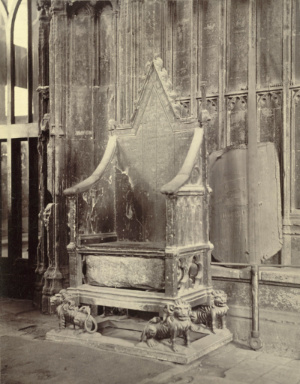
He brought it back to England (or did he? – it has been suggested the stone captured by Edward was a substitute and the real one was buried or otherwise hidden). In London, it was placed under a wooden chair known as the Coronation Chair or King Edward’s Chair on which most English and later British sovereigns were crowned.
On Christmas Day, 1950, four Scottish nationalist students – Ian Hamilton, Kay Matheson, Gavin Vernon and Alan Stuart – decided to liberate the 152 kilogram stone and return it to Scotland.
The stone broke in two when it was dropped while it was being removed (it was later repaired by a stone mason). The group headed north and, after burying the greater part of it briefly in a field to hide it, the stone was – on 11th April, 1951 – eventually left on the altar of Arbroath Abbey in Scotland.
No charges were ever laid against the students.
It was brought back to the abbey and used in the coronation of Queen Elizabeth II in 1953.
The stone was eventually returned to Scotland in 1996 on the proviso it could be temporarily relocated back to London for coronations and now sits in Edinburgh Castle. It was taken to London temporarily in 2023 for the coronation of King Charles III but has since been returned.
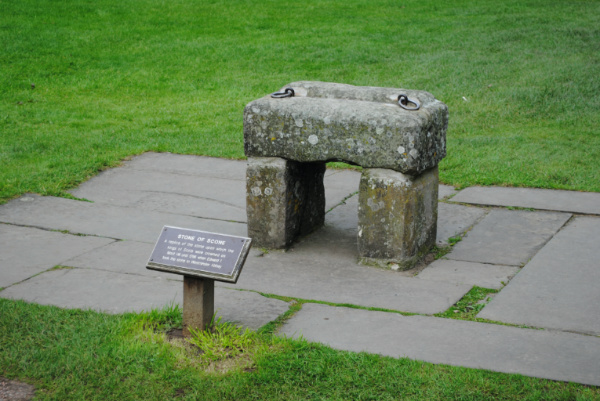
There is a replica of the stone at Scone Castle in Scotland.
 Exploring London
I’m an American but I thought the correct name is the “Stone of Scone” (as it’s shown in the hashtags).
Thanks for pointing that out – headline was turned around!