This Week in London – The Bayeux Tapestry blockbuster nears opening; new 9/11 display at IWM London; and, join a Star Trek world record attempt…

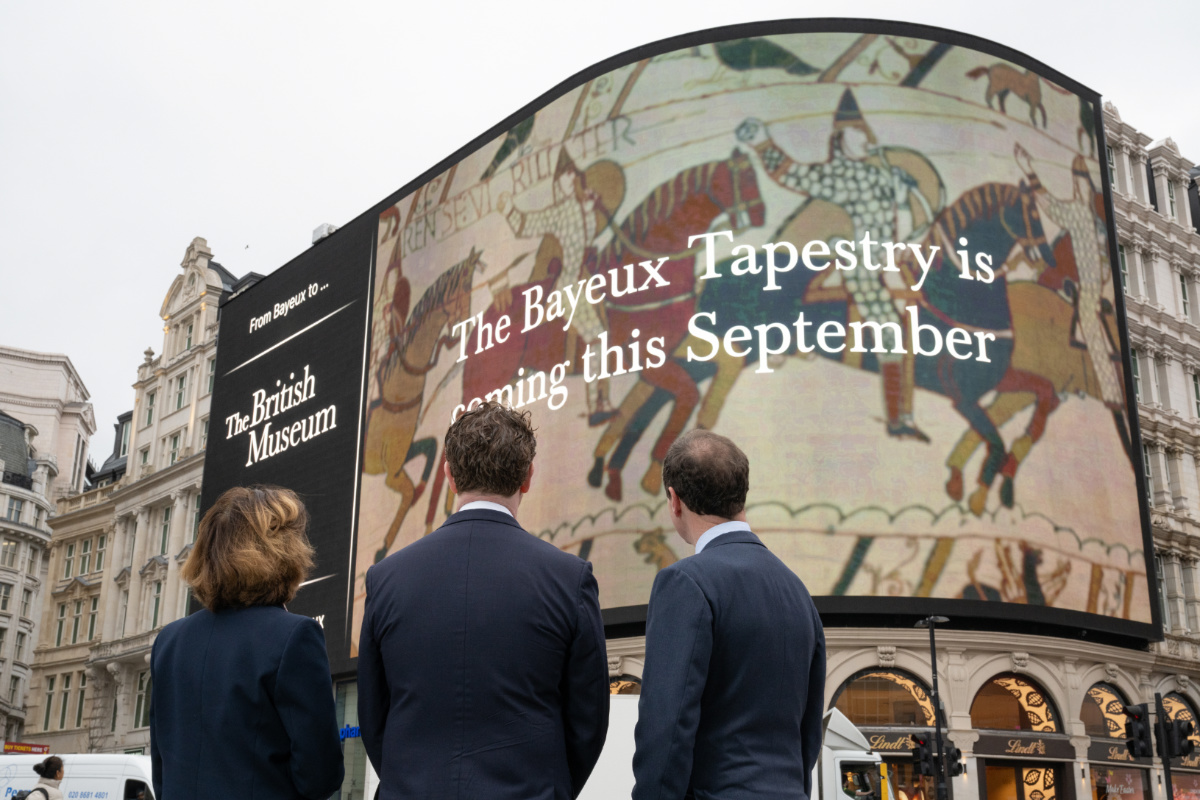
The tapestry exhibition was advertised in Piccadilly Circus earlier this year. PICTURE: Courtesy of Trustees of the British Museum

King Charles III and President Emmanuel Macron visited the Bayeux Tapestry Exhibition at the British Museum this week ahead of its opening to the public next week. On display in the UK for the first time since it was made, the tapestry depicts events leading up to the Battle of Hastings and the Norman Conquest of 1066 and will be shown at the British Museum until July next year while its usual home in Bayeux, northern France, is being renovated. The tapestry was likely commissioned by a Norman patron – believed to be William the Conqueror’s brother Bishop Odo, and made by English embroiderers using manuscript drawings from Canterbury – the latter a fact which led the King to quip in his speech at the museum that it could have been named the “Canterbury Embroidery”. In exchange for the tapestry, the UK is loaning some treasures of the British Museum, including the Sutton Hoo Treasure and some of the Lewis chess pieces, to museums in France. The first batch of tickets to see what’s been described as a “wonder of the medieval world” have sold out with further tickets to be released in October and January. For more, see www.britishmuseum.org/exhibitions/bayeux-tapestry

A new permanent photography exhibition featuring powerful images of the 9/11 attack on New York City opens at the Imperial War Museum London tomorrow. The images were taken by Bill Biggart, who died when the World Trade Center’s North Tower collapsed, and were retrieved with his camera from the wreckage. It is the first time the images have been shown in a public exhibition outside the US. The images are displayed around a section of steelwork recovered from Ground Zero and alongside other photographs taken by photojournalist Suzanne Plunkett in the streets surrounding the World Trade Center. On Saturday, IWM London will host IWM Reflections: 9/11, a free daylong event which brings together first-hand testimony, personal reflection, expert discussion and live music. Broadcaster and chartered counselling psychologist Dr Sian Williams will host the day which will also feature Janice Brooks, who was working in the South Tower of the World Trade Center on 11th September, 2001 as well as a string quartet from the English Chamber Orchestra performing Samuel Barber’s Adagio for Strings, and a range of speakers exploring the wider legacy of 9/11 across journalism, the military response, faith and community. Entry to the exhibition and day is free. For more, see https://www.iwm.org.uk/visits/iwm-london.

A world record attempt for the ‘Most People Performing a Vulcan Salute Simultaneously’ will take place at the Science Museum in South Kensington next Tuesday night. The attempt will take place at the museum’s free Star Trek Lates when visitors are encouraged to wear their finest Starfleet uniform and join the record attempt. It forms part of the global digital ‘Star Trek Vulcan Salute’ celebration which connects fans around the world and marks 60 years to the day since Star Trek made its US television debut in 1966. Visitors to the museum will also have a last chance to experience the Star Trek Warp Trail which brings together objects from the Star Trek archives and historic items on display in the museum as it explores the connection between the franchise and real-world scientific innovation. The trail is slated to close on 13th September. Star Trek Lates is free, but visitors must book a ticket in advance to attend and take part in the record attempt. For more, see www.sciencemuseum.org.uk/see-and-do/star-trek-lates.

Send all items to exploringlondon@gmail.com

This Week in London – ‘Pressure’, D-Day and the HMS Belfast; ‘Imagining Animals’ at the Tower; and, the story of a sextant at Greenwich…

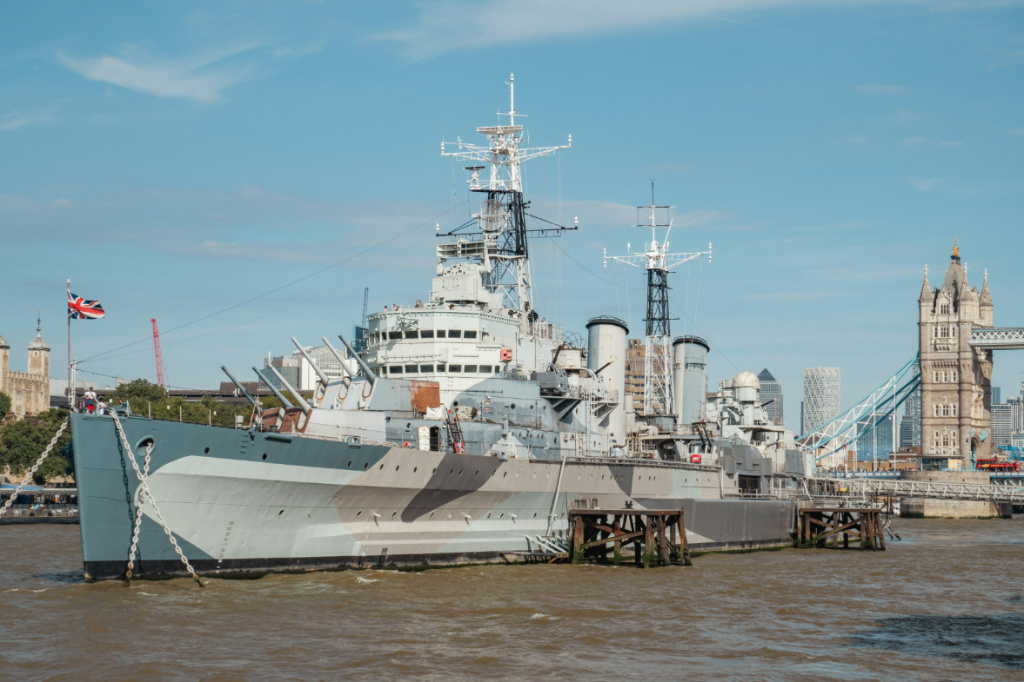
HMS Belfast. PICTURE: Adam Bignell/Unsplash

A helmet worn by a member of the American 101st Airborne Division killed on D-Day, a pocket-watch used to time the bombardment off Normandy, and the personal diary of Group Captain James Stagg – whose role on D-Day is captured in the upcoming film, Pressure – are among the objects on show in a new display on HMS Belfast. The display, Pressure: D-Day Decision, which opens tomorrow in a partnership between the Imperial War Museum, STUDIOCANAL and the Met Office, takes a deeper look at the events which took place on the day aboard a ship that was there. As well as Sergeant Floyd Jakob ‘Bud’ Corrington’s helmet, other highlights also include the original so-called ‘God of War memo’ on which General Dwight D Eisenhower (played by Brendan Fraser in the film) scrawled a note to Stagg (played by Andrew Scott) on the weather report he produced for 19th June (one of the only possible alternative dates for D-Day) in which he thanked “the Gods of war that we went when we did”. The display also features audiovisual content with oral testimonies from Kay Summersby (Eisenhower’s personal secretary, played by Kerry Condon in Pressure), meteorologist, George Lawrence Hogben and Group Captain James Stagg along with extracts from personal letters discovered within IWM’s collection that offer a glimpse into the hopes, fears and emotions of those on the D-Day frontlines. There’s also a chance to further explore the D-Day history of the HMS Belfast including the experiences of the 28 men who operated the ship’s guns in Y Turret as well as view a copy of the ship’s logbook and official record of its actions on 6th June, follow the path of the ammunition that powered HMS Belfast’s bombardment, and see where wounded troops were treated onboard in the Sick Bay. Runs until 11th April. Pressure opens in the UK on 9th September. Admission charge applies. For more, see https://www.iwm.org.uk/events/pressure-the-d-day-decision.

• Inspired by the menagerie of beasts once kept there, the Tower of London will host a range of extraordinary creatures brought to life using large-scale puppetry, music and movement. The work of artists Mervyn Millar and Suzy Willson, Imagining Animals will see visitors to the Tower come across a range of different animals as they explore the fortress – everything from a bear ambling across the parade grounds to a sudden flamboyance of flamingoes and a giant serpent slithering out of view. There’s also a community art installation in which people have created small birds for display representing their wishes or hopes for the future. Runs until 31st August and included in general admission. For more, see https://www.hrp.org.uk/tower-of-london/whats-on/imagining-animals/.

The story of a 19th century sextant is at the centre of a new display at the Old Royal Naval College’s visitor centre in Greenwich. The sextant, once an essential navigational tool when at sea, was among items from the Bigg-Wither Collection acquired by the Old Royal Naval College last year. As well as exploring how the sextant was made and used, the display also touches on wider stories about naval education, exploration and the people connected with Greenwich including Captain Guy Plantagenet Bigg-Wither who served in the Royal Navy before becoming Deputy Director of the first Royal Navy Staff College at Greenwich. For more, head to https://ornc.org/whats-on/visitor-centre-display-a-journey-through-the-stars/.

This Week in London -The Banqueting Hall reopened; new loans at The National Gallery; and, 40 years of the Freud Museum London…

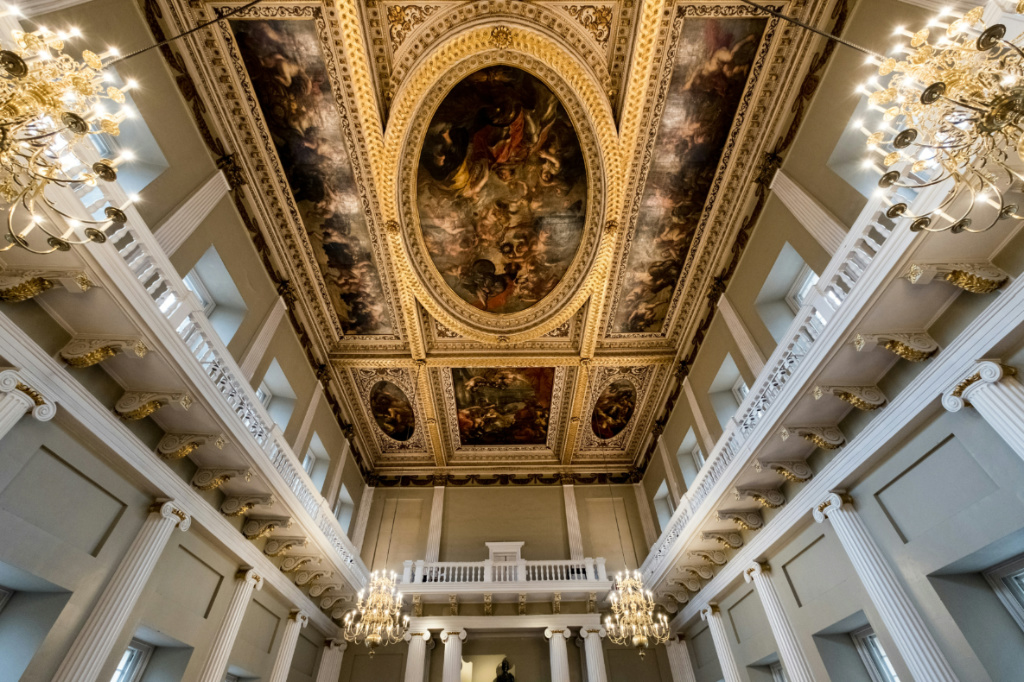
Rubens’ famous painting on the ceiling of the Banqueting House. PICTURE: Serg Bataev/Unsplash

The Banqueting House in Whitehall has reopened following a major project upgrading the building facilities with a new display on the history of the lost Palace of Whitehall. Visitors to the building will learn about the lost palace – of which the Banqueting House is one of the last surviving parts – and see the house’s magnificent ceiling painted by Flemish artist Peter Paul Rubens. Included is the chance to recline underneath the ceiling on cushioned benches and in bean bags and access specially created digital content to enrich your experience. This weekend BBC Radio presenter Georgia Martin and sound engineer Rob Winter will bring their Classical DJ project to the house, featuring a soundtrack inspired by the drama of the Stuart court and the Rubens ceiling. Admission charge applies. Runs until 20th September. For more, see www.hrp.org.uk.

Catch a glimpse of the arts scenes of Barcelona, Berlin and Paris at the beginning of the 20th century via three new loans on show at The National Gallery. Joining a collection of works by Paul Cezanne, Edgar Degas and George Bellows in the gallery’s Room 45 is American artist Marsden Hartley’s abstract work – Painting No 50 (1914–15), as well as Pablo Picasso’s Portrait of Germaine (1902) – the only Blue Period work by Picasso currently on display in a London museum. Meanwhile, Monet’s Waterlilies (1905) completes a group of four of the artist’s ‘Water-Lily’ works on display in Room 46. Admission is free. For more, see nationalgallery.org.uk.

The 40th anniversary of Freud Museum London is being marked with a new display. Opening next Wednesday, the display features items from Sigmund Freud’s collection of antiquities as well as family treasures. Runs from next Wednesday until 14th February. Admission charge applies. For more, see https://www.freud.org.uk/

Send all items to exploringlondon@gmail.com

This Week in London – Diana memorial playground reopens; ‘Does my head look big in this?’ and an appeal for Dunwich Heath…

The world-famous Diana, Princess of Wales Memorial Playground in Kensington Gardens reopened to the public this week after a £3 million renewal project. The Peter Pan-inspired playground, which was reopened on Wednesday, the National Day of Play, first opened in 2000 to commemorate the princess who had lived at nearby Kensington Palace. The free to enter playground features a brand new 17-by-12-metre galleon moored on a sandy beach, a “treehouse of dreams”, brand new water play area and a redesigned area for younger children featuring timber houses, play ships and a large sandpit. For more, head to https://www.royalparks.org.uk/visit/parks/kensington-gardens

On Now: Does my head look BIG in this? The art of portrait caricature. This exhibition at the Cartoon Museum in Bloomsbury charts the art of portrait caricature from its origins in Renaissance Italy through its “golden age” of 18th century England to its use in the present day. Admission charge applies. Runs to 1st November. For more, see https://www.cartoonmuseum.org/whats-on-exhibitions/does-my-head-look-big-in-this-the-art-of-portrait-caricature.

• Further afield: The National Trust has launched a public appeal to restore Dunwich Heath in Suffolk after a wildfire decimated the heathland and wiped out the habitat of some of the country’s rarest species. “We are looking at total devastation of a beloved and important landscape,” said the Trust’s Director-General Hilary McGrady. “We’ve lost precious habitats, wildlife, trees, and a place where people have made memories over generations. It’s heartbreaking. But together we can and will restore Dunwich, and crucially, make it more resilient and better adapted for the climate we’re facing now, and the climate we’ll be facing in future.” The heath and the neighboring RSPB Minsmere reserve is an especially important area for birds such as nightjars, skylarks and the very rare Dartford warbler, as well as adders, lizards and slow-worms, and butterflies including the rare silver-studded blue. To help with the appeal, head to nationaltrust.org.uk/dunwich-heath-appeal.

Send all items for inclusion to exploringlondon@gmail.com

This Week in London – ‘Childhood in War’; ‘A Century of American Photography’; and, Monet and Renoir reunited…

An image from the Childhood in War display. PICTURE: Courtesy IWM London

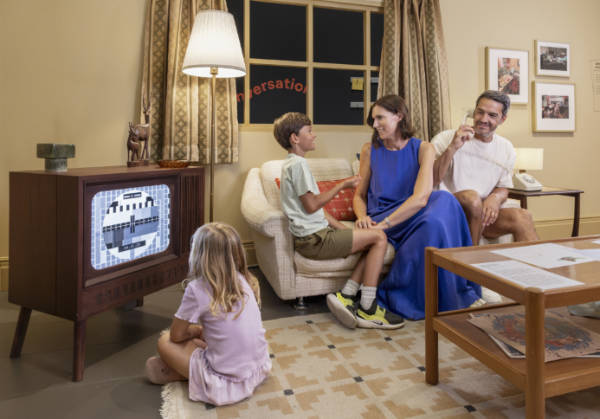
The impact of war on children is the subject of a new exhibition opening at IWM London on Friday. Childhood in War spans the period from World War I to today when more than one in six children globally – more than 450 million – live in areas impacted by war. It features personal testimonies, interactive and hands-on experiences and items from child rights organisations including UNICEF, Right to Learn Afghanistan and War Child. Designed with both families and adult visitors in mind, highlights include a teddy bear still treasured by Holocaust survivor John Hadj, a red knitted jumper given to Jochewet Heidenstein shortly before he and her sisters departed for the UK as part of the Kindertransport at the start of World War II, a large-scale evacuee train carriage, recreations of 20th century war games and reconstructed rooms including a child’s bedroom during World War II and a Cold War-era living room and kitchen. There are also contemporary stories from places including Afghanistan, Ukraine and Sudan. Runs until 28th February, 2027. Admission is free. For more, see iwm.org.uk/events/childhood-in-war.

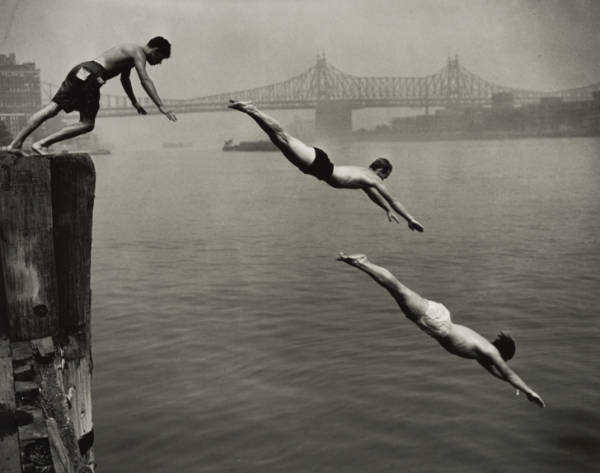
Arthur Leipzig, ‘Divers, East River’ (1948) © Estate of Arthur Leipzig, Courtesy of Howard Greenberg Gallery, New York

More than 100 landmark works by some of the most influential photographers of the 20th century sit at the centre of Dulwich Picture Gallery’s new exhibition, Portrait of a City: A Century of American Photography. The gallery’s second major photography exhibition, the display opens in the early 1900s, charts the impact of the Wall Street crash of 1929 and then turns to the rise of photographic modernism, how dramatic physical changes reshaped American cities in the mid-20th century and depictions of life on the margins before concluding with a presentation of Bruce Davidson’s renowned Subway series (1980–85). Featuring the works of some 38 artists, other highlights include Lewis Hine’s Riding the Ball High up on Empire State (1930), Dorothea Lange’s White Angel Breadline, San Francisco (1933),  Helen Levitt and Saul Leiter’s studies of street life and works by arry Winogrand, Diane Arbus and Lee Friedlander. Admission charge applies. For more, see https://www.dulwichpicturegallery.org.uk.

Pierre-Auguste Renoir, La Grenouillère (1869), © On loan from Nationalmuseum, Stockholm. Gift 1924 unknown donor through Nationalmusei Vänner

• Claude Monet’s Bathers at La Grenouillère and Pierre-Auguste Renoir’s La Grenouillère (both of which date from 1869) are being shown together in The National Gallery for the first time in 19 years ahead of the gallery major new exhibition, Renoir and Love. Painted side-by-side from a similar vantage point the gallery says the works “capture a defining moment in the birth of Impressionism” and provides a glimpse into the friendships and spirit of experimentation which will be explored in the upcoming exhibition (opening in October). The two paintings can be seen until mid-September. Admission is free. For more, see https://www.nationalgallery.org.uk.

Send all items for inclusion to exploringlondon@gmail.com

This Week in London – ‘Caribbean Takeover’ at the National Maritime Museum; Richard Dadd at the Royal Academy; and, British wildlife through the lens…

PICTURE: Yangki Suara/Unsplash

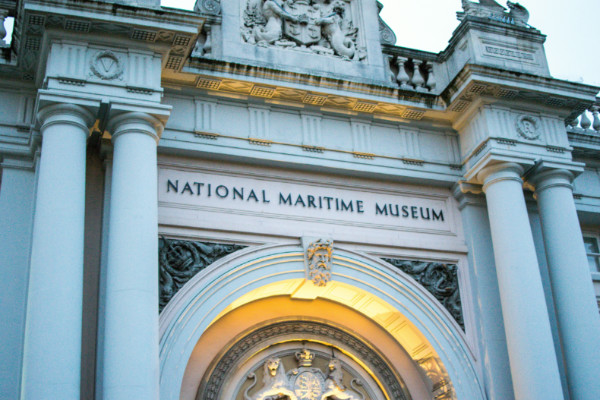
The National Maritime Museum in Greenwich hosts the annual ‘Caribbean Takeover’ – a family-friendly event celebrating Caribbean culture, history and heritage – this Saturday. The event, which marks 60 years of the Notting Hill Carnival, brings together artists, historians, performers and community groups. The day will feature live music, dance performances, talks, creative workshops and community-led displays with highlights including steel pan music and African drumming, calypso dance and limbo, performances on the Ocean Map, and interactive experiences. The event, which runs from 10am to 5pm, is free. For more, see https://www.rmg.co.uk/whats-on/national-maritime-museum-queens-house/caribbean-takeover.

The work of Victorian artist Richard Dadd (1817-1886) is at the centre of a new exhibition opening at the Royal Academy of Arts this Saturday. Richard Dadd: Beyond Bedlam, the first exhibition devoted to his work in more than 50 years, features around 100 oil paintings, drawings and watercolours and charts his life as a student at Royal Academy schools, his travels and the final 42 years of his life as a patient in Bethlem and Broadmoor Hospitals. Recognised early on for his skill at rendering detail, Dadd went on a tour of the eastern Mediterranean in 1842 but began experiencing delusions as the trip and, on returning to England, killed his father whom he believed to be the Egyptian god Osiris. He fled to France but was apprehended and spent the remainder of his life in hospitals – first at Clermont, north of Paris (1843-44), and then at Bethlem in Lambeth (1844-64), and finally at Broadmoor in Berkshire (1864-65). Highlights include the fairy painting Titania Sleeping (1841) and Scene from Hamlet (1840) as well as works from his time in hospitals including Contradiction. Oberon and Titania (1854-58), The Fairy Feller’s Master-Stroke (1855-64) and Portrait of a Young Man (1853). Runs in the The Jillian and Arthur M Sackler Wing of Galleries until 25th October. Admission charge applies. For more, see www.royalacademy.org.uk.

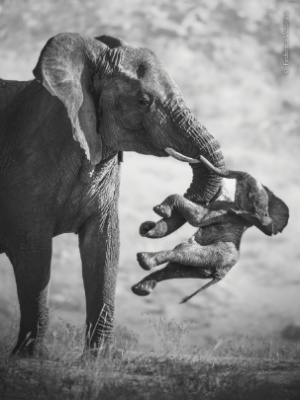
On Now: British Wildlife Photography Awards 2026. Some 72 images and video from the awards have gone on show at the Horniman Museum and Gardens in South London. Highlights include Paul Hobson’s A Toad Swims Across Its Woodland Pond (Grand Prize Winner and winner in the Black & White category); Ben Lucas’ Feathery Pillow, depicting a mute swan cygnet taking a nap on its sibling’s back (The Young British Wildlife Photographer of the Year 2026); Sarah Darnell’s The Fur Flew image of a pair of hares boxing (runner up in the Animal Behaviour category); Felix Belloin’s Through the Lavender showing a neighbourhood fox visiting his garden (runner up in the Animal Portraits category); Barry Webb’s Slime Moulds and a Water Droplet (winner in the Botanical Britain category). The free display can be seen until 21st February next year. For more, see horniman.ac.uk.

Send all items for inclusion to exploringlondon@gmail.com.

This Week in London – Newly discovered Tudor ring on show; Swiss art at the National Gallery; and, the story of electric travel in London…

A newly discovered gold signet ring bearing the signet of Queen Elizabeth I has gone on display this week at Hampton Court Palace. The ring was discovered by a metal detectorist at the site of a former royal hunting ground at Ampthill, Bedfordshire, and was purchased by Historic Royal Palaces under the terms of the Treasure Act 1996. Dated to the 1570s, it features an engraving of a phoenix rising from the flames. The phoenix emblem was first associated with Queen Anne Boleyn, the second wife of King Henry VIII, following the publication of a poem in 1575 by Ulpian Fulwell in which she is eulogised as being like a phoenix, with her daughter Elizabeth rising from the ashes as “a worthy Queen”. It was around this time that Queen Elizabeth I adopted the phoenix emblem for herself to honour her late mother. The emblem subsequently became associated with Anne Boleyn and courtiers had it incorporated in their clothing, jewels and paintings to show loyalty to the queen. It’s thought the ring may have been lost by a courtier or supporter of the Queen. Also on display at Hampton Court is the ‘Boleyn ring’ which, found close to the home of Anne Boleyn’s cousin, is engraved with a bull’s head and arrayed with sunbeams and stars of white enamel and features religious decoration of icons of the Virgin and Child and St Catherine of Alexandria. It has been speculated it belonged to Anne’s father or brother. On display in the Tudor World exhibition in the Wolsey Rooms at Hampton Court Palace and included in palace admission. For more, see https://www.hrp.org.uk/hampton-court-palace/.

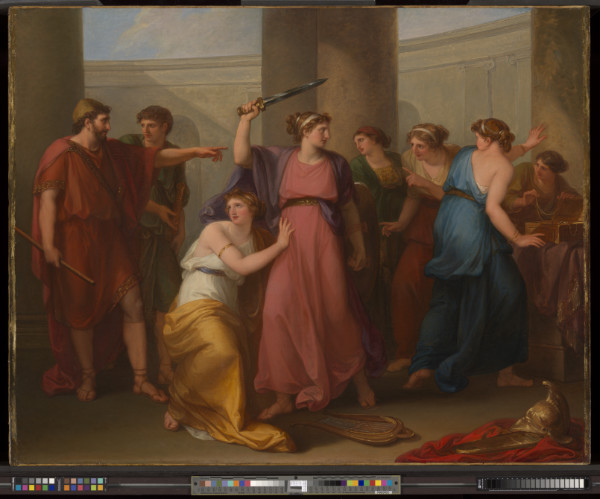
Angelica Kauffmann, Achilles discovered among the Daughters of Lycomedes (1787–8), Oil on canvas, 103.2 x 130.8 cm, The National Gallery, London. A gift from the Barrett Collection, 2026/NG6710 PICTURE: © The National Gallery, London

Eighteenth century Swiss artist Angelica Kauffmann’s first history painting in oils – Achilles discovered among the Daughters of Lycomedes – has been gifted to the National Gallery. The painting is one of three by Swiss artists gifted to the gallery by Dallas-based collectors Richard and Luba Barrett. The other two include Portrait of Louis Montchal by Ferdinand Hodler (1853–1918) and a landscape – Gallery Four Large Trees – by Alexandre Calame (1810–64). Kaufmann’s painting – the first of hers to enter the National Gallery’s current collection – was produced in 1787 to 1778 at the height of her success in Europe. An unusually large and fully worked preparatory picture, it was created for a final painting commissioned by Catherine the Great that is now at the Scientific-Research Museum of the Academy of Arts of Russia in St Petersburg. Kauffmann’s work can be seen in Room 37, Hodler’s in Room 44 and Calame’s in Room 39. For more, see www.nationalgallery.org.uk

• The story of electric travel is being told at the London Transport Museum in Covent Garden from next Tuesday. Electric Pioneers features a programme of events for families to explore the story of how electricity has shaped transport in London. Activities include the chance to design your own traffic light, meet costumed characters in the museum’s galleries and discover how electricity is made. Runs until 2nd September. Admission charges apply. For more see ltmuseum.co.uk/whats-on/summer-holidays-electric-pioneers.

Send all items to exploringlondon@gmail.com

This Week in London – Buckingham Palace’s Picture Gallery redisplayed; ‘Henry VIII’s Joust’ at Hampton Court Palace; and, Paul Sarrut’s images of World War I…

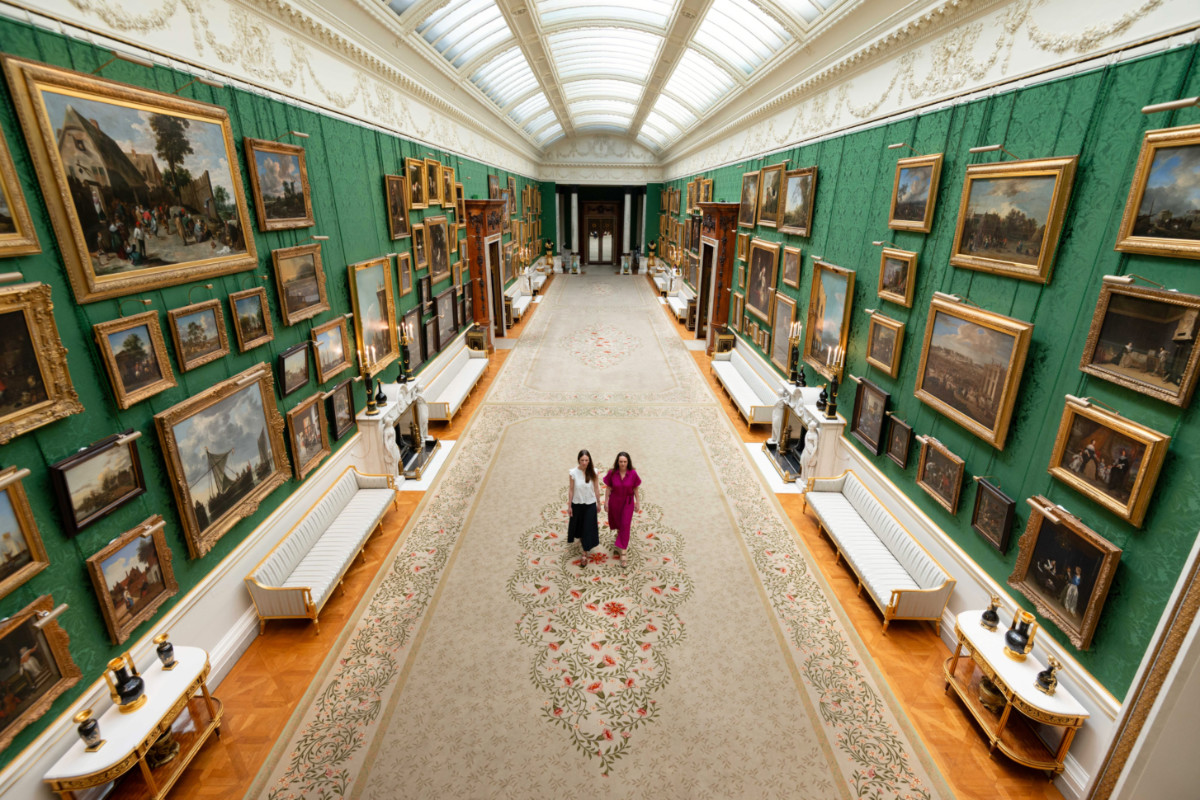
The Picture Gallery at Buckingham Palace has undergone a once-in-a-generation redisplay and opens to the public as part of the palace’s summer opening today. PICTURE: © Royal Collection Enterprises Limited 2026/Royal Collection Trust – Ben Fitzpatrick

Some 120 masterpieces from the Royal Collection – including paintings by Rubens, Caravaggio and Zoffany – have gone on display in Buckingham Palace’s Picture Gallery in a major transformation of the storied room. The new presentation, which almost doubles the number of works on show, comes as the palace’s State Rooms open to visitors for summer. Highlights of the redisplay, which took some 875 hours to complete, include Johan Zoffany’s The Tribuna of Uffizi which depicts the famed Florentine gallery with works by Holbein, Rubens and Raphael all identifiable, as well as George Stubbs’ A Rough Dog, believed to show King George IV’s pet dog, Thomas Gainsborough’s portrait of Johann Christian Fischer, not believed to have been hung in the gallery display before. Other new works include The Letter by Vermeer contemporary Gerard ter Borch, and Caravaggio’s The Calling for Saints Peter and Andrew while five paintings by Rembrandt have now been hung together and seven works by Rubens have been reunited. The gallery was created during the John Nash-designed redevelopment of what had been Buckingham House into Buckingham Palace and while King George IV died before its completion, the first arrangement was hung by the time Queen Victoria acceded to the throne in 1837. Open until 27th September. Admission charge applies. For more, see www.rct.uk.

See jousting amid the drama of the Tudor court at Hampton Court Palace over the next two weekends. ‘Henry VIII’s joust’ will take visitors back to 1526 when they can watch knights clash on horseback while tensions build as it’s discovered Anne Boleyn has not been formally invited to the event. The family friendly event, which is taking place over the weekends of 11th and 12th July and 18th and 19th July, is included in general admission to the palace. For more, see https://www.hrp.org.uk/hampton-court-palace/.

The first ever UK exhibition dedicated to the work of World War I French liaison officer and interpreter Paul Sarrut has opened at the National Army Museum in Chelsea. Drawn on the Western Front: Paul Sarrut and the Indian Army features more than 50 drawings and works on paper exploring the experiences of some of the more than a million Indian men who volunteered to serve in the British Indian Army during the war. The display features Sarrut’s famous image of Sepoy Harnam Singh as well as also uniforms, photographs, archives and medals. The latter include Victoria Crosses awarded to Frank de Pass, the first Jewish recipient, and Khudadad Khan, the first Muslim and first soldier from the Indian subcontinent to receive the award. Free to enter. Runs until 27th February, 2027. For more, see https://www.nam.ac.uk.

Send all items to exploringlondon@gmail.com

This Week in London – America’s 250th at the British Museum; Ferdinand Georg Waldmüller’s landscapes; and, ‘rival queens’ at the Foundling Museum…

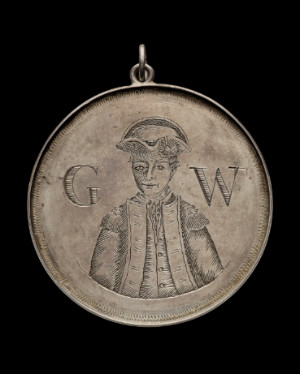
Washington Peace Medal PICTURE © The Trustees of the British Museum

The Washington Peace Medal, engraved to bear a portrait of George Washington by Paul Revere in 1777, is at the heart of a new exhibition at the British Museum marking the 250th anniversary of the Declaration of Independence. Declaring independence: USA 250 also features a ceremonial copy of the Declaration of Independence, handwritten in sheepskin and on loan from the West Sussex Record Office, known as the Sussex Declaration (it will be added halfway through the display’s run), a wampum belt representing the diplomacy between the Lenape people and the Haudenosaunee Confederacy in 1712 (the Lenape later signed the Treaty of Fort Pitt in 1778 with the Revolutionaries in what was the first formal treaty between an Indigenous Nation and the United States), and a pipe tomahawk given to Thayendanegea (Joseph Brant), a Mohawk, Haudenosaunee leader, which represents the Mohawk alliance with the British. The free display can be seen in Room 3 until 29th November. For more, see www.britishmuseum.org/exhibitions/declaring-independence-usa-250.

The first UK exhibition of the works of Austrian painter Ferdinand Georg Waldmüller (1793-1865) – and the first to be devoted solely to his landscapes – opens at the National Gallery today. Waldmüller: Landscapes features about 14 works including landscapes depicting scenes in the Prater, Vienna’s famous park, the Alpine region near Salzburg in Austria known as the Salzkammergut, views of Sicily, and later works such as Early Spring in the Vienna Woods (1861). Waldmüller, who was trained at the Academy in Vienna, visited London in 1856, bringing with him 34 works which were sold at auction following a private audience with Queen Victoria and Prince Albert, each of whom bought one. The exhibition in Room 1, which has been organised in cooperation with the Belvedere, Vienna, runs until 20th September. Admission is free. For more, see www.nationalgallery.org.uk/exhibitions/waldmüller-landscapes.

A new display celebrating 300 years since the debut of two operas by George Frideric Handel in London – Alessandro and Scipione – is running at the Foundling Museum in Bloomsbury. 300 Years of the ‘Rival Queens’: Handel’s 1726 Opera Season focuses on Italian soprano Faustina Bordoni and her rival Francesca Cuzzoni and how Handel carefully composed operas with two equally important roles to suit both singers, known as the ‘rival queens’. Admission charge applies. Runs until 25th October. For more, see https://foundlingmuseum.org.uk/event/handels-1726-opera-season/

Send all items for inclusion to exploringlondon@gmail.com

This Week in London – Documents from the American Revolution; Frida Kahlo’s impact; and, ‘Mirror Moon’ at the Royal Observatory…

Some of the most significant letters, papers, maps and documents of the period of the American Revolution have gone on display at the National Archives in Kew. Revolution 250: America’s Independence Story (1763-1783) features a rare Dunlap print of the declaration itself as well as the Tea Act, which ultimately led to the Boston Tea Party, a British officer’s account of the tea party event and the ‘Olive Branch petition’ sent to King George III from representatives of the 13 colonies in what represented a last attempt to avoid war. Also on show are King George III’s Proclamation of Rebellion declaring that the 13 colonies were in revolt and the Treaty of Paris in which Britain accepted American independence. Admission charge applies. For more, see www.nationalarchives.gov.uk.

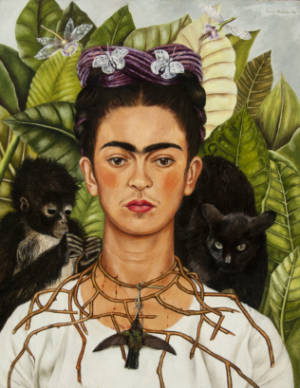
‘Untitled [Self-portrait with thorn necklace and hummingbird]’ (1940). Nickolas Muray. Collection of Mexican Art.

The first major exhibition exploring how artist Frida Kahlo (1907-1954) became a global icon and a key influence on later artists has opened at Tate Modern. Frida: The Making of an Icon, developed in collaboration with the Museum of Fine Arts in Houston, features more than 30 works by Kahlo including rarely seen self-portraits such as Self-Portrait (With Velvet Dress) (1926) as well as photographs and personal artefacts. Other highlights include Diego and Frida (1929), Survivor (1938), Memory (The Heart) (1937), Girl With A Death Mask (1938) and My Dress Hangs There (1933-38). Runs until 3rd January. Admission charge applies. For more, see https://www.tate.org.uk/whats-on/tate-modern/frida-kahlo-the-making-of-an-icon.

Luke Jerram’s Mirror Moon is on display at the Royal Observatory in Greenwich in a celebration of 350 years of studying the Moon from the site. The scale model, two metres in diameter, is made from mirrored stainless steel and draws on highly accurate topographical NASA data of the lunar surface. For more, see www.rmg.co.uk/royal-observatory/attractions/mirror-moon

Send all items from inclusion to exploringlondon@gmail.com.

This Week in London – American independence documents; 120 years of the Piccadilly Line and Food Season at the British Library…

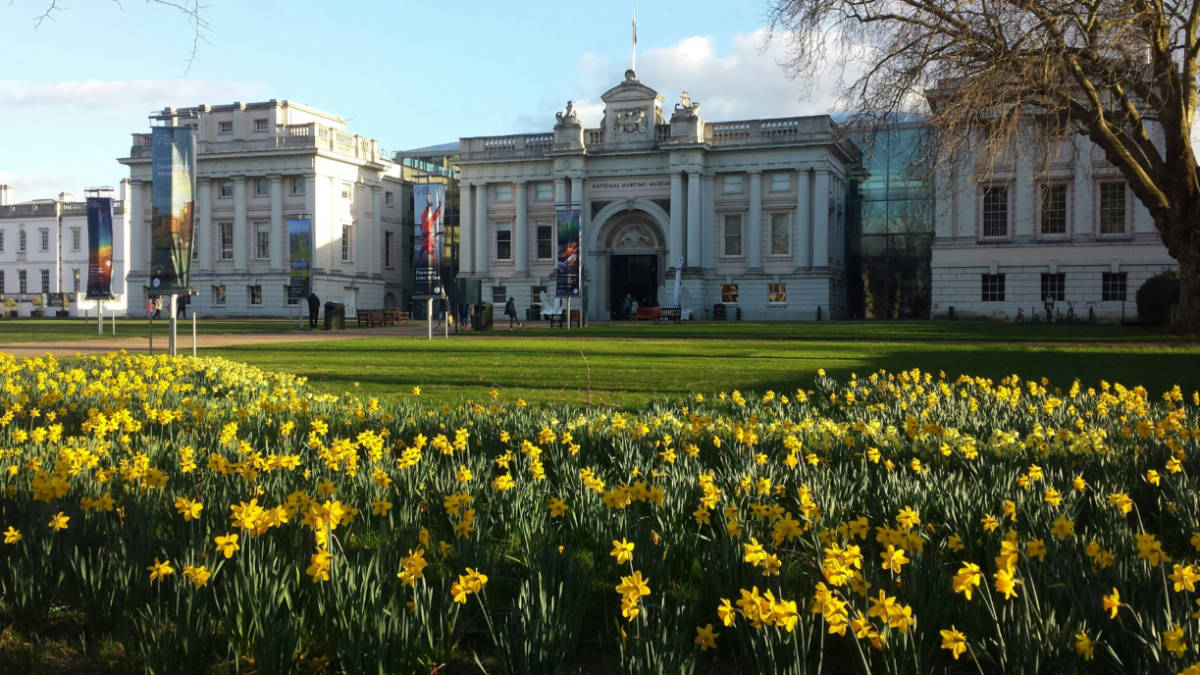
The National Maritime Museum in Greenwich. PICTURE: Phil Lev/Unsplash

One of the earliest British reports of American independence is at the heart of a temporary display at the National Maritime Museum in Greenwich. Opening on Monday, the display – which marks the 250th anniversary of the adoption of the Declaration of Independence on 4th July – features a letter dated 10th July, 1776, and a handwritten copy of the Declaration made between 5th and 10th July, 1776, which were sent to John Mantagu, 4th Early of Sandwich and First Lord of the Admiralty by Vice-Admiral Molyneux Shuldham, commander-in-chief of the North American Station. The documents are believed to be the first written accounts of American Independence to reach Britain and pre-date the first known arrival of a copy of the Declaration of the Continental Congress, known as the Dunlap Broadside, in August the same year. The documents will be on display in the Caird Library. Admission is free but requires a ticket. To register in advance, head to rchiveandlibrary.rmg.co.uk/aeon.

A season of events to celebrate 120 years of the Piccadilly Line is taking place over the next few months at the London Transport Museum in Covent Garden. The events include a creative workshop on Saturday in which participants can take inspiration from the line to create a unique textile artwork, a talk featuring railway historian and broadcaster Tim Dunn on 22nd August and the chance to go behind the scenes at the Museum Depot open days in September. For more, see www.ltmuseum.co.uk.

The British Library’s annual Food Season, now in its seventh year, kicks off on Saturday with the Food Season Big Weekend, a two day celebration featuring talks, tastings and live events. Among those appearing over the weekend are River Café co-founder Ruthie Rogers and culinary icon and actor Simon Russell Beale who is looking at the role of food in Shakespeare. The season runs until 2nd July. Others involved include food critic Jay Rayner chairing a discussion on chef Anthony Bourdain’s legacy, classicist Mary Beard and writer Charlotte Higgins exploring the food culture of ancient Pompeii and long-time friends and cultural icons Neneh Cherry and Andi Oliver reflecting on four decades of their shared life across music, food and family. Admission charges apply. For the full programme, head to https://events.bl.uk/whats-on/food-season.

Send all items to exploringlondon@gmail.com

This Week in London – William Tyndale’s New Testament; Marilyn Monroe portraits; and, the Great Exhibition Road Festival…

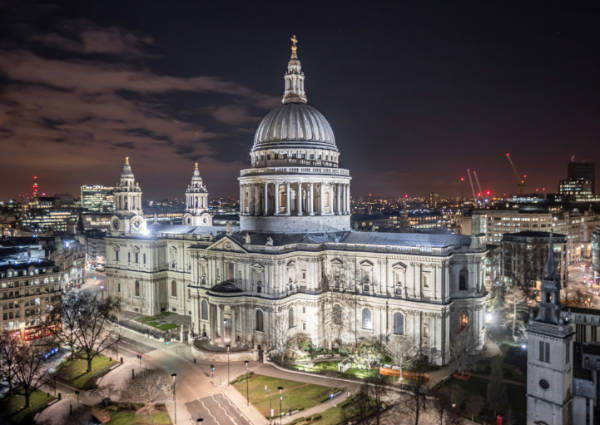
PICTURE: Alex Tai/Unsplash

The 500 year story of one of the smallest yet most revolutionary books in English history is being told at St Paul’s Cathedral. A Dangerous Calling: 500 Years of William Tyndale’s New Testament, which opens tomorrow, provides a rare chance for visitors to see a first edition of Tyndale’s translation up close in the cathedral library (one of only three in existence) as well as access to a new digitised version on the cathedral floor. The exhibition can be seen until 27th February. Admission charge applies. For more, see www.stpauls.co.uk/whats-on/exhibition-dangerous-calling-500-years-of-william-tyndales-new-testament

• Marilyn Monroe’s life, career and legacy is the subject of a new exhibition which opened at the National Portrait Gallery this week. Marking 100 years since her birth, Marilyn Monroe: A Portrait features works by the likes of Andy Warhol, Pauline Boty, Cecil Beaton and Richard Avedon. There’s also unseen photographs portraits taken by Allan Grant at Monroe’s Brentwood residence a day before her death in August, 1962, in a session for Life magazine. The display can be seen until 6th September. Admission charge applies. For more, see www.npg.org.uk/whatson/exhibitions/2026/marilyn-monroe-a-portrait

• The Great Exhibition Road Festival kicks off in South Kensington this weekend, marking 175 years since the 1881 Great Exhibition. The event features workshops, talks, performances and installations with organisations ranging from the Natural History Museum and Science Museum taking part along with Imperial College London, the Royal Parks, the V&A and Royal Albert Hall. For more on the festival, head to https://www.greatexhibitionroadfestival.co.uk/.

Send all items for inclusion to exploringlondon@gmail.com.

This Week in London – Lost music venues; the Iraq war remembered; and, ‘Queen Elizabeth II: Her Life in Style’ extended…

Lost UK music venues are recalled in a new exhibition opening at the V&A in South Kensington on Saturday. Lost Music Venues features more than 100 objects celebrating 50 lost venues and includes gig posters, membership cards, club photography, band merch, and subculture fashions which have been gathered together following a call to the public. Highlights include handwritten Oasis lyrics, a Blur set list, Mark Webber’s briefcase from his stint as Pulp’s tour manager, the exterior sign from the Astoria London, Joan Baez’s note of support for Rainbow Theatre, a poster for an early Banksy exhibition held at The Arches, a bespoke club outfit designed by Vivienne Westwood, and flyers from Plastic People. Free to visit, the display can be seen until 30th October, 2027. For more, see vam.ac.uk.

Marking the 15th anniversary of the end of the war in Iraq, a Warrior Infantry Fighting Vehicle will go on display outside the National Army Museum from next Tuesday to Sunday, 14th June. The vehicle has been recently decommissioned after more than 40 years of Army service and was present during operations in Iraq in 2004. It was almost certainly the vehicle in which then-Private Johnson Beharry earned the Victoria Cross for two separate acts of bravery under sustained enemy attack. Now Warrant Officer Class 1, Beharry became the first living British soldier in 35 years to be awarded the Victoria Cross for his heroic actions in saving the lives of his comrades during ambushes in Iraq. In the first, after his platoon commander was wounded in an attack on 1st May, 2004, Beharry took control of a Warrior Infantry Fighting Vehicle and, despite being severely injured, he led his patrol to safety under heavy machine-gun fire from the enemy. In the second incident on 11th June, 2004, Beharry, who sustained a severe head injury when a rocket-propelled grenade detonated just six inches from his head, still managed to drive his vehicle out of danger and saved the lives of those around him before losing consciousness. Beharry’s Victoria Cross will be among the first medals from Lord Ashcroft’s collection of Victoria Crosses and George Crosses to go on display inside the museum from 2nd June. His Iraq Medal and Kosovo Medal will also be on display. For more, see https://www.nam.ac.uk/.

Buckingham Palace have announced the landmark centenary exhibition at the King’s Gallery marking the centenary of the late Queen’s birth – Queen Elizabeth II: Her Life in Style – will be extended by six months due to popular demand. The exhibition, which will now close on 18th April next year, is the largest exhibition of Queen Elizabeth II’s fashion ever staged featuring more than 300 items drawn from her personal fashion archive. Admission charge applies. For more, see www.rct.uk/queenelizabeth

This Week in London -Courtauld carpet returns to Eltham; art from Asia-Pacific; London broadsides; and, a Blue Plaque for a ground-breaking astronomer…

An antique Chinese carpet which originally was part of furnishings at Eltham Palace has returned home after 80 years. The carpet, dyed in the “dynastic blue” of the Qing dynasty and featuring symbols including dragons, Buddhist emblems and masks, represents the demand for the Chinese decorative arts in the 1920s and 1930s and serves as a reminder of how Chinese art was produced, circulated, and displayed in Britain. The carpet, donated from the estate of Mrs M R Bernard – the niece of former palace owner Stephen Courtauld, has undergone extensive conservation work. It can be seen in what was Virginia Courtauld’s boudoir. Eccentric millionaires Stephen and Virginia Courtauld built a magnificent art deco mansion right next to the medieval Great Hall of Eltham Palace in 1936 but moved out in 1944 and passed the lease to the Army Educational Corps. Over the ensuing decades many of the original items in the palace were dispersed but English Heritage, which took over management of the palace in 1995, has been working to restore the interiors back to when the Courtaulds lived in them. Other original items which have returned to the palace in recent history including a gold telephone and a pair of Cartier brooches. Admission charge applies. For more, see www.english-heritage.org.uk/visit/places/eltham-palace-and-gardens/.

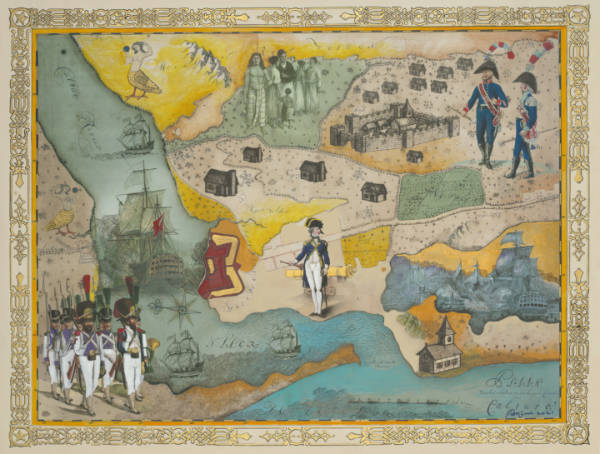
Pala Pothupitiye / Kalutara Fort, 2020–21 / Purchased 2021 with funds from Professor Emeritus Ian O’Connor AC and Anna Reynolds through the QAGOMA Foundation / Collection: QAGOMA, Brisbane/© Pala Pothupitiye

The works of more than 40 artists from 25 countries across the Asia Pacific region are going on show at the V&A in South Kensington. Rising Voices: Contemporary Art from Asia, Australia and the Pacific, to be held in The Porter Gallery, is being held in partnership with Australia’s Queensland Art Gallery/Gallery of Modern Art. Highlights include: Mchael Parekōwhat’s life-sized sculpture of a Mãori security guard, Kapa Haka (Whero) (2003); Pala Pothupitiye’s Kalutara Fort (2020-21) – a reimagined map of an historic Sri Lanka military camp; Brenda Fajardo, Elisabet Kauage, Mathias Kauage and John Siune’s There is still a war going on in Bougainville (1995) which responds to Papua New Guinea’s Bougainville conflict between 1988-98; and, a series of porcelain busts by Ah Xian. The exhibition opens on Saturday and runs until 10th January. Admission charge applies. For more, see https://www.vam.ac.uk/.

The role broadsides played in spreading news, advice and gossip in London from the 16th century onwards is the subject of a new exhibition at the Guildhall Library. Broadsides: Speaking to the People explores the history of broadsides and how they were used to speak to the general public, high and low alike. Free to see. Runs until 29th October. For more, see www.cityoflondon.gov.uk/events/exhibition-broadsides-speaking-to-the-people.

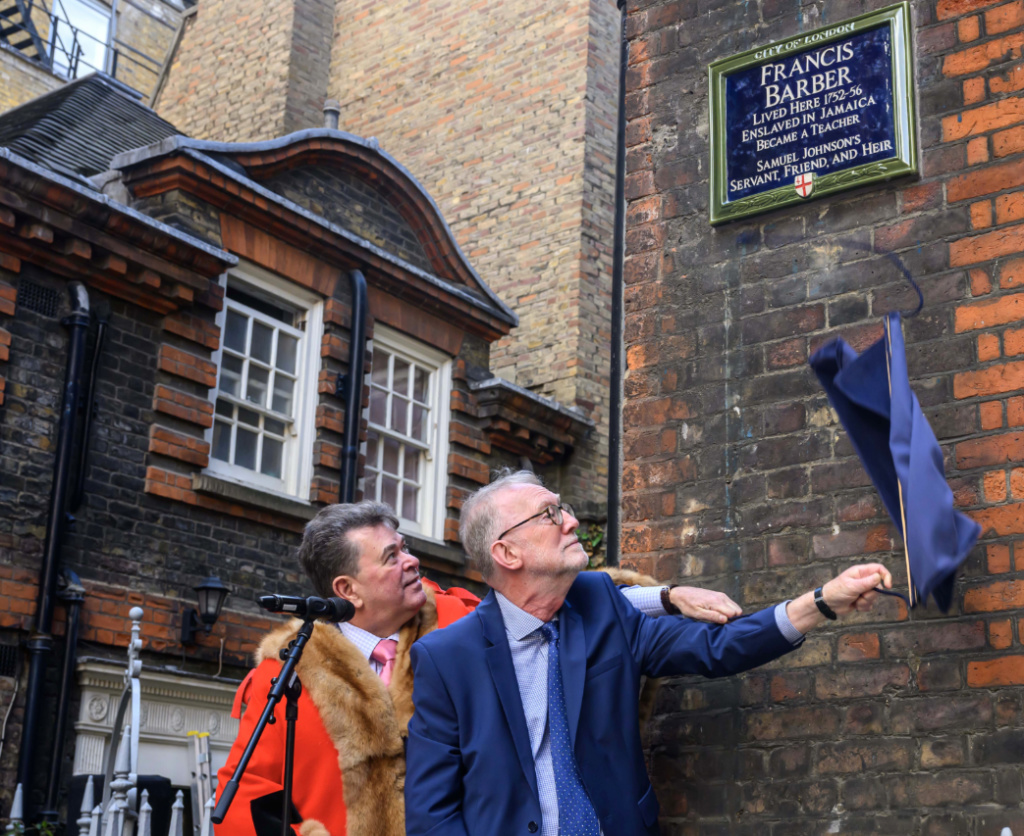
Ground-breaking astronomer Cecilia Payne-Gaposchkin has been honoured with an English Heritage Blue Plaque at the home in Notting Hill where she lived as a teenager. The plaque at 70 Lansdowne Road marks where Payne-Gaposchkin’s journey towards expanding our understanding of space began. Payne-Gaposchkin earned a doctorate in astronomy from Harvard after moving to the US. Her groundbreaking 1925 thesis proposed that stars are composed primarily of hydrogen and helium, a discovery that fundamentally changed scientific understanding of the universe, and in 1927, she became the youngest astronomer ever to have a star of distinction next to her name in the publication American Men of Science. For more, see www.english-heritage.org.uk/visit/blue-plaques/.

Send all items for inclusion to exploringlondon@gmail.com.

This Week in London – Henry Moore at Kew; The National Gallery expands online offering; and, Churchill’s paintings…

The largest outdoor exhibition of the art of Henry Moore – including a series of monumental sculptures – goes on display at Kew Gardens this Saturday. Henry Moore: Monumental Nature features 30 of Moore’s work placed across Kew’s landscapes and inside the Temperate House along with more than 90 smaller works on show in the Shirley Sherwood Gallery of Botanical Art. Among the large sculptural works on show will be Large Two Forms, Oval with Points, Reclining Woman: Elbow, Locking Piece and Three Piece Sculpture: Vertebrae while the smaller works include bronzes as well as stone and wood carvings, prints and drawings. Meanwhile, from 5th June Wakehurst, Kew’s wild botanic garden in Sussex is hosting a parallel exhibition of four more of Moore’s sculptures shown alongside newly commissioned pieces from contemporary artists. Both displays can be seen until 27th September. Admission charge applies. For more, see www.kew.org/kew-gardens.
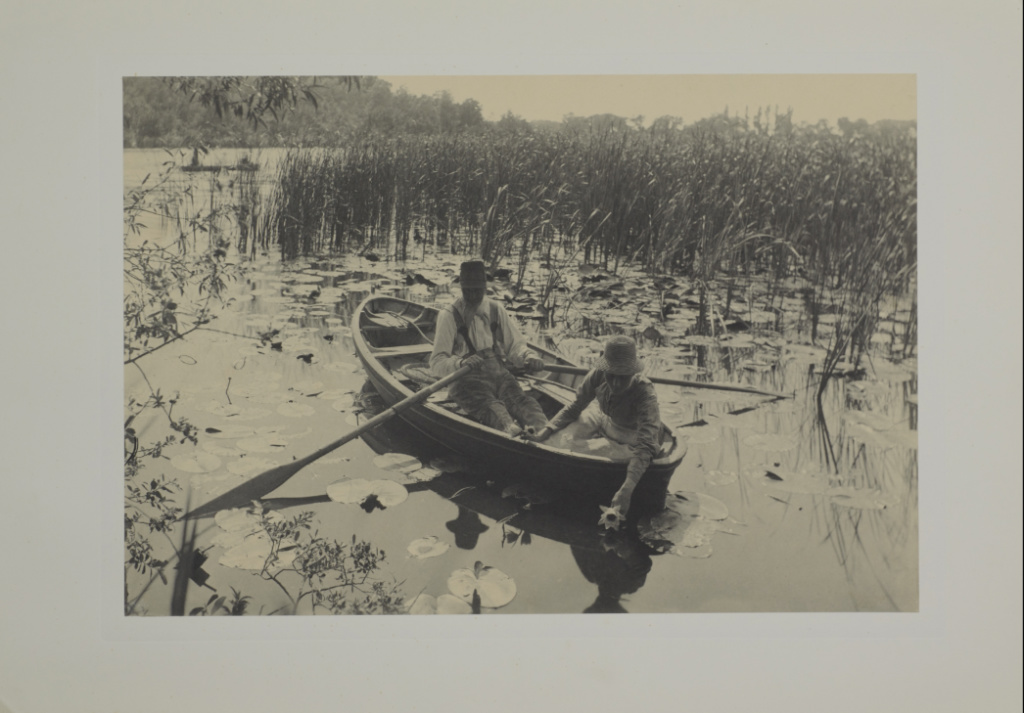
The entire collection of The National Gallery can be seen in a new online tour. The new Google Arts & Culture tour shows the 2024–25 Bicentenary redisplays of the whole collection, CC Land: The Wonder of Art. There’s also a highlights tour covering seven rooms which focuses on specific paintings including Jan Van Eyck’s Arnolfini Portrait, Sebastiano del Piombo’s The Raising of Lazarus, Johannes Vermeer’s A Young Woman Standing at a Virginal, Elisabeth Louise Vigée Le Brun’s Self Portrait in a Straw Hat, Edouard Manet’s portrait of the artist Eva Gonzalès, Sir Thomas Lawrence’s The Red Boy and Claude Monet’s The Water-Lily Pond. The Google Arts & Culture National Gallery Complete Tour can be found at www.nationalgallery.org.uk/visiting/virtual-tours/google-street-view-virtual-tour, and the The Google Arts & Culture National Gallery Highlights Tour at www.nationalgallery.org.uk/stories/virtual-curated-tour.

• Now On: Winston Churchill: The Painter. The first major retrospective of Sir Winston Churchill’s paintings since his death, this display at the Wallace Collection brings together 50 of his works, more than half from private collections. As well as wartime scenes and Mediterranean views, they include still lives, portraits, Moroccan cityscapes and paintings of Churchill’s home of Chartwell. Runs until 29th November. Admission is free. For more, see www.wallacecollection.org/whats-on/exhibitions-displays/winston-churchill-the-painter/

Send all items to exploringlondon@gmail.com

This Week in London – Zurbarán at the National Gallery; documents to mark the 250th anniversary of the US Declaration of Independence; and, NIGO at the Design Museum…

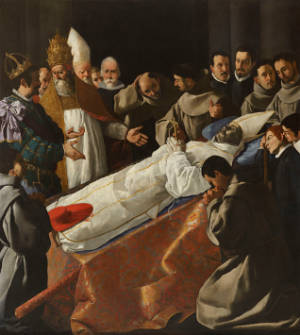
The Body of Saint Bonaventure, about 1629; Oil on canvas, 245 × 220 cm; Musée du Louvre, Paris © GrandPalaisRmn (musée du Louvre)/Franck Raux

The work of 17th century Spanish painter Francisco de Zurbarán is the subject of a new exhibition opening at the National Gallery this weekend. Zurbarán, the first major monographic exhibition on his work in the UK, features almost 50 paintings spanning the breadth of his career. They include life-size depictions of saints, altarpieces and still lifes such as Saint Bonaventure on His Bier, Saint Apollonia, The Crucifixion, The Crucified Chrisr with a Painter and Still Life with Lemons, Oranges and a Rose. Zurbarán (1598-1664) spent most of his life in Seville and, along with Diego Velázquez and Bartolomé Esteban Murillo, is considered one of the leading Spanish artists of his era. Runs until 23rd August. Admission charge applies. The exhibition will travel on to the Musée du Louvre and then the Art Institute of Chicago. For more, see www.nationalgallery.org.uk.

Rare documents related to the signing of the Declaration of Independence in the US are going on display in the City of London Heritage Gallery. The display, which marks the 250th anniversary of the signing, features two letters, dated 1775, which were sent to the City of London from the General Committee of Association of the City and County of New York and the Congress in Philadelphia along with a silk bookmark commemorating the assassination of Abraham Lincoln on 14th April, 1865, and the Roll of Fame recording the Honorary Freedom of the City of London opened at the entry for General Dwight D Eisenhower. Admission is free. The display, entered via the Guildhall Art Gallery, runs until 29th October. For more, see www.cityoflondon.gov.uk/events/heritage-gallery-display-america-and-london.

The first UK exhibition showcasing the multi-faceted work of Japanese designer and creative director NIGO opens at the Design Museum tomorrow. NIGO: From Japan with Love features more than 700 objects with highlights including a recreation of NIGO’s teenage bedroom, ceramics hand-thrown by NIGO and a life-size glass tea house made especially for the exhibition. Runs until 4th October. Admission charge applies. For more, see https://designmuseum.org/exhibitions/nigo-from-japan-with-love.

Send all items for inclusion to exploringlondon@gmail.com

10 London sites relating to Winnie-the-Pooh – 5. London Zoo..

London Zoo played a key role in the creation of Winnie-the-Pooh.

Harry Colebourn and Winnie the Bear sculpture at London Zoo. PICTURE: Katie Chan/Wikimedia Commons (licensed under CC BY-SA 4.0)

You’re invited to support our work! Subscribe to Exploring London for just £3 a month and receive access to all our content.

This Week in London – V&A East Museum opens; ‘Cool Britannia’ at the Barbican; and, Netherlandish drawings…

V&A East Museum © Hufton+Crow

The new V&A East Museum has opened to the public. Located in Queen Elizabeth Olympic Park, the new museum’s first exhibition The Music is Black: A British Story, reveals how Black British music has shaped British culture over the last 125 years. Highlights include Stormzy’s iconic 2019 Banksy-designed Glastonbury vest, Joan Armatrading’s childhood guitar, fashion worn by Seal, Sade and Skin, plus Fabio & Grooverider’s DJ equipment and Grooverider’s first turntable, newly acquired photographs by Eddie Otchere, Jennie Baptiste and Laura ‘Hyperfrank’ Brosnan, and a specially commissioned painting by Sir Frank Bowling. The museum also features two free permanent ‘Why We Make galleries’ which feature more than 500 objects from the V&A’s collection including new artworks by artists including Turner Prize-nominated Rene Matić, Carrie Mae Weems and Tania Bruguera and new acquisitions by designer Yinka Ilori, fashion designer Molly Goddard, photographer Jamie Hawkesworth and ceramicist Bisila Noha, as well as a range of objects from Renaissance portraits and historic scent cases to photographs by Maud Sulter and Shadi Ghadirian, Keith Khan’s carnival costumes, ballet costumes by Leigh Bowery, and fashion by Alexander McQueen and Vivienne Westwood. For more, see vam.ac.uk/east.

A new exhibition marking 30 years of ‘Cool Britannia’ has opened at the Barbican Music Library. 1996: 30 Years On features original costumes worn by the Spice Girls, previously unseen Oasis memorabilia, photography by Jill Furmanovsky and Derek Ridgers, and personal items from record producers and DJs Paul Oakenfold, Dave Pearce and Judge Jules. The exhibition, curated by the former editor of The Sun Dominic Mohan, also features a selection of pencil sketches of bands by Mike Smith who, in his role as a music executive, signed many of the most prominent acts of the era including Blur, Elastica, and Supergrass. The free exhibition runs until 19th September. For more, see www.cityoflondon.gov.uk/events/1996-30-years-on.

Portrait of an unknown man © The Trustees of the British Museum

Some 110 works by artists such as Rogier van der Weyden, Lucas van Leyden, Pieter Bruegel the elder and Hendrick Goltzius feature in a new exhibition at the British Museum. Early Netherlandish drawings, which draws on the museum’s collection of pre-1600s Netherlandish drawings, also includes lesser-known masters, anonymous sheets and workshop copies to provide a rich and comprehensive account of drawing across the region. The display follows a chronological narrative and examines the function of drawings in the workshop and their role in the design and production of paintings, tapestries, painted glass, sculpture and prints while thematic displays highlight new subjects that were introduced during this period, including landscapes, proverbs and a local iteration of the antique style, spurred by contact with Italy. The free exhibition can be seen in Room 90 until 20th September. For more, see www.britishmuseum.org/exhibitions/early-netherlandish-drawings.

Send all items for inclusion to exploringlondon@gmail.com.
This Week in London – Queen Elizabeth II’s fashion archive on show; London Transport Museum Depot’s open days; and, wartime London in art…

Janet Sutherland, the royal christening robe, 1841. © Royal Collection Enterprises Limited 2026 | Royal Collection Trust.

A christening robe, first worn by Queen Victoria’s eldest child, Princess Victoria, at her christening in 1841, and subsequently by 61 other royal babies including Queen Elizabeth II, is one of the stars of a new exhibition opening at The King’s Gallery in Buckingham Palace tomorrow. Queen Elizabeth II: Her Life in Style features around 200 items from Queen Elizabeth II’s fashion archive – the largest exhibition of her clothing ever staged. Other highlights include a Norman Hartnell apple-green gown worn by the Queen a state banquet given for President Eisenhower at the British Embassy in Washington, DC, in 1957; a crinoline-skirted blue gown and matching bolero jacket worn by the late Queen for her sister Princess Margaret’s wedding in 1960; and, perhaps more surprisingly, a clear plastic raincoat made by Hardy Amies in the 1960s. The latter is just one example of late Queen’s private, off-duty wardrobe which is also included in the show. Other examples include a Harris tweed jacket and Balmoral Tartan skirt, designed by Norman Hartnell and worn in the 1950 and a green coat made by Angela Kelly. The exhibition runs until 18th October. Admission charge applies. For more, see www.rct.uk.

• Celebrate 120 years of the Bakerloo and Piccadilly Lines and 70 years of the Routemaster bus at a London Transport Museum Depot open day. The first to be held this year, the four open days at the Acton Town facility, will allow visitors to discover the more than 320,000 objects not on display at the museum’s Covent Garden site including the chance to climb aboard historic train stock dating from 1927 and 1938, get a close-up look at the pioneering RM1 and RM2 buses, and explore everything from rare signalling equipment to models, maps, station architecture and posters. A programme of talks is also taking place across the weekend along with activities for kids, heritage demonstrations, displays and stalls. The days run from today – 9th April – through to Sunday (12th April). Admission charges apply. For more, see www.ltmuseum.co.uk/whats-on/depot-open-days/icons-london.

On Now: Beauty and Destruction: Wartime London in Art. This free exhibition at IWM London tells the story of London during World War II and features more than 45 paintings and drawings as well as photographs, films, objects and oral histories. Works include some by well-known artists such as Eliot Hodgkin, Graham
Sutherland, Henry Carr, Evelyn Dunbar, Duncan Grant and Edward Ardizzone as well as lesser known figures, many of whom were employed by the War Artists’ Advisory Committee. The works are presented under four themes -Travel, Thames, Street and Shelter – and highlights include Frances MacDonald’s Sketch for ‘London Docks’ (1944), John Edgar Platt’s Wartime traffic on the River Thames (1942) and fireman artist Leonard Rosoman’s The Houses of Parliament on Fire, May 1941 (1941) – which captures the last night of the Blitz. Other works in the display are Duncan Grant’s painting of that iconic symbol of wartime resistance, St Paul’s Cathedral, Henry Carr’s St Clement Dane’s Church on Fire after being Bombed (1941), Evelyn Gibbs’ WVS Clothing Exchange (1943) and Evelyn Dunbar’s Convalescent Nurses Making Camouflage Nets (1941). The display can be seen until 1st November. For more, see www.iwm.org.uk/events/beauty-and-destruction-wartime-london-in-art.

Send all items for inclusion to exploringlondon@gmail.com.
This Week in London – Sophia Duleep Singh at Kensington Palace; ‘Fairy Tales’ at the British Library; astronomers at the National Maritime Museum; and, the Science Museum celebrates ‘Star Trek’…

Historic Royal Palaces conservator Nelson Garcia prepares a banner used by the National Union of Women’s Suffrage Societies (NUWSS) in the early 20th century, for display in a new exhibition at Kensington Palace. The exhibition ‘The Last Princesses of Punjab’ explores the life of Sophia Duleep Singh; suffragette, Punjabi princess and goddaughter of Queen Victoria. PICTURE: © Historic Royal Palaces

A new exhibition celebrating the 150th anniversary of Punjabi princess and suffragette Sophia Duleep Singh opens at Kensington Palace today. The Last Princess of Punjab: The story of Sophia Duleep Singh and the women who shaped her explores the life of Sophia Duleep Singh and her intersections with six other women including her sisters Catherine and Bamba, her mother Bamba Muller, grandmother Jind Kaur and godmother Queen Victoria. On show is an ornately painted rocking horse from Princess Sophia’s childhood at Elveden Hall in Suffolk which was remodelled to resemble an Indian Mughal palace, an original copy of The Suffragette featuring an iconic image of Sophia selling copies of the magazine on the gate of Hampton Court Palace, a “No Vote, No Tax’ banner used in the early 1900s protest marches, and Princess Sophia’s handwritten letter to Winston Churchill reporting police brutality at the Black Friday suffragette march. And, for the first time since 1886, an iconic portrait of Jind Kaur will be reunited with real earrings she wore in the image. The exhibition runs until 8th November. Admission charge applies. For more, see https://www.hrp.org.uk/kensington-palace/whats-on/the-last-princesses-of-punjab/.

A celebration of the fantastical creatures, heroes and villains that populate the world of fairy tales opens at the British Library tomorrow. Fairy Tales takes visitors on a journey through an mysterious forest and enchanted palace as they discover the origins and evolution of fairy tales. Items on show include a Mervyn Peake illustration made for an edition of Household Tales by the Brothers Grimm, early printed editions of the legend of Mulan, puppets of Kai and Gerda from the Little Angel Theatre’s production of The Snow Queen, a copy of Cinderella illustrated by Arthur Rackham, a beautiful manuscript illustration of a dragon from the Persian legend, the story of Darab, and the original manuscript of Lewis Carroll’s Alice’s Adventures Under Ground. Admission charge applies. Runs until 23rd August. For more, see https://events.bl.uk/exhibitions/fairy-tales.

A new temporary space-themed gallery opens at the National Maritime Museum in Greenwich tomorrow. Astronomers Take Over is a hands-on space that provides the opportunity to meet astronomers from the Royal Observatory just up the hill, participate in science demonstrations and ask questions about space and astronomy. The gallery also includes a planetarium which features live astronomers shows ranging from ‘Animals in Space’ for young visitors to ‘The Night Sky’ – a classical guide to the cosmos, and ‘Solar System Sightseeing’, an introduction to Earth’s celestial neighbourhood. Science theatre shows will also be held at the museum from 3rd April. Admission charge applies. The gallery is open to 2028. For more, see https://rmg.co.uk/takeover.

The Science Museum in South Kensington is marking the 60th anniversary of Star Trek with a new program of events. They include the chance to see all 13 Star Trek films on one of the biggest screens in Europe as well as a free trail featuring iconic objects from the franchise’s archives and an exclusive range of anniversary merchandise for purchase. For more, see sciencemuseum.org.uk/star-trek-60.

Send all items for inclusion to exploringlondon@gmail.com