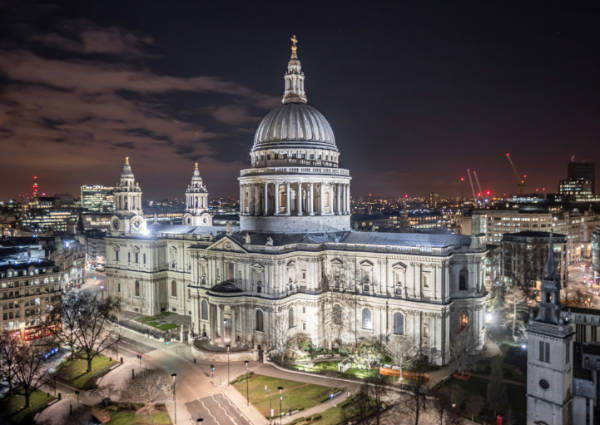
• The 500 year story of one of the smallest yet most revolutionary books in English history is being told at St Paul’s Cathedral. A Dangerous Calling: 500 Years of William Tyndale’s New Testament, which opens tomorrow, provides a rare chance for visitors to see a first edition of Tyndale’s translation up close in the cathedral library (one of only three in existence) as well as access to a new digitised version on the cathedral floor. The exhibition can be seen until 27th February. Admission charge applies. For more, see www.stpauls.co.uk/whats-on/exhibition-dangerous-calling-500-years-of-william-tyndales-new-testament
• Marilyn Monroe’s life, career and legacy is the subject of a new exhibition which opened at the National Portrait Gallery this week. Marking 100 years since her birth, Marilyn Monroe: A Portrait features works by the likes of Andy Warhol, Pauline Boty, Cecil Beaton and Richard Avedon. There’s also unseen photographs portraits taken by Allan Grant at Monroe’s Brentwood residence a day before her death in August, 1962, in a session for Life magazine. The display can be seen until 6th September. Admission charge applies. For more, see www.npg.org.uk/whatson/exhibitions/2026/marilyn-monroe-a-portrait
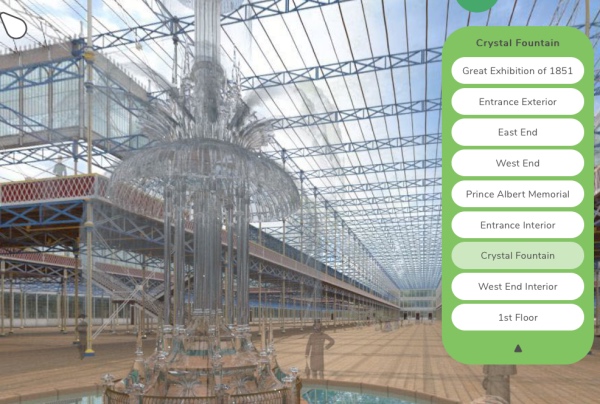
• The Great Exhibition Road Festival kicks off in South Kensington this weekend, marking 175 years since the 1881 Great Exhibition. The event features workshops, talks, performances and installations with organisations ranging from the Natural History Museum and Science Museum taking part along with Imperial College London, the Royal Parks, the V&A and Royal Albert Hall. For more on the festival, head to https://www.greatexhibitionroadfestival.co.uk/.
Send all items for inclusion to exploringlondon@gmail.com.



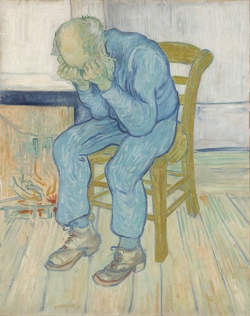 • The first exhibition to examine the work of Dutch artist Vincent van Gogh through his relationship with Britain has opened at Tate Britain this week. Van Gogh and Britain includes more than 40 works by the artist including L’Arlésienne (1890), Starry Night on the Rhone (1888), and Sunflowers (1888). The exhibition will also feature later works by Van Gogh including two he painted while in the Saint-Paul asylum – At Eternity’s Gate (1890 – pictured) and Prisoners Exercising (1890). The exhibition shows how Van Gogh, who lived in London between 1873 and 1876 working as a trainee art dealer, responded to works by artists like John Constable and John Everett Millais and his love of British writers like William Shakespeare, Christina Rossetti and, particularly, Charles Dickens (L’Arlésienne features one of Dickens’ favourite books in the foreground). The show runs until 11th August and is being accompanied by a series of talks and other events. Admission charge applies. For more, see
