Exploring London spoke to Dr Louise Devoy about her role at the observatory, her new book, Royal Observatory Greenwich: A History in Objects, and her “must-see” for those visiting the observatory…
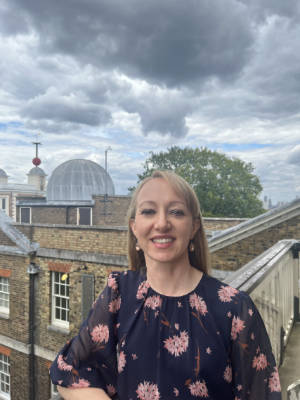
How long have you worked as senior curator at the Royal Observatory Greenwich and what was your pathway into the job?
“I’ve been working here for 12 years now and it’s been quite a journey! I originally studied physics with astrophysics at the University of Leicester and intended to continue with scientific research but my ideas changed after an inspirational internship working at a museum in the US. I really enjoyed learning about the history of astronomy – how our ideas have changed over time and the incredible stories of the people who were involved – and I continued my studies in the history of science. I’ve since worked at the Science Museum and British Museum and came here in 2013.”
Have you always been interested in astronomy?
“Yes, I have vivid memories of building a space rocket in primary school from cereal packets and yogurt pots that quite literally fired my imagination! I’ve still got The Night Sky Ladybird book that I bought and later in my teens my parents kindly bought me a telescope so I could learn more about practical astronomy. I don’t have much time for stargazing these days but I’ve recently purchased a compact smart telescope that you can put in your hand luggage and I’m looking forward to taking it on my travels.”
What does your job at the Royal Observatory entail?
“My job consists of two main parts; one based on research and one focused on communication. As a curator, I’m responsible for doing research on our collections, identifying objects for display and collaborating with researchers from other museums and observatories. Once I’ve done the detective work, I like to share these ideas and stories with our visitors through displays, talks and writing books and articles.”
What’s your favourite part of the day at the Observatory?
“For me, I enjoy seeing the sunset as I’m leaving the office, especially as the lights start to come on across London and you get a great view of the city from our hilltop location. It also makes me smile that sunset means going home for me, whereas for Greenwich astronomers in the past, it would have been the start of their working ‘day’!”

What prompted the writing of the book?
“It’s difficult to say but I definitely remember working on this during lockdown in 2020 and being inspired by similar books such as Neil MacGregor’s A History of the World in 100 Objects. Most books about the history of the Royal Observatory focus on the story of longitude, John Harrison’s marine timekeepers and Greenwich Mean Time (GMT) but I wanted to show how the Observatory has a much broader, richer history that encompasses many more people, subjects, stories and objects.
How did you decide which objects to feature in the book?
“I knew that we would be celebrating our 350th anniversary in 2025 and so I decided to choose objects that spanned the full chronology from 1675. I also wanted to expand the scope beyond the well-known clocks and telescopes to include books, paintings, manuscripts, watercolours, and even items of clothing previously worn by the Astronomer Royal and his family. In addition, I selected a few mystery objects to give me a good excuse to dig into the archives and piece together their stories.”
Do you have a favourite among them?
“I really like the story of the hole punch from the 1840s because it’s indicative of the paperwork and number-crunching that is an important but often overlooked aspect of astronomy. Once astronomers have done their observations, they have to apply mathematical corrections (‘reductions’) to account for atmospheric effects that might affect the results. It’s very tedious, repetitive work that was traditionally done by teenage boys known as ‘computers’. The seventh Astronomer Royal, George Biddell Airy (1801–1892) tried to make the process more efficient and less prone to errors by creating a template known as a ‘skeleton form’. The system worked well but generated vast amounts of paper, leading Airy to design a hole punch to organise the work. He was so proud of his idea that he encouraged other observatories to do the same and that’s why you’ll find another example of this hole punch over 8,000 miles away at the South African Astronomical Observatory in Cape Town. Airy invented his hole punch several decades before the standard office hole punch was patented, making our gadget one of the oldest in the world!”
What did you learn during the process of writing the book that you didn’t already know about the history of the Royal Observatory?
“The story of the secret binocular testing during the First World War really surprised me. The Observatory had already been involved in testing chronometers – portable, accurate timekeepers for navigation at sea – since the 1820s but the binocular testing was a new task. For security reasons, it was not mentioned in the Observatory’s Annual Reports and remained an unknown story for decades. I was intrigued by a one-line mention to it in the archives and dug a little further to uncover the full facts.”
 Exploring London