What’s in a name?…Honor Oak

Yes, this small south London district, located to the south of Peckham, was actually named for an oak.

In this case it was an oak which stood atop the 90 metre high One Tree Hill – the last in a line of hills which stretch north from Croydon.

The replanted oak. PICTURE: Doyle of London (licensed under CC BY-SA 4.0)

There’s a couple of possible explanations for the name – the first is that the oak in question once marked the southern boundary of the estates or “honour” of the 12th century Earls of Gloucester – hence ‘Honor Oak’.

The second is that Queen Elizabeth I apparently had a picnic with Sir Richard Bulkeley of Beaumaris under its branches on May Day, 1602. Hence again ‘Oak of Honor’ or ‘Honor Oak’.

Sadly, the original tree is gone – it was apparently hit by lightning in the 1880s – and a replacement, which can still be seen today, was subsequently planted nearby.

There’s a few stories surrounding the hill and its oak including that it was here that the Roman general Paulinus overcome Boudicca in 61AD. Another says that the highwayman Dick Turpin used it as a lookout.

Its height did see the hill put to use as a beacon by the Admiralty during the Napoleonic Wars and as a semaphore station by the East India Company. A beacon on top of the hill was erected to commemorate the Silver Jubilee of King George V in 1935 and subsequently used for celebrations including the coronation of Queen Elizabeth II and the Queen’s silver and golden jubilees.

There was also a gun emplacement built upon the hill during World War I.

The area around the hill was largely rural until the late 18th century. In 1809, the Croydon Canal Company constructed a canal which ran from Croydon north to New Cross and which included numerous locks. It was taken over almost 30 years later by the Croydon and London Railway for its new line (the current railway line, the stops on which include Honor Oak Park (opened in 1886), runs along the same course).
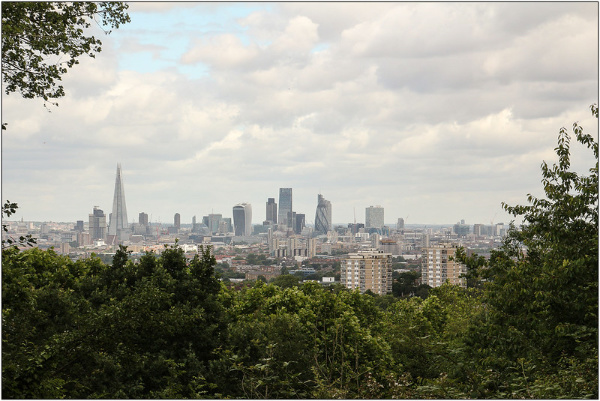
View from the top of One Tree Hill in 2016. PICTURE: Maureen Barlin (licensed under CC BY-NC-ND 2.0)

There was a bid to incorporate One Tree Hill into a golf course in the late 1800s but following a protest, this was halted and in 1905 the hill was acquired by the Camberwell Borough Council as public open space. It remains so today.

The Church of St Augustine was built to the designs of William Oakley on the hill’s east side in the late 19th century.

Famous residents in the streets around the hill have included Spike Milligan.

The Honor Oak Reservoir lies just to the north of the hill. It was constructed between 1901 and 1909 and was the largest brick built underground reservoir in the world. The roof of the still-in-use reservoir is grassed over and used as a golf course. A rather grand pumping station stands nearby.
This Week in London – Freud’s antiquities; how design can help the aging; and, new home for the Migration Museum…

Sigmund Freud’s collection of ancient antiquities and books inspired by them are the subject of a new exhibition at the Freud Museum London in Hampstead. Freud’s Antiquity: Object, Idea, Desire, which opens Saturday, explores the crucial role the collection played Freud’s development of the concepts and methods of psychoanalysis. The display, which is co-curated by Professor Miriam Leonard of UCL, Professor Daniel Orrells of Kings College London, and Professor Richard Armstrong, of the University of Houston, discusses six separate aspects of Freudian theory alongside representative objects from the collection and spans his entire psychoanalytic career from 1896 to 1939. Alongside the physical objects is a comprehensive digital multimedia resource, containing video recordings, podcasts, photographs of rarely seen objects from the collection, and a list of suggested reading. A series of events accompanies the exhibition. Runs until 16th July. Admission charge applies. For more, see www.freud.org.uk/exhibitions/freuds-antiquity-object-idea-desire/.

PICTURE: Ardfern (licensed under CC BY-SA 4.0/image cropped)

A new display at the Design Museum will showcase how cutting-edge design can help people live “more independently, sustainably and healthily but also with joy and fulfilment” as they age. Designing for our Future Selves, which opens on Friday, follows on from last Future of Ageing exhibition and will feature 10 design initiatives currently being developed by Design Age Institute and its partners which aim to positively impact the way we live and work as we grow older. The exhibition is free to visit. Runs until 26th March. For more, head here.

A permanent home for the Migration Museum, currently based in Lewisham, will be built in the Square Mile following planning approval this week. The new facility at 65 Crutched Friars will be located in a 21-storey building and will consist of three floors featuring space for exhibitions and events, a cafe and a shop. The City of London Corporation said the developer had agreed to provide the museum space rent-free for 60 years and to cover its operating costs for three years, and has also donated £500,000 to support its fund-raising campaign.

Send all items from inclusion to exploringlondon@gmail.com.

LondonLife – Astronomers honoured…

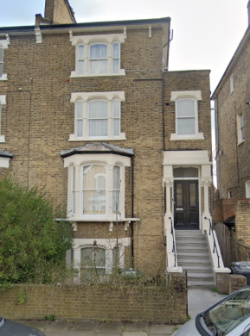
69 Tyrwhitt Road, Lewisham. PICTURE: Google Maps

Astronomers Walter and Annie Maunder have been commemorated with an English Heritage Blue Plaque at their former home in Lewisham. The couple, known for their work on sunspots, solar photography and the debunking of a myth which suggested there were canals on Mars as well as their aim of making astronomy more accessible to women and amateurs, lived at 69 Tyrwhitt Road from 1907 to 1911 (having previously lived at number 86). It was during their period at the house that they published a sunspot article in 1904 containing a now-famous ‘butterfly diagram’ and wrote The Heavens and its Story, making frequent references to nearby park and favourite stargazing spot, Hilly Fields. For more, see https://www.english-heritage.org.uk/visit/blue-plaques/.