This Week in London – Photographers honoured with Blue Plaques; David Hockney meets Piero dell Francesca; and ‘Taylor on Strings’ at Wembley Park…

Two pioneering photographers are being commemorated with English Heritage Blue Plaques today. Christina Broom (1862-1939) is believed to have been Britain’s first female press photographer while John Thomson (1837-1921) was a ground-breaking photo-journalist working at the advent of the medium. Broom’s plaque – the first to be located in Fulham – is being placed on 92 Munster Road, a terraced house of 1896, where she lived and worked for 26 years. Thomson’s plaque, meanwhile, will be located at what is now 15 Effra Road in Brixton where he and his family were living when one of his best-known and influential works, Street Life in London (1877-8), was published. For more, see www.english-heritage.org.uk/visit/blue-plaques/.
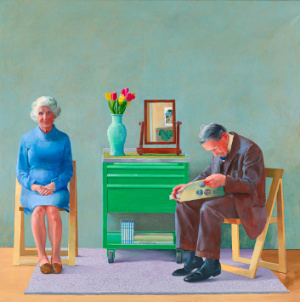
My Parents’ (1977), David Hockney/© David Hockney. Photo: Tate, London

Two of David Hockney’s key works – My Parents (1977) and Looking at Pictures on a Screen (1977) – which feature reproductions of 15th-century Italian painter Piero della Francesca’s The Baptism of Christ (probably about 1437–45) have gone on display alongside the Renaissance work at The National Gallery. Hockney and Piero: A Longer Look explores Hockney’s “lifelong association” with the National Gallery and its collections, particularly in the works of Piero della Francesca (1415/20–1492). Hockney once confessed that he would love to have The Baptism of Christ so he could look at it for an hour each day. My Parents features a reproduction of Piero’s work shown reflected in a mirror on a trolley behind the sitters while Looking at Pictures on a Screen depicts Hockney’s friend Henry Geldzahler, the Belgian-born American curator of 20th-century art at The Metropolitan Museum of Art in New York, peering at a folding screen in the artist’s studio on which are stuck four posters of National Gallery pictures including The Baptism of Christ. The display in Room 46 is free. Runs until 27th October. For more, see www.nationalgallery.org.uk.
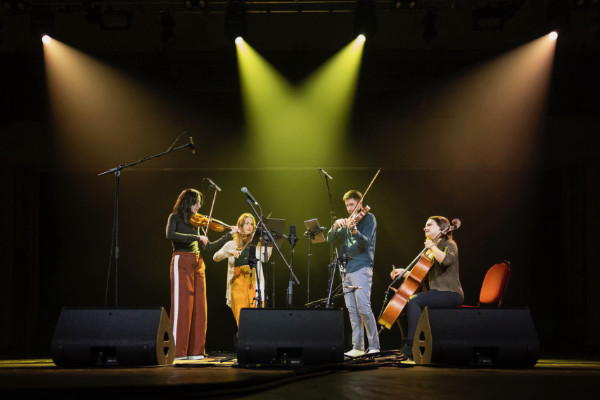
The City String Ensemble. PICTURE: Catherine Frawley

Experience a prelude of Taylor Swift at Wembley Park with with City String Ensemble playing more than a dozen interpretations of Taylor Swift songs. The free open air concert comes ahead of Swift’s return to Wembley Stadium later this month. ‘Taylor on Strings’ will be held at the Sound Shell from 6:30pm on 13th August. Tickets are free but must be booked with 30 released at 10am each day in the lead-up to the concert. For more, head to wembleypark.com/taylor-on-strings.

Send all items for inclusion to exploringlondon@gmail.com

A Moment in London’s History – The British Empire Exhibition…

Postcard showing the Empire Stadium. PICTURE: Via Wikipedia/Public Domain

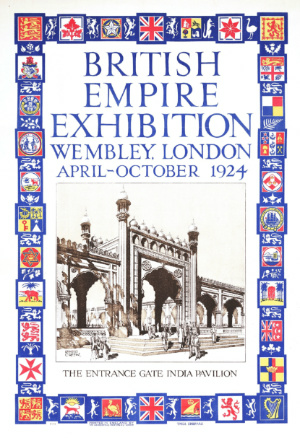
It’s 100 years ago this year that the British Empire Exhibition was held in Wembley Park.

Located on a more than 200 acre site, the exhibition was designed to showcase the diversity and reach of the empire. It ran for two six-month long summer seasons – first opening on 23rd April, 1924, and running until 1st November that year and then reopening on 9th May, 1925, and running until 1st October.

PICTURE: Via Wikipedia/Public Domain

The opening ceremony, which took place on St George’s Day, was attended by King George V and Queen Mary, and the event, in a first for a monarch, was broadcast on BBC radio.

The exhibition, which cost £12 million and attracted some 27 million visitors, featured what was said to be the largest sports arena in the world – Empire Stadium (later known as Wembley Stadium) – as well as four main pavilions dedicated to industry, engineering, the arts and the government, and a series of pavilions for 56 of the empire’s 58 territories as well as some commercial pavilions.

The latter included an Indian pavilion modelled on  Jama Masjid in Delhi and the Taj Mahal in Agra, a West African pavilion designed to look like an Arab fort, a Burmese pavilion designed to look like a temple and a Maltese pavilion designed as a fortress with the entrance resembling the famed Mdina Gate.

The Empire Stadium hosted events including military tattoos and Wild West rodeos while other attractions included a lake, a 47 acre fairground, a garden, restaurants and a working replica coal mine.

Star attractions included a replica of King Tutankhamen’s tomb (housed in the fairground), a working model of Niagara Falls and a full-sized sculpture of the Prince of Wales (later Edward VIII) made of butter (both in the Canadian pavilion), a 16 foot diameter ball of wool (Australian pavilion) and dodgem cars (also in the funfair). Queen Mary’s Dollhouse – now housed at Windsor – was designed by Sir Edwin Lutyens and served as a miniature showcase of the finest goods of the period.

Reinforced concrete was the main building material used in its construction, earning it the title of the first “concrete city”. The streets of the exhibition, meanwhile, were named by Rudyard Kipling.

The Malta Pavilion entrance. PICTURE: Wikipedia/Public Domain

Wembley Park Tube station, which had first opened in 1893, was rebuilt for the event and a new station – Exhibition Station (Wembley) added (it was officially closed in 1969).

While many of the buildings were dismantled after the exhibition, some survived for decades afterwards including, of course, the Empire Stadium which became Wembley Stadium and was the home of English football until replaced in 2003.

10 sites of (historic) musical significance in London – 10. Wembley Stadium, host of Live Aid…

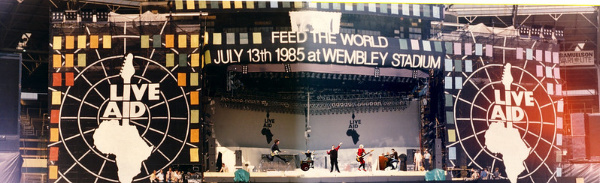
Wembley Stadium in London’s north-west has hosted numerous musical acts since the early 1970s but the most famous event was undoubtedly the British Live Aid concert in 1985.

Ultrasound perform at Live Aid at Wembley. PICTURE: cormac70 (licensed under CC BY-NC-ND 2.0)

Organised by Boomtown Rats frontman Bob Geldof and Ultravox vocialist Midge Ure (although it was apparently Boy George who first came up with the idea of a concert), the event featured an all-star line-up of the notable artists of the day.

Held to raise funds to support relief efforts aimed at those impacted by the devastating Ethiopian famine of 1983 to 1985, it followed the release of Band Aid’s single Do They Know It’s Christmas? the previous December (that song closed the British concert while We Are The World closed the US one).

About 72,000 people attended the event held on 13th July which featured artists including Paul McCartney, David Bowie, The Who (who reunited for the event), Queen and U2 (the latter two bands in show-stealing performances) and was held simultaneously with an event at at John F Kennedy Stadium in Philadelphia (attended by more than 89,000 people.

There were also concerts held in a range of other nations in Australia in support of the cause on the same day which were woven into the TV broadcast of the event. This was seen by an estimated 1.5 billion viewers worldwide.

The British event kicked off at noon and ran until 10pm that night while the US concert ended just after 4am, giving a total of 16 hours of concert time. Phil Collins famously performed at both events, taking a British Airways Concorde to the US after performing at Wembley and performing there.

Among the crowds watching were Prince Charles and Princess Diana.

8 structures from the London that never was – 2. Watkin’s Tower…

Designed as London’s response to the Eiffel Tower, Watkin’s Tower was the brainchild of railway entrepreneur and MP Sir Edward Watkin.

Watkin's-TowerFollowing the opening of the Eiffel Tower in 1889, Watkin wanted to go one better in London and build a tower than surpassed its 1,063 feet (324 metres) height.

He apparently first approached Gustave Eiffel himself to design the tower which was to be located as the centrepiece for a pleasure park development at Wembley Park in London’s north (which, incidentally, would be reached by one of Sir Edward’s railway lines – he opened Wembley Park station to service it). But Eiffel declined the offer and Watkin subsequently launched an architectural design competition.

Among the 68 designs received from as far afield as the US and Australia were a cone-shaped tower with a railway spiralling up its exterior, a Gothic-style tower (also with a railway), a tower topped with a 1/12 scale replica of the Great Pyramid, one modelled on the spire of Bow Church in Cheapside and one topped by a giant globe (you can see the catalogue of all entries here).

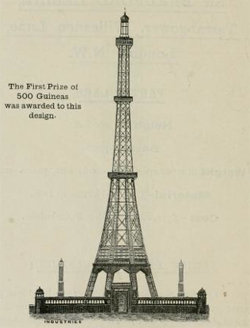
The winning entry was submitted by Stewart, MacLaren and Dunn who proposed a steel eight legged tower soaring 1,200 feet (366 metres) into the sky. To be lit with electric lighting at night, it came with two observation decks with restaurants, theatres and exhibition space as well as winter gardens, Turkish baths, shops, promenades and a 90 room hotel as well as an astronomical observatory. The top of the tower would be reached by a series of elevators.

The first stage of the project – formally known as London Tower or the Wembley Park Tower – had still not been completed when Wembley Park opened in May, 1894 – standing 154 feet (47 metres tall), it was finally finished in September the following year.

It was to never rise higher. The project become mired in problems – Watkin retired through ill health (and died in 1901), the structure started to subside and the construction company went into liquidation. Dubbed Watkin’s Folly and the London Stump, what there was of the tower was eventually demolished between 1904-1907.

While the dream of the tower never came to be, the site nonetheless became a popular vehicle for recreation and the site was later used for the 1924 British Empire Exhibition with Wembley Stadium built over the spot where the tower had once stood.

LondonLife – London from above…

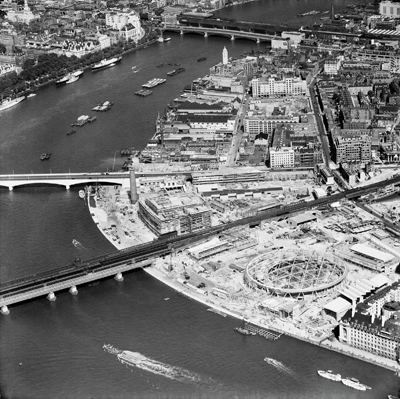
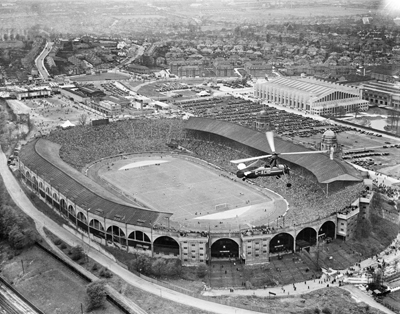
Aerofilms1A website launched last year – Britain from Above – boasts some unique perspectives on London among its more than 61,000 images including this one above of the South Bank site of the Festival of Britain – a national exhibition held at various venues across Britain as a post-war “tonic” for the nation – under construction, taken on 14th August, 1950. The website features images taken as part of a collection of aerial photographs taken between 1919 and 1953 by pioneering air survey company Aerofilms Ltd. It has been created by English Heritage, the Royal Commission on the Ancient and Historical Monuments of Scotland and the Royal Commission on the Ancient and Historical Monuments of Wales following their joint purchase of the company’s collection of more than 1.26 million negatives and 2000 photo albums and forms part of a four year project which aims to conserve and digitise some 95,000 of the oldest and most valuable photographs in the collection. Under the project, the general public is invited to share and record their knowledge and memories of the photographs featured. To get involved, head to www.britainfromabove.org.uk. Below can be seen an image of the FA Cup Final being played between Sheffield Wednesday and West Bromwich Albion (Sheffield were 4-2 victors) at Wembley Stadium on 27th April, 1935. PICTURES: © English Heritage. Aerofilms Collection EAW031792/© English Heritage. Aerofilms Collection EPW046905.

Aerofilms2

Olympics Special – The Olympic Torch Relay, part II…

We take a break from our regular series this week to bring you some images from the second half of the Olympic Torch Relay as it made it’s way around London toward tonight’s Opening Ceremony…


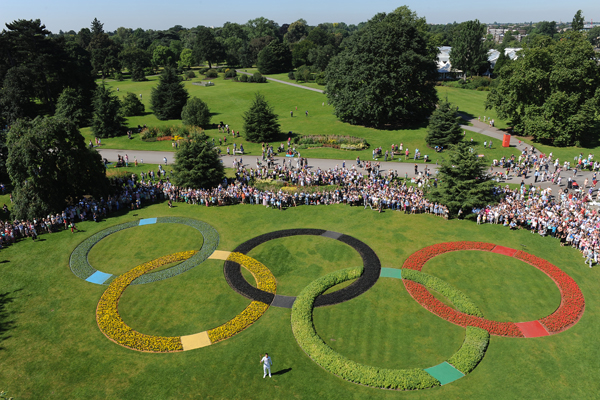
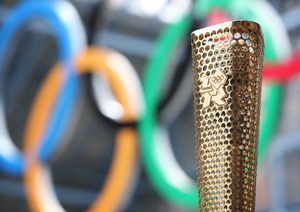
Day 67 (24th July): Tennis player Oliver Golding holds the Olympic Flame in between the Olympic Rings at Kew Gardens, London.

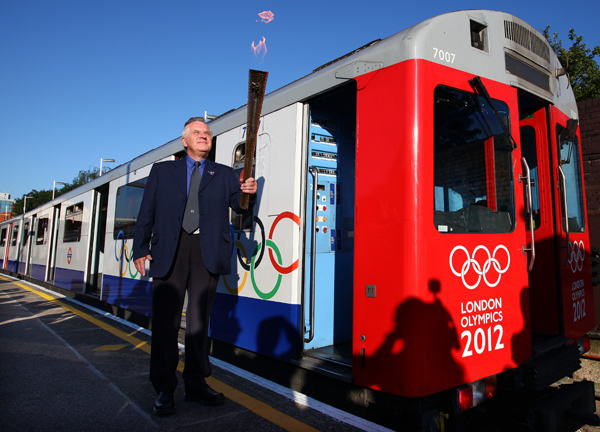
London Underground employee John Light carries the Olympic Flame onto an underground train at Wimbledon Station.

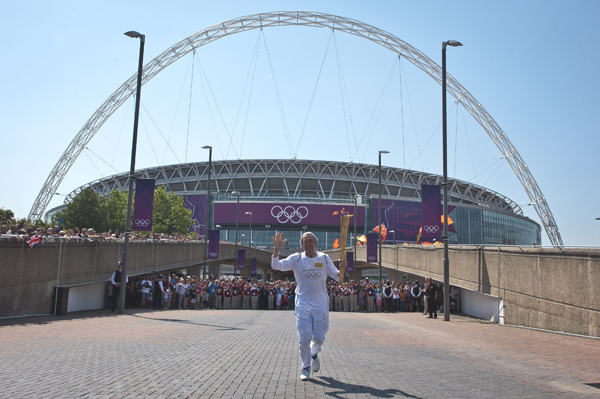
Day 68 (25th July): Former World Cup winning footballer Gordon Banks carries the Olympic Flame down Wembley Way, at Wembley Stadium.


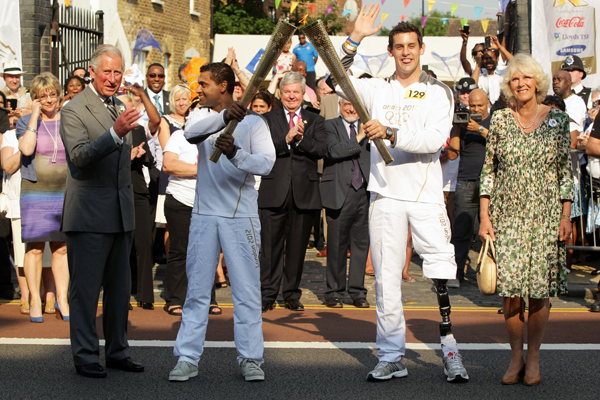
Prince Charles, Duke of Cornwall, and Camilla, Duchess of Cornwall, pose with  young entrepreneur Jay Kamiraz and Paralympian Scott Moorhouse as they kiss together Olympic torches in Tottenham.

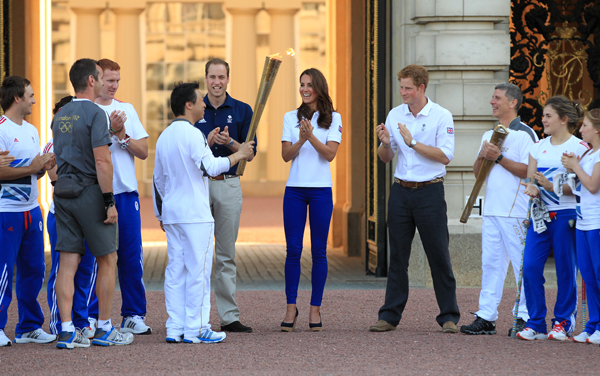
Day 69 (26th July): Disaster mapping charity volunteer Wai-Ming Lee passes the Olympic Flame to mountain rescue team leader John Hulse in front of Buckingham Palace in the presence of Prince William, Kate, Duchess of Cambridge and Prince Harry.

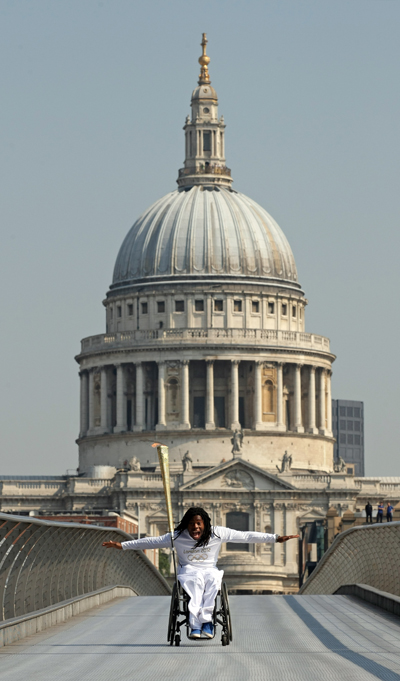
Wheelchair basketballer Ade Adepitan carries the Olympic Flame on Millennium Bridge.

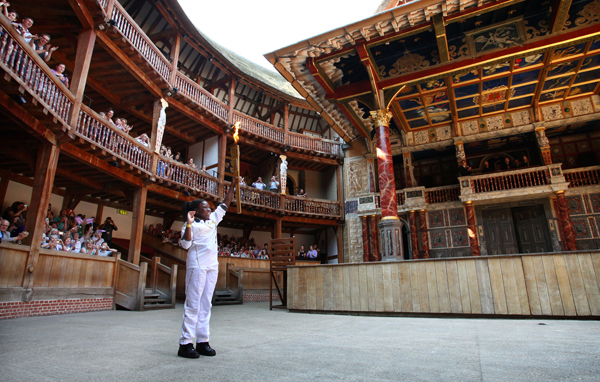
Student Ifeyinwa Egesi holds the Olympic Flame inside the Globe Theatre.

For more on the Torch Relay, see www.london2012.com/torch-relay/

ALL PICTURES: LOCOG.

10 Historic Sporting Events in London – 4. The 1966 FIFA World Cup at Wembley…

The home of English football, in 1966 Wembley Stadium in north-west London played host to the FIFA World Cup and witnessed England win the coveted cup.

Led out onto the ground by Bobby Moore, the English team, under manager Alf Ramsey, were locked in a 2-2 draw with West Germany when the game went into extra time. English player Geoff Hurst, who had already scored a goal, went on to score two more goals (one of which was particularly controversial with some still believing it didn’t cross the goal-line), giving him a hat-trick of goals and handing England the cup in a 4-2 win.

The team received the Jules Rimet trophy (named for former FIFA president Jules Rimet and replaced with the current FIFA World Cup Trophy in the 1970s) from Queen Elizabeth II.

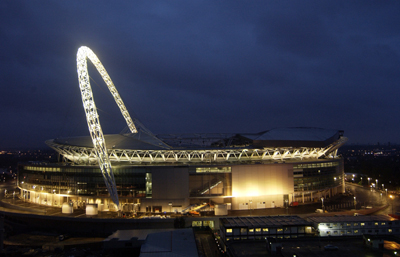
While the history of Wembley goes back to 1923 when the Empire Stadium, referred to as the “Twin Towers” thanks to its distinctive two domed towers, was built on the site, the current stadium was only officially opened in 2007. Capable of seating 90,000, it is the second largest stadium in Europe.

As the Empire Stadium, the ground – originally built for a British Empire Exhibition – had played host to events including the 1934 Empire Games, the 1948 Olympics, and numerous football finals including the so-called “White Horse final” when a mounted policeman went on the pitch to contain the estimated 200,000 fans who watched the Bolton Wanderers FC defeat West Ham United FC 2-0 in the 1923 FA Cup final.

The current stadium with its iconic arch now plays host to the FA Cup as well as other high-profile matches like the FA Community Shield and large events including rock concerts (a recent vote on the Wembley website found that the greatest event ever held there was a 2007 concert by Muse).

This Olympics, Wembley is hosting numerous football matches including the gold medal match for both men and women, on the 11th and 9th August respectively (the last time the men’s final was played here during an Olympics was in 1948 when England won the bronze). It’s hoped a new record will be set for the number of people attending a women’s Olympic football match (the current record of 76,489 was recorded at the 1996 Olympics in Georgia at the Stanford Stadium) during the Games.

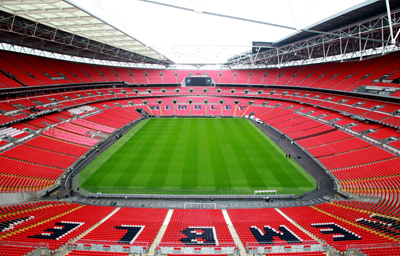
With a one kilometre circumference, the stadium encloses some four million square metres (equivalent apparently to the space taken up by 25,000 London double-decker buses) and features a Royal Box in the middle of the north stand from where all trophies are presented. The roof is partly closable.

There are tours of the stadium (although it’s closed during the Olympics), details of which are below.

WHERE: Wembley National Stadium, Wembley (nearest Tube stations are Wembley Park and Wembley Central or the Wembley Stadium British Rail station); WHEN: Selected dates – see website for details; advance booking strongly recommended (the stadium is closed for events, including the Olympics and before and after); COST: £16 an adult/£9 a child (under 16, under five’s free)/£9 seniors/£41 family ticket (zip wire ride extra); WEBSITE: www.wembleystadium.com/Wembley-Tours.aspx.

PICTURE: Action Images/Paul Harding (courtesy of Wembley National Stadium).

Around London: Olympic Torch Relay hits London; mascots pop-up all over the city; and Shakespeare at the British Museum…

• The Olympic Torch Relay arrives in London tomorrow night before working its way around all of the city’s 33 boroughs and reaching the Olympic Stadium for the Opening Ceremony next Friday.  The torch will arrive in the city by helicopter from Guildford tomorrow night and then be abseiled into the Tower of London where it will spend the night ensconced with the Olympic medals. The relay will travel 200 miles over the next week, carried by more than 980 torchbearers. The route is as follows:

  • Saturday, 21st July – Greenwich via Newham, Tower Hamlets and Hackney to Waltham Forest (highlights include a visit to the Cutty Sark);
  • Sunday, 22nd July – Redbridge via Barking & Dagenham and Havering to Bexley (highlights include a ride on the London Eye and a crossing of the Thames);
  • Monday, 23rd July – Lewisham via Bromley, Croydon, Sutton and Merton to Wandsworth (highlights include a visit to a live filming of Eastenders);
  • Tuesday, 24th July – Kingston via Richmond, Hounslow, Hillingdon and Denham to Ealing (highlights include a visit to Kew Gardens);
  • Wednesday, 25th July – Harrow via Brent, Barnet and Enfield to Haringey (highlights include a visit to Wembley Arena);
  • Thursday, 26th July – Camden via Islington, the City of London, Southwark, Lambeth, Wandsworth, Kensington & Chelsea and Hammersmith & Fulham  to Westminster (the many landmarks to be visited include St Paul’s Cathedral, Shakespeare’s Globe, Trafalgar Square, Buckingham Palace and Hyde Park);
  • Friday, 27th July – From Hampton Court Palace (where it will be taken into the maze) on board Gloriana via the Thames to Olympic Park for the Opening Ceremony.

The 70 day torch relay, which kicked off on 19th May, will have travelled a total distance of about 8,000 miles and have involved 8,000 torchbearers by the time it reaches its end. LOCOG and Transport for London have advised people to see the relay at a location closest to their home given the expected crowds. For more detailed route information, see www.london2012.com/torch-relay/route/. PICTURE: LOCOG

Still talking all things Olympics and London’s largest ever ‘pop up’ shop – where you can buy Olympic merchandise – was officially opened by multiple gold medalist Sir Steve Redgrave in Hyde Park last week. The shop, located on Rotten Row, will be the site of special athlete visits during the Games and visitors can have their photo taken with the Olympic Torch.

• Meanwhile, life-sized versions of the Olympic mascot Wenlock and Paralympic mascot Mandeville are popping up at some of London’s key tourist locations. The 83 two metre tall sculptures capture various elements of life in London with incarnations including a Beefeater, a giant red phone box and a replica of Big Ben. The figures can be found on the routes of Stroll, six new discovery trails designed to help both tourists and Londoners get more out of the city. A QR code on the bottom of each of the sculptures directs smartphone users to further information about the discovery trails. The discovery trails are part of the Mayor of London Presents, a city-wide programme featuring free events, shows and activities. For more on what’s happening in your area, see www.molpresents.com. Some of these events are also being run as part of the Festival of London 2012. For more on this, see http://festival.london2012.com.

• On Now: Shakespeare: staging the world. Part of the World Shakespeare Festival taking place in London, this exhibition at the British Museum looks at the then emerging role of London as a “world city” as interpreted through Shakespeare’s plays and examines the role the playhouse performed in this. The museum has collaborated with the Royal Shakespeare Company to produce the exhibition which features more than 190 objects including paintings, jewels and rare manuscripts. These include the Ides of March coin, a Roman gold aureus commemorating the assassination of Julius Caesar (Julius Caesar), the Lyte Jewel, presented to Thomas Lyte in 1610 in thanks for his work in tracing King James I’s lineage back through Banquo (Macbeth), and a 1610 bird’s-eye view of Venice (Othello and The Merchant of Venice). Runs until 25th November. Admission charge applies. For more, see www.britishmuseum.org.

10 Historic Sporting Events in London – 3. The 1934 Empire Games…

Come the end of this year, London will have become the first city in the world to host three Olympic Games. But it’s only hosted the Commonwealth Games – then known as the Empire Games (one of several names changes the Games have been through) – once, in 1934.

Only the second time the Games were held (following the holding of the first British Empire Games in Hamilton, Canada, in 1934), London was selected after the Games were initially awarded to Johannesburg in South Africa but concerns were raised, notably by Canada, about the impact South Africa’s Apartheid policy would have on visiting athletes and officials.

The Games were held in early August and involved 500 competitors from 16 different nations (as a comparison, almost 7,000 competitors attended the 2010 Commonwealth Games held in Delhi, India). Among those countries sending competitors for the first time were Hong Kong and India, Caribbean nations Jamaica and Trinidad, and Rhodesia (now Zimbabwe) in Africa as well as Newfoundland, representatives of which took part independent of the Canadian team, and the Irish Free State (the only Games in which they participated).

Six sports were featured in the Games and, following its use in the 1908 Olympic Games, organisers again turned to White City to host most of the events which included athletics, boxing, lawn bowls and wrestling (although cycling was held in Manchester and swimming and diving (seen as one sport) at the Empire Pool in Wembley). In what was seen as a breakthrough for women everywhere, selected athletic events were included for females (those not deemed “too exhaustive” apparently).

England topped the medal tally with 72 medals (29 gold) followed by Canada, Scotland, South Africa and Australia. Numerous new records were set in the pool.

10 Historic Sporting Events in London – 2. The 1948 Olympic Games…

We took a break from our Wednesday special looking at 10 historic sporting events in London but today we resume with a look at the 1948 Olympics.

The first Games held in 12 years due to outbreak of World War II, the XIV Olympiad were known as the “Austerity Games” due to the post-war rationing and economic climate. Britain had been named as host of the 1944 Games in June 1939 but following its cancellation, it was suggested as a venue for the 1948 and in 1946 was duly awarded them over other cities including a Lausanne in Switzerland and a number of US cities such as Los Angeles.

In so doing, London became the second city to host the Games twice (Paris had already done so in 1900 and 1924). Interestingly, when it hosts this year’s Games, London will become the first city to do so.

Due to the economic climate, no new venues were constructed for the Games and the athletes were accommodated in existing properties – RAF camps and London colleges – rather than a purpose-built Olympic village. The key venue was the Wembley Empire Exhibition Grounds – the opening ceremony (King George VI officially opened the Games), closing ceremony, athletics and football and hockey finals were all held in Wembley Stadium (pictured above as it is today – we’ll be looking at the “home of British football” in more detail in a later post) while fencing was held in the Palace of Engineering and swimming, diving and water polo at the Empire Pool.

Other London venues included Empress Hall at Earls Court for boxing, weightlifting and gymnastics, the Harringay Arena in north London for basketball and wrestling, the Herne Hill Velodrome for cycling and numerous football and hockey grounds including Arsenal Stadium in Highbury.

More than 4,000 athletes including 390 women took part in 136 events (Japan, Germany and the USSR were not represented while other countries such as Burma, Syria and Venezuela, were among the record-making 59 nations for the first time).

Memorable moments at the Games, which ran from late July into August, included 17-year-old Bob Mathias’ win in the decathlon only four months after taking up the sport (he remains the youngest man to win a men’s athletics event) and that of Dutch woman Fanny Blankers-Koen, the ‘flying housewife’, who won four gold medals in running events.

The Games were also notable for being the first to be shown on household televisions (although few people would have watched the Games this way), for introducing starting blocks for sprinters and for the use of the first covered pool – the Empire Pool at Wembley.

In a sign of things to come, the US won the most medals (84) followed by Sweden (44), and France (29). Great Britain came 12th with 23.

For more, check out the official Olympic website – www.olympic.org/london-1948-summer-olympics.

For more on Olympics history, check out London Olympics, 1908 and 1948.

PICTURE:  Courtesy of Wembley Stadium