Famous Londoners – Charles Frederick Field…

The real person behind writer Charles Dickens’ ‘Inspector Bucket’, Charles Frederick Field was a police officer with the Metropolitan Police who rose to the rank of inspector before, following retirement, becoming a private detective.
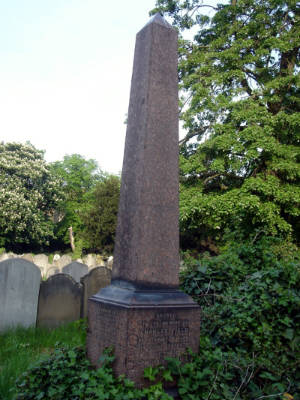
Field’s funerary monument in Brompton Cemetery. PICTURE: Edwardx (licensed under CC BY-SA 1.0)

Field, the son of a Chelsea pub proprietor, had apparently wanted to be an actor but due to his straitened economic situation had instead joined the Metropolitan Police at its founding in 1829.

Field served in several divisions across London, eventually rising to the rank of inspector. He joined the Detective Branch, which had only been formed in 1842, in 1846.

It was while with the Detective Branch that he encountered Dickens and they formed what’s described as a lasting friendship. From 1850 onwards Dickens wrote as series of articles about the world of the Detective Branch and the work of Field (sometimes using a pseudonym) including his essay ‘On Duty With Inspector Field’.

Dickens is also believed to have used Field as the model for Inspector Bucket in Bleak House, first published as a serial in 1852 and 1853.

Field, who was noted as a bit of a raconteur and for his love of disguises even when not really required (perhaps explained by theatrical bent), retired from the Met in 1852 and set up his own enquiry office. He apparently caused controversy after his retirement by using his rank in his private work which somewhat soured his relationship with the force.

Field, who died in 1874 and is buried in Brompton Cemetery, has since been the subject of several works of fiction.
10 places to encounter London’s animal life…A recap…

Before we move on to our next Wednesday series, here’s a recap…

1. Deer in Richmond Park…

2. Mudchute Park and Farm…

3. WWT London Wetland Centre…

4. Bushy Park…

5. Golders Hill Park Zoo…

6. The River Thames…

7. Kew Gardens…

8. Epping Forest…

9. Walthamstow Wetlands…

10.. Hanwell Zoo…

10 places to encounter London’s animal life…7. Kew Gardens…

Famous for it’s flora, Kew Gardens is also home to some unusual animal life including Chinese water dragons who live in the warm environments of the glasshouses.

See all of our content (and support our work) for just £3 a month…

Other animals in the gardens include foxes, hedgehogs and birds including green and great-spotted woodpeckers, mute swans, Canada geese, mallards, ring-necked parakeets, kingfishers, tawny owls, moorhens, and stock doves.

And, of course, the gardens are home to a myriad of insects including bees, butterflies and dragonflies as well as aquatic life including frogs, newts and fish.

WHERE: Kew Gardens (nearest Tube station is Kew Gardens); WHEN: 10am to 7pm (last entry 6pm) daily; COST: £25 adults/£8 children 16 and under (children under four free) (cheaper tickets for online bookings and during off-peak period from 1st November to 31st January); WEBSITE: www.kew.org.

Lost London – Kew Gardens’ flagpole(s)…

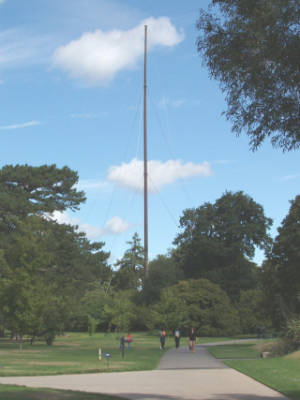
Once the tallest wooden flagpole in the world at 68 (225 feet) tall, the Kew Gardens flagpole stood for almost 50 years before it was dismantled in 2007.

The Kew Gardens flagpole shortly before it was removed. PICTURE: © Copyright David Hawgood (licensed under CC BY-SA 2.0)

The flagpole, a Douglas fir from Copper Canyon on Vancouver Island, was erected on 5th November, 1959, as a gift from the the British Columbia Loggers Association in Canada to mark both the centenary of the Canadian province of British Columbia (1958) and the bicentenary of Kew Gardens (1959).

The tree, which was around 370-years-old when cut, had originally weighed 37 tonnes, but after it was floated up the Thames to Kew and there underwent shaping, this was reduced to 15 tonnes.

Sadly, in 2006, it unfortunately failed its safety inspection – thanks to decay and woodpeckers – and was taken down the following year.

The flagpole was apparently the third (strictly the fourth) erected on the same site at the gardens which had originally been occupied by the ‘Temple of Victory’, a structure which had been built on the orders of King George III to commemorate the Anglo-German victory over the French at the 1759 Battle of Minden during the Seven Years’ War and which was removed in the mid 19th century.

The first flagpole on the site, which stood more than 31 metres (100 feet) tall. was erected in 1861. It had also come from Vancouver Island in British Columbia and replaced one which had snapped when it was in the process of being erected.

The pole was finally taken down in 1913 after being found to be suffering from dry rot.

A replacement, again from British Columbia, was erected in 1919 (its raising having been somewhat delayed by factors related to World War I). It was removed some time before 1959.

After the third giant flagpole was removed (the concrete footing can still be seen), the gardens decided not to erect another as that would mean cutting down another large tree. While far less of a spectacle, there is now a lesser flagpole near Victoria Gate where the flag is flown on special occasions.

LondonLife – Kew Gardens’ new Carbon Garden…

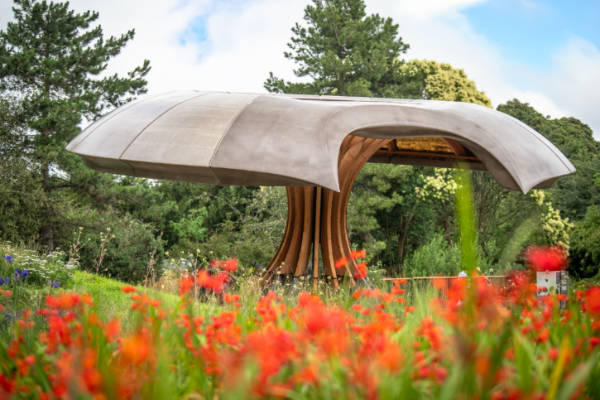
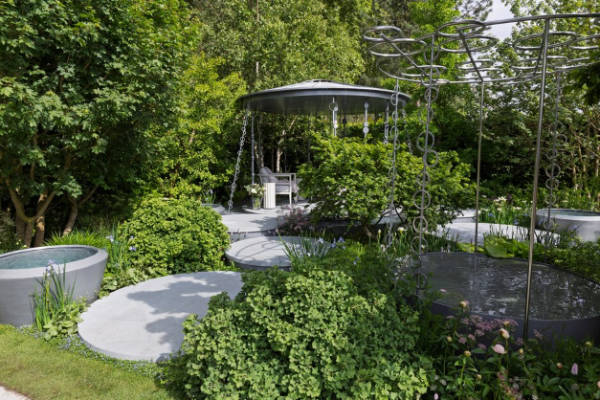
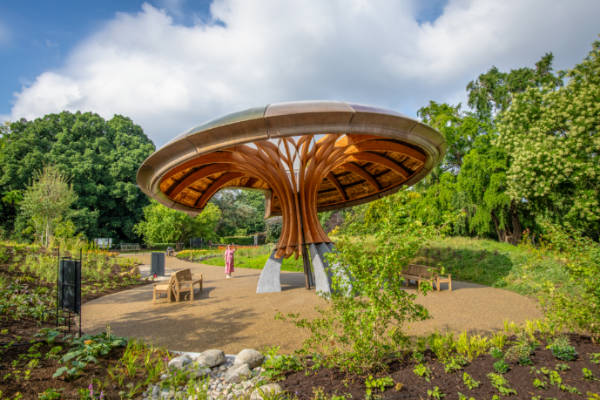
The Carbon Garden at Kew Gardens. PICTURES: Ines Stuart-Davidson © RBG Kew

A cutting edge ‘Carbon Garden’ opened at Kew Gardens on 25th July with the aim of revealing the critical role carbon plays in sustaining life on Earth, the scale of the climate crisis, and the “extraordinary potential of the natural world to combat it”. The permanent new garden features a selection of herbaceous perennials which illustrate the dramatic rise in global average temperatures over time, a dry garden which showcases how we can work with plants to adapt to a changing climate, more than 20 new trees selected for their resilience to projected future climate conditions, a rain garden and bioswale which, among other things, illustrate the ways we can manage waterflow, prevent soil erosion, and reduce flooding, and carbon storage. and grasslands, wildflower meadows and native hedgerows which aim to boost biodiversity. At the centre of the garden is a pavilion designed by Mizzi Studio which is inspired by the symbiotic relationship between the plant and fungal kingdoms, and is created using low-carbon, natural materials. Admission charges apply. For more, see www.kew.org/kew-gardens/whats-in-the-gardens/carbon-garden

LondonLife – Scenes from the RHS Chelsea Flower Show…

It’s that time of year again and the flowers are blooming at the annual RHS Chelsea Flower Show which started today and runs until Saturday. Here’s some images from this year’s event…

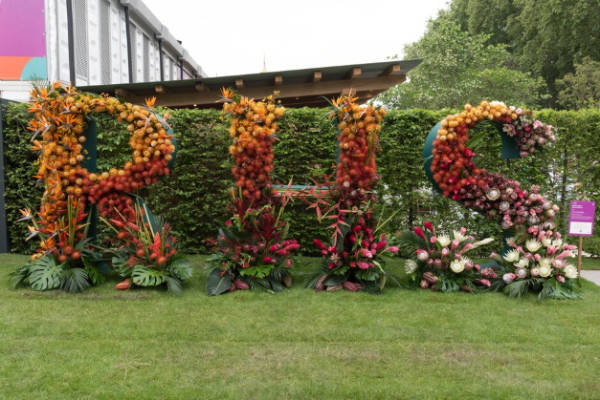
RHS Letters. Designed by Acacia Creative Studio at the RHS Chelsea Flower Show 2025. PICTURE: RHS/Tim Sandall
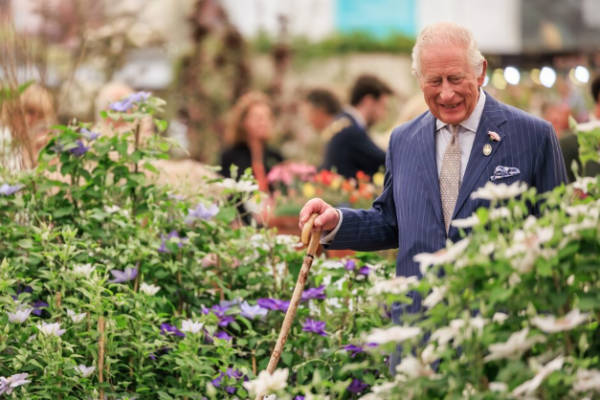
King Charles III visits the Chelsea Flower Show 2025. PICTURE: RHS/Ollie Dixon
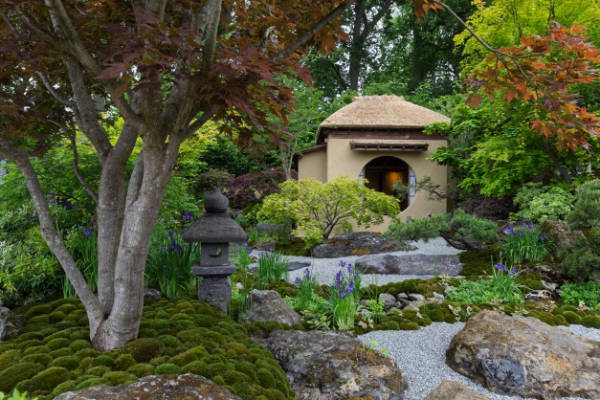
The ‘Cha No Niwa – Japanese Tea Garden’, designed by Kazuyuki Ishihara which won the RHS Chelsea Garden of the Year. PICTURE: RHS/Neil Hepworth
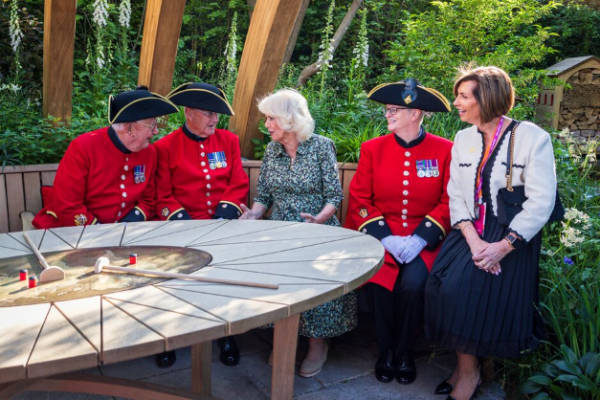
Queen Camilla meets Chelsea Pensioners at The London Square Chelsea Pensioners Garden. PICTURE: RHS/Ollie Dixon
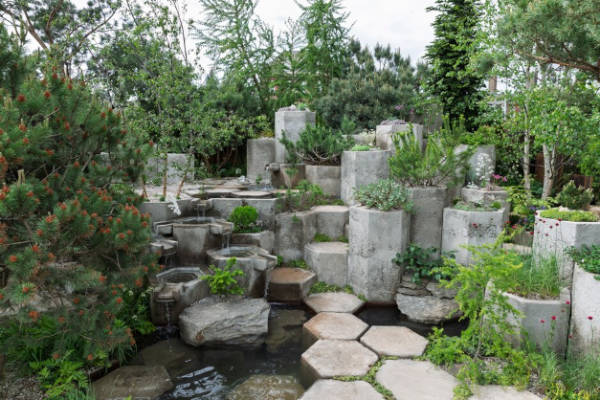
The ‘Boodles Raindance Garden’, designed by Dr Catherine MacDonald. PICTURE: RHS/Neil Hepworth
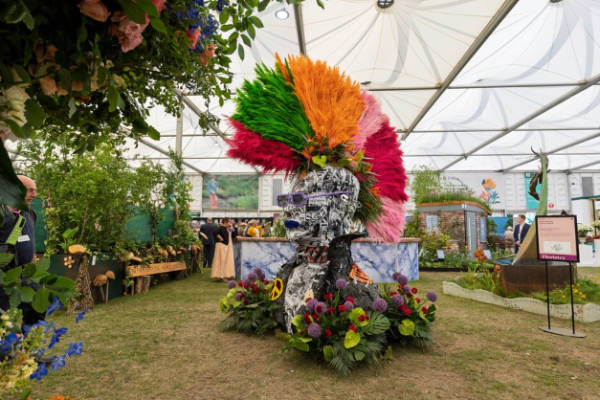
‘The Chelsea Punk’, created by Chelsea in Bloom at the RHS Chelsea Flower Show 2025. PICTURE: RHS/Neil Hepworth
The ‘British Red Cross ‘Here for Humanity’ Garden’, designed by John Warland and Tom Bannister. PICTURE: RHS/Sarah Cuttle

For more, head to https://www.rhs.org.uk/

This Week in London – Peru’s orchids celebrated at Kew; Brazilian Modernism at the Royal Academy; and a tribute to The Clash’s Joe Strummer…

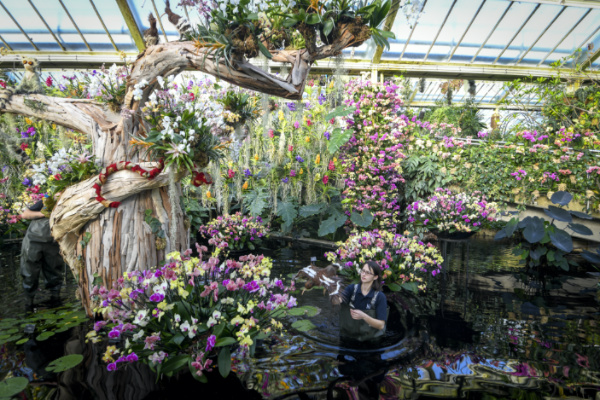
From a previous Orchid Festival at Kew Gardens which celebrated the biodiversity of Madagascar. PICTURE: © RBG Kew

• Kew Garden’s iconic orchid festival returns this Saturday with a Peruvian twist. The gardens’ 29th orchid festival explores some of the 3,000 species of orchids found in Peru’s varied landscapes. Inside the Princess of Wales Conservatory will be a floral recreation of the scenery of Peru including a cornucopia sitting on a grass island in the central pond which was inspired by Lake Titicaca and, in a smaller pond, floral parihuanas (flamingoes) stand proud in front of the iconic Machu Picchu. The display also includes the world’s largest bromeliad – Puya raimondii (commonly known as the Queen of the Andes) – which will be shown alongside floral sculptures inspired by the plant. The country’s diverse wildlife, meanwhile, is celebrated with an orchid aviary that brings to life the diverse bird populations of Peru, and visitors are welcomed by an alpaca bedecked in orchids. Visitors can also wander under a starry night sky adorned with dazzling allium flower heads, which will be recycled from Kew’s outdoor garden displays. There is also large-scale photography taken by celebrated Peruvian photographer Mariano Vivanco and new artworks created for the exhibition of Lima-born artist Gisella Stapleton. Runs until 2nd March. Admission charge applies (advance booking required). For more, see www.kew.org.

The diversity of 20th century Brazilian art is being celebrated in a new exhibition which opened at the Royal Academy this week. Brasil! Brasil! The Birth of Modernism features more than 130 works by 10 important Brazilian artists and spans the period from the 1910s to the 1970s. The artists include pioneers of Brazilian modernism such as Anita Malfatti, Vicente do Rego Monteiro, Jewish Lithuanian emigré Lasar Segall, Candido Portinari and Tarsilo do Amaral as well as self-taught artists such as Alfredo Volpu, Djaniro da Motta e Silva, Rupert Valentim, Geraldo de Barros, and the artist and architect Flávio de Carvalho. The exhibition also features a section dedicated to the historic Exhibition of Modern Brazilian Paintings, which took place at the Royal Academy in 1944 and was the first exhibition of modern Brazilian art in the UK. Runs until 21st April. Admission charge applies. For more, see www.royalacademy.org.uk.

A “legacy stone” commemorating the former residence of musician and former lead singer of The Clash, Joe Strummer, has been unveiled in North Paddington. The stone was installed in the newly refurbished Maida Hill Market on the corner of Walterton Road, a location where Strummer, who died in 2002, squatted during the 1970s ( in fact, his address of 101 Walterton Road inspired the name for the band the 101ers). The stone is inscribed with lyrics sung by Strummer in the song Clampdown from The Clash’s 1979 album London Calling including “the future is unwritten” and “No man born with a living soul can be working for the clampdown”. The stone was installed as part of Westminster City Council project to revitalise the market and Market Hill Area.

Send items to exploringlondon@gmail.com for inclusion.

10 towers with a history in London – 4. Caledonian Park Clock Tower…

Located in Islington, the Caledonian Park Clock Tower is a local landmark and among all that now remains of the 19th century Metropolitan Cattle Market.

Subscribe for just £3 a month – less than the cost of a coffee – to get access to all of Exploring London’s content!

This week in London – Re-live the ‘Golden Age of Piracy’; getting below the surface of the Thames; a look inside East London houses through time; and, a new public garden in the City…

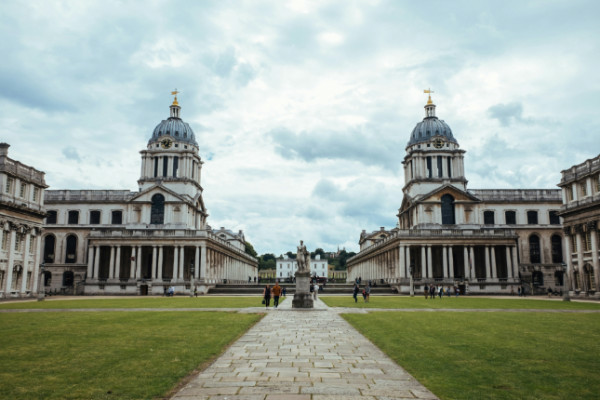
The Old Royal Naval College in Greenwich. PICTURE: Robert Bye/Unsplash

• ‘The Golden Age of Piracy’ will come to life in a living history weekend this Saturday and Sunday at the Old Royal Naval College in Greenwich. With the focus on the period between 1650 and 1720 (when more than 5,000 pirates were said to have been active), visitors will learn how to separate pirate fact from fiction, enjoy songs of the sea, witness sword and cutlass fights, and hear the tale of a real 18th-century mutiny. Each day culminates with a demonstration of the firepower of pirates and marines in the arena on the lawns overlooking the River Thames. There’s also the opportunity to wander through the pirate encampment and learn about the clothes and weapons of the period, listen to some love music and sample food from the Taste of History period kitchen. Runs from 11am to 4pm on Saturday and Sunday. Admission charge applies. For more, see https://ornc.org/whats-on/golden-age-of-piracy/.

The world of sound below the surface of the River Thames is the subject of a new contemporary art installation at the Natural History Museum which opens tomorrow. The River, composed by Norwegian sound artist Jana Winderen in collaboration with spatial audio expert Tony Myatt, uses underwater audio recordings to immerse visitors in a 360 degree audio composition which spans the river from the source by Kemble through central London and on to the sprawling estuary leading into the North Sea. The River is free to visit. Bookings, to ensure entry, can be made at https://www.nhm.ac.uk/visit.html.

One of the new rooms at the Museum of the Home – a Jewish tenement flat from 1913. PICTURE: Courtesy of the Museum of the Home.

Seven new and reimagined period rooms reflecting the stories of our East London community, past, present and future, have been unveiled at the Museum of the Home in Shoreditch. Thanks to the Real Rooms project, the expanded ‘Rooms Through Time: 1878-2049’ now includes a Jewish tenement flat from 1913, an Irish couple’s house in the 1950s, LGBTQ+ renters sharing an ex-council home in the 2005, a British-Vietnamese home in 2024, and the Innovo Room of the Future, which explores real homes amid challenges such as the climate crisis and technological advances. The scope of the existing 1870s Parlour and Front Room in 1976 have also both been expanded. Entry to the permanent display is free. For more, see https://www.museumofthehome.org.uk.

A new public garden has been opened at the intersection of Cheapside and New Change in the City of London. Formerly known as the Sunken Garden, the area has undergone a transformation and now features benches created from 150-year-old-plus granite stones salvaged from the Thames River Wall and recycled timber from fallen London Plane trees. There’s also new permeable paving which lets rain drain freely into the ground and stores it for trees to use later, reducing pressure on the sewer system while new plant species have been selected with local wildlife in mind.

Send all items for inclusion to exploringlondon@gmail.com.

What’s in a name?…Nunhead…

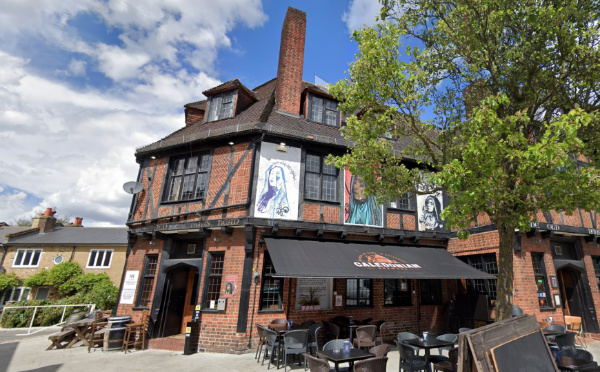
This district of London, which lies to the south-east of Peckham in the London Borough of Southwark, is believed to owe its name to a local tavern named, you guessed it, the Nun’s Head on the linear Nunhead Green (there’s still a pub there, called The Old Nun’s Head, in a building dating from 1905).

The Old Nun’s Head near Nunhead Green. PICTURE: Google Maps

There may well have been actual nuns here (from which the tavern took its name) – it’s suggested that there was a nunnery here which may have been connected to the Augustinian Priory of St John the Baptist founded in the 12th century at Holywell (in what is now Shoreditch).

A local legend gets more specific. It says that when the nunnery was dissolved during the Dissolution, the Mother Superior was executed for her opposition to King Henry VIII’s policies and her head was placed in a spike on the site near the green where the inn was built.

While the use of the name for the area goes back to at least the 16th century, the area remained something of a rural idyll until the 1840s when the Nunhead Cemetery, one of the “Magnificent Seven” cemeteries of Victorian London, was laid out and the area began to urbanise.

The chapel at Nunhead Cemetery. PICTURE: Owen Barritt (licensed under CC BY-SA 2.0)

A fireworks manufactory – Brocks Fireworks – was built here in 1868 (evidenced by the current pub, The Pyrotechnists Arms). The railway arrived in 1871.

St Antholin’s Church was built in 1877 using funds from the sale of the City of London church, St Antholin’s, Budge Row, which was demolished in 1875. St Antholin’s in Nunhead was destroyed during the Blitz and later rebuilt and renamed St Antony’s (the building is now a Pentecostal church while the Anglican parish has been united with that of St Silas).

There’s also a Dickens connection – he rented a property known as Windsor Lodge for his long-term mistress, actress Ellen Ternan, at 31 Lindon Grove and frequently visited her there (in fact, it has even been claimed that he died at the property and his body was subsequently moved to his home at Gad’s Hill to avoid a scandal).

Nunhead became part of the Metropolitan Borough of Camberwell in 1900. These days, it’s described by Foxtons real estate agency as “a quiet suburb with pretty roads and period appeal”.

This Week in London – West Ham Park celebrates its 150th; rare examples of 17th century paper-cutting; King Henry VIII jousts at Hampton Court; the collection of Elizabeth Legh; and, ‘Horrible Science’…

West Ham Park celebrates its 150th anniversary this weekend with a festival of music, food, sport, and other activities. On Saturday there will be a free, family-friendly festival with music – including appearances by Australian-born singer-songwriter Celina Sharma and singer-songwriter, Fiaa Hamilton, as well as a DJ set from Ellis – along with arts and crafts, a children’s fun fair and local food stalls. On Sunday, activities are based around the theme of ‘give it a go’ with visitors able try out various sports and health activities, including football, cricket, tennis, athletics, Tai Chi, and long-boarding. There will also be free taster sessions and opportunities to meet local sporting legends. An outdoor exhibition about the park’s history can be seen in Guildhall Yard in the City leading-up to the event after which it will be moved to Aldgate Square. West Ham Park is the largest green space in the London Borough of Newham and has been managed by the City of London Corporation since 1874. Activities on both days start at 12pm. For more, see www.cityoflondon.gov.uk/westhampark150.

To see the rest of this post (and all of our coverage), subscribe for just £3 a month. This small contribution – less than the cost of a cup of coffee – will help us continue and grow our coverage. We appreciate your support!

10 significant (and historic) London trees – A recap…

We’ll kick off a new series next week, but, in the meantime, here’s a recap…

1. Queen Elizabeth’s Oak, Greenwich…

2. The Cheapside Plane…

3. Charter Oak of Bexley…

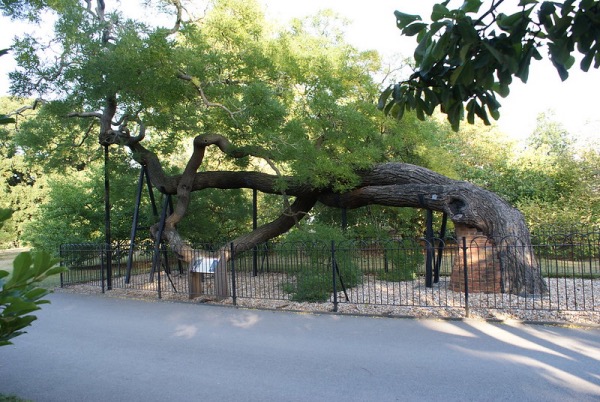
4. The Royal Oak, Richmond Park…

5. Black mulberry trees, Middle Temple Gardens…

6. Mendelssohn’s Tree…

7. D-Day Tree…

8. The Old Lions…

9. The Fulham Palace Oak…

10. Berkeley Square Plane Tree…

This Week in London – ‘The Tudor World’ explored; ‘Crossing Borders’ at the Horniman; and, TfL deal at the Painted Hall…

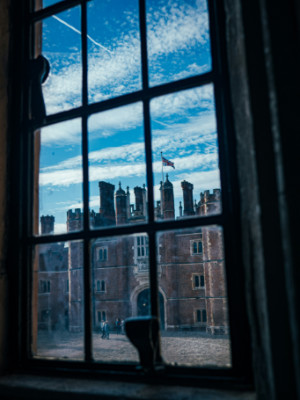
Looking out a window at Hampton Court Palace. PICTURE: Greg Willson/Unsplash

• The oldest surviving rooms at Hampton Court Palace – the Wolsey Rooms which King Henry VIII and Thomas Wolsey once used – are the location of a new display opening today exploring the early years of Henry VIII’s reign and the lives of the ‘ordinary’ men and women who shaped the Tudor dynasty. The Tudor World has, at its centre, rare surviving paintings from the Royal Collection including The Embarkation of Dover – depicting the Tudor navy – and The Field of Cloth of Gold which details Henry VIII’s summit with King Francis I of France in 1520. Also on show is a gold ring believed to have belonged to the Boleyn family, a brightly coloured silk hat linked to King Henry VIII, Wolsey’s portable sundial, a wooden chest used to hide religious contraband by Catholic priests during the reign of Queen Elizabeth I, and, an original Tudor chain pump used to help empty the Hampton Court cesspool. Among the stories of “ordinary” Tudor people being shared is that of Anne Harris, Henry VIII’s personal laundry woman who washed the bandages for his leg ulcers and, Jacques Francis, a free-diver from West Africa who was involved in the expedition to salvage guns from the sunken Mary Rose and who later became one of the first Black African voices heard in an English court, when he was called to testify in a case concerning his employer, Paulo Corsi. Included in palace admission. For more, see www.hrp.org.uk/hampton-court-palace/.

Crossing Borders, a day of free activities, performances and workshops run by local newly arrived people, will be held at the Horniman Museum Gardens in Forest Hill this Saturday. The day will feature arts and crafts workshops led by IRMO, dance performances by Miski Ayllu and the Honduran Folkloric Pride Group, the chance to learn circus skills with young people from Da’aro Youth Project and South London Refugee Association, and the opportunity to make kites with Southwark Day Centre for Asylum Seekers. The free event runs from 11am to 4pm. For more, see https://www.horniman.ac.uk/event/crossing-borders/.

Transport for London customers can save 30 per cent on entry to the Painted Hall at the Old Royal Naval College when using the TfL network until 17th November. Simply show customers show your TfL journey on the day of your visit via the TfL Oyster and Contactless app and receive the discount, taking the adult entry price, when booked online to just £11.55. For bookings, head to https://londonblog.tfl.gov.uk/2022/07/27/in-the-city/.

Send all items for inclusion to exploringlondon@gmail.com.

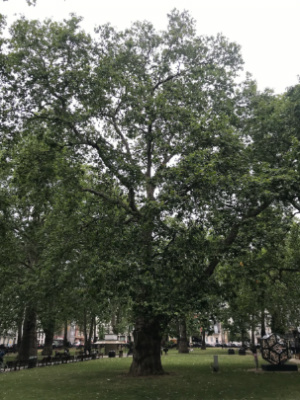
10 significant (and historic) London trees…10. Berkeley Square Plane Tree…

PICTURE: Via Wikipedia (licensed under CC BY-SA 4.0)

Located in the heart of Mayfair are some of the oldest – and most valuable – plane trees in London.

London plane trees (Platanus × acerifolia) – believed to be a hybrid of the American Sycamore Platanus occidentalis) and the Oriental Plane (Platanus orientalis) – were widely planted across London in the 18th century due to their resistance to pollution.

These grand old trees are believed to have been planted in 1789 by MP Edward Bouverie, who lived at 13 Berkeley Square.

Among the 30 or so plane trees in the Grade II-listed park is one known variously as the ‘Victorian Plane’ or ‘Berkeley Plane’.

It was reportedly assessed under the Capital Asset Value for Amenity Trees system in 2008 as being worth $750,000, a price tag which is understood to have made it the most valuable tree in Britain at the time.

The tree was one of the original 41 Great Trees of London.

10 significant (and historic) London trees…9. The Fulham Palace Oak…

PICTURE: DavidRBadger (licensed under CC BY-NC-SA 2.0)

Said to be the oldest of its species in the UK (and a contender for the oldest tree in London), this holm oak (Quercus ilex), also known as a holly leaved oak, is believed to be more than 500-years-old.

The site was the home of senior clergy for much longer – Waldhere, the Bishop of London, first bought the site in 704 AD. And over the years, Fulham Palace and its gardens have evolved significantly with some of the current structures dating from Tudor times.

The Bishops of London left the palace in 1973 and it’s now managed under a trust which was established in 2011.

It’s possible this immense evergreen oak, which is native to the Mediterranean region, was among a number planted in the mid-16th century during the tenure of Bishop Edmund Grindal (about 1553 to 1559).

Bishop Grindal is known to have had a keen interest in the garden and who is credited with introducing the tamarisk tree to England and growing grapes which were sent to Queen Elizabeth I.

It’s also possible the tree was planted during the later tenure of Bishop John Aylmer (1576 to 1594).

The oak, which was coppiced many years ago extending its life, is among the original 41 trees awarded “Great Tree” status in 1988.

WHERE: Fulham Palace Gardens, Bishop’s Avenue, Fulham (nearest Tube station is Putney Bridge); WHEN: 10.30am – 5pm daily; COST: Free; WEBSITE: https://www.fulhampalace.org

10 significant (and historic) London trees…8. The Old Lions…

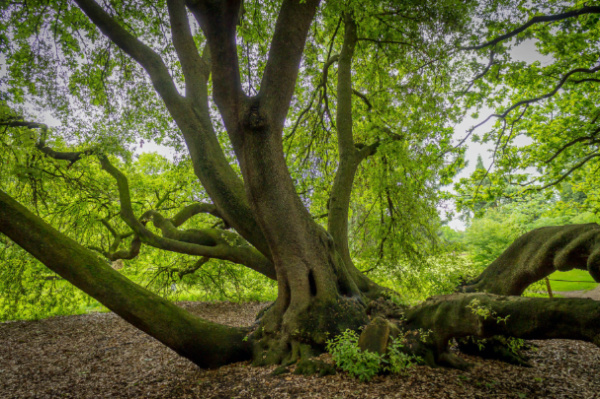
Not one but five trees located in Kew Gardens, the “Old Lions” are five of the oldest trees in the garden.

Kew’s first curator, John Smith, is credited with first using the term to describe the trees.

The Japanese pagoda tree. PICTURE: Michelle Bartsch (licensed under CC-BY-NC-ND-2.0)

They include a Japanese pagoda tree (Styphnolobium japonicum) which was planted in 1762 after having been brought back to London from China by London nurseryman James Gorden.

There’s also the oldest of the maidenhair trees (Ginkgo biloba) in the garden, one of several grown by Gorden in 1758. Originally planted in the Duke of Argyll’s Garden at Whitton, it was transferred to Kew in 1762 following his death by his nephew Lord Bute, and is thought to be one of the first of its species to be grown in the country.

The Oriental plane (Platanus orientalis), located next to the Orangery, also apparently come from Whitton, brought to Kew in 1762, while the Caucasian elm (Zelkova carpinifolia) was planted in 1760 and is the only survivor of a group of three, the other two lost in storms in 1987 and 1990.

The last of the five trees is a Black locust (Robinia pseudoacacia) tree, also known as the false acacia tree. It was planted in the gardens in 1762 and was also transplanted from the Duke of Argyll’s Garden at Whitton.

WHERE: Kew Gardens (nearest Tube station is Kew Gardens); WHEN: 10am to 7pm (see website for seasonal changes); COST: From £20 for adults; from £18 concessions; from £9 young person (16 to 29 years); from £5 for children (4 to 15 years); see website for ticket categories WEBSITE: www.kew.org.

This Week in London – Memorial to Victims of Transatlantic Slavery designs; and, images of the Royal Parks in spring…

Members of the public are invited to view a shortlist of ideas for the proposed Memorial to Victims of Transatlantic Slavery to be located in West India Quay. Mayor of London Sadiq Khan pledged £500,000 to fund the memorial which will be the first of its kind in the UK. Short-listed works include Alberta Whittle”s Echoes from beneath the deep and in between the canes (a Caribbean-style pavilion alongside a sugarcane field and cowrie shells which are synonymous with the trade in enslaved people); Zak Ové’s Nana Buluku (an 11 metre tall and richly decorated representation of an African Queen, Nana Buluku); Grada Kilomba’s Archaeology of Contemplation (this uses the image of a boat as a metaphor of remembrance, remembering those who were transported as cargo by the British and other nations); Helen Cammock’s Ripple (a large-scale, circular stone structure with six discoverable engraved texts in West African wood); Hew Locke’s Memorial for the victims of the transatlantic slave trade (bronze sculptures of boys and girls carrying buildings which were built in London from money earned by the trade in enslaved people); and, Khaleb Brooks – The Wake (a large scale cowrie shell which represents the perseverance, prosperity and beauty rooted in African and African diasporic heritage). An online exhibition of the shortlisted work is available to view on https://www.london.gov.uk/transatlantic-slavery-memorial and the public is invited to give their feedback.    

Winning entries from the Royal Parks’ photographic competition Creating Spaces for Life can be seen online. Take a gander, which features four goslings under the protective wing of a parent, won the competition which invited visitors to photograph the new life emerging in the eight Royal Parks during the springtime. Other entries among the winners included a swan taking flight, a silhouetted coot appearing to walk on water and a common blue butterfly pictured in the spring sunshine. To see the winning images, head to www.royalparks.org.uk/photography-competition-creating-spaces-for-life.

Send all items to exploringlondon@gmail.com.

10 significant (and historic) London trees…3. Charter Oak of Bexley…

Danson Mansion and the Charter Oak of Bexley. PICTURE: Brian Toward (Public Domain)

Located in Danson Park in Bexley, south-east London, this tree is another of those in London which has been awarded “Great Tree” status.

Estimated to be around 200-years-old, it was planted in what was originally the grounds of the Danson Mansion Estate.

Danson House, a Palladian villa, was built by Sir John Boyd in 1766 for his second wife Catherine Chapone and designed by Sir Robert Taylor, the architect who also designed the Bank of England.

The Charter Oak of Bexley’s name comes from the charter which changed Bexley from a Urban District Council to the Borough of Bexley. It was presented to the first municipal council by Lord Cornwallis underneath the oak in 1937.

The Charter Oak of Bexley in 2011. PICTURE: Brian Toward (Public Domain)

The oak’s significance is underlined by its presence on the Borough of Bexley’s coat-of-arms.

Visibly deteriorating, in 2017, “revolutionary geo-injector technology” was used to decompact the soil around the tree and feed its roots, successfully extending the tree’s life.

WHERE: Danson Park, Bexley (nearest railway stations are Bexleyheath and Welling); WHEN: 24 hours a day; COST: Free; WEBSITE: https://www.bexley.gov.uk/discover-bexley/visitor-attractions/danson-house-and-park/house

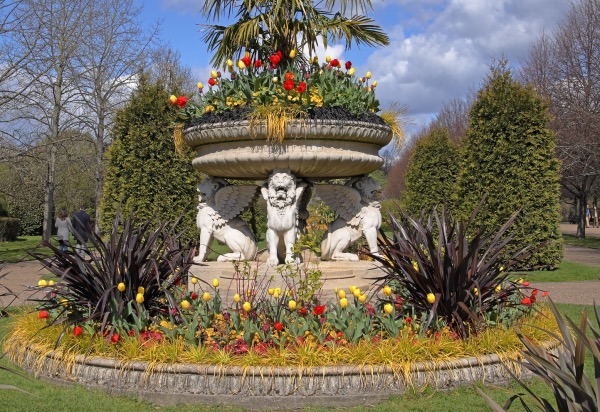
Treasures of London – The Griffin Tazza…

PICTURE: Marc (licensed under CC BY-NC-ND 2.0/image cropped)

Located in The Regent’s Park, this circular stone planter – often called the ‘Lion Vase’ – dates from the 1860s.

The vase (‘tazza’ just means ‘vase’), which features a circular bowl sitting atop four winged lions or griffins, was designed by Austin and Seeley out of artificial stone.

It was installed as the centrepiece of the Italian Gardens by their designer, William Andrews Nesfield, in 1863.

The vase – which is one of about 30 stone vases in the Avenue Gardens – was restored in the mid-1990s.

WHERE: The Griffin Tazza, The Avenue Gardens, The Regent’s Park (nearest Tube stations are Regent’s Park and Great Portland Street); WHEN: 5am to 9:30pm daily; COST: Free: WEBSITE: www.royalparks.org.uk/visit/parks/regents-park-primrose-hill

LondonLife – Quiet corner…

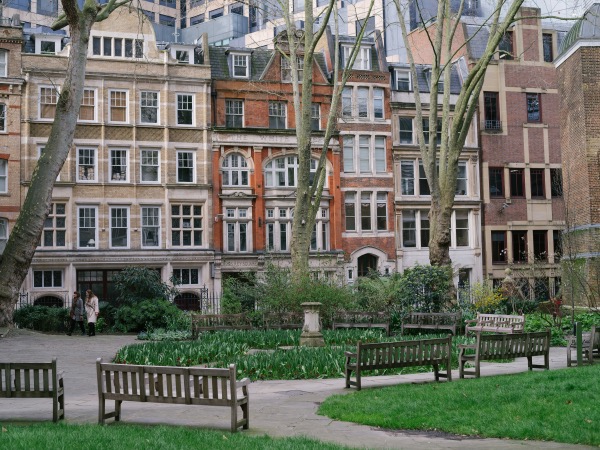
Postman’s Park, King Edward Street, City of London. PICTURE: Fran The Now Time/Unsplash