Earlier…
Earlier…
Once the tallest wooden flagpole in the world at 68 (225 feet) tall, the Kew Gardens flagpole stood for almost 50 years before it was dismantled in 2007.
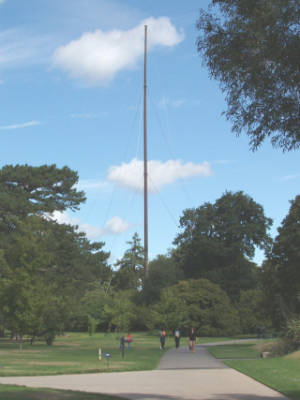
The flagpole, a Douglas fir from Copper Canyon on Vancouver Island, was erected on 5th November, 1959, as a gift from the the British Columbia Loggers Association in Canada to mark both the centenary of the Canadian province of British Columbia (1958) and the bicentenary of Kew Gardens (1959).
The tree, which was around 370-years-old when cut, had originally weighed 37 tonnes, but after it was floated up the Thames to Kew and there underwent shaping, this was reduced to 15 tonnes.
Sadly, in 2006, it unfortunately failed its safety inspection – thanks to decay and woodpeckers – and was taken down the following year.
The flagpole was apparently the third (strictly the fourth) erected on the same site at the gardens which had originally been occupied by the ‘Temple of Victory’, a structure which had been built on the orders of King George III to commemorate the Anglo-German victory over the French at the 1759 Battle of Minden during the Seven Years’ War and which was removed in the mid 19th century.
The first flagpole on the site, which stood more than 31 metres (100 feet) tall. was erected in 1861. It had also come from Vancouver Island in British Columbia and replaced one which had snapped when it was in the process of being erected.
The pole was finally taken down in 1913 after being found to be suffering from dry rot.
A replacement, again from British Columbia, was erected in 1919 (its raising having been somewhat delayed by factors related to World War I). It was removed some time before 1959.
After the third giant flagpole was removed (the concrete footing can still be seen), the gardens decided not to erect another as that would mean cutting down another large tree. While far less of a spectacle, there is now a lesser flagpole near Victoria Gate where the flag is flown on special occasions.
We’ve amended this article based on feedback….
While there is believed to have been at least one earlier mosque opened in London (a room in a house was apparently converted for this purpose in Albert Street, Camden, in 1895), London’s first purpose-built mosque opened in 1926 in Southfields in the city’s south-west.
Known as the Fazl Mosque (Grace Mosque in English), the mosque – which is also known as the London Mosque and is the second oldest in Britain – is said to have cost some £6,223 and is understood to have been designed by TH Mawson and Sons.
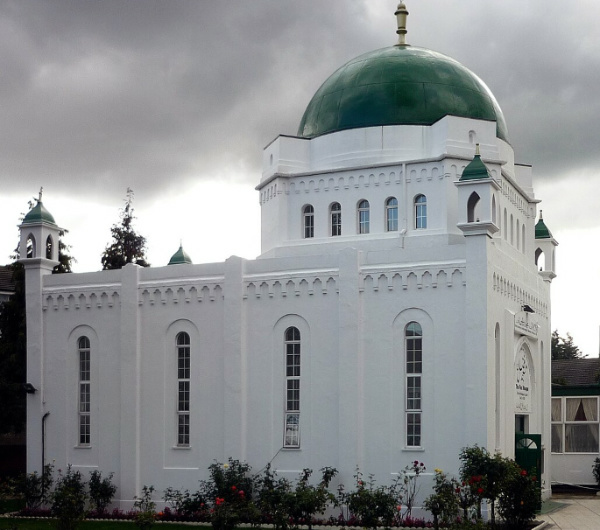
Said to have been financed by the donations of Ahmadiyya community in India (the land had been purchased in 1920), the foundation stone was laid in 1924 by Mirza Bashir-ud-Din Mahmud Ahmad, the second Caliph of the Ahmadiyya and leader of the worldwide Ahmadiyya Muslim Community.
The Grade II-listed building was formally opened by Khan Bahadur Sheikh Abdul Qadir, an ex-minister of Punjab Legislative Council, on 4th October, 1926, with about 600 guests.
The mosque can accommodate about 150 people and the first Imam was Maulana Abdul Rahim Dard.
Visitors to the mosque have included King Saud of Saudi Arabia and the Crown Prince Faisal Bin Abdul-Aziz, who visited in 1935. In more recent times, Prince Edward, the Earl of Wessex, and Justin Welby, the Archbishop of Canterbury, have both visited the property.
The fourth caliph, Mirza Tahir Ahmad, lived in an apartment in a separate building on the premises, originally built for the mosque’s imam, after migrating from Pakistan where prohibitions were placed on the Ahmadis, banning them from any public expression of the Islamic faith.
It remained so until his death in 2003 after which the current caliph, Mirza Masroor Ahmad, lived there until relocating to the estate known as Islamabad in Tilford in 2019.
During this period between 1984 and 2019, the mosque at 16 Gressenhall Road served as the de facto headquarters of the Ahmadiyya Muslim Community worldwide.
This free-standing, 287 foot-high tower is a survivor – it’s all that remains of the Imperial Institute.
Subscribe for just £3 a month to get access to all Exploring London’s stories – that’s less than the cost of a cup of coffee!
• A new photographic exhibition exploring how Underground stations and metro systems provide shelter to citizens during periods of war, both now and in the past, opened at the London Transport Museum in Covent Garden last week. Echoes of the Blitz: Underground shelters in Ukraine and London features 70 images, including historical pictures from the museum’s collection as well as 38 contemporary photographs shot by six renowned, mainly Ukrainian, documentary photographers. The latter include photography showing ordinary Ukrainian citizens sleeping, waiting, cooking, washing clothes, caring for their pets and creating temporary make-shift homes in metro stations of Kyiv and and Kharkiv show alongside black and white archive images of Londoners taking refuge in Tube stations during World War II. The exhibition, which is being run in partnership with Berlin-based journalistic network n-ost, can be seen until spring next year. Admission charge applies. For more, see www.ltmuseum.co.uk.
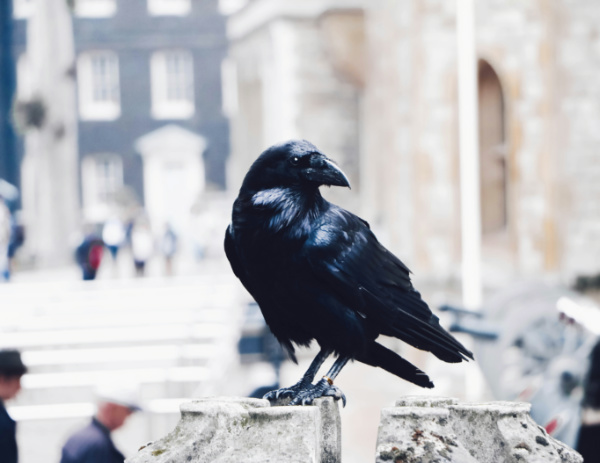
• A new Ravenmaster has been appointed at the Tower of London. Yeoman Warder Michael ‘Barney’ Chandler took up the role at the start of this month, 15 years after he first became a Yeoman Warder at the Tower. The Ravenmaster oversees a team of four responsible for the care of the Tower’s seven ravens which legend says must remain at the Tower to ensure its protection. The legend apparently goes back to at least the reign of King Charles II – when the King’s astronomer John Flamsteed complained that the resident ravens were impeding his work at the Tower and requested their removal, the King was told that if the ravens left the Tower then the Kingdom would fall (and so they remained). While the Yeoman Warders have longed cared for the ravens, the post of Ravenmaster was only created in the past 50 years and was first held by Yeoman Warder Jack Wilmington. Yeoman Warder Chandler, who became the 387th Yeoman Warder at the Tower when he was appointed in March, 2009, is only the sixth person to hold the office. For more, see www.hrp.org.uk/tower-of-london/.
• One of the most popular paintings at the Guildhall Art Gallery is being reinstalled to mark International Women’s Day on Friday. Dante Gabriel Rossetti’s La Ghirlandata has been on loan – first to the Tate Britain and then to the Delaware Art Museum in the US – but is now being returned. The painting dates from 1873 and depicts a ‘garlanded woman’ playing an arpanetta and looking directly at the viewer. The muse for the woman is said to have been the actor and model, Alexa Wilding, while the two ‘angels’ in the top corners were posed by William and Jane Morris’ youngest daughter, May Morris. The City of London Corporation acquired the oil on canvas work in 1927. On Saturday, free family activities will be held at the gallery to mark the work’s return. For more, see www.thecityofldn.com/la-ghirlandata.
Send items to exploringlondon@gmail.com.
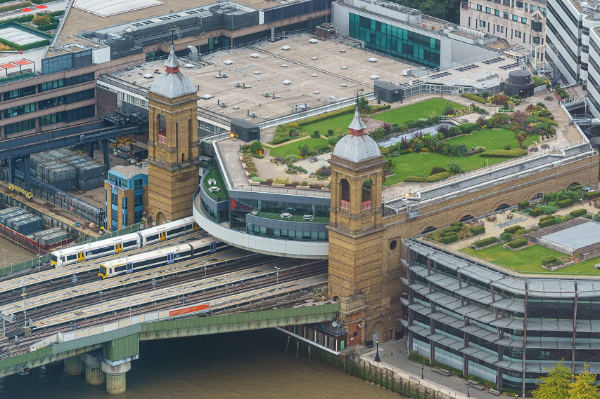
This establishment in the Cannon Street Station in the City of London is a modern take on the pub but thanks to the name and location comes with built-in history.
Sir John Hawkshaw (1811-1891) was a railway engineer who, importantly given this pub’s location, is recognised for his work on the original Cannon Street railway station – which he designed with JW Barry – as well as the adjoining Cannon Street Railway Bridge over the Thames (it was originally named ‘Alexandra Bridge’ in honour of Princess Alexandra of Denmark, wife of Edward, the Prince of Wales)
The original Cannon Street station, which opened on 1st September, 1866, featured two “Wren-style” towers which stand 135 feet high and faced the Thames (these two towers, now Grade II listed, are still there today). They helped support the station’s single arched iron and glass roof which stretched some 700 feet in length to cover the railway platforms (an adjoining Italianate-style hotel and forecourt designed by Barry opened the following year).
While Hawkshaw’s two towers remain (and it should be noted that the engineer was also famous for his work on other projects including, among others, the Severn Tunnel and Suez Canal), the current Cannon Street Station is a much more modern structure dating originally from the 1980s with some works being completed in the last decade or so.
The site’s known history, meanwhile, goes back much further, however. Prior to Hawkshaw’s station, since 1690 the site had been occupied by the livery hall of the Worshipful Company of Plumbers. Prior to that it was the site of the Steelyard and, much further back in time, the remains of a Roman palace have been found beneath the site which date from the 1st century.
The modern pub, located in the station, is part of the JD Wetherspoon chain.
For more on the pub, see https://www.jdwetherspoon.com/pub-histories/england/london/the-sir-john-hawkshaw-cannon-street.
Walk the streets of London and chances are you’ll soon come across an English Heritage Blue Plaque commemorating someone famous.
There are now more than 990 Blue Plaques in London, commemorating everyone from diarist Samuel Pepys to writer Virginia Woolf and comedian Tony Hancock.
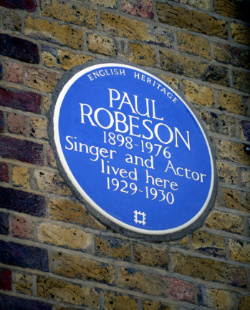
The scheme was started in 1866 by the Society of Arts (later the Royal Society of Arts) having been proposed by MP William Ewart three years before. The first two plaques were erected in 1867 – one commemorating poet Lord Byron at his birthplace, 24 Holles Street in Cavendish Square (although this property was later demolished) and the other commemorating Napoleon III in King Street, Westminster (this is now the oldest survivor of the scheme).
Thirty-five years – and 35 plaques – later, the London County Council took over the scheme. It was this body that standardised the plaque’s appearance (early plaques come in various shapes and colours) and while ceramic blue plaques were standard by 1921, the modern simplified Blue Plaque didn’t appear until 1938 when an unnamed student at the Central School of Arts and Crafts, who was paid just four guineas for their troubles, came up with what is now an iconic design.
In 1965, the LCC, having created almost 250 new Blue Plaques, was abolished and its successor, the Greater London Council, took over the scheme, expanding its area of coverage to includes places like Richmond, Redbridge and Croydon. In 1984, the GLC appointed artisan ceramicists Frank and Sue Ashworth of London Plaques to make the Blue Plaques (and they continue to do so).
The GLC placed some 262 Blue Plaques before, in 1986, English Heritage took over management of the scheme. Since then it’s placed more than 360 plaques.
The plaques, which are 495mm (19½ inches) in diameter and 50mm (two inches) thick, are slightly domed in a bid to encourage self-cleaning in the rain.
Anyone can propose a subject for a new plaque – but generally only one plaque is erected per person (although there have been some exceptions to this), only a maximum of two plaques are allowed per building (there are 18 buildings with two), and proposals, if turned down, must wait 10 years before they are reconsidered.
In addition, new Blue Plaques are only erected a minimum of 20 years after the subject’s death, the building on which one is placed must “survive in a form that the commemorated person would have recognised, and be visible from a public highway”, and buildings which may have many different personal associations, such as churches, schools and theatres, are not normally considered.
The Blue Plaques panel meet three times a year to decide on proposals. Among those currently serving on the 12 person body are architectural historian Professor William Whyte, who chairs the panel, award-winning journalist and author Mihir Bose, Emily Gee, regional director for London and the South East at Historic England, and, Susie Thornberry, assistant director at Imperial War Museums.
The plaques don’t confer any legal protection to buildings but English Heritage says they can help preserve them through raising awareness.
Recently unveiled plaques have commemorated pioneering social research organisation Mass-Observation, lawyer Hersch Lauterpacht – who played a key role in prosecuting the Nazis at the Nuremberg trials, and, Dadabhai Naoroji, an Indian Nationalist and the first Indian to win a popular election to Parliament in the UK. Among those being unveiled this year are plaques commemorating anti-racist activist Claudia Jones, suffragette Emily Wilding Davison and Ada Salter, the first female mayor of a London borough.
English Heritage’s Blue Plaques scheme isn’t the only one commemorating people in London. Others include the City of London’s Blue Plaques scheme (there is only one English Heritage Blue Plaque in the City of London – it commemorates Dr Samuel Johnson), Westminster City Council’s Green Plaques and Heritage Foundation plaques which commemorate figures who worked in entertainment.
For more, head to www.english-heritage.org.uk/visit/blue-plaques/.

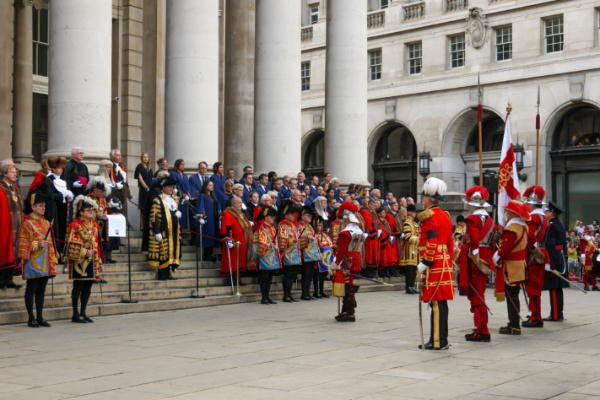
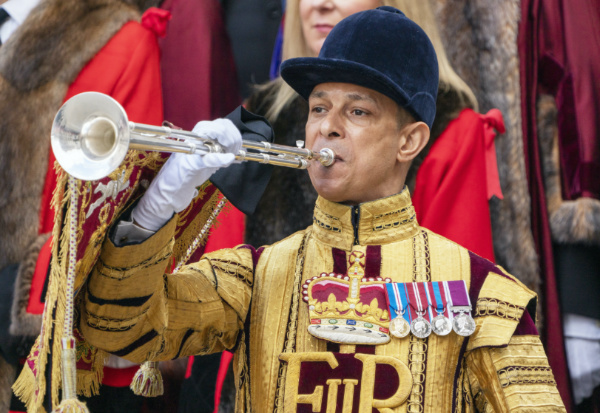
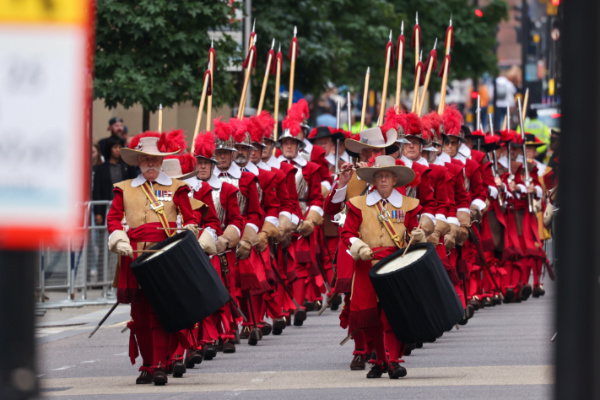
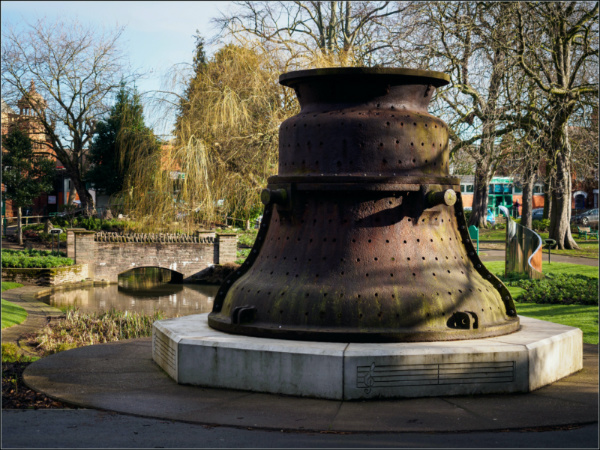
Not the name of a person, Great Paul is in fact the name of the largest of four bells in south-west tower of St Paul’s Cathedral.

The bronze bell was cast in 1881 by JW Taylor of Taylor’s bell foundry in Loughborough. With a diameter of some 11 metres, it weighs an impressive 16.8 tons (in fact, until the casting of the Olympic Bell for the 2012 London Olympics, it was the largest bell in the UK).
Brought to London from Loughborough on a train over a period of 11 days, Great Paul was hung in the tower in May, 1882.
The bell was traditionally sounded at 1pm every day but was silent for more than 40 years after its ringing apparatus broke in the 1970s.
Following a restoration, Great Paul started being rung again last year when it was rung during a festival of church bells to mark the easing of COVID-19 restrictions. Earlier this year, it led a bell ringing tribute marking Queen Elizabeth II’s Platinum Jubilee.
Previous historic occasions on which the bell was rung included Queen Victoria’s Diamond Jubilee in 1897 and the marriage of Prince Charles and Lady Diana Spencer at the cathedral in 1981.
The south-east tower of the cathedral is also home to the storied bell known as Great Tom – but we’ll deal with that in a future post.

Buckingham Palace is among the sites across London which will be hosting events to mark Queen Elizabeth II’s Platinum Jubilee this June. The Queen’s 70th year on the throne will be marked with four days of celebrations across the June bank holiday weekend which will include the Queen’s Birthday Parade (known as Trooping the Colour), the lighting of Platinum Jubilee Beacons – including the principal beacon at Buckingham Palace, a Service of Thanksgiving at St Paul’s Cathedral, the ‘Platinum Party at the Palace’ – a celebration concert in the gardens of Buckingham Palace, The Big Jubilee Lunch in communities across the city, and a special Platinum Jubilee Pageant, part of which will see a moving river of flags rippling down The Mall. For more information, head to www.royal.uk/platinum-jubilee-central-weekend.

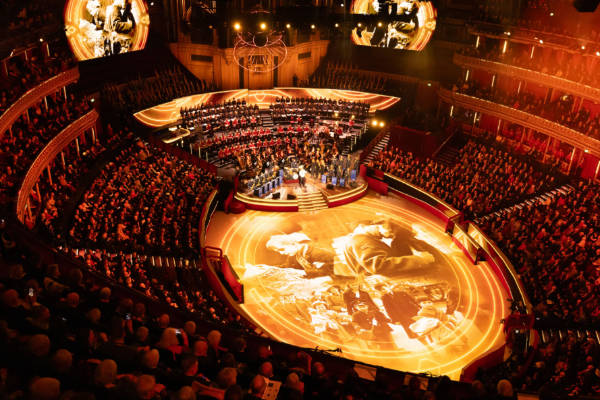
Arguably the grandest music venue in London, the Royal Albert Hall, named in memory of Queen Victoria’s husband Prince Albert, has been hosting musical events since it first hosted a concert in 1871.
The Grade I-listed hall, which has a seating capacity of more than 5,000 and which did suffer from acoustic problems for many years (until mushroom-shaped fibreglass acoustic diffusers were hung from the ceiling following tests in the late 1960s), has been the setting for some of the most important – and, in some cases, poignant – music events of the past 150 years, not just in London but the world at large.
Among some of the most memorable are the Titanic Band Memorial Concert – held on 24th May, 1912, just six weeks after the sinking of the iconic ship to remember the 1514 people who died with a particular focus on the eight musicians who played on as the stricken vessal sank, the ‘Great Pop Prom’ of 15th September, 1963 – only one of a handful of occasions when The Beatles and Rolling Stones played on the same stage, and Pink Floyd’s gig of 26th June, 1969 – coming at the end of a UK tour, the on-stage antics saw the band banned (it was short-lived, however, they returned just a few years later in 1973).
Other musical figures to have taken to the stage here include everyone from composers Richard Wagner, John Philip Sousa, and Benjamin Britten to the Von Trapp family, jazz greats Billie Holiday and Ella Fitzgerald, and the likes of Shirley Bassey, Bob Dylan and Elton John – a veritable musical who’s who of the past 150 years. The venue also hosted the 13th Eurovision Song Contest in 1968.
Of course, Royal Albert Hall is famous for The Proms, an annual festival of classical music which was first performed here in 1941 after the venue where it had been held since 1895 – the Queen’s Hall on Langham Place – was lost to an incendiary bomb during World War II.
Prom stands for ‘Promenade Concert’, a phrase which originally referred to the outdoor concerts in London’s pleasure gardens during which the audience was free to walk around while the orchestra was playing (there are still standing areas during performances). The most famous night of the season is the ‘Last Night of the Proms’ which, broadcast by the BBC, features popular classics and ends with a series of patriotic tunes to stir the blood.
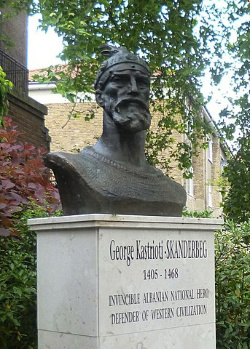
Unveiled just nine years ago, this bust in Bayswater commemorates George Kastrioti Skanderbeg, a 15th century Albanian lord who led a rebellion against the Ottoman Empire (and who later became a central figure of inspiration in the Albanian National Awakening of the 19th century).
Located on the corner of Inverness Terrace and Porchester Gardens, the bronze bust was created by Kreshnik Xhiku.
An inscription on the front reads “George Kastrioti Skanderbeg, 1405 – 1468, invincible Albanian national hero, defender of western civilization.”
It was unveiled on the 100th anniversary of Albanian independence on 28th November, 2012, with Westminster City Councillor Robert Davis and Albanian Charge d’affaires, Mal Berisha, in attendance.
The bust was installed as part of Westminster’s City of Sculpture initiative.
Back to Parliament Square this week where we look at a bronze statue of anti-apartheid activist and former President of South Africa, Nelson Mandela.

Unveiled on 29th August, 2007, this larger-than-life statue is the work of English sculpture Ian Walters (he completed a clay sculpture of the Parliament Square statue before his death in 2006 but sadly didn’t live to see it cast in bronze in London.)
The statue was proposed by South African journalist and anti-apartheid activist Donald Woods but after his death in 2001, the fundraising effort, officially launched in 2003, was led by his wife Wendy and Sir Richard Attenborough.
It depicts Mandela standing on a low plinth with his arms outstretched as though making a speech. He is shown wearing a flowery shirt.
It was originally proposed the statue be located outside of the South African High Commission in Trafalgar Square but after planning approval was refused, the alternative site of Parliament Square was eventually decided upon.
The unveiling in the south-west corner of the square was attended by Mandela himself along with his wife Graça Machel and then Mayor of London Ken Livingstone while then PM Gordon Brown did the official duties.
Interestingly it’s not the only work of Walters depicting Mandela – he was also the sculptor behind the bust of Mandela which stands outside Royal Festival Hall in South Bank.
It’s also not the only South African who has a statue in Parliament Square – there’s also one of Jan Smuts, twice Prime Minister of the Union of South Africa in the early 20th century (in fact Mandela recalled at the unveiling that he and his friend Oliver Tambo, who went on to become president of the ANC, had once joked about seeing the statue of a Black man one day erected in the square – Tambo never lived to see it, but Mandela, at age 89, did).
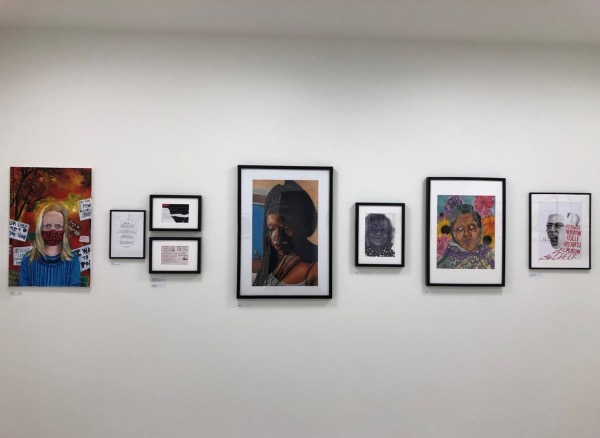

Works by young Londoners depicting their COVID-19 experiences as well as their feelings in support of the Black Lives Matter movement have gone on show in an exhibition at the Saatchi Gallery and online. A Westminster City Council project, called Creative Collective, asked young people to produce works in any medium – audio clips, short films, poems, paintings, drawings, statements or digital works – responding to themes including lockdown, resilience and hope, community and Black Lives Matter. The results, which have previously been on display at libraries across Westminster, can now be viewed until 31st August at in the Learning Gallery at the Saatchi Gallery as part of the JR Chronicles Exhibition. The display is also available to see online here. The project is the work of the council’s cultural youth engagement programme – City Lions – in partnership with children’s services, local schools, professional artists, libraries and archives.
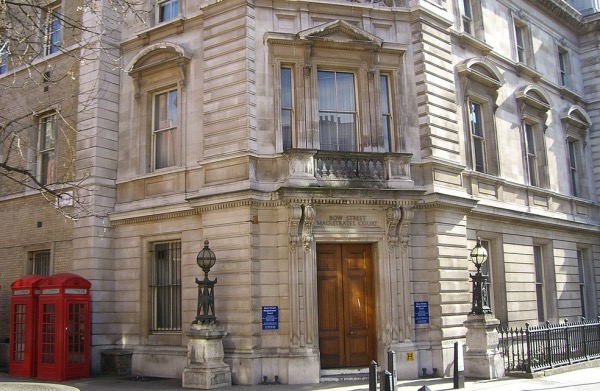
The Bow Street Police Museum, located on the site of the 1881 Bow Street Magistrates’ Court and Police Station, has opened its doors in Covent Garden. The museum tells the story of the early Bow Street Runners, the first official law enforcement service in the city, and the Metropolitan Police officers who came after. Visitors can explore the former cells and hear the stories of those who once worked in the building. The connections between Bow Street and the constabulary dates back to 1740 when Thomas de Veil opened a Magistrates’ Court in his family home at number four Bow Street in the 18th century and continued until the closure of the Bow Street Magistrates’ Court in 2006. Among the famous faces who passed through Bow Street’s police station and court over that time were Oscar Wilde, Suffragettes Sylvia Pankhurst, Christabel Pankhurst and Mrs Drummond, and the Kray twins. For more, head to https://bowstreetpolicemuseum.org.uk.
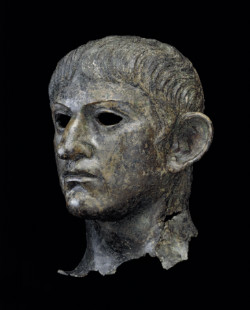
• A bronze head of the Roman Emperor Nero found in the River Alde in Suffolk – long wrongly identified as being that of the Emperor Claudius – and the Fenwick Hoard – which includes Roman coins, military armlets and jewellery – are among the star sights at a new exhibition on Nero at the British Museum. Nero: the man behind the myth is the first major exhibition in the UK which takes Rome’s fifth emperor as its subject. The display features more than 200 objects charting Nero’s rise to power and his actions during a period of profound social change and range from graffiti and sculptures to manuscripts and slave chains. Other highlights include gladiatorial weapons from Pompeii, a warped iron window grating burnt during the Great Fire of Rome of 64 AD, and frescoes and wall decorations which give some insight into the opulent palace he built after the fire. The exhibition, which opens today, runs until 24th October in the Sainsbury Exhibitions Gallery. Admission charge applies. For more, see www.britishmuseum.org/whats_on/exhibitions/nero/events.aspx.
• The office of late theoretical physicist Professor Stephen Hawking will be recreated at the Science Museum, it was announced this week. The contents of the office, which Hawking, the author of the best-selling A Brief History of Time, occupied at Cambridge’s department of applied mathematics and theoretical physics from 2002 until shortly before his death in 2018, includes reference books, blackboards, medals, a coffee maker and Star Trek mementoes as well as six of his wheelchairs and the innovative equipment he used to communicate. The museum, which reportedly initially plans to put the objects on display in 2022 and later recreate the office itself, has acquired the contents through the Acceptance in Lieu scheme, which allows families to offset tax (his archive will go to the Cambridge University Library under the same scheme).
• Nineteenth century civil engineer Ardaseer Cursetjee Wadia – the first Indian Fellow of the Royal Society – has been honoured with an English Heritage Blue Plaque at his former Richmond home. The plaque, which can be found on 55 Sheen Road – the villa Cursetjee and his British family moved to upon his retirement in 1868, was installed to mark the 180th anniversary of his election as a Fellow of the Royal Society. Cursetjee is considered the first modern engineer of India and was the first Indian at the East India Company to be placed in charge of Europeans. He was at the forefront of introducing technological innovations to Mumbai including gaslight, photography, electro-plating and the sewing machine. Cursetjee first visited London in 1839 and travelled regularly been Mumbai (formerly Bombay) and London until his retirement. For more, see www.english-heritage.org.uk/visit/blue-plaques.
Send all items for inclusion to exploringlondon@gmail.com.

Spotted in Sloane Square Tube station. PICTURE: John Cameron/Unsplash
PICTURE: Bex Walton/licensed under CC BY 2.0)
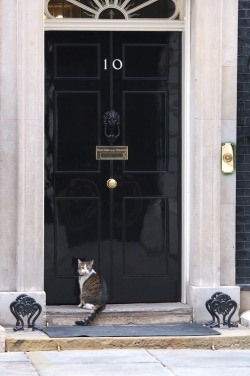
• Larry the cat celebrated his 10th anniversary in Downing Street this week. Officially the “Chief Mouser to the Cabinet Office”, Larry first came to Number 10 on 15th February, 2011, from the Battersea Dogs & Cats Home and has since been spotted many times in and around the property going about his duties (or seeing off rivals like the now retired Palmerston, the Foreign Office cat). Larry has served three Prime Ministers during his time in the seat of power – David Cameron, Theresa May and now Boris Johnson – and met with various world leaders (famously apparently taking a liking to US President Barack Obama and being spotted sleeping under Donald Trump’s car). Larry tweeted on Tuesday – the day of his “Larryversary” – that he has no plans of retiring at this stage.
• A series of auctions involving a collection of 260 London street signs started this week. Westminster City Council is selling the signs – which include Abbey Road NW8 (estimated price tag of £1,000-£2,000), Pimlico Road SW1 (£100-£200), Westbourne Park Road W2 (£100-£200) and Belgrave Place SW1 (£80-£120) – through Catherine Southon Auctioneers until 3rd March. The distinct signs were first created by Sir Misha Black in 1967. Head here for details.
• Looking further afield and English Heritage has put out a call for people with connections to the Cichociemni – the name for a group of Polish Home Army parachutists, many of whom trained at Audley End House, who were dropped behind enemy lines in Poland to begin fighting for the liberation of their homeland – to share their stories. Monday marked the 80th anniversary of the operation involving the elite fighters. Some 527 of them completed their training at the Jacobean stately home in Essex where their presence is today remembered in a memorial and fragmentary remains such as a scrap of graffiti in the coal gallery candle store, remnants of a timetable in a former briefing room and insulators for telephone wires which remain in some trees. “We’d love to hear from the public who have a connection or story to share about the Cichociemni at Audley,” said Andrew Hann, an historian with English Heritage which looks after Audley End House. “We’re particularly interested in hearing from those in the local area at the time, who may remember hearing bangs in the night, or seeing troops crossing fields in the darkness. Perhaps unsurprisingly, given that they were highly trained to be both ‘silent and unseen’ they left little obvious trace.”
Send items for inclusion to exploringlondon@gmail.com
 Exploring London


