Four sites related to royal coronations in London – 3. Westminster Abbey…

Westminster Abbey has been centre-stage at coronations since at least the Norman Conquest.

William the Conqueror set the precedent for coronations at the abbey when he decided not to get crowned at Winchester Cathedral (where Edward the Confessor had been crowned) and instead chose to be crowned at the minster built by Edward the Confessor (there is some suggestion King Harold Godwinson, the last Saxon King, was crowned at Westminster Abbey before the Conquest but no documentary evidence exists for this).

William the Conqueror’s coronation was held on Christmas Day, 1066, and since then some 39 coronations have been carried out (King Charles III’s will be the 40th).

A view of the pulpit and to the right the Cosmati Pavement and behind it the High Altar inside Westminster Abbey. PICTURE: PJ photography/Shutterstock

Arrangements for the coronation ceremony are the responsibility of the Earl Marshal and the coronation committee but the abbey’s dean acts as a liaison with the sovereign and assists the Archbishop of Canterbury who is usually the bishop who crowns the monarch.

Since the late 14th century, the service has largely followed that laid down in the Liber Regalis (Royal Book), an illuminated manuscript created in around 1390.

Since 1308, the heart of the coronation service has taken place on the Cosmati Pavement, located just before the High Altar, in what is known as the “Coronation Theatre”.

Having processed into the abbey and been acclaimed or “recognised” as sovereign by those present, the monarch then makes promises to God and the people they rule in what is known as the Oath, before being presented with a Bible.

Then, seated in the Coronation Chair, the monarch is anointed with holy oil while a canopy is held over them to shield this most sacred part of the ceremony from the eyes of those gathered.

Still seated, the monarch is then invested with the coronation regalia, including the Sovereign’s Ring, the Sovereign’s Orb, the Sceptre with Cross and the Sceptre with Dove, before St Edward’s Crown is brought from the altar and placed on the monarch’s head (it’s only since that coronation of King James I in 1603 that both the anointing and the crowning are carried out while the monarch is seated on the Coronation Chair – before that, the chair was used for only one aspect of the ceremony).

The monarch then moves to a throne and receives the homage of the royal princes and senior peers. It’s at this point that the coronation of a Queen Consort typically takes place in a simpler form of the ceremony.

The monarch then retires into St Edward’s Chapel where they dress on a purple robe known as the Imperial State Robe or Robe of Estate as well as the Imperial State Crown before processing back out through the abbey.

Other elements of the coronation include music which since the Coronation of King George II has included the George Fredric Handel anthem, Zadok the Priest. The introit I was glad has been sung at every coronation since that of King Charles I in February, 1626.

The abbey is currently closed in preparation for the Coronation of King Charles III. It reopens on Monday, 8th May. The Coronation Theatre will remain in place for visitors to see until 13th May.

WHERE: Westminster Abbey, Westminster (nearest Tube station is Westminster or St James’s Park); WHEN: Open to tourists everyday except Sunday  (times vary so check the website); COST: £27 an adult/£24 for seniors (65+)/£12 a child (6-17 years); WEBSITE: www.westminster-abbey.org.

LondonLife – Rehearsing the Coronation Procession…

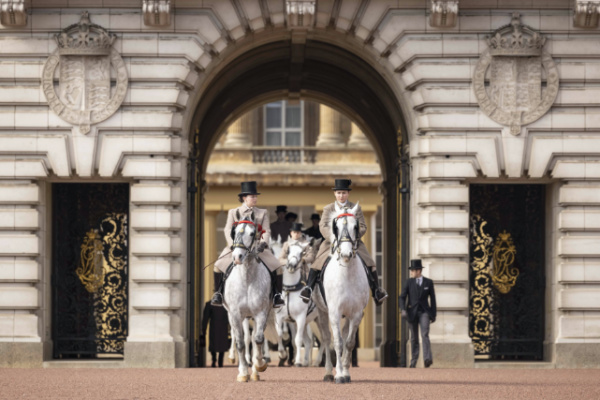
Members of the Household Mounted Regiments leaving Buckingham Palace in a rehearsal of the Coronation Procession. More than 6,000 men and women of the armed forces will participate in the coronation next month in the largest military ceremonial operation for 70 years. PICTURE: Sgt Donald C Todd/UK MOD © Crown copyright 2023.
Rehearsals at Buckingham Palace for King Charles III coronation. PICTURE: Sgt Donald C Todd/UK MOD © Crown copyright 2023.
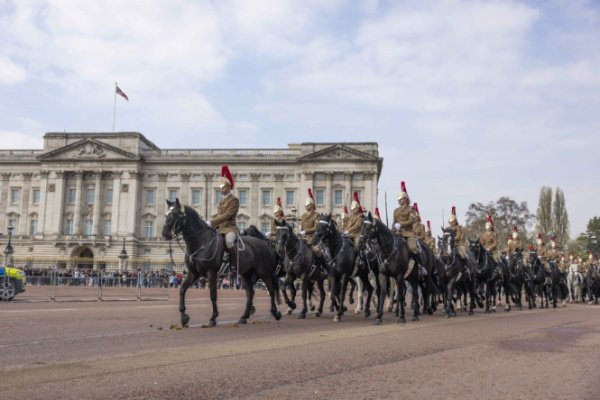
Approaching Buckingham Palace as part of rehearsals for the coronation of King Charles III. PICTURE: Sgt Donald C Todd/UK MOD © Crown copyright 2023.
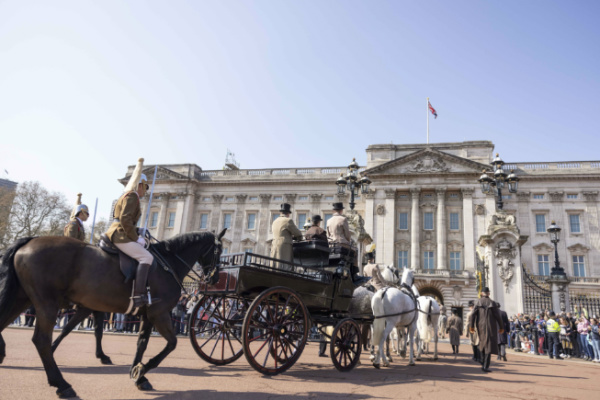
Members of the Household Mounted Regiments provided the escort for a number of royal coaches from Buckingham Palace up the Mall to ensure timings and pacing was correct for the coronation next month. PICTURE: Sgt Donald C Todd/UK MOD © Crown copyright 2023
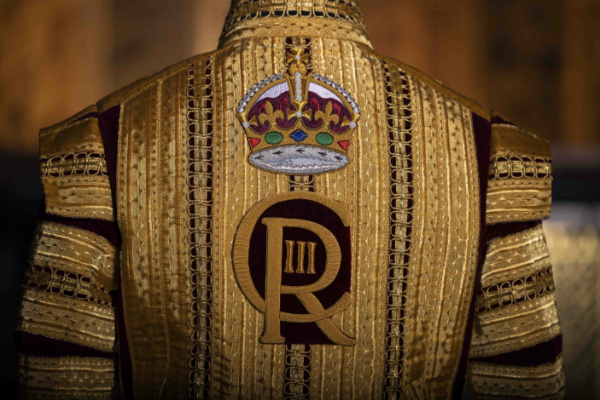
Image of drum major’s new State Ceremonial Uniform of the household Division, taken at The Royal Military Chapel (The Guards’ Chapel) in London. PICTURE: Sgt Donald C Todd/UK MOD © Crown copyright 2023

This Week in London – Coronations at Westminster Abbey; tulips at Hampton Court; St Bartholomew at The National Gallery; and, Food Season at the British Library…

A new exhibition exploring the 1,000-year history of coronations at Westminster Abbey has opened in the abbey’s medieval chapter house. The exhibition, which has opened ahead of the coronation of King Charles III on 6th May, draws on historic illustrations and archive photography to explore the elements of the coronation service including the oath-taking, anointing, investing and crowning and takes a closer look any some of key artefacts present in the ceremony including the Coronation Chair. The exhibition, which is free with admission to the abbey and which runs until the end of September, is part of a season of events celebrating the coronation including themed late evenings, family activities and special afternoon teas at the Cellarium Café. Meanwhile, the abbey has also announced that visitors will be able to view the ‘Coronation Theatre’ – the special area which will be built for the historic occasion, from the Abbey’s North and South Transepts – following the coronation. Tickets for the special viewing – which will include the chance to see key elements from the coronation service including the Coronation Chair still in position on the Cosmati Pavement – can be purchased for timed slots between 8th and 13th May. For more on the abbey’s events surrounding the coronation, see www.westminster-abbey.org/events.

Tulips at Hampton Court Palace in 2021. PICTURE: Derek Winterburn (licensed under CC BY-ND 2.0)

Hampton Court Palace bursts into colour from Friday with its annual Tulip Festival. More than 110,000 bulbs have been planted to creat dramatic displays in the formal gardens and cobbled courtyards, among them a selection of heirloom bulbs on display in the Lower Orangery Garden which presents visitors with the chance to see tulips as they would have looked during the time of King William III and Queen Mary II, soon after the flowers were first introduced to Britain. Thanks to a special relationship with Netherlands-based Hortus Bulborum, the bulbs on display include Sylvestris (1595) and Rubella Broken (1700) as well as the Orange King (1903) and Queen of the Night (1940). Other highlights of the festival include 3,000 wine-toned tulips, including the merlot variety, flowing down from the steps and parapet of the Wine Fountain, as well as a floral fantasy in the palace’s courtyards in which tulips such as Raspberry Ripple, Apricot Emperor and Purple Prince flow out of wheelbarrows, barrels and a horse cart, and a free-style tulip planting in the Kitchen Garden inspired by Van Gogh’s 1883 painting, Bulb Fields. Runs until 1st May. Admission charge applies. For more, see https://www.hrp.org.uk/hampton-court-palace/whats-on/tulip-festival/.

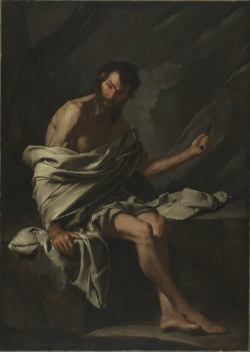
Bernardo Cavallino (1616 ‑ 1656?), Saint Bartholomew (about 1640-1645), oil on canvas H x W: 176 x 125.5 cm; The National Gallery, London. Bought with the support of the American Friends of the National Gallery, 2023
PICTURE: © The National Gallery, London

The recently acquired Bernardo Cavallino work, Saint Bartholomew has gone on show at The National Gallery. The painting, which dates from 1640-45 and which was last exhibited at The Metropolitan Museum of Art in New York in 1993, is being displayed alongside other 17th century works by artists such as Caravaggio, Artemisia and Orazio Gentileschi, Guercino, Reni and Ribera in the Hans and Julia Rausing Room (Room 32). The National Gallery has one other work by Cavallino – Christ driving the Traders from the Temple – but his depiction of Saint Bartholomew is considered one of his most splendid works. Admission is free. For more, see nationalgallery.org.uk.

Featuring everything from a celebration of African Caribbean takeaways to a “deep-dive” into the issues surrounding food production and access, Food Season kicks off at the British Library Monday. Highlights include a discussion of the sandwich by food writers Nigella Lawson, Jonathan Nunn and Rebecca May Johnson, a day-long celebration of African Caribbean cuisine featuring chefs and broadcasters Jimi Famurewa, Fatmata Binta and Andi Oliver, and, an exploration of the big challenges in food, land use and food production featuring author Henry Dimbleby alongside Dr Tara Garnett, Nick Saltmarsh, Abby Allen and Dimitri Houtart. Runs until 7th June. Admission charges apply. For the full programme, see www.bl.uk/events/food-season.

Send all items to exploringlondon@gmail.com

Where’s London’s oldest…chair?

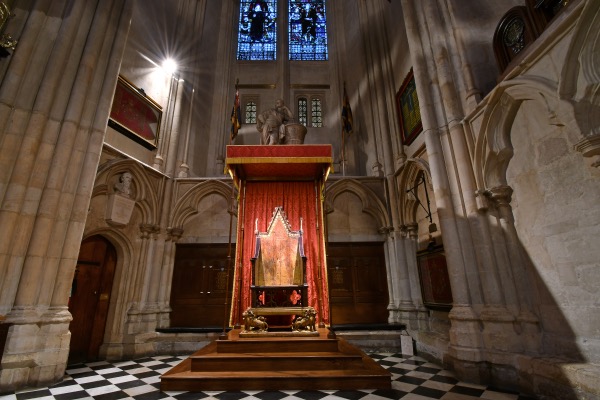
The Coronation Chair in Westminster Abbey PICTURE: Jim Dyson/Getty Images/Dean and Chapter of Westminster

The coronation of King Charles III is taking place in Westminster Abbey on 6th June and in preparation for that, the Coronation Chair is getting a makeover.

The six foot tall chair, which was made around 1300, is commonly referred to as the oldest piece of furniture in the UK which is still used for its original purpose and which is by a known maker.

The chair was constructed on the orders of King Edward I in 1300-1301 specifically to hold the Scone of Stone which he had brought south from Scotland several years before and which he had given into the care of the Abbot of Westminster.

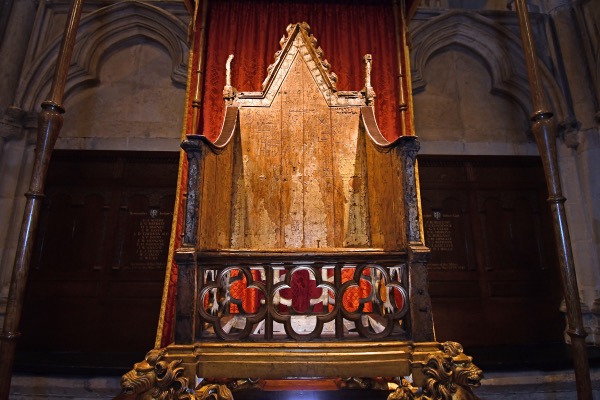
Made of oak and painted by one Master Walter, the chair was decorated with patterns of birds, foliage and animals on a gilt background. On the seat back was painted the figure of a king, possibly King Edward I, with his feet resting on a lion. The chair, which would have had the appearance of being made of gold, would have also been decorated with coloured glass.

The space for the stone below the seat was originally fully enclosed and it’s believed the chair originally contained no seat with the King sitting on a cushion placed directly on the Stone of Scone.

The chair now rests on four gilt lions which were added in the 16th century (although those currently there are replacements made in 1727).

The Coronation Chair in Westminster Abbey PICTURE: Jim Dyson/Getty Images/Dean and Chapter of Westminster

While there is some debate over whether King Edward II was sitting in the chair when he was crowned in 1308, that has certainly been the case from the 1399 when King Henry IV was crowned while sitting on it. Twenty-six subsequent monarchs including everyone from King Henry VIII to Queen Elizabeth II followed suit (Oliver Cromwell, meanwhile, had the chair removed to Westminster Hall when installed there as Lord Protector).

The chair has been graffitied in earlier centuries thanks mostly to Westminster schoolboys and visitors. Among the most legible graffiti scrawled upon it is “P Abbott slept in this chair 5-6 July 1800”. It also suffered minor damage in a bomb attack in 1914 thought to have been carried out by Suffragettes (it didn’t suffer any damage in World War II thanks to its being removed to Gloucester Cathedral).

The Stone of Scone, which had been taken briefly back to Scotland by Scottish Nationalists in 1950, was formally returned to Scotland in 1996 where it can now be seen at Edinburgh Castle. It is being returned to London for the coronation.

The chair, which for centuries had been kept in the Chapel of St Edward the Confessor, was moved to the abbey’s ambulatory in 1998 and then again moved again in 2010, this time to a specially-built enclosure in St George’s Chapel, located at the west end of the nave, so it could undergo conservation work. The two year conservation program was completed in 2013.

The chair is currently undergoing cleaning and work to stabilise what’s left of the gilding ahead of the coronation.

This Week in London – London painted large; Donatello at the V&A; and, the first King Charles III stamps…

The most extensive collection of large scale paintings of London ever seen opens at the City of London Corporation’s Guildhall Art Gallery on Friday. The Big City: London painted on a grand scale has at its heart a series of works by David Hepher which, on display in London for the first time, were given to the City by the artist in 2022. There’s also a four piece panel installation by John Bartlett and huge works by Frank O Salisbury and Terence Cuneo. The exhibition is open on a ‘pay what you can’ basis and runs until 23rd April. For more, see www.cityoflondon.gov.uk/thebigcity.

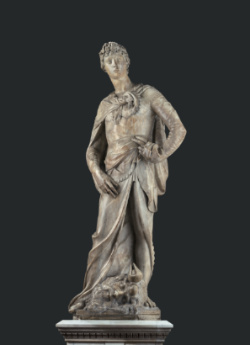
Donatello and Desiderio da Settignano, St. John the Baptist (Martelli Baptist), Museo Nazionale
del Bargello, Florence, courtesy of the Ministry of Culture. Photo: Bruno Bruchi.

The first major exhibition to explore the work of Renaissance sculptor Donatello opens at The V&A on Saturday. Donatello: Sculpting the Renaissance features works never before on display in the UK including his early marble David and the bronze Attis-Amorino – both of which come from the Museo Nazionale del Bargello in Florence, as well as the reliquary bust of San Rossore from the Museo Nazionale di San Matteo, Pisa, and bronzes from the High Altar of the Basilica of St Anthony in Padua. And, for the first time, the V&A’s carved shallow relief of the Ascension with Christ giving the keys to St Peter will be displayed alongside the Madonna of the Clouds from the Museum of Fine Arts, Boston, and Desiderio da Settignano’s Panciatichi Madonna from the Museo Nazionale del Bargello. Among the 130 objects in the display are also works by Donatello’s contemporaries and followers. Admission charge applies. The display runs until 11th June. For more, see www.vam.ac.uk.

See the designs for the first Royal Mail stamp to feature King Charles III in a new exhibition at The Postal Museum. The King’s Stamp traces the story of definitive stamps and features stamps from the reigns of six monarchs. Along with the designs for the first definitive stamps featuring King Charles III, highlights include one of only two sheets of Edward VII ‘Tyrian Plum’ and original letters revealing the influence of past monarch’s on stamp designs as well as the chance to see your silhouette on a stamp. Runs until 3rd September. Admission charge applies. For more, see www.postalmuseum.org/event/the-kings-stamp/.

Send all items for inclusion to exploringlondon@gmail.com.

LondonLife – Marking the King’s birthday; remembering the sacrifice of those who gave their lives in war; and, welcoming a new Lord Mayor…

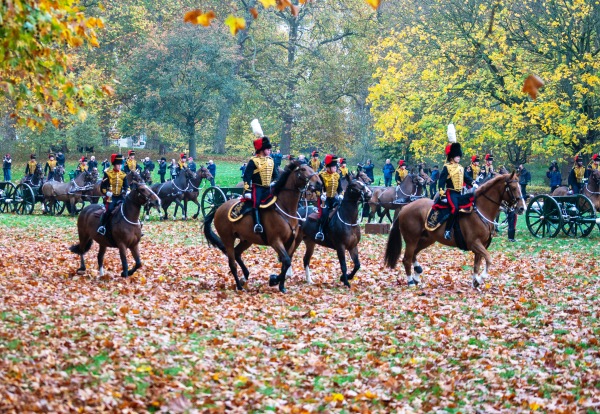
Members of the King’s Troop Royal Horse Artillery arrive at Green Park for the 41 gun salute to celebrate King Charles III’s 74th birthday on Monday. In London, The King’s Troop Royal Horse Artillery and The Honourable Artillery Company each fired celebratory Royal Salutes at 12 noon and 1pm respectively in what was the first formal birthday salute for King Charles III since he became monarch. PICTURE: Giles Anderson/UK MOD © Crown copyright 2022.
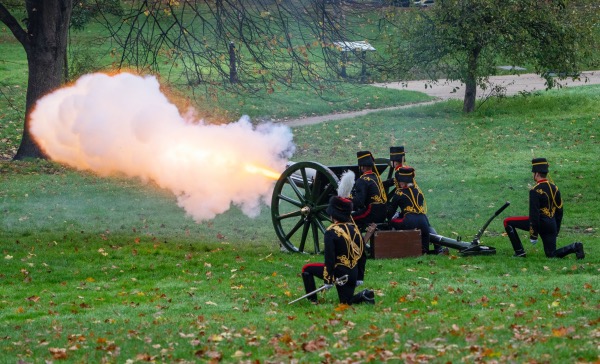
Members of the King’s Troop Royal Horse Artillery firing a 41-gun salute to celebrate King Charles III’s 74th birthday. PICTURE: Giles Anderson/UK MOD © Crown copyright 2022.
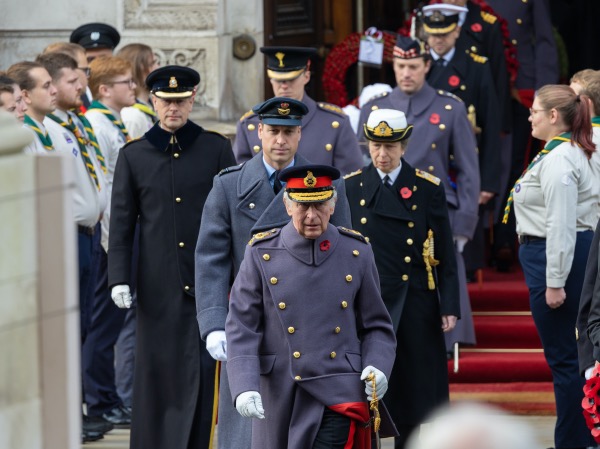
King Charles III leads the royal party to their position at the Cenotaph on Sunday as armed forces personnel from the Royal Navy, British Army and Royal Air Force came together for Remembrance Sunday and the National Service of Remembrance. Joining the King and members of the Royal Family, more than 600 members of the Armed Forces honoured the brave servicemen and women killed in all conflicts since the First World War. PICTURE: Simon Walker / No10 Downing Street/UK MOD © Crown copyright 2022.
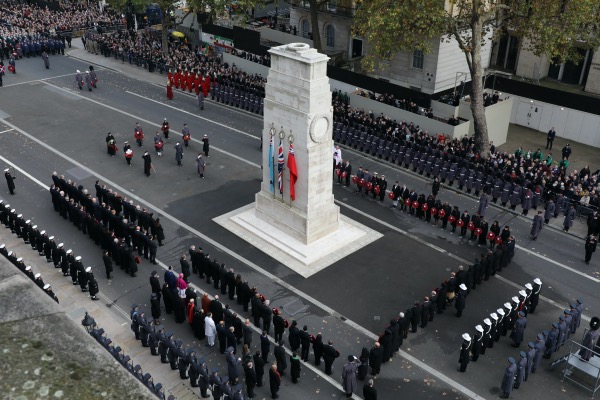
Armed Forces personnel from the Royal Navy, British Army and Royal Air Force gathered at the Cenotaph on Remembrance Sunday, for the National Service of Remembrance. PICTURE: Cpl Tim Hammond/UK MOD © Crown copyright 2022.
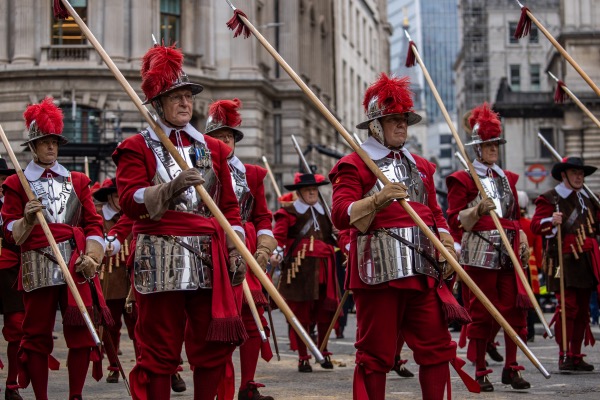
Pikeman march through the streets of the City of London for the Lord Mayor’s Show on Saturday. Some 6,500 people, 250 horses, more than 50 decorated floats, and a flying pig, took part in the parade. PICTURE: Corporal Rob Kane/UK MOD © Crown copyright 2022.
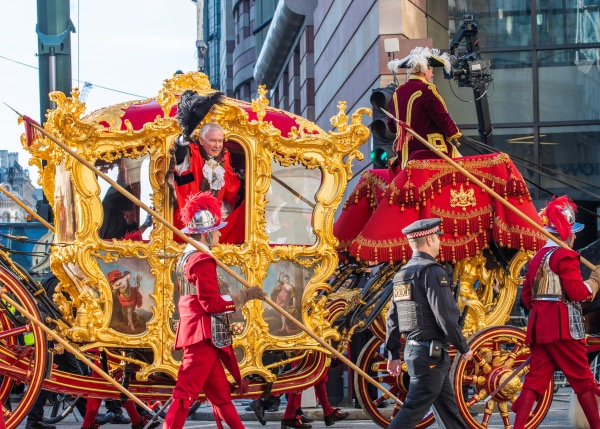
Nicholas Lyons, elected as the 694th Lord Mayor of the City of London, waves from the golden State Coach, which has been used in every Lord Mayor’s Show since 1757 and is the oldest ceremonial vehicle in regular use in the world. PICTURE: Lt Reilly AGC (ETS)/UK MOD © Crown copyright 2022

LondonLife – A tumultuous week in national politics and (another) new PM…

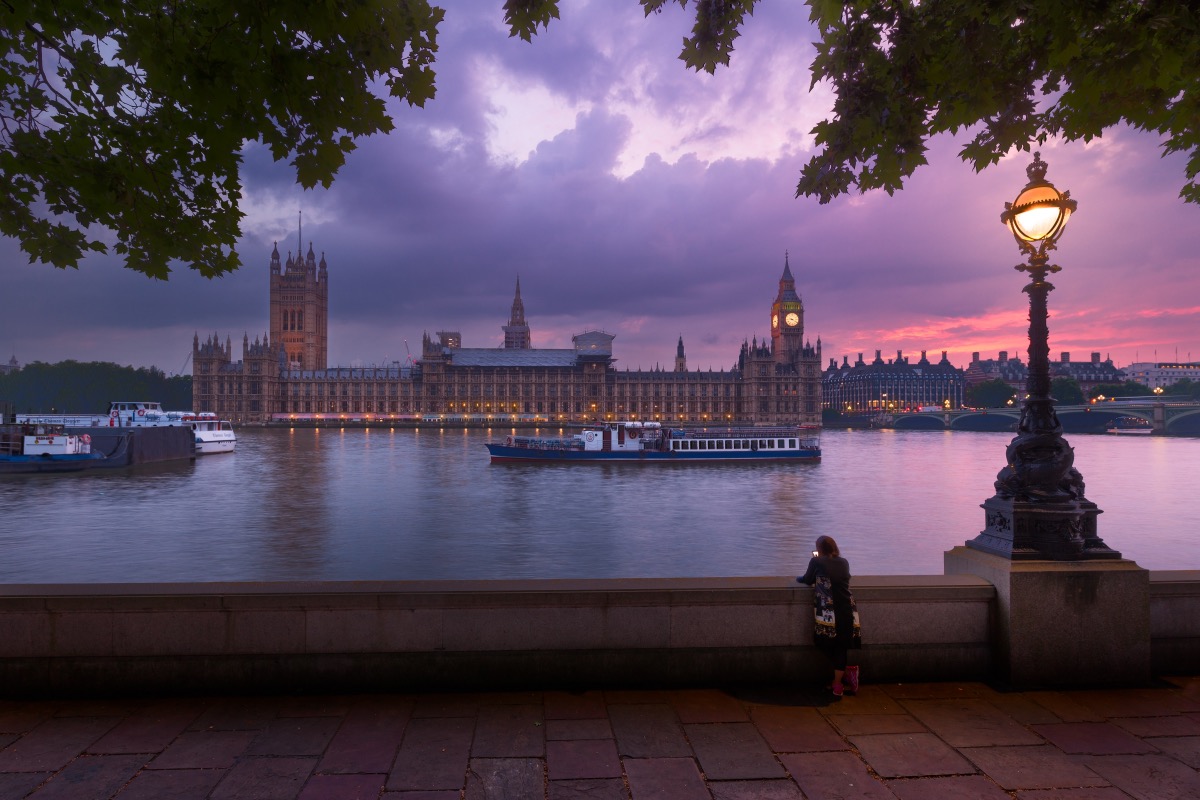
The Houses of Parliament (pictured here in 2020). PICTURE: Yaopey Yang/Unsplash

Rishi Sunak was appointed as the nation’s third Prime Minister in less than two months today following Liz Truss announcement she would resign on Friday. Sunak visited King Charles III at Buckingham Palace after Truss visited earlier to officially resign.

This Week in London – Hieroglyphs explored at the British Museum; King Charles III coronation date announced; ‘The Admiral’s Revenge’ in Greenwich’; and, Dickens and ghosts…

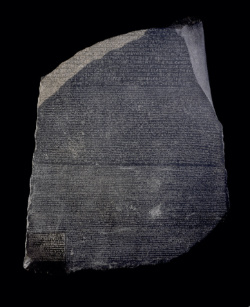
The Rosetta Stone. Granodiorite; Rasid, Egypt; Ptolemaic, 196 BC © The Trustees of the British Museum.

• Marking 200 years since French Egyptologist Jean-Francois Champollion (1790-1832) was able to decipher hieroglyphs using the Rosetta Stone, a new exhibition opening at the British Museum explores how the stone and other inscriptions and objects helped scholars unlock one of the world’s oldest civilisations. Hieroglyphs: unlocking ancient Egypt centres on the Rosetta Stone but also features more than 240 other objects, many of which are shown for the first time. Alongside the Rosetta Stone itself, highlights include: “the Enchanted Basin”, a large black granite sarcophagus from about 600 BCE which is covered with hieroglyphs and images of gods; the richly illustrated, more than 3000-year-old Book of the Dead papyrus of Queen Nedjmet which measures more than four metres long; and the mummy bandage of Aberuait, a souvenir from one of the earliest ‘mummy unwrapping events’ in the 1600s where attendees each received a piece of the linen, preferably inscribed with hieroglyphs. There’s also the personal notes of key figures in the race to decipher hieroglyphs including those of Champollion which come from the Bibliothèque nationale de France as well as those of England’s Thomas Young (1773 – 1829) from the British Library. The exhibition can be seen in the Sainsbury Exhibition Gallery until 19th February. Admission charge applies. For more, see britishmuseum.org/hieroglyphs.

• King Charles III will be crowned at Westminster Abbey on 6th May next year, Buckingham Palace has announced this week. The Queen Consort, Camilla, will be crowned alongside him in the first such coronation since 12th May, 1937, when King George VI and Queen Elizabeth were crowned in the abbey. The ceremony, which will be conducted by the Archbishop of Canterbury, will, according to the palace, “reflect the monarch’s role today and look towards the future, while being rooted in longstanding traditions and pageantry”. King Charles III is expected to sign a Proclamation formally declaring the coronation date at a meeting of the Privy Council later this year. The first documented coronation at Westminster Abbey was that of King William the Conqueror on 25th December, 1066, and there have been 37 since, the most recent being that of Queen Elizabeth II on 2nd June, 1953.

https://www.youtube.com/embed/Vfmo5dgTEl0″ title=”YouTube video player” frameborder=”0″ allow=”accelerometer; autoplay; clipboard-write; encrypted-media; gyroscope; picture-in-picture” allowfullscreen

A new dark comedy, The Admiral’s Revenge, has opened in The Admiral’s House in the Old Royal Naval College, Greenwich. The play, set in 1797, features sea shanties, puppetry and follows a crew of shipmates in the wake of the ill-fated Battle of Tenerife. Audiences have the chance to explore the Admiral’s House before the show and enjoy a complimentary rum cocktail. Runs until 12th November. For ticket prices, head to https://ornc.org/whats-on/1797-the-mariners-revenge/.

A new exhibition exploring Charles Dickens’ interest in the paranormal has opened at the Charles Dickens Museum in Bloomsbury. To Be Read At Dusk: Dickens, Ghosts and the Supernatural explores Dickens’ famous ghost stories, including A Christmas Carol, and reveals his influence on the genre. Highlights include a copy of The Chimes which Dickens gifted to fellow author Hans Christian Anderson, original John Leech sketches of Dickens’ ghosts of the past, present and future and original tickets and playbills relating to the author’s public performances of his ghost stories. The display will also look into Dickens’ own views on the supernatural as a fascinated sceptic and includes  correspondence in which he was asking about the location of a supposedly haunted house. Runs until 5th March. Admission charge applies. For more, see https://dickensmuseum.com/blogs/all-events/to-be-read-at-dusk-dickens-ghosts-and-the-supernatural.

Send all items to exploringlondon@gmail.com

King Charles III proclaimed monarch in London…

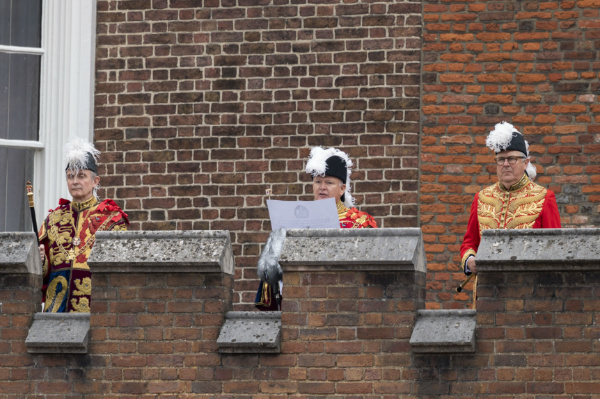
The Principal Proclamation of King Charles III was read by the Garter King of Arms at 11am from the balcony above Friary Court, St James’s Palace on Saturday. 10th September. PICTURE: LSgt Galvin/UK MOD © Crown copyright 2022
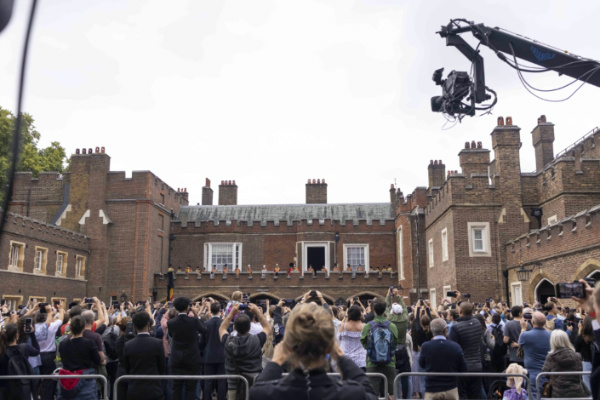
A wider view of the crowd gathered outside St James’s Palace. PICTURE: Sgt Donald C Todd RLC Photographer//UK MOD © Crown copyright 2022
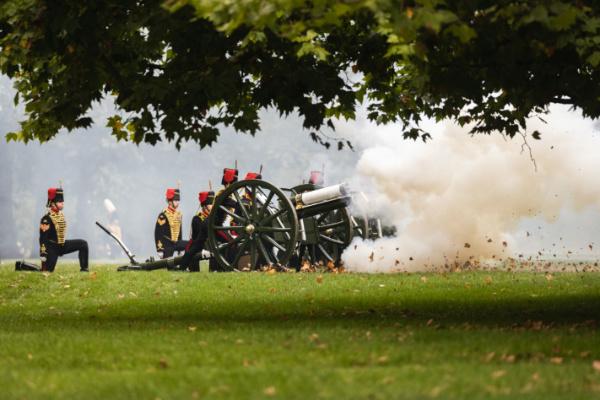
A Gun Salute at the Tower of London for the Principal Proclamation of King Charles III. Immediately following the Principal Proclamation, a Royal Salute of 41 rounds was fired by the King’s Troop Royal Horse Artillery in Hyde Park, and a Royal Salute of 62 rounds from HM Tower of London was fired by the Honourable Artillery Company (below). PICTURES: Above – Corporal Cameron Eden, RLC/UK MOD © Crown copyright 2022; Below – Sgt Jimmy Wise/UK MOD © Crown copyright 2022
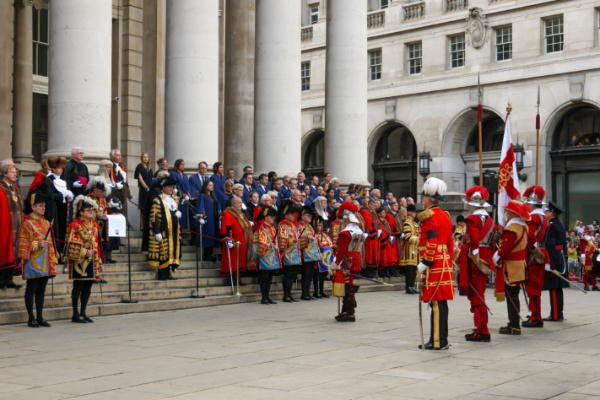
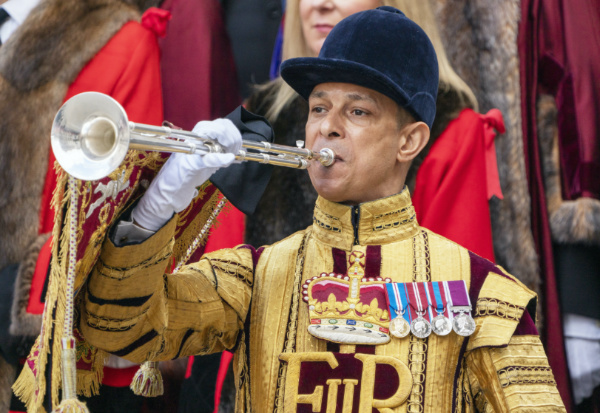
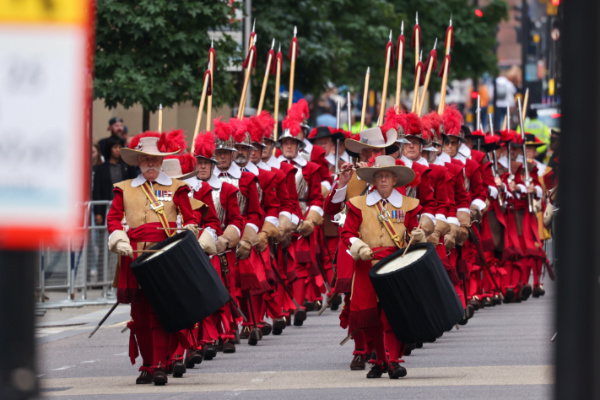
At noon, the Proclamation was read from the steps of The Royal Exchange (pictured) by Clarenceux King of Arms. The Lord Mayor of the City of London, together with the Court of Aldermen and Members of Common Council, were present. The Company of Pikemen and Musketeers of the Honourable Artillery Company, the Lord Mayor’s Body Guard in the City of London, were on duty at the Royal Exchange, accompanied by The Band of the Honourable Artillery Company and eight State Trumpeters of The Household Cavalry. PICTURE: PO Phot Joel Rouse/UK MOD © Crown copyright 2022
One of the State Trumpeters positioned on the steps of the Royal Exchange echoing the fanfare from four State Trumpeters at Mansion House as part of the ceremony of the Proclamation of His Majesty King Charles III from the Royal Exchange. PICTURE: Giles Anderson/©MoD Crown Copyright 2022
The Company of Pikemen and Musketeers (pictured) of the Honourable Artillery Company, the Lord Mayor’s Body Guard in the City of London, were on duty at the Royal Exchange. PICTURE: PO Phot Joel Rouse/UK MOD © Crown copyright 2022