Famous Londoners – Samuel Pepys

A navy administrator and an MP who lived in London for much for the 17th century, it is for his remarkable diary – filled with reflections on great events and the intimate goings on of daily life – that Samuel Pepys is renowned around the world.

Born the son of a tailor in Salisbury Court, Fleet Street (the site is now marked with a plaque), on 23rd February, 1633, Pepys (pronounced ‘peeps’) attended St Paul’s School before moving on to Cambridge University. After graduation, he entered the household of one of his father’s cousins, Sir Edward Montagu, as a secretary around 1655 – the same year he married Elisabeth de St Michel.

Under the patronage of Sir Edward – after he became the Earl of Sandwich – Pepys was appointed Clerk of the Acts to the Navy Board – a task which saw him playing a key role in shaping the English fleet which fought (unsuccessfully) in the Second Anglo-Dutch War (1665-1667).

In 1673, he became Secretary to the Admiralty and the same year was elected an MP for Castle Rising in Norfolk (he later became an MP for Harwich). Pepys also served as president of the Royal Society from 1684-1686, and even visited Tangier where he was involved in the evacuation of the short-lived English colony there. He was imprisoned twice in later years – at least once on suspicion of supporting the Jacobites – but the charges were dropped and he retired at the age of 57 in 1690.

In 1701 he moved out to a house in Clapham and lived there until his death on 26th May, 1703 (his wife Elisabeth had died many years earlier in 1669 and they’d had no children). His extensive library – including his six volume diary – were bequeathed to Magdalene College at Cambridge.

Despite an illustrious public career, it is his diary for which Pepys is most celebrated. Covering the years from 1660 to 1669 (he only stopped writing for fear he would go blind), it records his reactions to such monumental events as Charles II’s coronation (he was present as a youth at the beheading of Charles I), the Great Plague of London in 1665 and the Great Fire of London the following year as well as intimate details from his personal life including how he spent his leisure time, his various illnesses and his sexual liaisons. Written originally in a form of shorthand, it was first published in 1825 – and only fully published in 1976 – and has since gone on to enthral and entertain millions around the world.

Among places in London which still hold a Pepys connection are St Bride’s Church (he was baptised there), All Hallows by the Tower (it was in the tower from which Pepys watched the Great Fire), St Olave’s on Seething Lane (pictured above) where Pepys and his wife are buried (he was living in Seething Lane when he started the diary and St Olave’s served as his parish church between 1660 and 1674). Further down Seething Lane, there is a bust of Pepys in the gardens which now cover the Navy Office where Pepys once lived and worked.

There is also an exhibition on Pepy’s in Prince Henry’s Room at 17 Fleet Street (the building dates from around 1610 and was a pub when Pepys was alive), although it is currently closed.  An online version of Pepys’ diary can be found at the website Pepys’ Diary. For more on Pepys’ life, we do recommend Claire Tomalin’s best-selling biography Samuel Pepys: The Unequalled Self.

Wren’s London – 3. The Royal Observatory, Greenwich

Leaving Wren’s churches momentarily, we turn this week to another of Wren’s designs, that of the Royal Observatory in Greenwich in London’s east.

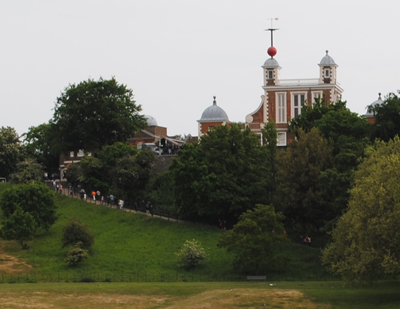
Commissioned in 1675 by King Charles II, the first part of the observatory – Flamsteed House, named for the first Astronomer Royal, John Flamsteed – was designed by Wren with, it is believed, the assistance of architect and scientist Robert Hooke.

Built using second-hand materials including stone brought from a Tudor fort at Tilbury, Flamsteed House was located on the former site of Greenwich Castle which had been previously used as a guest house and hunting lodge by Henry VIII. It is said to be the first purpose-built scientific research facility in the country.

The turreted building includes the Octagon Room from which Flamsteed made observations of events in the skies (although its position meant its use for this was somewhat limited), as well as living quarters for the astronomer. On top of the house is a red time ball which, since it was first used in 1833, has marked the time by falling at 1pm each day.

These days part of the National Maritime Museum and a UNESCO World Heritage Site since 1997, the site also hosts the Prime Meridian and is the place from where Greenwich Mean Time, since 1884 the basis for all world time, is calculated.

WHERE: Blackheath Avenue, Greenwich (nearest DLR station is Cutty Sark); WHEN: 10am to 5pm Monday to Sunday; COST: Entry is free; WEBSITE: www.nmm.ac.uk/places/royal-observatory/

Famous Londoners: Samuel Johnson

The man behind what is perhaps the most famous quote about London – “When a man is tired of London, he is tired of life” – Samuel Johnson was a noted writer, critic and raconteur of the 18th century whose work included a then unparalleled English language dictionary.

Often simply referred to as “Dr Johnson”, Johnson was also the subject of one of the most famous biographies ever written – that of his friend James Boswell’s aptly named Life of Samuel Johnson.

Born in 1709 in Lichfield, Staffordshire (the home is now a museum), Johnson – who often struggled with poor health and depression – was the son of a bookseller who managed to help fund his brief time at Pembroke College in Oxford before lack of funds meant he had to leave without a degree (he was later awarded an honorary degree).

He worked with his father and as a tutor before eventually, in 1737, heading to London with his friend and former pupil, actor David Garrick, and there worked for the rest of his life as a writer producing works including magazine articles and essays, poetry, sermons, and biographies.

In 1746, he was commissioned to produce the dictionary and rented  a property at 17 Gough Square, not far from Fleet Street, where he would spend the nine years working in it. Published in 1755, the dictionary was a remarkable work which not only won him acclaim ever since but also resulted in King George III granting Johnson a modest pension for the rest of his life (he had previously been arrested for debt).

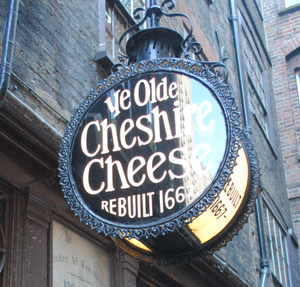
The Gough Square house is these days open to the public and includes an exhibition on Johnson’s life, particularly with regard to his time there (there’s a statue of his cat Hodge in the square itself). Other sites which Johnson is known to have frequented include Ye Olde Cheshire Cheese in Fleet Street, the Anchor Inn in Bankside, the Theatre Royal Covent Garden (now the Royal Opera House) in Bow Street where the Beefsteak Club met, and St John’s Gate in Clerkenwell where he once had an office.

Johnson married an older widow, Elizabeth Porter, in 1735, but she died in 1752 and it was following her death that Francis Barber, a former Jamaican slave, moved in as his servant, eventually becoming Johnson’s heir.

Johnson’s friends included some of the great luminaries of the time, including artist Joshua Reynolds, philosopher Edmund Burke, poet Oliver Goldsmith, and, of course, Boswell.

Following a series of illnesses, Johnson died in 1784 and was buried in Westminster Abbey. The 300th anniversary of his death was marked with a series of events last year including a re-enactment of the walk Johnson and Garrick made from Lichfield to London.

Dr Johnson’s House (17 Gough Square, nearest tube is Temple, Holborn or Chancery Lane) is open Monday to Saturday, 11am-5.30pm (5pm from October to April). Entry costs £4.50 an adult, £3.50 for concessions, £1.50 for children and family tickets are available for £10. For more information, see www.drjohnsonshouse.org.

10 sites in London you may not know about – 5. Richmond Park

OK, something this big can’t exactly be a secret but due to the fact it lies well out of the city centre, the vast expanse of Richmond Park in the city’s outer south-west, not far from the Thames, can get overlooked.

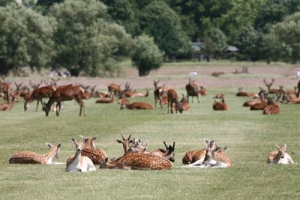
At almost 1,000 hectares, Richmond Park is the largest open space in the city and is home to some 650 Red and Fallow deer who roam about at will.
While the park’s royal connections go back to Edward I (1272-1307) when the area was known as the Manor of Sheen, a name which was changed to Richmond during the reign of Henry VII (1485-1509), it wasn’t until 1637 that Charles I decided to enclose the land with walls that remain to this day.

Deer aside, the park is also home to Pembroke Lodge which in 1847 became the home of then Prime Minister Lord John Russell (and is now a restaurant). The park’s features include King Henry’s Mound – which boasts great views on a clear day including that of St Paul’s Cathedral (12 miles away) – and the Isabella Plantation – an ornamental woodland garden.

WHERE: The park is located south of the Thames-side village of Richmond. Nearest tube is Richmond.  WHEN: 7am in summer to dusk; COST: Free to enter; WEBSITE: www.royalparks.org.uk/parks/richmond_park/

Image: Courtesy of Royal Parks. © Giles Barnard

10 London sites you may not know about – 1. Eltham Palace

London is a vast city and whether you’re a first-time visitor or a seasoned Londoner, there’s probably still many places you haven’t yet visited. So over the next few posts we’re running a list of 10 of the less well-known sites for your perusal…

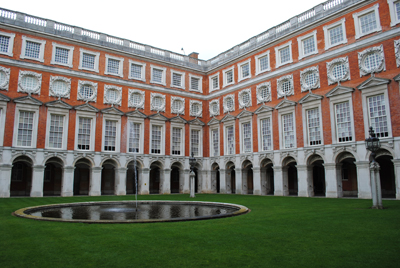
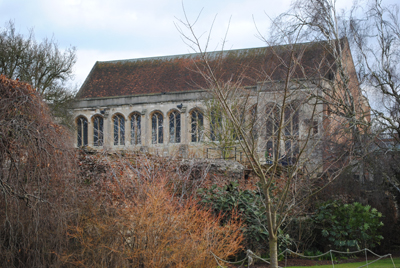
1. Eltham Palace. While Henry VIII’s final home, Hampton Court Palace, remains among London’s top 10 tourist sites, less well known is his childhood home, Eltham Palace. True, nowhere near as much of it remains from the Tudor and earlier medieval times, but with a later adjoined 1930s mansion housing some amazing Art Deco interiors, the medieval remains are just the start.

The palace’s history can be traced back to the Domesday survey of 1086. It passed into royal ownership in 1305 when then owner, Anthony Bek, Bishop of Durham, gave it to King Edward I.

Numerous kings and their families spent time at Eltham including Edward III, Henry IV, and Henry VI, and it was Edward IV who, between 1475 and 1480, ordered the Great Hall built – a treasure which still survives.

Henry VIII was the last English monarch to spend considerable time at Eltham – it was elipsed by Greenwich Palace as a royal residence – and, after falling into disrepair into the seventeenth century, it passed back into ‘non-royal’ hands.

Much of what stands at Eltham today dates from the 20th century when millionaire socialites Sir Stephen and Lady Virginia Courtauld oversaw the restoration of the medieval Great Hall and the construction of an adjoining mansion which is a masterpiece of 1930s style incorporating a combination of Art Deco, “ocean-liner style” and Swedish design.

The Courtaulds left for a new life in Southern Rhodesia in 1944 and from then until the early 1990s the military occupied the property. English Heritage subsequently oversaw a major restoration and opened it to the public in 1999.

It’s well worth a visit to see the medieval Great Hall (which apparently boasts the third largest hammer-beam roof in England) and the 1930s property (aside from the stunning interiors – including Virginia’s gold-plated bathroom and warmed sleeping quarters for the Courtauld’s pet lemur – there’s also some great Courtauld family movies on show which give an amazing insight into the family which once lived there and an audio guide tour fittingly narrated by David ‘Poirot’ Suchet). There’s also 19 acres of gardens to explore, including a magnificent medieval bridge spanning what remains of the moat, and a cafe to while away the afternoon.

WHERE: Off Court Road, SE9. Half a mile from Eltham and Mottingham train stations. COST: £8.30 adult/£7.20 concession/£4.20 child (garden only tickets are available). English Heritage members free. WEBSITE: www.elthampalace.org.uk