We pause our series on Winnie-the-Pooh to take a brief look at three uniquely London traditions which take place each Easter…
News
This Week in London – Sophia Duleep Singh at Kensington Palace; ‘Fairy Tales’ at the British Library; astronomers at the National Maritime Museum; and, the Science Museum celebrates ‘Star Trek’…
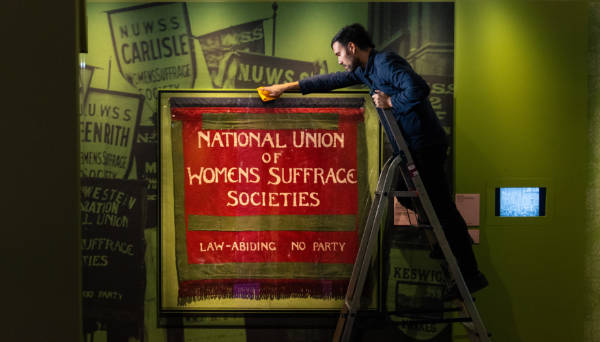
• A new exhibition celebrating the 150th anniversary of Punjabi princess and suffragette Sophia Duleep Singh opens at Kensington Palace today. The Last Princess of Punjab: The story of Sophia Duleep Singh and the women who shaped her explores the life of Sophia Duleep Singh and her intersections with six other women including her sisters Catherine and Bamba, her mother Bamba Muller, grandmother Jind Kaur and godmother Queen Victoria. On show is an ornately painted rocking horse from Princess Sophia’s childhood at Elveden Hall in Suffolk which was remodelled to resemble an Indian Mughal palace, an original copy of The Suffragette featuring an iconic image of Sophia selling copies of the magazine on the gate of Hampton Court Palace, a “No Vote, No Tax’ banner used in the early 1900s protest marches, and Princess Sophia’s handwritten letter to Winston Churchill reporting police brutality at the Black Friday suffragette march. And, for the first time since 1886, an iconic portrait of Jind Kaur will be reunited with real earrings she wore in the image. The exhibition runs until 8th November. Admission charge applies. For more, see https://www.hrp.org.uk/kensington-palace/whats-on/the-last-princesses-of-punjab/.
• A celebration of the fantastical creatures, heroes and villains that populate the world of fairy tales opens at the British Library tomorrow. Fairy Tales takes visitors on a journey through an mysterious forest and enchanted palace as they discover the origins and evolution of fairy tales. Items on show include a Mervyn Peake illustration made for an edition of Household Tales by the Brothers Grimm, early printed editions of the legend of Mulan, puppets of Kai and Gerda from the Little Angel Theatre’s production of The Snow Queen, a copy of Cinderella illustrated by Arthur Rackham, a beautiful manuscript illustration of a dragon from the Persian legend, the story of Darab, and the original manuscript of Lewis Carroll’s Alice’s Adventures Under Ground. Admission charge applies. Runs until 23rd August. For more, see https://events.bl.uk/exhibitions/fairy-tales.
• A new temporary space-themed gallery opens at the National Maritime Museum in Greenwich tomorrow. Astronomers Take Over is a hands-on space that provides the opportunity to meet astronomers from the Royal Observatory just up the hill, participate in science demonstrations and ask questions about space and astronomy. The gallery also includes a planetarium which features live astronomers shows ranging from ‘Animals in Space’ for young visitors to ‘The Night Sky’ – a classical guide to the cosmos, and ‘Solar System Sightseeing’, an introduction to Earth’s celestial neighbourhood. Science theatre shows will also be held at the museum from 3rd April. Admission charge applies. The gallery is open to 2028. For more, see https://rmg.co.uk/takeover.
• The Science Museum in South Kensington is marking the 60th anniversary of Star Trek with a new program of events. They include the chance to see all 13 Star Trek films on one of the biggest screens in Europe as well as a free trail featuring iconic objects from the franchise’s archives and an exclusive range of anniversary merchandise for purchase. For more, see sciencemuseum.org.uk/star-trek-60.
Send all items for inclusion to exploringlondon@gmail.com
This Week in London – Sculpture at the V&A East; ‘Londoners on Trial’; and, Elsa Schiaparelli…
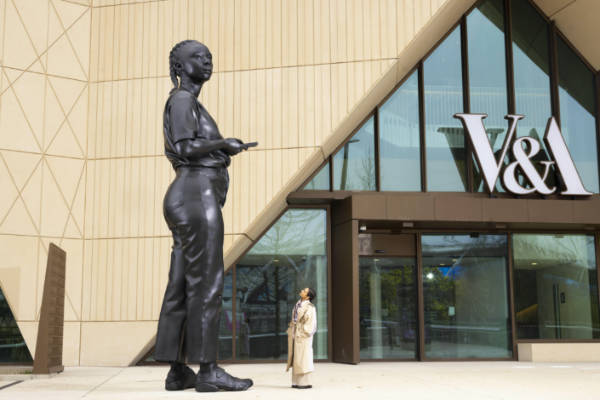
• An 18 foot tall sculpture of a young person, holding a mobile phone and looking towards a horizon “full of possibilities”, has appeared outside the V& East Museum ahead of its public opening next month. A Place Beyond, the work of artist Thomas J Price, has been created from an amalgamation of images, 3D scans and observations and has been constructed in bronze using digital technologies and ancient techniques. Also announced this month have been the artists involved with New Work, the V&A’s new six-monthly rotating creative commissions programme. The artists – who include Turner Prize-nominated artist Rene Matić, Lawrence Lek, Laura Wilson, Tania Bruguera, Es Devlin, Shahed Saleem, Justinien Tribillon and Carrie Mae Weems – have been invited to reflect on east London’s layered histories and creative futures under the theme of Making East London. The works will be displayed across V&A East’s two sites – V&A East Museum and Storehouse – from the museum’s public opening on 18th April. For more, see vam.ac.uk.
• On Now: Londoners on Trial: Crime, Courts and the Public 1244-1924. This free exhibition at The London Archives explores the history of law and order in the city and draws on documents from famous cases involving the likes of 17th century pickpocket Moll Cutpurse, highwayman Dick Turpin, Jack Sheppard, Oscar Wilde, and suffragette Sylvia Pankhurst. runs until 25th February next year. For more, head to www.thelondonarchives.org/visit-us/exhibitions/londoners-on-trial.
• The work and impact of Elsa Schiaparelli, one of the 20th century’s most innovative fashion designers is the subject of a new exhibition at the V&A. Opening on Saturday in the Sainsbury Gallery, Schiaparelli: Fashion Becomes Art follows the fashion house’s evolution from its origins through to its present day incarnation under creative director Daniel Roseberry. It features more than 200 objects including garments, accessories, jewellery, paintings, photographs, sculpture, furniture, perfumes and archive materials. Highlights include the V&A’s Skeleton dress and the Tear dress as well as a hat shaped to look like an upside-down shoe – all of which were conceived in collaboration with Salvador Dalí. There will also be artworks by Pablo Picasso, Jean Cocteau and Man Ray on display. Runs until 1st November. Admission charge applies. For more, see vam.ac.uk.
Send all items for inclusion to exploringlondon@gmail.com.
This Week in London – St Patrick’s Day celebrations; Banqueting House ‘sneak peeks’; and, George Stubbs…
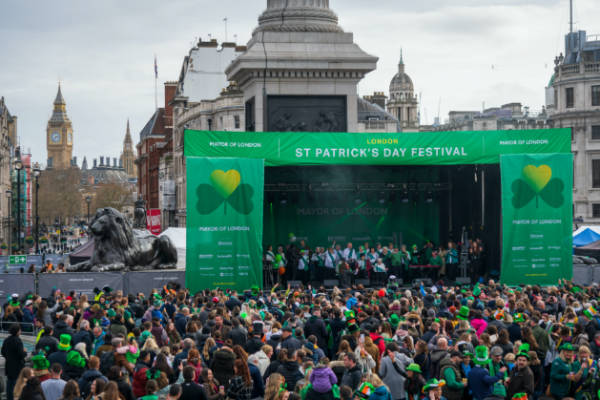
• The St Patrick’s Day parade and celebrations in Trafalgar Square take place this Sunday. The parade, which features Irish CountyAssociations, marching bands, dancers, musicians and carnival performers, kicks off at noon and heads along Piccadilly, through Piccadilly Circus, down Regent Street and then Cockspur Street before ending in the square. In the square, Irish comedian Rachel Galvo will host the main stage where acts will include traditional and contemporary performances from the likes of Irish Culture Centre Hammersmith’s Singing and Reminiscence Choir, Moonlight: The Philip Lynott Enigma, Carrie Baxter, Cór na nÓg Caisleán, Jig and Swig and the London Bodhrán Band, The Wran, Nell Mescal, Huartan, David Keenan and Robert Arkins ‘Commitments’. There’s also a tent hosting comedy, spoken word, music, and Irish film and TV shorts, an exhibition, Irish language lessons, children’s arts and crafts, and the ‘Oldbog Cottage’ experience. Meanwhile, celebrity chef Anna Haugh and The Wee Sister restaurant will be serving Irish dishes while the square will also host a range of stalls offering food, crafts and other Irish delights. For more, see london.gov.uk/events/st-patricks- festival-2026
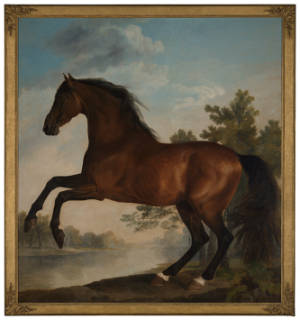
• George Stubbs’ (1724-1806) monumental portrait of a rearing horse is at the centre of an exhibition which opened at The National Gallery this week. Alongside Scrub, a bay horse belonging to the Marquess of Rockingham (c1762), Stubbs: Portrait of a Horse also features other paintings and works on paper by the artist and visitors can compare the large-scale equine portrait with another of Stubbs’ masterpieces, Whistlejacket (c1762), which is on display nearby in Room 34. The exhibition can be seen in Room 1 until 31st May. Admission is free. For more, see www.nationalgallery.org.uk/.
• People are invited to visit the Banqueting House in Whitehall for a “sneak preview” following a major project to upgrade visitor facilities ahead of its formal reopening this summer. The 400-year-old building boasts a new passenger lift offering step-free access to the main hall, home, of Peter Paul Rubens’ masterpiece ceiling, for the first time while a new heating system has been installed along with a new sustainably sourced English Oak floor. The sneak previews will take place on 20th March, 3rd April, 1st May, 29th May and 26th June ahead of its reopening on 1st August. Admission charge applies. For more, see www.hrp.org.uk/banqueting-house/.
Send all items for inclusion to exploringlondon@gmail.com
This Week in London – Jock McFadyen’s large-scale Tube paintings revisited; Rose Wylie at the RA; new galleon arrives at Kensington Gardens; and, IWM Duxford’s new rooms…
• Jock McFadyen’s large-scale Tube paintings have come together in a new exhibition opening at the Guildhall Art Gallery on Friday. Jock McFadyen with Jem Finer: Underground (and Surface) revisits McFadyen’s Underground series from the late 1990s and also features a layered soundscape by The Pogues’ Jem Finer which were composed from field recordings on the Northern and Central lines. Admission is by Pay What You Can. Runs until 20th September, 2026. For more, see www.cityoflondon.gov.uk/events/underground-and-surface-exhibition.
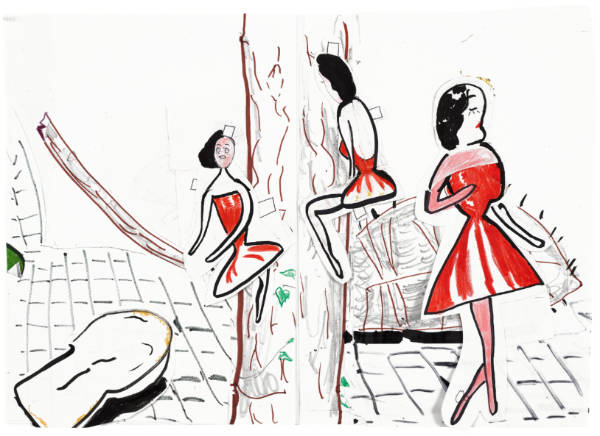
• The largest survey to date of celebrated British artist and Royal Academician Rose Wylie opens at the Royal Academy on Saturday. Rose Wylie: The Picture Comes First features more than 90 works, including Wylie’s most iconic, alongside new paintings and drawings. Works on show include those depicting memories of
family life and bombing raids in London during World War II such as Wing Tips and Blue Doodlebugs (2022/23), Room Project (2002-3) – Wylie’s first major series to receive significant critical acclaim, works on paper such as Bottom Teeth, Self-Portrait (2016), and works from the series Film Notes. It concludes with four large monochromatic paintings of animals in ginger, black, blue and red made directly by the artist onto the canvas using her hands. Runs in the Main Galleries until 19th April. Admission charge applies. For more, see www.royalacademy.org.uk/exhibition/rose-wylie.
• A life-sized wooden galleon has arrived in Kensington Gardens where it will become the centrepiece of the Diana, Princess of Wales Memorial Playground when it reopens this summer. The ship has been manufactured in Frasdorf, Germany, and is predominately made from mountain larch wood drawn from sustainably managed forests in the Bavarian Alps. It’s part of a £3 million renewal of the free-to-enter playground, which is inspired by the adventures of Peter Pan. For more, see www.royalparks.org.uk/visit/parks/kensington-gardens/diana-memorial-playground.
• Further Afield – Historic Duxford: Air Crew Room, Pilot’s Briefing Room and Pilots Locker Room. Three newly transformed historic rooms opened at IWM Duxford just south of Cambridge late last year, each of which contains newly acquired objects and interactive elements. The air crew room, located beside the Battle of Britain Hangar, tells the stories of the US 8th Air Force and RAF Bomber Command through personal objects belonging to former pilots and crew. They include false identity papers and the diary of American fighter pilot Lonnie Moseley of Duxford’s 78th Fighter Group who was forced to bail out of his P-47 Thunderbolt over France in 1944 and took shelter with a local French farmer’s family until returning to England. Nearby in the pilot’s briefing room, meanwhile, visitors can enjoy an audio-visual recreation of a real-life briefing given on D-Day in which they can sit among their ‘fellow pilots’. And in the pilot’s locker room, the everyday life of pilots who were stationed at Duxford in 1940 is explored including with interactive elements such as the opportunity to try on replica uniforms and see lockers containing recreated details of some of the pilots such as a conversation between 19 Squadron’s George ‘Grumpy’ Unwin and 302 (Polish) Squadron’s Julian Kowalski. The rooms can be visited with standard admission. For more, see www.iwm.org.uk/visits/iwm-duxford.
Send all items from inclusion to exploringlondon@gmail.com.
This Week in London – Lunar New Year celebrations; Aardman at the Young V&A; and, the women in Dickens’ life…
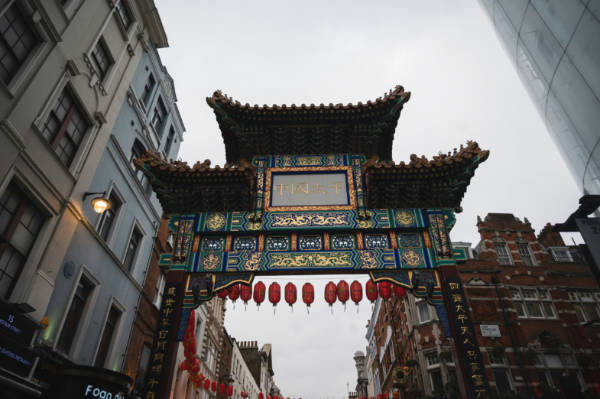
• Lunar New Year festivities will be held in Chinatown in central London this weekend including lion dances and the Chinese New Year Parade. Lion dances will be held throughout Chinatown on Saturday and Sunday while the parade kicks off at 10am on Sunday just east of Trafalgar Square reaching the square at 12 where an afternoon of festivities will be held. For more, see www.london.gov.uk/events/lunar-new-year-festival-spring-2026. Meanwhile, Lunar New Year celebrations will also be held in Greenwich on Saturday. The celebrations include lion dances, musical and dance performances, a martial arts demonstration, workshops including one on Tibetan dance and another on lantern making and the chance to sample Asian food. For more, see www.rmg.co.uk/lunarnewyear.
• A new exhibition at the Young V&A in Bethnal Green takes a look behind the scenes of stop-motion classics such as Wallace & Gromit, Chicken Run and Shaun the Sheep. Inside Aardman: Wallace & Gromit and Friends, created primarily for children and families and marking Aardman’s 50th annversary, features some 150 objects including never-seen-before models, sets and storyboards from Aardman’s archives as well as interactive activities ranging from designing characters and experimenting with lighting through to creating live action videos. Among the items on show are early sketches of Wallace & Gromit, a hand-drawn storyboard from The Wrong Trousers (1993) train chase, Wallace & Gromit’s motorbike and sidecar from Vengeance Most Fowl (2024), and the airship model from The Pirates! (2012). Admission charge applies. Runs until 15th November. For more, see vam.ac.uk/young.
• The women who influenced Charles Dickens are at the centre of a new exhibition at the Charles Dickens Museum. Extra/Ordinary Women features a portrait of Dickens’ daughters, Katey and Mamie, on display for the first time, Catherine Dickens’s cookbook, and a draft preface to an 1857 manual for educating working class children written by penned by Angela Burdett Coutts and including edits by Dickens in blue ink as well as items owned by Ellen Ternan, best known for her 12-year extra-marital relationship with Dickens. Admission charge applies. Runs until 6th September. For more, see https://dickensmuseum.com/blogs/all-events/extra-ordinary-women.
Send all items for inclusion to exploringlondon@gmail.com
This Week in London – Lucian Freud’s etching plates and prints; The Jolly Postman at the Postal Museum; and, Beano at the Tower…
• Newly acquired etching plates and prints of Lucian Freud’s go on display for the first time in a new exhibition at The National Portrait Gallery. Lucian Freud: Drawing into Painting, the UK’s first museum exhibition to focus on the artist’s works on paper, features rarely-seen drawings and preparatory studies alongside iconic paintings and is said to offer “unprecedented insight” into Freud’s creative process and working methods. The display features some 170 drawings, etchings and paintings and includes a look at the childhood drawings, sketchbooks, letters and unfinished paintings as well as a number of drawings and etchings that have a relationship with specific paintings. Runs until 4th May. Admission charge applies. For more, see www.npg.org.uk.
• An interactive exhibition celebrating 40 years of the much-loved children’s book The Jolly Postman opens at the Postal Museum on Saturday. Visitors are invited to follow Janet and Allan Ahlberg character on his postal rounds, from the Three Bears’ cottage, to Cinderella at the palace, and the Wicked Witch’s gingerbread bungalow with magical surprises at every stop and a treasure trove of original artwork, much of which is on display for the first time. The display shows how the Ahlbergs drew inspiration from the everyday magic of the post arriving through the letterbox to create their classic book. Admission charge applies (includes a ride on Mail Rail, and access to all the museum’s exhibitions, including The Jolly Postman for one year after the date of first visit). Runs until January 2027. For more, see www.postalmuseum.org/event/the-jolly-postman/.
• Beano arrives at the Tower of London for the February half-term with a twisting outdoor trail. With pieces of the Beano crews’ go-cart scattered across history, visitors are charged with helping track them down, repair the tangled timeline and transport Dennis and his pals back to Beanotown. Beano Mischief at the Tower of London runs from 14th until 22nd February. Admission charge applies. For more, see www.hrp.org.uk/tower-of-london/whats-on/beano-mischief-at-the-tower-of-london/.
Send all items to exploringlondon@gmail.com for inclusion.
This Week in London – Love letters at the National Archives; photographs of the Pantanal; and, the Foundling Hospital Boys’ Band…
PICTURE: Aaron Burden/Unsplash
• Love letters from some of the most famous – and infamous – love affairs have gone on show at the National Archives in Kew in the lead-up to Valentine’s Day. Love Letters features a note sent by Henry VIII’s fifth wife Catherine Howard to courtier Thomas Culpeper in 1541 – later used to prove they were having a treasonous affair, a never-before-seen love letter from the Cambridge Five spy ring’s “fifth man” John Cairncross to his 27-year-old girlfriend Gloria Barraclough, and, a letter Oscar Wilde’s lover Lord Alfred Douglas wrote to Queen Victoria on 25th June, 1895, begging her to exercise her “power of pardon” as Wilde began a two year sentence for gross indecency. Also included is a letter from Charles Kray in 1956, written to the courts on behalf of his son Ronnie, one of the notorious Kray twins, who was facing sentence for assault. The free display can be seen until 12th April. For more, see www.nationalarchives.gov.uk.
• More than 60 striking images showcasing the biodiversity of the Pantanal, a South American wetland, have gone on show at the Science Museum. Water Pantanal Fire features images by two of Brazil’s leading documentary photographers – Lala de Almeida and Luciano Candisani – which were taken between 2007 and 2024 and reveal a stark distinction between the teeming life seen in the region before fires and droughts ravaged the area, leaving a transformed barren landscape. The exhibition, which runs until the 31st May, is free to see. For more, see www.sciencemuseum.org.
• On Now: The Foundling Hospital Boys’ Band. This small display at The Foundling Museum in Bloomsbury looks at the history of the band from its founding in 1847 and explores how it shaped the boys’ lives with many of them graduating into professional military bands (in fact, by World War I, more than 80 per cent of the boys leaving the home went into military music. Admission charge applies. For more, see https://foundlingmuseum.org.uk/event/the-foundling-hospital-boys-band/.
Send all items for inclusion to exploringlondon@gmail.com.
This Week in London – ‘Samurai’ at the British Museum; V&A East’s first exhibition; and, Jane Austen and the Royal Navy…
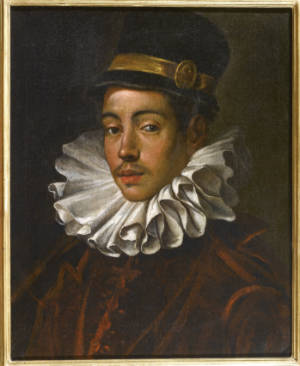
• The evolution of the samurai over the past 1,000 years is the subject of a new exhibition at The British Museum. Samurai brings together around 280 objects and digital media as it explores the role of samurai as warrior as well as the later roles they fulfilled, during a prolonged peace after 1615, as government officials, scholars and patrons of the arts with women making up half of the samurai class. On display will be a suit of samurai armour, complete with helmet and golden standard, which was recently acquired by the museum as well as a vermillion red woman’s firefighting jacket, a rare portrait of Itō Mancio, a 13-year-old samurai who led an embassy to the Vatican in 1582, by Domenico Tintoretto (pictured), and a portrait of Henry, Count of Bourbon, which portrays him as a samurai warrior and which was commissioned by him while visiting Japan in 1889. The exhibition, which opens on 3rd February, runs until 4th May in The Sainsbury Exhibitions Gallery. Admission charge applies. For more, see www.britishmuseum.org/exhibitions/samurai.
• Tickets are now on sale for the V&E East Museum’s first exhibition, The Music is Black: A British Story. The multi-sensory exhibition features more than 200 objects ranging from musical instruments to soundtracks,
artworks, fashion, and personal belongings of world-famed artists including Winifred Atwell’s piano, the Nintendo Jme used for early music experiments, fashion worn by Little Simz, Seal, Dame Shirley Bassey and Skin and newly acquired photographs of Kemistry and Storm, Mis-Teeq, and Skepta. The exhibition opens on 18th April. Admission charge applies. For more, see www.vam.ac.uk/exhibitions/the-music-is-black-a-british-story
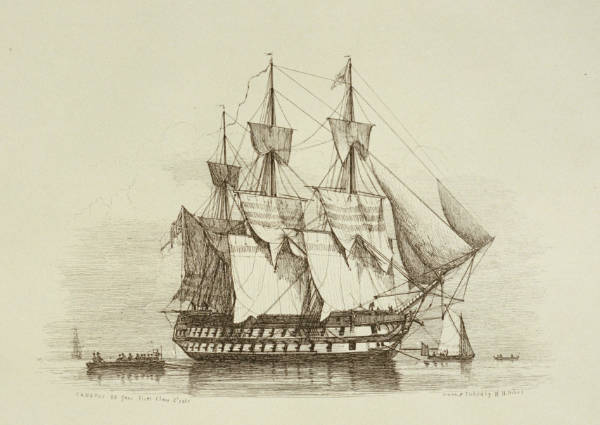
• On Now: Jane Austen and the Royal Navy. This display at the National Maritime Museum marks the 250th anniversary of Jane Austen’s birth and features manuscripts relating to her youngest brothers Francis and Charles Austen, both of whom had naval careers, and explores Jane’s connections to the Royal Navy and the influence her brothers had in her works. Francis – known as Frank (born in 1774) – entered the Royal Navy at the age of 12 and rose through the ranks to eventually captain the HMS Canopus during the Napoleonic Wars while Charles (born in 1779) also entered the Navy at age 12, was on board the Endymion when it captured the French ship Le Scipio, was captain of the Phoenix when it was wrecked at sea and ended his career as commander-in-chief of the East Indies and China Station. The display in the Caird Library can be seen until March. Admission is free. For more, see www.rmg.co.uk/national-maritime-museum.
Send all items to exploringlondon@gmail.com.
This Week in London – Hawai’i’s history and culture; Green Plaque commemorates FA; and, Turner and Constable at the Tate…

• The history and artistry of Hawaii along with its relationship with Britain is the subject of a new exhibition at the British Museum. Hawaii: a kingdom crossing oceans commemorates 200 years since a series of events including the visit of Hawaiian King Liholiho (Kamehameha II) and Queen Kamāmalu to London with a royal delegation to seek alliance and protection from the Crown. Building from the visit of the Hawaiian party to the British Museum, the exhibition features around 150 objects and artworks, many of which have never seen seen before, with highlights including an ‘ahu ‘ula (feathered cloak) which was sent in 1810 by the first king of united Hawai’i, Kamehameha I, to King George III, a nine foot ki’i image of the god Kū, and the Anglo-Franco proclamation of 1843, on loan from The National Archives, which highlights the UK and France’s formal recognition of Hawai’i’s independence and emphasises diplomatic bonds between these nations. Opening today, the exhibition can be seen until 25th May in The Joseph Hotung Exhibition Gallery (Room 35). Admission charge applies. For more, see britishmuseum.org/hawaii.
• The former headquarters of the Football Association (FA) has been commemorated with a City of Westminster Green Plaque at 22 Lancaster Gate, an address synonymous with the FA from the early 20th century until the 1990s. In a statement, the City of Westminster said the plaque, which was unveiled late last year, “celebrates the cultural and historical significance of the FA’s presence in the area and its role in English football history”.
• On Now: Turner & Constable. An exhibition at the Tate Britain focuses on two of Britain’s greatest painters, JMW Turner and John Constable, who were also great rivals. The display, which marks 250 years since their births – Turner in 1775 and Constable in 1776, features more than 170 paintings and works on paper as it explores their intertwined lives and legacies. Highlights include Turner’s momentous The Burning of the Houses of Lords and Commons (1835), not seen in Britain for more than 100 years, and Constable’s The White Horse (1819). Admission charge applies. Runs until 12th April. For more, see www.tate.org.uk/whats-on/tate-britain/turner-and-constable/exhibition-guide.
Send all items to exploringlondon@gmail.com.
This Week in London – Art deco at the London Transport Museum; art storage during WWII commemorated; and, William Dobson’s self-portrait…
• An exhibition exploring the influence of the art deco movement on graphic poster design in on now at the London Transport Museum in Covent Garden. Art deco: the golden age of poster design features more than a hundred original 1920s and 1930s transport posters and poster artworks alongside photography, short films, ceramics and other objects to mark the centenary of the 1925 Paris exhibition where art deco originated. In the UK, Frank Pick, then-chief executive of London Transport, was the individual most responsible for advancing this form of graphic style, master-minding the publicity for the Underground and LT from 1908 onwards. A number of the posters in the exhibition in the Global Poster Gallery have never been put on public display before. Admission charge applies. For more, see www.ltmuseum.co.uk/whats-on/art-deco.
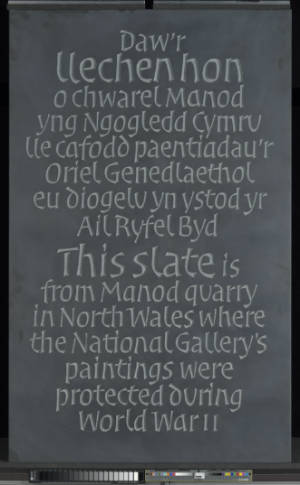
Photo: The National Gallery, London
• An inscribed stone tablet commemorating the Welsh quarry where The National Gallery’s art was protected during World War II has been put on permanent display in the gallery. The tablet, made from slate taken from the Manod quarry in Eryri (Snowdonia), was conceived by the artist Jeremy Deller and designed and carved by letter-carver John Neilson. The work, which was commissioned by Mostyn, an art gallery in Llandudno and supported by CELF – the national contemporary art gallery for Wales, can be seen in the Portico Vestibule, close to Boris Anrep’s floor mosaic of Sir Winston Churchill depicted in war time. The Manod slate mine in north Wales was chosen to store the art after an earlier proposal to evacuate the works to Canada was vetoed over fears of U-boat attacks. At the mine, explosives were used to enlarge the entrance to allow access for the the largest paintings and several small brick ‘bungalows’ were built within the caverns to protect the paintings from variations in humidity and temperature. What was known as an ‘elephant’ case was constructed to transport the paintings on trucks from London and, by the summer of 1941, the entire collection had moved to its new subterranean home, where it was to remain for four years, returning to London only after the end of the war in 1945. For more see www.nationalgallery.org.uk/.
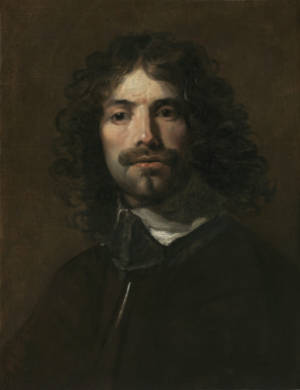
• A self-portrait by William Dobson, widely considered to be the first great painter born in Britain, has gone on display at Tate Britain alongside a Dobson’s portrait of his wife. Dobson’s painting, which was acquired by the Tate and the National Portrait Gallery, was made between 1635 and 1640 and is said to be a “groundbreaking example of English self-portraiture”. His Portrait of the Artist’s Wife (c1635-40), which joined Tate’s collection in 1992, depicts Dobson’s second wife Judith and would have been conceived around the time of their marriage in December, 1637. Dobson rose to the role of King Charles I’s official painter before his career was cut tragically short when he died at the age of 35. For more, see tate.org.uk/visit/tate-britain.
• Send items for inclusion to exploringlondon@gmail.com.
This Week in London – Trafalgar Square Christmas tree to light up; new location for returning Sir John Tenniel plaque; and, Chinese crafts at the V&A…
• The lights will be turned on the Trafalgar Square Christmas tree tonight. This year marks the 78th anniversary of the gift of the first Christmas tree to the people of London from the Norwegian city of Oslo in acknowledgement of the support Britain gave to Norway during World War II. The festivities will include the choir of St-Martin-in-the-Fields singing some well known Christmas carols to music led by the Regent Hall Band of the Salvation Army, the reading of a poem written by children who live in Westminster, a display by The Corps of Drums from the Band of His Majesty’s Royal Marines Collingwood and a performance by Det Norske Jentekor, The Norwegian Girls’ Choir, conducted by Anne Karin Sundal-Ask. Festivities start at 5pm and the lights switch on at 6pm. The tree will be in the square until 5th January after which it will be recycled. You can follow the tree on Instagram at @TrafalgarTree, on TikTok at @TrafalgarTree, and on X at @TrafalgarTree.
• A Blue Plaque commemorating Alice in Wonderland illustrator and political cartoonist Sir John Tenniel has been returned to London’s streets – but to a different location than that where it was first positioned. The plaque, which is actually jade-green and white, was originally unveiled by the London County Council in 1930 at Tenniel’s longtime Maida Vale home (the colour was due to the request of the house-holder). But following its removal when the house was demolished in 1959, the plaque was so damaged that its destruction was authorised. But this wasn’t carried out and the plaque, which features an early “wreathed” design, has been in storage since. Following restoration, however, it has now been relocated to a new home – a property at 52 Fitz-George Avenue in West Kensington where Tenniel spent the final years of his life.
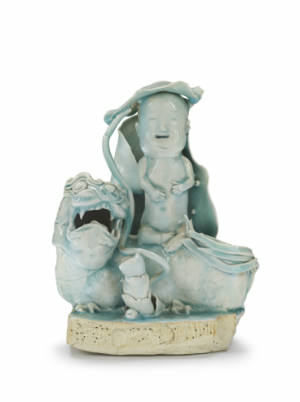
• The first major UK exhibition exploring contemporary studio crafts in China is on now at the V&A South Kensington. Dimensions: Contemporary Chinese Studio Crafts features more than 80 objects including almost 50 new acquisitions and puts a spotlight on “contemporary and modern makers who build upon longstanding tradition to reinvent ancient practices, pioneer alternative techniques, and develop new channels for self-expression”. Many of the objects – displayed in the China and Ceramics galleries – sit in dialogue alongside permanent displays of historic Chinese craftsmanship. Highlights include large scale works such as Lin Fanglu’s She’s Bestowed Love (2025), that transforms intricate tie-dye practices into a monumental textile sculpture, more delicate pieces such as Zhang Huimin’s Golden Mammary 4 (2025), a brooch produced by pushing the boundary of filigree in a reinvention of traditional practice, a wall hanging by pioneering artist of studio pottery Tan Chang, as well as works by the three potters who were the first to be exhibited in China under the mantle of ‘modern ceramics’: Mei Wending, Zeng Li and Zeng Peng. Runs until 27th September next year. Free admission. For more, see www.vam.ac.uk/exhibitions/dimensions-contemporary-chinese-studio-crafts.
Send all items to exploringlondon@gmail.com
LondonLife – Downing Street’s Christmas lights…
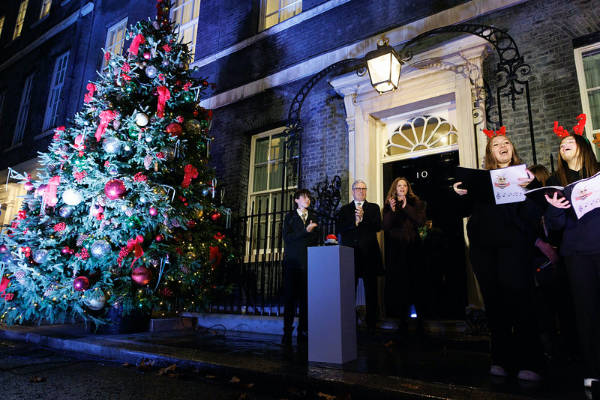
This Week in London – Christmas at Hampton Court; Caravaggio’s Victorious Cupid; and, Romani art, culture and heritage…
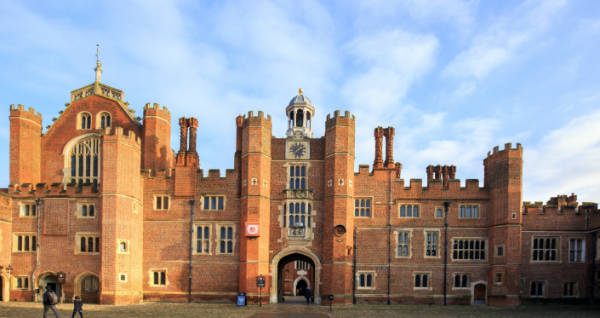
• Christmas has come to Hampton Court Palace with the one-time home of King Henry VIII decorated with traditional decorations and hosting a range of Christmas-related activities. Musicians located throughout the palace are playing a mixture of classical tunes and familiar Christmas melodies while in the Wine Cellar “intriguing history” of Christmas is being brought to life in story-telling sessions. The culinary Christmas traditions of the Tudors, meanwhile, are on display in the historic kitchens with, between 20th December and 4th January, the Historic Kitchens team recreating recipes from the Tudor court. The Magic Garden is hosting a special playful outdoor adventure for younger ones between 17th December and 4th January. The Hampton Court Palace Ice Rink has also returned (until 4th January) and there’s a Christmas market being held in the Great Fountain Garden on 5th to 7th December and again on 12th to 14th December. The Festive Fayre will feature more than 100 independent exhibitors offering artisan food and drink, unique gifts and stocking fillers while there will be live music on the East Front bandstand and horse and cart rides in the grounds. Admission charge applies. For more on Christmas activties at the palace head to www.hrp.org.uk/hampton-court-palace/whats-on/christmas-festivities/.
• Caravaggio’s Victorious Cupid – never-before seen in public in the UK – is at the centre of a new exhibition which has opened at the Wallace Collection. The sculpture is presented with two Roman sculptures that along with the Caravaggio were all once part of the portfolio of Marchese Vincenzo Giustiniani (1564–1637), one of the most celebrated collectors of his day. The life-sized Cupid was once displayed along with works by the likes of Raphael, Titian and Giorgione in his grand palazzo located near the Pantheon in Rome along with an extensive gallery of classical sculpture. Caravaggio’s Cupid, which is free to enter, can be seen in the Exhibition Galleries until 12th April. For more, see www.wallacecollection.org/whats-on/exhibitions-displays/caravaggios-cupid/.
• A new display honouring the livelihoods, creativity and craft of Romani communities and their contribution to British society has opened at the London Museum Docklands. By Appointment Only: Romani art, culture and heritage centres on three works, Sugar Coated (2025) by Corrina Eastwood, Tap Your Heels Together Three Times (2025) by Delaine Le Bas and What Makes a Home? (2025) by Dan Turner. There’s also timeline by John-Henry Phillips which illustrates the history of Romani communities from 500-1000 up to 2022. This is displayed along with the Historic England film Searching for Romani Gypsy Heritage with John Henry Phillips (2024) and an oral history piece both of which contextualise the timeline. The exhibition in the Reflections Room is free. For more, see www.londonmuseum.org.uk/whats-on/by-appointment-only/.
Send all items for inclusion to exploringlondon@gmail.com.
This Week in London – Wes Anderson’s archive explored; Edwin Austin Abbey at The National Gallery; and, Christmas at the Tower…
• The first retrospective of the work of film-maker Wes Anderson has opened at the Design Museum in South Kensington. Wes Anderson: The Archives draws on the director’s own archives to chart the evolution of his films from early experiments in the 1990s and collaborations to an exploration of the design stories behind films such as The Royal Tenenbaums, The Grand Budapest Hotel, Fantastic Mr Fox and Isle of Dogs. The display features more than 700 objects including original storyboards, polaroids, sketches, paintings, handwritten notebooks, puppets, miniature models and costumes. Highlights include a candy-pink model of the Grand Budapest Hotel, vending machines from Asteroid City, a FENDI fur coat worn by Gwyneth Paltrow as Margot Tenenbaum in The Royal Tenenbaums, stop motion puppets used to depict the fantastical sea creatures in The Life Aquatic with Steve Zissou and Mr Fox wearing his signature corduroy suit and show dog Nutmeg alongside miniature sets. There’s also a screening of Bottle Rocket, Anderson’s first short film, created in 1993. Runs until 26th July. Admission charge applies. For more, see https://designmuseum.org/exhibitions/wes-anderson-the-archives.
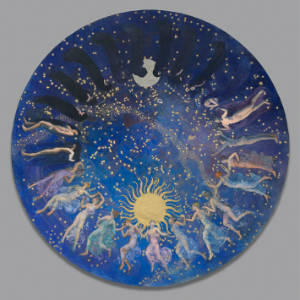
• A design for the ceiling of the House of Representatives in the Pennsylvania State Capitol in the US has gone on show at The National Gallery as part of a new exhibition dedicated to its creator Edwin Austin Abbey (1852-1911). The 12-feet diameter half-scale design for The Hours, newly conserved by the Yale University Art Gallery, depicts 24 female figures representing the 24 hours of the day. The display, Edwin Austin Abbey: By the Dawn’s Early Light, also features six preparatory drawings for his work, The Apotheosis of Pennsylvania, a vast wall mural featuring representations of 16th and 17th century English explorer Sir Walter Raleigh and American frontiersman Daniel Boone behind the Speaker’s dais. Abbey, who lived and worked in the UK, displayed the first of his Harrisburg murals at the University of London in 1908 prior to shipping them to the US – guests included King Edward VII and Queen Alexandria. The free display can be seen in the HJ Hyams Room (Room 1) until 15th February. For more, see www.nationalgallery.org.uk/exhibitions/edwin-austin-abbey-by-the-dawn-s-early-light
• The Tower of London is being transformed into a “magical storybook world” to mark Christmas this year. A Storybook Christmas at the Tower of London features royal romances, legendary figures and treasured traditions which include animals who once lived in the Tower’s royal menagerie, the famous tower ravens, the chance to step onto a regal throne for a family portrait and find storybook backdrops among Christmas trees and wreaths, and an opportunity to explore the story of the Tower’s Royal Observatory where the first Royal Astronomer was appointed in 1675. The “storybook Christmas” opens on Sunday and runs until 4th January. Included in general admission. For more, see www.hrp.org.uk/tower-of-london/.
Send all items to exploringlondon@gmail.com
This Week in London – Kew’s Christmas light trail returns; ‘Time’ at the Old Royal Naval College; and, a royal Christmas shop…
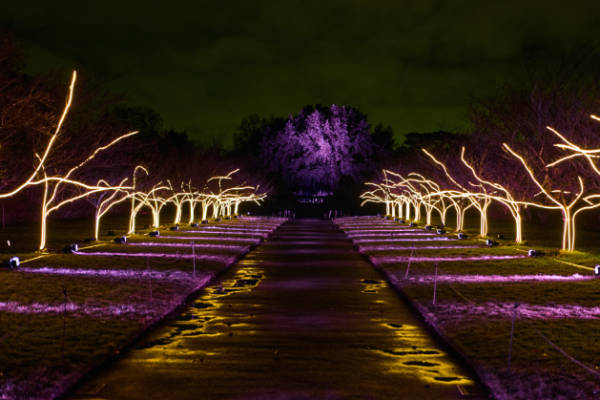
• Kew Garden’s famous light trail opens tomorrow and this year the three kilometres features eight new world premiere installations, interactive dance floors with giant headphones and, for the first time, the illumination of the Great Pagada. Christmas at Kew will also feature seasonal staples such as illuminated trees, a festive funfair and the ever-popular Christmas Cathedral. Among the new installations are Creative Culture’s Christmas Orchestra featuring festive music coordinated with lights and In Bloom, an installation by Netherlands’ multidisciplinary artist Wilhelmsusvlug said to evoke “delicate petals dancing through the air”. There will be a newly created projection at the Palm House while the Palm House Pond will feature a light display of 100 lillies and the trail concludes with a music and light show at the Temperate House. Runs until 4th January. Admission charge applies. For more, see www.kew.org/christmas.
• Time, a sound and light show by Luxmuralis, has transformed the Old Royal Naval College after dark with an “unforgettable journey through history and science”. Visitors start in the Painted Hall where they’s see Peter Walker’s Connection & Identity illuminated after which they’ll move through the Ripley Tunnel, Queen Mary Undercroft and chapel before heading outside across the colonnades and into the courtyard. Runs until 22nd November. Admission charge applies. For more, see https://ornc.org/whats-on/time-by-luxmuralis/.
• The Royal Shop in the Royal Mews at Buckingham Palace has been transformed into a Christmas pop-up shop for the first time. The Royal Mews Christmas Shop, which opens tomorrow, features a range of official royal gifts as well as food and drink from the Royal Collection Trust, a department of the Royal Household. Among the new offerings this year are mini 20cl bottles of gins infused with botanicals hand-picked from the grounds of royal residences including Buckingham Palace and Windsor Castle as well as a Property of the Royal Kitchen range of kitchen accessories, which takes its inspiration from the Great Kitchen at Windsor Castle, and wine accessories including crystal wine glasses, delicately etched with a pattern of knotted vines and grape leaves inspired by the Grand Punch Bowl, a majestic wine cistern in the Royal Collection known to have been used by Queen Victoria. To visit the shop online, head to www.royalcollectionshop.co.uk.
Send all items to exploringlondon@gmail.com
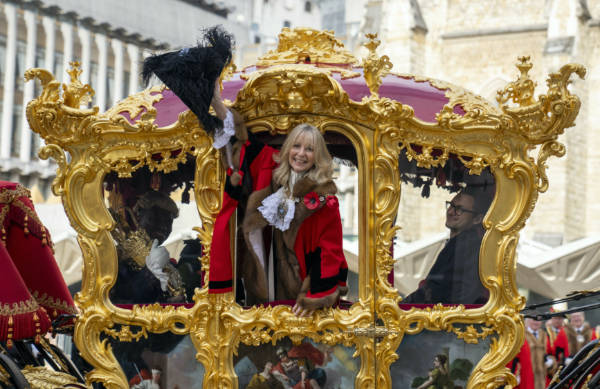
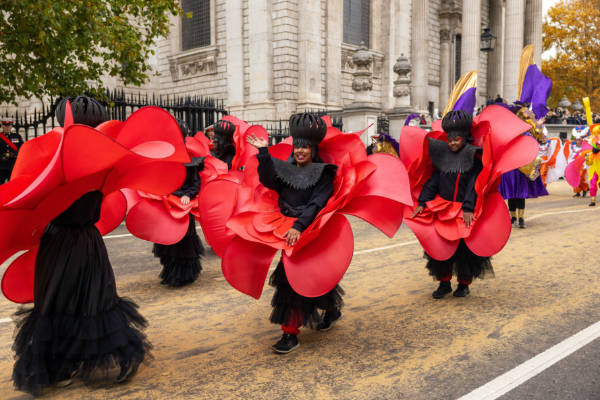
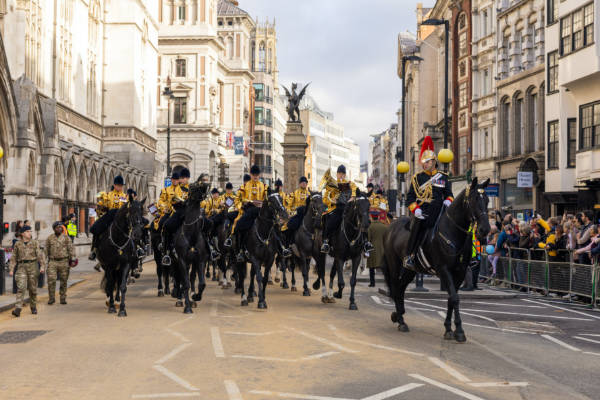
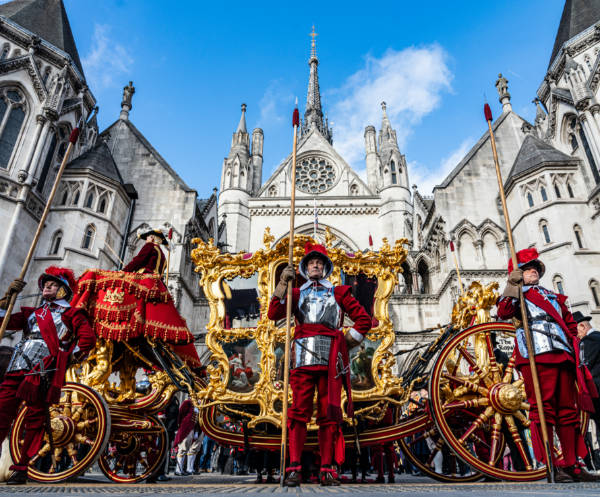
LondonLife II – The Lady Mayor’s Show…
The historic Lady Mayor’s Show took place on Saturday through the streets of the City of London. Dame Susan Langley, the 697th Lord Mayor of London, is only the third woman to hold the post in more than 800 years, and is the first ever to be titled the ‘Lady Mayor of London’.
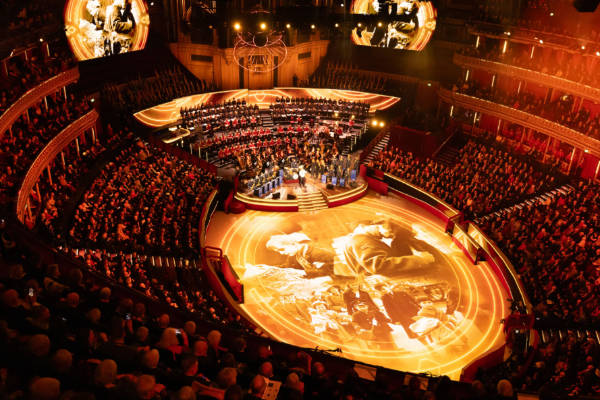
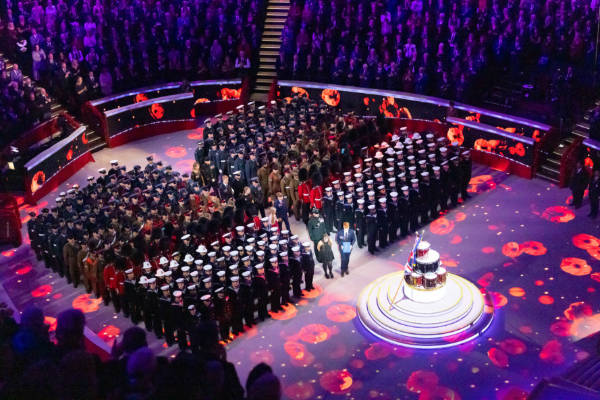
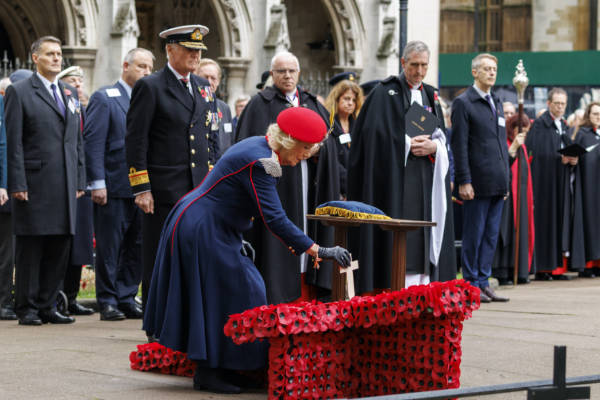
LondonLife I – Marking 80 years since the end of World War II…
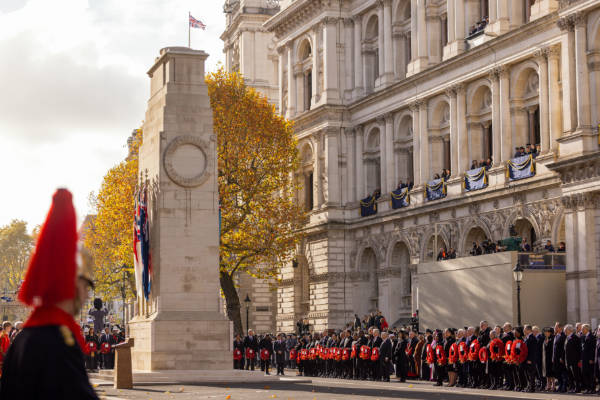
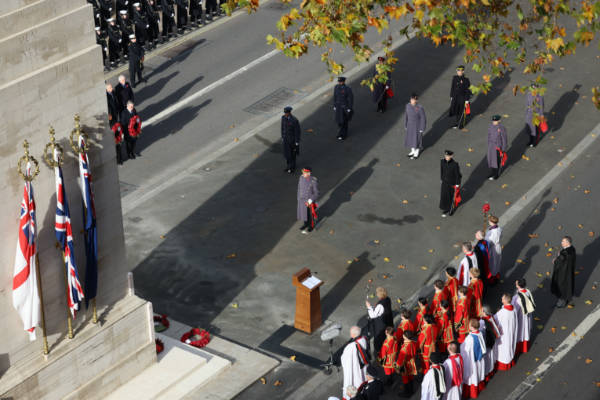
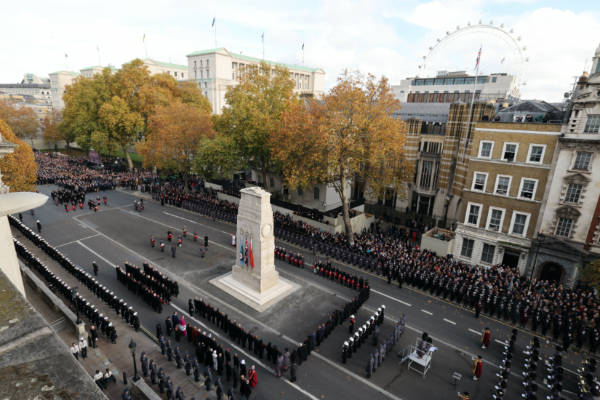
Earlier…

This Week in London – The first Lady Mayor’s Show; Joseph Wright ‘of Derby’ at the National Portrait Gallery; and, Audrey Hepburn’s Blue Plaque…
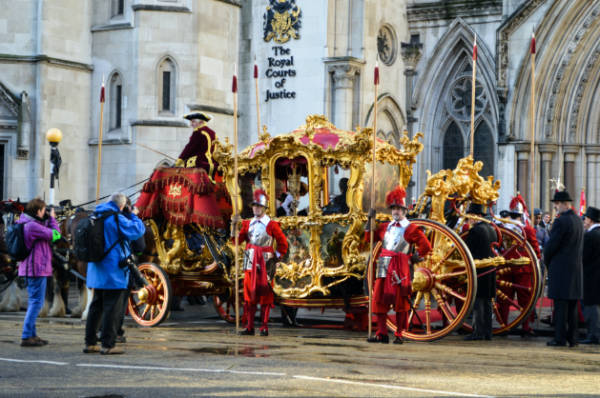
• The Lord Mayor’s Show – or this year, for the first time in its 800 year history, the Lady Mayor’s Show – takes place on Saturday as Dame Susan Langley is celebrated as the City of London’s 697th Lord Mayor of London. Langley, who takes office at Guildhall on Friday in the ancient ‘Silent Ceremony’, is the third woman to hold the role and the first to adopt the title “Lady Mayor”. The more than three mile-long procession, which kicks off at 11am, features around 7,000 participants, 200 horses and more than 50 decorated floats and travels from the Mansion House, the official mayoral residence, through the City to the Royal Courts of Justice, via St Paul’s Cathedral, before returning. The centrepiece as always is the State Coach carrying the Lady Mayor as she fulfills the dual purpose of showing herself to residents and swearing allegiance to the crown. For more – including details of the procession’s route, head to https://lordmayorsshow.london/.
• The first exhibition dedicated to the work of 18th century artist Joseph Wright ‘of Derby’ opens at The National Gallery tomorrow. Wright of Derby: From the Shadows focuses on his career between 1765 and 1773 when he created his candlelight series. On show are a number of works from this series including Three Persons Viewing the Gladiator by Candlelight (1765), A Philosopher giving that Lecture on the Orrery in which a lamp is put in place of the Sun (1766), and the gallery’s own An Experiment on a Bird in the Air Pump (1768). Mezzotint prints of Wright’s works – key to the establishment of his international reputation – will also be on display. The exhibition, in the Sunley Room, runs until 10th May. Admission charge applies. For more, see www.nationalgallery.org.uk/exhibitions/wright-of-derby-from-the-shadows.
• Hollywood icon Audrey Hepburn has been honoured with an English Heritage Blue Plaque on her former home in Mayfair. The plaque at 65 South Audley Street was where Hepburn lived in a flat with her mother between 1949 to 1954 as she launched her career as an actor. It was from here that she travelled to the West End to perform in chorus lines, appeared in British films such as 1951’s The Lavender Hill Mob and while living here that she was cast as the lead in Gigi on Broadway – a key stepping stone towards her breakthrough performance in 1953’s Roman Holiday. Hepburn was born in Brussels but had strong ties to London, training at the Ballet Rambert and working as a dancer and model before moving on to acting. Of course, as well as Roman Holiday, Hepburn performed notable roles Sabrina, Funny Face, Breakfast at Tiffany’s, My Fair Lady, and Charade. She later dedicated herself to humanitarian work, serving as a UNICEF Goodwill Ambassador, and was awarded the Presidential Medal of Freedom shortly before her death in 1993. For more on English Heritage Blue Plaques, see www.english-heritage.org.uk/visit/blue-plaques/.
Send all items to exploringlondon@gmail.com
This Week in London – The story of Henry VIII’s lost dagger; ‘Secret Maps’ at the British Library; and, ‘Connection and Identity’ at Greenwich…
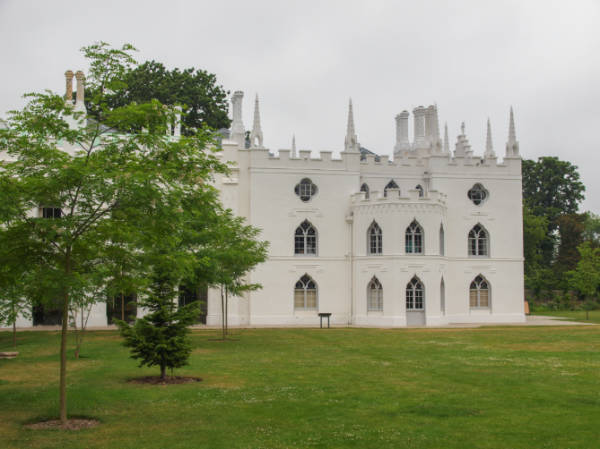
• The disappearance of a jewelled Ottoman dagger which is believed to have once belonged to King Henry VIII has inspired a new exhibition at Strawberry Hill House, Horace Walpole’s former home in Twickenham in London’s west. Henry VIII’s Lost Dagger: From the Tudor Court to the Victorian Stage looks at the history of the 16th century dagger which, said to have been richly decorated with “a profusion of rubies and diamonds”, was once part of Horace Walpole’s collection. When the collection was sold in 1842, the dagger passed into ownership of the Shakespearean actor Charles John Kean who directed private theatricals for Queen Victoria at Windsor Castle. Kean (1811-1868) pioneered what critics dubbed “living museums” on the Victorian stage by using real artifacts, including the dagger, during performances. But after Kean’s death the dagger vanished without a trace. Dr Silvia Davoli, the principal curator at Strawberry Hill House, launched an investigation to find the dagger and instead found six almost identical daggers scattered around the globe. Two of these daggers – known as the Vienna and Welbeck Abbey examples – are featured in the exhibition alongside reproductions of 18th century materials which related to Walpole’s lost dagger from Yale University’s Lewis Walpole Library. The exhibition can be seen from Saturday until 16th February. Admission charge applies. For more, see www.strawberryhillhouse.org.uk.
• The role maps have played in preserving secrets for the benefit of their creators from the 14th century to the present day is the subject of a new exhibition at the British Library. Secret Maps features more than 100 items ranging from hand-drawn naval charts given to Henry VIII to maps of cable networks used to intercept messages between the world wars; and the satellite tracking technology used by apps today. Among highlights are a map from 1596 attributed to Sir Walter Raleigh on an expedition in search of the mythical city of El Dorado in what is now Guyana in South America; a map produced in 1946 of British India (modern-day India, Pakistan and Bangladesh) with a ‘top secret’ report investigating the potential economic and military impact of partition for the proposed state of Pakistan; one of only two known existing copies of a secret map produced by Ordnance Survey during the General Strike of 1926 amid fears of a public uprising; and a 1927 Cable Map of the world which reveals a global network of censorship stations and was used by the British government to intercept messages sent via submarine and overland cables. Runs until 18th January (and accompanied by a programme of events). Admission charge applies. For more, see https://events.bl.uk/exhibitions/secretmaps.
• Staffordshire-based artist Peter Walker’s large scale interactive artworks, Connection and Identity, can be seen in the Painted Hall at the Old Royal Naval College in Greenwich from Friday. Identity features eight columns suspended within the hall which shift in colour and light while Connection showcases “a dramatic and modern reinterpretation of Michelangelo’s Creation of Adam“. The installation, which is located in the hall sometimes described as “Britain’s Sistine Chapel”, is accompanied by music specially composed by David Harper. Runs until 25th January. Admission charge applies. For more, see https://ornc.org/whats-on/connection-and-identity/.
Send all items for inclusion to exploringlondon@gmail.com.
 Exploring London


