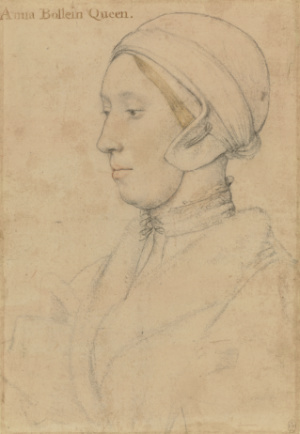
Anne Boleyn (1532)/Royal Collection Trust / © His Majesty King Charles III 2023.
• The largest exhibition of the work of Tudor-era artist Hans Holbein the Younger has opened at The Queen’s Gallery, Buckingham Palace. Holbein at the Tudor Court features more than 50 works by Holbein including intimate portrait drawings of the royal family and the Tudor nobility including one of few surviving drawings of Anne Boleyn made during her lifetime, drawings of Jane Seymour and Sir Thomas More, and an unfinished portrait of King Henry VIII’s son Prince Edward. Other portraits include that of Derich Born, a 23-year-old Steelyard merchant, and one of Richard Southwell, a convicted murderer who was one of King Henry VIII’s closest advisors. The exhibition also features objects including a Brussels tapestry, jewel-like miniatures and Henry VIII’s magnificent armour, usually on show at Windsor and in London for the first time in a decade. Runs until 14th April. Admission charge applies. For more, see www.rct.uk/collection/themes/exhibitions/holbein-at-the-tudor-court/the-queens-gallery-buckingham-palace
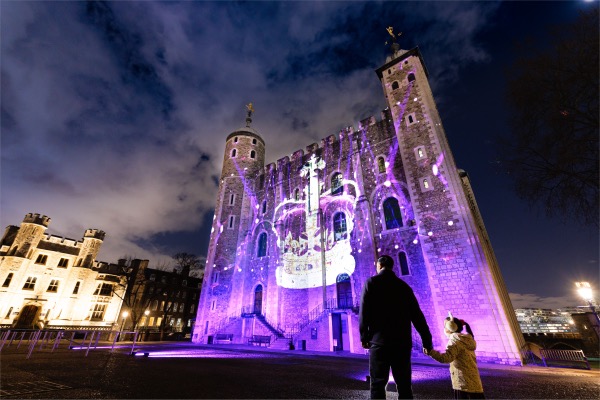
• The magnificence of coronations and the Crown Jewels will be on show at the Tower of London from tomorrow night in a new light and sound show. Crown and Coronation – which has been created by Historic Royal Palaces in partnership with Luxmuralis as part of an artistic collaboration between artist Peter Walker and composer David Harper – brings the “spectacle, significance and shared experience” of coronations to life and demonstrates the pivotal role of the Crown Jewels in the ceremony as it takes visitors on a journey through the past 1,000 years. Images of the jewels will be projected on the White Tower in the show with visitors then able to view the actual jewels themselves in a special after hours opening. But you’ll have to be quick – the show can only be seen for nine days, ending on 25th November before it embarks on a two year UK-wide tour. Admission charge applies. For more, see www.hrp.org.uk/tower-of-london/.
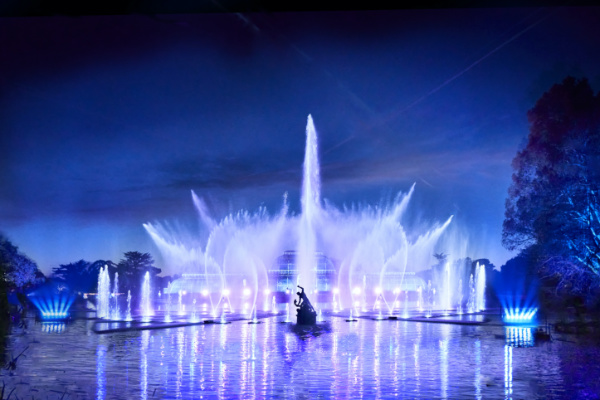
• Christmas returned to Kew this week with the launch of it’s new festive light trail featuring seven new installations. Highlights of this year’s trail include three metre tall illuminated flowers, cascading lights suspended from the tree canopy, one of the longest light tunnels to ever feature in Kew’s Christmas celebrations and the Hive – which recreates life inside a beehive – as well as the iconic Palm House light show, the twinkling tunnel of light inspired by arched church windows known as the ‘Christmas Cathedral’, and a ‘Fire Garden’ at the Temperate House. There’s also festive treats to sample and visitors can experience a traditional Christmas dinner at The Botanical Brasserie. Admission charges applies. Runs until 7th January (advance bookings only). For more, see www.kew.org/christmas.
• Charles Dickens’ friendship and collaboration with writer Wilkie Collins is explored in a new exhibition at The Charles Dickens Museum in Bloomsbury. Dickens met Collins, who would become one of his most significant friends, in 1851 as they performed together in a play at the house of John Forster and their personal and professional relationship lasted more than 15 years. The display features works produced as a result of the friendship – everything from articles in Dickens’s Household Words through to novellas and plays such as The Lazy Tour of Two Idle Apprentices and The Frozen Deep – and features original letters, historic objects, and interactive displays focusing on everything from the pair’s moustache-growing contests and cruising international entertainment districts to co-writing side by side, discussing writer’s block and plot devices. Admission is included with general admission. Runs until 25th February. For more, see https://dickensmuseum.com.
Send all items to exploringlondon@gmail.com.

 Exploring London