A former summer residence of the Archbishops of Canterbury for centuries, Croydon Palace has in more recent times been used as a school.
Elizabeth I
10 London bishop’s palaces, past and present – 6. Fulham Palace…
The former residence of the Bishops of London for more than 1,300 years, Fulham Palace is today a museum surrounded by 13 acres of gardens on the north bank of the Thames.
Get access to all of Exploring London’s articles for just £3 a month…
10 London bishop’s palaces, past and present – 5. Durham House…
Now long gone, this central London property was once the residence of the, you guessed it, bishops of Durham.
Subscribe for just £3 a month to access all of Exploring London’s articles…
What’s in a name?…Honor Oak
Yes, this small south London district, located to the south of Peckham, was actually named for an oak.
In this case it was an oak which stood atop the 90 metre high One Tree Hill – the last in a line of hills which stretch north from Croydon.

There’s a couple of possible explanations for the name – the first is that the oak in question once marked the southern boundary of the estates or “honour” of the 12th century Earls of Gloucester – hence ‘Honor Oak’.
The second is that Queen Elizabeth I apparently had a picnic with Sir Richard Bulkeley of Beaumaris under its branches on May Day, 1602. Hence again ‘Oak of Honor’ or ‘Honor Oak’.
Sadly, the original tree is gone – it was apparently hit by lightning in the 1880s – and a replacement, which can still be seen today, was subsequently planted nearby.
There’s a few stories surrounding the hill and its oak including that it was here that the Roman general Paulinus overcome Boudicca in 61AD. Another says that the highwayman Dick Turpin used it as a lookout.
Its height did see the hill put to use as a beacon by the Admiralty during the Napoleonic Wars and as a semaphore station by the East India Company. A beacon on top of the hill was erected to commemorate the Silver Jubilee of King George V in 1935 and subsequently used for celebrations including the coronation of Queen Elizabeth II and the Queen’s silver and golden jubilees.
There was also a gun emplacement built upon the hill during World War I.
The area around the hill was largely rural until the late 18th century. In 1809, the Croydon Canal Company constructed a canal which ran from Croydon north to New Cross and which included numerous locks. It was taken over almost 30 years later by the Croydon and London Railway for its new line (the current railway line, the stops on which include Honor Oak Park (opened in 1886), runs along the same course).
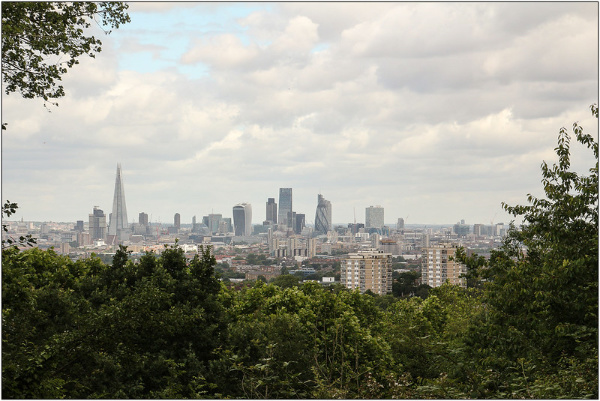
There was a bid to incorporate One Tree Hill into a golf course in the late 1800s but following a protest, this was halted and in 1905 the hill was acquired by the Camberwell Borough Council as public open space. It remains so today.
The Church of St Augustine was built to the designs of William Oakley on the hill’s east side in the late 19th century.
Famous residents in the streets around the hill have included Spike Milligan.
The Honor Oak Reservoir lies just to the north of the hill. It was constructed between 1901 and 1909 and was the largest brick built underground reservoir in the world. The roof of the still-in-use reservoir is grassed over and used as a golf course. A rather grand pumping station stands nearby.
10 towers with a history in London – 8. The Bell Tower…
We return to the Tower of London this week to look at the history of another of its storied towers.
Support out work and subscribe for just £3 a month for full access to the site.
10 towers with a history in London – 1. The Bloody Tower…

Carrying rather a gruesome name, this rectangular-shaped tower sits over a gate leading from outer ward into the inner ward in the Tower of London.
The tower, which once controlled the watergate before the outer walls were constructed, was originally known as the Garden Tower due to its location adjoining the Tower Lieutenant’s Garden.
To see the rest of this post (and all of our coverage), subscribe for just £3 a month. This small contribution – less than the cost of a cup of coffee – will help us continue and grow our coverage. We appreciate your support!
Treasures of London – The Abraham Tapestries, Hampton Court Palace…
Hanging in the Tudor Great Hall at Hampton Court Palace, this series of 10 huge tapestries are believed to have been commissioned by King Henry VIII and were first hung in the hall in 1546.
To see the rest of this post (and all of our coverage), subscribe for just £3 a month. This small contribution – less than the cost of a cup of coffee – will help us continue and grow our coverage. We appreciate your support!
This Week in London – ‘The Tudor World’ explored; ‘Crossing Borders’ at the Horniman; and, TfL deal at the Painted Hall…
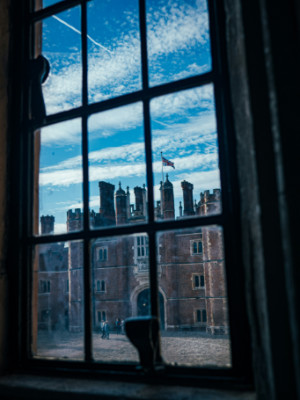
• The oldest surviving rooms at Hampton Court Palace – the Wolsey Rooms which King Henry VIII and Thomas Wolsey once used – are the location of a new display opening today exploring the early years of Henry VIII’s reign and the lives of the ‘ordinary’ men and women who shaped the Tudor dynasty. The Tudor World has, at its centre, rare surviving paintings from the Royal Collection including The Embarkation of Dover – depicting the Tudor navy – and The Field of Cloth of Gold which details Henry VIII’s summit with King Francis I of France in 1520. Also on show is a gold ring believed to have belonged to the Boleyn family, a brightly coloured silk hat linked to King Henry VIII, Wolsey’s portable sundial, a wooden chest used to hide religious contraband by Catholic priests during the reign of Queen Elizabeth I, and, an original Tudor chain pump used to help empty the Hampton Court cesspool. Among the stories of “ordinary” Tudor people being shared is that of Anne Harris, Henry VIII’s personal laundry woman who washed the bandages for his leg ulcers and, Jacques Francis, a free-diver from West Africa who was involved in the expedition to salvage guns from the sunken Mary Rose and who later became one of the first Black African voices heard in an English court, when he was called to testify in a case concerning his employer, Paulo Corsi. Included in palace admission. For more, see www.hrp.org.uk/hampton-court-palace/.
• Crossing Borders, a day of free activities, performances and workshops run by local newly arrived people, will be held at the Horniman Museum Gardens in Forest Hill this Saturday. The day will feature arts and crafts workshops led by IRMO, dance performances by Miski Ayllu and the Honduran Folkloric Pride Group, the chance to learn circus skills with young people from Da’aro Youth Project and South London Refugee Association, and the opportunity to make kites with Southwark Day Centre for Asylum Seekers. The free event runs from 11am to 4pm. For more, see https://www.horniman.ac.uk/event/crossing-borders/.
• Transport for London customers can save 30 per cent on entry to the Painted Hall at the Old Royal Naval College when using the TfL network until 17th November. Simply show customers show your TfL journey on the day of your visit via the TfL Oyster and Contactless app and receive the discount, taking the adult entry price, when booked online to just £11.55. For bookings, head to https://londonblog.tfl.gov.uk/2022/07/27/in-the-city/.
Send all items for inclusion to exploringlondon@gmail.com.
10 significant (and historic) London trees…9. The Fulham Palace Oak…
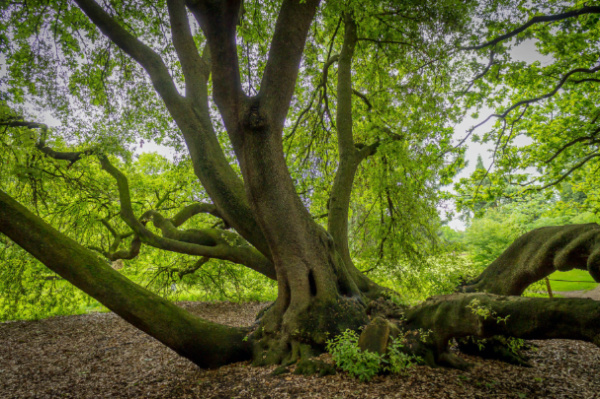
Said to be the oldest of its species in the UK (and a contender for the oldest tree in London), this holm oak (Quercus ilex), also known as a holly leaved oak, is believed to be more than 500-years-old.
The site was the home of senior clergy for much longer – Waldhere, the Bishop of London, first bought the site in 704 AD. And over the years, Fulham Palace and its gardens have evolved significantly with some of the current structures dating from Tudor times.
The Bishops of London left the palace in 1973 and it’s now managed under a trust which was established in 2011.
It’s possible this immense evergreen oak, which is native to the Mediterranean region, was among a number planted in the mid-16th century during the tenure of Bishop Edmund Grindal (about 1553 to 1559).
Bishop Grindal is known to have had a keen interest in the garden and who is credited with introducing the tamarisk tree to England and growing grapes which were sent to Queen Elizabeth I.
It’s also possible the tree was planted during the later tenure of Bishop John Aylmer (1576 to 1594).
The oak, which was coppiced many years ago extending its life, is among the original 41 trees awarded “Great Tree” status in 1988.
WHERE: Fulham Palace Gardens, Bishop’s Avenue, Fulham (nearest Tube station is Putney Bridge); WHEN: 10.30am – 5pm daily; COST: Free; WEBSITE: https://www.fulhampalace.org
10 significant (and historic) London trees…1. Queen Elizabeth’s Oak, Greenwich…
Spring is upon us, so we thought it an appropriate time to consider some of London’s greatest natural assets – its trees. But, as well as being significant for their environmental impact, each of these trees (or, in some cases, the remains of them), are significant for historic reasons (we’ve previously mentioned a couple including what’s believed to be the oldest tree and the unusual – and sadly now deceased – Hardy Tree).
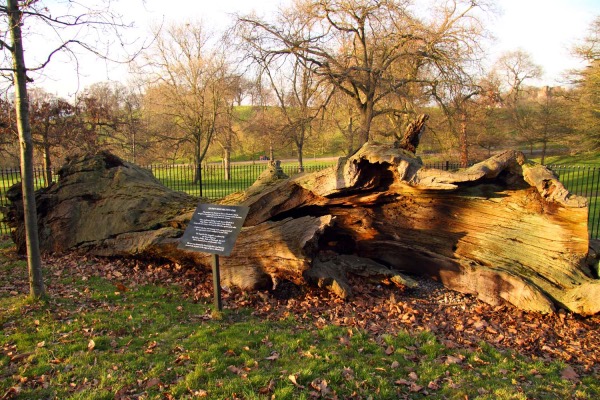
First up, it’s the tree known as Queen Elizabeth’s Oak in Greenwich. Thought to date from possibly as far back as the late 13th century, this tree survived until the 19th century before its carcass finally fell to the ground during a storm in 1991. It has lain in Greenwich Park ever since.
The tree, which is located at the end of what is now Lover’s Walk close to the Maze Hill Gate, was located in the grounds of Greenwich Palace (also known as the Palace of Placentia) and was there when King Henry VIII resided at the palace.
In fact, it’s said that he and Anne Boleyn danced around the oak while courting, and (and here’s where the name comes from) that Elizabeth, their daughter (and later Queen Elizabeth I), picnicked under its canopy (some accounts suggest she actually picnicked in the tree’s hollow – but still then upright – trunk).
Following the creation of what is now Greenwich Park, the hollow tree was apparently used as a prison for those caught illicitly on the grounds. They were secured behind a heavy wooden door fitted to the trunk (a park keeper’s lodge was built nearby in the 17th century; it was demolished in the 1850s).
The tree, one of 3,000 in the park, had died in the 19th century and was reduced to an eight metre high stump, partly supported by ivy, when it was blown over by the storm in June, 1991.
A replacement oak, which was donated by the Greenwich Historical Society was planted nearby by the Duke of Edinburgh on 3rd December, 1992, to mark Queen Elizabeth II’s 40 years on the throne.
A ring analysis carried out on the tree found in 2014 it dated back to at least 1569 but with the core missing a precise date of germination couldn’t be found. Estimates, however, place the date of germination to the last 13th or early 14th century. The analysis placed the tree’s death to between 1827 and 1842.
The tree is marked with a plaque and both it and the new tree are surrounded by an iron railing.
WHERE: Queen Elizabeth Oak, Greenwich Park (nearest DLR station is Greenwich); WHEN: 6am to 8pm daily; COST: Free; WEBSITE: https://www.royalparks.org.uk/visit/parks/greenwich-park.
This is an expanded version of a post first made in 2017.
10 atmospheric ruins in London – 6. Tudor and medieval remains at Eltham Palace…
Once a medieval royal palace, Eltham Palace in London’s east was transformed into a 1930s house which incorporates the medieval great hall.

But there are also some other remains of the former medieval palace on the site – including the footings of the palace’s west range incorporating royal apartments used in the Tudor era.
These included separate apartments for the king and queen as well as a gallery where the king could walk in inclement weather.
The ruins feature diamond-patterned brickwork (pictured), part of the west range which was built during the reign of Queen Elizabeth I in the 1580s.
There are also the remains of a tower of yellow brick, which possibly dates from the 14th century when, prior to the site being a royal palace, it was rebuilt as a manor house by Anthony Bek, Bishop of Durham (it was Bek who gave the manor to the future Edward II in 1305).
These days the ruins lie within the home’s magnificent gardens, recreated to show how they might hav. Alongside the remains of the west range (and the medieval great hall which dates from the reign of King Edward IV and is largely intact), are the remains of a late 15th century bridge over a medieval moat, at the south end of which are the remains of a gatehouse.
There’s also an oak pedestrian bridge, supported by medieval brick and foundations which once formed part of the main southern entrance to the palace.
WHERE: Eltham Palace, Court Yard, Eltham, Greenwich (nearest train station is Mottingham); WHEN: 10am to 4pm Wednesday to Sunday; COST (advance online tickets): £14.50 adults/£8.60 children/£12.70 concessions/£37.60 family (can include a donation/English Heritage members free); WEBSITE: www.english-heritage.org.uk/visit/places/eltham-palace-and-gardens/.
8 locations for royal burials in London…5. Henry VII’s Lady Chapel, Westminster Abbey…
Located just to the east of St Edward the Confessor’s Chapel in Westminster Abbey is the lavishly ornate Lady Chapel built on the orders of King Henry VII.
Described as the “last masterpiece of English medieval architecture”, the chapel is the resting place of King Henry VII and his wife Queen Elizabeth of York.

The couple were the first to be buried in a vault under the floor rather than a tomb but still features an elaborate monument above the floor.
The monument was designed in the Renaissance style by Italian sculptor Pietro Torrigiano and features gilt bronze effigies of the King and Queen lying side-by-side above a black marble base decorated with six medallions representing the Virgin Mary and Henry’s patron saints (who included St Edward the Confessor). At either end of the base are coats of arms supported by cherubs.
A fine grille, designed by Thomas Ducheman, surrounds the monument – once gilded, it featured 30 statues in niches but only six – depicting saints – now remain. The lengthy Latin inscription written on the grille lauds King Henry as “a wise and watchful monarch, a courteous lover of virtue” among other superlatives. There are further inscriptions on the monument.
They’re not the only kings and queen’s buried in the chapel. King James I is buried in the vault under the King Henry VII’s tomb and his wife Queen Anne of Denmark is buried nearby.
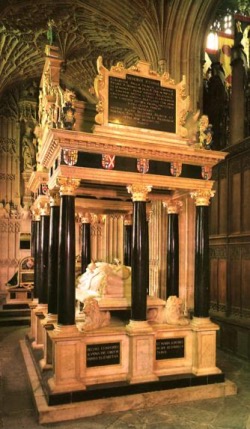
Queen Elizabeth I is buried in the chapel’s north aisle with a monument above depicting her effigy. Her coffin was placed on top of her half-sister Queen Mary I whose body had been placed there after her death in 1558. The monument was installed on the orders of King James I who, while commissioning a depiction of Queen Elizabeth, didn’t order an effigy of Mary to be made. Instead, she is commemorated with an inscription translated as “Partners both in throne and grave, here rest we two sisters, Elizabeth and Mary, in the hope of the Resurrection.”
The religious differences of the two Queens – Elizabeth being a Protestant and Mary a Catholic – are meanwhile commemorated in an inscription on the floor which reads: “Remember before God all those who divided at the Reformation by different convictions laid down their lives for Christ and conscience sake.”
Buried in a vault beneath the south aisle of the chapel – with just simple inscriptions on stones above (no monuments were erected due to the lack of space apparently – are the remains of the Stuart monarchs King Charles II, Queen Anne (and her husband Prince George), Queen Mary II and King William III.
The rather flamboyant tomb of Mary, Queen of Scots, is also in this aisle. King James I had her remains brought to the abbey from Peterborough Cathedral in 1612 and laid to rest in a marble tomb featuring an elaborate canopy and a white marble effigy at the feet of which stands a crowned Scottish lion. The eldest son of King James I, Henry Frederick, Prince of Wales, was also buried in the Queen’s vault (she was his grandmother), probably due to lack of space.
The young king Edward VI is buried beneath the floor in front of the altar and the last monarch to be buried in the abbey – King George II – lies in a vault under the central aisle along with his wife Queen Caroline and some of their children as well as other family members. On the King’s orders, the sides of the coffins of King George II and that of Queen Caroline were removed so their remains could mingle.
Several other royals – including Princess Mary of Orange, eldest daughter of Charles I and Henrietta Maria, and Prince Rupert of the Rhine – are also buried in the chapel.
HERE: Lady Chapel, Westminster Abbey (nearest Tube stations are Westminster and St James’s Park); WHEN: Times vary – see the website for details; COST: £27 adults/£24 concession/£12 children (discounts for buying online; family rates available); WEBSITE: www.westminster-abbey.org
Famous Londoners – Will Somers…
The most famous of court jesters during the reign of King Henry VIII, little is known of Will Somers’ early life although it is suggested he was born in Shropshire.
It’s said Somers (also spelt Somer or Sommers) entered the service of a wealthy Northamptonshire merchant Sir Richard Fermor who presented him to King Henry VIII at Greenwich in 1525 (he is known to have been in service by 1535).

Somers’ role as jester involved using his wit to comment on court life and those in it – including the likes of Cardinal Wolsey – and while he was permitted a wide latitude he would over-step including when he insulted Queen Anne Boleyn and her daughter Princess Elizabeth, leading to the King to threaten to kill Somers himself.
Somers was provided with royal livery to wear at court (he also sometimes apparently wore elaborate costumes) and was provided with a “keeper” to look after him.
Such was the esteem Somers’ was held in, he is believed to be the fool depicted in a family portrait of the King, his wife Jane Seymour and children Prince Edward and Princesses Mary and Elizabeth (Somers has a monkey on his shoulder in the painting; Jane Foole also appears in the portrait). He’s also believed to be depicted in an image with King Henry VIII which appeared in a psalter (pictured)
Towards the end of King Henry’s life it’s said Somers was the only one who could make him laugh. He remained at court following the King’s death through the reigns of King Edward VI and Queen Mary I and present at the coronation of Queen Elizabeth I, eventually retired during her reign.
Somers is believed to have died on 15th June, 1560, and be buried in St Leonards, Shoreditch. There’s now a plaque to Somers there commemorating his burial.
Sommers subsequently appeared in various works of literature in following centuries including in more recent years when he has also appeared in TV shows – including the series The Tudors – as well as various novels including Paul Doherty’s The Last of Days.
This article contains an affiliate link.
10 (lesser known) statues of English monarchs in London…10. Four Queens…
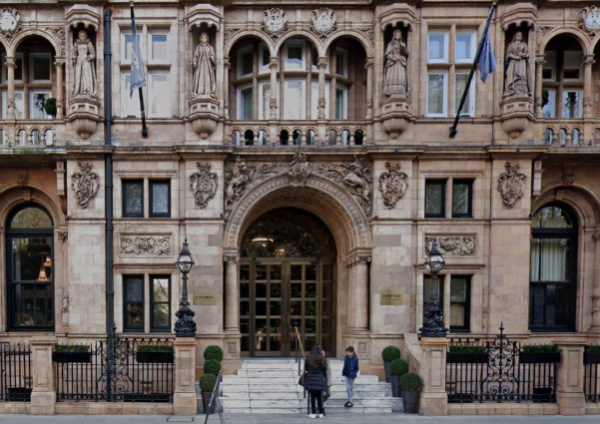
We finish our series of lesser known statues of English monarchs with a Bloomsbury building featuring four English queens.
Tucked away in niches over the main entrance of the Hotel Russell – which opened in 1898, the four queens – Elizabeth I, Mary II, Anne, and Victoria – were the work of Henry Charles Fehr.
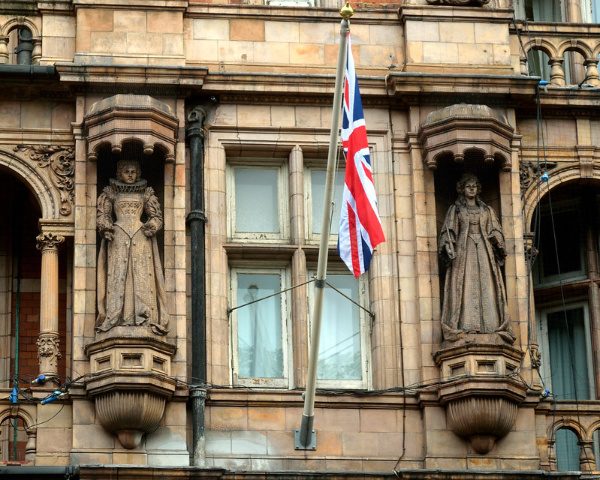
The larger than lifesize terracotta statues – which face out to Russell Square – don’t include Queen Mary I and are rather unusual and represent idealised versions of the queens. Elizabeth is readily identifiable due to the ruff she wears but there is some confusion over who’s who when it comes to Mary II and Anne. Victoria, meanwhile, is depicted as a very young woman.
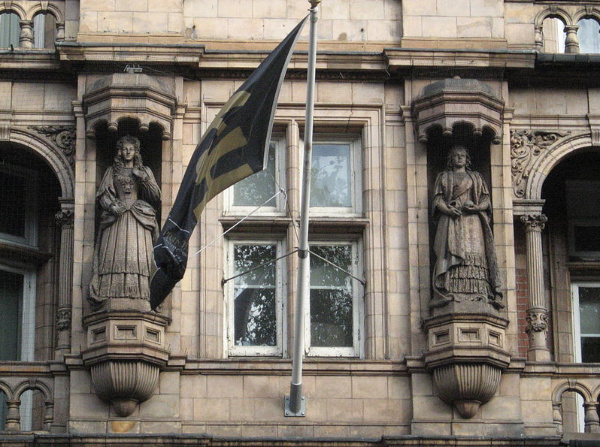
Among other ornamentation, the building – which was designed by C Fitzroy Doll, also features the busts of four Prime Ministers – Lord Derby, Lord Salisbury, William Gladstone and Benjamin Disraeli – on the Guilford Street facade.
The hotel is now the Kimpton Fitzroy London.
10 (lesser known) statues of English monarchs in London…9. Empress Matilda?…
The neo-Gothic former Public Record Office (now the Maughan Library of King’s College) in Chancery Lane is adorned with statues of several kings and queens including two kings – King Edward III and King Henry III – as well as four queens.
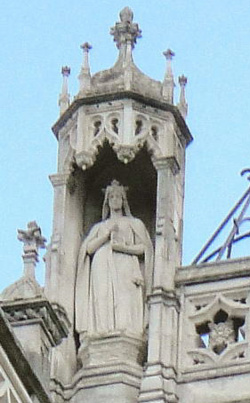
The queens, which can be found at the top of the tower over the main entrance, include three who are represented with more famous statues elsewhere – Queen Elizabeth I (on the facade of St Dunstan-in-the West), Queen Anne (outside of St Paul’s Cathedral) and Queen Victoria (outside Buckingham Palace among others).
But one of those statues – that of the Empress Matilda – is something of an outlier – unlike the others, the Empress Matilda, while she claimed the title of Queen of England, was never actually crowned (her attempt to be crowned at Westminster failed when opposed by the London mob which supported her opponent, King Stephen).
Instead, Matilda (sometimes known as Maud) claimed the title ‘Lady of the English’ and while she was eventually driven out of England to Normandy where she died, her eldest son did take the crown in 1154 as King Henry II.
The statue, which stands on top of the east side of the tower (and is quite difficult to spot), stands 2.4 metres high and was made of Portland stone to adorn the 1850s, now Grade II* listed building (the gatehouse leading to Chancery Lane – which features the two kings – was an extension in the 1890s). It is said to be the work of sculptor Joseph Durham.
What’s a little puzzling is why the Empress was included as one of the four, particularly given other English queens and monarchs – Queen Mary I and II – were not.
10 (lesser known) statues of English monarchs in London…5. Queen Elizabeth I at Westminster School…
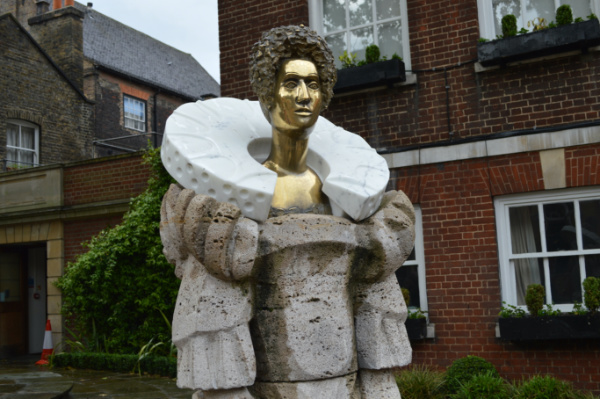
This rather unusual statue of Queen Elizabeth I is a relatively new addition – it was dedicated 12 years ago on what was the 450th anniversary of the refounding of Westminster School – more properly The Royal College of St Peter in Westminster – by the aforementioned Queen.
The larger-than-life statue, which can be found in Little Dean’s Yard, is the work of a former pupil, sculptor Matthew Spender.
It depicts the Queen in white Travertino Noce stone while her head, surrounded by a giant white ruff is gilded bronze with what was auburn hair. The unusual depiction has certainly attracted its share of detractors.
The statue, which was commissioned by the Westminster School Society, was unveiled by the Queen’s namesake, Queen Elizabeth II, on 21st May, 2010.
There’s a more famous – and more typical – statue of Queen Elizabeth I on the exterior of St Dunstan-in-the-West in Fleet Street and another on the exterior of Guildhall.
Guided tours of the school can be arranged during the school’s holidays. For more information, see www.westminster.org.uk/about/our-history/guided-tours/.
Lost London – Arundel House…
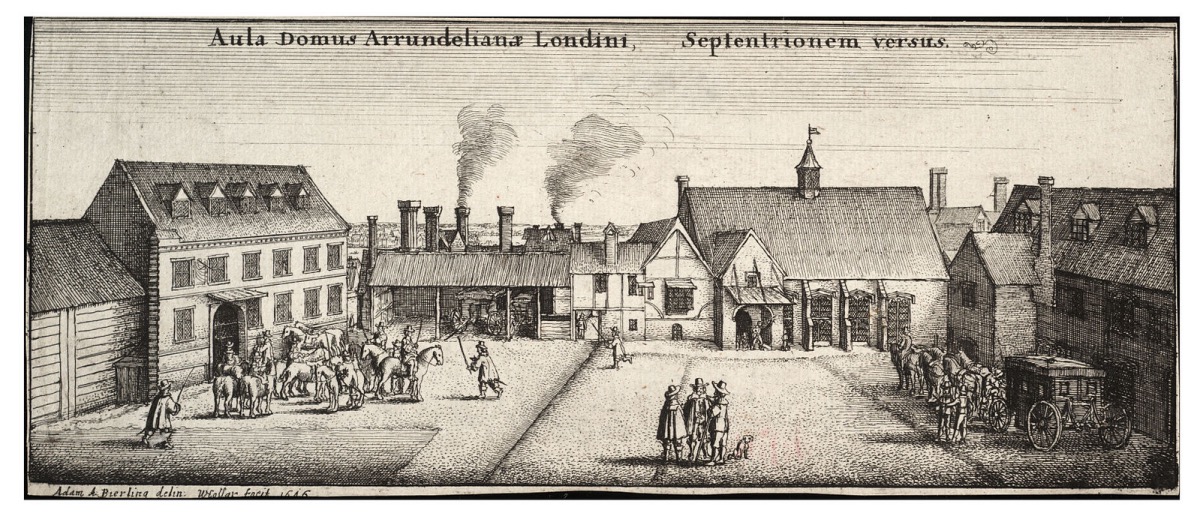
One of a string of massive residences built along the Strand during the Middle Ages, Arundel House was previously the London townhouse of the Bishops of Bath and Wells (it was then known as ‘Bath Inn’ and Cardinal Thomas Wolsey was among those who resided here during this period).
Following the Dissolution, in 1539 King Henry VIII granted the property to William Fitzwilliam, Earl of Southampton (it was then known as Hampton Place). After reverting to the Crown on his death on 1542, it was subsequently given to Thomas Seymour, 1st Baron Seymour of Sudeley, a younger brother of Queen Jane Seymour, Henry VIII’s third wife, and known as ‘Seymour Place’. Then Princess Elizabeth (late Queen Elizabeth I) stayed at the property during this period (in fact, it’s said her alleged affair with Thomas Seymour took place here).
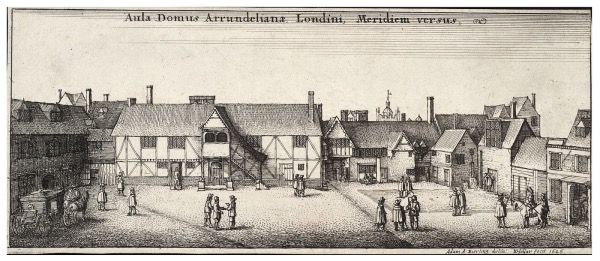
Seymour significantly remodelled the property, before in 1549, he was executed for treason. The house was subsequently sold to Henry Fitz Alan, 12th Earl of Arundel, for slightly more than £40. He was succeeded by his grandson, Philip Howard, but he was tried for treason and died in the Tower of London in 1595. In 1603, the house was granted to Charles, Earl of Nottingham, but his possession was short-lived.
Just four years later it was repurchased by the Howard family – in particular Philip’s son, Thomas Howard, 14th Earl of Arundel – who had been restored to the earldom.
Howard, who was also the 4th Earl of Surrey, housed his famous collection of sculptures, known as the ‘Arundel Marbles’, here (much of his collection, described as England’s first great art collection, is now in Oxford’s Ashmolean Museum).
During this period, guests included Inigo Jones (who designed a number of updates to the property) and artist Wenceslas Hollar who resided in an apartment (in fact, it’s believed he drew his famous view of London, published in 1647, while on the roof).
Howard, known as the “Collector Earl”, died in Italy in 1646. Following his death, the property was used as a garrison and later, during the Commonwealth, used as a place to receive important guests
It was restored to Thomas’ grandson, Henry Howard, 6th Duke of Norfolk, following the Restoration. Following the Great Fire of London in 1666, for several years the property was used as the location for Royal Society meetings.
The house was demolished in the 1678. It’s commemorated today by the streets named Surrey, Howard, Norfolk and Arundel (and a late 19th century property on the corner of Arundel Street and Temple Place now bears its name).
Treasures of London – Great Seal of Queen Elizabeth I…
Held in the National Archives at Kew, this great seal was used during the second half of Queen Elizabeth I’s reign – from 1586 to 1603.
The seal, which replaced an earlier one used by Queen Elizabeth I, was used by the Chancery to prove the document it was attached to was issued in the Queen’s name. The seal also acted as a security device, ensuring the document couldn’t be read before reaching the intended recipient. Made of wax, it was created using a metal pattern or matrix.
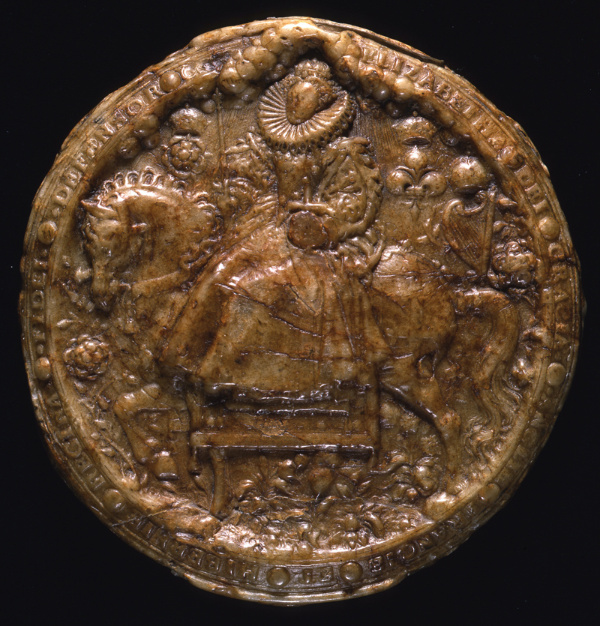
The metal pattern for this seal was created by court miniaturist Nicholas Hilliard.
The obverse or front side of the seal, which is made of resin and beeswax which turns brown with age, shows Queen Elizabeth I on her throne, her hands holding a sceptre and an orb – royal insignia – and accompanied by the Royal Coat of Arms. The reverse (pictured) shows Queen Elizabeth I mounted on a horse and surrounded by symbols including the Tudor Rose, a harp representing Ireland and fleur de lys representing France. The inscription around the seal reads: Elizabetha dei gracia Anglie Francie et Hibernie Regina Fidei Defensor (‘Elizabeth, by grace of God, Queen of England, France and Ireland, Defender of the Faith’).
The seal was traditionally carried before the Lord Chancellor and Keeper of the Great Seal in a purse or burse. One used to carry Queen Elizabeth I’s matrix is in the collection of the British Museum.
The matrix used to create the second seal was surrendered to King James I on his accession to the throne on 3rd May, 1603. James then used it for the next 11 weeks until his own was ready (at which time Queen Elizabeth I’s matrix was defaced).
This Week in London – Elizabeth I and Mary, Queen of Scots; Ellen and William Craft honoured; and, Kehinde Wiley’s ‘Portrait of Melissa Thompson’…
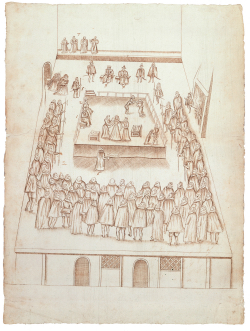
• The complex relationship between Queen Elizabeth I and Mary, Queen of Scots, is the subject of a new exhibition opening at the British Library in King’s Cross tomorrow. Highlights of Elizabeth and Mary: Royal Cousins, Rival Queens, the first major exhibition to consider both women together, include Queen Elizabeth I’s 1545 handwritten translation of her stepmother Katherine Parr’s Prayers and Meditations – a gift for her father King Henry VIII, a sonnet by Mary, Queen of Scots, which was handwritten the night before she was executed in 1587 (possibly the last thing she ever wrote), the ‘Penicuik Jewels’ which she is thought to have given away on the day of her death and Robert Beale’s eye-witness drawing depicting her entering the hall, disrobing, and placing her head on the block (pictured right). Other items on show include King Henry VIII’s Great Bible (dating from 1540, it was later inherited by Elizabeth I), Elizabeth I’s mother-of-pearl locket ring (c1575) containing miniature portraits of herself and her mother Anne Boleyn, and the warrant confining Mary, Queen of Scots, in Lochleven Castle in 1567. The exhibition is accompanied by a programme of events. Runs until 20th February. Admission charge applies. For more, see www.bl.uk/events/elizabeth-and-mary.
• Nineteenth century African-American abolitionists Ellen and William Craft have been honoured with an English Heritage Blue Plaque at their former Hammersmith home. The Crafts escaped from enslavement in Georgia in the US in December, 1848, and fled to Britain, settling in a mid-Victorian house at 26 Cambridge Grove where they raised a family and campaigned for an end to slavery. The Crafts returned to the US following the end of the American Civil War and the emancipation of enslaved people and settled in Boston with three of their children. In 1873, they established the Woodville Cooperative Farm School in Bryan County, Georgia, for the children of those who had been emancipated. Ellen died in Georgia in 1891 and William in Charleston in 1900.
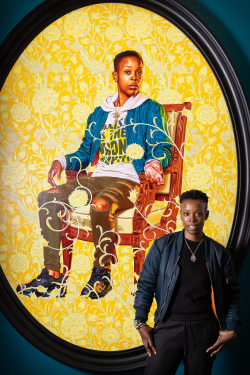
• American artist Kehinde Wiley’s monumental Portrait of Melissa Thompson has gone on display in the V&A’s British Galleries, alongside William Morris’s Wild Tulip designs that inspired it. The massive oil painting, which was created as part of Wiley’s series The Yellow Wallpaper and was first exhibited at the William Morris Gallery in Walthamstow in 2020, was acquired earlier this year and is being displayed as part of a series of initiatives marking the 125th anniversary of William Morris’s death this October. The painting will be displayed in the William Morris Room (room 125) until 2024, after which it will move to its permanent home at V&A East Museum in 2025. Admission is free. For more, head to vam.ac.uk.
Send all items to exploringlondon@gmail.com.
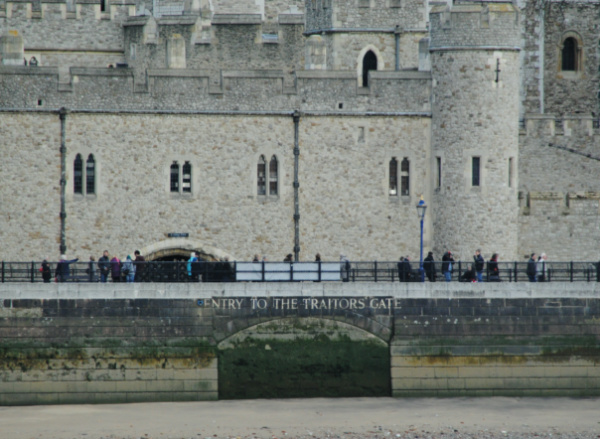
Treasures of London – Traitor’s Gate…
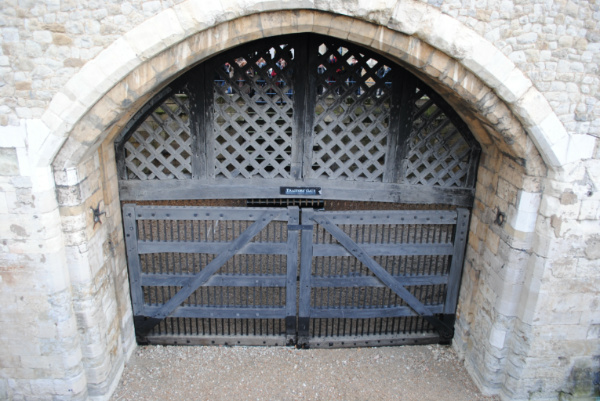
Built by King Edward I in the 13th century as a water gate to provide access from the Tower of London to the River Thames, the name ‘Traitor’s Gate’ came to be applied to this portal in Tudor times in relation to those accused of treason who were brought into the tower under its arch.
The double gateway is part of St Thomas’s Tower, which was designed by a Master James of St George, and behind it is a pool which was used to feed water to a cistern on the roof of the White Tower. While the gate was originally built to give access directly to the river, Traitor’s Gate now sits behind a wharf which runs along the river bank (and where can be seen the bricked up entrance says ‘Entry to the Traitor’s Gate’ – this was bricked up in the 19th century when embankment works were carried out)
Sir Thomas More, Sir Walter Raleigh and even the future Queen Elizabeth I (when a princess) were among those who were brought in by barge through the Traitor’s Gate (their journey would have led them under London Bridge where the heads of executed prisoners were on display). Whether Henry VIII’s disgraced Queen Anne Boleyn entered the tower through the gate remains a matter of some dispute.
 Exploring London

