Famous Londoners – Obaysch the hippo…

Given our current series on London’s animal life, we thought it an opportune time to take a look at another of London’s most famous animals – in this case a hippopotamus called Obaysch.

‘The Hippopotamus at the Zoological Gardens, Regent’s Park, London’, c1855, by Count de Montizon (Spanish, 1822 – 1887). PICTURE: George Eastman Museum/Flickr

Obaysch had been living near (and named for) an island in the River Nile in Egypt. He was gifted by the Ottoman Viceroy, Abbas Pasha, to the British Consul General, Sir Charles Murray (who became known as “Hippopotamus Murray” due to his affection for the animal).

Transported via a steamer to Southampton, he arrived at London Zoo in Regent’s Park on 25th May, 1850.

Said to have been the first hippo to be brought to Europe since the days of the Roman Empire, Obaysch soon gained the status of a celebrity at London Zoo with Queen Victoria among the thousands who came to see him (she apparently compared his swimming technique to that of a porpoise) in a craze that became known as “hippomania”.

In 1854, Obaysch was joined by a female hippo Adhela, also known as ‘Dil’, (again as a gift of the Viceroy) who was the first living female hippo in Europe since, you guessed it, Roman times.

In 1860, Obaysch escaped from the hippo enclosure and was only lured back to his enclosure by using one of the zookeepers whom he apparently particularly disliked as bait.

The zoo hoped the pair of hippos would breed but it wasn’t until 1871 that they first became the parents of a baby who sadly, didn’t survive.

Two more babies followed and the second of these, born in November, 1872, and named Guy Fawkes despite subsequently being found to be a female, became the first captive bred hippo to be reared by its mother.

Obaysch died on 11th March, 1878 and Adhela four years later on 16th December, 1882. Guy Fawkes died in March, 1908.

This Week in London – Wildlife Photographer of the Year is coming; ‘Vanishing Africa’; and, ‘Black Chiswick Though History’…

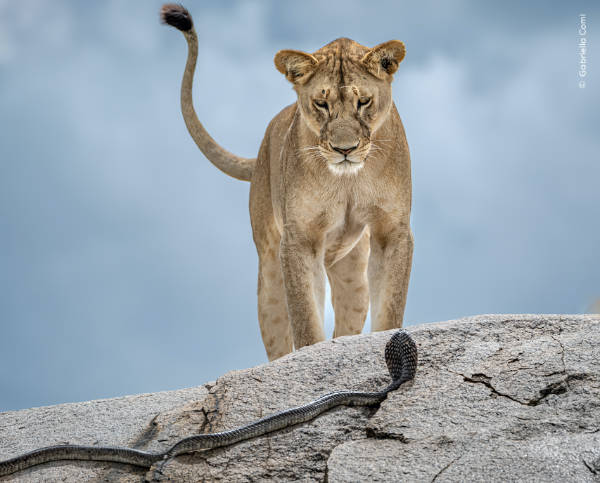
‘Wake-up Call’ by Gabriella Comi, Italy, (Highly Commended, Behaviour: Mammals). PICTURE: Courtesy of the Wildlife Photographer of the Year, Natural History Museum

Depicting a dramatic stand-off between a lion and a cobra in the Serengeti National Park in Tanzania, Gabriella Comi’s impressive image is among the 60,636 entries, from across 113 countries and territories, received in the Natural History Museum’s 61st annual Wildlife Photographer of the Year competition. The competition’s category winners and the prestigious ‘Grand Title’ and ‘Young Grand Title’ awards will be announced on 14th October, 2025, after which, from 17th October, 100 of the images will go on show at the museum in South Kensington. Other images revealed this week include Amit Eshel’s portrait of an inquisitive pack of Arctic wolves and photographs of flamingoes, coyotes and red deer by emerging young photographers as young as nine-years-old. For more, see https://bit.ly/WPY61Exhibition.

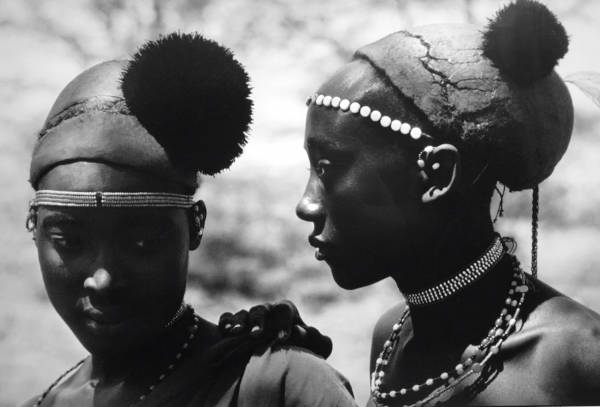
One of the images in ‘Vanishing Africa’. PICTURE: © Mirella Ricciardi

The Science Museum has launched a new online exhibition, Vanishing Africa, which features images by Kenyan-born photographer Mirella Ricciardi and reveal how much climate change is changing the continent. Taken in East Africa over two years in the 1960s, the photographs are a visual record of the Indigenous peoples of the region, including the Maasai, Samburu, Turkana, Orma, Pokot and Rendille people, and “capture a land of untamed wilderness, diverse wildlife, and Indigenous communities attuned to nature”, an East Africa which many no longer recognise. The exhibition has been published to celebrate the ‘UK/Africa Season of Culture’ and launches ahead of the international climate summit, COP30. To view it, head to www.sciencemuseum.org.uk/objects-and-stories/vanishing-africa-through-mirella-ricciardis-lens.

On Now: Black Chiswick Through History. This project, launched in 2011, looks at how the history of Chiswick House is connected to Black history and people of colour. This year’s installation explores the life of 18th-century Chiswick House resident James Cumberlidge – one of the few people of African heritage in Britain whose likeness was captured and preserved for posterity – and traces his journey from  page boy at Chiswick House to trumpeter in the Royal Court of King George III. There’s also a painting dating from the 1870s which depicts Queen Victoria attending a fashionable garden party right here at Chiswick House in July, 1875. Runs until 28th September. Admission charge applies. For more, see https://chiswickhouseandgardens.org.uk/event/visit-chiswick-house/.

Send all items for inclusion to exploringlondon@gmail.com.

Treasures of London – The Royal Mews…

Usually Treasures of London focuses on an object held in a museum or gallery or an outdoor feature such as sculpture or memorial but in honour of its 200th birthday this year, today we’re taking a look at the Royal Mews at Buckingham Palace.

Here are some facts about the Mews which you may not know…

Subscribe for just £3 a month to access all of Exploring London’s content…

This Week in London – Royal garments; Victor Hugo’s drawings; and, British Black music…

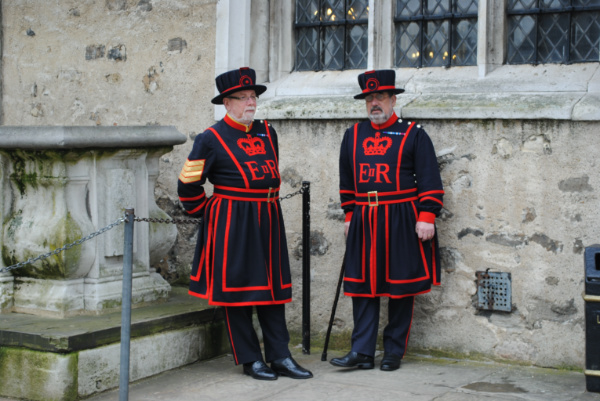
Yeoman Warders at the Tower of London. PICTURE: David Adams

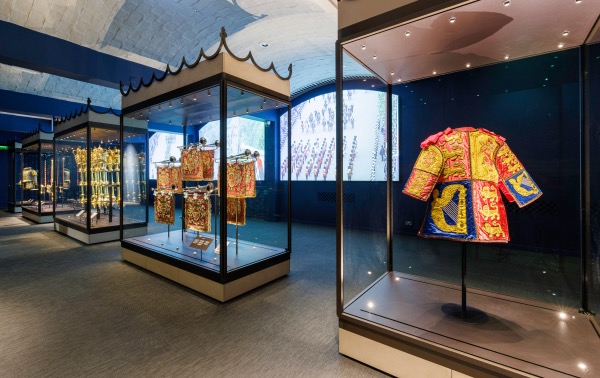
Almost 200 garments from the Royal Ceremonial Dress Collection are able to be explored online thanks to a new collaboration between Historic Royal Palaces, which looks after six royal palaces including Hampton Court Palace and the Tower of London, and Google Arts & Culture. Drawing on ultra-high-resolution photography and 3D scanning, the garments – which include everything from ceremonial uniforms such as those worn by Yeoman Warders and a rare Bristow hat which may have been worn by King Henry VIII to Queen Victoria’s silk shoes, a waistcoat worn by King George III and a dress worn by the future Queen Elizabeth II in 1927 when she was just 18-months-old – can now be viewed in unprecedented detail (a billion pixels per image) without the risk of the damage which can occur thanks to light, humidity, and handling. The Royal Ceremonial Dress Collection comprises over 10,000 pieces of historic dress and related materials spanning the period from the 16th century to the present day and features garments worn by monarchs and key historical figures, including, as well as the aforementioned, Prince Albert, Princess Margaret, and Diana, Princess of Wales. To see the items, head to goo.gle/royalwardrobe.

Author, politician and artist Victor Hugo’s rarely seen works on paper have gone on show at the Royal Academy of Arts. Astonishing Things: The Drawings of Victor Hugo features around 70 works drawn from European collections and follows his preoccupation with drawing from early caricatures and travel drawings to later landscapes and abstract works. Arranged across four sections, the works on show include everything from Mushroom (1850) – which depicts a giant anthropomorphic toadstool, some of his many works depicting castles such as The cheerful castle (c 1847), and drawings that Hugo created in tandem with writing his 1866 novel The Toilers of the Sea, set in Guernsey in the years following the Napoleonic Wars, as well some relating to his most famous work, Les Misérables. The exhibition, being held in the Jillian and Arthur M Sackler Wing of Galleries, can be seen until 19th June. Admission charge applies. For more, see royalacademy.org.uk.

A “ground-breaking” exhibition showing the outsized impact British Black music has had on the world stage over the past 100 years has opened at the Barbican Music Library. Black Sound London highlights artists who created their own platforms, audiences, and spaces, often without mainstream support and spans genres including jazz, lovers’ rock, jungle, grime, and drill. Among the objects on show are vintage mixtapes, iconic magazine covers, and fly-posted walls. Runs until 19th July. For more, see www.cityoflondon.gov.uk/services/libraries/barbican-music-library.

Send all items for inclusion to exploringlondon@gmail.com.

This Week in London – ‘Dress Codes’ at Kensington Palace; Edvard Munch portraits; St Patrick’s Day celebrations; and, women’s lives at Hampton Court…

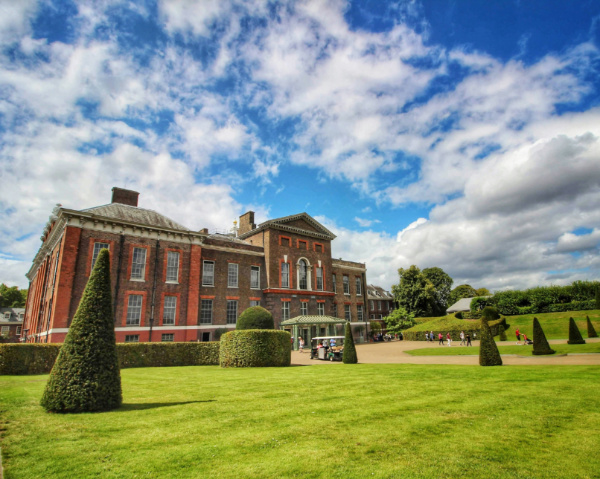
Kensington Palace. PICTURE: Martin Zenker/Unsplash

Never-before-seen royal clothing is going on show at a new exhibition opening at Kensington Palace today. Dress Codes, which includes rarely seen highlights from the Royal Ceremonial Dress Collection, explores the codes and conventions of royal clothing, and the impact fashion can make “when boundaries are pushed and dress codes evolve”. Highlights include two matching Liberty print floral cotton dresses, worn in 1936 by Queen Elizabeth II (then Princess Elizabeth) and her younger sister Princess Margaret, a glittering red Bruce Oldfield gown worn by Diana, Princess of Wales, for a state visit to Saudi Arabia in 1987, and a Catherine Walker green silk velvet tuxedo-style dress which was shared with the world as one of 79 dresses famously auctioned to raise money for HIV/AIDS and cancer charities in 1997. There also two dresses worn by Princess Margaret which are going on show for the first time in the UK – a 1978 Thea Porter evening ensemble and a colourful green embroidered evening gown by the Filipino designer Jose Pitoy Moreno, worn in 1980. Other items include a never-before-displayed black mourning bodice worn by Queen Victoria. Runs until 30th November. Admission charges apply. For more, see www.hrp.org.uk/kensington-palace/whats-on/dress-codes.

The first ever exhibition of Edvard Munch portraits opens at the National Portrait Gallery. The display, Edvard Munch Portraits, include Munch’s portraits of lawyer Thor Lütken and physicist Felix Auerbach as well as early family portraits such as Evening (1888) which shows his sister Laura on a family holiday and Andreas Munch Studying Anatomy (1886). Other works include The Brooch (1902) and full-length portraits of Jappe Nilssen, the painter Ludvig Karsten and writer Christian Gierløff – all from the group of men he called his ‘Lifeguards’ or ‘Guardians’. Runs until 15th June. Admission charge applies. For more, see www.npg.org.uk.

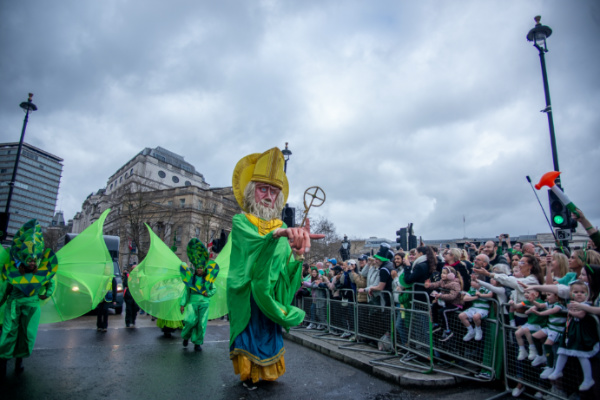
St Patrick’s Day in London in 2024. PICTURE: Loredana Sangiuliano/Shutterstock

The St Patrick’s Day Parade and Festival returns to London this Sunday. Irish Paralympic gold medal winning cyclist Katie-George Dunlevy and Olympic gold medal winning boxer Kellie Harrington are serving as this year’s Grand Marshals of the parade which, with more than 50,000 participants, will feature floats, marching bands, and dance troupes. The parade kicks off at noon and will make its way from Hyde Park Corner past Piccadilly and Trafalgar Square and on to Whitehall. Meanwhile, Trafalgar Square will host an afternoon of entertainment hosted by Irish-Indian-Malaysian DJ and broadcaster Tara Kumar and featuring a wide range of family-friendly performances by the likes of Kíla, Irish Women in Harmony and Ragz-CV. Celebrity chef Anna Haugh will provide Irish cooking demonstrations and there will be an exhibition celebrating Ireland’s unsung women heroes as well as the chance to learn Irish dancing and a dedicated zone for kids with free creative workshops. For more, see https://www.london.gov.uk/events/st-patricks-day-2024.

An audio-led exploration of Hampton Court Palace after dark kicks off next Wednesday to mark
International Women’s History Month.
Still The Hours uses a layered soundscape to guide visitors through the palace’s darkened halls as established actors including Kathryn Hunter (Harry Potter, Black Doves, Poor Things) and Miranda Richardson (Harry Potter, Good Omens, The Hours) can be heard alongside up-and-coming female voices to “weave a vivid tapestry” of women’s lives at the palace. The stories explored in the hour long presentation range from a suffragette to a mistress and a queen to a maid. Runs until 30th March. Admission charge applies (for ages 14+, under 16s must be accompanied by an adult). For more, see www.hrp.org.uk.

Send all items to exploringlondon@gmail.com


This Week in London – Queen Victoria’s Christmas childhood; Parmagianino’s Madonna and Child with Saints; and, Buckingham Palace winter tours…

Step back in time at Kensington Palace this Christmas with an experience inspired by Queen’s Victoria’s childhood at the palace. Victoria’s Childhood Christmas features intricately designed installations – everything from trees hung with sugar ornaments and handmade paper decorations to bespoke illustrations and period-style gifts – as well as an exploration of how some of the traditions still celebrated today – such as arranging numerous Christmas trees on table tops and displaying unwrapped presents around them – can be traced back to the 1830s at Kensington Palace. There’s also a pop-up theatre set which captures the magic of Victoria’s winter trips to London opera houses and a festive-themed afternoon tea inspired by Princess Victoria’s Christmas traditions served in The Orangery. The experience, which is included in general admission, can be seen until 5th January. For more, see www.hrp.org.uk/kensington-palace/

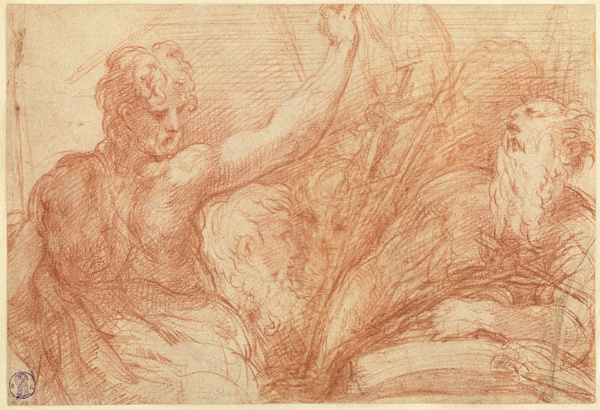
Parmigianino (1503–1540), ‘Studies of Saints John the Baptist and Jerome, a Crucifix and Various Heads’ (recto), about 1525–7; Red chalk on paper, 13.5 × 22.1 cm; The J. Paul Getty Museum, Los Angeles (87.GB.9); PICTURE: Courtesy of the Getty’s Open Content Program

Parmigianino’s Madonna and Child with Saints (1526‒7) returns to display in The National Gallery for the first time in a decade in honour of the gallery’s 200th anniversary. The work, which is also known as The Vision of Saint Jerome, was presented to the gallery in 1826 and is being displayed with a selection of some of the most important preparatory drawings providing a rare opportunity to follow the artist’s creative process. The painting can be seen in Room 46 until 9th March. Entry is free. For more, see nationalgallery.org.uk.

The Buckingham Palace State Rooms are open for one hour tours on select dates throughout winter. Led by an expert guide, the tours, which have a maximum of 30 people, include a complimentary guide. For more, see https://www.rct.uk/whatson

Send all items to exploringlondon@gmail.com

10 towers with a history in London – 9. The Queen’s Tower, Imperial College London…

This free-standing, 287 foot-high tower is a survivor – it’s all that remains of the Imperial Institute.

Subscribe for just £3 a month to get access to all Exploring London’s stories – that’s less than the cost of a cup of coffee!

London Explained – Albertopolis…

An aerial view of the area known as Albertopolis. PICTURE: Andreas Praefcke/Public Domain

A nickname, connected to Prince Albert (beloved husband of Queen Victoria), which was given to an area of South Kensington centred on Exhibition Road which is packed with various cultural and educational institutions.

The land, which had been the Kensington Gore Estate, was purchased by the Royal Commission for the Exhibition of 1851 on the suggestion of Prince Albert using the profits made from the Great Exhibition which had been held just to the north in Hyde Park. His vision was for arts and science quarter which included schools, colleges and libraries as well as museums, exhibition rooms and spaces for events.

Among the buildings subsequently constructed upon it were those bearing Prince Albert’s name including Royal Albert Hall and the Victoria and Albert Museum along with the huge Albert Memorial.

Other institutions on the land include the Natural History Museum, Imperial College London, the Royal College of Music, the Royal College of Art, the Science Museum, the Royal Geographical Society and the since removed Royal Horticultural Society Gardens.

The area gained its nickname in the 1850s due to the Prince’s role in the Great Exhibition and its subsequent purchase and was seen to both celebrate, but also by some, to satirise him. It fell out of use after the Prince’s death in 1861 but was subsequently revived in the 1960s and since to bring attention to buildings in the area threatened with demolition.

A pedestrian subway under Exhibition Road runs north from South Kensington Station and gives access to the museums (when it was built in 1885, a toll of one penny was charged to use it).

10 towers with a history in London – 3. Victoria Tower…

Located at the south-western end of the Houses of Parliament, the rather grand Victoria Tower was built as part of Sir Charles Barry’s 19th century redevelopment of the site in the Gothic Perpendicular style.

We invite you to support our work and subscribe for just £3 a month to gain access to all our coverage!

10 significant (and historic) London trees…5. Black mulberry trees, Middle Temple Gardens…

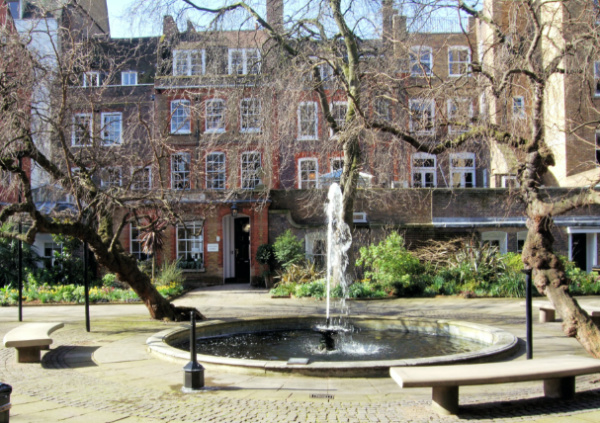
The two gnarled mulberry trees on either side of the fountain. PICTURE: Jim Linwood (licensed under CC BY 2.0)

While there’s been gardens here dating back possibly as far as the middle of the 12th century when the Templars established a preceptory here, these two trees have a more recent historic (and royal) link.

The gnarled black mulberrys (Morus nigra) in the Fountain Court were planted here on 20th June, 1887, to commemorate the Golden Jubilee of Queen Victoria.

There were actually four mulberry trees planted to mark the occasion – which was celebrated with a grand dinner in the nearby Middle Temple Hall – but these two trees are the only survivors, the other two having been removed in the 1970s.

Both trees are these days leaning on supports.

Famous Londoners – Princess Sophia Duleep Singh…

A suffragette and women’s right’s campaigner, Princess Sophia Jindan Alexandrovna Duleep Singh was the daughter of the deposed Maharaja Sir Duleep Singh, last Sikh emperor of Punjab, and god-daughter of Queen Victoria and is known for having leveraged her position to advocate for the rights of others.

Princess Sophia Duleep Singh selling subscriptions for the ‘Suffragette’ newspaper outside Hampton Court in London in about 1913. PICTURE: Via Wikipedia/Public Domain.

Singh was born on 8th August, 1876, at a house in Belgravia, the third daughter of the Maharajah and his German-born first wife, Bamba Müller. The fifth of six children, she was named Sophia for her maternal grandmother, a formerly enslaved woman from Ethiopia who married a wealthy German banker, and Alexandrovna in tribute to her godmother, Queen Victoria.

Following his forced abdication, the Maharaja had travelled to England as a boy in 1854 where he lived on an annual government pension of £25,000. Having later married Bamba in Cairo, he returned to England where in 1863 he purchased Elvedon Hall in Suffolk (which he later rebuilt). Sophia subsequently spent her childhood there.

But after the breakdown of her parents’ marriage (after which her father remarried before being exiled to Paris where he campaigned for a return to India until his death in 1889) and the death of her mother in 1887 from typhoid (she had contracted the disease but survived), Sophia and her siblings were placed in the care of Arthur Craigie Oliphant – chosen by Queen Victoria to be guardian – first at their home in Folkestone and then in Brighton.

After finishing her education at a girls school in Brighton, Sophia and her sisters sisters Bamba and Catherine embarked upon a six-month tour of Holland, Germany, Greece, Italy, and Egypt.

Sophia, who had inherited some of her father’s fortune, was given Faraday House – part of the Hampton Court estate – as a grace-and-favour apartment by Queen Victoria in 1896 (along with an annual grant to maintain the property and a key to Hampton Court Palace where she could walk her dogs).

The princess took a keen interest in dogs – she was a member of the Ladies’ Kennel Association and showed her dogs on several occasions – as well in music, photography and fashion. She also supported Indians in London, particularly those in the Sikh community, and travelled to India a number of occasions.

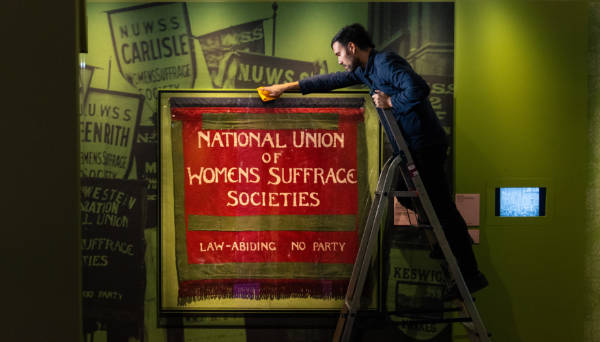
Princess Sophia is known for her work in the women’s suffrage movement and was an active member of the Women’s Social and Political Union. She was present in Parliament Square ion 18th November, 1910, when more than 300 suffragettes including Emmeline Pankhurst gathered and demanded to see the Prime Minister HH Asquith and, having refused to disperse when he refused to see them, were met with a violent response by police. The day, which resulted in injuries to more than 200 women including two who died of them, became known as Black Friday.

Sophia was also, perhaps more importantly in terms of public impact, a member of the Women’s Tax Reform League and refused to pay fines on a couple of occasions, protesting that taxation without representation was “tyranny” (with the result that some of her jewels were confiscated and auctioned off).

The Blue Plaque on Faraday House. PICTURE: Spudgun67 (licensed under CC BY-SA 4.0)

During World War I, Princess Sophia – as well as being part of a 10,000-strong march calling for the establishment of a female volunteer force – was involved in fundraising for organisations such as the Red Cross and in support of Indian soldiers and also worked as a nurse at the Brighton Pavilion and other hospitals where Indian soldiers were recovering.

During World War II, Sophia moved to Penn, Buckinghamshire, with her sister Catherine, and took in evacuee children from London.

Having never married, Princess Sophia died in her sleep in Penn on 22nd August, 1948. A full band played Wagner’s Funeral March at her cremation and her ashes were taken to India for burial.

Sophia’s name and image are among those on the plinth of the statue of Millicent Fawcett in Parliament Square. In 2023, an English Heritage Blue Plaque was unveiled on Faraday House in Richmond.

Sources: Historic Royal Palaces; Oxford Dictionary of National Biography; BBC.

Where’s London’s oldest…roundabout?

PICTURE: Matt Brown (licensed under CC BY 2.0)

London’s oldest roundabout is said to be located in Southwark at the intersection of Borough, Westminster Bridge, Waterloo, London and Blackfriars Roads.

St George’s Circus was built in 1771 (during the reign of King George III) and designed by Robert Mylne as a grand southern entrance to London with radiating roads leading to three bridges over the Thames: London Bridge, Westminster Bridge and Blackfriars Bridge.

Mylne also designed the obelisk which still stands in the centre of the circus. As well as showing the date on which it was erected, the obelisk also records distances to Palace Yard in Westminster, Fleet Street, and London Bridge. Gas lamps were placed at each corner to illuminate the intersection.

The now Grade II*-listed obelisk has a rather interesting history in itself. Having stood at the roundabout for more than a century, in about 1897 it was relocated to Geraldine Mary Harmsworth Park outside the Imperial War Museum on Lambeth Road to make way for a clocktower designed to mark Queen Victoria’s Diamond Jubilee.

The clocktower itself, however, was removed in the 1930s to help with traffic flow. It wasn’t until 1998 that the obelisk was moved back to its original site (now minus the oil lamps).

Interestingly, an Act of Parliament passed in 1812 specifies that all buildings on the intersection must be located 240 feet from the obelisk (the reason, apparently, for curved facades on some of the surrounding buildings).

A Moment in London’s History…The opening (and subsequent burning) of Alexandra Palace…

This month marks the 150th anniversary of the fire which destroyed the first Alexandra Palace in the north of London, only two weeks after it was opened.

Conceived by British architect Owen Jones as a “palace of the people”, the palace at Muswell Hill was created to serve as a public centre of recreation, entertainment and education for the people of north London as something of a counterpart to the Crystal Palace in the city’s south.

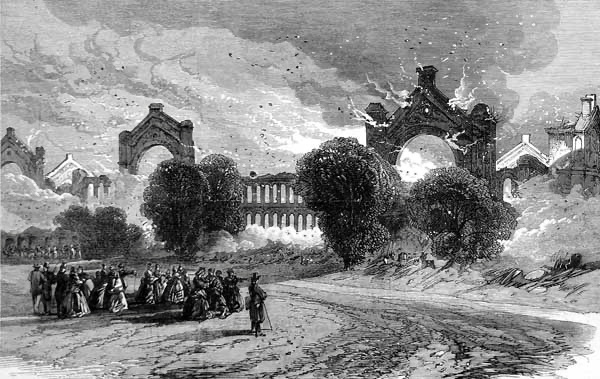
The 1873 fire as depicted in the Illustrated London News.

Designed by Alfred Meeson and John Johnson, the massive glass, iron and brick building covered some 250,000 square feet. It was constructed using recycled materials from the vast temporary building built for the 1862 International Exhibition in South Kensington. Building works commenced in September, 1865, and it was completed in early 1873.

Officially named Alexandra Palace after the popular Princess of Wales, Alexandra of Denmark (although the name Palace of the People – which had originally been given to the project – remained an alternative as did, later, the shortened “Ally Pally”), it featured a vast 900 foot long central nave capped with a 220 foot high dome as well as first floor galleries and terraces.

The palace and surrounding park were officially opened on 24th May, 1873, the 54th birthday of Queen Victoria. The grand celebration, which was attended by tens of thousands of people, featured concerts, recitals and ended with fireworks.

It was only 16 days after the opening, at lunchtime on 9th June, that the palace was destroyed by a fire believed to have started when a burning ember from a brazier being used by plumbers working on the roof set fire to the building’s timber. Numerous horse drawn and manual fire engines were dispatched to the scene along with some 120 firefighters but to no avail.

Tragically three staff members died as a result of the blaze which left only the outer walls of the palace standing. Among the items destroyed was a collection of English pottery and porcelain which, comprising some 4,700 items, had been on loan.

Plans to rebuild the palace were quickly acted upon and a new and improved palace opened on 1st May, 1875. This building survived a fire in 1980 but about a third of the building was destroyed.

The now Grade II-listed building has since been rebuilt(but that’s a story for a another time).

This Week in London – The Crown Jewels (redisplayed); The Troubles at IWM; and, Tate Britain, rehung…

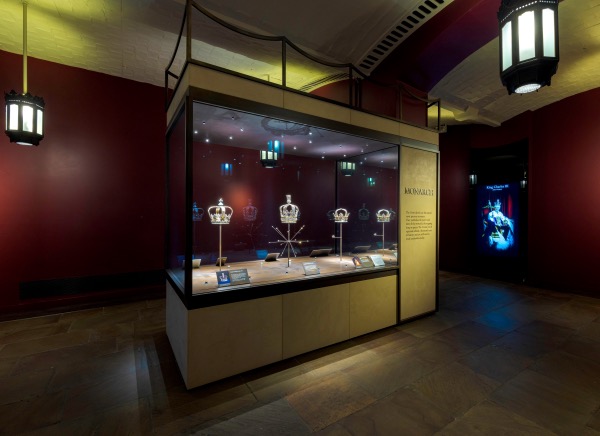
Part of the new Jewel House display of the Crown Jewels at The Tower of London. PICTURE: ©Historic Royal Palaces

A new display of the Crown Jewels opens in the Tower of London’s Jewel House tomorrow – the first major change to the display in more than a decade. Opening just weeks after the coronation regalia was used in the coronation of King Charles III and Queen Camilla at Westminster Abbey, the re-presentation of the jewels comes about thanks to a partnership between Historic Royal Palaces and royal jewellers Garrard and is the culmination of a four year project aimed at delving deeper into the history of the collection and coronations. The display, which features images from the recent coronation, starts with a celebration of the timelessness of monarchy featuring the State Crown frames worn by King George I, King George IV and Queen Victoria. It explains how historic jewels including the Black Prince’s Ruby have passed from crown to crown and explores the origins of the current jewels, starting with the destruction of the medieval coronation regalia in 1649. The story of gems including the Koh-i-Noor and Cullinan Diamond will also be explored while at the heart of the display is a room dedicated to the spectacle of the Coronation Procession. It ends with the Treasury containing more than 100 objects including the St Edward’s Crown of 1661, the Sovereign’s Sceptre with Cross and the Sovereign’s Orb. As an added spectacle, for nine nights in November, the Tower will also host a touring light and sound show, Crown and Coronation, which, created in partnership with Luxmuralis Artist Collaboration, will feature imagery and footage of monarchs and coronations past, along with images of the regalia. Images will be projected on buildings of the Inner Ward including the White Tower. The light and sound show, which will run at the Tower from 17th to 25th November, will tour the UK in 2024. Entry is included in general admission. For more, see www.hrp.org.uk/tower-of-london/whats-on/the-crown-jewels/.

More of the new display in the Jewel House of the Crown Jewels at The Tower of London. PICTURE: ©Historic Royal Palaces

The almost 30-year conflict in Northern Ireland known as The Troubles is the subject of a new exhibition at the Imperial War Museum. Northern Ireland: Living with the Troubles, which opens tomorrow, features familiar objects including rubber bullets, propaganda posters and a Good Friday Agreement booklet as well as rarer items such as a screen-printed handkerchief made by UVF paramilitaries in the Long Kesh internment camp. There will also be the chance to hear first-hand testimonies including from republican and loyalist paramilitaries as well as British soldiers, local police and ordinary civilians, and the opportunity to see archival photography depicting hunger strike riots, army checkpoints and bomb wreckage. Admission is free. Runs until 7th January. For more, see www.iwm.org.uk/visits/iwm-london.

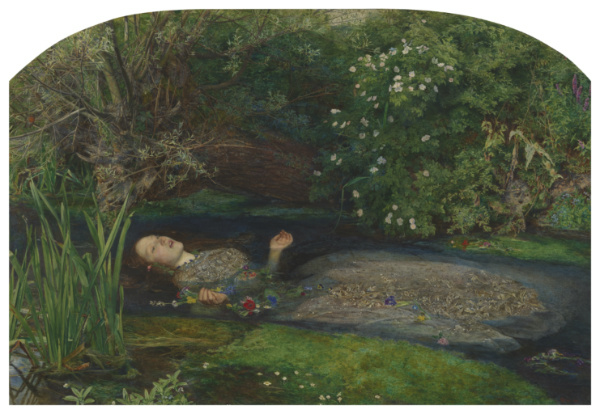
Sir John Everett Millais, Ophelia, 1851-2, Oil paint on canvas; Support: 762 × 1118 mm, frame: 1105 × 1458 × 145 mm
PICTURE: Tate (Seraphina Neville)

Tate Britain has completed a complete rehang of its free collection displays – the first for 10 years. Visitors can see more than 800 works by 350 artists including iconic treasures such as John Everett Millais’ Ophelia (pictured above), William Hogarth’s The Painter and his Pug, David Hockney’s A Bigger Splash, Barbara Hepworth’s Pelago and Chris Ofili’s No Woman, No Cry. The collection also includes more than 100 works by JMW Turner, rooms devoted to such luminaries as William Blake, John Constable, the Pre-Raphaelites and Henry Moore, and a series of changing solo displays exploring other ground-breaking artists such as Annie Swynnerton, Richard Hamilton, Aubrey Williams and Zineb Sedira. Some 70 of the works in the collection – ranging from Tudor portraits to contemporary installations – which have been acquired in the last five years alone. For more, see www.tate.org.uk.

Send all items to exploringlondon@gmail.com.

Four sites related to royal coronations in London – 4. Buckingham Palace…

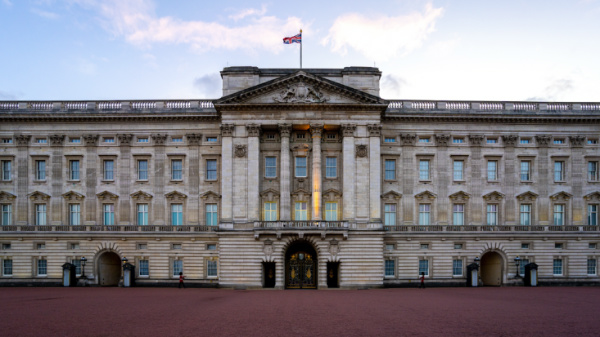
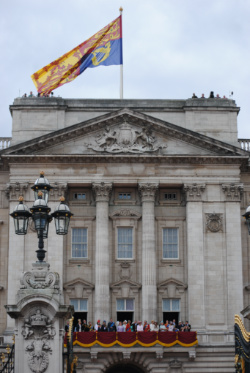
Buckingham Palace. PICTURE: Mike Marrah/Unsplash

Buckingham Palace will play an important role in this weekend’s coronation of King Charles III – not only as the location from which he and Queen Camilla will leave for the ceremony, but also for the famous balcony appearance.

Not just for coronations – the Royal Family on the Buckingham Palace balcony at Trooping the Colour in 2010. PICTURE: David Adams

Monarchs have only been living at the palace since 1837 when Queen Victoria moved in and it has been the official London residence of kings and queens ever since (although it should be noted that since becoming King, Charles has reportedly continued to reside at Clarence House and apparently intends continuing to do so following the coronation).

The palace has been in royal hands since 1761 when King George III bought what was then Buckingham House for the use of his wife Queen Charlotte, given, in particular, its proximity to St James’s Palace where court was held. Hence it become known as the Queen’s House.

King George IV intended using it the same way but in the 1820s had a change of heart and decided, with the aid of architect John Nash, to transform it into a palace. The ballooning work was unfinished when he died, and his successor and younger brother, King William IV, replaced Nash with Edward Blore to complete the work (thanks, apparently, to Nash’s budget blow-outs).

But William didn’t move into the property (in fact, he offered it up as a new home for parliament after much of the old Houses of Parliament were consumed by fire in 1834 – an offer which was not taken up).

Queen Victoria, however, decided to make it her home and she became the first monarch to leave the palace headed to a coronation when she did so in June, 1838.

Victoria also made the first balcony appearance by a monarch at the palace, doing so during celebrations to make the opening of the Great Exhibition in 1851.

But the first balcony appearance by a monarch immediately after their coronation was her son King Edward VII, who appeared on the balcony with his wife Queen Alexandra, to the joy of onlookers following his coronation on 9th August, 1901. Every monarch since has done so after their coronation (King Edward VIII, of course, never having had a coronation).

The King’s mother, Queen Elizabeth II, was the first monarch to watch a flypast on the balcony after her coronation, a tradition the King is expected to continue.

Buckingham Palace has also been the site of Coronation Banquets since the coronation of Queen Victoria (when it replaced Westminster Hall as the location). Queen Elizabeth held two Coronation Banquets in the palace following her coronation on 3rd and 4th June, each attended by 400 guests.

Few details have yet been released about King Charles III’s Coronation Banquet.

Moments in London’s history – Five unusual facts about royal coronations past…

Westminster Abbey, scene of coronations for more than 950 years. PICTURE: Benjamin Elliott/Unsplash.

Ahead of the coronation of King Charles III, here’s five unusual facts about coronations of bygone eras…

1. Queen Mary I did not use the Coronation Chair during her coronation on 1st October, 1553. An ardent Catholic, the Queen apparently believed the ancient seat had been tainted by her half-brother Edward VI’s Protestantism and so was crowned in a different chair. The chair is said to have been sent to her by the Pope but what became of it remains something of a mystery. The Queen also had a new, special supply of coronation oil for the anointing part of the ceremony made and sent to her by the Bishop of Arras for the same reason – that Edward had “polluted” the previous oil.

2. So many things went wrong at Queen Victoria’s coronation that a group of historians was established to examine the history of coronations and create a more structured ceremony. The mishaps during the five hour ceremony included the Queen having the Coronation Ring painfully forced into the wrong finger, the Bishop of Bath and Wells prematurely announcing that the ceremony had ended, and the elderly Lord John Rolle falling down a flight of steps when making his homage to the Queen (the Queen then graciously went down to him rather than have him attempt the steps again).

3. Two (or possibly three) English monarchs never had coronations. They include King Edward V – one of the “Princes in the Tower” who became king following the death of his father, Edward IV, on 9th April, 1483, but who then disappeared with his brother Richard after last being seen in the Tower of London (King Richard III was subsequently crowned King instead). They also include King Edward VIII who, having became king on 20th January, 1936, abdicated in December that year before his coronation was held (King George VI was subsequently crowned on the date set for Edward’s coronation – 12th May, 1937). And, depending on whether you accept her monarchy, Lady Jane Grey, who reigned for only nine days before she was executed.

4. King Edward VII’s coronation had to be delayed because of an emergency appendectomy operation. The ceremony, which had originally been scheduled for 26th June, 1902, took place some weeks later than planned on 9th August – and was then marred when the Archbishop of Canterbury, Frederick Temple, placed the crown back-to-front on the King’s head.

5. King George IV refused to let his wife Queen Caroline attend his coronation. Such was the acrimonious nature of their relationship that, having already been informed she was not welcome at the event, Caroline found the doors to Westminster Abbey barred to her when she attempted to enter as he was being crowned on 19th July, 1821. After repeated attempts to enter, she was eventuallys forced to leave without having gained entry.

10 historic London homes that are now museums…8. Queen Charlotte’s Cottage…

PICTURE: Maureen Barlin (licensed under CC BY-NC-ND 2.0)

A confession to begin – this property, located in Kew Gardens, was never actually a residence but instead was built as a country day retreat for the family of King George III at the behest of his wife Queen Charlotte.

The cottage, which features a thatched roof and half-timbered walls and dates from around 1772, is known as a cottage orné (decorated cottage).

Located in what’s described as “one of London’s finest bluebell woods” with parts of it more than 300-years-old, it was designed to be a place where the Queen and her growing family (the King and Queen would have 15 children) could enjoy picnics or take tea while on walks through the gardens during their summers at Kew.

Inside, the ground floor of the premises features two halls – one for the royal family on the left and another for servants on the right, each of which features a staircase leading to the first floor. In the centre of the ground floor is the Print Room, a small room hung with more than 150 satirical engravings including works by the famed James Gillray. There’s also a small kitchen.

On the upper floor is the Picnic Room which features two expansive recycled 17th century windows looking out to the garden and wall and roof paintings featuring trailing nasturtiums and convolvulus to give the appearance of a bower. The latter are thought to have been the work of Princess Elizabeth, generally viewed as the most artistic of King George III’s children.

Behind the cottage was a large paddock which was used to contain a growing menagerie of animals, no doubt to the delight of the royal children. Initially the occupants were Tartarian pheasants and oriental cattle but later it also housed a now extinct quagga (an animal similar to a zebra) and some of the first kangaroos to arrive in Britain (these were bred by the early 19th century, there were up to 18 of them). In 1806, the gardener was instructed to turn the paddock into a flower garden.

King George III was apparently fond of the cottage but he was last at Kew in 1806. It was used in 1818 following the double wedding of his sons, the Duke of Clarence (who became King William IV) and Edward, the Duke of Kent (father of Queen Victoria).

Queen Victoria rarely visited the cottage but had it maintained by a housekeeper. In 1889, the Queen gave the cottage to the public to commemorate her Diamond Jubilee.

The Grade II* cottage is these days managed by Historic Royal Palaces.

WHERE: Queen Charlotte’s Cottage, the south-west corner of, Kew Gardens (nearest Tube station is Kew Gardens); WHEN: Cottage is open from 4th April from 11.30am to 3.30pm on weekends and bank holidays; COST: (entry to Kew Gardens) £21.50 adults/£10 students/children £5 (discounts apply for advance bookings); WEBSITE: www.kew.org.

8 locations for royal burials in London…8. Kensal Green Cemetery…

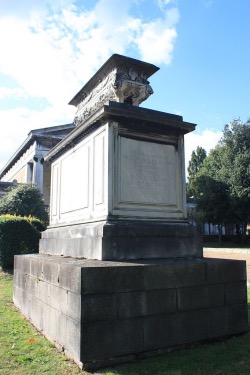
Princess Sophia’s grave at Kensal Green Cemetery. PICTURE: Stephencdickson (licensed under CC BY-SA 4.0)

The oldest of London’s so-called ‘Magnificent Seven’ cemeteries established in the 19th century, Kensal Green is the burial place of a few members of the royal family dating from the Georgian and Victorian eras.

The ninth child and sixth son of King George III, Prince Augustus Frederick, the Duke of Sussex, died at Kensington Palace at the age of 70. In his will, he specifically requested he not have a state funeral and so was buried at Kensal Green on 4th May, 1843. His rather plain grey monument which is surrounded by concrete bollards, is located in front of the cemetery’s main chapel.

Opposite his grave is the tomb of his sister Princess Sophia, the 12th child of King George III. She, too, died at Kensington Palace – on 27th May, 1848 – and wished to be buried near her brother instead of at Windsor.

King George III’s grandson, Prince George, Duke of Cambridge, was also buried at Kensal Green. A military man (and ally of Queen Victoria), he served as commander-in-chief for 39 years before being forced to resign in 1895. He died in 1904 at Gloucester House, Piccadilly, in 1904 and was buried at Kensal Green with his wife the following day.

WHERE: Kensal Green Cemetery, Harrow Road, Queen’s Park (nearest Tube station is Kensal Green); WHEN: Monday to Saturday 9am to 5pm, Sundays 10am to 5pm; COST: Free: WEBSITE: www.kensalgreencemetery.com.

Famous Londoners – Great Paul…

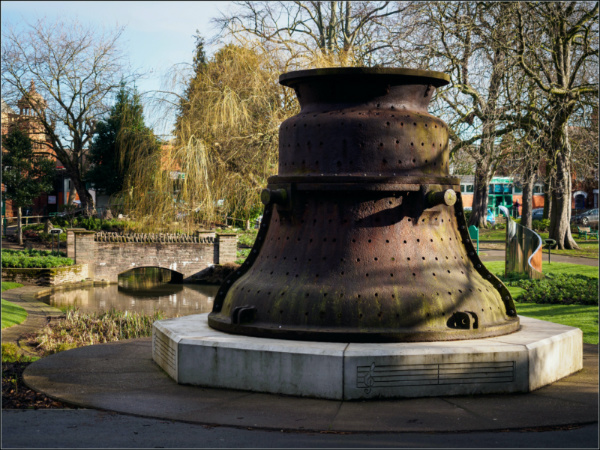
The bell casing used by Taylor’s Bell Foundry to cast Great Paul in Loughborough. PICTURE: Phil McIver (licensed under CC BY-NC 2.0)

Not the name of a person, Great Paul is in fact the name of the largest of four bells in south-west tower of St Paul’s Cathedral.

The south-west tower at St Paul’s Cathedral which contains Great Paul. PICTURE: jan buchholtz (licensed under CC BY-NC-ND 2.0)

The bronze bell was cast in 1881 by JW Taylor of Taylor’s bell foundry in Loughborough. With a diameter of some 11 metres, it weighs an impressive 16.8 tons (in fact, until the casting of the Olympic Bell for the 2012 London Olympics, it was the largest bell in the UK).

Brought to London from Loughborough on a train over a period of 11 days, Great Paul was hung in the tower in May, 1882.

The bell was traditionally sounded at 1pm every day but was silent for more than 40 years after its ringing apparatus broke in the 1970s.

Following a restoration, Great Paul started being rung again last year when it was rung during a festival of church bells to mark the easing of COVID-19 restrictions. Earlier this year, it led a bell ringing tribute marking Queen Elizabeth II’s Platinum Jubilee.

Previous historic occasions on which the bell was rung included Queen Victoria’s Diamond Jubilee in 1897 and the marriage of Prince Charles and Lady Diana Spencer at the cathedral in 1981.

The south-east tower of the cathedral is also home to the storied bell known as Great Tom – but we’ll deal with that in a future post.

10 (lesser known) statues of English monarchs in London…10. Four Queens…

The facade of the former Hotel Russell featuring the statues of the four Queens. PICTURE: Courtesy of Google maps.

We finish our series of lesser known statues of English monarchs with a Bloomsbury building featuring four English queens.

Tucked away in niches over the main entrance of the Hotel Russell – which opened in 1898, the four queens – Elizabeth I, Mary II, Anne, and Victoria – were the work of Henry Charles Fehr.

Queen Elizabeth and Queen Mary II. PICTURE: Tom Hilton (licensed under CC BY 2.0)

The larger than lifesize terracotta statues – which face out to Russell Square – don’t include Queen Mary I and are rather unusual and represent idealised versions of the queens. Elizabeth is readily identifiable due to the ruff she wears but there is some confusion over who’s who when it comes to Mary II and Anne. Victoria, meanwhile, is depicted as a very young woman.

Queen Anne and Queen Victoria. PICTURE: Jack1956 (Public domain)

Among other ornamentation, the building – which was designed by C Fitzroy Doll, also features the busts of four Prime Ministers – Lord Derby, Lord Salisbury, William Gladstone and Benjamin Disraeli – on the Guilford Street facade.

The hotel is now the Kimpton Fitzroy London.