We’re back this week after a Christmas-New Year break!
This year, as well as running our regular programme of content, we’ll be introducing some new features on Exploring London (and reviving some old ones that had fallen by the wayside).
Stay tuned for updates and if you can, please consider supporting our work with a £3 a month subscription which gives you access to all our content and helps ensure we can continue producing it.
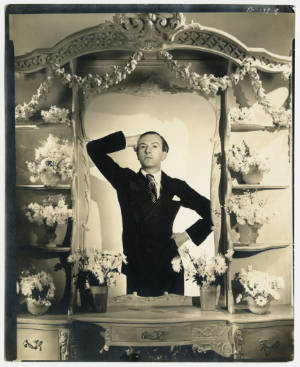
Cecil Beaton, c1935, Gelatin silver print, The Cecil Beaton Studio Archive, London
• The first exhibition to exclusively explore Cecil Beaton’s pioneering work in fashion photography opens today at the National Portrait Gallery.Cecil Beaton’s Fashionable World features portraits of some of the 20th century’s most iconic figures including celebrities, Marilyn Monroe, Audrey Hepburn, Elizabeth Taylor and Marlon Brando as well as royalty including Queen Elizabeth II and Princess Margaret and artists such as Lucian Freud, Francis Bacon and Salvador Dali. Curated by Vogue contributing editor Robin Muir, the display charts his meteoric rise and legacy and celebrates his signature artistic style which married “Edwardian stage glamour with the elegance of a new age”. As well as photographs, the 250 items displayed include letters, sketches, and costumes – the latter including the costumes and sets he created for the musical My Fair Lady, performed on stage, and then later on screen. The exhibition runs until 11th January. Admission charge applies. For more, see www.npg.org.uk/whatson/exhibitions/2025/cecil-beaton/.
• Diwali on the Square – London’s annual celebration of the Festival of Lights – takes place in Trafalgar Square this Sunday. The free, family event runs from 2pm to 8pm and will feature 200 dancers from Hindu, Sikh and Jain communities performing a mix of modern and classical dance. There will also be diya lighting, a retelling of the Diwali story by Aaya Anand Chaaya Anand, Bollywood Bhangra, and activities such as turban tying, yoga and meditation, henna decorations, puppet shows and dance workshops. Vegan and vegetarian food will be available at market stalls serving traditional and fusion cuisine. For more, head to www.london.gov.uk/events/diwali-square-2025.
• Piano legend and TV personality Winifred Atwell has been honoured with an English Heritage Blue Plaque at her former Mayfair home. Atwell, the first black artist to achieve a UK number one single, with the medley Let’s Have Another Party in 1954, lived at the home at 18 Bourdon Street with her husband and manager Lew Levisohn during the 1950s and the 1960s. It was in this property that she kept her famous Steinway concert grand piano and a deliberately out-of-tune upright piano that become a signature in her honky-tonk performances. For more, see www.english-heritage.org.uk/visit/blue-plaques/
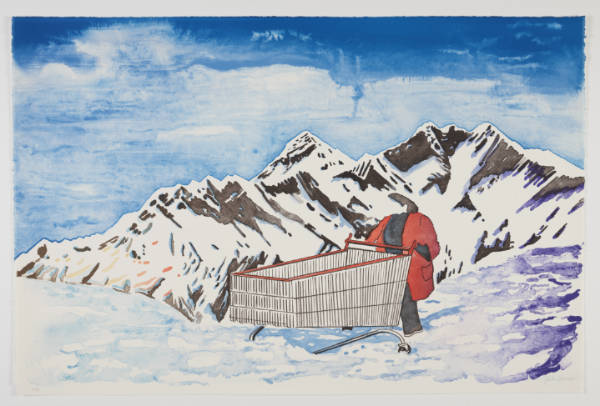
• The works of artists such as Edvard Munch and Mamma Andersson are at the centre of a new exhibition at the British Museum showcasing Nordic works of art on paper. Nordic noir: works on paper from Edvard Munch to Mamma Andersson is the culmination of a five year programme to build the museum’s collection of post-war Nordic art and among the highlights on show are two of Munch’s woodcut prints. Other artists featured in the exhibition include Olafur Eliasson, John Savio, Vanessa Baird, Yuichiro Sato, Fatima Moallim, and John Kørner. Key themes explored in the exhibition include nature and the need to preserve the natural world, the worlds of Norse myth, inner struggles with mental health, post-war angst, the threat of the Cold War, feminism and the rights of the Indigenous Sami people. Runs until 22nd March. Admission to display in Room 90 is free. For more, see www.britishmuseum.org/exhibitions/nordic-noir-works-paper-edvard-munch-mamma-andersson.
• More than 100 works of art showing the changing attitudes towards the military in the 19th century opens at the National Army Museum in Chelsea next Tuesday.Myth and Reality: Military Art in the Age of Queen Victoria – the first dedicated art exhibition at the museum in more than five years – centres on four themes – ‘The Female Perspective’, ‘The Great Campaigns’, ‘Patriotism and Portraiture’, and ‘Realism and Reportage’. Highlights include a collection of 25 works by Elizabeth Thompson, Lady Butler, who rocketed to fame in the 19th century for her depictions of Waterloo and Crimea. Other works in the show include Thomas Barker Jones’ The Capitulation of Kars, Crimean War, 28 November 1855, works by war artists such as Joseph Arthur Crowe – a journalist at The Times‘, consular official and art historian, and portraits of Victoria Cross winners. Runs until 1st November. Admission charge applies. For more, see www.nam.ac.uk.
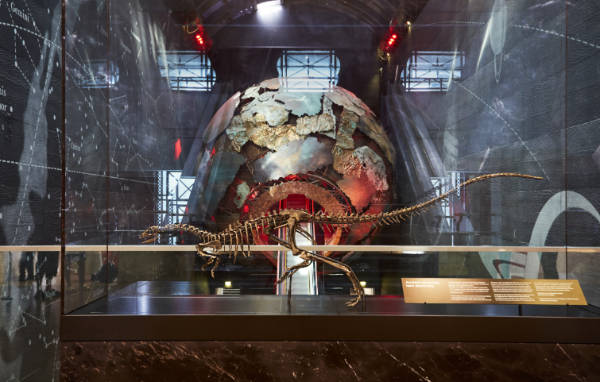
‘Enigmacursor mollyborthwickae’ at the Natural History Museum. PICTURE: Courtesy of the Natural History Museum.
• A new species of dinosaur, Enigmacursor mollyborthwickae, a two-legged herbivore from the famous Morrison Formation in the US, goes on show at the Natural History Museum from today. Standing half a metre tall and a little over a metre long, the Enigmacursor mollyborthwickae, would have been found on the floodplains of the western United States in the Late Jurassic period (145-150 million years ago), darting around underneath giants like Diplodocus and Stegosaurus (like Sophie, who also resides in the Museum’s Earth Hall). Unearthed in 2021/2022 from a commercial quarry, Enigmacursor was acquired from the gallery David Aaron Ltd thanks to the support of David and Molly Lowell Borthwick. It was initially thought to be a Nanosaurus – a poorly-known species of small herbivorous dinosaur first named in the 1870s – but on closer inspection it was found to be a new genus and species. Enigmacursor mollyborthwickae is on permanent public display on the first-floor mezzanine in Earth Hall. For more see www.nhm.ac.uk.
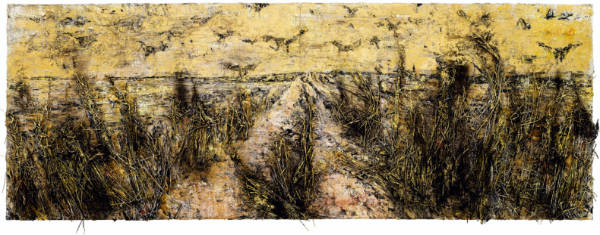
• The influence of Vincent van Gogh on the work of artist Anselm Kiefer is the subject of a new display at the Royal Academy of Arts.Kiefer/ Van Gogh, held in the The Gabrielle Jungels-Winkler Galleries, brings together works by both artists for the first time in the UK and features paintings and drawings by Van Gogh from the collection of the Van Gogh Museum, Amsterdam, as well as paintings, drawings and sculptures by Kiefer including some works that have never been shown before. Among highlights are a selection of Kiefer’s celebrated large-scale landscapes such as The Crows (Die Krähen) (2019) as well as Van Gogh’s Snow-Covered Field with a Harrow (after Millet) (1890) and Field of Irises near Arles (1888) and drawings Kiefer made as a youth inspired by van Gogh which are being shown alongside several of van Gogh’s own drawings, including La Crau Seen from Montmajour (1888). There’s also Kiefer’s 2014 work Walther von der Vogelweide: under der Linden an der Heide (Walther von der Vogelweide: under the Lime tree on the Heather) and a new sculpture created for the exhibition which depicts a tall sunflower emerging from a large pile of books, shedding golden seeds onto their lead pages (shown in dialogue with Van Gogh’s Piles of French Novels (1887). Opens on Saturday, 28th June, and runs until 26th October. Admission charge applies. For more, see royalacademy.org.uk.
Send all items for inclusion to exploringlondon@gmail.com.
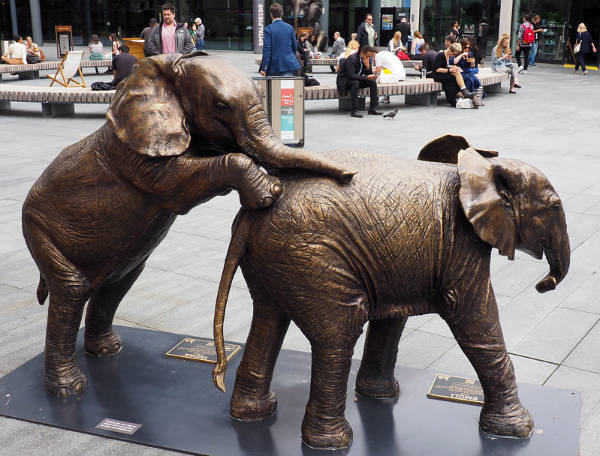
The work of artists Gillie and Marc, the series of sculptures known as The Orphans include an adult female and 20 calves. They were first unveiled in late 2019 at Marble Arch and were then, from late 2021, relocated to their current location.
The aim of the sculpture is to raise awareness for Africa’s endangered elephants – that data shows that poaching, human-wildlife conflict and climate change claims the lives of up to 55 elephants a day – but also funds for the Kenyan-based Sheldrick Wildlife Trust.
The elephants represent a real-life herd of largely orphaned elephants which have been rescued by the trust and each sculpture comes with a name and a scannable barcode which can be used to access information about that particular pachyderm.
The largest of the herd is the three metre tall ‘Matriarch’ who is symbolic of the mother of the orphaned elephants and features blue tusks to “draw attention to the issues of elephant endangerment”. Others include ‘Tagwa’, a suspected orphan of human-wildlife conflict found on the slopes of Mount Kenya, and ‘Tamiyoi’, who survived a fall into a well.
The trust said in April on X that there were currently no plans to relocate the herd and expected them to be at the market for at least six months.
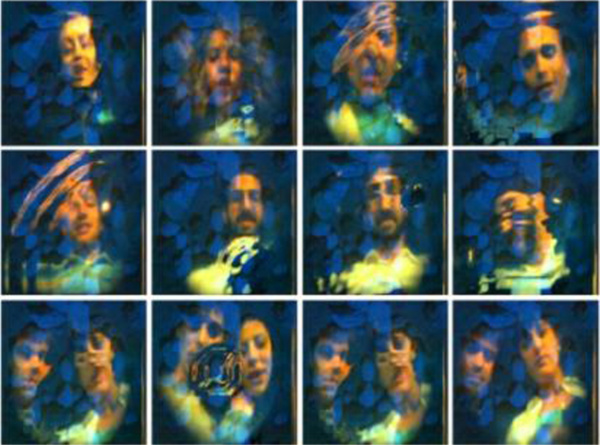
• Early innovators of optical, kinetic, programmed and digital art are being celebrated in a new exhibition which opens today at Tate Modern.Electric Dreams: Art and Technology Before the Internet features the work of more than 70 artists who worked between the 1950s and the dawn of the internet age and “who took inspiration from science to create art that expands and tests the senses”. Works on show include Electric Dress (1957) by Japanese artist Atsuko Tanaka of the Gutai group which is being shown alongside her circuit-like drawings, German artist Otto Piene’s Light Room (Jena) which surrounds viewers in a continuous light ‘ballet’, British-Canadian Brion Gysin’s homemade mechanical device, Dreamachine no.9 (1960-76) which creates kaleidoscopic patterns, and Tatsuo Miyajima’s eight-metre-long wall installation of flashing LED lights, Lattice B (1990), which is a meditation on time. A series of rooms, meanwhile, explores the art shows which played a key role in the development of digital art including London’s groundbreaking ‘Cybernetic Serendipity’ exhibition held at the ICA in 1968, and the exhibition also features the work of early adopters including US artist Rebecca Allen and Palestinian Samia Halaby as well as some of the earliest artistic experiments in virtual reality such as Monika Fleischmann and Wolfgang Strauss’ interactive installation Liquid Views (1992). Runs until 1st June. Admission charge applies. For more, see tate.org.uk.
• The Museum of London Docklands is launching The Reflection Room, a new display space for artists on Friday. The new space, which the museum says will offer “room to explore a range of ideas and perspectives that foreground emotions and human experiences connected to London’s history”, will open with British-Caribbean artist Zak Ové’s mixed media installation Exodus. The installation, which is said to suggest a “reflection on today’s discourse around migration” will be accompanied by a wall of historic maps that present a visual sense of data on international migration, agricultural trade, and tourism between 1500 and 2005. Exodus can be seen until May. Admission is free. For more, see www.londonmuseum.org.uk/docklands/.
• The final tranche of tickets for London’s New Year’s Eve fireworks display go on sale on Monday, 2nd December, at noon. Tickets must be bought in advance to attend and cost between £20 and £50 depending on the viewing area while Londoners will pay £15 less on each ticket booked than those living outside of the capital. Tickets will be available at www.ticketmaster.co.uk. For more on the event, see www.london.gov.uk/nye.
Send items for inclusion to exploringlondon@gmail.com.
With the Olympics on Paris and all our minds turned to sporting endeavours, we thought it an appropriate time to recall the life of one of the most celebrated swordsmen of the 18th century.
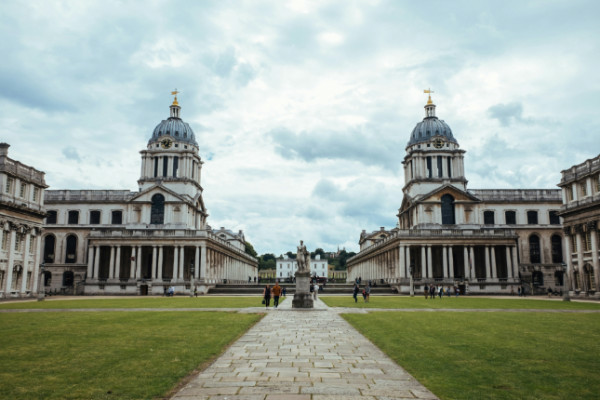
• ‘The Golden Age of Piracy’ will come to life in a living history weekend this Saturday and Sunday at the Old Royal Naval College in Greenwich. With the focus on the period between 1650 and 1720 (when more than 5,000 pirates were said to have been active), visitors will learn how to separate pirate fact from fiction, enjoy songs of the sea, witness sword and cutlass fights, and hear the tale of a real 18th-century mutiny. Each day culminates with a demonstration of the firepower of pirates and marines in the arena on the lawns overlooking the River Thames. There’s also the opportunity to wander through the pirate encampment and learn about the clothes and weapons of the period, listen to some love music and sample food from the Taste of History period kitchen. Runs from 11am to 4pm on Saturday and Sunday. Admission charge applies. For more, see https://ornc.org/whats-on/golden-age-of-piracy/.
• The world of sound below the surface of the River Thames is the subject of a new contemporary art installation at the Natural History Museum which opens tomorrow. The River, composed by Norwegian sound artist Jana Winderen in collaboration with spatial audio expert Tony Myatt, uses underwater audio recordings to immerse visitors in a 360 degree audio composition which spans the river from the source by Kemble through central London and on to the sprawling estuary leading into the North Sea. The River is free to visit. Bookings, to ensure entry, can be made at https://www.nhm.ac.uk/visit.html.
One of the new rooms at the Museum of the Home – a Jewish tenement flat from 1913. PICTURE: Courtesy of the Museum of the Home.
• Seven new and reimagined period rooms reflecting the stories of our East London community, past, present and future, have been unveiled at the Museum of the Home in Shoreditch. Thanks to the Real Rooms project, the expanded ‘Rooms Through Time: 1878-2049’ now includes a Jewish tenement flat from 1913, an Irish couple’s house in the 1950s, LGBTQ+ renters sharing an ex-council home in the 2005, a British-Vietnamese home in 2024, and the Innovo Room of the Future, which explores real homes amid challenges such as the climate crisis and technological advances. The scope of the existing 1870s Parlour and Front Room in 1976 have also both been expanded. Entry to the permanent display is free. For more, see https://www.museumofthehome.org.uk.
• A new public garden has been opened at the intersection of Cheapside and New Change in the City of London. Formerly known as the Sunken Garden, the area has undergone a transformation and now features benches created from 150-year-old-plus granite stones salvaged from the Thames River Wall and recycled timber from fallen London Plane trees. There’s also new permeable paving which lets rain drain freely into the ground and stores it for trees to use later, reducing pressure on the sewer system while new plant species have been selected with local wildlife in mind.
Send all items for inclusion to exploringlondon@gmail.com.
Exploring London has now been running for more than 14 years and during that time we’ve published thousands of articles about London’s history and culture.
We’re wanting to expand and improve our coverage but to do so we need your help. That’s why we’ve decided to ask for our regular readers to contribute just £3 a month – about the price of a cup of coffee – to help with running costs (and a big thanks to all those who have already voluntarily contributed financially to Exploring London in recent years – it’s helped us to stay afloat!)
While some articles will be free for all to view, we’ll be making some articles only available to paid subscribers in the future.
We hope you’ll join us in this new initiative and look forward to continuing to explore London with the coming months seeing the introduction of some new features (and the return of some old ones).
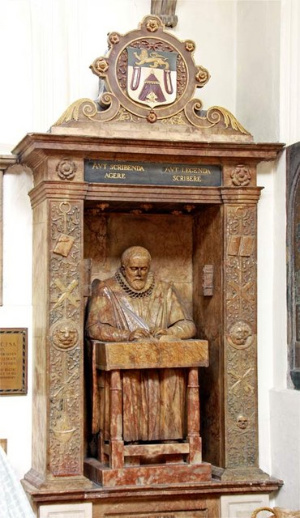
Sixteenth century historian John Stow wrote numerous chronicles of English history but is mostly remembered for his landmark survey of London, a monumental work which has lead to him being informally given the title “founding father of London history”.
The monument depicting John Stow. PICTURE: John Salmon / St Andrew Undershaft, St Mary Axe, EC2 – Wall monument of John Stow / CC BY-SA 2.0
Stow (sometimes written as Stowe) was born a Londoner in about 1525 in the parish of St Michael, Cornhill. He was the eldest of seven children of Thomas Stow, a tallow chandler, and his wife Elizabeth.
Nothing is known about Stow’s early education - whether he attended a grammar school or was self-taught – but he is known to have developed a deep knowledge of English history, culture and customs as well as of Latin.
He didn’t follow his father’s trade but instead became an apprentice tailor and in 1547 was named a freeman of the Merchant Taylors’ Company. He is said to have worked as a tailor in London for almost 30 years.
In 1560, he started on his best known work, A Survey of London, a detailed topographical survey of the City of London and its suburbs – it was eventually published in 1598 (a second, longer edition followed in 1603). But his first book, on the works of Geoffrey Chaucer, was published in 1561, and he went on to publish numerous editions of English chronicles.
Stow was in contact with many of the era’s leading antiquarians, including the likes of John Dee and William Camden, and he was an active member of the first Society of Antiquaries, established in about 1586.
He also attracted the patronage of some significant figures including the Archbishops of Canterbury Matthew Parker and John Whitgift and Robert Dudley, Earl of Leicester, and was well-known for his collection of manuscripts, the largest group of which is now within the Harley collection at the British Library.
Stow, whose work never made him a wealthy man and who, at times, was the subject of his acquaintances’ charity (although Barrett L Beer in an entry in the Oxford Dictionary of National Biography describes his pleas of poverty as “exaggerated”), married his wife Elizabeth sometime after 1549. They lived initially in Aldgate where his business was also based (and later moved to the Lime Street ward). The couple had three daughters, two of whom – Joan and Julyan – survived him.
Stow died on 5th April, 1605. He was buried in the church of St Andrew Undershaft and his wife commissioned a marble monument to commemorate him which depicts Stow seated at his desk. A commemorative service, organised by the Merchant Taylors Company, is still held in the church every three years during which the quill he writes with is regularly replaced in a sign of respect.
For the final entry in our Wednesday special series, we go to see Sir Christopher Wren’s greatest work – and also his resting place, St Paul’s Cathedral.
Following his death on 25th February, 1723, Wren was buried in the crypt of St Paul’s Cathedral on 5th March.
His burial location was in the south-east corner of the crypt and a simple memorial was placed there near that of his daughter Jane and his sister Susan Holder and her husband William.
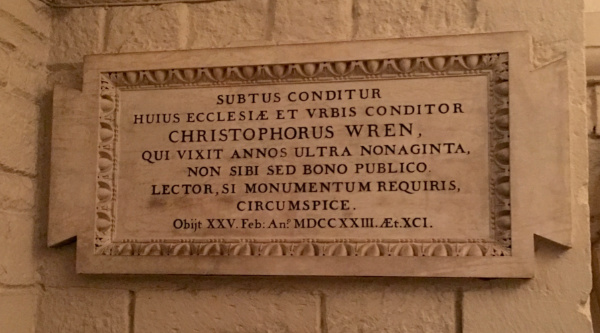
The plaque which marks the location was written by his eldest son Christopher. Inscribed in Latin, it reads: “Here in its foundations lies the architect of this church and city, Christopher Wren, who lived beyond ninety years, not for his own profit but for the public good. Reader, if you seek his monument – look around you. Died 25 Feb. 1723, age 91.”
It’s a fitting tribute to one responsible for some of London’s most famous landmarks.
Interestingly, a fragment of Wren’s coffin can be seen at the RIBA Library. It was taken from his tomb in 1851 when it was last opened to allow for his last surviving direct descendent to be placed within.
WHERE: St Paul’s Cathedral (nearest Tube stations are St Paul’s, Mansion House and Blackfriars); WHEN: 8.30am to 4.30pm Monday to Saturday; COST: £23 adults/£20.50 concessions/£10 children/£56 family (these are walk-up rates – online advanced and group rates are discounted); WEBSITE: www.stpauls.co.uk.
• The world famous Trafalgar Square Christmas tree will be illuminated tonight. This year is the 76th year that tree has been gifted from the City of Oslo, Norway, in recognition of the support Britain gave the nation during World War II. The tree lighting ceremony kicks off at 6pm and the tree will remain in the square until 4th January, the 12th night of Christmas, before being recycled and used as mulch in gardens around the city. You can follow the tree on X. Meanwhile, in other Christmas-related activities, the Princess of Wales will host a special Christmas carol service at Westminster Abbey tomorrow night. The service will be filmed for broadcast and will air in the UK as part of a special programme on ITV1 and ITVX on Christmas Eve.
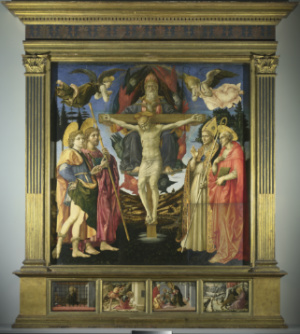
• The first-ever exhibition dedicated to the career of Italian Renaissance painter Francesco Pesellino (about 1422– 1457) opens at The National Gallery today. Pesellino was active in Florence in the mid-15th century but his early death at 35 and the subsequent misattribution of his surviving works meant he’s become one of the greatest Renaissance painters you’ve never heard of. Highlights include two ‘Story of David’ panels which date from the last years of his career and are being displayed in the round, the ‘Pistoia Trinity Altarpiece’, one of only two large-scale altarpieces Pesellino is known to have produced (and unfinished at his death), and his small-scale devotional work Madonna and Child (1450s). Entry to the exhibition in Room 46 is free. Can be seen until 10th March next year. For more, see www.nationalgallery.org.uk/exhibitions/pesellino-a-renaissance-master-revealed.
• Coalescence, an artwork by designer Paul Cocksedge, is making its London debut at the Old Royal Naval College’s Painted Hall from Saturday. Made from over 2,500 pieces of coal – the amount consumed by a single 200 watt light bulb in a year – Coalescence will “create an intricate play of shadow and sparkle that draws on the lustrous quality of the anthracite, a form of high-carbon coal”, inviting visitors to question our dependence on fossil fuels. Also on show in the Nelson Room, will be a new artwork, 20 Trees, which brings a message about ecological balance by blending mathematical calculations with dwindling natural resources.
• A major exhibition celebrating fantasy writers and the world’s they’ve created opens at the British Library tomorrow. Fantasy: Realms of Imagination, which is being run in partnership with Wayland Games, will take visitors on a journey to worlds ranging from Middle-earth to Pan’s Labyrinth and those created by Studio Ghibli. The exhibition is accompanied by a range of events including Neil Gaiman and Rob Wilkins discussing the impact of Terry Pratchett’s first Discworld novel The Colour of Magic 40 years after it first hit shelves, Susan Cooper speaking with Natalie Haynes on the 50th anniversary of her best-selling novel The Dark is Rising; and Brian and Wendy Froud exploring how they developed the design concept for 1980’s cult classic The Dark Crystal. There will also be talks from the likes of bestselling fantasy writers RF Kuang, Adrian Tchaikovsky, and Philip Pullman, and a special late opening featuring musical performances and art inspired by the electronic music duo Drexciya and an event featuring Arthur C Clarke award-winning author Tade Thompson. Runs until 25th February. Admission charge applies. For more, see www.bl.uk/events/fantasy.
• Diwali in the Square will take place in Trafalgar Square this Sunday. The capital’s celebration of the Festival of Lights, which opens with 200 colourfully dressed dancers, features performances from artists drawn from London’s Hindu, Sikh and Jain communities, a range of family-friendly activities including dance workshops, yoga and meditation, Ramayana Puppet shows, Soho Theatre comedy, and a ‘Glimpse of Goddesses’ stall, and food from 1pm to 7pm. The event is free to attend. For more, see www.london.gov.uk/events/diwali-square-2023.
• The first major UK exhibition to map the design evolution of the skateboard has opened at The Design Museum.Skateboard chronicles the history of skateboard design from the 1950s to the present day, from humble, homemade, beginnings to technologically advanced models used by today’s professionals. It features around 90 skateboards – including Laura Thornhill’s Logan Earth Ski 1970s pro model, Tony Hawk’s first ever professional model skateboard, Sky Brown’s first pro model and the Sky Brown x Skateistan Almost deck – alongside 100 other objects hardware such as wheels and tucks, safety equipment, VHS tapes, DVDs, magazines and ephemera. The exhibition also features a skate ramp, offering skaters the incredibly rare opportunity to skate inside a major museum. Admission charge applies. Runs until 2nd June. For more, see https://designmuseum.org/exhibitions/skateboard.
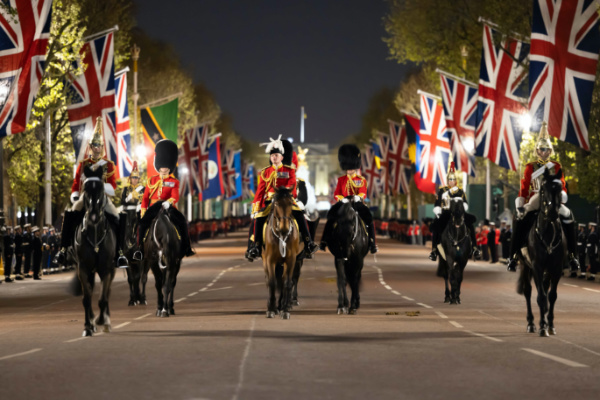
• It’s Coronation weekend in London, so first up it’s a look at the Coronation Procession. The 1.42 mile route from Buckingham Palace to Westminster Abbey, which opens for viewers at 6am on Saturday, will see the procession – with King Charles III and Queen Camilla travelling in the Diamond Jubilee State Coach – leave Buckingham Palace at 10:20am. Known as The King’s Procession, the coach, which will be accompanied by The Sovereign’s Escort of the Household Cavalry, will travel down The Mall, through Admiralty Arch and past Trafalgar Square, before turning down Whitehall. The procession will then make its way down to the Houses of Parliament and around the east and south sides of Parliament Square to Broad Sanctuary and Westminster Abbey.
• The ceremony is scheduled to begin at 11am and is expected to run for two hours. There is, of course, no access to the abbey for uninvited guests but the ceremony will be broadcast live by the BBC and big screens are being set up to watch in St James’s Park, Green Park and Hyde Park as well as Holland Park, Valence Park in Dagenham and Walpole Park in Ealing.
• At 1pm, the King and Queen will return from Westminster Abbey to Buckingham Palace in The Coronation Procession. They will be riding in the 260-year-old Gold State Coach that has been used in every coronation since that of William IV and accompanied by almost 4,000 members of the armed forces in what’s been called the largest ceremonial military operation in recent decades. Representatives of Commonwealth nations and British Overseas Territories will also take part in the return procession. The route will be the reverse of the outgoing route and see the procession travel back through Parliament Square (lined with an honour guard of 100 members of the Royal British Legion) and up Whitehall to Trafalgar Square, turning left to travel through Admiralty Arch and back down The Mall. Reaching Buckingham Palace, the King and Queen will receive a Royal Salute from the armed forces who have been escorting them followed by three cheers.
• The balcony appearance and flypast. The newly crowned King and Queen Consort are scheduled to appear on the famous balcony on Buckingham Palace at 2.30pm accompanied by members of the royal family. They will watch a six minute flypast of military planes, ending with a display by the Red Arrows.
• On Sunday, communities are invited to join in the Coronation Big Lunch (communities will also be holding street parties throughout the weekend). On Sunday night, the BBC will broadcast The Coronation Concert from Windsor Castle. The concert will feature the Coronation Choir as well as ‘Lighting Up The Nation’ in which locations across the UK will take part. For details on where events are being held, head to https://coronation.gov.uk/events/.
• On Monday, people are encouraged to join in The Big Help Out by volunteering time to help out in your local community. To find out where your local events are, head to https://thebighelpout.org.uk.
OK, so this is two sites but both – while once an integral part of coronations – are no longer so.
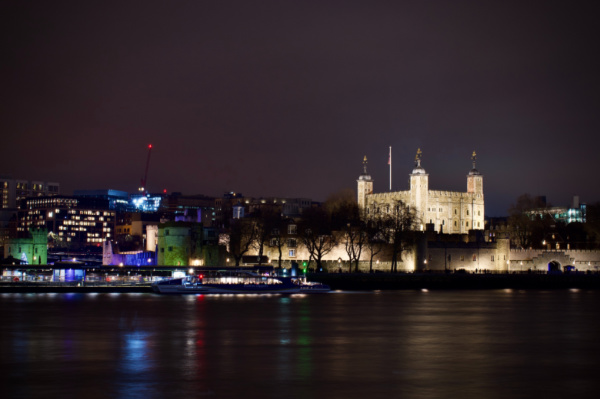
The first, the Tower of London, was, in a tradition begun by King Richard II in 1377, where the monarch would reside on the night before the coronation. It was also where – initially in St John’s Chapel in the White Tower and later in a chapel where the Chapel of St Peter ad Vincula now stands – that the Knights of the Bath would be invested and then hold vigil on the eve of a coronation.
Not only was the Tower a royal palace, it was also ideally located for the start of the coronation procession the next day in which the monarch would process through the City of London to Westminster Abbey.
Queen Elizabeth I is believed to have been the last monarch to spend the night before her coronation at the Tower. King Charles II still left from the Tower for his coronation in 1661 but the apartments were said to be in such a poor state that he didn’t spend the night there (the previous two monarchs – King James I and King Charles I – had both cancelled the vigil and coronation procession itself apparently because of plague).
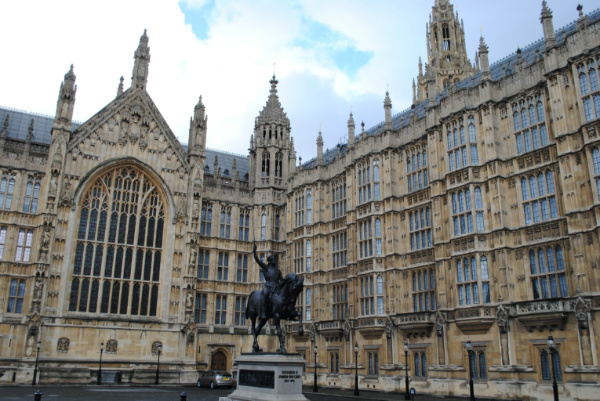
Westminster Hall, meanwhile, has also played a key role in coronations, including being the location where the monarch was presented with the coronation regalia before heading to Westminster Abbey for the ceremony as well as hosting the coronation banquet after the ceremony in Westminster Abbey.
The southern end of Westminster Hall to the left. PICTURE: David Adams
The tradition dates back to the coronation of King Richard I in 1189 (although a feast was held in the hall in 1170 for Prince Henry, Richard’s eldest brother, after he was crowned during the reign of their father King Henry II).
Among traditions observed at these banquets was that citizens of London would act as butlers to the monarch and that the Earl Marshall kept order on horseback. It was also traditional for the King’s Champion to ride into the hall in full armour and challenge anyone to deny the right of the monarch to sit on the throne.
As the event became more sophisticated, galleries were added to hall to accomodate guests.
The last monarch to hold a coronation banquet in Westminster Hall was King George IV in 1821 whose lavish event cost some £250,000. King William IV abandoned the banquet when he was crowned in 1830, deeming it too expensive. The presentation of the regalia and procession from the hall to the abbey prior to the coronation was abandoned at the same time.
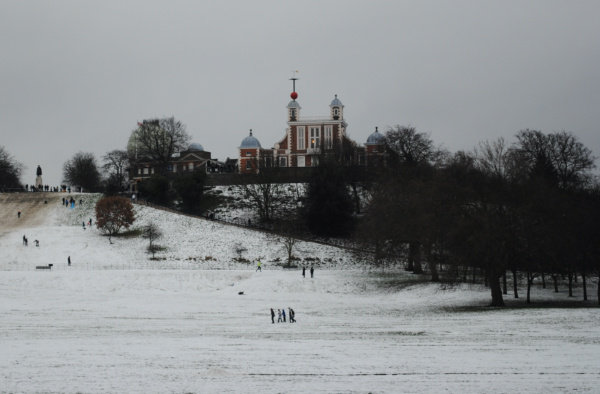
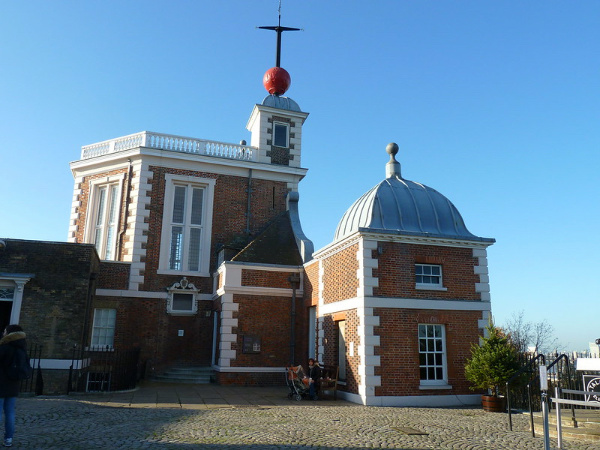
Flamsteed House from Greenwich Park. PICTURE: David Adams
Located at the heart of what is now known as the Old Royal Observatory in Greenwich is a residence, built for the first Astronomer Royal John Flamsteed and subsequently used by his successors to the post.
The property was built at the behest of King Charles II after he appointed Flamsteed to the post in March, 1675. Flamsteed, who initially worked out of the Queen’s House below, laid the foundation stone for the new property on 16th August that year.
Designed by Sir Christopher Wren and built under the supervision of Robert Hooke, the building was constructed on the foundations of the previous building on the site – known variously as Duke Humphrey’s Tower or Greenwich Castle) – and used bricks from spare stock at Tilbury Fort, and wood, iron and lead from a demolished gatehouse at the Tower of London.
Costing some £520, the three story property featured a large hall and parlour on the ground floor, a bedroom and study for the then-single Flamsteed, a basement kitchen and “astronomer rooms” while on the floor above was a single large, octagonal room, known initially as the “Great Room” and later as the “Octagon. Room”, featuring a series of tall windows through which Flamstead could conduct his observations of the heavens.
A telescope was mounted on the roof and two summerhouses, one of which contained Flamsteed’s camera obscura, were built on either side. Other buildings on the site during Flamsteed’s time included the adjoining Quadrant House and Sextant House (so-named for the equipment they housed).
The original property was extended several times and a series of additional buildings were also added to the site including what is now known as the Meridian Building (which incorporates not only Flamsteed’s Sextant House and Quadrant House but subsequent additions including apartments for an assistant, fireproof record rooms and domes to house equipment including the Telescope Dome.
In 1946, the scientific work of the observatory was relocated to Herstmonceux in Sussex and the complex came under the management of the National Maritime Museum. In 1960, Flamsteed House was reopened as part of the museum; other buildings later followed suit.
The site was renovated in the early 1990s and reopened to the public as a museum in 1993.
These days Flamsteed House hosts displays about its construction as well as what life was like for those who lived there. Wren’s Octagon Room, which houses a collection of timepieces and astronomical instruments, remains a highlight.
Flamsteed House is now topped by a time-ball which was installed in 1919 (replacing an earlier one which was installed in 1833) and drops each day at 1pm.
WHERE: Flamsteed House, Royal Observatory Greenwich (nearest stations are Cutty Sark DLR and Greenwich and Maze Hill Stations); WHEN: 10am to 5pm daily; COST: £16 adults/£10 under 25s/students/£8 children; WEBSITE: www.rmg.co.uk/royal-observatory/attractions/flamsteed-house.
We ran a special series to mark Queen Elizabeth II’s Diamond Jubilee in 2012, so in honour of the Queen’s memory we interrupt our current series to recap ‘Celebrating the Diamond Jubilee with 10 royal London locations’…

 Exploring London