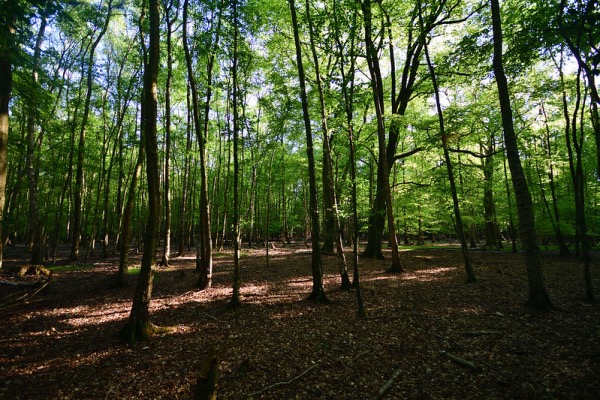
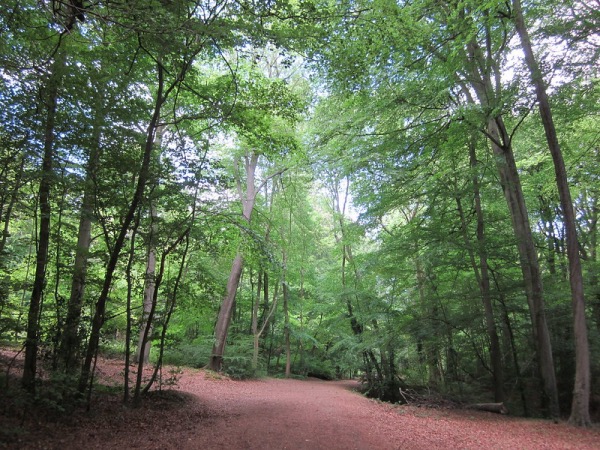
City of London-managed open spacesEpping Forest, Burnham Beeches and Ashtead Common have been selected to be part of a nationwide network of 70 ancient woodlands to be dedicated to The Queen in celebration of the Platinum Jubilee. At almost 6,000 acres, Epping Forest is London and Essex’s largest green space and is known as the “green lungs” of London. Burnham Beeches, located in Buckinghamshire, is only a square mile in size but is described as a “New Forest in miniature” while Ashtead Common in Surrey’s 200 hectares of open public space is home to more 1,000 living ancient oak pollards. For more on The Queen’s Green Canopy initiative, see www.queensgreencanopy.org. For more on the City of London’s green spaces, see www.cityoflondon.gov.uk/things-to-do.
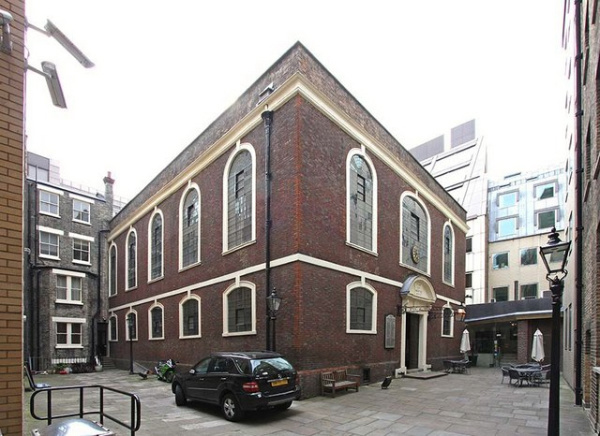
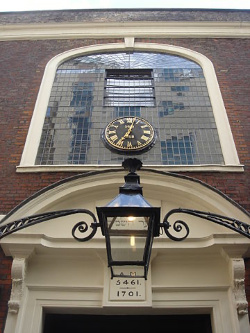
The synagogue has historical ties to the city’s Spanish and Portuguese Jewish community, known as Sephardic Jews, which first started meeting together in a small synagogue in Creechurch Lane in 1657 after it become possible for Jews to openly practice their religion under the rule of Lord Protector Oliver Cromwell.
Increasing numbers in the community soon meant a larger premises was required and a committee was formed which signed a contract with Quaker builder Joseph Avis in February, 1699, to build a larger premises (tradition holds that Avis returned the money he made on the job to the community, saying he would not profit from building a house of God). In June that same year, the community leased a tract of land at Plough Yard, Bevis Marks, on which the new building would be built. Construction commenced soon after.
The property’s design is said to emulate, at least in part, that of the 1675 Portuguese Synagogue of Amsterdam (it’s also thought the design was influenced by the works of Sir Christopher Wren). There’s also a story that the building included an oak beam from one of the Royal Navy’s ships presented by Queen Anne.
The rectangular building, which features three galleries inside, was eventually completed and dedicated in September, 1701.
The roof of the now Grade 1-listed building was replaced following a fire in 1738 and the synagogue only suffered minor damage during the Blitz. It also suffered some collateral damage from the IRA bombing in 1992 and the 1993 Bishopsgate bombing but remains mostly intact.
Sermons at Bevis Marks were in Portuguese until 1833 when they changed to English.
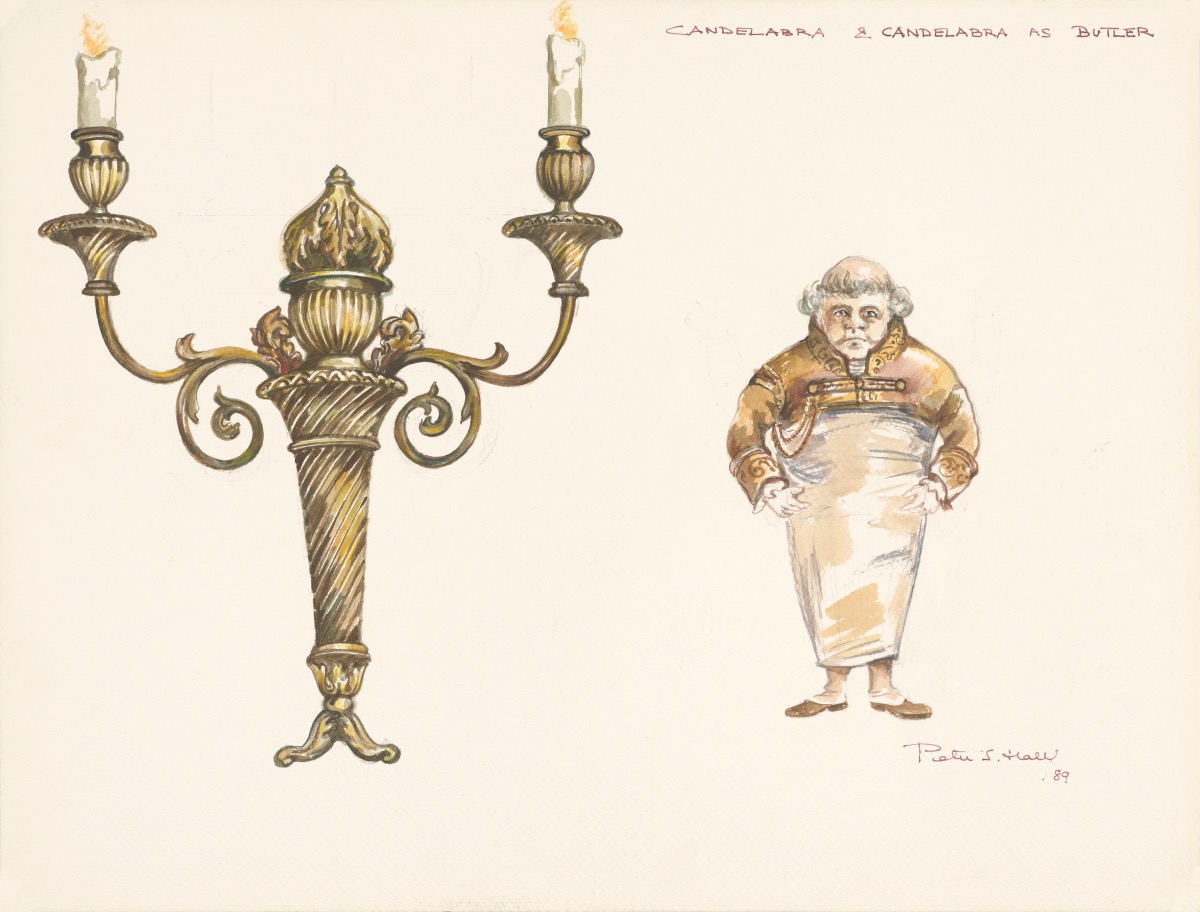
Features inside include an oak Renaissance-style ark containing the Torah scroll which, painted to resemble coloured Italian marble, is located at the centre of the eastern wall. There are also seven hanging brass candelabra which symbolise the seven days of the week. The largest, which hangs in the centre of the synagogue – represents the Sabbath and was donated by the community of the Great Synagogue of Amsterdam. There are also 10 large brass candlesticks representing the Ten Commandments. While the upright oak seats are said to “reflect the Puritanism of 17th century England”, the backless oak benches at the back are the original seats which were brought from the Creechurch Lane premises.
Twice Prime Minister Benjamin Disraeli’s 1804 birth is recorded in the register but after his father had a falling out with the synagogue officials, Disraeli was in 1817 baptised at St Andrew’s Holborn.
• The connection between Disney’s animated films and French 18th-century art is explored in an exhibition at the Wallace Collection.Inspiring Walt Disney: The Animation of French Decorative Arts, which is being held in collaboration with New York’s Metropolitan Museum of Art, features more than 120 examples of production artwork and works on paper from the Walt Disney Animation Research Library and the Walt Disney Archives alongside approximately 30 18th-century artworks. The latter include Jean-Honoré Fragonard’s much-loved painting, The Swing (c1767), which provided inspiration for Disney films including Beauty and the Beast (1991), Tangled (2010) and Frozen (2013) and which is being showcased for the first time since its recent conservation. The exhibition, which was previously at the New York’s Metropolitan Museum of Art, can be seen until 16th October. Admission charge applies. For more, see www.wallacecollection.org.
• Eid in the Square returns to Trafalgar Square this Saturday for the first time since 2019. The day, held from noon to 6pm to mark the celebration that follows the end of Ramadan, features Islamic inspired art, culture and comedy on the main stage alongside a feast of food stalls from across the world. Performers include Baha Yetkin Sufi Ensemble, Nafees Ifran & Qalandar Qawwali Band, Dur Dur Band, Star Children’s Choir, spoken word poet Hussain Manawer, comedy sketch show favourites, ‘The Halalians’, Alif New Beginnings, and award-winning music producer Naughty Boy who will present his Naughty Boy Kitchen pop-up serving signature dishes fusing his British upbringing and Pakistani heritage. Other family-friendly activities being held on the day including calligraphy, storytelling, mehndi, face painting, and drama and poetry workshops, as well as a variety of sports activities including Muslim Girls Fencing and Sisterhood FC.
• World renowned philosopher and historian of ideas, Sir Isaiah Berlin (1909-1997), was commemorated with an English Heritage Blue Plaque at his former Holland Park home. Berlin lived at 33 Upper Addison Gardens for nearly six-and-a-half years while attending St Paul’s School, then located in Hammersmith – a period he later referred to as “my golden childhood”. The house, which was purchased by his timber merchant father, was the family’s first permanent home in the UK following their arrival from Latvia. Berlin was also commemorated this week with a plaque on another of his former homes, this one in Hampstead. The Heath and Hampstead Society plaque was placed on the property at number 49 Hollycroft Avenue which was where Berlin’s family moved in October, 1928. While he left for Oxford University that same month, he spent much time there during his university vacations. Oxford was Berlin’s main base for the rest of his life. For more, see www.english-heritage.org.uk/visit/blue-plaques/.
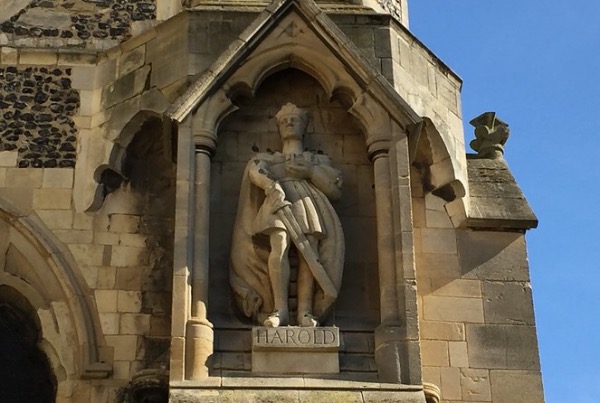
Depicting the last crowned Anglo-Saxon king who famously died at the Battle of Hastings, this statue is located in a niche on the exterior of Waltham Abbey Church on the north-eastern outskirts of Greater London.
The life-sized statue was the work of Canadian-born, Dorset-based, sculptor Elizabeth Muntz and was erected in the 1960s.
King Harold, also known as King Harold II, not only rebuilt the abbey church (apparently after he was healed of paralysis on a pilgrimage to Waltham), the abbey is also a possible site for his grave.
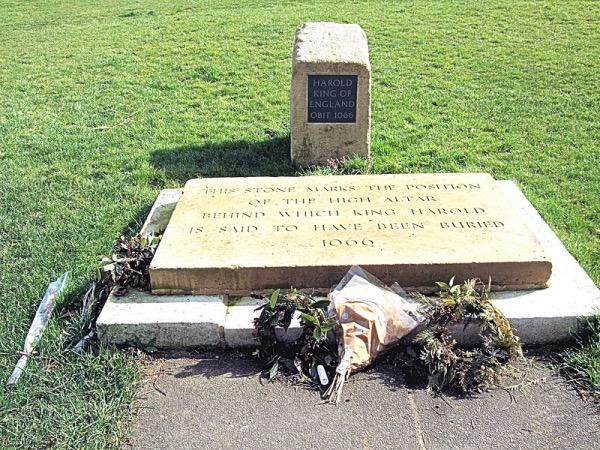
The grave is marked by a memorial stone now located in the churchyard which was erected in 1960. The inscription says the stone marks the position of the former church’s high altar. King Harold is said to have been buried behind this in 1066 after he was killed, according to tradition, by a well-aimed arrow to the eye at the Battle of Hastings (the church was rebuilt in the 12th century which explains why the altar is now located outside).
There are alternate theories for his burial place including in Bosham, West Sussex.
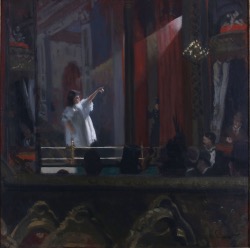
Walter Sickert, ‘Little Dot Hetherington at the Bedford Music Hall’ (1888) Private collection. Photo: James Mann
• Britain’s biggest retrospective on the work of artist Walter Sickert (1860-1942) in almost 30 years opens at the Tate Britain in Millbank today. The exhibition features more than 150 of his works spanning the six decades of his career. They include paintings and drawings of music halls in London and Paris such as The Old Bedford (1894-5) and Théâtre de Montmartre (c1906) and an examination of key influencers upon his work such as American artist James Abbott McNeill Whistler whose A Shop (1884-90) is being shown with Sickert’s A Shop in Dieppe (1886-8) as well as Whistler’s 1895 portrait of Sickert. Other works on show include The Camden Town Murder (1908), Ennui (1914) and Off To the Pub (1911). Admission charge applies. Runs until 18th September. For more, see www.tate.org.uk/whats-on/tate-britain/walter-sickert.
• A new exhibition at the Dulwich Picture Gallery explores the truth behind 18th century gossip suggesting 17th century Dutch artist Philips Wouwerman was a plagiarist. True Crime: The Case of Philips Wouwerman looks at claims the painter, who created more than 600 paintings over his career, stole the drawings of the dead artist Pieter van Laer and subsequently used them for his own works. The display features works by Wouwerman and Van Laer as well as expert testimony from the past and present. It’s the first in a series of displays – Unlocking Paintings – which have been devised by the recently appointed curator Helen Hillyard to present new perspectives on the Gallery’s collection. Can be seen until 21st August. For more, follow this link.
• A self-taught Victorian physicist, Oliver Heaviside, has been commemorated with an English Heritage Blue Plaque at his former home in Camden Street. The property is where the young Victorian scientist, who had been left almost entirely deaf after suffering scarlet fever in childhood, continued with his self-education after leaving school at 16 and where he later worked on his ground-breaking interpretation of James Clerk Maxwell’s Treatise on Electricity and Magnetism. Heaviside played a key role in the development and advancement of electrical communications and was even name-checked in Cats where a line referring to “the Heaviside layer” is a reference to his discovery of a reflective layer in the upper atmosphere which allowed radio waves to be ‘bent’ around the earth. For more, see www.english-heritage.org.uk/visit/blue-plaques/.
Send all items for inclusion to exploringlondon@gmail.com.
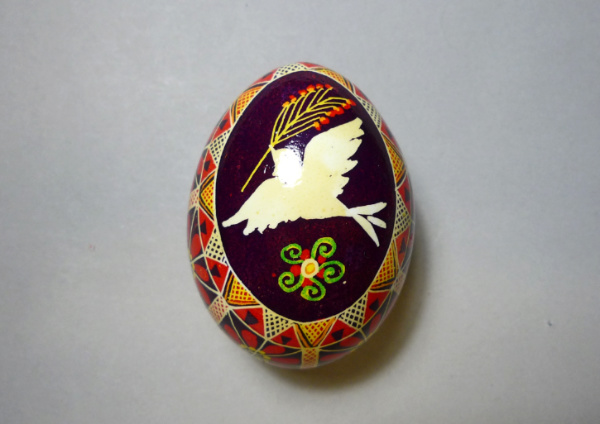
• A free display on the cultural heritage of Ukraine has opened at the British Museum. Located in the museum’s ‘Collecting the world’ gallery, Ukraine: Culture in crisis features objects drawn from the museum’s collection including a 5,500-year-old painted storage jar, hand-coloured lithographs of a man and a woman in Ukrainian dress dating from about 1813, and, an Easter egg decorated with the dove of peace (pictured) dating from between 1970 and 1980. There are also objects from the Greek colony of Olbia established on the Black Sea between 600 and 300 BC including a black glazed, fluted amphora from southern Italy dating from between 300 and 250BC. For more, head to www.britishmuseum.org. To learn more about the protection of cultural heritage in Ukraine visit icom-poland.mini.icom.museum/icom-poland-appeal-help-us-help-ukraine.
• The earliest surviving printed news report in Britain of the 1513 Battle of Flodden and an original BBC radio script of the D-Day landings are among exhibits at the British Library’s first major exhibition putting a spotlight on the role news plays in our society. Other exhibits on show at Breaking the News, which opens on Friday, include smashed hard drives used by The Guardian to store Edward Snowden’s hard files. The display explores what makes an event news and the meaning of a free press as well as the ethics involved in making the news, news objectivity and how the way we encounter news has evolved over five centuries of news publication in Britain. Runs until 21st August. Admission charge applies. For more, head to www.bl.uk/events/breaking-the-news.
• St George’s Day celebrations return to Trafalgar Square this Saturday. The free family event, which runs from noon until 6pm, will feature live music by the likes of string quartet Bowjangles, hoedown collective Cut A Shine, brass band Das Brass and folk headliner James Riley & the Rooftop Assembly. There will also be appearances from St George with his Dragon, Divine stilt walkers and the Pearly Kings and Queens as well as a range of food stalls. Other family-oriented activities including The Knights Training School, the Storytorium, a dragon Selfie station, face painting, upcycled arts and crafts, and a games area.
• The art and poster stores at the London Transport Museum’s Depot in Acton Town will be open to the public this weekend. The Art of the Poster Open Days, which run from today until Sunday, will give the public the chance to view some of the more than 30,000 posters in the depot’s collection and hear from expert guides about how posters have characterised London and its transport over the past century. There will also be talks from artists, curators and historians and visitors have the chance to design their own posters in creative workshops as well as, on Saturday and Sunday, riding the London Transport Miniature Railway. Timed tickets must be booked in advance. Admission charges apply. For bookings, head to www.ltmuseum.co.uk/whats-on/depot/art-poster.
Send all items for inclusion to exploringlondon@gmail.com.
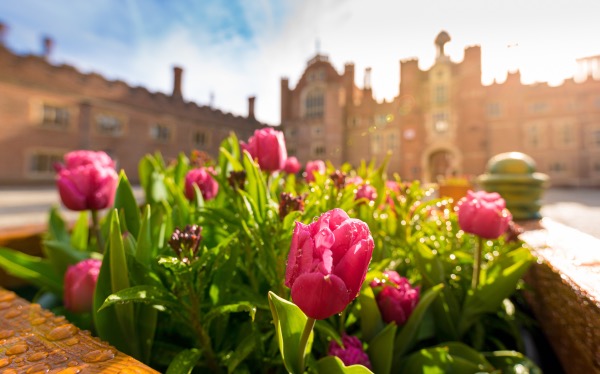
• Hampton Court Palace’s Tulip Festival – the largest of its kind in the UK – is returning following its successful inaugural year in 2021. From Friday until 2nd May (depending on flowering periods), the palace’s 60 acres of formal gardens are expected to be filled with rare, historic and specialist tulip varieties inspired by Queen Mary II’s famous 17th century collection which was once housed at the palace. Some 120,000 tulip bulbs of 60 different varieties have been planted, including breath-taking floating tulip vases located in the palace’s famous fountains, and floral displays which will fill the cobbled courtyards of Base Court and Clock Court. Visitors will be able to find out all about the links between the flower and the palace’s history with a dedicated Tulip Festival Guide. Included with admission. For more, head here.
• New exhibits marking the 40th anniversary of the Falklands Conflict have gone on show at the Imperial War Museum in Lambeth. Among the new items on display are drawings by Linda Kitson, the first female artist commissioned by IWM to accompany troops into conflict, and images of the conflict – many of which have never been seen before – taken by photographer Paul RG Haley who covered it for Soldier Magazine. The museum is also exploring the story and legacy of the conflict through a digital programme of events including a series of short films and a new episode of the Conflict of Interest podcast featuring actor Katherine Parkinson. For more, see www.iwm.org.uk.
• The Regent’s Park will soon boast a new 1.5 acre garden at its centre in honour of Queen Elizabeth II’s Platinum Jubilee. The new garden, to be created on the site of a former plant nursery near the Inner Circle, will include design features that reflect the Queen’s “love of trees and nature”. The Royal Parks will be committing £1 million to the project and will seek external funding and public donations. Designs for the new park will be shared as they are developed. Meanwhile, The Royal Parks have also announced they will be creating a new wood in Richmond Park as part of the Queen’s Green Canopy Initiative. The new woodland, which will be located adjacent to Ham Cross, will be planted with 70 large trees, each one to mark a year of Her Majesty’s reign.
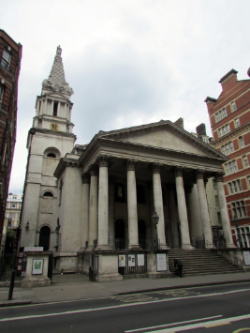
St George’s Bloomsbury with its stepped pyramid spire. PICTURE: Reading Tom (licensed under CC BY 2.0)
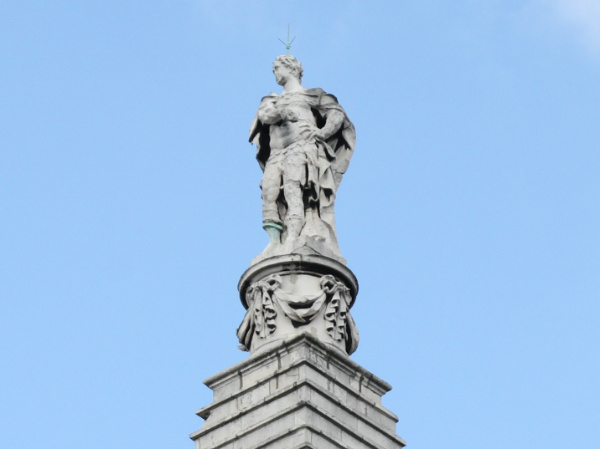
The larger-than-life-sized Portland stone statue is the work of Edward Strong who was master mason on the building of the church. It depicts the king in Roman costume standing atop a Roman altar.
The steeple, described as the “most eccentric” in London, also features statues of two unicorns and two lions at its base – both symbols of the Royal Coat of Arms of the UK – the lions representing England and the unicorns Scotland – and included apparently as a comment on Hanoverian succession. These were also originally the work of Strong but the originals disappeared in the 1870s and those now present are replicas which themselves recently underwent a restoration.
The stepped pyramid spire is said to have been influenced by Pliny the Elder’s description of Mausoleum at Halicarnassus.
Horace Walpole famously referred to the statue of King George in verse:
When Henry VIII left the Pope in the lurch, The Protestants made him the head of the church, But George’s good subjects, the Bloomsbury people Instead of the church, made him head of the steeple.
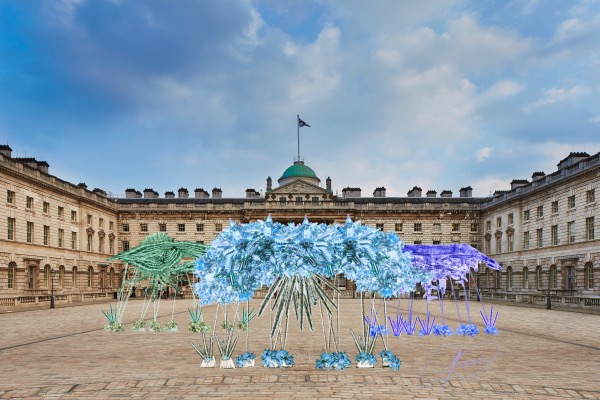
Arks of Gimokudan by Leeroy New, 2022 (Artist’s Rendition)
The Arks of Gimokudan, the first large-scale installation by Philippine artist-designer Leeroy New, has taken up residence in Somerset House’s central courtyard to mark Earth Day later this month. The installation features a fleet of three ships – made using reused and recycled materials and plastic waste – which appear to float some three metres above ground, inviting visitors to imagine themselves underwater and looking up at the vessals which draw on the history, culture and mythologies of his home nation of the Philippines, the country most at risk from the climate crisis according to a 2019 report. The ships represent a Spanish imperial galleon highlighting the Philippines’ long history of colonisation, a contemporary, military battleship, referencing continued territorial conflict and international tension in the region, and a futuristic spaceship, inspired by New’s fascination with sci-fi and world-making while the overall work also references Mebuyan, the Goddess of Gimokudan (Death and Fertility). Earth Day will be celebrated on 22nd April and the work can be seen in the Edmond J Safra Fountain Court until 26th April. Meanwhile, the first in the series of Morgan Stanley Lates at Somerset House with The Courtauld will take place on Wednesday (13th April) with Leeroy New in which visitors are invited to take part in a free live sculpting workshop in the courtyard. There will also be food from Hackney’s Bongbong’s Manila Kanteen, dance performances from 2022 Olivier award nominee Julia Cheng, a DJ, drinks and more. For more, see www.somersethouse.org.uk.
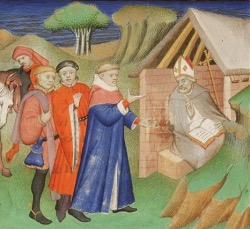
This month marks the 1010th anniversary of the murder of Alphege, the Archbishop of Canterbury, by Vikings in Greenwich.
St Alphege, Archbishop of Canterbury, is asked for advice in this early 15th century manuscript from Paris.
Alphege, also known as Ælfheah and Alfege, had been kidnapped from Canterbury during a Viking raid in September, 1011. Alphege’s captors were said to have been seeking a huge sum for his ransom – some 3,000 gold marks, reports the monk Osbern – but that, knowing such a sum would bring starvation upon the people under his care, he refused to allow himself to be ransomed – for money or anything else – and this drew the anger of his captors.
According to the Anglo-Saxon Chronicle, one day, seven months after his kidnapping – on 19th April, 1012, the Vikings were drunk and, had the elderly archbishop brought before their assembly. Then, in an act of execution, they began throwing ox bones and heads at the unfortunate archbishop before one of them struck him on the back of the head with the butt of an axe, killing him.
According to tradition, the murder took place on the site of St Alfege’s Church in Greenwich. A contemporary account also tells that a Viking lord named Thorkell the Tall, a Christian convert, had tried to save the archbishop’s life – offering everything he owned except his ship in exchange for the cleric’s life – but failed (interestingly, so appalled was Thorkell at the murder that he switched sides and fought for the English king Ethelred the Unready following Alphege’s death). There is also an account that the fatal blow was actually delivered by a Christian converted named Thrum as an act of mercy.
Alphege’s body was recovered and he was buried in St Paul’s Cathedral in London. In 1023, the body was moved by King Cnut to Canterbury in a gesture of goodwill to the English. The first Archbishop of Canterbury to meet such a violent end, he was canonised in 1078.
There is a memorial stone to the saint set in the floor in front of the altar in the Greenwich church.
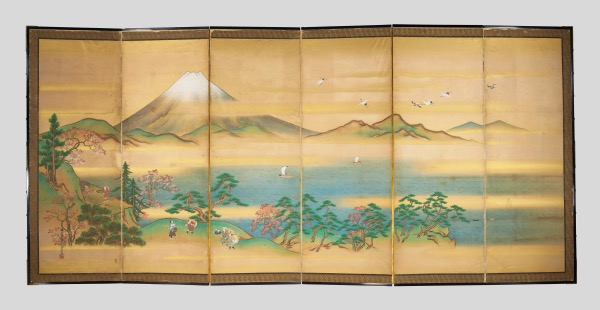
Itaya Hiroharu, folding screen paintings, 1860. Sent to Queen Victoria by Shōgun Tokugawa Iemochi, 1860.
• A first-of-its-kind exhibition featuring the Royal Collection’s Japanese works of art opens at the Queen’s Gallery, Buckingham Palace, tomorrow.Japan: Courts and Culture, features more than 150 works including rare porcelain, samurai armour, woodcut prints, embroidered screens and a range of diplomatic gifts sent during the reigns of monarchs ranging from King James I to Queen Elizabeth II. Among the highlights are a pair of folding screens sent to Queen Victoria in 1860 from the Japanese Shōgun Tokugawa Iemochi which will go on public display for the first time since they arrived at the British court 162 years ago. The screen paintings, which depict the changing seasons, were not thought to have survived but in recent years research has revealed the two screens were the work of Itaya Hiroharu, one of the artists likely to have worked on Queen Victoria’s gifts. Also included in gift was a set of lacquer furniture, spears inlaid with glittering mother of pearl, and swords made by leading court swordsmiths – all of which will also be on display. Admission charge applies. Runs until 26 February, 2023. For more, see www.rct.uk.
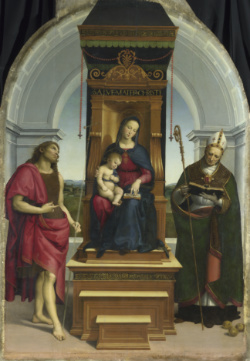
• Marking the 500th anniversary of the death of Raphael, one of the first-ever exhibitions to explore the complete career of this giant of the Italian Renaissance opens at The National Gallery on Saturday. The Credit Suisse Exhibition: Raphael, which was supposed to be held in 2020 and was delayed due to the coronavirus pandemic, features more than 90 exhibits. They include a rare gathering of Raphael’s paintings of the Virgin and Child including Ansidei Madonna (The Virgin and Child with Saint John the Baptist and Saint Nicholas of Bari) (1505), two bronze roundels – The Incredulity of Saint Thomas and The Descent into Limbo – from Santa Maria della Pace which have never previously exhibited outside Italy and which are attributed to Cesarino Rossetti after designs by Raphael, and a room devoted to Raphael’s frescoes for Pope Julius II’s private apartments. There are also several of his original print designs, an survey of ancient Rome he undertook for Pope Leo X, tapestry designs including Saint Paul Preaching at Athens (workshop of, or on behalf of, Pieter van Aelst, active about 1490–1533, after design by Raphael, about 1517–19), and portraiture from his final years including Portrait of Lorenzo de’ Medici (1518) and Portrait of Baldassare Castiglione (1519). Admission charge applies. Runs until 31st July. For more, see www.nationalgallery.org.uk/exhibitions/the-credit-suisse-exhibition-raphael.
• The British Library’s Food Season kicks off today with almost two months of online and in-person events inspired by the cookbooks, recipes and culinary stories in the collection. Highlights include chef Ainsley Harriott talking about his life and career with food-writer Melissa Thompson, food-writer Maunika Gowardan celebrating India’s breadth of food cultures with chefs and food-writers including Ravinder Bhogal, Romy Gill, Kavi Thakrar and Farokh Talati, chef and broadcaster Andi Oliver discussing Jessica B Harris’ 50- year career examining the history and meaning of food for the African diaspora, and psychologist Kimberley Wilson chairing a discussion about the food prisoners are fed inside British correctional institutions and if it impacts rehabilitation. Now in its fifth year, the 2022 Food Season is supported by KitchenAid. For the full programme of events, head to www.bl.uk/events/food-season.
• Textile designer Enid Marx – famous for her seat fabric designs on the London Underground – has been honoured with an English Heritage Blue Plaque. The plaque was unveiled this week at her former home at 39 Thornhill Road where she lived and worked for more than 30 years. Marx, who shared the house with her partner, Margaret Lambert, and friends Eleanor Breuning and Grace Lambert (Breuning continues to live at the house today), had a purpose-built studio in the back garden which remains in similar condition to when she left it almost 25 years ago. Alongside her work for the London Underground, Marx also is known for her design of postage stamps marking the start of Queen Elizabeth II’s reign in 1953. For more, see www.english-heritage.org.uk/visit/blue-plaques/.
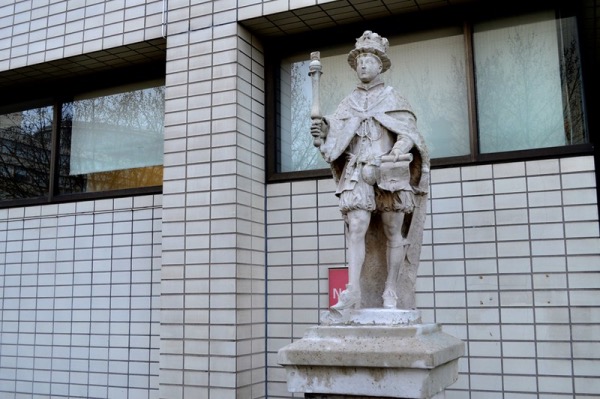
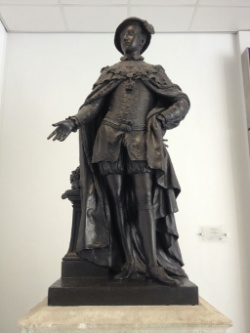
In honour of Queen Elizabeth II’s Platinum Jubilee, we have a new series looking at 10 lesser known statues of previous monarchs in London.
We kick off with not one, but actually two, statues of King Edward VI, the son of King Henry VIII and his third queen, Jane Seymour, can be found at St Thomas Hospital in Southwark.
Both of the statues were commissioned to commemorate the king’s re-founding of the hospital – which had been first founded in the 12th century and had been closed in 1540 as part of the Dissolution – in 1551 and which saw the complete rebuilding of the hospital under the stewardship of the hospital’s President, Sir Robert Clayton.
The oldest of the statues, now located outside the north entrance to the hospital’s North Wing on Lambeth Palace Road, was designed by Nathaniel Hanwell and carved from Purbeck limestone by Thomas Cartwright in 1682.
Peter Scheemakers’ bronze of King Edward VI. PICTURE: Secretlondon (licensed under CC BY-SA 3.0)
It originally was part of a group – the King standing at the centre holding his raised sceptre surrounded by four figures which were innovative in that they depicted patients of the time – which adorned the gateway to the hospital on Borough High Street.
It was moved when the gate was widened in around 1720 and subsequently occupied several different positions – including spending some time in storage – before eventually, without the surrounding figures, being moved to its current position in 1976. It was designated a Grade II* monument in 1979.
The second of the two statues is a bronze figure in period dress which was created by sculptor Peter Scheemakers in 1737.
It can now be found inside the hospital’s North Wing, having been moved there last century, and like its counterpart, was designated a Grade II* monument in 1979.
The inscription on the front of the plinth describes the King as “a most excellent prince of exemplary piety and wisdom above his years, the glory and ornament of his age and most munificent founder of this hospital” and adds that the statue was erected at the expense of Charles Joye, Treasurer of the hospital.
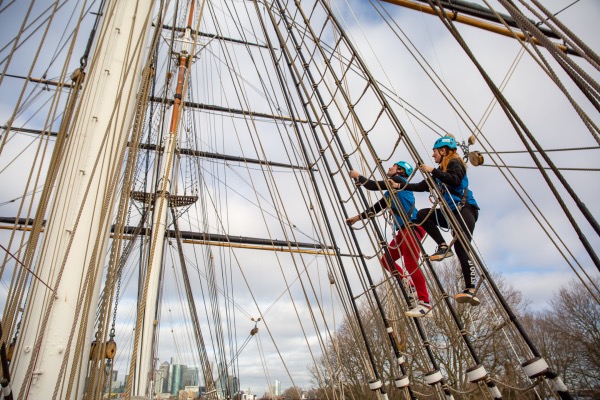
Visitors to the Cutty Sark now have the opportunity to climb the ship’s rigging for the first time since the ship arrived in Greenwich in 1954. The ‘Rig Climb Experience’, which was launched last weekend, sees those bold enough to do so stepping up from the main deck onto the ship’s ratlines, climbing up its shrouds and traversing one of the ship’s lower yardarms to reach the tops platform where they’ll be able to take in magnificent views over Greenwich and The Thames. One of the fastest tea clippers of its day, the Cutty Sark – which was built in Dumbarton in 1869 – had more than 11 miles of rigging, 32 sails with an original sail area of 32,000 square feet, and a 152 foot main mast. Prices start at £41 for adults and £26 for children for a ‘Standard Rig Climb’ and £51 for adults and £36 for children for the Rig Climb Experience Plus. For more, head to www.rmg.co.uk/cuttysark.
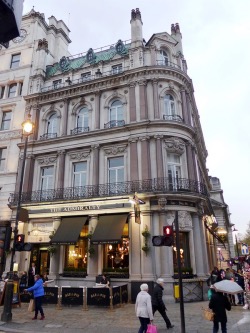
With a claim to be the most central pub in London, this Trafalgar Square pub takes its name from its proximity to…well, all things naval.
This includes Trafalgar Square itself, of course, and its centrepiece of Nelson’s Column (commemorating the victory at the Battle of Trafalgar and Vice-Admiral Lord Nelson) as well as the the location of Admiralty Arch behind the building and the Old Admiralty Building just down Whitehall.
The Grade II-listed Italianate building, which was designed by FW Porter and dates from 1871, has only been a pub since 2014 when it was acquired by Fullers.
It was originally constructed for the Union Bank and later became a branch of the National Westminster Bank. In 2005, the building became home to Scottish restaurant Albannach before becoming a pub almost 10 years later.
Fittingly, the pub – officially located at 66 Trafalgar Square – features an interior inspired by HMS Victory, Nelson’s flagship at the Battle of Trafalgar.
It was opened on 23rd October, 2014, just two days after Trafalgar Day by former First Sea Lord Admiral Lord West of Spithead and Fuller’s chief executive Simon Emeny. A magnum of beer was reportedly ceremonially smashed on the pub’s exterior in keeping with naval tradition.
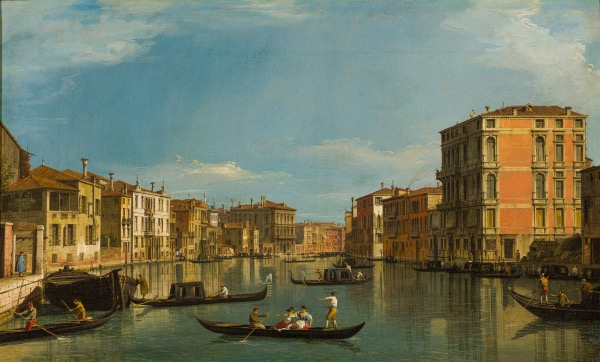
• Twenty-four of Canaletto’s Venetian views which are normally found at Woburn Abbey form the heart of a new exhibition opening at the National Maritime Museum in Greenwich on Friday.Canaletto’s Venice Revisited explores some of the most iconic view paintings of Venice and how tourism, which helped establish Canaletto’s career, today threatens Venice’s future. The views from Woburn Abbey were painted by Canaletto for Lord John Russell, the 4th Duke of Bedford, in the 1730s and this is the first time the paintings, which are thought to be Canaletto’s largest single commission, will be on display in their entirety outside of the abbey. As well as 22 smaller views of Venice depicting iconic landmarks such as Piazza San Marco and the Grand Canal, as well as campi, palazzi and churches, the works include two monumental views, A Regatta on the Grand Canal and The Grand Canal, Ascension Day: The embarkation of the Doge of Venice for the Ceremony of the Marriage of the Adriatic. Runs until 25th September. Admission charge applies. For more, see www.rmg.co.uk/canaletto.
• The story of the postcode is the subject of a new exhibition at The Postal Museum.Sorting Britain: The Power of Postcodes charts the journey of postcodes in the UK, from the post postal districts in London, Liverpool and Manchester and the first trial of postcodes in Norwich in 1959 to how postcodes are used today as an indicator of social standing. Highlights in the display include ELSIE, one of the only original 1950s Electronic Letter Sorting Indicating Equipment left in existence, images of ‘Poco the Postcode Elephant’ – one of the biggest advertising campaigns of the 1980s and unseen maps of London from the 19th century. Runs until 1st January. Included in admission ticket. For more, see www.postalmuseum.org.
• The Lindt GOLD BUNNY Hunt is returning to both Hampton Court Palace and Kensington Palace this Easter for the first time since 2019. Children aged four to 12 are invited to use a trail map to explore each palace and gardens and find the Lindt GOLD BUNNY statues while learning about people from the palaces’ past and, on successfully completing their mission, claim their chocolatey reward. Check the website for details of dates. The hunt is included in palace admission. For more, see www.hrp.org.uk.
• The representation of foundlings, orphans, adoptees, and foster children in comics and graphic novels comes under scrutiny in a new exhibition at the Foundling Museum in Bloomsbury. Opening Friday, Superheroes, Orphans & Origins: 125 years in comics looks at traditional orphan superheroes ranging from Superman and Batman to Spider Man and Black Panther along with characters from early newspaper comic strips, Japanese Manga and contemporary graphic novel protagonists. The display includes historical newspapers, original artwork and contemporary digital work as well as examples of international comics rarely exhibited in the UK. There are also three new artistic commissions specifically made for the exhibition. Can be seen until 28th August. Admission charge applies. For more, see https://foundlingmuseum.org.uk/event/superheroes-orphans-origins/.
Send items for inclusion to exploringlondon@gmail.com.
• The archive of writer, teacher and ethno-psychotherapist Beryl Gilroy has been acquired by the British Library. Highlights from the archive, which includes working drafts for published and unpublished novels, letters with publishers and literary agents and ‘born-digital’ material, is at the centre of the free Celebrating Beryl Gilroy display which opened in the Treasures Gallery earlier this month. Gilroy, who was born in Guyana (then British Guiana) and who immigrated to Britain in 1952, became the first black head teacher in London in 1969 and wrote a number of acclaimed children’s books to better reflect the lives of her pupils. Her works – which explore the lives of families, particularly of women and children, the impact of 20th century migration and societal change that came as a result – also included number of novels, a collection of poems, non-fiction writing and a 1976 memoir, Black Teacher. The free display can be seen until 26th June. For more, see www.bl.uk.
• A controversial bronze statue of merchant and slave trader Robert Milligan which formerly stood on West India Quay outside the Museum of London Docklands is joining the museum’s collection. The statue was removed in June, 2020, following a petition signed by over 4,000 people called for it to be removed from public view. Its acquisition by the museum follows a public consultation conducted in partnership with the Tower Hamlets Council and landowners Canal & River Trust, which concluded that the statue should be housed in a museum where it can be fully contextualised. “Over the last 15 years, the museum has been working with academics, community leaders and activists to tell the story of London’s involvement in the transatlantic slave trade, and give voice to its legacy,” said a museum spokesman. “The West India Docks, championed by Milligan using wealth from the slave trade, are a visible reminder of how this history has shaped our city. It is right and important that we acknowledge this in the statue’s story. We will now take time to consult with the local community to decide how best to take this forward as part of our collection.” The statue will be held in storage whilst the museum consults further with local communities about how best to present it.
• The impact of the global coronavirus pandemic on children’s play is the subject of an online exhibition launched by Young V&A and its partners UCL and the University of Sheffield this week.Play In The Pandemic features some of the 100 submissions sent in from around the globe in answer to a call-out from The Play Observatory research project for people to submit their experiences of play – everything from music videos to children’s artworks and films made by parents showing their children splashing in puddles – alongside objects from the Young V&A’s collection. The exhibition, which takes the form of an unfolding origami house, also features a series of activities – ranging from how to make your own origami house to creating dens and window boxes for people to get involved. Head to the Play Observatory website.





 Exploring London