Famous for it’s flora, Kew Gardens is also home to some unusual animal life including Chinese water dragons who live in the warm environments of the glasshouses.
See all of our content (and support our work) for just £3 a month…
Other animals in the gardens include foxes, hedgehogs and birds including green and great-spotted woodpeckers, mute swans, Canada geese, mallards, ring-necked parakeets, kingfishers, tawny owls, moorhens, and stock doves.
And, of course, the gardens are home to a myriad of insects including bees, butterflies and dragonflies as well as aquatic life including frogs, newts and fish.
WHERE: Kew Gardens (nearest Tube station is Kew Gardens); WHEN: 10am to 7pm (last entry 6pm) daily; COST: £25 adults/£8 children 16 and under (children under four free) (cheaper tickets for online bookings and during off-peak period from 1st November to 31st January); WEBSITE: www.kew.org.
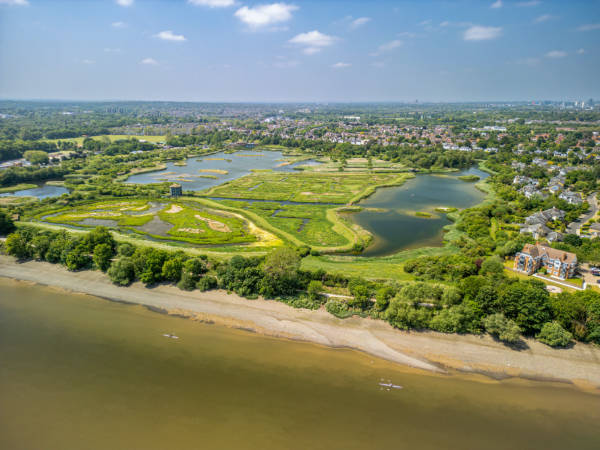
This year celebrating its 25th anniversary, the 105 acre site on the west bank of the River Thames at Barnes known as the WWT London Wetland Centre is a waterway-studded oasis not far from the heart of London.
Subscribe for just £3 a month to access all of our content and support our work at Exploring London!
Aerial view of the WWT London Wetland Centre. PICTURE: yujie chen/iStockphoto
The centre, which is managed by the Wildfowl and Wetlands Trust (founded by Sir Peter Scott in the 1940s), first opened in 2000 on the site which had previously been home to several small reservoirs which had been there since the 1880s.
The reservoirs had been converted into wetland habitats (the work included removing an unexploded bomb from World War II), creating what was, at the time, the largest man-made wetland in any capital city. Sir David Attenborough, who has reportedly described the site as an “extra lung for Londoners”, officially opened the centre, initially known as the Barn Elms Wetland Centre.
In 2002, a significant area of the site – some 29 hectares (72 acres) – was declared a Site of Special Scientific Interest by Natural England.
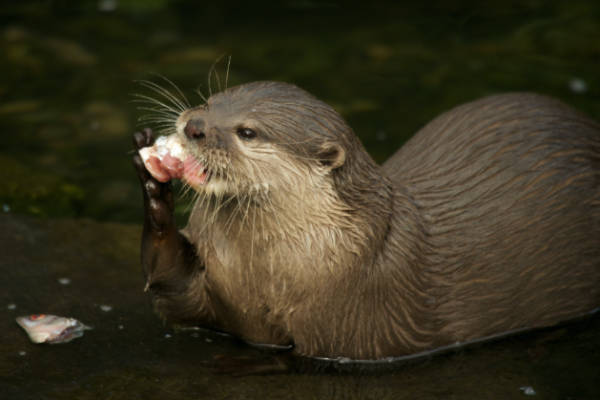
The site is home to a diverse range of wildlife including all manner of birdlife and insects as well as a couple of Asian short-clawed otters, the smallest of all 13 species of otters around the world, and a colony of water voles.
The wide variety of birdlife at the sanctuary – more than 250 species have been recorded – includes American wood ducks, white-faced whistling ducks, Hawaiian geese (nenes) and cranes as well as lapwings, common terns, pochards, sand martins, and reed warblers.
Insects found at the site include moths, dragonflies, crickets, grasshoppers and beetles and during summer months, two of Britain’s rarest bat species – the Leisler’s bat and Nathusius’ pipistrelle – are also often detected hunting over wetlands.
An Asian short-clawed otter eating fish at the WWT London Wetland Centre. PICTURE: nicholas_dale/iStockphoto.
Along with six hides for watching and photographing the wildlife, the site also includes an adventure play area with a zip line, a water play area, a “mud kitchen”, a ‘Wild Walk’ featuring balance beams and bridges, and special pools for “pond dipping”.
The centre also boasts a discovery centre with interactive displays and a cafe. It holds a range of activities each week including walks, photography workshops and special tours, such as a British Sign Language tour.
WHERE: WWT London Wetland Centre, Queen Elizabeth Walk, Barnes (nearest railway station is Barnes Bridge); WHEN: 10am to 5:30pm daily (until the end of October); COST: Adults from £16.29/Junior (3-17 years) from £10.58/Family from £45.81; WEBSITE: www.wwt.org.uk/wetland-centres/london
 Exploring London