A Moment in London’s History – The London Beer Flood of 1814…

For some it sounds like a dream come true but what is known as the London Beer Flood of 17th October, 1814, was a very real tragedy, leaving eight dead in its wake.

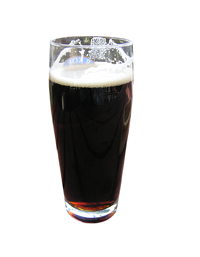
PorterThe flood of more than a million litres of fermenting porter – a dark beer (pictured) – occurred when corrosion caused one of the metal hoops around a three storey high vat to give way inside the Horse Shoe Brewery.

The force of the vat’s collapse – which took place late in the afternoon – caused further vats to rupture and the resulting wave of beer reportedly stood as tall as 15 foot high as it smashed into neighbouring buildings.

Standing at the corner of Tottenham Court Road and Oxford Street in central London, the brewery was located in the midst of the St Giles Rookery – a overcrowded slum filled with flimsy structures. This meant the damage was considerable and while many buildings were at least partially damaged, the worst hit were a pair of homes which were apparently completely destroyed.

Among the dead were four women and a three-year-old boy who were attending a wake for a child in a nearby basement and a four-year-old girl and her mother who were having tea in their house.

While an enterprising watchman apparently charged voyeurs to see the ruins of the vat, it is believed that reports mobs ran amok getting drunk on the spilt beer have no basis in fact.

The brewers, Henry Meux & Co, were subsequently taken to court but, with the incident ruled an “Act of God”, no-one could be held accountable (in fact, the brewers were refunded duties they had paid on the lost beer). The brewery itself was finally demolished in 1922 and the Dominion Theatre now stands on the part of the site.

The nearby Holborn Whippet pub now commemorates the event with a special brew.

PICTURE: Michal Zacharzewski/www.freeimages.com

A Moment in London’s History – The execution of John Austin, the last person hanged at Tyburn…

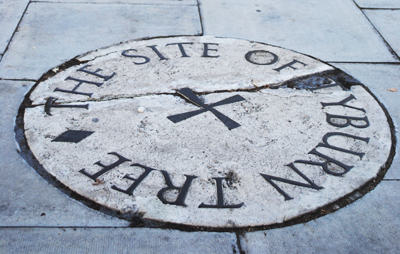
Tyburn-TreeThe site of public executions for hundreds of years, it’s generally accepted that at about 9am on 3rd November, 1783, John Austin became the last person to be hanged there (for more on the history of executions at Tyburn – and in particular the massive gallows known as the Tyburn Tree – see our previous post here).

Austin had been convicted of being a highwayman – specifically for inflicting “robbery with violence” upon labourer John Spicer, two weeks before during which Austin had attacked Spicer, beating and cutting him, “in a cruel manner”.

As he stood on the cart beneath the gallows (a mobile gallows had been in use since 1759 when the Elizabethan-era Tyburn Tree was dismantled), Austin’s last words were somewhat predictable – he requested that the crowd pray for his “departing soul”, that they would heed his example and that Jesus would have “mercy upon my poor soul”.

His death, it is said, was “hard”. As the cart was moved off, the halter around his neck apparently slipped “to the back part of his head” and instead of his neck being broken, Austin slowly choked to death.

The decision to cease executions at Tyburn (near where Marble Arch now stands) and move them to outside Newgate Prison was apparently due to complaints. These came from both City traders who felt the condemned person’s three mile procession from Newgate to Tyburn disrupted making money and the fashionable who sought to live in the city’s outlying western areas like Marylebone and who didn’t want to see the unruly mob that typically accompanied  outside their front doors. Such groups had long been lobbying for the practice to come to an end.

For more on the history of Tyburn see Robert Bard’s Tyburn: The Story of London’s Gallows.