10 Questions – Dr Louise Devoy, senior curator at the Royal Observatory Greenwich…

Exploring London spoke to Dr Louise Devoy about her role at the observatory, her new book, Royal Observatory Greenwich: A History in Objects, and her “must-see” for those visiting the observatory…
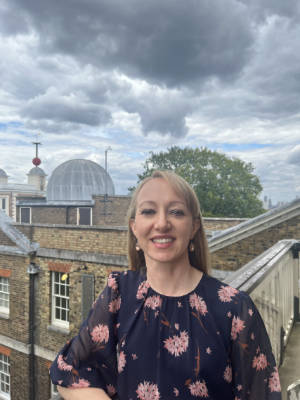
Dr Louise Devoy, senior curator at the Royal Observatory Greenwich. PICTURE: Courtesy of the Royal Observatory Greenwich

How long have you worked as senior curator at the Royal Observatory Greenwich and what was your pathway into the job?
“I’ve been working here for 12 years now and it’s been quite a journey! I originally studied physics with astrophysics at the University of Leicester and intended to continue with scientific research but my ideas changed after an inspirational internship working at a museum in the US. I really enjoyed learning about the history of astronomy – how our ideas have changed over time and the incredible stories of the people who were involved – and I continued my studies in the history of science. I’ve since worked at the Science Museum and British Museum and came here in 2013.”

Have you always been interested in astronomy?
“Yes, I have vivid memories of building a space rocket in primary school from cereal packets and yogurt pots that quite literally fired my imagination! I’ve still got The Night Sky Ladybird book that I bought and later in my teens my parents kindly bought me a telescope so I could learn more about practical astronomy. I don’t have much time for stargazing these days but I’ve recently purchased a compact smart telescope that you can put in your hand luggage and I’m looking forward to taking it on my travels.”

What does your job at the Royal Observatory entail?
“My job consists of two main parts; one based on research and one focused on communication. As a curator, I’m responsible for doing research on our collections, identifying objects for display and collaborating with researchers from other museums and observatories. Once I’ve done the detective work, I like to share these ideas and stories with our visitors through displays, talks and writing books and articles.”

Royal Observatory Greenwich: A History in Objects is published on 16th October. To purchase head to the Royal Observatory Greenwich shop by clicking here.

What’s your favourite part of the day at the Observatory?
“For me, I enjoy seeing the sunset as I’m leaving the office, especially as the lights start to come on across London and you get a great view of the city from our hilltop location. It also makes me smile that sunset means going home for me, whereas for Greenwich astronomers in the past, it would have been the start of their working ‘day’!”

What prompted the writing of the book?
“It’s difficult to say but I definitely remember working on this during lockdown in 2020 and being inspired by similar books such as Neil MacGregor’s A History of the World in 100 Objects. Most books about the history of the Royal Observatory focus on the story of longitude, John Harrison’s marine timekeepers and Greenwich Mean Time (GMT) but I wanted to show how the Observatory has a much broader, richer history that encompasses many more people, subjects, stories and objects.

How did you decide which objects to feature in the book?
“I knew that we would be celebrating our 350th anniversary in 2025 and so I decided to choose objects that spanned the full chronology from 1675. I also wanted to expand the scope beyond the well-known clocks and telescopes to include books, paintings, manuscripts, watercolours, and even items of clothing previously worn by the Astronomer Royal and his family. In addition, I selected a few mystery objects to give me a good excuse to dig into the archives and piece together their stories.”

Do you have a favourite among them?
“I really like the story of the hole punch from the 1840s because it’s indicative of the paperwork and number-crunching that is an important but often overlooked aspect of astronomy. Once astronomers have done their observations, they have to apply mathematical corrections (‘reductions’) to account for atmospheric effects that might affect the results. It’s very tedious, repetitive work that was traditionally done by teenage boys known as ‘computers’. The seventh Astronomer Royal, George Biddell Airy (1801–1892) tried to make the process more efficient and less prone to errors by creating a template known as a ‘skeleton form’. The system worked well but generated vast amounts of paper, leading Airy to design a hole punch to organise the work. He was so proud of his idea that he encouraged other observatories to do the same and that’s why you’ll find another example of this hole punch over 8,000 miles away at the South African Astronomical Observatory in Cape Town. Airy invented his hole punch several decades before the standard office hole punch was patented, making our gadget one of the oldest in the world!”

What did you learn during the process of writing the book that you didn’t already know about the history of the Royal Observatory?
“The story of the secret binocular testing during the First World War really surprised me. The Observatory had already been involved in testing chronometers – portable, accurate timekeepers for navigation at sea – since the 1820s but the binocular testing was a new task. For security reasons, it was not mentioned in the Observatory’s Annual Reports and remained an unknown story for decades. I was intrigued by a one-line mention to it in the archives and dug a little further to uncover the full facts.”
Subscribe for just £3 a month to see all of Exploring London’s content – including the answers to the final two questions…

Famous Londoners – John Flamsteed…

Memorialised in the name of the house where he once lived at the Royal Observatory in Greenwich, John Flamsteed was the first Astronomer Royal.

Flamsteed was born in Denby, Derbyshire, on 16th August, 1646, and was the only child of Stephen Flamsteed, who among other things was involved in the brewing industry, and his first wife Mary (who died when John Flamsteed was still quite young).

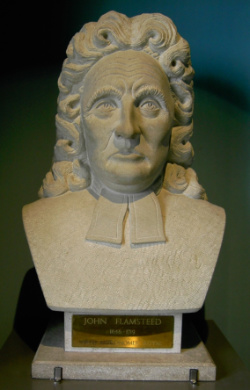
A bust of John Flamsteed at the Royal Observatory Greenwich.

He was educated at local schools but left off his studies at the age of 15 due to his own ill health and his father’s need for his assistance in the household and with his business.

His poor health meant he pursued some more sedentary activities and it was during this period that he established interest in astronomy, writing his first paper in 1665. Flamsteed did briefly attend Jesus College in Cambridge in the early 1670s, although it’s not thought he ever took up full residence.

Flamsteed was ordained a deacon and was preparing to take up a living in Derbyshire in 1675 – having by then obtained an MA from Cambridge – when his patron Jonas Moore, whom he’d met in the summer of 1670 during a visit to London and then visited again in mid-1674, invited him to return to the city, ostensibly to establish an observatory which Moore, who was Surveyor-General of the Ordnance, had offered to pay for.

Flamsteed arrived in February, 1675, stayed with Moore in the Tower before, after meeting King Charles II, was made an official assistant to a Royal Commission which the king had established charged with examining the merits of a proposal – put forward by a “le Sieur de St Pierre” to find longitude by the position of the Moon.

The commission decided the proposal wasn’t worth taking further but did recommend the establishment of an observatory from which the movement of the stars and Moon could be mapped in the hope of developing a method of finding longitude. Flamsteed was subsequently appointed “The King’s Astronomical Observator” – the first Astronomer Royal – on 4th March, 1675, by royal warrant, and in June that same year, another royal warrant provided for the founding of the Royal Greenwich Observatory. Flamsteed laid the foundation stone on 10th August.

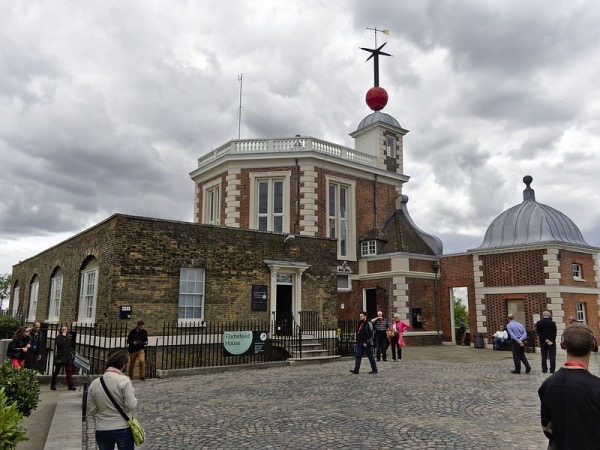
He was admitted as a fellow of the Royal Society in February the following year and in July he moved into the observatory, now known as Flamsteed House (it contains famed Octagonal Room with large windows from which celestial events could be watched), which was designed by Sir Christopher Wren. It was to serve as Flamsteed’s home for next decade or so.

Flamsteed House, Royal Greenwich Observatory, its named after John Flamsteed. PICTURE: Dmitry Djouce.

Flamsteed’s achievements as an astronomer included the accurate calculation of the solar eclipses of 1666 and 1668 and recording some of the earliest sightings of Uranus which he mistakenly thought was a star. He was also in regular contact with many other scientific luminaries of the day and famously fell out with both Sir Edmond Halley (his one-time assistant and future successor as Astronomer Royal) and Sir Isaac Newton.

Flamsteed’s own catalogue of almost 3,000 stars wasn’t published until after death in 1725 thanks to the effort’s of his wife Margaret – whom he had married on 23rd October, 1692 (they were to have no children although Flamsteed’s niece, Ann Heming, did live with them). Margaret also published his star atlas, Atlas Coelestis, posthumously in 1729.

In 1684, Flamsteed was elevated to the priesthood and made rector of the village of Burstow, near Crawley in Surrey – a post, which, along with that of Astronomer Royal, he held until his death on 31st December, 1719.

He was buried in Burstow and there is a plaque on the wall of the church there marking his grave (which was added long after his death). Aside from his earthly honours – which includes the name of Flamsteed House at the Royal Observatory, a crater on the Moon is named after him as is an asteroid.

Famous Londoners – The Tower Ravens…

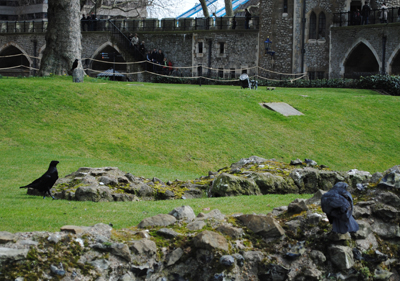
Ravens

OK, so they’re not people as such, but the ravens at the Tower of London are renowned the world over.

Known as the “Guardians of the Tower”, there are currently as many as eight ravens living at the tower, lodged in a space on the grass next to the Wakefield Tower.

Raven-pensLegend has it that there must be at least six ravens living at the Tower – should they leave, not only will the Tower fall but the kingdom as well (although we hasten to add that it’s been argued this tradition only started in the Victorian age and that there have been times when the numbers of ravens dropped below the required six, such as at the end of World War II when only one raven remained).

It was King Charles II who first ordered the ravens be protected – an order which must have upset Astronomer Royal John Flamsteed who complained after he found that the birds were interfering with the observation work he was carrying out from the Tower’s north-east turret. He later moved out to Greenwich.

The eight ravens who now live at the tower include Rocky, Merlin, Hugine and the latest additions Jubilee – given to the Tower last year to celebrate the Queen’s Diamond Jubilee – and Grip, named after Charles Dickens’ pet raven.

The birds are looked after by a team of four headed by the raven master, Chris Skaife, who each day feed them 170 grams (six ounces) of raw meat and special biscuits soaked in animal blood.

Not all ravens can cut the mustard to work at the Tower – one recent addition Pearl was apparently bullied by other ravens and had to be withdrawn. And while the birds have the feathers on one wing trimmed to stop them escaping to a new life on the wing, that hasn’t stopped some from doing so including Grog who took off in 1981 and was last seen outside an East End pub.

The oldest raven to ever live at the Tower was Jim Crow, who died at age of 44 in 1928.

WHERE: Tower of London (nearest Tube station Tower Hill); WHEN: 9am to 5.30pm, Tuesday to Saturday, 10am to 5.30pm Sunday to Monday; COST: £21.45 adults; £10.75 children under 15; £18.15 concessions; £57.20 for a family; WEBSITE: www.hrp.org.uk/toweroflondon/.