This Week in London – Hawai’i’s history and culture; Green Plaque commemorates FA; and, Turner and Constable at the Tate…

‘ahu ʻula (feathered cloak) sent by Kamehameha I to King George III, received by George IV © Royal Collection Enterprises Limited 2025 | Royal Collection Trust

The history and artistry of Hawaii along with its relationship with Britain is the subject of a new exhibition at the British Museum. Hawai􏰄i: a kingdom crossing oceans commemorates 200 years since a series of events including the visit of Hawaiian King Liholiho (Kamehameha II) and Queen Kamāmalu to London with a royal delegation to seek alliance and protection from the Crown. Building from the visit of the Hawaiian party to the British Museum, the exhibition features around 150 objects and artworks, many of which have never seen seen before, with highlights including an ‘ahu ‘ula (feathered cloak) which was sent in 1810 by the first king of united Hawai’i, Kamehameha I, to King George III, a nine foot ki’i image of the god Kū, and the Anglo-Franco proclamation of 1843, on loan from The National Archives, which highlights the UK and France’s formal recognition of Hawai’i’s independence and emphasises diplomatic bonds between these nations. Opening today, the exhibition can be seen until 25th May in The Joseph Hotung Exhibition Gallery􏰊 (Room 35). Admission charge applies. For more, see britishmuseum.org/hawaii.

The former headquarters of the Football Association (FA) has been commemorated with a City of Westminster Green Plaque at 22 Lancaster Gate, an address synonymous with the FA from the early 20th century until the 1990s. In a statement, the City of Westminster said the plaque, which was unveiled late last year, “celebrates the cultural and historical significance of the FA’s presence in the area and its role in English football history”.

On Now: Turner & Constable. An exhibition at the Tate Britain focuses on two of Britain’s greatest painters, JMW Turner and John Constable, who were also great rivals. The display, which marks 250 years since their births – Turner in 1775 and Constable in 1776, features more than 170 paintings and works on paper as it explores their intertwined lives and legacies. Highlights include Turner’s momentous The Burning of the Houses of Lords and Commons (1835), not seen in Britain for more than 100 years, and Constable’s The White Horse (1819). Admission charge applies. Runs until 12th April. For more, see www.tate.org.uk/whats-on/tate-britain/turner-and-constable/exhibition-guide.

Send all items to exploringlondon@gmail.com.
What’s in a name?…Great Queen Street…

Wondering which ‘great’ Queen this street name is referring to? Perhaps Queen Victoria, our own Queen Elizabeth or even her namesake, Queen Elizabeth I?

None of the above – the West End thoroughfare which runs between Drury Lane and Kingsway, is named for Queen Anne (of Denmark), consort of King James I (and the ‘great’ in Great Queen Street, we imagine, refers to the size of the thoroughfare and not the ‘greatness’ of the Queen).

Originally a residential street dating from the first half of the 17th century (one of which apparently sported a statue of another queen, Henrietta Maria, wife of King Charles I, on its facade), the houses were gradually replaced  over the years but some early 18th century abodes do remain.

Famous residents include everyone from Civil War Parliamentarian General Thomas Fairfax and 18th century composer Thomas Arne to late 17th and early 18th century portrait painter Sir Godfrey Kneller and James Boswell, biographer of Samuel Johnson.

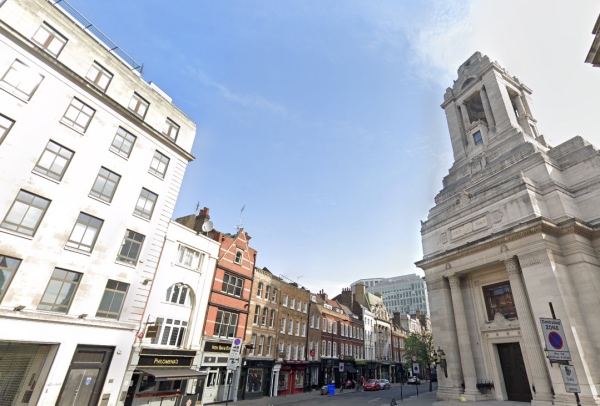
Freemason’s Hall, home of the United Grand Lodge of England, is located on the corner with Wild Street and the De Vere Grand Connaught Rooms next door stand on the site of the former Freemasons Tavern where, in 1863, the Football Association was founded.

PICTURE: View down Great Queen Street with the edifice of Freemason’s Hall on the right. (Google Street View)

10 Historic Sporting Events in London – 4. The 1966 FIFA World Cup at Wembley…

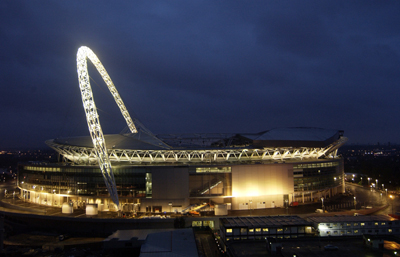
The home of English football, in 1966 Wembley Stadium in north-west London played host to the FIFA World Cup and witnessed England win the coveted cup.

Led out onto the ground by Bobby Moore, the English team, under manager Alf Ramsey, were locked in a 2-2 draw with West Germany when the game went into extra time. English player Geoff Hurst, who had already scored a goal, went on to score two more goals (one of which was particularly controversial with some still believing it didn’t cross the goal-line), giving him a hat-trick of goals and handing England the cup in a 4-2 win.

The team received the Jules Rimet trophy (named for former FIFA president Jules Rimet and replaced with the current FIFA World Cup Trophy in the 1970s) from Queen Elizabeth II.

While the history of Wembley goes back to 1923 when the Empire Stadium, referred to as the “Twin Towers” thanks to its distinctive two domed towers, was built on the site, the current stadium was only officially opened in 2007. Capable of seating 90,000, it is the second largest stadium in Europe.

As the Empire Stadium, the ground – originally built for a British Empire Exhibition – had played host to events including the 1934 Empire Games, the 1948 Olympics, and numerous football finals including the so-called “White Horse final” when a mounted policeman went on the pitch to contain the estimated 200,000 fans who watched the Bolton Wanderers FC defeat West Ham United FC 2-0 in the 1923 FA Cup final.

The current stadium with its iconic arch now plays host to the FA Cup as well as other high-profile matches like the FA Community Shield and large events including rock concerts (a recent vote on the Wembley website found that the greatest event ever held there was a 2007 concert by Muse).

This Olympics, Wembley is hosting numerous football matches including the gold medal match for both men and women, on the 11th and 9th August respectively (the last time the men’s final was played here during an Olympics was in 1948 when England won the bronze). It’s hoped a new record will be set for the number of people attending a women’s Olympic football match (the current record of 76,489 was recorded at the 1996 Olympics in Georgia at the Stanford Stadium) during the Games.

With a one kilometre circumference, the stadium encloses some four million square metres (equivalent apparently to the space taken up by 25,000 London double-decker buses) and features a Royal Box in the middle of the north stand from where all trophies are presented. The roof is partly closable.

There are tours of the stadium (although it’s closed during the Olympics), details of which are below.

WHERE: Wembley National Stadium, Wembley (nearest Tube stations are Wembley Park and Wembley Central or the Wembley Stadium British Rail station); WHEN: Selected dates – see website for details; advance booking strongly recommended (the stadium is closed for events, including the Olympics and before and after); COST: £16 an adult/£9 a child (under 16, under five’s free)/£9 seniors/£41 family ticket (zip wire ride extra); WEBSITE: www.wembleystadium.com/Wembley-Tours.aspx.

PICTURE: Action Images/Paul Harding (courtesy of Wembley National Stadium).