These docks located in Blackwall were among the large number of docks built in the first half of the 19th century and were, as the name suggests, established by the East India Company.
London Docklands
10 historic London docks…9. Millwall Dock…
Located on the southern end of the Isle of Dogs, Millwall Dock opened in March, 1868.
Subscribe for just £3 a month to see all of Exploring London’s content…
10 historic London docks…7. Royal Docks…
This series of three inter-connected docks in London’s east were once the largest enclosed docks in the world (they’re still the largest enclosed docks in the UK).
Subcribe for just £3 a month to access all of Exploring London’s content…
10 historic London docks…4. West India Docks…
A complex of three docks located on the Isle of Dogs, the West India Docks were founded more than 200 years ago and in recent decades have been redeveloped as the financial centre of Canary Wharf.
Subscribe to see all our content for just £3 a month!
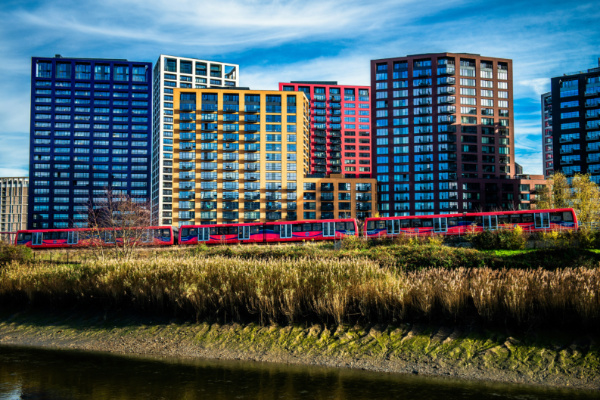
LondonLife – Docklands colour…
A Moment in London’s History – The ‘Great Tea Race’ crosses the finish line…
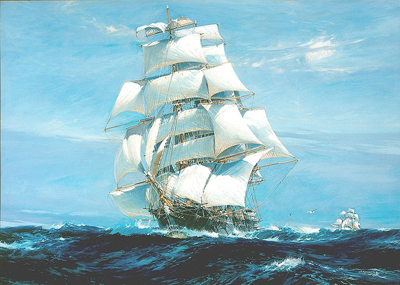 It’s 150 years ago this month that the ‘Great Tea Race’ of 1866 ended in London with the clipper ship Taeping taking the honours followed just 28 minutes later by the Ariel.
The race, which had started in China, was part of a tradition for ships carrying cargoes of tea from the east to engage in a race to be the first to dock in London – and quite a lucrative one, for it was common for the first ship to arrive to receive a premium of at least 10 per cent (although 1866 was apparently the last time this was offered).
At least 57 ships apparently sailed in the 1866-67 ‘tea season’, departing for Britain from a range of ports including Shanghai, Canton and Hong Kong. But it was the fastest which gathered the most attention – these chosen clippers set sail for Britain from the Min River, downriver from Foochow (now Fuzhou), in late May, 1866.
As well as the Taeping, launched in 1863 and captained by Donald MacKinnon, and the Ariel, launched only the previous year and captained by John Keay, other favourites in the 1866 race included Fiery Cross, Serica and Taitsing.
The race was followed breathlessly in the London press although details were limited – largely due to the time it took for the news to reach London – as the ships set a course which took them through Indonesia via the Sunda Strait and around the southern tip of Africa and up via the Atlantic to the UK.
The Taeping, the race winner, reached London Docks at 9.47pm on 6th September while Ariel arrived at the East India Dock at 10.15pm. The Serica, meanwhile, reached West India Docks at 11.30pm. (It wasn’t to be too unfortunate for the runner-up – Captains McKinnon and Keay had apparently agreed to split the premium of 10 shillings a ton).
Amazingly, this means the three ships – which had all left China on the same tide – had sailed more than 14,000 miles in a race of 99 days yet had managed to dock with just two hours between them.
PICTURE: The Ariel and Taeping, by Jack Spurling (1926)/Wikimedia Commons
LondonLife – Supermoon over Docklands…
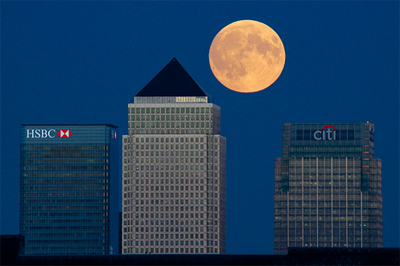
London photographer Ian Wylie captures the “supermoon” rising over Canary Wharf in London’s east on Sunday, ahead of the lunar eclipse in the early hours of Monday. As seen from London Bridge at 6:54pm – 20 minutes after moonrise and six minutes after sunset. A supermoon occurs when the moon reaches the closest part of its orbit to Earth and hence appears larger than normal. This week’s supermoon coincided with a lunar eclipse – in which the moon passes behind the Earth through its shadow (also known as an umbra) – which later made the moon appear red (a lunar eclipse is also known as a “blood moon”). Last seen in 1982, the phenomena will apparently not be visible again until 2033. PICTURE: © Ian Wylie/Flickr
 Exploring London