This Week in London – Marie Antoinette; ‘Theatre Picasso’, ‘Exploring Space’ at the Science Museum; and Talk Like A Pirate Day…

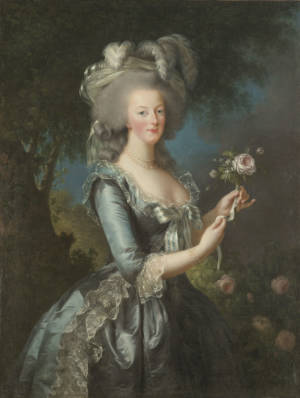
Portrait de Marie-Antoinette à la rose, Élisabeth-Louise Vigée Le Brun © Château de Versailles, Dist. Grand Palais RMN / Christophe Fouin.

The UK’s first exhibition to focus on the French Queen, Marie Antionette, opens at the V&A on Saturday. Marie Antoinette Style explores the dress and interiors adopted by the Queen, an early modern “celebrity”, during the final decades of the 18th century. It features some 250 objects including loans from Versailles which have never before been seen outside of France. There are personal items worn by the Queen including fragments of court dress, her silk slippers and jewels from her private collection as well as items from the Queen’s dinner service at the Petit Trianon, accessories and intimate items from her toilette case and even recreated scents from the court and a perfume which was favoured by the Queen. There also contemporary couture pieces by designers such as Moschino, Dior, Chanel, Erdem, Vivienne Westwood and Valentino and costumes, including shoes, made for screen, such as for Sofia Coppola’s Oscar winning film Marie Antoinette. The exhibition can be seen in Galleries 38 and 39 until 22nd March. Admission charge applies. For more, see vam.ac.uk/exhibitions/marie-antoinette.
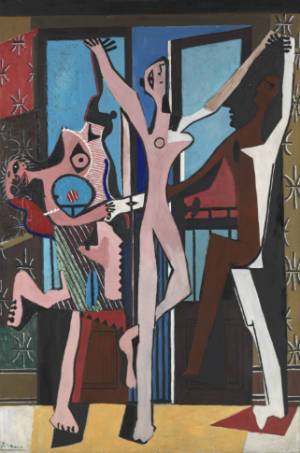
Pablo Picasso, The Three Dancers (1925) Tate. © Succession Picasso/DACS, London 2025.

Around 50 works by famed artist Pablo Picasso have been brought together for a new exhibition at the Tate Modern to mark the centenary of the artist’s work The Three Dancers (1925). Staged by contemporary artist Wu Tsang and write and curator Enrique Fuenteblanca, Theatre Picasso explores aspects of performance in his works and features the Tate’s entire collection of Picassos which, alongside The Three Dancers, also includes Weeping Woman (1937) and Nude Woman in a Red Armchair (1932). There are also loans from key museums in France as well as prints, drawings, sculptures, textile works and collages. These include the wool and silk tapestry Minotaur (1935) which is being displayed in the UK for the first time. Accompanying the works is Henri-George Clouzot’s 1959 film The Mystery of􏰱Picasso. Admission charge applies. Runs until 12th April. For more, see

A new free gallery revealing the stories behind space exploration opens at the Science Museum in South Kensington on Saturday. The gallery – Exploring Space – showcases iconic items from the history of space exploration including a chunk of Moon rock nicknamed ‘Great Scott’ which was collected in 1971, the Soyuz TMA-19M descent module that carried astronaut Tim Peake, and the Sokol KV-2 rescue suit worn by Helen Sharman in 1991. There are also new technologies from the space sector including prototype electric propulsion technology from Magdrive and the ‘rolly-polly’ LEV-2 Moon rover, the result of the first collaboration between a space agency (JAXA) and a toy company (Takara Tomy). For more, see www.sciencemuseum.org.uk/see-and-do/space.
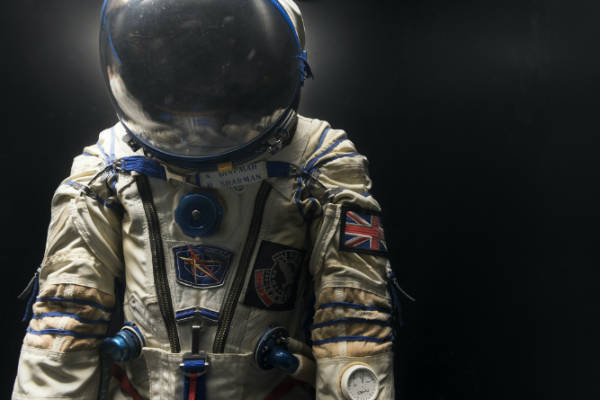
British astronaut, Helen Sharman’s Sokol spacesuit made by Zvezda. Sharman wore this rescue suit during the space flight on board the SOYUZ-TM-12 and MIR spacecraft in May 1991. Space suit model number KV-2 No. 167.

“Ahoy me hearties!” It’s International Talk Like A Pirate Day on Friday and the National Maritime Museum in Greenwich is celebrating from Friday across the weekend with talks about everything from Barbary corsairs to sea shanties, character actors and two-for-one discounts on tickets to the Pirates exhibition. Visitors over the weekend who dress like a pirate will be in the chance to win prizes including Cutty Sark rig climb tickets, annual passes to the Old Royal Naval College, and a family tour of The Golden Hinde. And to brush-up on your pirate lingo, “Abbey-Lubber” means a lazy sailor avoiding work, and ‘Jack Ketch’ a hangman or executioner. For more, see rmg.co.uk/whats-on/national-maritime-museum/international-talk-pirate-day.

Send all items to exploringlondon@gmail.com.
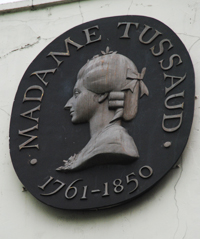
Famous Londoners – Madame Tussaud…

Famed around the world for her London-based wax museum (and the chain of waxworks which now bears her name), French-born Madame Tussaud is a towering figure of the early 19th century.

Born Anna Maria Grosholtz in Strasbourg on 1st December, 1761, Marie Tussaud’s association with waxworks came early when, her father Joseph having apparently died from wounds sustained in the Seven Years War just before her birth, she accompanied her mother Anna Maria Walder to Berne in Switzerland where her mother took up a position as a housekeeper for a physician and anatomical wax sculptor and portraitist Dr Philippe Curtius.

Madame-TussaudIn 1765, Dr Curtius moved to pre-Revolutionary Paris where he was soon to open a couple of establishments – at the Palais-Royal and the Boulevard du Temple (later consolidated at the latter site) – displaying his works in wax. Marie, whom Dr Curtius brought to Paris with her mother in 1768, started working with him on wax models and in 1777, at the age of just 16, produced her first wax figure, that of philosopher Voltaire. Other early works of Madame Tussaud’s depicted Rousseau and Benjamin Franklin.

The story goes that such was the renown of Tussaud and her “uncle” Dr Curtius, that their social circle came to include members of the Royal Family. Tussaud is widely believed to have been an art tutor to King Louis XVI’s sister Elizabeth and may have even taken up residence at Versailles.

Tussaud recounts that she was arrested during the French Revolution – the story goes that she was imprisoned and eventually released thanks to the intervention of family friend and revolutionary Jean-Marie Collot d’Herbois but whether this is true remains a matter of debate.

Tussaud claims she was then forced make death masks of those who ended their life on the scaffold including Louis XVI, Marie Antoinette, Marat and Robespierre. When Curtius died in 1794, she inherited his wax works and the following year married an engineer Francois Tussaud with whom she had two sons, Joseph and Francois (later known as Francis).

In 1802, Madame Tussaud accepted an invitation to go to London to exhibit her work at the Lyceum Theatre but thanks to the outbreak of the Napoleonic Wars, she and her four-year-old son Joseph were unable to return to France. Separated from her husband, she subsequently spent the next three decades travelling with her exhibition – which included relics from the Revolution and, like those of Curtius, was being constantly updated to reflect current affairs – around Britain and Ireland.

Her son Francois joined her in 1822 and Tussaud continued travelling until 1835 when she first established a permanent exhibition in Baker Street, London. Known as the Baker Street Bazaar, it apparently contained more than 400 wax figures. In 1846, Punch Magazine is credited with having invented the term ‘Chamber of Horrors’ for the room where the relics of the French Revolution were displayed.

Tussaud wrote her memoirs in 1838, and, in 1842, completed a wax model of herself. She died in her sleep on 16th April, 1850, in London. Her son Francois became chief artist for the exhibition after her retirement – he was succeeded by his son and then grandson. The exhibition moved to its current site in Marylebone Road in 1884.

Now owned by the Merlin Entertainments Group, Madame Tussauds has branches in cities in some 10 countries as well as its London base. Many of her original models still exist and are on display in the London museum along with the exhibition’s oldest attraction – known as ‘Sleeping Beauty’, it dates from 1863 – a breathing likeness of Louis XV’s sleeping mistress Madame du Barry.

For more on Madame Tussauds today, see www.madametussauds.com.

For more on the life of Madame Tussaud, see Kate Berridge’s book, Waxing Mythical: The Life and Legend of Madame Tussaud.