This Week in London – Restored Roman kiln to be unveiled; and, design for new Memorial to Victims of Transatlantic Slavery revealed…

The most complete Roman pottery kiln found in Greater London is going on public display in Highgate Wood in what is the first public showing since its discovery in 1968. The kiln has been restored thanks to a £243,550 National Lottery Heritage Fund grant and will be unveiled at 11am on Sunday as part of the annual Highgate Wood Community Heritage Day. The day, which runs until 4pm, will see the firing of a replica kiln and there will also be guided walks, a children’s Roman-themed woodland adventure workshop, arts, crafts, and other activities. The kiln will be on show in the Information Hut. For more, see www.cityoflondon.gov.uk/events/highgate-wood-community-heritage-day.
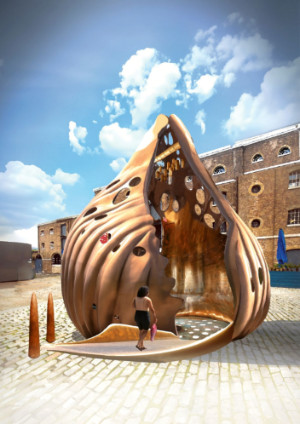
Concept image of Khaled Brooks’ ‘The Wake’. Courtesy of Mayor of London

Khaleb Brooks’ sculpture The Wake has been selected as the new Memorial to Victims of Transatlantic Slavery to be located at West India Quay. The design, which features a seven metre tall cowrie shell in recognition of the shell’s role as symbol of slavery. A number of smaller shells will also be installed at other locations in London that have connections to the trade of enslaved people. Khaleb’s work was selected from a shortlist of six proposals by an artistic advisory panel of experts following a public consultation period. The memorial will be unveiled in 2026.

Send all items to exploringlondon@gmail.com.

This Week in London – Memorial to Victims of Transatlantic Slavery designs; and, images of the Royal Parks in spring…

Members of the public are invited to view a shortlist of ideas for the proposed Memorial to Victims of Transatlantic Slavery to be located in West India Quay. Mayor of London Sadiq Khan pledged £500,000 to fund the memorial which will be the first of its kind in the UK. Short-listed works include Alberta Whittle”s Echoes from beneath the deep and in between the canes (a Caribbean-style pavilion alongside a sugarcane field and cowrie shells which are synonymous with the trade in enslaved people); Zak Ové’s Nana Buluku (an 11 metre tall and richly decorated representation of an African Queen, Nana Buluku); Grada Kilomba’s Archaeology of Contemplation (this uses the image of a boat as a metaphor of remembrance, remembering those who were transported as cargo by the British and other nations); Helen Cammock’s Ripple (a large-scale, circular stone structure with six discoverable engraved texts in West African wood); Hew Locke’s Memorial for the victims of the transatlantic slave trade (bronze sculptures of boys and girls carrying buildings which were built in London from money earned by the trade in enslaved people); and, Khaleb Brooks – The Wake (a large scale cowrie shell which represents the perseverance, prosperity and beauty rooted in African and African diasporic heritage). An online exhibition of the shortlisted work is available to view on https://www.london.gov.uk/transatlantic-slavery-memorial and the public is invited to give their feedback.    

Winning entries from the Royal Parks’ photographic competition Creating Spaces for Life can be seen online. Take a gander, which features four goslings under the protective wing of a parent, won the competition which invited visitors to photograph the new life emerging in the eight Royal Parks during the springtime. Other entries among the winners included a swan taking flight, a silhouetted coot appearing to walk on water and a common blue butterfly pictured in the spring sunshine. To see the winning images, head to www.royalparks.org.uk/photography-competition-creating-spaces-for-life.

Send all items to exploringlondon@gmail.com.