Famous Londoners – Charles Frederick Field…

The real person behind writer Charles Dickens’ ‘Inspector Bucket’, Charles Frederick Field was a police officer with the Metropolitan Police who rose to the rank of inspector before, following retirement, becoming a private detective.
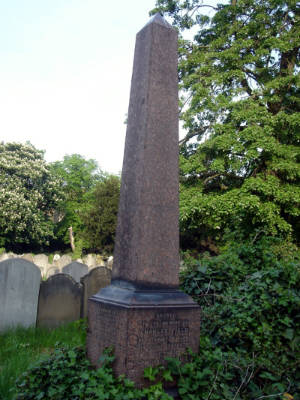
Field’s funerary monument in Brompton Cemetery. PICTURE: Edwardx (licensed under CC BY-SA 1.0)

Field, the son of a Chelsea pub proprietor, had apparently wanted to be an actor but due to his straitened economic situation had instead joined the Metropolitan Police at its founding in 1829.

Field served in several divisions across London, eventually rising to the rank of inspector. He joined the Detective Branch, which had only been formed in 1842, in 1846.

It was while with the Detective Branch that he encountered Dickens and they formed what’s described as a lasting friendship. From 1850 onwards Dickens wrote as series of articles about the world of the Detective Branch and the work of Field (sometimes using a pseudonym) including his essay ‘On Duty With Inspector Field’.

Dickens is also believed to have used Field as the model for Inspector Bucket in Bleak House, first published as a serial in 1852 and 1853.

Field, who was noted as a bit of a raconteur and for his love of disguises even when not really required (perhaps explained by theatrical bent), retired from the Met in 1852 and set up his own enquiry office. He apparently caused controversy after his retirement by using his rank in his private work which somewhat soured his relationship with the force.

Field, who died in 1874 and is buried in Brompton Cemetery, has since been the subject of several works of fiction.
London Explained – Police in London…

London has several police forces so let’s explain.

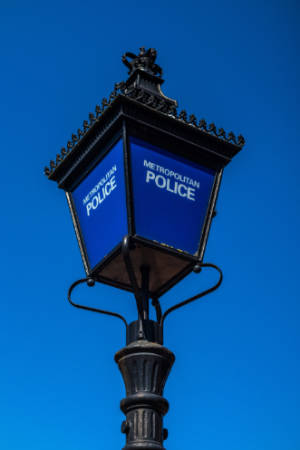
PICTURE: Tadas Petrokas/Unsplash

The largest police force in London (and the UK as a whole) is the Metropolitan Police. They are responsible for policing the Greater London area and its 8.6 million residents (with some exceptions – more on that in a moment).

The Met, currently led by Commissioner Sir Mark Rowley, was founded by Sir Robert Peel in 1829 and across the almost 200 years since has grown to a service of more than 33,000 police officers, 11,000 staff, almost 1500 police community support officers and more than 1,100 special officers.

They are headquartered at New Scotland Yard on Victoria Embankment in Westminster.

The Met’s jurisdiction comprises some 620 square miles – the 32 boroughs of Greater London.

An exception within Greater London is within the Square Mile of the City of London, home to some 8,000 residents but host to an additional 500,000 workers, tourists and others each day. This falls under the jurisdiction of the much smaller City of London Police.

The London City Police officially formed in 1832 but became the City of London Police with the passing of the City of London Police Act 1839.

Led by Commissioner Peter O’Doherty, the 17th City of London police commissioner, the service consists of more than 1,000 officers and staff and as well as providing policing services locally, the City of London Police also leads policing efforts nationally on fraud and cyber-crime.

They are currently temporarily headquartered at Guildhall.

A number of other police services also operate in London. They include the British Transport Police, responsible for policing the railway network including track and stations as well as the London Underground and Docklands Light Railway.

The Ministry of Defence Police, meanwhile, are responsible for policing Ministry of Defence property in London including the ministry itself in Whitehall while the tiny Kew Constabulary is responsible for policing Kew Gardens (the former Royal Parks Constabulary merged with the Met in 2004 – the parks are now policed through a specialist unit in the Met).