Not one but five trees located in Kew Gardens, the “Old Lions” are five of the oldest trees in the garden.
Kew’s first curator, John Smith, is credited with first using the term to describe the trees.
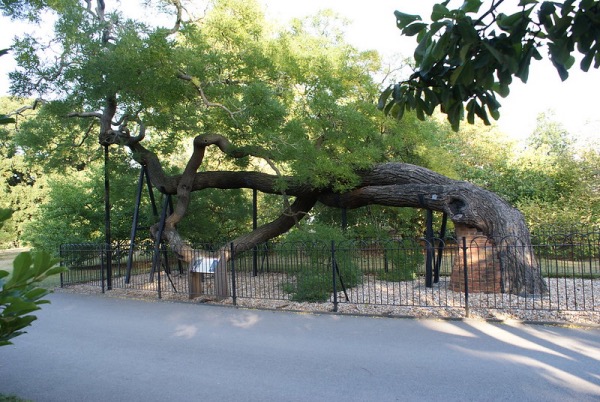
They include a Japanese pagoda tree (Styphnolobium japonicum) which was planted in 1762 after having been brought back to London from China by London nurseryman James Gorden.
There’s also the oldest of the maidenhair trees (Ginkgo biloba) in the garden, one of several grown by Gorden in 1758. Originally planted in the Duke of Argyll’s Garden at Whitton, it was transferred to Kew in 1762 following his death by his nephew Lord Bute, and is thought to be one of the first of its species to be grown in the country.
The Oriental plane (Platanus orientalis), located next to the Orangery, also apparently come from Whitton, brought to Kew in 1762, while the Caucasian elm (Zelkova carpinifolia) was planted in 1760 and is the only survivor of a group of three, the other two lost in storms in 1987 and 1990.
The last of the five trees is a Black locust (Robinia pseudoacacia) tree, also known as the false acacia tree. It was planted in the gardens in 1762 and was also transplanted from the Duke of Argyll’s Garden at Whitton.
WHERE: Kew Gardens (nearest Tube station is Kew Gardens); WHEN: 10am to 7pm (see website for seasonal changes); COST: From £20 for adults; from £18 concessions; from £9 young person (16 to 29 years); from £5 for children (4 to 15 years); see website for ticket categories WEBSITE: www.kew.org.
 Exploring London