What’s in a name?…Pudding Lane…

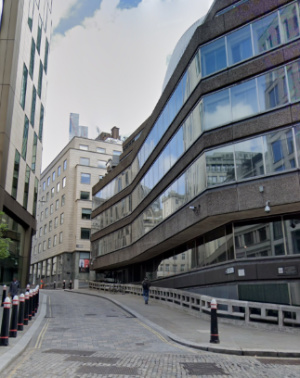
Looking northward up Pudding Lane (to the right of the picture is a somewhat controversial plaque marking the site of the bakery). PICTURE: Google Maps

Famous for being the location of the bakery where the Great Fire of London started, Pudding Lane runs between Eastcheap and Lower Thames Street in the City of London.

While it has been claimed in the past that the name did come from desserts or puddings being sold here, it’s now generally believed that the name relates to the medieval word ‘pudding’ which meant offal – the guts or entrails of animals.

It was apparently down this lane that the butchers of the Eastcheap market (London’s primary meat market in medieval times, located at the northern end of the lane), having slaughtered an animal for consumption, would have the ‘puddings’ carried down the lane so they could be disposed of on waste barges (earlier on, the butchers were apparently permitted to toss the offal into the Thames when tide conditions were right).

The lane, which 16th century historian John Stow said was also known as Rother Lane (due to a Thames wharf called Rothersgate at its southern end) and Red Rose Lane (after a shop sign in the lane), also has the honour of being one of the world’s first designated one-way streets.
Where’s London’s oldest…one-way street?

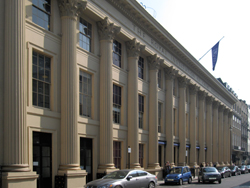
Albemarle Street in Mayfair is generally believed to be the first street in London made into a one-way street.

The decision to make the street one-way apparently stems from the popularity of a series of science-oriented lectures at The Royal Institution of Great Britain given in the early 19th century by Sir Humphry Davy, inventor of the miner’s lamp and the first lecturer appointed at the RI following its inception in 1799.

Such was the crush of carriages in Piccadilly to attend Davy’s lectures that in response, the powers that be at The Royal Institution gave instructions to coach drivers about the direction of travel in the street and paid for constables to enforce their ruling.

The concept of the one-way street, however, does apparently go back much further. The Spectator reports that in 1617, Pudding Lane – the site of the start of the famous Great Fire of London in 1666, was among numerous laneways around Thames Street which were designated as one-way only for carts to ease congestion.

Above: The Royal Institution as it is today, where Friday night lectures caused the introduction of one-way traffic in the street. PICTURE: Gryffindor /CC BY-SA 3.0