This Week in London – Buckingham Palace to open East Wing; ‘Now Play This’ marks 10 years; Vaisakhi at Trafalgar Square; and, the warden’s private apartments opened at Walmer…

The East Wing of Buckingham Palace with the Central Balcony. PICTURE: Mike Marrah/Unsplash

• The East Wing of Buckingham Palace – including the room off which the famous central balcony sits – is being opened to the public for the first time this year as part of the annual summer opening. Tours will take visitors to locations including the Principal Corridor, where paintings by artists such as Thomas Gainsborough, Sir Thomas Lawrence and Franz Xaver Winterhalter are on display, as well as the Yellow Drawing Room, decorated with recently restored Chinese hand-painted wallpaper from the 18th century, where visitors will see two hexagonal, nine-tiered Chinese porcelain pagodas and the Kylin Clock. They’ll also see the Centre Room, which leads on to the balcony, where highlights include a newly restored glass chandelier shaped to resemble a lotus flower, and two Chinese 18th-century imperial silk wall hangingspresented to Queen Victoria by Guangxu, Emperor of China, for her Diamond Jubilee in 1897. A limited number of tours will run daily from 15th July and through August. Tours must be booked in addition to standard entry. Admission charge applies. For more, see https://www.rct.uk/event/the-state-rooms-and-east-wing-highlights-tour-07-2024.

Now Play This, London’s festival of innovative and experimental games marks its 10th anniversary as part of the city-wide London Games Festival from Saturday. The eight day event at Somerset House, this year running under the theme of ‘Liminal: Playing Between Worlds’, features games including Atuel (Matajuegos) which involves shapeshifting into animals within Argentina’s Atuel River Valley ecosystem and Proteus (Ed Key & David Kanaga) in which players explore unknown fantasy worlds as well as daytime events such as GOLF, a build-your-own mini-golf course, and evening events such as the Boring office party, a twist on the classic murder mystery. Admission charges apply. Runs until 14th April. For more, see https://nowplaythis.net.

Trafalgar Square will host celebrations for the Sikh festival of Vaisakhi this Saturday. From noon until 6pm, the celebration of Sikh and Punjabi culture and heritage will be co-hosted by DJ and presenter Tommy Sandhu and entrepreneur, disability specialist and speaker Shani Dhanda. Events include Kirtan performances, demonstrations of Gatka, a Sikh martial art and talks by expert chefs as well as turban tying, film screenings, sports with the Sikh Games, and Sikh artists displaying their work. There’s also a children’s marquee with free activities from Kiddie Sangat and free vegetarian treats and traditional Indian tea will be available over the course of the afternoon. For more, see www.london.gov.uk/vaisakhi.

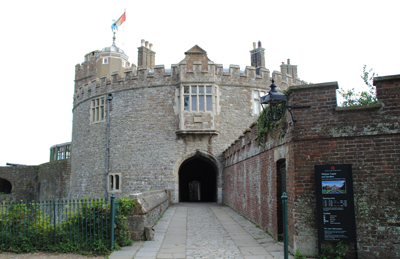
Walmer Castle in Kent. PICTURE: Ben Garratt/Unsplash

Further Afield: The Lord Warden’s private apartment has opened to the public for the first time at Walmer Castle, the seaside retreat of the late Queen Elizabeth, The Queen Mother, in Kent. The private apartment is given to the Lord Warden of the Cinque Ports, a position the Queen Mother held between 1978 and 2002. Visitors are able to tour a selection of rooms in the apartment, including the sitting, dining and master bedroom, which were used by The Queen Mother, Lord Boyce and other 20th century Lord Wardens and their families. Among the private items on show are family photos of the Boyce family and artwork, including a selection of paintings from a private and much-treasured collection belonging to Sir Robert Menzies and which depict places connected with his political career, including his time as Prime Minister of Australia. The post of warden is currently vacant following the death of Lord Boyce in 2022. Some rooms in the castle are currently closed to allow for a major conservation project to take place, however visitors can still see Wellington’s bedroom and the famous Wellington boots. Admission charges apply. For more, see https://www.english-heritage.org.uk/walmer.

Send all items to exploringlondon@gmail.com.
Where’s London’s oldest…florist?

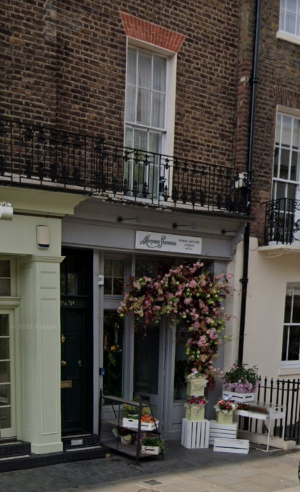
Moyses Stevens premises at 53 Elizabeth Street in Belgravia. PICTURE: Google Maps

While flowers have been sold in London for centuries, the oldest surviving family florist is said to be Moyses Stevens.

The original shop was opened by Miss Moyses (who became Mrs Stevens) in Victoria Street, Belgravia. It was extended in the 1930s and a branch in Berkeley Square, Mayfair, followed in 1936.

The firm, a regular at the Chelsea Flower Show, held the royal warrant for Queen Elizabeth The Queen Mother and that for then-Prince Charles (we’re not clear on what this means now he’s King).

Known for their wedding arrangements, Moyses Stevens now operates out of locations across the city including one in the Selfridges Food Hall and, since 2019, a flower school in the former Battersea Power Station.

For more, see www.moysesflowers.co.uk

Daytripper – Walmer Castle…

Walmer-CastleA coastal artillery fort built on the orders of King Henry VIII in light of a threatened Catholic invasion, Walmer Castle on the Kentish coast is officially the residence of the Lord Warden of the Cinque Ports.

What was a rather functional artillery platform has been embellished significantly in the years since it became the official residence of the Lord Warden in 1708, creating a comfortable home for holders of the title who have included Queen Elizabeth, the Queen Mother, the Duke of Wellington and bookseller WH Smith.

The ‘castle’, located about a two hour, 10 minute train journey from London (and then a mile walk from Walmer Station), was constructed in 1539 as one of a string of forts – others include nearby Deal Castle and the long gone Sandown Castle – designed to protect the watery stretch between Goodwin Sands and the coast known as the Downs.

Its low circular design, featuring a central ‘keep’ reached by a drawbridge and surrounded by a curtain wall with four projecting, semi-circular bastions, was influenced by the need to defend against heavy artillery and provide a platform for guns.

Initially garrisoned with ten gunners, four soldiers and two porters under the command of a captain and a lieutenant, Walmer saw little action during Tudor times but was the site of a siege during the Civil War.

Obsolete by the end of the 17th century, it was the Duke of Dorset who was the first Lord Warden (an office created in the thirteenth century to oversee the affairs of the Cinque Ports Confederation, a grouping of five ports including Hastings, Romney, Hythe, Dover and Sandwich) to use Walmer Castle as a residence, embarking on a renovation and extension of the existing structure.

Further alterations was carried out by successive Lords Warden, the most extensive being those made by  the 2nd Earl Granville, Lord Warden between 1865 and 1891, who commissioned architect George Devey to oversee the additions.

The gardens, meanwhile, which are well worth visiting in their own right, were also Granville’s work as well as that of an earlier Lord Warden, Prime Minister William Pitt the Younger, who was Lord Warden between 1792 and 1806.

The Duke of Wellington (Lord Warden between 1829 and 1852) reputedly enjoyed his time staying at the castle – he was even visited by the young Princess Victoria here in 1835 (she later stayed for a month with her family when Queen) and died here on 14th September 1852. His room can still be seen inside – the contents include the armchair he was sitting in when he died (the rooms also include a small museum dedicated to Wellington and another dedicated to William Pitt).

Not all Lords Warden enjoyed the property. Sir Winston Churchill, Lord Warden  between 1941 and 1965, never stayed here but Sir Robert Menzies, Prime Minister of Australia and Lord Warden between 1966 and 1978, did and the Queen Mother, Lord Warden between 1978 and 2002, was a regular visitor.

The castle was opened to the public soon after responsibility for it was transferred from the War Office to the Ministry of Works in 1905. It is now under the care of English Heritage and the rooms inside are decorated as they were in the 1930s (it was WH Smith who ensured historic furnishings at Walmer could not be removed). There are even a couple of holiday cottages on site which can now be rented.

WHERE: Walmer Castle, Kingsdown Road, Deal, Kent; WHEN: 10am to 6pm daily (until 6th July); COST: Adults £7.90/Children (5-15 years) £4.70/Concession £7.10; WEBSITE: www.english-heritage.org.uk/daysout/properties/walmer-castle-and-gardens/.

10 (more) curious London memorials…4. ‘People of London’ Memorial…

People-of-London

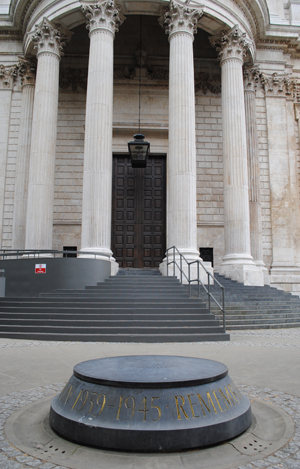
Amid all the grand war-related memorials of London, this rather humble memorial sitting outside the north transept of St Paul’s Cathedral in St Paul’s Churchyard can easily be overlooked. 

Known as the Memorial to the Londoners killed in World War II Bombardments or simply as the ‘People of London’ memorial as it’s called on the sculptor’s website, it commemorates the 30,000 Londoners who were killed during the Blitz  (not to be confused with the National Firefighters’ Memorial, known informally to many as the Blitz Memorial, which sits opposite the cathedral’s south transept and commemorates firefighters who died during the Blitz).

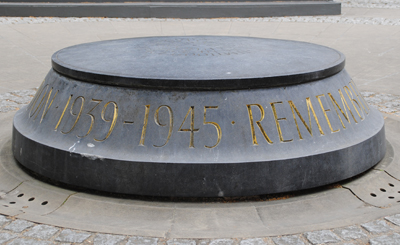
People-of-London---smallThe round memorial was carved from a three tonne block of Irish limestone and is set into paving (it was initially very shiny).

The gilded inscription which runs around the outside reads “Remember before God the people of London 1939-1945” while on top, written in a spiral, is an inscription written by Sir Edward Marsh – “In war resolution, in defeat defiance, in victory magnanimity, in peace goodwill”, the text of which was used by Sir Winston Churchill in the frontispiece to his history, The Second World War.

Unveiled by the Queen Mother on 11th May, 1999, the memorial is the work of Richard Kindersley, whose other memorials include the Commonwealth Memorial on Constitution Hill.

Kindersley writes on his website, that the “position of the memorial adjacent to St Paul’s is most appropriate, as most people will remember the dramatic photograph of the Cathedral dome of the taken during a devastating attack in 1941.”

It was paid for by public funds raised following an appeal in the Evening Standard newspaper, launched in connection with the 50th anniversary of VE Day.