This Week in London – The Crown Jewels (redisplayed); The Troubles at IWM; and, Tate Britain, rehung…

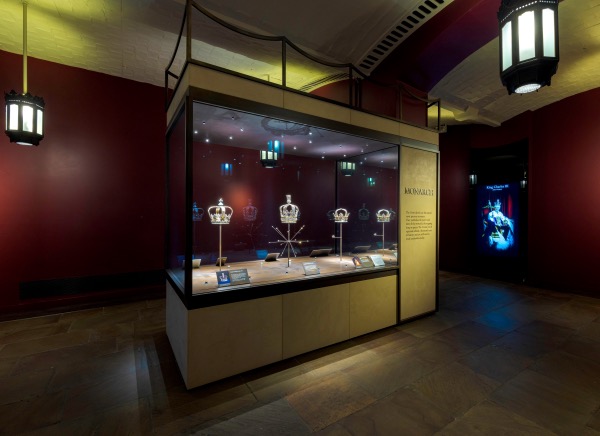
Part of the new Jewel House display of the Crown Jewels at The Tower of London. PICTURE: ©Historic Royal Palaces

A new display of the Crown Jewels opens in the Tower of London’s Jewel House tomorrow – the first major change to the display in more than a decade. Opening just weeks after the coronation regalia was used in the coronation of King Charles III and Queen Camilla at Westminster Abbey, the re-presentation of the jewels comes about thanks to a partnership between Historic Royal Palaces and royal jewellers Garrard and is the culmination of a four year project aimed at delving deeper into the history of the collection and coronations. The display, which features images from the recent coronation, starts with a celebration of the timelessness of monarchy featuring the State Crown frames worn by King George I, King George IV and Queen Victoria. It explains how historic jewels including the Black Prince’s Ruby have passed from crown to crown and explores the origins of the current jewels, starting with the destruction of the medieval coronation regalia in 1649. The story of gems including the Koh-i-Noor and Cullinan Diamond will also be explored while at the heart of the display is a room dedicated to the spectacle of the Coronation Procession. It ends with the Treasury containing more than 100 objects including the St Edward’s Crown of 1661, the Sovereign’s Sceptre with Cross and the Sovereign’s Orb. As an added spectacle, for nine nights in November, the Tower will also host a touring light and sound show, Crown and Coronation, which, created in partnership with Luxmuralis Artist Collaboration, will feature imagery and footage of monarchs and coronations past, along with images of the regalia. Images will be projected on buildings of the Inner Ward including the White Tower. The light and sound show, which will run at the Tower from 17th to 25th November, will tour the UK in 2024. Entry is included in general admission. For more, see www.hrp.org.uk/tower-of-london/whats-on/the-crown-jewels/.
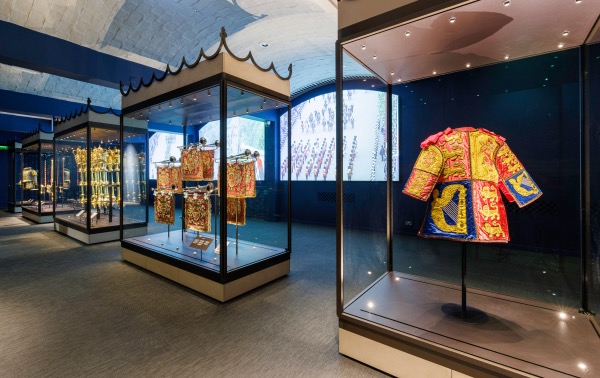
More of the new display in the Jewel House of the Crown Jewels at The Tower of London. PICTURE: ©Historic Royal Palaces

The almost 30-year conflict in Northern Ireland known as The Troubles is the subject of a new exhibition at the Imperial War Museum. Northern Ireland: Living with the Troubles, which opens tomorrow, features familiar objects including rubber bullets, propaganda posters and a Good Friday Agreement booklet as well as rarer items such as a screen-printed handkerchief made by UVF paramilitaries in the Long Kesh internment camp. There will also be the chance to hear first-hand testimonies including from republican and loyalist paramilitaries as well as British soldiers, local police and ordinary civilians, and the opportunity to see archival photography depicting hunger strike riots, army checkpoints and bomb wreckage. Admission is free. Runs until 7th January. For more, see www.iwm.org.uk/visits/iwm-london.
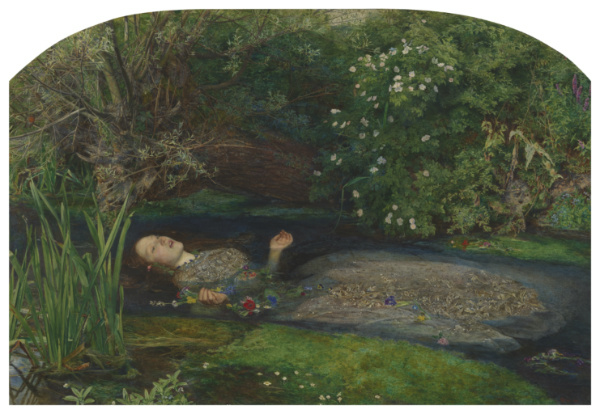
Sir John Everett Millais, Ophelia, 1851-2, Oil paint on canvas; Support: 762 × 1118 mm, frame: 1105 × 1458 × 145 mm
PICTURE: Tate (Seraphina Neville)

Tate Britain has completed a complete rehang of its free collection displays – the first for 10 years. Visitors can see more than 800 works by 350 artists including iconic treasures such as John Everett Millais’ Ophelia (pictured above), William Hogarth’s The Painter and his Pug, David Hockney’s A Bigger Splash, Barbara Hepworth’s Pelago and Chris Ofili’s No Woman, No Cry. The collection also includes more than 100 works by JMW Turner, rooms devoted to such luminaries as William Blake, John Constable, the Pre-Raphaelites and Henry Moore, and a series of changing solo displays exploring other ground-breaking artists such as Annie Swynnerton, Richard Hamilton, Aubrey Williams and Zineb Sedira. Some 70 of the works in the collection – ranging from Tudor portraits to contemporary installations – which have been acquired in the last five years alone. For more, see www.tate.org.uk.

Send all items to exploringlondon@gmail.com.

Treasures of London – The Crown Jewels

No series on the treasures of London would be complete without a mention of the Crown Jewels, housed – except when being used – under tight security in the same place they’ve been since the early 1300s – the Tower of London.

The jewels, which are described as a ‘working collection’, include the coronation regalia and feature some 23,578 gems  – the Imperial State Crown alone boasts 2,868 diamonds, 273 pearls, 17 sapphires, 11 emeralds and five rubies.

The regalia itself is made up of the crowns of the sovereigns, consorts and Princes of Wales as well as sceptres, orbs, rings, swords, spurs, bracelets, robes, and the oldest piece, a 12th century anointing spoon.

It and three steel coronation swords are the only pieces to survive the destruction of all the pre-Civil War regalia in 1649-50, carried out at the behest of Oliver Cromwell following the execution of King Charles I (many of the earlier crown jewels, dating from the Anglo-Saxon period, had already been replaced in the early 13th century after items were lost while being taken across The Wash during the reign of King John in 1216).

Following Cromwell’s destruction, new regalia was made on the orders of King Charles II. Modelled on that of his father, it was used in the king’s coronation on 23rd April, 1661, and cost more than £12,000.

Today, St Edward’s Crown – with which the sovereign is crowned by the Archbishop of Canterbury – is the principal piece of the regalia. Other items include the Sovereign’s Sceptre, topped with 530 carat First Star of Africa – the largest flawless cut diamond in the world, Queen Victoria’s small diamond crown, and the Imperial Crown of India. There is also a crown made for Queen Elizabeth, the Queen Mother, for her 1937 coronation which features the famous Koh-i-Nur (‘Mountain of Light’) diamond.

Until 1303, the Crown Jewels had been housed at Westminster Abbey. Following a successful robbery that year, however (after which most items were recovered), they were moved to the Tower.

The most famous attempt to steal the Crown Jewels was made by an Irishman, Colonel Thomas Blood, in 1671. He and his gang had arranged to see the jewels (this could be done for a fee) but when they arrived, used a mallet to knock out the jewel keeper before stabbing him.

Colonel Blood had hidden King Charles II’s crown under his cloak, squashing its arches of in the process, while his companion Robert Perot had stuck the coronation orb down his breeches and Blood’s son was in the process of sawing the sceptre in half when the keeper’s son returned unexpectedly and raised the alarm.

Arrested, Blood got off rather lightly – King Charles II decided, apparently for some unknown reason, to pardon him. Security around the jewels, however, was tightened – iron bars were used instead of wooden ones and people were thenceforth forbidden from handling the jewels.

The Crown Jewels are now housed in the Jewel House at the Tower, built in 1967 in the west wing of the Waterloo Barracks, and guarded by the Yeomen Warders.

WHERE: Tower of London (nearest tube station Tower Hill); WHEN: 9am to 4.30pm, Tuesday to Saturday, 10am to 4.30pm Sunday to Monday (until 28th February); COST: £18.70 adults; £10.45 children under 15; £15.95 concessions; £51.70 for a family (prices, which include a voluntary donation, are valid until 28th February); WEBSITE: www.hrp.org.uk/toweroflondon/. For more on the Crown Jewels, see www.royal.gov.uk/MonarchUK/Symbols/TheCrownJewels.aspx or the Royal Collection website, http://bit.ly/i9FM3