Archbishop’s House, located next to the Roman Catholic Cathedral of Westminster, is the official residence of the Catholic Archbishop of Westminster.
Westminster
LondonLife – Look up!…
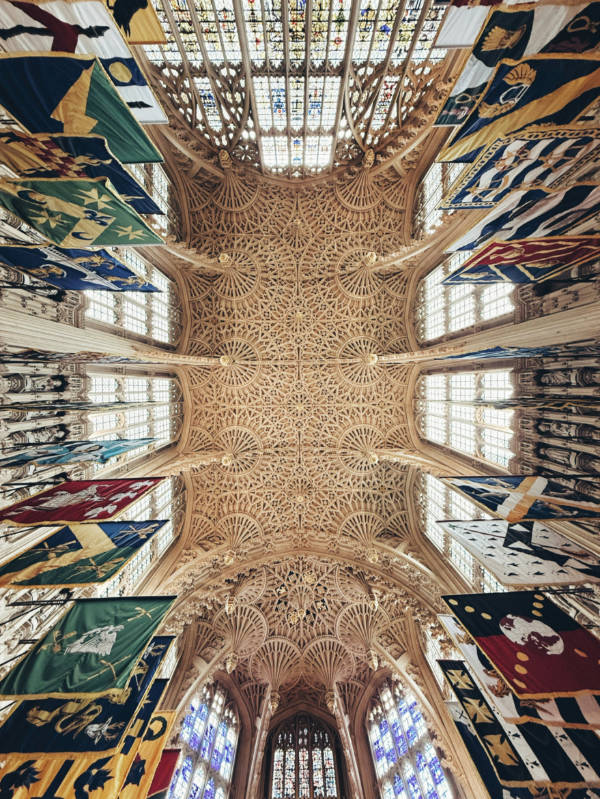
The magnificent carved fan vaulted roof of the Henry VII Lady Chapel at the eastern end of Westminster Abbey. The chapel, which 16th century historian John Leland called “the wonder of the world”, was consecrated in 1516.
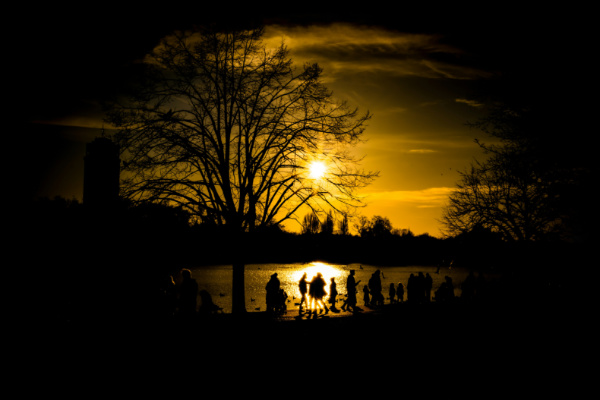
LondonLife – Sunset, Hyde Park…
10 towers with a history in London – 6. Westminster Cathedral campanile…
A well-known landmark in Westminster, the distinctive striped brick and stone campanile of Westminster Cathedral stands 284 feet or 64 metres high.
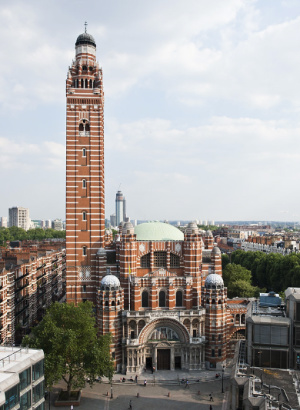
Building of a Roman Catholic cathedral in Westminster – what would be the largest in England and Wales – was the vision of Cardinal Herbert Vaughan. Construction started in 1895 and was complete eight years later. The campanile was the final part of the building’s structure to be completed.
Conscious that the Gothic Westminster Abbey only a short distance away, architect John Francis Bentley instead designed the cathedral in a neo-Byzantine style and the plans originally included two campanili or bell towers which may have been influenced by those in Venice (it was Cardinal Vaughn who famously said one campanile would be enough for him resulting in just one being built).
The 30 foot square dome-topped tower, like the rest of the building, was constructed of stripes of red brick and Portland stone which reflected existing residential buildings nearby.
Formally known as St Edward’s Tower, it contains the 55cwt St Edward’s Bell (named after St Edward the Confessor) which was a gift of Gwendoline, the Duchess of Norfolk, in 1910. It was cast at the Whitechapel Foundry and bears the inscription, “While the sound of this bell travels through the clouds, may the bands of angels pray for those assembled in thy church. St Edward, pray for England.”
Carved stone eagles surround the apex of the tower – a reference to St John the Evangelist (apparently patron saint of the architect) and the cross on top of the cupola is said to contain a fragment of the True Cross discovered by the Empress Helena in 326 AD.
The campanile famously appears at the end of Alfred Hitchcock’s 1940 thriller, Foreign Correspondent, in a scene in which the bad guy is thrown from the top.
The campanile, which has a lift to the top, is open to the public. Viewing balconies on all four sides of the tower provide 360 degree views of the surrounding city including over the stunning domes of the cathedral itself.
WHERE: The Campanile, Westminster Cathedral (nearest Tube stations are Victoria and St James’s Park); WHEN: 11am to 3:30pm Fridays, Saturdays and Sundays; COST; £6 adults; £12 families (two adults and up to four children); £3 concessions (aged 60+); WEBSITE: https://westminstercathedral.org.uk/tower-viewing-gallery-reopens/
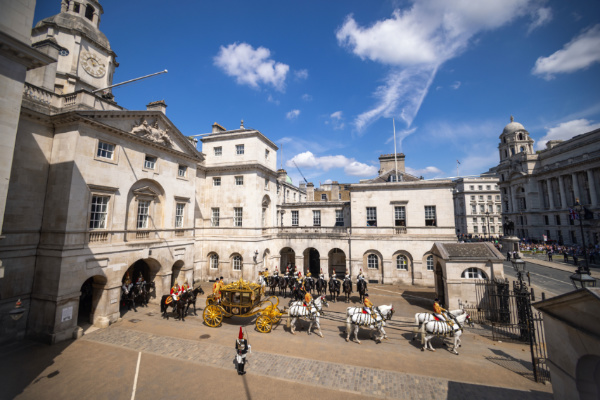
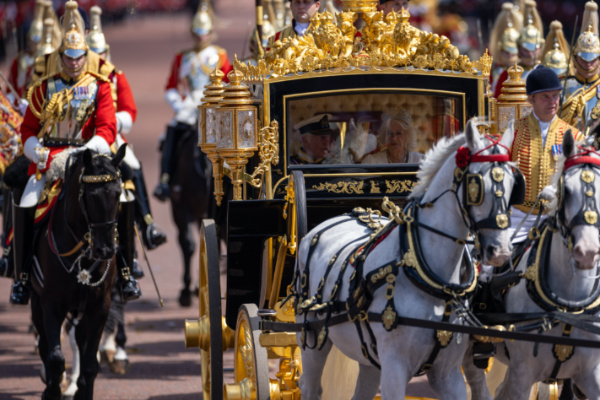
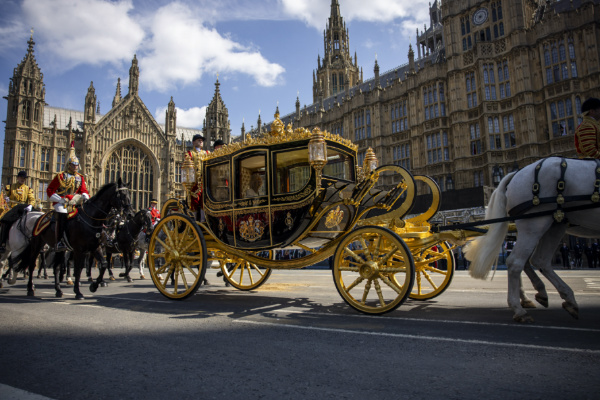
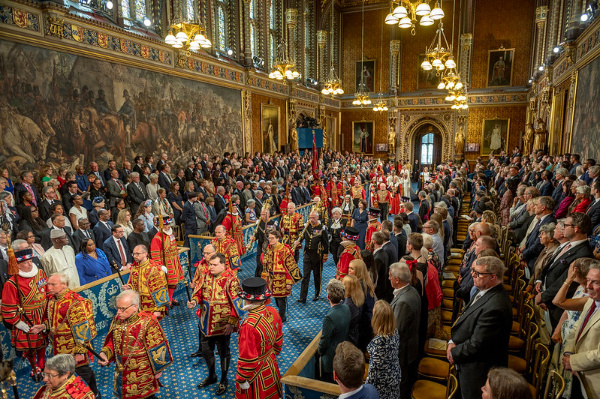
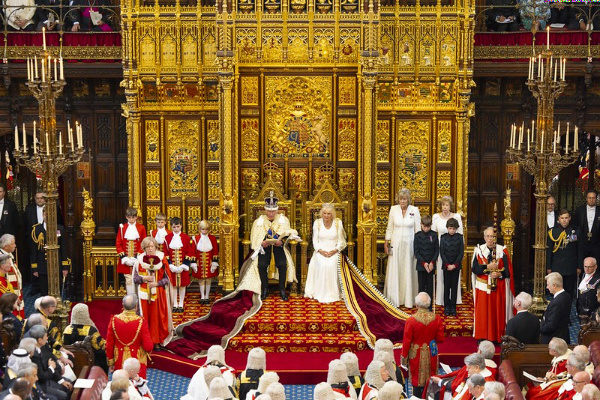
LondonLife – Scenes from the State Opening of Parliament…
Last Wednesday, 17th July, was the State Opening of Parliament, the first since the new Labour government took office. More than 1,100 members of the armed forces were in attendance, accompanied by 200 military horses, as the procession of King Charles III and Queen Camilla made its way to the Houses of Parliament where the King delivered a speech outlining the government’s plans.
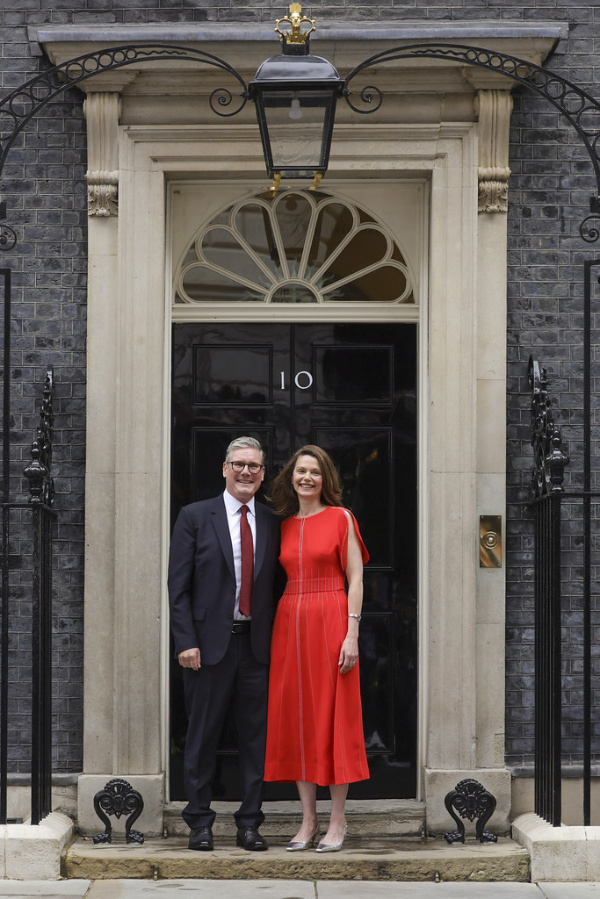
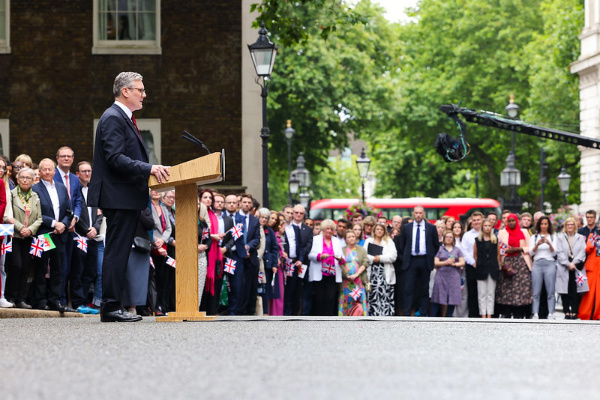
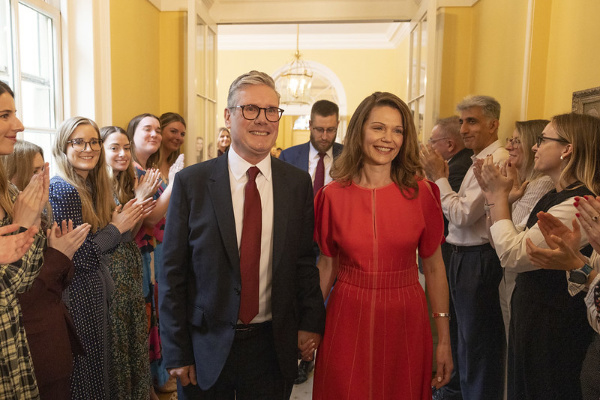
LondonLife – A new PM at Number 10…
LondonLife – Abbey frontage…
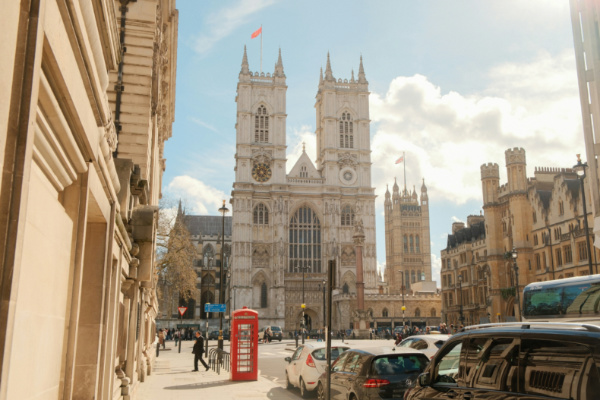
LondonLife – Standing tall…

Looking towards Westminster Cathedral from Cathedral Walk.
LondonLife – Westminster traffic…

Where’s London’s oldest… (continuously cultivated) garden?
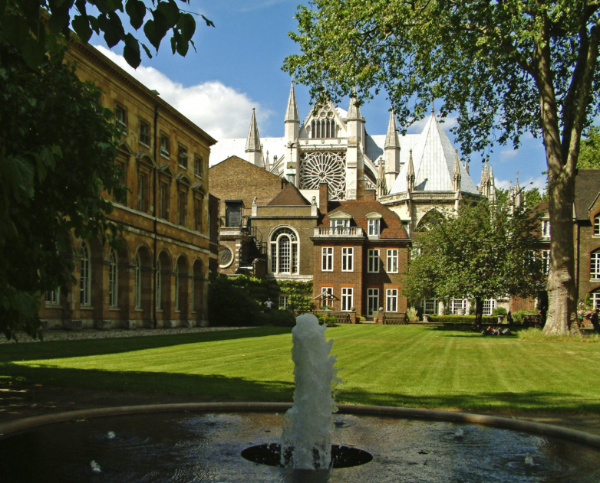
Not to be confused with London’s oldest botanic garden (The Chelsea Physic Garden), the College Garden at Westminster Abbey is believed to be the oldest garden in England under continuous cultivation.
In monastic times, the garden, as well as providing eye-pleasing flower displays, was used to grow vegetables and medicinal herbs for the abbey’s resident monks and it also included an orchard, as well as fishponds and beehives. The first herbarium dates from at least 1306 although the infirmary garden was originally established in the 11th century..
The garden was under the overall supervision of the abbey’s Infirmer – responsible for caring for the sick or infirm – and was tended to by a head gardener and two under-gardeners (all of whom were monks).
The oldest surviving feature of the garden today is a high stone wall which dates from 1376. Today the garden features London plane trees planted in the 1850s and a broad expanse of lawn.
There is also a small rose garden which marks Queen Elizabeth II’s accession to the throne and a herb garden planted to commemorate the lives of the monks and the founding of the Westminster School.
A 1993 bronze sculpture depicting the Crucifixion of Jesus Christ, by Enzo Plazzotta, sits out the south end of the garden. A single jet fountain was added in 2002.
The west side of the garden is bordered by the 18th century dormitory for the Westminster School. Two late Victorian houses, originally used for clergy, stand at the north end.
The garden is accessed from the south-east corner of the abbey cloister.
LondonLife – Wall of windows…

London pub signs…The Red Lion, Westminster…
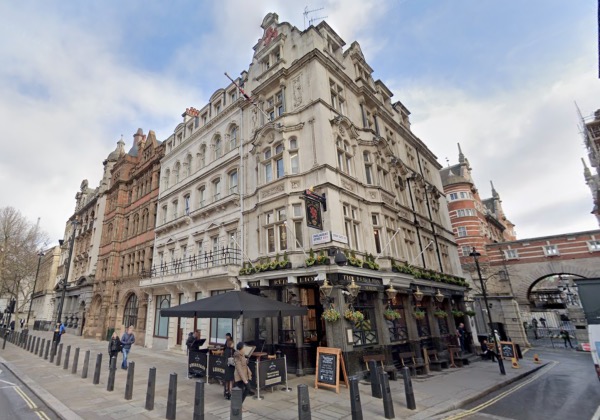
There has been a pub on this storied Whitehall location, located between conveniently for politicians between the Houses of Parliament and Downing Street, since at least the 15th century.
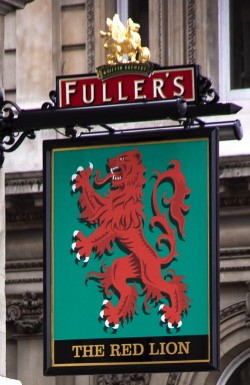
Then named Hopping Hall, a pub is recorded on this site at 48 Parliament Street (on the corner with Derby Gate) as early as 1434. It passed into the hands of the Crown by 1531 and by the early 19th century it had taken on the name of the Red Lion (at the time, it was visited by Charles Dickens as a young man). The current, now Grade II-listed, building was erected on the site in 1890.
The pub’s name – one of the most common in England (there’s several more in London alone) – apparently originated at the ascension of the Scottish King James I to the throne in 1603. The King ordered that all significant buildings display the red heraldic lion of Scotland and that included pubs. Hence the Red Lion.
The four storey pub has been popular among politicians (and journalists interviewing politicians) including Prime Ministers – indeed, it’s claimed to have served every PM up until Edward Heath in the 1970s (as such it’s one of the many pubs in London which features division bells, although the function of these has apparently been replaced by an app).
For more, see www.redlionwestminster.co.uk.
Treasures of London – The Jewel Tower’s vaulted chamber…
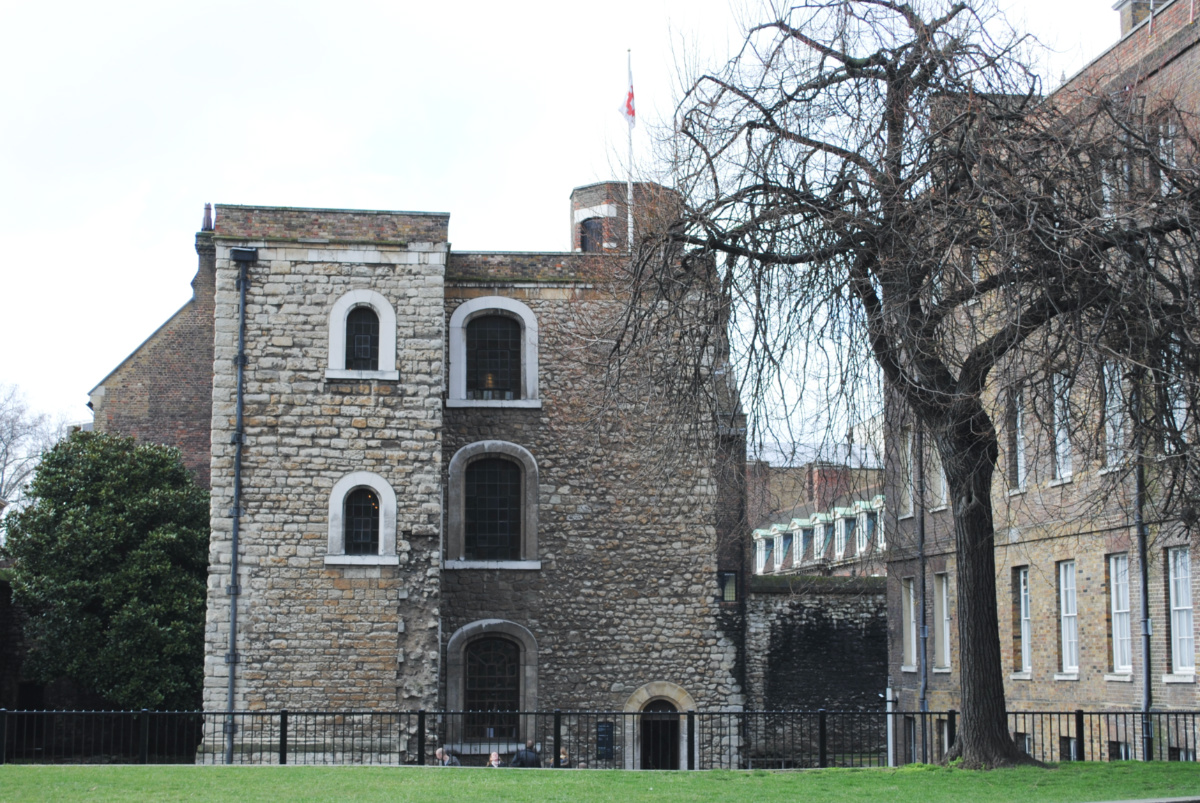
Located in the ground floor of Westminster’s three-storied Jewel Tower is a fine 14th-century ribbed vault, described as an “architectural masterpiece”.
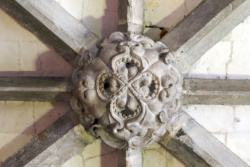
The room is believed to have been constructed, along with the rest of the building, in the 1360s to the designs of master mason Henry de Yevele.
Located in the south-west corner of Old Palace Yard, the tower was originally used as a personal treasure-house for King Edward III and was known as the King’s Privy Wardrobe. Later it was used to house government documents and in 1869 became the Weights and Measures Office.
It is one of few surviving buildings from the medieval Palace of Westminster (the rest having been destroyed in the fire of 1834).
The vaulted chamber incorporates tiercerons – ribs set between the transverse and diagonal ribs to form simple fans and also features a series of sculpted bosses.
Made in Reigate stone, these depict human and mythical animal heads, as well as intertwined pairs of eagles and swans and plant designs. It is believed the bosses were once whitened.
The west wall of the chamber features the remains of a fireplace while the main window reveal is medieval (although the window itself dates from the 18th century).
The property, which is under the care of English Heritage, is not to be confused with the Jewel House at the Tower of London.
WHERE: The Jewel Tower, Abingdon Street, Westminster, (nearest Tube stations are Westminster and St James’s Park); WHEN: 10am to 4pm on weekends; COST: £6 adults/£3.60 children (aged five to 17 years)/£5.30 concession; family tickets available; WEBSITE: www.english-heritage.org.uk/visit/places/jewel-tower/
LondonLife – Eye view…
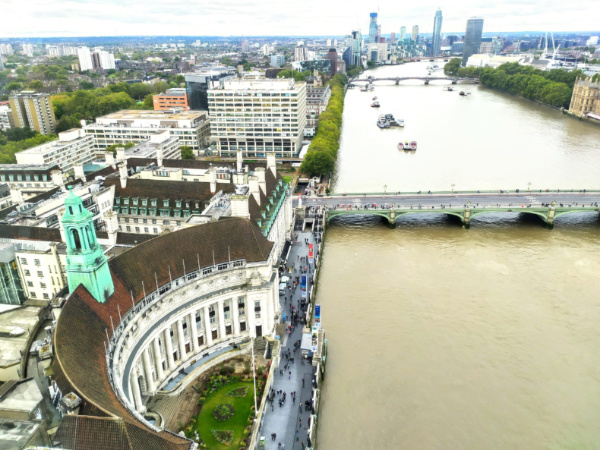
Looking south from the London Eye down the River Thames over County Hall and Westminster Bridge.
10 (lesser known) statues of English monarchs in London…6. King Edward the Confessor and King Henry III…
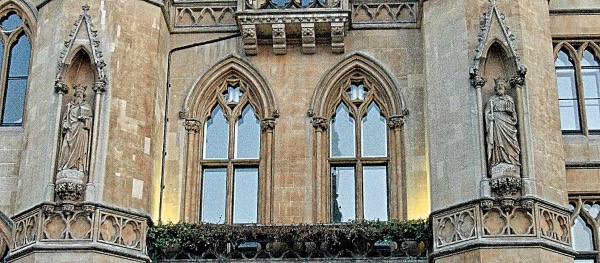
These two statues are listed together because they both appear on the exterior of the same building – The Sanctuary which stands next to Westminster Abbey.
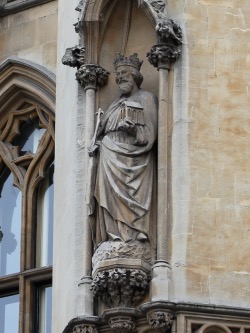
This Grade II-listed building, which contains a gateway to the Dean’s Yard, was designed by Sir George Gilbert Scott and built in Bath stone with slate roofs in the mid-1850s.
The statues, which stand in niches on the exterior of the turrets on either side of the gateway, have been identified as the two kings on London Remembers.
Their position at this location is not random. The king on the left, identified as Edward the Confessor, had St Peter’s Abbey rebuilt here in the mid 11th century (and was buried in it only a week after its consecration).
The king on the right, King Henry III, rebuilt the abbey church in the mid-13th century to provide a shrine to venerate Edward the Confessor and as a site for his own tomb.
The kings are apparently not the only monarchs adorning the building – two roundels below them depict Queen Victoria and Prince Albert.
10 (lesser known) statues of English monarchs in London…5. Queen Elizabeth I at Westminster School…
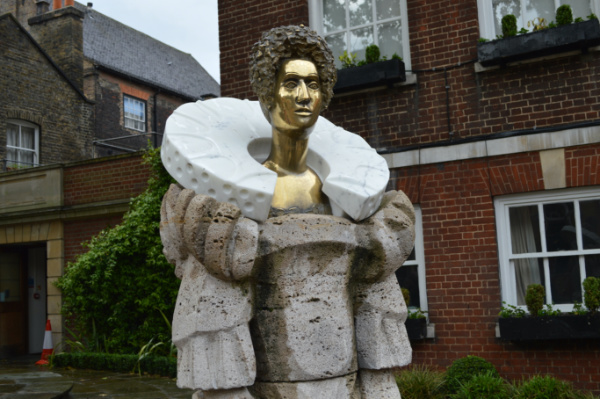
This rather unusual statue of Queen Elizabeth I is a relatively new addition – it was dedicated 12 years ago on what was the 450th anniversary of the refounding of Westminster School – more properly The Royal College of St Peter in Westminster – by the aforementioned Queen.
The larger-than-life statue, which can be found in Little Dean’s Yard, is the work of a former pupil, sculptor Matthew Spender.
It depicts the Queen in white Travertino Noce stone while her head, surrounded by a giant white ruff is gilded bronze with what was auburn hair. The unusual depiction has certainly attracted its share of detractors.
The statue, which was commissioned by the Westminster School Society, was unveiled by the Queen’s namesake, Queen Elizabeth II, on 21st May, 2010.
There’s a more famous – and more typical – statue of Queen Elizabeth I on the exterior of St Dunstan-in-the-West in Fleet Street and another on the exterior of Guildhall.
Guided tours of the school can be arranged during the school’s holidays. For more information, see www.westminster.org.uk/about/our-history/guided-tours/.
Where’s London’s oldest…public Holocaust memorial?
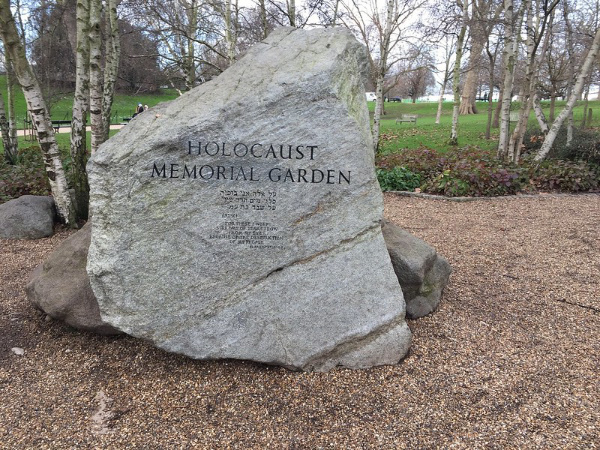
Amid controversy over plans for a new Holocaust memorial in London and the marking of Holocaust Memorial Day this week, we thought it would be a good time to take a look at where the oldest public memorial to the victims of the Holocaust in London, which actually isn’t that old, is located.
Unveiled in 1983 in Hyde Park at site just to the east of the Serpentine, it consists of a grouping of boulders surrounded by white-trunked birch trees. Designed by Richard Seifert and Derek Lovejoy and Partners, the largest of the boulders is inscribed with a text, in Hebrew and English, from the Biblical Book of Lamentations. It reads: “For these I weep. Streams of tears flow from my eyes because of the destruction of my people.”
The Holocaust Memorial Garden, which was actually the first such memorial dedicated to the victims of the Holocaust in Britain, was erected by the Board of British Jews.
Plans for a new memorial to the victims of the Holocaust – to be located in Victoria Tower Gardens, just to the south of the Houses of Parliament – were approved by the government in the middle of last year following a controversial public inquiry. But a High Court judge subsequently granted the London Historic Parks And Gardens Trust permission to appeal that decision.
10 sites of (historic) musical significance in London – 5. Henry Purcell’s grave in Westminster Abbey…
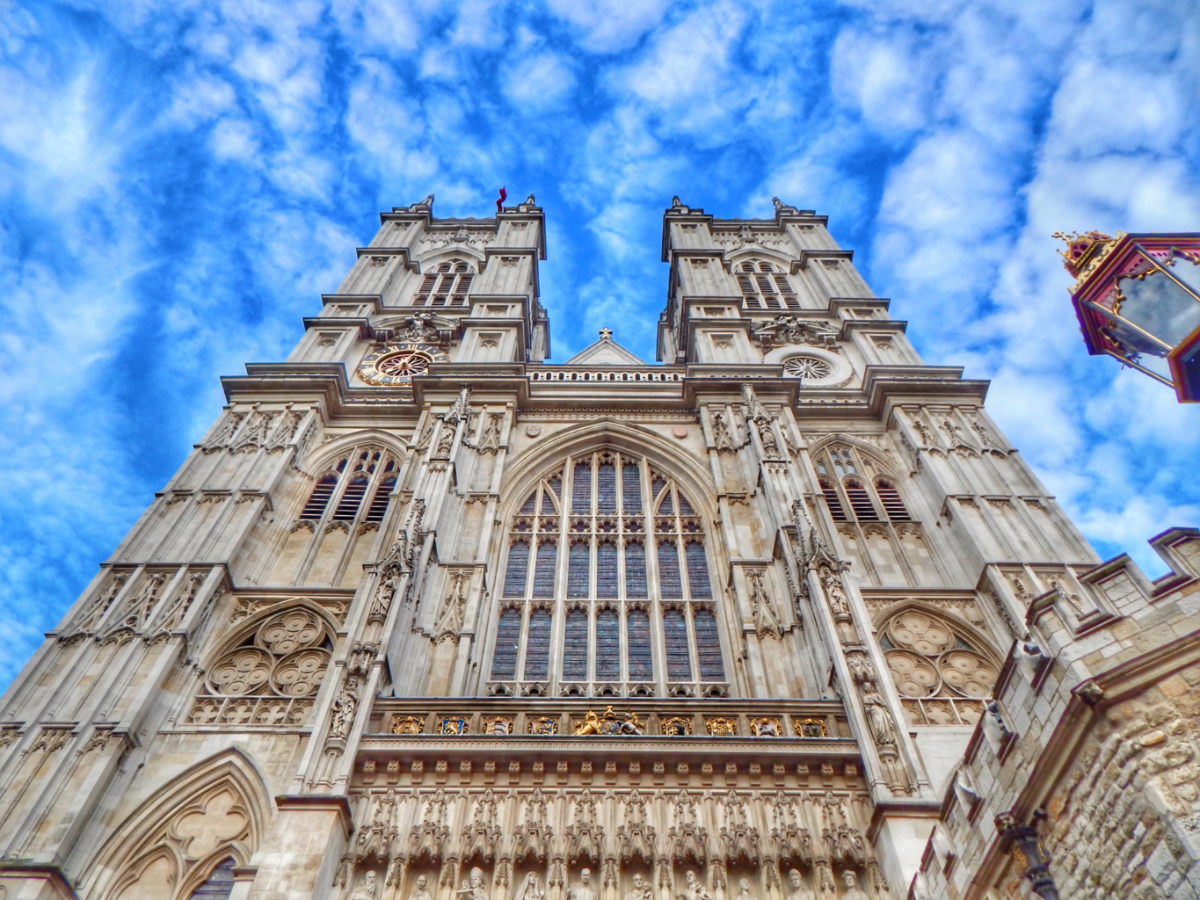
Westminster Abbey is important for many reasons when it comes to London’s musical heritage but among them is the intrinsic connection the grand building has with Restoration-era composer and musician Henry Purcell.
Purcell, who was born in Westminster in 1659 and who died there in 1695, is famous for having composed music in a range of genres including the first English opera as well as being the organist of the Westminster Abbey (from 1679) and that of the Chapel Royal (from 1682).
Fittingly, Purcell, who died at the age of just 36 leaving a widow and six children behind, was buried beside where the organ was then located in the north aisle of Westminster Abbey. The grave, which also contains the remains of his wife Frances, is inlaid with brass letters written in Latin.
It reads: “Here rests Henry Purcell, Organist of this Collegiate Church. Died 21 November aged 37, A.D. 1695. Immortals, welcome an illustrious guest, your gain, our loss – yet would not earth reclaim the many-sided master of his art, the brief delight and glory of his age: great Purcell lives! his spirit haunts these aisles, while yet the neighbouring organ breathes its strains, and answering choirs worship God in song. Frances, wife of Henry Purcell, is buried near her husband 14 February 1706.”
A memorial tablet to Purcell was erected on a nearby wall by Dame Annabella Howard, a former pupil of Purcell’s. The inscription in English and Latin “Here lyes Henry Purcell Esq., who left this life and is gone to that blessed place where only his harmony can be exceeded. Died 21 of November in the 37th year of his age, AD 1695”.
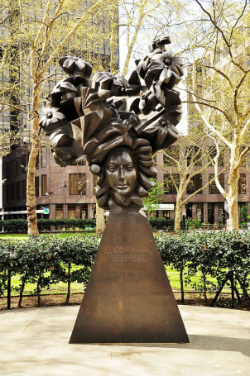
There is also an elaborate statue, The Flowering of the English Baroque, commemorating Purcell located just down the road from the Abbey in Christchurch Gardens, Broadway. Designed by sculptor Glynn Williams, it was unveiled by Princess Margaret on the tercentenary of the death of the composer – 22nd November 1995.
10 London memorials commemorating foreign leaders – 10. Skanderbeg…
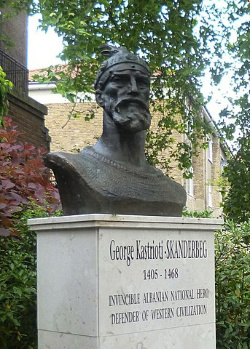
Unveiled just nine years ago, this bust in Bayswater commemorates George Kastrioti Skanderbeg, a 15th century Albanian lord who led a rebellion against the Ottoman Empire (and who later became a central figure of inspiration in the Albanian National Awakening of the 19th century).
Located on the corner of Inverness Terrace and Porchester Gardens, the bronze bust was created by Kreshnik Xhiku.
An inscription on the front reads “George Kastrioti Skanderbeg, 1405 – 1468, invincible Albanian national hero, defender of western civilization.”
It was unveiled on the 100th anniversary of Albanian independence on 28th November, 2012, with Westminster City Councillor Robert Davis and Albanian Charge d’affaires, Mal Berisha, in attendance.
The bust was installed as part of Westminster’s City of Sculpture initiative.
LondonLife – A lion in Piccadilly Circus…

One of the 27 life-sized lion sculptures placed in central London to raise awareness and funds to support community conservation and livelihoods across Africa impacted by COVID-19. Each of the lions has been decorated by decorated by famous artists, musicians and comedians (this one by rock star Ronnie Wood and named ‘Not Lying Lion’). The Lion Trail, which is also part of the City of Westminster’s ‘Inside Out festival’, is delivered by wildlife conservation charity Tusk and supported by Art of London. The lions can be see until 26th September. For more, see www.tuskliontrail.com/london-pride/
 Exploring London