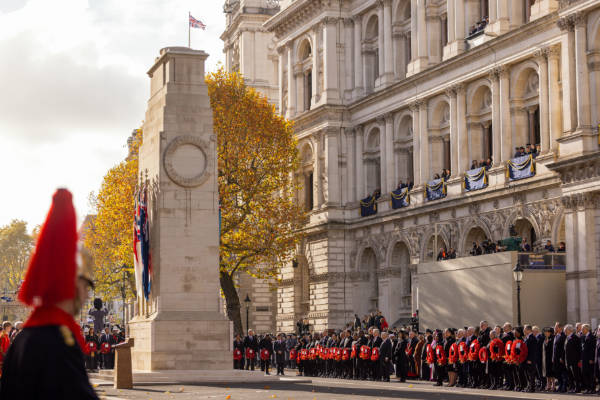
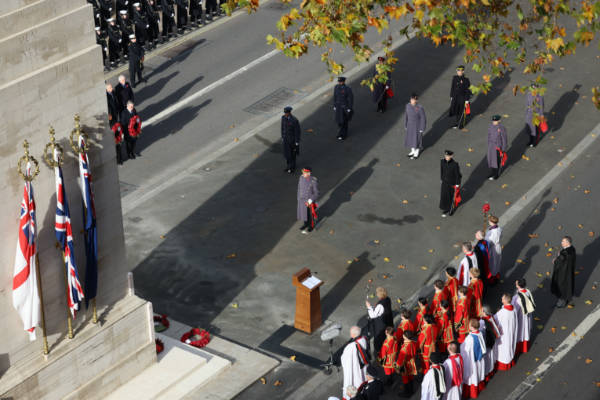
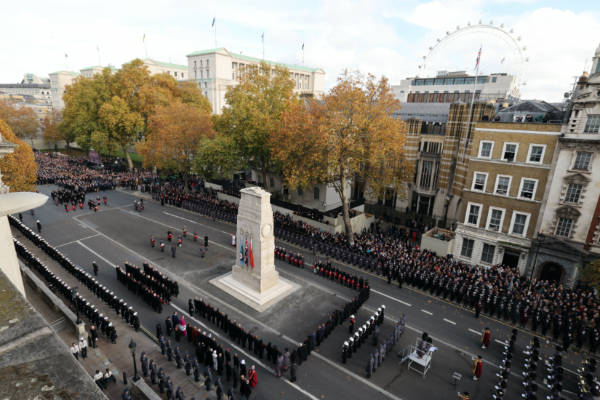
Earlier…
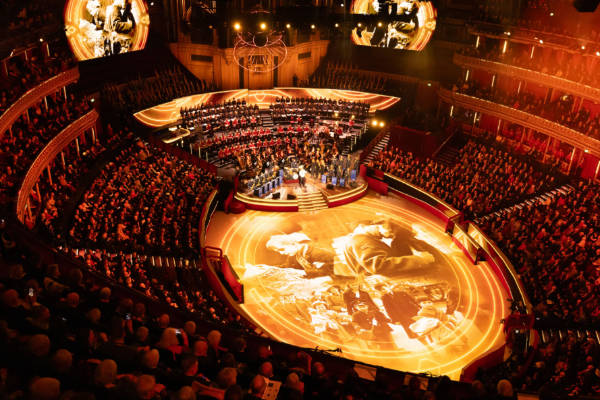
Earlier…
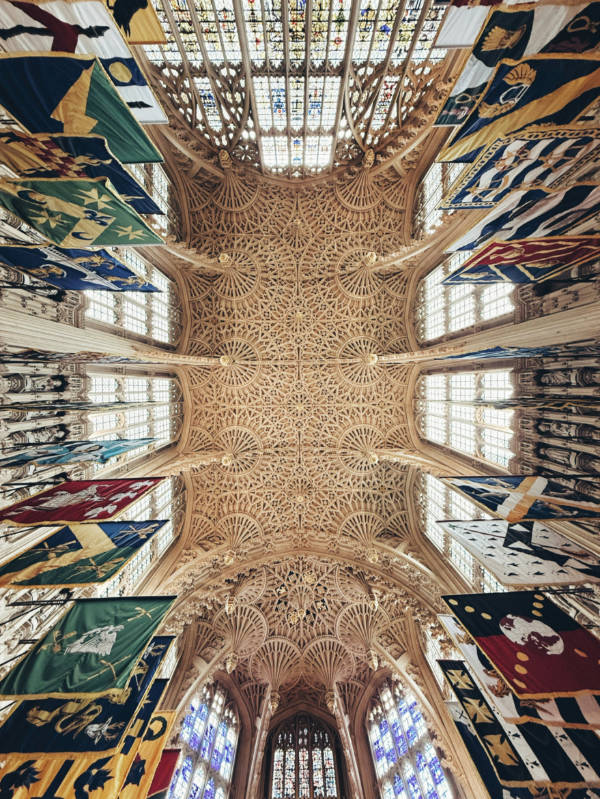
The magnificent carved fan vaulted roof of the Henry VII Lady Chapel at the eastern end of Westminster Abbey. The chapel, which 16th century historian John Leland called “the wonder of the world”, was consecrated in 1516.
Located in what was the gatehouse of Westminster Abbey, this small prison dates from 1370.
It was built by Walter de Warfield, then the abbey’s Cellarer, and featured two wings, built at right angles to each other.
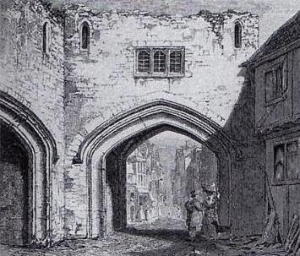
Under the jurisdiction of the Abbot, the prison had two sections – one for clerics and one for laymen. The Abbey’s Janitor was its warder.
Among the most famous inmates was the Cavalier poet Richard Lovelace who was imprisoned for petitioning to have the Clergy Act 1640 annulled. While inside, he wrote the famous work, To Althea, from Prison which features the famous lines: “Stone walls do not a prison make, Nor iron bars a cage”.
Other notables include Sir Walter Raleigh, held here on the night before he was beheaded in Old Palace Yard on 29th October 1618, diarist Samuel Pepys – detained for a few weeks in 1689 on suspicion of being a Jacobite (but released because of ill health), and Gunpowder Plot conspirator Thomas Bates.
Falling into a state of decay, the prison was demolished in 1776-77 (although one wall stood until the 1830s). A gothic column, the Westminster Scholars’ Memorial which is also known as the Crimea and Indian Mutiny Memorial, now stands on the site.
A rectangular block of pale yellow sandstone decorated with a Latin cross, the Stone of Scone, also known as the Stone of Destiny, long featured in the crowning of Scottish kings. But in 1296, it was seized by King Edward I as a trophy of war.
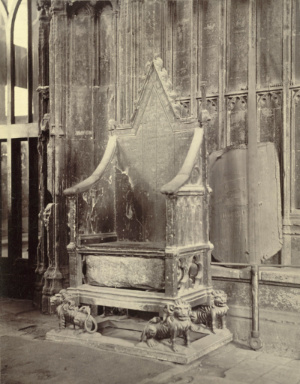
He brought it back to England (or did he? – it has been suggested the stone captured by Edward was a substitute and the real one was buried or otherwise hidden). In London, it was placed under a wooden chair known as the Coronation Chair or King Edward’s Chair on which most English and later British sovereigns were crowned.
On Christmas Day, 1950, four Scottish nationalist students – Ian Hamilton, Kay Matheson, Gavin Vernon and Alan Stuart – decided to liberate the 152 kilogram stone and return it to Scotland.
The stone broke in two when it was dropped while it was being removed (it was later repaired by a stone mason). The group headed north and, after burying the greater part of it briefly in a field to hide it, the stone was – on 11th April, 1951 – eventually left on the altar of Arbroath Abbey in Scotland.
No charges were ever laid against the students.
It was brought back to the abbey and used in the coronation of Queen Elizabeth II in 1953.
The stone was eventually returned to Scotland in 1996 on the proviso it could be temporarily relocated back to London for coronations and now sits in Edinburgh Castle. It was taken to London temporarily in 2023 for the coronation of King Charles III but has since been returned.
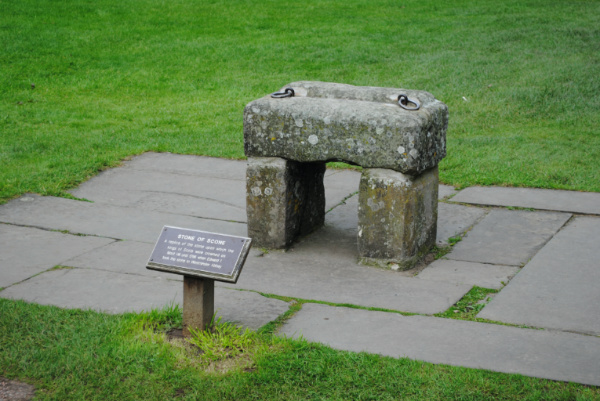
There is a replica of the stone at Scone Castle in Scotland.
UNESCO’s World Heritage List includes as many as 1223 properties right across the globe which the World Heritage Committee considers as having “outstanding universal value”.
Most of them are cultural sites (952) but they also include some 231 natural sites and 40 which have both qualities.
The UK is actually home to 35 sites on the list, ranging from Stonehenge and the English Lake District to neolithic Orkney and the City of Bath.
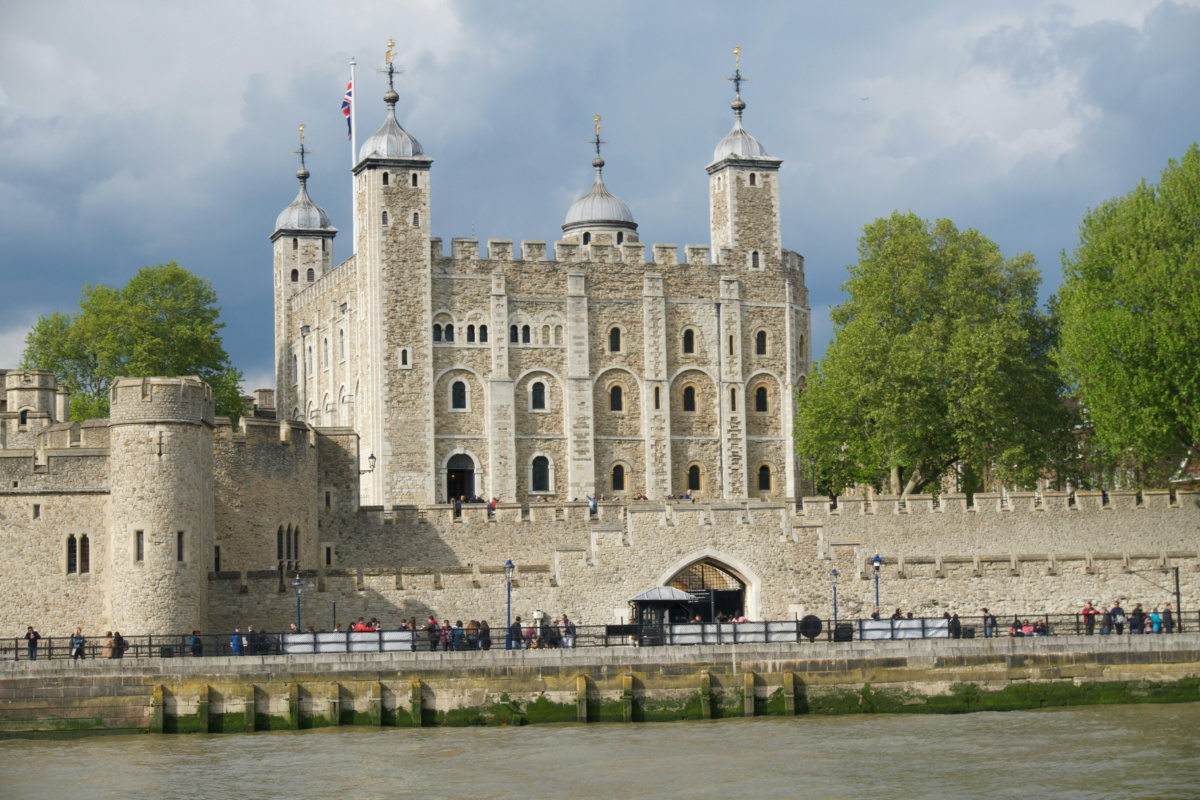
London itself is home to four internationally recognised UNESCO World Heritage Sites. These include the Tower of London, the Royal Botanic Gardens in Kew, the Palace of Westminster and Westminster Abbey (including the neighbouring St Margaret’s Church), and maritime Greenwich.
The first of the four to be added to the list was the 10 hectare site of Palace of Westminster and Westminster Abbey in 1987 (described as being of “great historic and symbolic significance”). It was followed by the Tower of London in 1988, and the 109 hectare area covering the Queen’s House, Old Royal Naval College and Royal Observatory known as maritime Greenwich in 1997.
The 132 hectare site of the Royal Botanic Gardens at Kew was the most recent addition to the list in 2003.
As well as being added to the list, sites can also be removed as happened when Liverpool became the third site to be removed from the list in 2021 due to what the World Heritage Committee said was “the irreversible loss of attributes conveying the outstanding universal value of the property”.
Concerns have been raised over the Tower of London’s future on the list due to surrounding development and, of course, there are always other sites that can be added (we vote for Hampton Court Palace, among others).
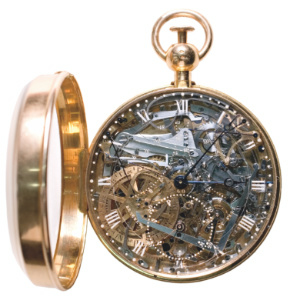
• One of the world’s most valuable watches – the No 160 watch which Abraham-Louis Breguet designed for Marie Antoinette but which wasn’t completed until the 1820s, well after her death – is the star of the show at the Science Museum’s new exhibition Versailles: Science and Splendour. Opening today, the exhibition, created in partnership with the Palace of Versailles, takes visitors on “a 120-year journey through the evolution of science at Versailles” and explores how Louis XIV, Louis XV and Louis XVI encouraged the pursuit of scientific knowledge and harnessed that knowledge as a tool of power. More than 100 objects are on display and, along with Breguet’s watch, they include Louis XV’s rhinoceros, a detailed map of the moon by Jean-Dominique Cassini, and Claude-Siméon Passemant’s Clock of the Creation of the World (1754). The watch, meanwhile, has its own fascinating history, including two decades in which its whereabouts were unknown after it was stolen in 1983 (in fact, its display in this exhibition marks the first time the timepiece has travelled abroad since its safe return to the LA Mayer Museum for Islamic Art in 2008). Runs until 21st April. Admission charge applies. For more, see sciencemuseum.org.uk/see-and-do/versailles.
• A medieval silk seal bag, which dates from the reign of King Henry III, has gone on public display for the first time in the Queen’s Diamond Jubilee Galleries at Westminster Abbey. The display follows the discovery by scholars that the bag’s material is a perfect match to the silk cloth used to wrap the remains of the Emperor Charlemagne when he was buried in Germany’s Aachen Cathedral (Charlemagne, seen as the first Holy Roman Emperor, died in 814 but was re-buried in the karlsschrein (Charles’s shrine) at Aachen in 1215). The bag at the abbey contains a wax seal, the Great Seal of King Henry III, which was attached to an inventory of the jewels and precious items on Edward the Confessor’s shrine located in the heart of the abbey. It was drawn up in 1267 when Henry III was in financial difficulties and forced to pawn items from the shrine to Italian merchants to raise funds (it is believed the items were all returned within 18 months). The silk used for Charlemagne’s shroud is believed to have been spun in the 12th century in Spain or the eastern Mediterranean and, while the small piece at the Abbey originates from a separate silk, it is understood that it would have been produced by the same weavers on the same loom. The bag can been seen until Easter next year. Admission charge applies. For more, see www.westminster-abbey.org/visit-us/plan-your-visit/the-queens-diamond-jubilee-galleries/.
• A new interactive electric bus display has opened at the London Transport Museum in Covent Garden. The Wrightbus Electroliner display – which has been provided by Transport UK London Bus – is based on an electric vehicle bus type which has been part of the fleet of buses operating in London since 2023. The new display features the front of the bus and includes an interactive driver cab and passenger space. Admission charge applies. For more, see www.ltmuseum.co.uk.
Send all items for inclusion to exploringlondon@gmail.com.
• A celebration of Black communities and culture returns to Trafalgar Square this weekend. Taking place on Saturday, the Mayor of London’s Black On The Square festival features live music and dance as well as art, fashion, food from Ghana, Guyana, Jamaica, Mauritius and Nigeria, and a range of family-friendly activities. Multi award-winning actor and rapper Bashy is headlining with other acts including Cultur FM, Kofi Stone, Krar Collective, Shingai, Phoebs and Karen Nyame. The free festival runs from noon to 6pm. For more, see www.london.gov.uk/events/black-square-2024.
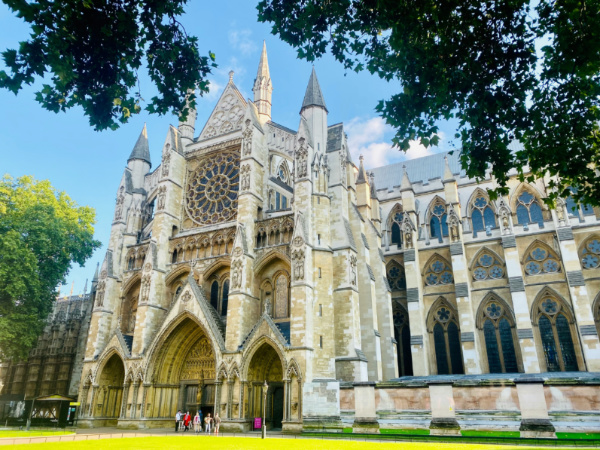
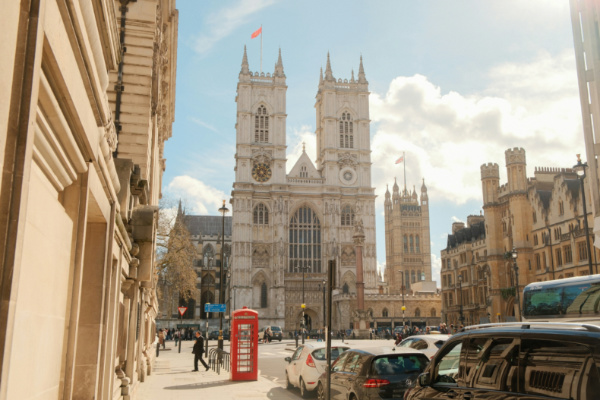
• Westminster Abbey, home of the famed Poet’s Corner, has unveiled a new season of events celebrating poets and poetry this autumn. Voice and Verse, which launches on 3rd October, features poetry readings, talks, tours, musical performances and workshops. Highlights include a lunchtime concert to be held in St Margaret’s Church with music inspired by the poetry of writers memorialised in Poet’s Corner, a talk on the lives and legacy of World War I poets and an eventing of poetry held in Poet’s Corner itself. For more information, including event dates and booking information, head to www.westminster-abbey.org/events/autumn-season.
• Further afield: Two of Victorian actor Ellen Terry’s costumes – worn while performing Lady Macbeth in an 1888 production of Macbeth at London’s Lyceum Theatre – have gone on display at her former home of Smallhythe Place in Kent. The costumes, designed by Alice Comyns Carr, include the iridescent green ‘Beetlewing dress’, decorated in over 1,000 beetle wings, and immortalised in a John Singer Sargent painting of Terry. There’s also a gown worn by Terry in the play’s banqueting scene in which Macbeth sees the ghost of Banquo. Made of muslin and shot through with gold thread, it is on display for the first time after extensive conservation work to address the damage caused by its repeated use on stage and the alterations and repairs which have occurred since. The Dressing Lady Macbeth: An Exhibition can be seen until 3rd November. Admission fees apply. For more, see www.nationaltrust.org.uk/visit/kent/smallhythe-place.
Send all items for inclusion to exploringlondon@gmail.com
Hanging in the Tudor Great Hall at Hampton Court Palace, this series of 10 huge tapestries are believed to have been commissioned by King Henry VIII and were first hung in the hall in 1546.
A Royal Peculiar is a Church of England parish that is exempt from the jurisdiction of the church diocese or province in which it sits and instead answers directly to the monarch.
The concept of the Royal Peculiar first began to emerge in Anglo-Saxon times and was developed over the following centuries.

• The role of women in the Royal National Lifeboat Institution is being celebrated in a new exhibition at the National Maritime Museum in Greenwich. Women of the RNLI, which marks the bicentenary of the organisation, features a series of 42 photographs depicting women volunteers and the lifeboat stations’ slipways where they work. The images by photographer Jack Lowe are part of his ongoing ‘Lifeboat Station Project’, an attempt to photograph all 238 operational RNLI lifeboat stations and their crews.. Lowe uses a 12×10 inch (30×25cm) Thornton-Pickard field camera from about 1905 and develops the photos using a process called ‘wet collodion’, a technique invented in the mid-19th century. The display also features oral histories from some of the sitters. The display can be seen from Saturday until 1st December. For more, see www.rmg.co.uk.
• A new exhibition exploring the architectural style of Tropical Modernism in West Africa and India opens at the V&A on Saturday. Tropical Modernism: Architecture and Independence centres on the work of British architects Jane Drew and Maxwell Fry who developed Tropical Modernism in the 1940s, working primarily in Ghana and India. The style, which valued function over ornamentation, became a symbol of a post-colonial future. The exhibition includes models, drawings, letters, photographs, and archival ephemera as it documents the key figures and moments of the Tropical Modernist movement. There is also a half hour film installation displayed on three screens. Runs until 22nd September. Admission charge applies. For more, see vam.ac.uk.
• A new memorial stone dedicated to Antarctic explorer Sir Ernest Shackleton has been unveiled at Westminster Abbey. The triangular-shaped memorial, which can be found on a wall in the south cloister, was unveiled at a service earlier this month attended by Princess Anne and members of Shackleton’s family. Located close to tributes to pioneering sailors Captain James Cook, Sir Francis Chichester and Sir Francis Drake, it was designed and made by sculptor Will Davies and its shape reflects Shackleton’s preference to be at the apex of a triangle in group photographs. The memorial incorporates stones including Connemara marble and Kilkenny limestone in reflection of Shackleton’s Irish heritage, and the names of his expedition ships, Nimrod and Endurance, are inscribed upon it, along with the lifeboat The James Caird, and his family motto, ‘FORTITUDINE VINCIMUS’ (‘By Endurance We Conquer’). For more, see www.westminster-abbey.org.
Send all items to exploringlondon@gmail.com.
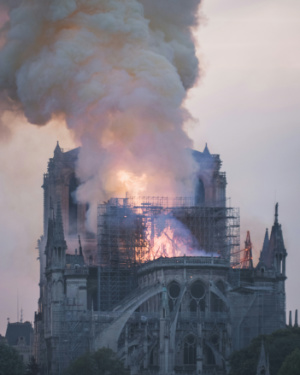
• An immersive exhibition on the cathedral of Notre Dame de Paris, currently being restored following a devastating 2019 fire, opened at Westminster Abbey this week. Notre Dame de Paris, The Augmented Exhibition tells the story of the Gothic masterpiece from the 12th century to today and features a digital recreation of the cathedral by digital heritage specialists, Histovery, in collaboration with Rebuilding Notre-Dame de Paris. The exhibition is being held in the 13th century chapter house of the abbey with visitors, thanks to digital technology, able to witness firsthand the lavish wedding of King Henri IV, the coronation of Napoleon Bonaparte, and the 19th century construction of Notre-Dame’s iconic spire of Viollet-le-Duc. Runs until 1st June. Admission charge applies. For more, head here. The exhibition is part of a season of events at the abbey celebrating the bonds between the UK and France.
• An new exhibition focused on the hundreds of thousands of people held captive during World War II has opened at the National Archives in Kew. Great Escapes: Remarkable Second World War Captives, tells the story of famous escape attempts such as the escape from Stalag Luft III known as “the Great Escape” (made famous in the film of the same name) and British officer Airey Neave’s escape from Colditz Castle dressed as a German soldiers well as stories of individuals seeking escape through art, music and finding love while being held. The exhibition is divided into three parts. The first explores the legal framework for the 1929 Geneva Convention governing prisoners and tells the story of MI9, a highly secret British Government agency established in 1939 to help military personnel evade and escape capture. Part two explores the stories from individual prisoners and internees under British, German, and Japanese authority during World War II while part three examines how prisoners were dealt with at the end of the war as well as how the experience of the conflict led to the Geneva Convention being rewritten in 1949. Runs until 21st July. Admission is free. For more, see www.nationalarchives.gov.uk/great-escapes/.

• An image of a young polar bear drifting to sleep on a bed carved into an iceberg has won the Wildlife Photographer of the Year People’s Choice Award. Nima Sarikhani’s Ice Bed, and the four finalist ‘Highly Commended’ images were selected from a shortlist of 25 images chosen by the Natural History Museum and an international judging panel from almost 50,000 images entered in the 59th Wildlife Photographer of the Year competition. The other finalists include Tzahi Finkelstein’s The Happy Turtle – a meeting between Balkan pond turtle and a northern banded groundling dragonfly, Daniel Dencescu’s Starling Murmuration - which captured the moment a starling murmuration formed the shape of a bird, Mark Boyd’s Shared Parenting in which two lionesses groom a cub in Kenya’s Maasai Mara, and, Audun Rikardsen’s Aurora Jellies which shows two moon jellyfish illuminated by the aurora borealis in a fjord in Norway. The five images can be seen both online and in the accompanying exhibition at the Natural History Museum until 30th June. Admission charge applies. For more, see www.nhm.ac.uk/wpy/peoples-choice.
Send all items to exploringlondon@gmail.com.
We finish our series on Christopher Wren by providing a quick recap…
1. The Old Court House, Hampton Court Palace Green…
9. St James’s Street, Piccadilly…
We’ll start a new series in the New Year!
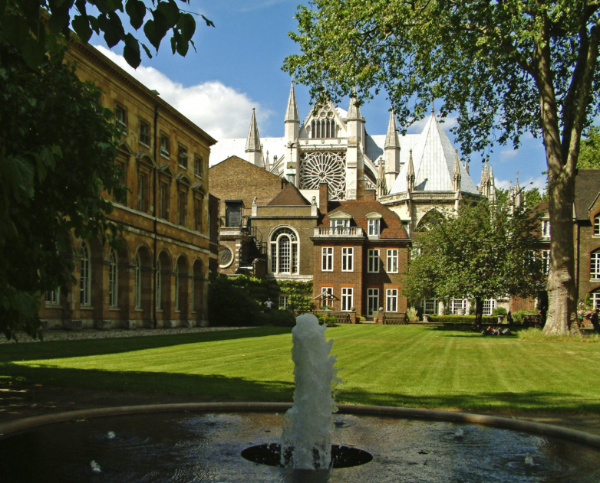
Not to be confused with London’s oldest botanic garden (The Chelsea Physic Garden), the College Garden at Westminster Abbey is believed to be the oldest garden in England under continuous cultivation.
In monastic times, the garden, as well as providing eye-pleasing flower displays, was used to grow vegetables and medicinal herbs for the abbey’s resident monks and it also included an orchard, as well as fishponds and beehives. The first herbarium dates from at least 1306 although the infirmary garden was originally established in the 11th century..
The garden was under the overall supervision of the abbey’s Infirmer – responsible for caring for the sick or infirm – and was tended to by a head gardener and two under-gardeners (all of whom were monks).
The oldest surviving feature of the garden today is a high stone wall which dates from 1376. Today the garden features London plane trees planted in the 1850s and a broad expanse of lawn.
There is also a small rose garden which marks Queen Elizabeth II’s accession to the throne and a herb garden planted to commemorate the lives of the monks and the founding of the Westminster School.
A 1993 bronze sculpture depicting the Crucifixion of Jesus Christ, by Enzo Plazzotta, sits out the south end of the garden. A single jet fountain was added in 2002.
The west side of the garden is bordered by the 18th century dormitory for the Westminster School. Two late Victorian houses, originally used for clergy, stand at the north end.
The garden is accessed from the south-east corner of the abbey cloister.

Think of Sir ChristopherWren and chances are it’s St Paul’s Cathedral – perhaps the most famous building he designed – which comes to mind. Certainly not Westminster Abbey, which he did not.
Yet, aside from his time at the Westminster School as a child, Wren did have a long relationship with the royal church at Westminster. In March, 1698, he was appointed the Surveyor of the Fabric at Westminster Abbey, a post he held until his death (when he was succeeded by Sir Nicholas Hawksmoor).
Wren did some work on the building. Prior to being appointed surveyor he had undertaken some work on schoolmaster Dr Richard Busby’s house (Wren had been one of his students) in the Little Cloister in 1683 (the house was destroyed during the Blitz in World War II).
Following his appointment, Wren did undertake a major restoration of the decayed stonework and roof of the church. He also approved designs by his deputy, William Dickinson, for the north front and an altarpiece which Wren had originally designed for the royal chapel at the Palace of Whitehall was given to the minster by Queen Anne (it was removed in the 19th century).
In 1713, Wren had also created designs for a series of works at the abbey which included the addition of a central tower and spire at the abbey and the completion of the west front which were never realised and which were shelved after his death (the wooden model for the tower and spire is located in Queen’s Diamond Jubilee Galleries, along with a pair of wooden obelisks he designed for the entrance to the Quire).
While there’s no memorial to him in the Abbey, Wren’s image can be seen in the lower right section of a memorial window in the north choir aisle dedicated to 19th century engineer Robert Stephenson while his coat of arms is shown along with numerous others in some post-war glass windows in the Chapter House.
WHERE: Westminster Abbey (nearest Tube stations are Westminster and St James’s Park); WHEN: Times vary – see the website for details; COST: £29 adults/£26 concession/£13 children (family rates available); WEBSITE: www.westminster-abbey.org.
Famed 16th century historian and writer William Camden is celebrated not only for the influence he and his career had on writers including the likes of Ben Jonson and Edmund Spenser, but also for his work in helping to transform the idea of historical inquiry.
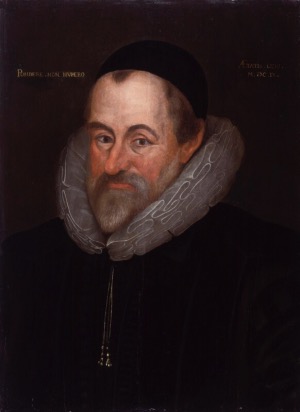
Camden was born in London on 2nd May, 1551, the son of Sampson, a painter-stainer originally from Lichfield, and his wife Elizabeth (Curwen).
He attended a school at Christ’s Hospital and then St Paul’s School before going on to study at the University of Oxford., graduating with a BA in 1573.
He had returned to London a couple of years earlier and in 1575 was appointed the second master of Westminster School (Jonson was one of his pupils; according to tradition, Camden sponsored his position).
It was during this period that, when not attending his duties at Westminster, he travelled the country, collecting material for what would be the first topographical survey of England. Titled Britannia and written in Latin, it was published in 1586.
Camden was made head master in 1593 and in 1595 published a Greek grammar which became seen as standard work.
In 1597, he was made Clarenceux king-of-arms (one of the three principal heralds at the College of Arms) which allowed him more time for writing (in 1589, he had been granted the prebend of Ilfracombe at Salisbury Cathedral).
Camden, who had established the Society of Antiquities with friends in about 1585 (it helped lay the foundations for the school of 17th century historians), published several history-related works between 1600 and 1607 including the first guide to Westminster Abbey’s monuments.
He was, from the end of that period, also working on his Annales Rerum Anglicarum et Hibernicarum Regnante Elizabetha (Annals of the Affairs of England and Ireland During the Reign of Elizabeth), the first volume of which was published in 1615 (a second volume was completed in 1617 but not published until after Camden’s death).
In 1618, in poor health, Camden retired two Chislehurst in Kent and while there founded the first chair of history at the University of Oxford (in fact the first such chair at any English university). He died, having never married, at Chislehurst on 9th November, 1623.,
Camden was buried in Poet’s Corner, in the south transept, of Westminster Abbey and has a monument which features his bust.
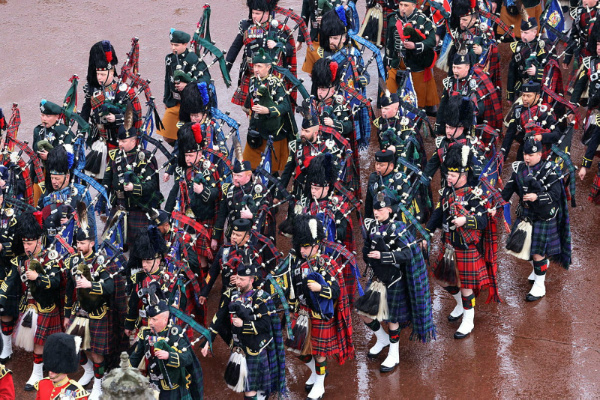
Some more images from the coronation of King Charles III and Queen Camilla on the weekend…
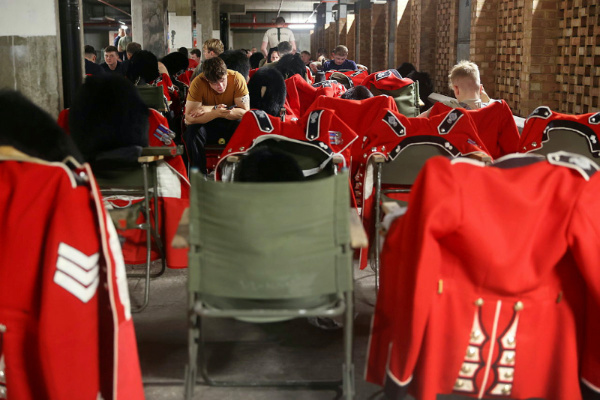
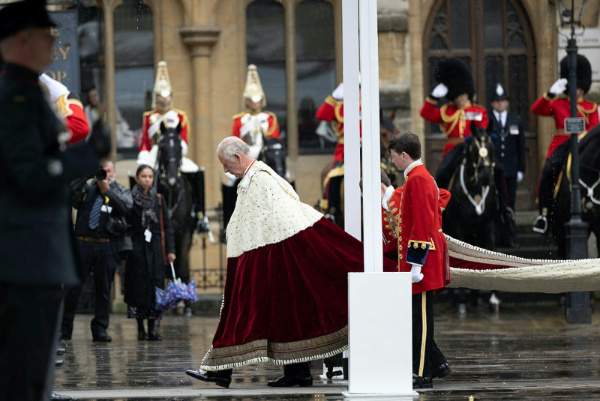
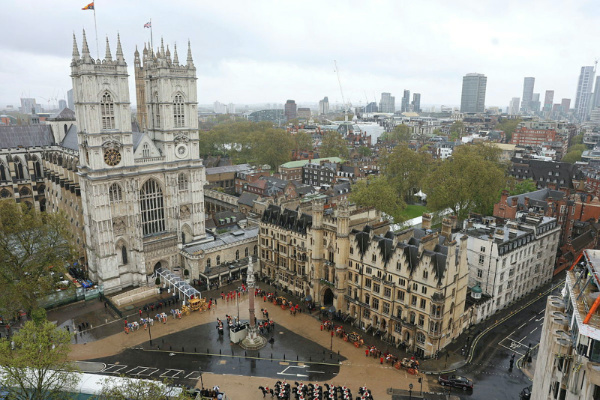
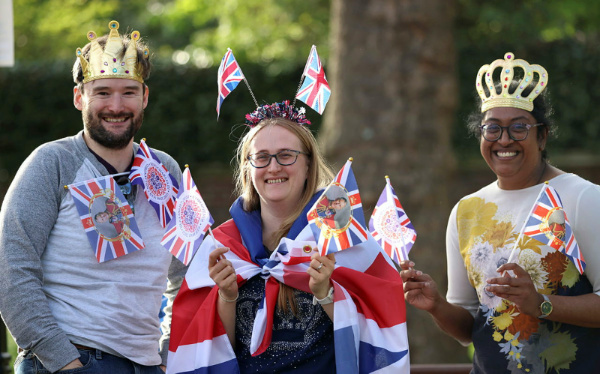
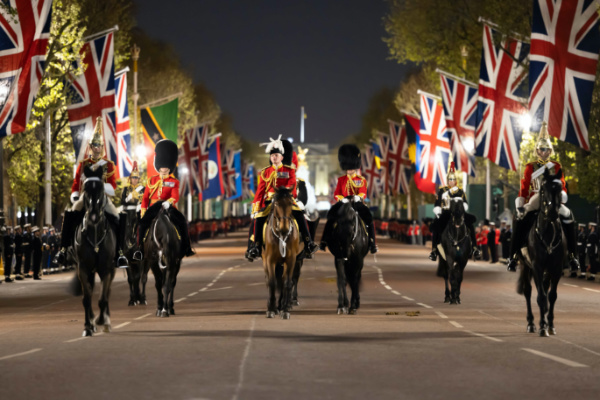
• It’s Coronation weekend in London, so first up it’s a look at the Coronation Procession. The 1.42 mile route from Buckingham Palace to Westminster Abbey, which opens for viewers at 6am on Saturday, will see the procession – with King Charles III and Queen Camilla travelling in the Diamond Jubilee State Coach – leave Buckingham Palace at 10:20am. Known as The King’s Procession, the coach, which will be accompanied by The Sovereign’s Escort of the Household Cavalry, will travel down The Mall, through Admiralty Arch and past Trafalgar Square, before turning down Whitehall. The procession will then make its way down to the Houses of Parliament and around the east and south sides of Parliament Square to Broad Sanctuary and Westminster Abbey.
• The ceremony is scheduled to begin at 11am and is expected to run for two hours. There is, of course, no access to the abbey for uninvited guests but the ceremony will be broadcast live by the BBC and big screens are being set up to watch in St James’s Park, Green Park and Hyde Park as well as Holland Park, Valence Park in Dagenham and Walpole Park in Ealing.
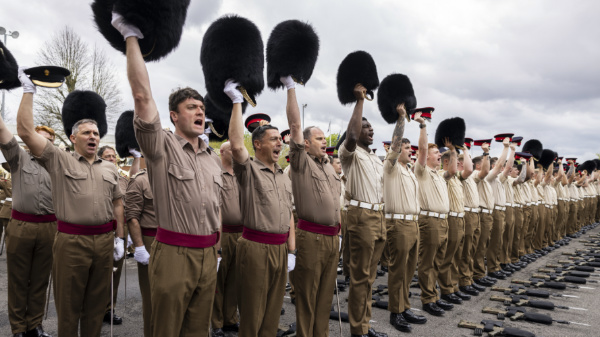
• At 1pm, the King and Queen will return from Westminster Abbey to Buckingham Palace in The Coronation Procession. They will be riding in the 260-year-old Gold State Coach that has been used in every coronation since that of William IV and accompanied by almost 4,000 members of the armed forces in what’s been called the largest ceremonial military operation in recent decades. Representatives of Commonwealth nations and British Overseas Territories will also take part in the return procession. The route will be the reverse of the outgoing route and see the procession travel back through Parliament Square (lined with an honour guard of 100 members of the Royal British Legion) and up Whitehall to Trafalgar Square, turning left to travel through Admiralty Arch and back down The Mall. Reaching Buckingham Palace, the King and Queen will receive a Royal Salute from the armed forces who have been escorting them followed by three cheers.
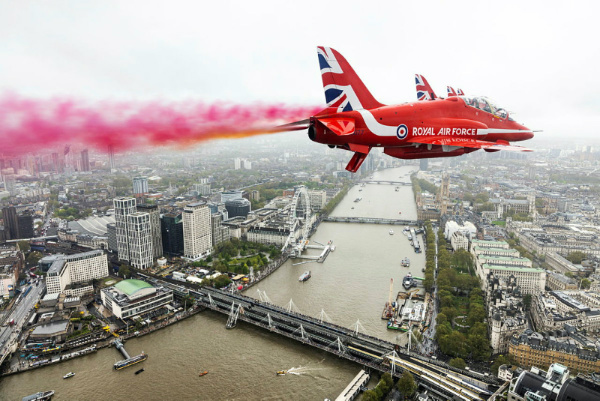
• The balcony appearance and flypast. The newly crowned King and Queen Consort are scheduled to appear on the famous balcony on Buckingham Palace at 2.30pm accompanied by members of the royal family. They will watch a six minute flypast of military planes, ending with a display by the Red Arrows.
• On Sunday, communities are invited to join in the Coronation Big Lunch (communities will also be holding street parties throughout the weekend). On Sunday night, the BBC will broadcast The Coronation Concert from Windsor Castle. The concert will feature the Coronation Choir as well as ‘Lighting Up The Nation’ in which locations across the UK will take part. For details on where events are being held, head to https://coronation.gov.uk/events/.
• On Monday, people are encouraged to join in The Big Help Out by volunteering time to help out in your local community. To find out where your local events are, head to https://thebighelpout.org.uk.
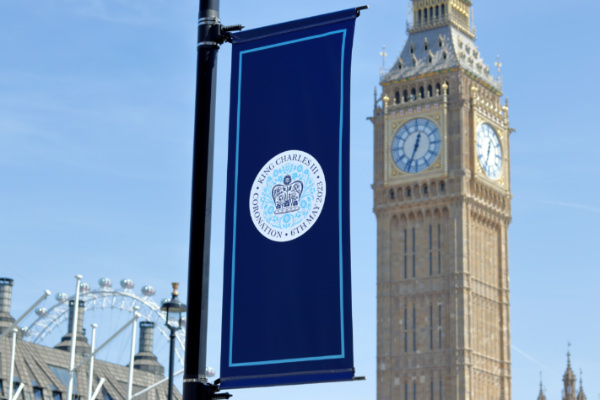
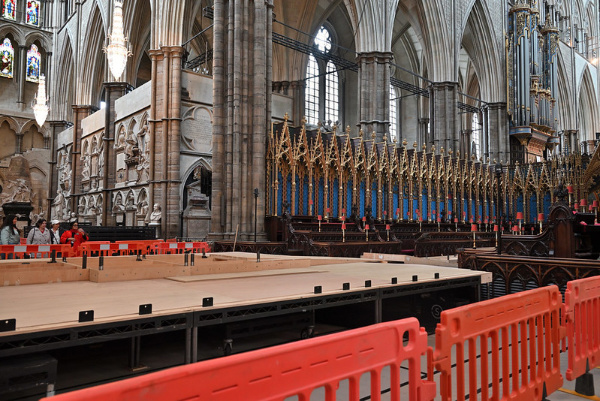

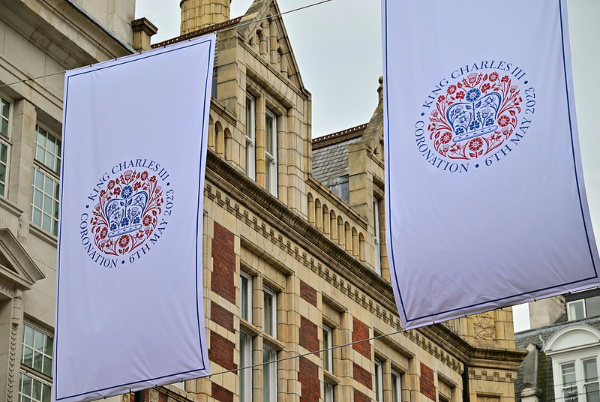
Westminster Abbey has been centre-stage at coronations since at least the Norman Conquest.
William the Conqueror set the precedent for coronations at the abbey when he decided not to get crowned at Winchester Cathedral (where Edward the Confessor had been crowned) and instead chose to be crowned at the minster built by Edward the Confessor (there is some suggestion King Harold Godwinson, the last Saxon King, was crowned at Westminster Abbey before the Conquest but no documentary evidence exists for this).
William the Conqueror’s coronation was held on Christmas Day, 1066, and since then some 39 coronations have been carried out (King Charles III’s will be the 40th).

Arrangements for the coronation ceremony are the responsibility of the Earl Marshal and the coronation committee but the abbey’s dean acts as a liaison with the sovereign and assists the Archbishop of Canterbury who is usually the bishop who crowns the monarch.
Since the late 14th century, the service has largely followed that laid down in the Liber Regalis (Royal Book), an illuminated manuscript created in around 1390.
Since 1308, the heart of the coronation service has taken place on the Cosmati Pavement, located just before the High Altar, in what is known as the “Coronation Theatre”.
Having processed into the abbey and been acclaimed or “recognised” as sovereign by those present, the monarch then makes promises to God and the people they rule in what is known as the Oath, before being presented with a Bible.
Then, seated in the Coronation Chair, the monarch is anointed with holy oil while a canopy is held over them to shield this most sacred part of the ceremony from the eyes of those gathered.
Still seated, the monarch is then invested with the coronation regalia, including the Sovereign’s Ring, the Sovereign’s Orb, the Sceptre with Cross and the Sceptre with Dove, before St Edward’s Crown is brought from the altar and placed on the monarch’s head (it’s only since that coronation of King James I in 1603 that both the anointing and the crowning are carried out while the monarch is seated on the Coronation Chair – before that, the chair was used for only one aspect of the ceremony).
The monarch then moves to a throne and receives the homage of the royal princes and senior peers. It’s at this point that the coronation of a Queen Consort typically takes place in a simpler form of the ceremony.
The monarch then retires into St Edward’s Chapel where they dress on a purple robe known as the Imperial State Robe or Robe of Estate as well as the Imperial State Crown before processing back out through the abbey.
Other elements of the coronation include music which since the Coronation of King George II has included the George Fredric Handel anthem, Zadok the Priest. The introit I was glad has been sung at every coronation since that of King Charles I in February, 1626.
The abbey is currently closed in preparation for the Coronation of King Charles III. It reopens on Monday, 8th May. The Coronation Theatre will remain in place for visitors to see until 13th May.
WHERE: Westminster Abbey, Westminster (nearest Tube station is Westminster or St James’s Park); WHEN: Open to tourists everyday except Sunday (times vary so check the website); COST: £27 an adult/£24 for seniors (65+)/£12 a child (6-17 years); WEBSITE: www.westminster-abbey.org.
 Exploring London


