Famous for it’s flora, Kew Gardens is also home to some unusual animal life including Chinese water dragons who live in the warm environments of the glasshouses.
See all of our content (and support our work) for just £3 a month…
Other animals in the gardens include foxes, hedgehogs and birds including green and great-spotted woodpeckers, mute swans, Canada geese, mallards, ring-necked parakeets, kingfishers, tawny owls, moorhens, and stock doves.
And, of course, the gardens are home to a myriad of insects including bees, butterflies and dragonflies as well as aquatic life including frogs, newts and fish.
WHERE: Kew Gardens (nearest Tube station is Kew Gardens); WHEN: 10am to 7pm (last entry 6pm) daily; COST: £25 adults/£8 children 16 and under (children under four free) (cheaper tickets for online bookings and during off-peak period from 1st November to 31st January); WEBSITE: www.kew.org.
It’s official, a new Guinness World Record was set in Greenwich on the weekend when some 874 people gathered at the Old Royal Naval College on Saturday dressed as their favourite characters from the big (and little) screen. The Old Royal Naval College team partnered with Elstree Studios for the event, part of the festivities being held to mark 100 years of film and TV at the site, which featured everyone from Stormtroopers to Jack Sparrow, Batman to characters from Bridgerton and Sherlock Holmes. The record, which was verified by Guinness, is officially known as the ‘largest gathering of people dressed as screen characters’.
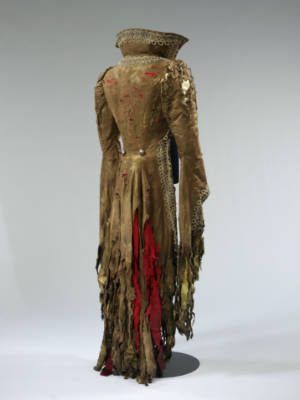
Frockcoat designed by Alexander McQueen and David Bowie for his 50th Birthday Concert, 1997. Image courtesy of the V&A
• David Bowie’s final, unrealised musical projects – The Spectator, an unseen Ziggy Stardust guitar, and Bowie’s costume designs are just some of the treasures housed in the new David Bowie Centre which opened to the public this month. Located at the V&A East Storehouse in Queen Elizabeth Olympic Park, the new home for David Bowie’s archive features nine displays show-casing more than 200 items which also include handwritten lyrics, photography, costumes and sketches. As well as seeing the displays, visitors can book one-on-one time with some of the 90,000-plus objects in the archive through the ‘Order an Object’ service. More than 500 items were requested in the first week of the service going live with a frockcoat designed by Alexander McQueen and David Bowie for his 50th birthday concert in 1997 the most frequently requested item. Entry to the archive is free, but ticketed. For more, including bookings, see www.vam.ac.uk/exhibitions/david-bowie-centre.
• The annual Chelsea History Festival kicked off yesterday with more than 80 events taking place until Sunday. Events include tours of the Royal Hospital Chelsea, and the chance to visit the Soane Stable Yard, the free exhibition Lost and Found in Hong Kong: The Unsung Chinese Heroes at D-Day at the hospital, walking tours including ‘Rock ‘n’ Roll Chelsea’ and ‘1960s Chelsea’, and a medicinal trees tour at the Chelsea Physic Garden. For the full programme head here.
• A major exhibition on the Blitz club – which helped shape London’s culture not only in the mid-1980s but in the decades that followed – has opened at the Design Museum in Kensington High Street. Located in a Covent Garden side street, the club is credited with having “transformed 1980s London style”, generating a creative scene that had an enormous impact on popular culture in the following decade. Blitz: The Club that Shaped the 80s features more than 250 items including clothing and accessories, design sketches, musical instruments, flyers, magazines, furniture, artworks, photography, vinyl records and rare film footage. Runs until 29th March. Admission charge applies. For more, see https://designmuseum.org/exhibitions/blitz-the-club-that-shaped-the-80s.
The River Thames is home to a range of wildlife as it winds through London including several thousand seals which have been spotted at locations across the city’s span.
Subscribe for just £3 a month to access all of Exploring London’s content (and support our work!)
Given our current series on London’s animal life, we thought it an opportune time to take a look at another of London’s most famous animals – in this case a hippopotamus called Obaysch.
‘The Hippopotamus at the Zoological Gardens, Regent’s Park, London’, c1855, by Count de Montizon (Spanish, 1822 – 1887). PICTURE: George Eastman Museum/Flickr
Obaysch had been living near (and named for) an island in the River Nile in Egypt. He was gifted by the Ottoman Viceroy, Abbas Pasha, to the British Consul General, Sir Charles Murray (who became known as “Hippopotamus Murray” due to his affection for the animal).
Transported via a steamer to Southampton, he arrived at London Zoo in Regent’s Park on 25th May, 1850.
Said to have been the first hippo to be brought to Europe since the days of the Roman Empire, Obaysch soon gained the status of a celebrity at London Zoo with Queen Victoria among the thousands who came to see him (she apparently compared his swimming technique to that of a porpoise) in a craze that became known as “hippomania”.
In 1854, Obaysch was joined by a female hippo Adhela, also known as ‘Dil’, (again as a gift of the Viceroy) who was the first living female hippo in Europe since, you guessed it, Roman times.
In 1860, Obaysch escaped from the hippo enclosure and was only lured back to his enclosure by using one of the zookeepers whom he apparently particularly disliked as bait.
The zoo hoped the pair of hippos would breed but it wasn’t until 1871 that they first became the parents of a baby who sadly, didn’t survive.
Two more babies followed and the second of these, born in November, 1872, and named Guy Fawkes despite subsequently being found to be a female, became the first captive bred hippo to be reared by its mother.
Obaysch died on 11th March, 1878 and Adhela four years later on 16th December, 1882. Guy Fawkes died in March, 1908.
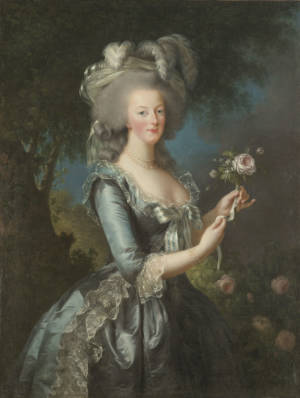
• The UK’s first exhibition to focus on the French Queen, Marie Antionette, opens at the V&A on Saturday.Marie Antoinette Style explores the dress and interiors adopted by the Queen, an early modern “celebrity”, during the final decades of the 18th century. It features some 250 objects including loans from Versailles which have never before been seen outside of France. There are personal items worn by the Queen including fragments of court dress, her silk slippers and jewels from her private collection as well as items from the Queen’s dinner service at the Petit Trianon, accessories and intimate items from her toilette case and even recreated scents from the court and a perfume which was favoured by the Queen. There also contemporary couture pieces by designers such as Moschino, Dior, Chanel, Erdem, Vivienne Westwood and Valentino and costumes, including shoes, made for screen, such as for Sofia Coppola’s Oscar winning film Marie Antoinette. The exhibition can be seen in Galleries 38 and 39 until 22nd March. Admission charge applies. For more, see vam.ac.uk/exhibitions/marie-antoinette.
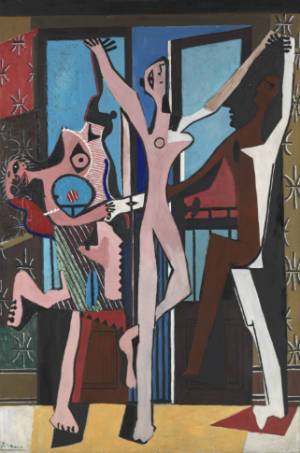
• Around 50 works by famed artist Pablo Picasso have been brought together for a new exhibition at the Tate Modern to mark the centenary of the artist’s work The Three Dancers (1925). Staged by contemporary artist Wu Tsang and write and curator Enrique Fuenteblanca, Theatre Picasso explores aspects of performance in his works and features the Tate’s entire collection of Picassos which, alongside The Three Dancers, also includes Weeping Woman (1937) and Nude Woman in a Red Armchair (1932). There are also loans from key museums in France as well as prints, drawings, sculptures, textile works and collages. These include the wool and silk tapestry Minotaur (1935) which is being displayed in the UK for the first time. Accompanying the works is Henri-George Clouzot’s 1959 film The Mystery ofPicasso. Admission charge applies. Runs until 12th April. For more, see
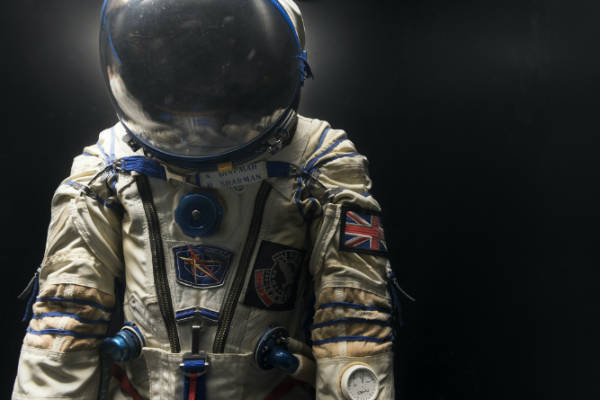
• A new free gallery revealing the stories behind space exploration opens at the Science Museum in South Kensington on Saturday. The gallery – Exploring Space – showcases iconic items from the history of space exploration including a chunk of Moon rock nicknamed ‘Great Scott’ which was collected in 1971, the Soyuz TMA-19M descent module that carried astronaut Tim Peake, and the Sokol KV-2 rescue suit worn by Helen Sharman in 1991. There are also new technologies from the space sector including prototype electric propulsion technology from Magdrive and the ‘rolly-polly’ LEV-2 Moon rover, the result of the first collaboration between a space agency (JAXA) and a toy company (Takara Tomy). For more, see www.sciencemuseum.org.uk/see-and-do/space.
British astronaut, Helen Sharman’s Sokol spacesuit made by Zvezda. Sharman wore this rescue suit during the space flight on board the SOYUZ-TM-12 and MIR spacecraft in May 1991. Space suit model number KV-2 No. 167.
• “Ahoy me hearties!” It’s International Talk Like A Pirate Day on Friday and the National Maritime Museum in Greenwich is celebrating from Friday across the weekend with talks about everything from Barbary corsairs to sea shanties, character actors and two-for-one discounts on tickets to the Pirates exhibition.Visitors over the weekend who dress like a pirate will be in the chance to win prizes including Cutty Sark rig climb tickets, annual passes to the Old Royal Naval College, and a family tour of The Golden Hinde. And to brush-up on your pirate lingo, “Abbey-Lubber” means a lazy sailor avoiding work, and ‘Jack Ketch’ a hangman or executioner. For more, see rmg.co.uk/whats-on/national-maritime-museum/international-talk-pirate-day.
Not to be confused with the much larger ZSL London Zoo, this small zoo in Golders Hill Park on the north-western side of Hampstead Heath is home to a number of exotic species including ring-tailed lemurs, red-necked wallabies and kookaburras.
Subscribe to get access
Read more of this content when you subscribe today.
• The week-long Open House London kicks off this Saturday and features a range of activities across all 33 London boroughs – from “drop-ins” at and guided tours of buildings to talks, exhibitions, workshops and, of course, walking tours. Highlights include architect guided tours of Rana Begum’s Little Citadel retreat compound in Stoke Newington, rare access to the Islip and Nurses’ Chapels in Westminster Abbey, tours of several facilities at Queen Elizabeth Olympic Park including the new Sadler’s Wells theatre, the Lee Valley VeloPark and the Hackney Wick Fish Island Creative Enterprise Zone, and walking tours exploring Roman London. For the full programme, head to https://programme.openhouse.org.uk/.
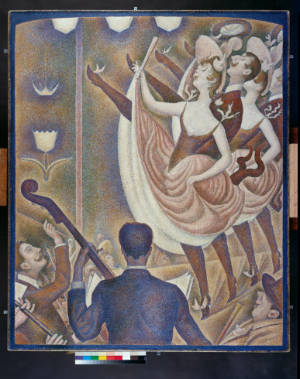
• Georges Seurat’s painting of cancan dancers Let Chahut (1889-90) goes on display in the Sainsbury Wing of The National Gallery on Saturday.Radical Harmony: Helene Kröller-Müller’s Neo-Impressionists, which draws on the collection of the German art collector Helene Kröller-Müller (1869‒ 1939), at the Kröller-Müller Museum, Otterlo, in the Netherlands, also features several other works by Seurat as well as other radical works of French, Belgian and Dutch artists, painted from 1886 to the early 20th century. Among the highlights are Seurat’s Sunday at Port-en-Bessin (1888) and The Canal of Gravelines, in the Direction of the Sea (1890), Théo van Rysselberghe’s In July – before Noon (1890), Jan Toorop’s Sea (1899), Henry van de Velde’s Twilight (about 1889) and Paul Signac’s The Dining Room (1886-87). Runs until 8th February. Admission charge applies. For more, see www.nationalgallery.org.uk/exhibitions/radical-harmony-neo-impressionists
• Marking 60 years since VJ (Victory over Japan) Day, the National Army Museum is hosting the first national museum exhibition on the Burma campaign during World War II in the 21st century. Beyond Burma: Forgotten Armies features more than 180 objects including artworks, weapons, uniforms and photographs and explores the retreat from Burma in 1942, the transformation and resurgence of British and Indian forces in India in 1943 and the campaign against the Imperial Japanese Army during 1944-45. Highlights include the abstract painting And the World was covered in darkness by Major Conrad ‘Dick’ Richardson Romyn who experienced intense fighting in Burma, a bottle of Army anti-mosquito cream and a vial of anti-malarial tablets representing the treatment of soldiers, a tin identity bracelet and food bowl used by Gunner Moss Simon, who spent three years as a prisoner of war, and a military medal awarded to Corporal Dogo Manga who served with 1st Battalion, the Nigeria Regiment, Royal West African Frontier Force. Opens on Tuesday and runs until 13th April next year. Admission is free. For more, see www.nam.ac.uk/whats-on/beyond-burma.
Send all items for inclusion to exploringlondon@gmail.com
Famous for its herd of Red and Fallow deer, the expansive Bushy Park in south-west London is also a haven for many other kinds of wildlife – from birds and fish to insects and small mammals.
Subscribe now for access to all Exploring London’s stories and support our work!
This district in the Borough of Lambeth in south London was formerly a rural manor located on the southern edge of London.
The name, variants of which date back to at least the late 12th century, is said to relate to the Old English words for a tree trunk – ‘stoc’ – and a well or spring, ‘wella’, and has been interpreted as meaning the well or spring by a tree stump, tree truck or perhaps a wood (there was apparently a Stockwell Wood which has long since disappeared).
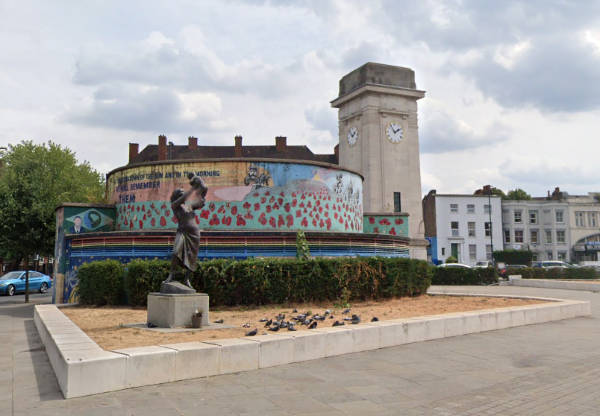
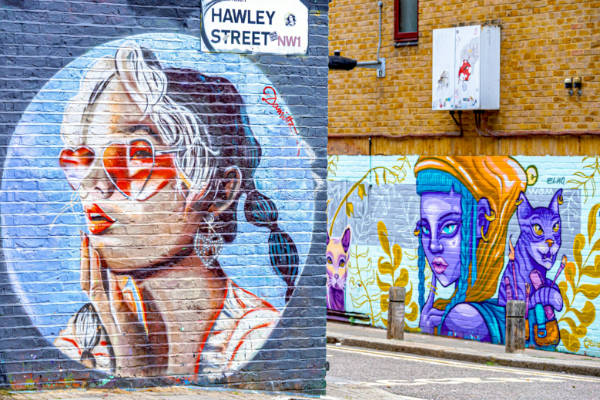
The War Memorial and mural painted on a ventiliation house in Stockwell. PICTURE: Courtesy of Google Maps
The manor of Stockwell was formed at the end of the 13th century when King Edward I acquired the manor of South Lambeth and divided it into two, creating the manors of Stockwell and Vauxhall (the manor house itself, parts of which survived until the 19th century, stood on the north side of Stockwell Road).
The area become known for its market gardens and was transformed into an urban landscape until the mid-19th century. Remnants of the 19th century housing stock can still be found in areas including the Stockwell Park Conservation Area in the west of the district.
The area around Stockwell Tube station, which first opened in 1890 and has since been rebuilt a couple times, was heavily bombed during World War II and rebuilt following the war. New developments included a number of social housing estates.
Today, Stockwell and nearby South Lambeth host the district known as Little Portugal which, centred on South Lambeth Road, is home to one of the UK’s largest Portuguese communities. The area is also home to several other immigrant communities.
Local landmarks include the oldest surviving building in the area – St Andrew’s Church, Stockwell Green (built in 1767), the Stockwell Congregational Church (1798) and the Stockwell War Memorial.
The latter – a white stone tower – is located on a site first laid out in the 1920s and features a mural on an adjoining ventilation shelter commemorating French Resistance fighter Violette Szabo (there’s a Blue Plaque on her former home in Burnley Road) and other Stockwell residents who died in war. There is also the ‘Bronze Woman’ statue which was unveiled in 2008 as a tribute to Black Caribbean women.
Residents of Stockwell have included artist Arthur Rackham and pioneering theatre director Joan Littlewood as well as musician David Bowie (born in Stansfield Road), actors Joanna Lumley (who still lives there) and Roger Moore (born in Aldebert Terrace).
Tragically, Stockwell Tube station was where Brazilian man Jean Charles de Menezes was fatally shot by police on 22nd July, 2005, after being misidentified as one of four suicide bombers who were on the run after their devices had failed to detonate the previous day (the attempts had come just two weeks after the 7th July bombings in which more than 50 people had been killed).
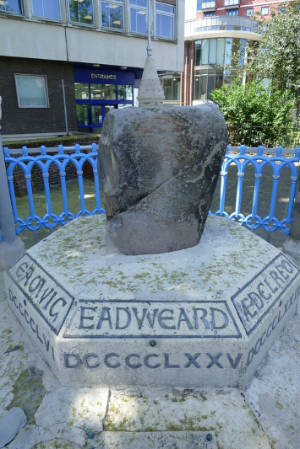
The Coronation Stone in Kingston-upon-Thames. PICTURE: Loz Pycock (licensed under CC BY-SA 2.0)
This month marks the 1,100th anniversary of the coronation of the Saxon King Aethelstan, so we thought it fitting to recall the place of his coronation, believed to be the Coronation Stone at the heart of the south-west London Royal Borough of Kingston upon Thames.
Located outside the Guildhall, the now Grade I-listed stone is an ancient block of sarsen stone which was originally at a chapel, believed to have been wooden, on the edge of the town’s market place (close to the site of All Saints Church which originally dates from the 12th century).
Subscribe to access all of Exploring London’s content for just £3 a month.
• It’s September and that means Totally Thames – London’s annual month-long festival centred on the famous waterway – is underway. This year’s festival includes a packed programme of events which this weekend include the St Katharine Docks Classic Boat Festival, the Kingston River Cultures Festival, a mud-larking exhibition held in the ancient Roman amphitheatre under Guildhall Yard and a Victorian family day out at Crossness Pumping Station. Other highlights include a foreshore archaeology walk at Deptford (14th September), guided tours of the HMS Wellington (20th September), the month-long exhibition of winners and runners-up from the annual Thames Lens photography competition on the Riverside Walkway on the north bank near Millennium Bridge, and, of course, the annual Great River Race (on Saturday, 20th September). For more, head to https://thamesfestivaltrust.org/whats-on/.
• The contribution of Black Londoners is again being celebrated this weekend as Black On The Square returns to Trafalgar Square. The free, family-friendly festival, now in its third year features live music, dance, food and workshops and this year includes a focus on London’s nightlife under the theme ‘Intergenerate’ recognising Black Londoners’ contribution to electronic culture and night life and featuring Garage music producer and DJ Wookie. There will also be a series of stalls offering foods ranging from Caribbean classics to West African vegan bites and artisanal goods including jewellery, art, books, homeware and fashion with the ‘Accra to London’ stall offering a range of items influenced by Ghana’s capital city, Accra, a highlight. Runs from 12pm to 6pm on Saturday. For more, see https://www.london.gov.uk/events/black-square-2025.
• The Great West Road and the Thames have served as key routes into London since Roman times and they’re now the subject of a new exhibition at the Barbican Library. Rivers and Roads features the work of Brentford-based painter Helena Butler, who paints in a semi abstract style to capture the landscape and the feelings and images the local scenery inspires, and ceramic artist Anna Butler, who has produced a series in response to Alfred Noyes’ beloved poem The Shining Streets of London. Admission is free. Runs until 29th September. For more, see www.cityoflondon.gov.uk/events/rivers-and-roads-art-exhibition
Send all items for inclusion to exploringlondon@gmail.com.
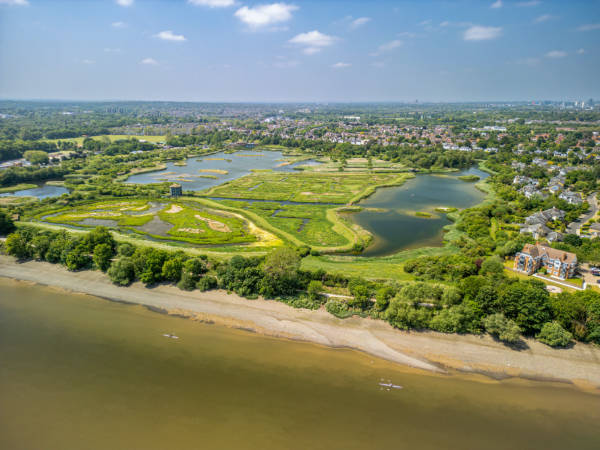
This year celebrating its 25th anniversary, the 105 acre site on the west bank of the River Thames at Barnes known as the WWT London Wetland Centre is a waterway-studded oasis not far from the heart of London.
Subscribe for just £3 a month to access all of our content and support our work at Exploring London!
Aerial view of the WWT London Wetland Centre. PICTURE: yujie chen/iStockphoto
The centre, which is managed by the Wildfowl and Wetlands Trust (founded by Sir Peter Scott in the 1940s), first opened in 2000 on the site which had previously been home to several small reservoirs which had been there since the 1880s.
The reservoirs had been converted into wetland habitats (the work included removing an unexploded bomb from World War II), creating what was, at the time, the largest man-made wetland in any capital city. Sir David Attenborough, who has reportedly described the site as an “extra lung for Londoners”, officially opened the centre, initially known as the Barn Elms Wetland Centre.
In 2002, a significant area of the site – some 29 hectares (72 acres) – was declared a Site of Special Scientific Interest by Natural England.
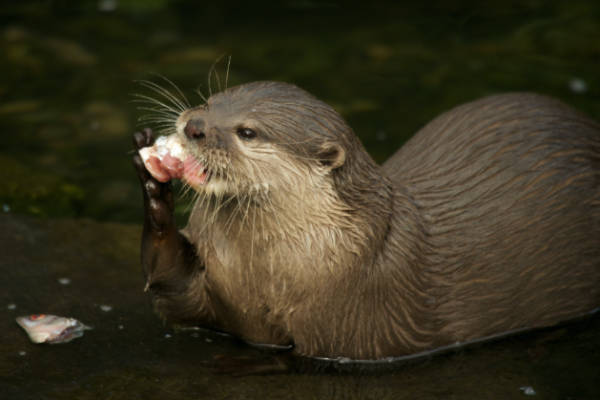
The site is home to a diverse range of wildlife including all manner of birdlife and insects as well as a couple of Asian short-clawed otters, the smallest of all 13 species of otters around the world, and a colony of water voles.
The wide variety of birdlife at the sanctuary – more than 250 species have been recorded – includes American wood ducks, white-faced whistling ducks, Hawaiian geese (nenes) and cranes as well as lapwings, common terns, pochards, sand martins, and reed warblers.
Insects found at the site include moths, dragonflies, crickets, grasshoppers and beetles and during summer months, two of Britain’s rarest bat species – the Leisler’s bat and Nathusius’ pipistrelle – are also often detected hunting over wetlands.
An Asian short-clawed otter eating fish at the WWT London Wetland Centre. PICTURE: nicholas_dale/iStockphoto.
Along with six hides for watching and photographing the wildlife, the site also includes an adventure play area with a zip line, a water play area, a “mud kitchen”, a ‘Wild Walk’ featuring balance beams and bridges, and special pools for “pond dipping”.
The centre also boasts a discovery centre with interactive displays and a cafe. It holds a range of activities each week including walks, photography workshops and special tours, such as a British Sign Language tour.
WHERE: WWT London Wetland Centre, Queen Elizabeth Walk, Barnes (nearest railway station is Barnes Bridge); WHEN: 10am to 5:30pm daily (until the end of October); COST: Adults from £16.29/Junior (3-17 years) from £10.58/Family from £45.81; WEBSITE: www.wwt.org.uk/wetland-centres/london
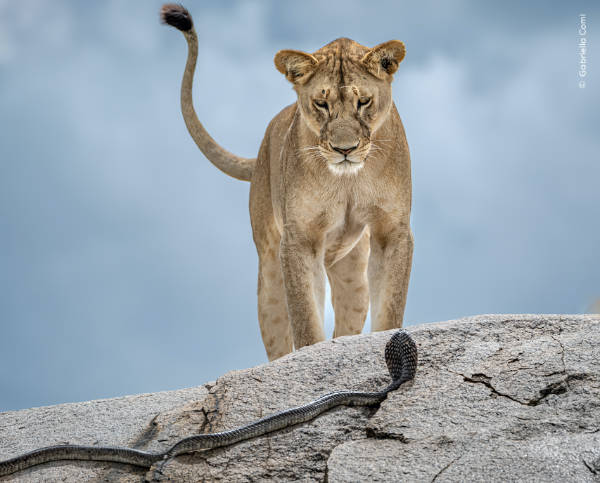
‘Wake-up Call’ by Gabriella Comi, Italy, (Highly Commended, Behaviour: Mammals). PICTURE: Courtesy of the Wildlife Photographer of the Year, Natural History Museum
• Depicting a dramatic stand-off between a lion and a cobra in the Serengeti National Park in Tanzania, Gabriella Comi’s impressive image is among the 60,636 entries, from across 113 countries and territories, received in the Natural History Museum’s 61st annual Wildlife Photographer of the Year competition. The competition’s category winners and the prestigious ‘Grand Title’ and ‘Young Grand Title’ awards will be announced on 14th October, 2025, after which, from 17th October, 100 of the images will go on show at the museum in South Kensington. Other images revealed this week include Amit Eshel’s portrait of an inquisitive pack of Arctic wolves and photographs of flamingoes, coyotes and red deer by emerging young photographers as young as nine-years-old. For more, see https://bit.ly/WPY61Exhibition.
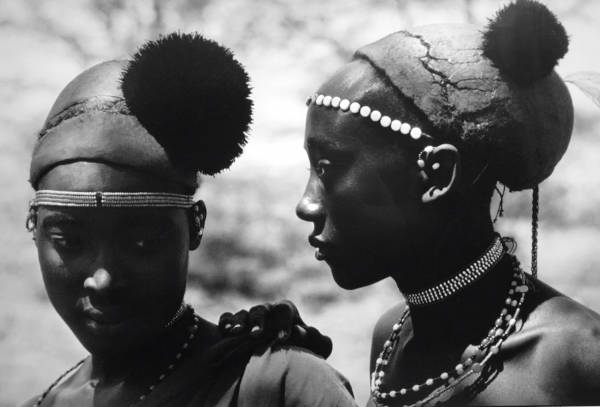
• The Science Museum has launched a new online exhibition, Vanishing Africa, which features images by Kenyan-born photographer Mirella Ricciardi and reveal how much climate change is changing the continent. Taken in East Africa over two years in the 1960s, the photographs are a visual record of the Indigenous peoples of the region, including the Maasai, Samburu, Turkana, Orma, Pokot and Rendille people, and “capture a land of untamed wilderness, diverse wildlife, and Indigenous communities attuned to nature”, an East Africa which many no longer recognise. The exhibition has been published to celebrate the ‘UK/Africa Season of Culture’ and launches ahead of the international climate summit, COP30. To view it, head to www.sciencemuseum.org.uk/objects-and-stories/vanishing-africa-through-mirella-ricciardis-lens.
• On Now: Black Chiswick Through History. This project, launched in 2011, looks at how the history of Chiswick House is connected to Black history and people of colour. This year’s installation explores the life of 18th-century Chiswick House resident James Cumberlidge – one of the few people of African heritage in Britain whose likeness was captured and preserved for posterity – and traces his journey from page boy at Chiswick House to trumpeter in the Royal Court of King George III. There’s also a painting dating from the 1870s which depicts Queen Victoria attending a fashionable garden party right here at Chiswick House in July, 1875. Runs until 28th September. Admission charge applies. For more, see https://chiswickhouseandgardens.org.uk/event/visit-chiswick-house/.
Send all items for inclusion to exploringlondon@gmail.com.
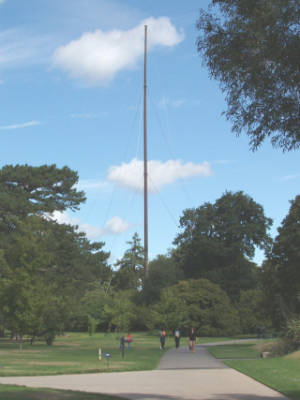
Once the tallest wooden flagpole in the world at 68 (225 feet) tall, the Kew Gardens flagpole stood for almost 50 years before it was dismantled in 2007.
The flagpole, a Douglas fir from Copper Canyon on Vancouver Island, was erected on 5th November, 1959, as a gift from the the British Columbia Loggers Association in Canada to mark both the centenary of the Canadian province of British Columbia (1958) and the bicentenary of Kew Gardens (1959).
The tree, which was around 370-years-old when cut, had originally weighed 37 tonnes, but after it was floated up the Thames to Kew and there underwent shaping, this was reduced to 15 tonnes.
Sadly, in 2006, it unfortunately failed its safety inspection – thanks to decay and woodpeckers – and was taken down the following year.
The flagpole was apparently the third (strictly the fourth) erected on the same site at the gardens which had originally been occupied by the ‘Temple of Victory’, a structure which had been built on the orders of King George III to commemorate the Anglo-German victory over the French at the 1759 Battle of Minden during the Seven Years’ War and which was removed in the mid 19th century.
The first flagpole on the site, which stood more than 31 metres (100 feet) tall. was erected in 1861. It had also come from Vancouver Island in British Columbia and replaced one which had snapped when it was in the process of being erected.
The pole was finally taken down in 1913 after being found to be suffering from dry rot.
A replacement, again from British Columbia, was erected in 1919 (its raising having been somewhat delayed by factors related to World War I). It was removed some time before 1959.
After the third giant flagpole was removed (the concrete footing can still be seen), the gardens decided not to erect another as that would mean cutting down another large tree. While far less of a spectacle, there is now a lesser flagpole near Victoria Gate where the flag is flown on special occasions.

 Exploring London