This Week in London – The Charles Dickens Museum celebrates 100 years; activist Olive Morris commemorated; and, ‘The Story of Soldier Magazine’…

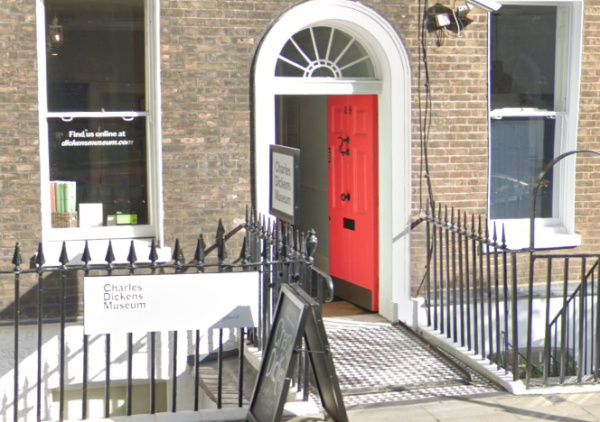
The Charles Dickens Museum. PICTURE: Courtesy of Google Maps

The Charles Dickens Museum, located in the author’s former home at 48 Doughty Street in Bloomsbury, is marking its centenary this year, and to celebrate the occasion, it’s holding a special exhibition of highlights from its collection. The museum, which first opened its doors on 9th June, 1925, has brought together everything from Dickens’ hairbrush, walking stick and only surviving suit through to portraits and photographs made during his lifetime as well as original manuscripts, letters to his family and friends and rare first editions. The exhibition runs on 29th June. Admission charge applies. For more, see https://dickensmuseum.com/.

Housing rights campaigner and activist Olive Morris has been commemorated with an English Heritage Blue Plaque in Brixton. Jamaican-born Morris (1952-1979), who dedicated her life to helping the oppressed and exploited, hosted Black women’s study groups and lived as a squatter at the three storey property at 121 Ralston Road in the 1970s. She was a significant figure in the British Black Panther movement, co-founded the Brixton Black Women’s Group and the Organization of Women of African and Asian Descent in 1978, and was one of the “Old Bailey three” who were acquitted after being prosecuted over a protest outside the Old Bailey, winning the right to a fair representation of Black people on the jury during the court proceedings. For more, see www.english-heritage.org.uk/visit/blue-plaques/.

Soldier magazine, the official magazine of the British Army, is marking its 80th anniversary with an exhibition ay the National Army Museum. The Story of Soldier Magazine charts the publication’s history from March, 1945, when it was launched by Field Marshal Bernard Law Montgomery, through the role it’s played in covering every major conflict since as well as the issues shaping military life. Runs until 6th July. Admission is free. For more, see https://www.nam.ac.uk.

Send all items for inclusion to exploringlondon@gmail.com.
This Week in London – Photographers honoured with Blue Plaques; David Hockney meets Piero dell Francesca; and ‘Taylor on Strings’ at Wembley Park…

Two pioneering photographers are being commemorated with English Heritage Blue Plaques today. Christina Broom (1862-1939) is believed to have been Britain’s first female press photographer while John Thomson (1837-1921) was a ground-breaking photo-journalist working at the advent of the medium. Broom’s plaque – the first to be located in Fulham – is being placed on 92 Munster Road, a terraced house of 1896, where she lived and worked for 26 years. Thomson’s plaque, meanwhile, will be located at what is now 15 Effra Road in Brixton where he and his family were living when one of his best-known and influential works, Street Life in London (1877-8), was published. For more, see www.english-heritage.org.uk/visit/blue-plaques/.

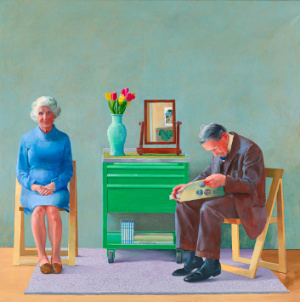
My Parents’ (1977), David Hockney/© David Hockney. Photo: Tate, London

Two of David Hockney’s key works – My Parents (1977) and Looking at Pictures on a Screen (1977) – which feature reproductions of 15th-century Italian painter Piero della Francesca’s The Baptism of Christ (probably about 1437–45) have gone on display alongside the Renaissance work at The National Gallery. Hockney and Piero: A Longer Look explores Hockney’s “lifelong association” with the National Gallery and its collections, particularly in the works of Piero della Francesca (1415/20–1492). Hockney once confessed that he would love to have The Baptism of Christ so he could look at it for an hour each day. My Parents features a reproduction of Piero’s work shown reflected in a mirror on a trolley behind the sitters while Looking at Pictures on a Screen depicts Hockney’s friend Henry Geldzahler, the Belgian-born American curator of 20th-century art at The Metropolitan Museum of Art in New York, peering at a folding screen in the artist’s studio on which are stuck four posters of National Gallery pictures including The Baptism of Christ. The display in Room 46 is free. Runs until 27th October. For more, see www.nationalgallery.org.uk.

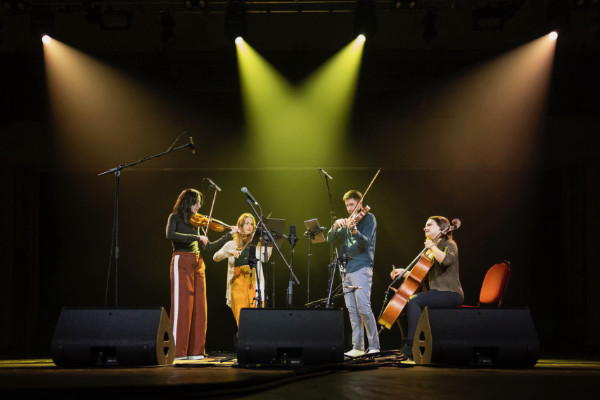
The City String Ensemble. PICTURE: Catherine Frawley

Experience a prelude of Taylor Swift at Wembley Park with with City String Ensemble playing more than a dozen interpretations of Taylor Swift songs. The free open air concert comes ahead of Swift’s return to Wembley Stadium later this month. ‘Taylor on Strings’ will be held at the Sound Shell from 6:30pm on 13th August. Tickets are free but must be booked with 30 released at 10am each day in the lead-up to the concert. For more, head to wembleypark.com/taylor-on-strings.

Send all items for inclusion to exploringlondon@gmail.com

LondonLife – Insights into the British Black experience…

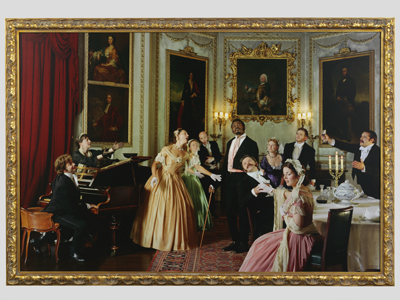
Yinka_Shonibare_Diary_of_a_Victorian_Dandy__Yinka_Shonibare_Victoria_and_Albert_London

Part of Yinka Shonibare’s large scale series, Diary of a Victorian Dandy is one of more than 50 photographs exploring the experiences of black people in Britain in the latter half of the 20th century which feature in the V&A’s new exhibition, Staying Power: Photographs of Black British Experience 1950s-1990s. The photographs have been selected from 118 works by 17 artists which the South Kensington museum – working in partnership with Black Cultural Archives – has acquired over the last seven years in a project funded by the Heritage Lottery Fund. Along with Shonibare’s 1998 series, others on display include intimate portrayals of British-Caribbean life in London in the 1960s-70s by Neil Kenlock, Armet Francis, Dennis Morris and Charlie Phillips along with Raphael Albert’s depictions of the black beauty pageants he organised from the 1960s to the 1980s, and Norman ‘Normski’ Anderson’s colourful depictions of vibrant youth culture of the 1980s and Nineties. The display is accompanied by oral histories on a range of subjects – including recollections of the photographers, their relatives, and the people depicted in the images – which have been collated by Black Cultural Archives. Runs until 24th May in gallery 38A (admission is free) Coinciding with the exhibition, the BCA is presenting a display of 25 more photographs drawn from the V&A’s collection at their heritage centre in Brixton (runs until 30th June; admission is free). For more, see www.vam.ac.uk/stayingpower (and for the Brixton exhibition, see www.bcaheritage.org.ukPICTURE: © Yinka Shonibare/Victoria and Albert, London.

Around London – Brixton Windmill reopens; offload your Royal Wedding bunting; and, Women War Artists…

The Brixton Windmill, the only surviving windmill in inner London, was reopened to the public amid much celebration on 1st May. The windmill, located at Windmill Gardens, was built in 1816 and leased the following year by John Ashby. The Ashby family – including the sons and grandsons of John – operated the mill until the 1860s when the Ashby’s milling business was transferred to what was then a more rural location at Mitcham. Two years later the sails were removed and the mill was subsequently used for storage. A steam and later a gas engine were fitted to the mill in the early 20th century but it was finally closed down in 1934. In the 1970s, the mill passed into the ownership of Lambeth Council. A £400,000 Heritage Lottery grant obtained by Friends of Windmill Gardens and Lambeth Council has enabled a complete restoration of the Grade II* listed building. For more details on the mill, including opening hours and events, see www.brixtonwindmill.org.

• Wanting to offload some Royal Wedding tat? The Museum of London is looking for objects which help tell the story of how London celebrated the marriage of Prince William and Kate Middleton. They are particularly interested in acquiring materials people used in street parties or private celebrations – everything from paper plates and napkins to bunting and “funny hats”. Donations are unable to be returned even if not used. For details on where to send items, see www.museumoflondon.org.uk/Corporate/Press-media/Remembering+the+Royal+Wedding.htm

Now On: Women War Artists at the Imperial War Museum. Covering the period from World War I to the Kosovo conflict of the 1990s, the exhibition features the work of artists including Anna Airy, one of the first women officially commissioned during the First World War, Dame Laura Knight, Linda Kitson and Frauke Eigen. Admission is free. Runs until 8th January, 2012. For more information, see www.iwm.org.uk.

Around London – Transport depot open day; Brixton Windmill to reopen; and, St Pancras’ Olympic Rings

The London Transport Museum Depot’s ‘Open Weekend’ kicks off on Saturday. The weekend of events at the depot in Gunnersbury Lane, Acton, will feature model railways, the chance to ride the Acton Miniature Railway – on either a replica 1938 tube train or a Metropolitan steam train – as well as heritage buses, and talks by author and broadcaster Christian Wolmar on his books Engines of War and Subterranean Railway. There will also be events specifically for children. The depot is home to more than 370,000 objects including road and rail vehicles, posters and artwork, and ticket machines. Events run from 11am to 5pm (last entry 4pm). There is an admission charge. For more information, see www.ltmuseum.co.uk/whats-on/museum-depot/events

Brixton Windmill, the only surviving windmill in inner London, will be open to the public from 2nd May after a major restoration project. The Grade II* listed building, located in Windmill Gardens in Brixton, south-east London, was built in 1816 and was owned by the Ashby family until it ceased production in 1934. It was purchased by the London County Council in 1957 but had since fallen into disrepair. The restoration project, which kicked off in October last year, was partly funded by a £397,700 Heritage Lottery Fund grant obtained by Friends of Windmill Gardens and Lambeth Council. It is envisaged that interpretation materials will be installed and a programme of educational activities run at the site – including growing wheat and mixing flour – after the completion of the restoration work. See www.brixtonwindmill.org for more information.

Giant Olympic Rings were unveiled at St Pancras International earlier this month. The 20 metre wide and nine metre high rings, which have been suspended from the station’s roof, weigh 2,300 kilograms and are made from aluminium. Built in Hertfordshire over four weeks, they took seven nights to install. They’re the first in a series of Olympic Rings that will appear around the city in the lead-up to the 2012 Games. The Olympics was last held in London in 1948.