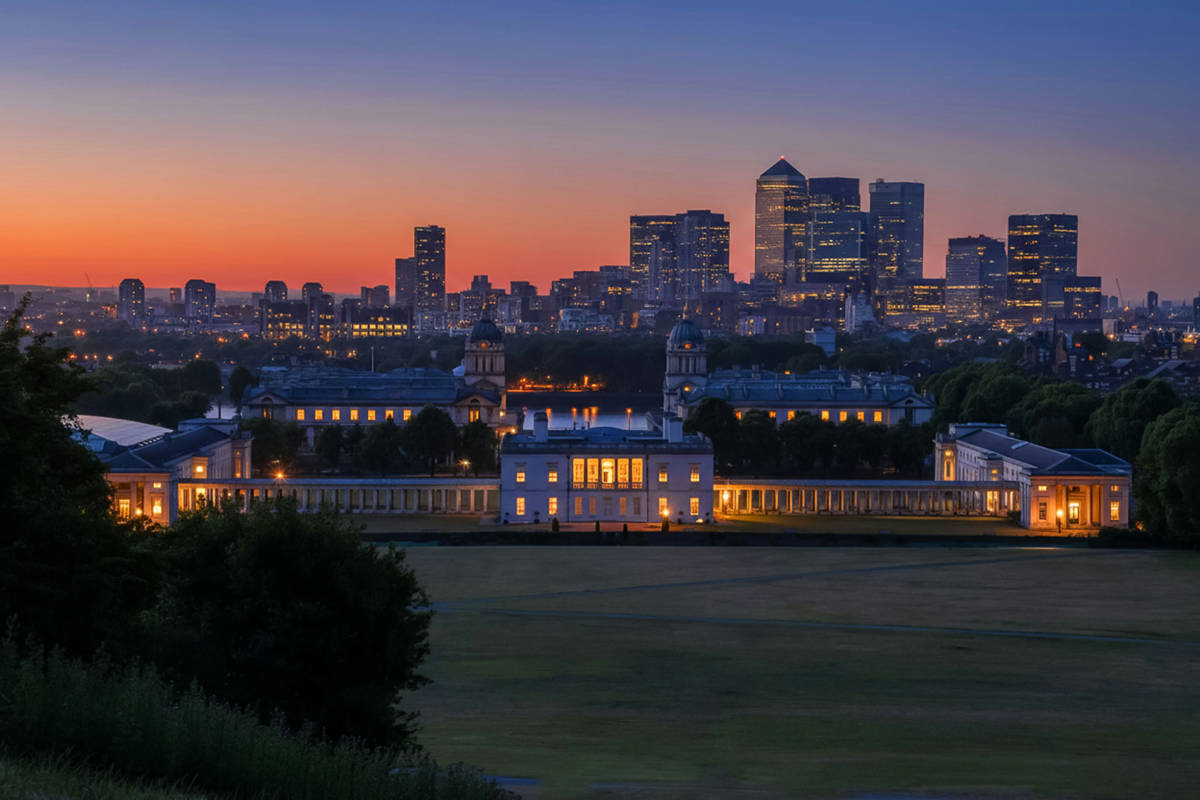
LondonLife – Greenwich overwatch…
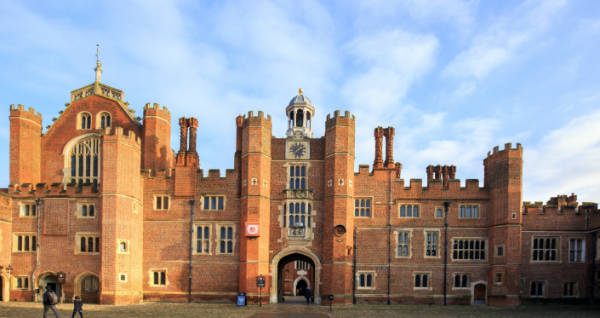
• Christmas has come to Hampton Court Palace with the one-time home of King Henry VIII decorated with traditional decorations and hosting a range of Christmas-related activities. Musicians located throughout the palace are playing a mixture of classical tunes and familiar Christmas melodies while in the Wine Cellar “intriguing history” of Christmas is being brought to life in story-telling sessions. The culinary Christmas traditions of the Tudors, meanwhile, are on display in the historic kitchens with, between 20th December and 4th January, the Historic Kitchens team recreating recipes from the Tudor court. The Magic Garden is hosting a special playful outdoor adventure for younger ones between 17th December and 4th January. The Hampton Court Palace Ice Rink has also returned (until 4th January) and there’s a Christmas market being held in the Great Fountain Garden on 5th to 7th December and again on 12th to 14th December. The Festive Fayre will feature more than 100 independent exhibitors offering artisan food and drink, unique gifts and stocking fillers while there will be live music on the East Front bandstand and horse and cart rides in the grounds. Admission charge applies. For more on Christmas activties at the palace head to www.hrp.org.uk/hampton-court-palace/whats-on/christmas-festivities/.
• Caravaggio’s Victorious Cupid – never-before seen in public in the UK – is at the centre of a new exhibition which has opened at the Wallace Collection. The sculpture is presented with two Roman sculptures that along with the Caravaggio were all once part of the portfolio of Marchese Vincenzo Giustiniani (1564–1637), one of the most celebrated collectors of his day. The life-sized Cupid was once displayed along with works by the likes of Raphael, Titian and Giorgione in his grand palazzo located near the Pantheon in Rome along with an extensive gallery of classical sculpture. Caravaggio’s Cupid, which is free to enter, can be seen in the Exhibition Galleries until 12th April. For more, see www.wallacecollection.org/whats-on/exhibitions-displays/caravaggios-cupid/.
• A new display honouring the livelihoods, creativity and craft of Romani communities and their contribution to British society has opened at the London Museum Docklands. By Appointment Only: Romani art, culture and heritage centres on three works, Sugar Coated (2025) by Corrina Eastwood, Tap Your Heels Together Three Times (2025) by Delaine Le Bas and What Makes a Home? (2025) by Dan Turner. There’s also timeline by John-Henry Phillips which illustrates the history of Romani communities from 500-1000 up to 2022. This is displayed along with the Historic England film Searching for Romani Gypsy Heritage with John Henry Phillips (2024) and an oral history piece both of which contextualise the timeline. The exhibition in the Reflections Room is free. For more, see www.londonmuseum.org.uk/whats-on/by-appointment-only/.
Send all items for inclusion to exploringlondon@gmail.com.
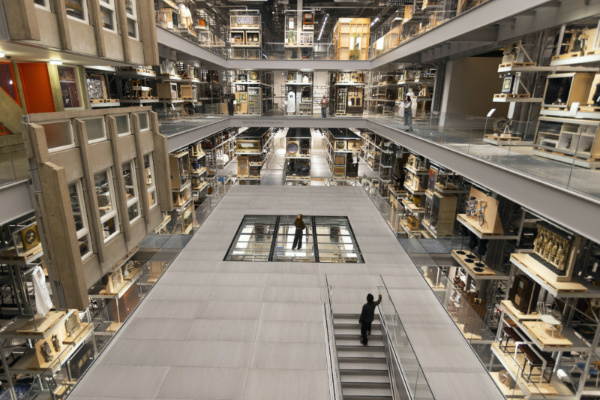
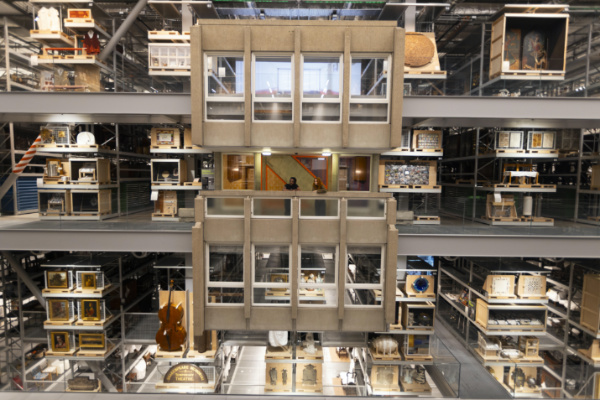
• The V&A East Storehouse opens to the public for the first time in Queen Elizabeth Olympic Park this Saturday. The venue features more than 100 mini-displays centred on the themes of ‘Collecting Stories’, ‘Sourcebook for Design’ and ‘The Working Museum’ and boasting more than 1,500 items from across the V&A’s collections with works by Hew Locke, Zaha Hadid, Daniel Liebskind and Thomas Heatherwick’s London 2012 Olympic cauldron model among those featured. A massive 11-metre-wide stage cloth designed by Pablo Picasso for the Ballets Russes’ 1924 production, Le Train Bleu, will be displayed for first time in more than 10 years while among large scale objects are a section of the now-demolished housing estate, Robin Hood Gardens, and Frank Lloyd Wright’s 1930s Kaufmann Office – the only Frank Lloyd Wright interior outside of the US. Anyone can book access to any object in the storehouse for free via the ‘Order an Object’ process and the venue is also hosting a series of live events including back2back: Archival Bodies, and new programming strand, A Life in the Work of Others – featuring Turner-Prize-winning artist, Jasleen Kaur. Admission to the Storehouse at Queen Elizabeth Olympic Park in Stratford, is free. For more, see www.vam.ac.uk/east.
• The home where novelist Barbara Pym began writing her celebrated 1952 novel Excellent Women has been given an English Heritage Blue Plaque. Pym lived at the second floor flat at 108 Cambridge Street in Pimlico with her sister Hilary between November 1945 to autumn 1949. It was from a corner room, overlooking Warwick Square and St Gabriel’s Church, that she meticulously recorded her observations, and laid the groundwork for her distinctive literary voice. Her work during this period also included revising the text for her first published novel, Some Tame Gazelle (1950). In March, three more Blue Plaques were unveiled commemorating women: Una Marson (1905–1965), the BBC’s first Black woman producer at The Mansions, Mill Lane in West Hampstead where she lived from at least 1939 to 1943; and, Rhoda Garrett (1841–1882) and Agnes Garrett (1845–1935), at 2 Gower Street in Bloomsbury where they founded Britain’s first female-run interior-decorating business. For more, see www.english-heritage.org.uk/visit/blue-plaques/.
• A free family trail inspired by Jessie Burton’s new children’s book, Hidden Treasure, has launched at the London Museum Docklands. Inspired by the tale of two young mudlarks, the trail takes families on a journey around the museum’s galleries to learn more about centuries of life by the river. It’s aimed at children under 12-years-old, who also have free entry into the museum’s mudlarking exhibition, Secrets of the Thames. For more, see www.londonmuseum.org.uk.
Send all items for inclusion to exploringlondon@gmail.com
These docks located in Blackwall were among the large number of docks built in the first half of the 19th century and were, as the name suggests, established by the East India Company.
Located on the southern end of the Isle of Dogs, Millwall Dock opened in March, 1868.
This series of three inter-connected docks in London’s east were once the largest enclosed docks in the world (they’re still the largest enclosed docks in the UK).
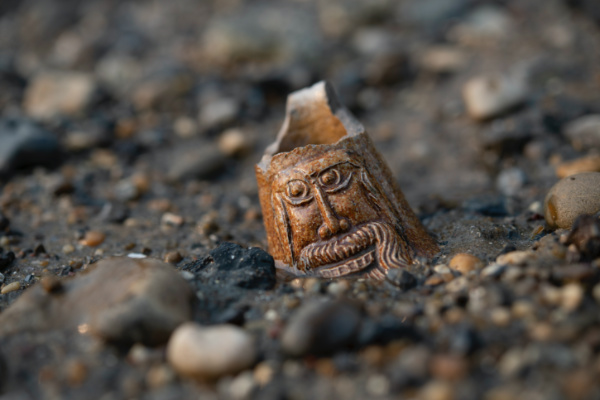
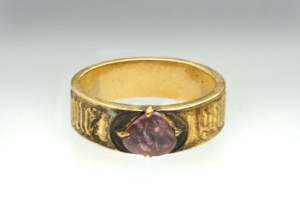
• The first major exhibition on mudlarking opens at the Museum of London Docklands tomorrow. Secrets of the Thames: Mudlarking London’s lost treasures features some of the fascinating finds made along the Thames foreshore – from a Tudor head-dress and a medieval gold ring to an an elaborately decorated Viking era dagger and a pair of 18th century false teeth. While mudlarking was historically an activity of the poor, often children, during the 19th century, it has evolved into a popular hobby for some (albeir permits are required) and in recent years led to some spectacular finds. Others among the more than 350 objects on show include a 16th century ivory sundial, the nationally significant Iron Age Battersea Shield, a pair of medieval spectacles, 16th century wig curlers, and a Roman badge decorated with a phallus. The exhibition also features the installation, The Moon by artist Luke Jerram, which highlights the role the moon and tides play in creating the unique conditions for mudlarks to explore the river’s banks. Admission charge applies. Runs until 1st March next year. For more, see www.londonmuseum.org.uk/whats-on/secrets-thames/.
• The hidden world of MI5 is being revealed in a new exhibition opening at the National Archives in Kew on Saturday. MI5: Official Secrets features original case files, photographs and papers alongside equipment used by spies and spy-catchers during the organisation’s 115 year history. Among the items on show are first-hand account of Kim Philby’s confession in 1963, papers related to the past activities of Cambridge spy Anthony Blunt, M15’s first camera – a pocket-sized ‘Ensignette’ made by Houghton Ltd from 1910, evidence that led to German spy Josef Jakobs being the last person executed at the Tower of London, and, advanced radio equipment found buried in the garden of Soviet spies Helen and Peter Kroger in the 1960s. The exhibition also features video insights from former MI5 directors general, intelligence experts including Professor Christopher Andrew – author of MI5’s official history, and Baroness May, former Prime Minister and one of Britain’s longest serving Home Secretaries. The exhibition is free to visit and runs until 28th September. For more, see https://www.nationalarchives.gov.uk/mi5-official-secrets/.
• The first new permanent gallery at the Natural History Museum – Fixing Our Broken Planet – opens today. The new gallery brings together pioneering research from the museum’s scientists with advice from environmentalists and young changemakers on how to better care for the planet and its future and aims to be a “definitive destination for those looking to explore the threats to our natural world whilst discovering where solutions can be found”. Visitors will come face-to-face with more than 250 specimens including a Sumatran rhinoceros, parasitic worms and whale’s earwax; each telling an important story about our fragile relationship with the natural world and will also see research showing how fungi is used to fertilise crops, how bacteria can be harnessed to extract copper from mine waste, how bison are helping to engineer forests in the UK to store more carbon and how vital DNA analysis on mosquitos is being used to fight mosquito-borne diseases, such as malaria. The new display is located in the restored original 1881 Waterhouse building. The gallery is free to visit. For more, see www.nhm.ac.uk.
• Send all items to exploringlondon@gmail.com
A complex of three docks located on the Isle of Dogs, the West India Docks were founded more than 200 years ago and in recent decades have been redeveloped as the financial centre of Canary Wharf.
The oldest riverside wet dock in London (and for many years the largest), the origins of the expansive Greenland Dock in Rotherhithe go back to the late 17th century.
Located just to the east of the Tower of London, St Katharine Docks were opened in 1828 following the demolition of more than 1,000 houses along with a brewery and what was left of the medieval St Katharine’s Hospital.
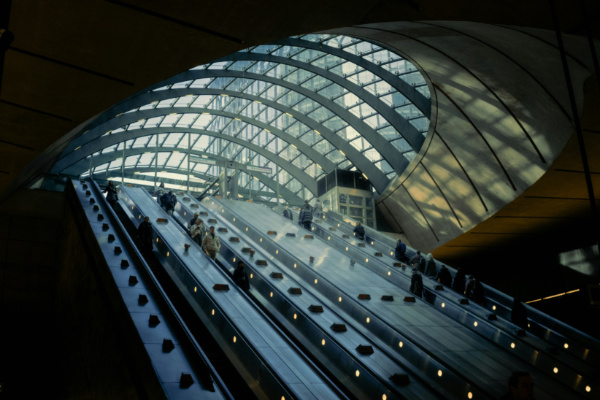
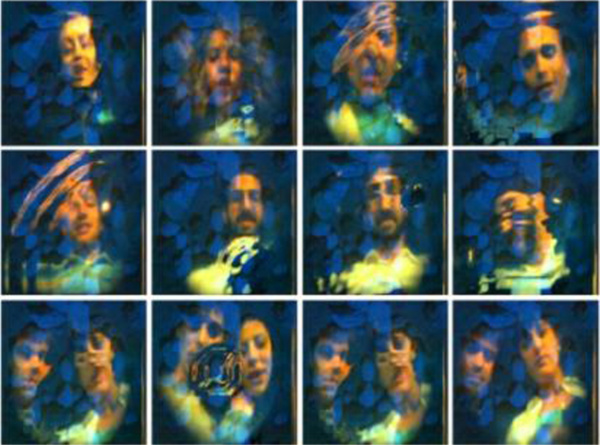
• Early innovators of optical, kinetic, programmed and digital art are being celebrated in a new exhibition which opens today at Tate Modern. Electric Dreams: Art and Technology Before the Internet features the work of more than 70 artists who worked between the 1950s and the dawn of the internet age and “who took inspiration from science to create art that expands and tests the senses”. Works on show include Electric Dress (1957) by Japanese artist Atsuko Tanaka of the Gutai group which is being shown alongside her circuit-like drawings, German artist Otto Piene’s Light Room (Jena) which surrounds viewers in a continuous light ‘ballet’, British-Canadian Brion Gysin’s homemade mechanical device, Dreamachine no.9 (1960-76) which creates kaleidoscopic patterns, and Tatsuo Miyajima’s eight-metre-long wall installation of flashing LED lights, Lattice B (1990), which is a meditation on time. A series of rooms, meanwhile, explores the art shows which played a key role in the development of digital art including London’s groundbreaking ‘Cybernetic Serendipity’ exhibition held at the ICA in 1968, and the exhibition also features the work of early adopters including US artist Rebecca Allen and Palestinian Samia Halaby as well as some of the earliest artistic experiments in virtual reality such as Monika Fleischmann and Wolfgang Strauss’ interactive installation Liquid Views (1992). Runs until 1st June. Admission charge applies. For more, see tate.org.uk.
• The Museum of London Docklands is launching The Reflection Room, a new display space for artists on Friday. The new space, which the museum says will offer “room to explore a range of ideas and perspectives that foreground emotions and human experiences connected to London’s history”, will open with British-Caribbean artist Zak Ové’s mixed media installation Exodus. The installation, which is said to suggest a “reflection on today’s discourse around migration” will be accompanied by a wall of historic maps that present a visual sense of data on international migration, agricultural trade, and tourism between 1500 and 2005. Exodus can be seen until May. Admission is free. For more, see www.londonmuseum.org.uk/docklands/.
• The final tranche of tickets for London’s New Year’s Eve fireworks display go on sale on Monday, 2nd December, at noon. Tickets must be bought in advance to attend and cost between £20 and £50 depending on the viewing area while Londoners will pay £15 less on each ticket booked than those living outside of the capital. Tickets will be available at www.ticketmaster.co.uk. For more on the event, see www.london.gov.uk/nye.
Send items for inclusion to exploringlondon@gmail.com.
• The most complete Roman pottery kiln found in Greater London is going on public display in Highgate Wood in what is the first public showing since its discovery in 1968. The kiln has been restored thanks to a £243,550 National Lottery Heritage Fund grant and will be unveiled at 11am on Sunday as part of the annual Highgate Wood Community Heritage Day. The day, which runs until 4pm, will see the firing of a replica kiln and there will also be guided walks, a children’s Roman-themed woodland adventure workshop, arts, crafts, and other activities. The kiln will be on show in the Information Hut. For more, see www.cityoflondon.gov.uk/events/highgate-wood-community-heritage-day.
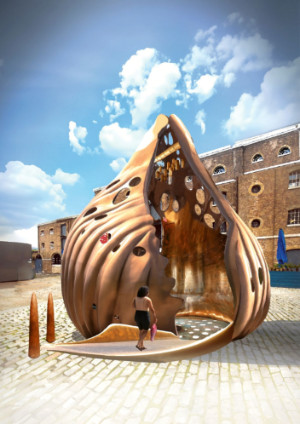
• Khaleb Brooks’ sculpture The Wake has been selected as the new Memorial to Victims of Transatlantic Slavery to be located at West India Quay. The design, which features a seven metre tall cowrie shell in recognition of the shell’s role as symbol of slavery. A number of smaller shells will also be installed at other locations in London that have connections to the trade of enslaved people. Khaleb’s work was selected from a shortlist of six proposals by an artistic advisory panel of experts following a public consultation period. The memorial will be unveiled in 2026.
Send all items to exploringlondon@gmail.com.
• Members of the public are invited to view a shortlist of ideas for the proposed Memorial to Victims of Transatlantic Slavery to be located in West India Quay. Mayor of London Sadiq Khan pledged £500,000 to fund the memorial which will be the first of its kind in the UK. Short-listed works include Alberta Whittle”s Echoes from beneath the deep and in between the canes (a Caribbean-style pavilion alongside a sugarcane field and cowrie shells which are synonymous with the trade in enslaved people); Zak Ové’s Nana Buluku (an 11 metre tall and richly decorated representation of an African Queen, Nana Buluku); Grada Kilomba’s Archaeology of Contemplation (this uses the image of a boat as a metaphor of remembrance, remembering those who were transported as cargo by the British and other nations); Helen Cammock’s Ripple (a large-scale, circular stone structure with six discoverable engraved texts in West African wood); Hew Locke’s Memorial for the victims of the transatlantic slave trade (bronze sculptures of boys and girls carrying buildings which were built in London from money earned by the trade in enslaved people); and, Khaleb Brooks – The Wake (a large scale cowrie shell which represents the perseverance, prosperity and beauty rooted in African and African diasporic heritage). An online exhibition of the shortlisted work is available to view on https://www.london.gov.uk/transatlantic-slavery-memorial and the public is invited to give their feedback.
• Winning entries from the Royal Parks’ photographic competition Creating Spaces for Life can be seen online. Take a gander, which features four goslings under the protective wing of a parent, won the competition which invited visitors to photograph the new life emerging in the eight Royal Parks during the springtime. Other entries among the winners included a swan taking flight, a silhouetted coot appearing to walk on water and a common blue butterfly pictured in the spring sunshine. To see the winning images, head to www.royalparks.org.uk/photography-competition-creating-spaces-for-life.
Send all items to exploringlondon@gmail.com.
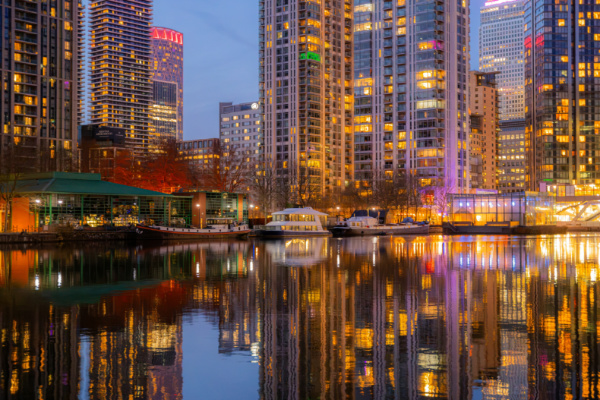
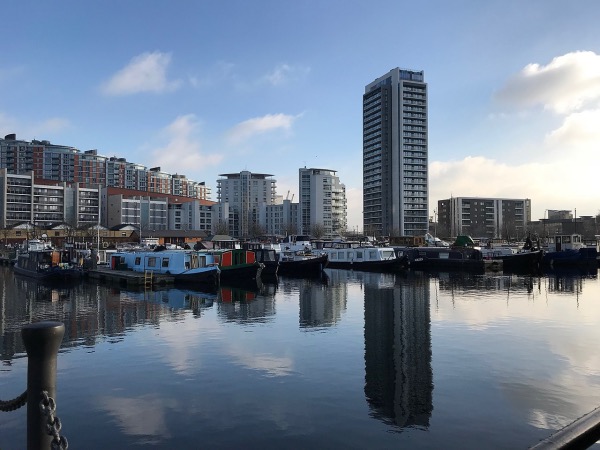
Though they no longer in evidence, this Thames-side East London district takes its name from the Black Poplar trees which were once abundant in the area.
The area was apparently fertile ground for the poplars thanks to the proximity of the Lea and Thames Rivers which created the moist soil the tree needs. There was still a poplar tree in the area until the mid-1980s.
The name goes back to the 14th century but Poplar wasn’t an independent parish until the 19th century (before which it was a hamlet of Stepney). Poplar is now part of the Borough of Tower Hamlets.
The medieval village of Poplar was centred on Poplar High Street and the East India Company, which built ships in Blackwall Yard, established a chapel and almshouses in Poplar.
The area expanded rapidly in the early 19th century thanks to the maritime industries that grew up here but by late that century this had diversified into other manufacturing and transport-related industries.
The area has long had a maritime association with ship fitting taking place in the area from the 15th century. Poplar was impacted by bombings during World War I and then devastated during the Blitz with about half the houses in the area damaged and the population dropping significantly as a result.
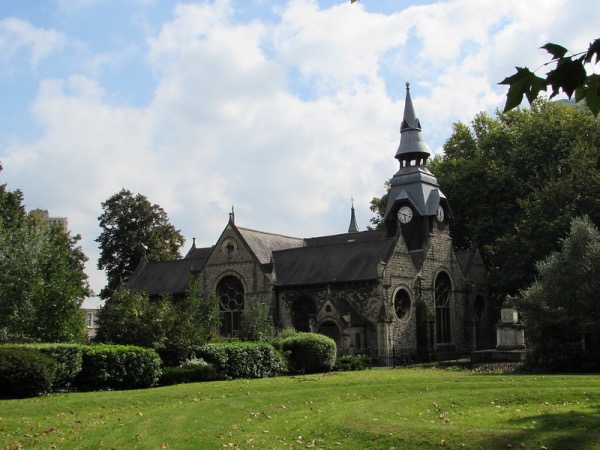
Landmark buildings include the old Poplar Town Hall, now a hotel, the Grade II*-listed St Matthias Old Church (originally the chapel built by the East India Company in 1654 and now a community centre), the Grade II-listed All Saints Church, dating from 1821-23, and the Museum of London Docklands at West India Quay.
The area also features considerable post-war housing including the Brutalist-style 26 storey Balfron Tower. In more recent years, with the development of the Docklands and the linking of the area to the city by the Docklands Light Railway, the area has continued to undergo regeneration.
• An iconic red coat worn by Princess Diana when she announced she was pregnant with Prince William is going on show in a new exhibition at the Museum of London Docklands at West India Quay. Fashion City: How Jewish Londoners shaped global style – the first major exhibition in two decades centred on the museum’s extensive dress and textile collection – tells the story of Jewish designers, makers and retailers responsible for some of the most recognisable looks of the 20th century. As well as the David Sassoon-designed coat, it also features a newly acquired Alexon tweed coat worn by EastEnders character Dot Cotton, hats relating to the ‘milliner millionaire’, Otto Lucas, who changed the global reputation of British fashion in the mid-20th century, and garments designed by Mr Fish, a leading figure of the Peacock Revolution whose flamboyant menswear was worn by stars including Jimi Hendrix, David Bowie, and Muhammad Ali. The fashion items are joined by personal items from some of the 200,000 Jewish people who arrived in Britain between the late 19th and mid 20th century, such as a small travelling case used by a child arriving in London as part of the Kindertransport (the rescue effort of children from Nazi-controlled territory in 1938-1939), and a leather bag owned by a woman who fled from Vienna in 1938. Opens on Friday and runs until 14th April next year. Admission charges apply. For more, see www.museumoflondon.org.uk/museum-london-docklands/whats-on/exhibitions/fashion-city
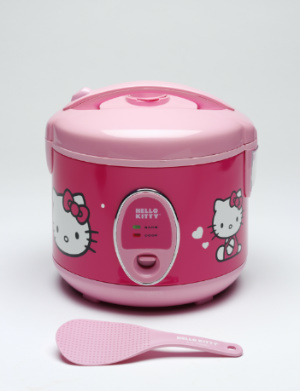
• Drawing on everything from Hokusai to Pokémon and Studio Ghibli, the influence of Japanese folklore on Japan’s art and design is the subject of the first exhibition at the new Young V&A. Japan: Myths to Manga is divided into four sections – Sky, Sea, Forest, and City – and features more than 150 historic and contemporary objects along with hands-on activities for visitors of all ages ranging from manga-making to Taiko drumming and yōkai interactive. Highlights in the display include works by celebrated 19th century Japanese artists, such as Hokusai’s Great Wave (1831), Sylvanian families matched with historic netsuke (small sculptures), a stage model for the Royal Shakespeare Company’s production of My Neighbour Totoro, and a Hello Kitty rice cooker from 2014. An installation of 1,000 paper cranes, a symbol of remembrance from the Hiroshima Peace Memorial Park in Japan, will also be present. The display, which opens at the Bethnal Green premises on Saturday, runs until 11th August next year. Admission charges apply. A series of events linked to the exhibition are also being run. For more, see www.vam.ac.uk/exhibitions/japan-myths-to-manga.
• Anti-racism activist and a ‘founding spirit’ of the Notting Hill Carnival, Claudia Jones, has been honoured with an English Heritage Blue Plaque in Vauxhall. The plaque marks the mid-19th century terraced house that was her home for almost four years during which she founded the West Indian Gazette and came up with the idea of bringing Caribbean carnival to London (the first carnival took place in It was during her time living in this shared dwelling that Jones founded the West Indian Gazette and came up with the idea of bringing Caribbean carnival to London (the first carnival took place in St Pancras Town Hall on 30th January, 1959; the Notting Hill Carnival, an outdoor event, came later). For more, see www.english-heritage.org.uk/visit/blue-plaques/.
Send all items for inclusion to exploringlondon@gmail.com.
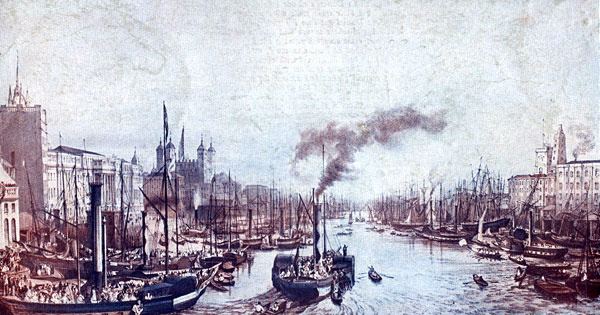
A stretch of the River Thames which spans the area from London Bridge to below Limehouse, the Pool of London was the highest part of the river navigable by tall-masted ships (thanks to the them not being able to pass under London Bridge).
The term originally referred to the stretch of the river at Billingsgate in the City of London which was where all imports had to be delivered for inspection by customs officers (hence these wharves were given the name ‘legal quays’).
But as trade expanded and reached its peak in the 18th and 19th centuries, so too did the stretch referred to as the “Pool of London”. It came to be divided into two sections – the Upper Pool, which stretches from London Bridge to Cherry Garden Pier in Bermondsey (and is bisected by Tower Bridge), and the Lower Pool, which stretched from the latter pier to Limekiln Creek.
The Upper Pool’s north bank includes the Tower of London, the old Billingsgate Market and the entrance to St Katharine’s Dock while the south bank features Hay’s Wharf and the HMS Belfast. The Lower Pool’s north bank includes the entrance to Limehouse Cut as well as Regent’s Canal and Execution Docks while below it runs the Thames and Rotherhithe Tunnels.
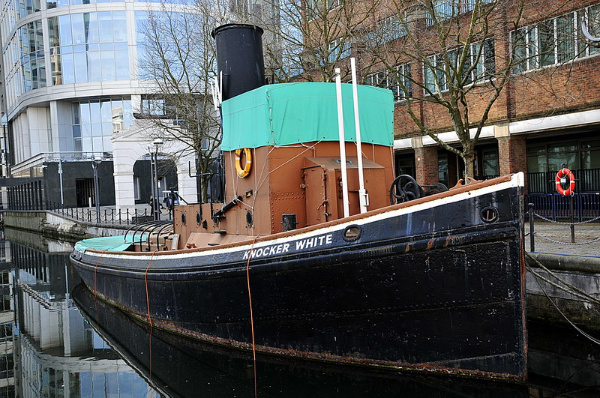
A Dutch-built tugboat, the Knocker White (originally called the steam tug Cairnrock) was built in 1924 by T Van Duijvendijk’s yard at Lekkerkek near Rotterdam, Netherlands for Harrisons (London) Lighterage Ltd.
Following the installation of a steam engine and boiler at Great Yarmouth, the steel-hulled Cairnrock – which was designed for general towage work and featured a drop-down funnel for travelling under bridges – was initially used to Tow the Harrisons’ floating steam-powered coal elevator Wotan around the lower reaches of the Thames.
In 1960, the 77 foot long tug was sold and passed through the hands of a couple of different owners and ended up, by 1962, in the hands of WE White and Sons. It was during this time that its name was changed (after a White family nickname), marine diesel engines installed and the steam engines and boilers removed.
The Knocker White continued in service, operating out of the WE White & Sons base at Hope Wharf in Rotherhithe, working on the Thames and the Solent until 1982.
In November of that year, it was sold for scrap to Todd (Breakers) Ltd of Dartford but, after being drawn to the attention of the Museum of London, was acquired by them in March 1985 as a classic example of an early tall-funnelled Thames steam tug.
In November, 2016, the Knocker White – along with the Varlet – was acquired by Trinity Buoy Wharf with the aim of restoring the vessel and putting on public display. It can be seen moored at the wharf today.
 Exploring London