This Week in London – Turner’s ‘The Battle of Trafalgar’ returns to public display; Halloween at Hampton; Diwali at Greenwich; and, NYE tickets…

The Queen’s House, Greenwich. PICTURE: Frank Chou/Unsplash

Artist JMW Turner’s only royal commission has returned to public display in Greenwich to mark the 250th anniversary of the artist’s birth. The more than three metre-wide painting (Turner’s largest completed work), The Battle of Trafalgar, went on display on Tuesday – 220 years to the day since the battle it depicts – at the Queen’s House. The 1824 painting, which was commissioned by King George IV, commemorates the victory of the British Royal Navy over a combined French and Spanish fleet off Cape Trafalgar on 21st October, 1805. First displayed at St James’s Palace, it was transferred to the Naval Gallery at Greenwich Hospital in 1829. It was removed from public display in March last year to protect it during a works project at the National Maritime Museum and has now found a new home at the Queen’s House. Admission is free. For more, see www.rmg.co.uk/queens-house.

The ghosts of King Henry VIII and Oliver Cromwell are among those which can be encountered at Hampton Court Palace from Friday as it marks Halloween. Immersive Halloween-inspired installations with unearth the stories of some of the palace’s former residents while outside there’s a Haunted Garden complete with skeletal horse and carriage. Halloween season at the palace runs until 2nd November and is included in general admission. For more, see www.hrp.org.uk/hampton-court-palace/whats-on/halloween-at-hampton-court-palace/.

Diwali, the annual Hindu celebration, comes to the National Maritime Museum in Greenwich this Saturday with the ‘Illuminate’ festival. The free festival, which runs from 11am to 5pm and is curated by Mehala Ford – founder of South Asian art collective COMMONGROUND&, includes performances, creative workshops including traditional Rangoli art and Henna art, storytelling sessions including a puppet show telling the epic story of Ramayana, and a lantern parade around Greenwich Park. There ares also talks and Diwali-inspired food. For more, see www.rmg.co.uk/whats-on/national-maritime-museum/diwali.

Tickets to London’s New Year’s Eve celebrations have gone on sale. The 12 minute show celebrating the new year will kicks off with the familiar sounds of Big Ben’s chimes, before thousands of fireworks and hundreds of lights help to illuminate the night sky around the London Eye all set to a wide-ranging soundtrack. Around 100,000 Londoners and visitors are expected to attend. Ticket prices are between £20 and £35 for Londoners and £40 and £55 for visitors. For more, see www.london.gov.uk/nye.

Send all items for inclusion to exploringlondon@gmail.com
Treasures of London – The Abraham Tapestries, Hampton Court Palace…

Hanging in the Tudor Great Hall at Hampton Court Palace, this series of 10 huge tapestries are believed to have been commissioned by King Henry VIII and were first hung in the hall in 1546.

To see the rest of this post (and all of our coverage), subscribe for just £3 a month. This small contribution – less than the cost of a cup of coffee – will help us continue and grow our coverage. We appreciate your support!

This Week in London – London Design Biennale; canal wildlife; a suffragette princess honoured; and, the ‘Polar Silk Road’ explored…

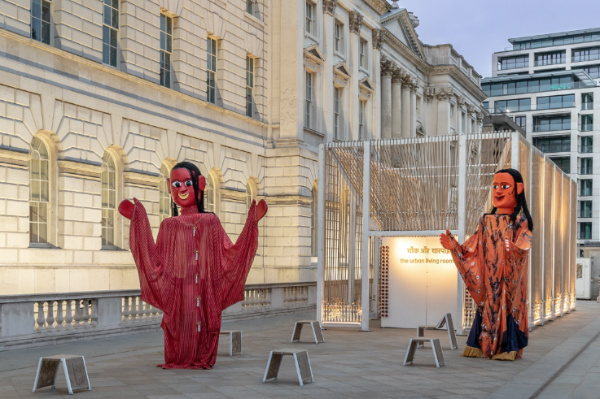
The Indian Pavilion at the London Design Biennale. PICTURE: Courtesy of London Design Biennale.

• The almost month-long London Design Biennale kicks off at Somerset House today under the theme of ‘The Global Game: Remapping Collaborations’. The fourth edition of the biennale is artistically directed by the Nieuwe Instituut – the Dutch national museum and institute for architecture, design and digital culture – and takes over the entirety of Somerset House. Among the exhibits is the India pavilion (pictured above) featuring a multi-sensory evocation of the essence of a contemporary Indian city chowk – an open market at the junction of streets – through the visual metaphor of a charpai – a traditional woven daybed, Malta’s large-scale ‘village-square’ installation that merges traditional city planning with the Phoenician-Maltese tradition of fabric production and dyeing of the multiple colours of Phoenician purple, the Ukrainian Pavilion which features am interior construction symbolising the country’s industrial, natural resource, and creative richness and a series of external projects which tell stories about new design collaborations in times of crisis for Ukraine and the vital role of design in creating new progressive connections. There’s also the chance to see the Ai-Da Robot, the world’s first humanoid robot artist, which will make history by showing her unique ability to design objects. Running alongside is the EUREKA exhibition which will share design-led innovation from leading research centres. Runs until 25th June. Admission charge applies. For more, see www.somersethouse.org.uk/whats-on/london-design-biennale-eureka-2023.

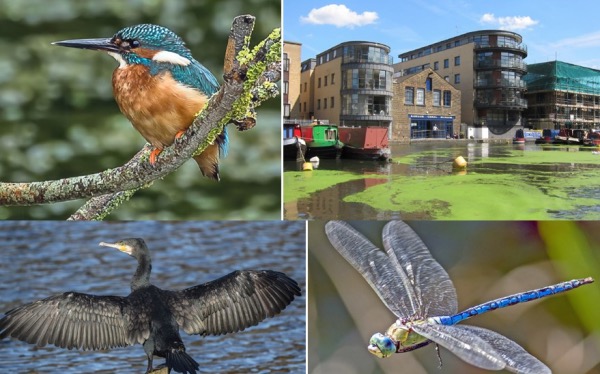
London canal wildlife. PICTURES: Courtesy of the London Canal Museum

A new exhibition highlighting the flora and fauna of London’s canals has opened at the London Canal Museum in King’s Cross. Many of the canals were derelict by the end of the 20th century but have received a new lease of life in recent times as leisure destinations. These days, they provide a “highway” for fauna including birds, fish and mammals to move in and out of the capital, some of which is showcased in this new display. Entry with general admission and for an extra fee, guided narrowboat trips along The Regent’s Canal are available on selected days. For more, see www.canalmuseum.org.uk.

Princess Sophia Duleep Singh, a suffragette, daughter of the last Maharajah of the Punjab, and god-daughter to Queen Victoria, has been commemorated with an English Heritage Blue Plaque. The plaque marks Faraday House in Hampton Court, granted to the princess and her sisters as a grace and favour apartment by Queen Victoria. Also known as ‘Apartment 41’, the property – which was named after scientist Michael Faraday – was home to Princess Sophia for more than 40 years and her base when she was campaigning for women’s suffrage. For more, see www.english-heritage.org.uk/visit/blue-plaques/.

North Warning System III, Tuktoyaktuk, Northwest Territories, Canada, 2020. PICTURE: © Gregor Sailer

• The ‘Polar Silk Road’ – a channel opened up thanks to melting Arctic Sea ice – is the subject of a new exhibition at the Natural History Museum. Gregor Sailer: The Polar Silk Road features 67 photographs taken by acclaimed Austrian artist and photographer Gregor Sailer showcasing manmade structures – from isolated research centres to Icelandic geothermal power stations – captured across four countries in the Arctic circle. There’s also a short film discussing the impacts of the climate crisis. The exhibition is free to visit. For more, see www.nhm.ac.uk/visit/exhibitions/the-polar-silk-road.html.

Send all items for inclusion to exploringlondon@gmail.com.

Where’s London’s oldest…(still operational) ferry service?

There’s a couple of contenders for this title – the ferry service at Woolwich and that at Hampton.

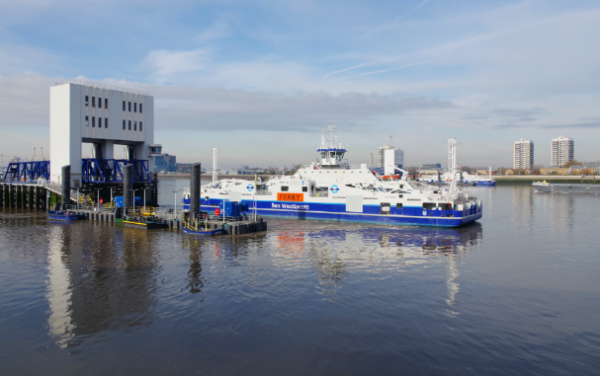
Ferry services linking the north bank of the Thames at Woolwich North to the south bank at Woolwich have operated on the Thames since at least the 14th century.

The Woolwich Ferry’s northern terminal. PICTURE: Matt Buck (licensed under CC BY-SA 2.0)

While they were previously commercial operations, in 1889 a free passenger and vehicle ferry service started operation. By the early 1960s increasing demand saw the paddle steamers retired and the ferry service upgraded to a roll-on/roll-off model. The Woolwich Ferry service, which has been run by numerous authorities over the past century, is currently run by Transport for London.

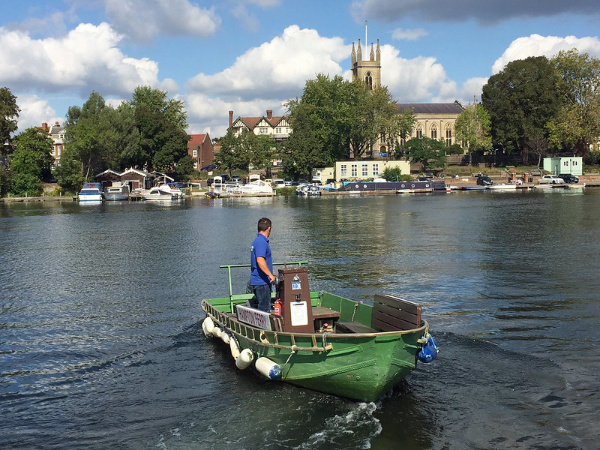
Another contender for the title of London’s oldest (still operational) ferry service is the Hampton Ferry, a pedestrian service, which operates on the Thames about a mile west of Hampton Court Bridge between Hampton on the north bank and Hurst Park, Molesey, the south bank.

The Hampton Ferry. PICTURE: diamond geezer (licensed under CC BY-NC-ND 2.0)

The ferry service, which was first used by fishermen and agricultural workers, dates back to 1514 and was incorporated by statute, making it one of the oldest British companies. The ferry, which costs £2 for a single crossing, operates seasonally from April to October.