Lost London – Arundel House…

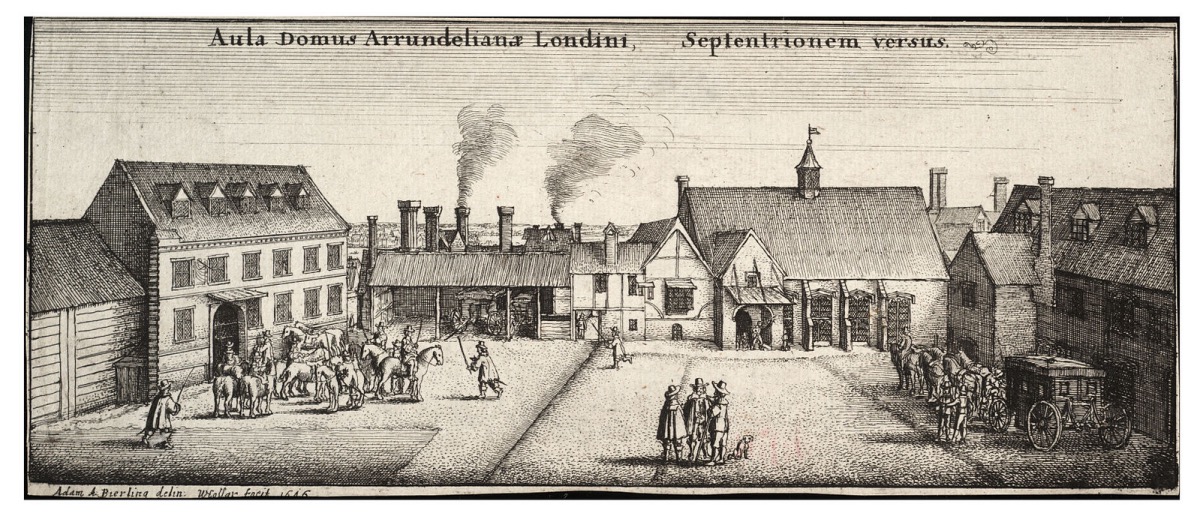
Arundel House, from the south, by Wenceslas Hollar. Via Wikimedia Commons.

One of a string of massive residences built along the Strand during the Middle Ages, Arundel House was previously the London townhouse of the Bishops of Bath and Wells (it was then known as ‘Bath Inn’ and Cardinal Thomas Wolsey was among those who resided here during this period).

Following the Dissolution, in 1539 King Henry VIII granted the property to William Fitzwilliam, Earl of Southampton (it was then known as Hampton Place). After reverting to the Crown on his death on 1542, it was subsequently given to Thomas Seymour, 1st Baron Seymour of Sudeley, a younger brother of Queen Jane Seymour, Henry VIII’s third wife, and known as ‘Seymour Place’. Then Princess Elizabeth (late Queen Elizabeth I) stayed at the property during this period (in fact, it’s said her alleged affair with Thomas Seymour took place here).
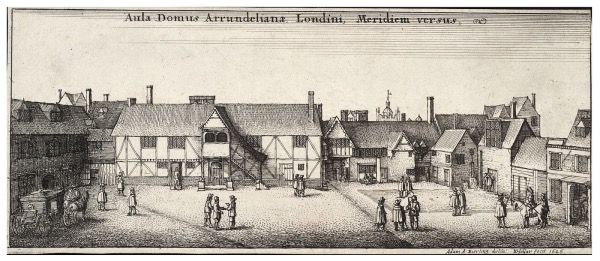
Arundel House, from the south, by Wenceslas Hollar. Via Wikimedia Commons.

Seymour significantly remodelled the property, before in 1549, he was executed for treason. The house was subsequently sold to Henry Fitz Alan, 12th Earl of Arundel, for slightly more than £40. He was succeeded by his grandson, Philip Howard, but he was tried for treason and died in the Tower of London in 1595. In 1603, the house was granted to Charles, Earl of Nottingham, but his possession was short-lived.

Just four years later it was repurchased by the Howard family – in particular Philip’s son, Thomas Howard, 14th Earl of Arundel – who had been restored to the earldom.

Howard, who was also the 4th Earl of Surrey, housed his famous collection of sculptures, known as the ‘Arundel Marbles’, here (much of his collection, described as England’s first great art collection, is now in Oxford’s Ashmolean Museum).

During this period, guests included Inigo Jones (who designed a number of updates to the property) and artist Wenceslas Hollar who resided in an apartment (in fact, it’s believed he drew his famous view of London, published in 1647, while on the roof).

Howard, known as the “Collector Earl”, died in Italy in 1646. Following his death, the property was used as a garrison and later, during the Commonwealth, used as a place to receive important guests

It was restored to Thomas’ grandson, Henry Howard, 6th Duke of Norfolk, following the Restoration. Following the Great Fire of London in 1666, for several years the property was used as the location for Royal Society meetings.

The house was demolished in the 1678. It’s commemorated today by the streets named Surrey, Howard, Norfolk and Arundel (and a late 19th century property on the corner of Arundel Street and Temple Place now bears its name).
This Week in London – Faberge eggs; Royal jeweller Garrard; and, Christmas at Kew…

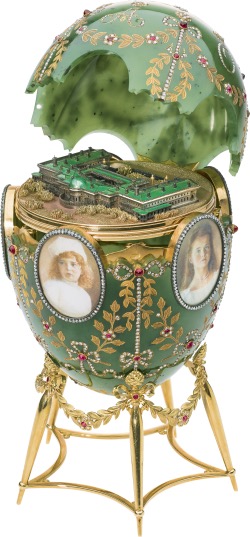
The Alexander Palace Egg, Fabergé. Chief Workmaster Henrik Wigström (1862-1923), gold, silver, enamel, diamonds, rubies, nephrite, rock crystal, glass, wood, velvet, bone, 1908 © The Moscow Kremlin Museums

• The largest collection of Faberge’s Imperial Easter eggs to be displayed together in a generation go on show at the V&A from Saturday. Fabergé in London: Romance to Revolution is the first major exhibition devoted to the international prominence of Russian goldsmith, Carl Fabergé, and his little-known London branch. Divided into three sections which cover everything from the techniques and detailing synonymous with the Faberge name to his time in London, the royal patronage he received, and the impact of the Great War and Russian Revolution on the business. The display features more than 200 objects with highlights including a prayer book gifted by Emperor Nicholas II to Empress Alexandra Feodorovna on his Coronation Day, the only known example of solid gold tea service crafted by Fabergé, a rare figurine of a veteran English soldier commissioned by King Edward VII, and a “kaleidoscopic display” of 15 of the Imperial Easter Eggs. The latter include several that have never before been shown in the UK including the largest Imperial Egg – the Moscow Kremlin Egg – which was inspired by the architecture of the Dormition Cathedral, the Alexander Palace Egg – which features watercolour portraits of the children of Nicholas II and Empress Alexandra and contains a model of the palace inside (pictured), the recently rediscovered Third Imperial Egg of 1887 (found by a scrap dealer in 2011) and Empress Alexandra Feodorovna’s Basket of Flowers Egg. Runs until 8th May. Admission charge applies. For more, see www.vam.ac.uk.

The Royal Family’s relationship with the jeweller Garrard is the subject of a new exhibition which has opened in Kensington Palace’s ‘Jewel Room’. Going on display for the first time are examples of the firm’s ledgers which document royal commissions dating back to 1735 while other highlights include Queen Mary’s fringe tiara which was made in 1919 using diamonds taken from Queen Victoria’s wedding gift to Queen Mary and which was subsequently worn by Queen Elizabeth II on her wedding day. Admission charge applies. For more, see www.hrp.org.uk/kensington-palace.

Botanical illustrations from the archives at Kew Gardens are brought to life on a canvas consisting of a selection of spectacular trees from the arboretum as part of this year’s Christmas display. Christmas at Kew also includes Spheric – a 15-metre-wide dome of light covered in more than 2,000 individually controlled LED pixels which sits on a reflective water pool and allows visitors to fully immerse themselves in a unique mirrored illusion as they cross the lake, a new installation for Holly Walk which will illuminate the night sky for over 200 metres overhead as it replicates the enchanting visual phenomenon of the Aurora Borealis, a vibrant rainbow tree illumination which brings to life the 12 Days of Christmas, and the ever-popular Fire Garden. The display can be seen until 9th January. Admission charge applies. For more, see www.kew.org.

Send all items for inclusion to exploringlondon@gmail.com.

10 sites of (historic) musical significance in London – 8. The home where Mozart composed his first symphony…

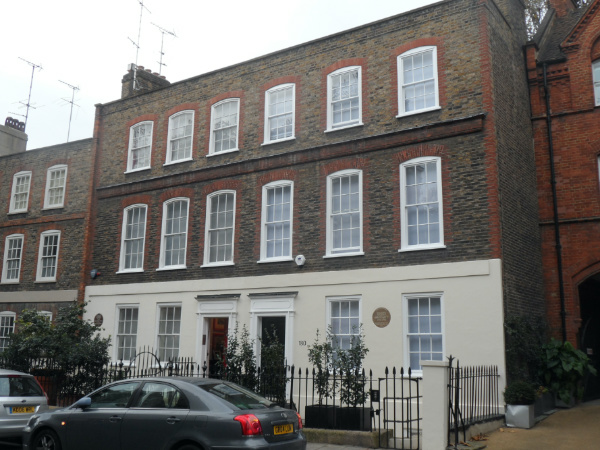
180 Ebury Street, Belgravia. PICTURE: Spudgun67 (licensed under CC BY-SA 4.0)

Think of Austrian composer Wolfgang Amadeus Mozart and chances are it isn’t London which immediately comes to mind. But it was in a home in Belgravia that the then-precocious eight-year-old composed his first symphony.

Mozart, his father Leopold, mother Anna Maria and his elder sister Maria Anna spent almost a year-and-a-half in London, between April, 1764, and July, 1765, as part of a European grand tour. Having initially taken lodgings above a barber’s shop in Cecil Court in Soho, they moved to the more rural setting of 180 Ebury Street, then known as Five Fields Row, in August so his father could recover from a serious illness which apparently developed after he caught a cold.

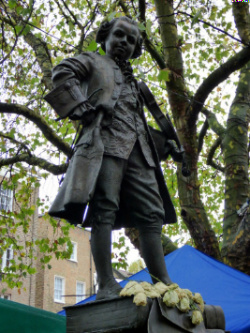
Philip Jackson’s statue of Wolfgang Amadeus Mozart in Orange Square. PICTURE: Peter O’Connor (licensed under CC BY-SA 2.0)

Mozart and his sister were both child prodigies and during their London sojourner performed in various London theatres and for King George III and Queen Charlotte at Buckingham Palace on several occasions. But, with his father now needing quiet, they were forbidden to play instruments in the house and so, according to his sister’s writings, in order to keep himself busy it was there that he composed his “first symphony for all the instruments of the orchestra, especially for trumpets and kettledrums”.

While the work she was referring to is now lost, Mozart did go on to compose the symphony that is now seen as his first at the same time. Known as K.16 in E flat major, it was first performed at the Haymarket Little Theatre in February, 1765.

Leopold did recover and so the family moved back to Soho – lodging at 20 Frith Street to be précise – in September, 1764. It was there that Mozart met the youngest son of Johann Sebastian Bach, Johann Christian, who was to be a key influence on his musical style. They left the property – and brought their time in England to an end in July, 1765, amid waning public interest in their performances (they gone from performing for the Royal Family to entertaining pub patrons). The family continued with their European tour before eventually returning to their home town of Salzburg (Mozart later settled in Vienna where he died at the young age of 35).

Mozart’s time at the Ebury Street residence (and the composition he wrote there) is commemorated with an English Heritage Blue Plaque (albeit this one is brown) which was erected by the then London County Council in 1939. Following damage in the war, it was reinstated in 1951. There’s also a statue commemorating Wolfgang Amadeus Mozart in nearby Orange Square. Designed by Philip Jackson, it was erected in 1994.

London Explained – Pearly Kings and Queens…

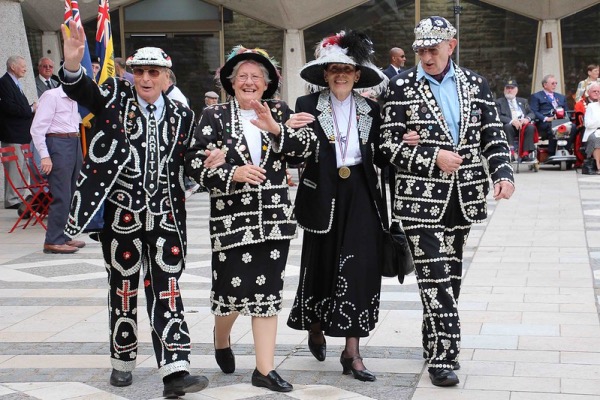
Pearly Kings and Queens at a Harvest celebration outside Guildhall in September, 2014. PICTURE: Maureen Barlin (licensed under CC BY-NC-ND 2.0)

Often simply called ‘Pearlies’, Pearly Kings and Queens are easily identified through their tradition of wearing clothes decorated with mother-of-pearl buttons.

The habit of wearing clothes decorated with mother-of-pearl buttons was adopted by London’s costermongers (street vendors) in the 19th century. The costermongers had a tradition of helping each other out during tough times and costermongers later elected “Coster Kings” to organise and represent them.

It was this tradition that street sweeper Henry Croft, who was raised in a workhouse orphanage in Somers Town, north-west of the City of London, is said to have drawn on when he created a suit completely covered in mother-of-pearl buttons in a bid to help his efforts to raise funds for the orphanage he grew up in (although some say he was inspired by the costumes of music hall ‘coster-singers’ who entertained crowds in music halls with cockney songs).

Such was Croft’s success at raising funds that hospitals and other charities subsequently asked him to fundraise on their behalf as well. The work soon grew beyond what Croft, who is often referred to as the first ‘Pearly King’, could personally handle and so many costermongers and others joined in his efforts giving birth to the broader movement.

By the early 20th century there were 28 ‘Pearly families’ in London, one for each borough. Pearly titles are pass down through families, a tradition which continues to this day (although there have been cases of Pearly families leaving their title behind as they left London which case it it awarded to someone new). There are a number of “pearly” organisations in London these days which engage in a range of charitable activities.

It’s also worth noting that the symbols, patterns and images on the pearly costumes have various meanings – a heart, for example, means charity. One of the key events the Pearlies take part in each year are Harvest festivals.

This Week in London – The Lord Mayor’s Show returns; Peru at the British Museum for the first time; and, Heritage at Risk in London…

The Lord Mayor’s Show returns to London this weekend after being cancelled last year due to the coronavirus pandemic. More than 6,500 people, 120 horses and more than 50 decorated floats are expected to take part in the event – which dates back to the 13th century – on Saturday. It comes a day after Alderman Vincent Keaveny, who has been elected as the 693rd Lord Mayor of the City of London, officially takes office tomorrow. Highlights in this year’s three mile-long procession include colourful full-size model elephants, Japanese taiko drummers, and a horse-drawn bus as well as a fire engine with a 210-foot extendable turntable ladder – the tallest in Europe. The procession, which will be watched by millions live on the BBC and through online streaming, will leave The Mansion House, the Lord Mayor’s official residence, at 11am. In honour of this year’s show, three of London’s Thames bridges – London, Cannon St and Southwark – are being lit specially for the occasion. For more, including details on where to watch the show, see www.lordmayorsshow.london.

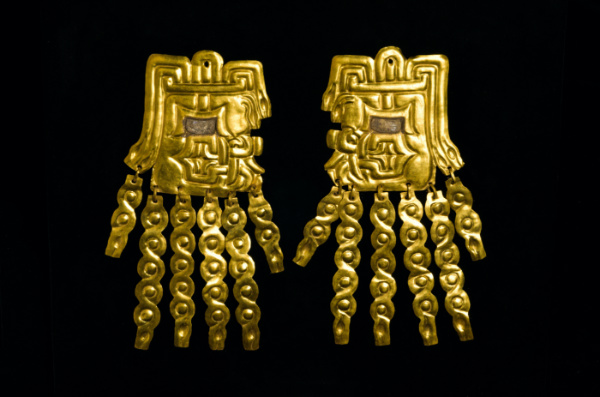
Gold alloy and shell ear plates with feline features, Peru, 800–550 BC. Museo Kuntur Wasi.

More than 40 ancient objects from Peru are the centrepiece of a new exhibition which opened at the British Museum this week. Peru: a journey in time is the first major exhibition the museum has ever staged focused on Peru and coincides with the 200th anniversary of the country’s independence. The exhibition charts the rise and fall of six societies, from the early culture of Chavin in 1200 BC to the fall of the Incas in AD 1532. Highlights include a 2,500-year-old gold headdress and pair of ear plates which were part of an elite burial found at the site of Kuntur Wasi, Cajamarca, a ceremonial drum from around 100 BC-AD 650 featuring a depiction of the capture of defeated enemies in ritual combat, and, the oldest object on loan – a ceremonial vessel from the Cupisnique culture in the shape of a contorted human body, which dates from up to 1200 BC. The display can be seen until 20th February, 2022, in the Joseph Hotung Great Court Gallery. Admission charge applies. For more, see www.britishmuseum.org.

• Streatham Hill Theatre in London’s south is among buildings added to Historic England’s ‘Heritage at Risk’ register for this year. Opened in 1929, the Grade II-listed building was designed by William George Robert Sprague and is described as an “unusually lavish example of a theatre built outside of the West End”. Other London buildings on the list include everything from a Toll Gate House in Spaniards Road, Highgate, to Alexandra Palace in Wood Green, and churches such as St Mary Woolnoth in the City of London. Meanwhile, among the sites removed from the list this year after being “saved” are the Battersea Power Station, first added to the list in 1991 and in recent years the subject of a major redevelopment, and former public conveniences at Guilford Place, Lamb’s Conduit Street, in Bloomsbury, which have been “sensitively transformed into a cosy wine and charcuterie bar”. For more, see https://historicengland.org.uk/whats-new/news/heritage-at-risk-2021/.

Send all items to exploringlondon@gmail.com.

10 sites of (historic) musical significance in London – 7. Ronnie Scott’s Jazz Club… 

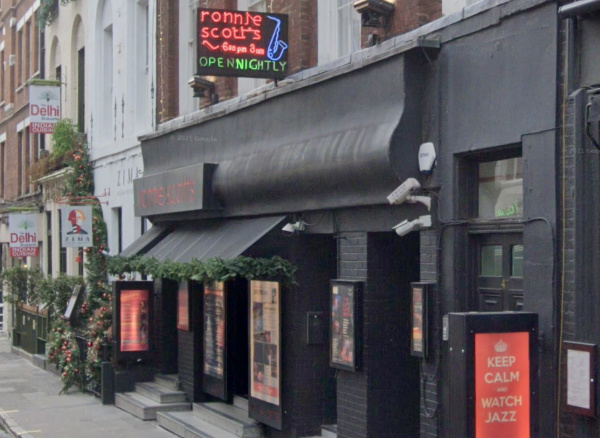
PICTURE: Google Maps

Tenor saxophonists Ronnie Scott and Pete King opened their jazz club in Soho in 1959.

Located in the basement of 39 Gerrard Street in Chinatown, the club was initially created as a place where local jazz musicians could jam but was soon attracting a who’s who of jazz to the stage.

The 1965, the club moved to 47 Frith Street where remains today (it took over the building next door in 1968).

Over the years, the club has played host to jazz greats including Zoot Sims, Sarah Vaughn and Count Basie to Miles Davis, Ella Fitzgerald and Wynton Marsalis as well as musicians such as Jimi Hendrix, Tom Waits, The Who and Mark Knopfler with the Notting Hillbillies.

Patrons, meanwhile, have included everyone from Harold Pinter and the Beatles to Peter O’Toole and Spike Milligan.

Scott died on 23rd December, 1996, and King continued to run the club for another nine years before selling it to theatre impresario Sally Greene.

The club celebrated its 50th anniversary in 2019 and was honoured that year with an English Heritage Blue Plaque commemorating the original site.

LondonLife – Up close with a Komodo dragon…

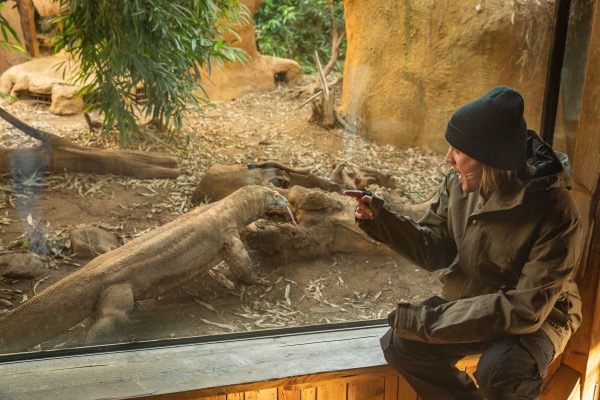
Dougie Poynter meets ZSL London Zoo’s dragon Ganas during The Komodo Dragon Experience. PICTURE: © ZSL

ZSL London Zoo launched its ‘Komodo Dragon Experience’ this month with McFly bassist, Dougie Poynter, getting hands-on in caring for the 13-year-old dragon Ganas. Poynter joined zookeeper Joe Capon behind the scenes at the Attenborough Komodo Dragon House and watched Capon demonstrate the 54 kilogram creature’s training routine. He then helped prepare its food before hiding the meat in holes and inside logs to allow Ganas, one of just 1,400 Komodo dragons left in the world, to use its remarkable sense of smell in obtaining its next meal. The Komodo Dragon Experience is only available twice a month. Admission charge applies. For books, head to zsl.org/the-komodo-dragon-experience.

Where’s London’s oldest seafood restaurant?…Sweetings…

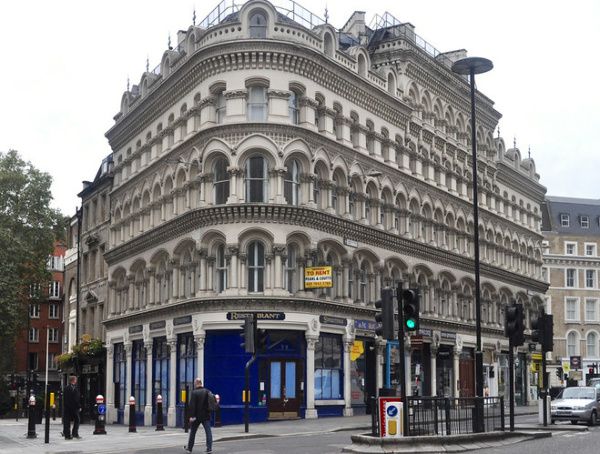
Sweetings Restaurant (ground floor) in the Albert Buildings, Queen Victoria Street. PICTURE: Phil Beard (licensed under CC BY-NC-ND 2.0)

London’s oldest seafood restaurant is generally said to be Sweetings, the origins of which go back to the opening of John S Sweetings, Fish and Oyster Merchant, in Lad Lane, Islington, in 1830.

Additional premises at 159 Cheapside and 17 Milk Street soon followed, promoted as “Very Superior Oyster Rooms”. In 1889, Sweetings Restaurant opened at its present site at 39 Queen Victoria Street, inside the Grade II-listed Albert Buildings which was constructed in 1871 and the shape of which (if not the scale) has been compared to New York City’s Flatiron Building.

The food aside, Sweetings is famous for its signature ‘Black Velvet’, a mix of champagne and Guinness which was created in 1861 in response to the death of Prince Albert.

Famous patrons have reportedly included the French painter Henri de Toulouse-Lautrec as well as the late George Francis, reportedly an associate of the Kray twins, who is said to have offered £1 million to buy the restaurant (an offer which was refused).

For more, see www.sweetingsrestaurant.co.uk.

Treasures of London – Great Seal of Queen Elizabeth I…

Held in the National Archives at Kew, this great seal was used during the second half of Queen Elizabeth I’s reign – from 1586 to 1603.

The seal, which replaced an earlier one used by Queen Elizabeth I, was used by the Chancery to prove the document it was attached to was issued in the Queen’s name. The seal also acted as a security device, ensuring the document couldn’t be read before reaching the intended recipient. Made of wax, it was created using a metal pattern or matrix.

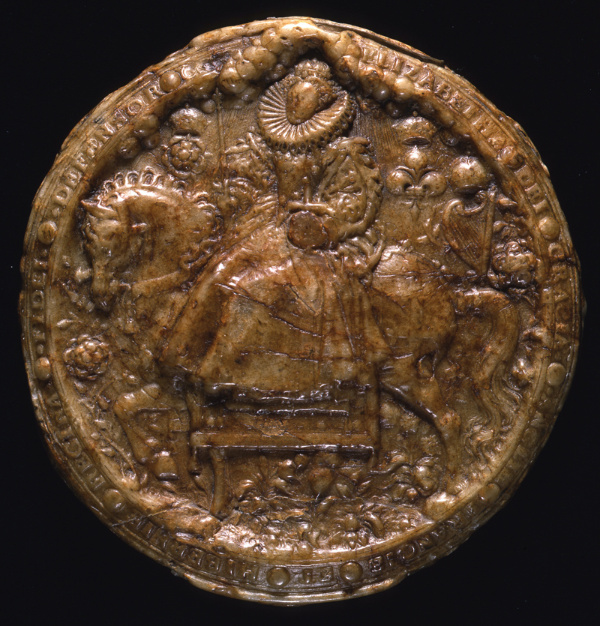
The reverse side of the Great Seal of Queen Elizabeth I. PICTURE: Courtesy of The National Archives, Kew.

The metal pattern for this seal was created by court miniaturist Nicholas Hilliard.

The obverse or front side of the seal, which is made of resin and beeswax which turns brown with age, shows Queen Elizabeth I on her throne, her hands holding a sceptre and an orb – royal insignia – and accompanied by the Royal Coat of Arms. The reverse (pictured) shows Queen Elizabeth I mounted on a horse and surrounded by symbols including the Tudor Rose, a harp representing Ireland and fleur de lys representing France. The inscription around the seal reads: Elizabetha dei gracia Anglie Francie et Hibernie Regina Fidei Defensor (‘Elizabeth, by grace of God, Queen of England, France and Ireland, Defender of the Faith’).

The seal was traditionally carried before the Lord Chancellor and Keeper of the Great Seal in a purse or burse. One used to carry Queen Elizabeth I’s matrix is in the collection of the British Museum.

The matrix used to create the second seal was surrendered to King James I on his accession to the throne on 3rd May, 1603. James then used it for the next 11 weeks until his own was ready (at which time Queen Elizabeth I’s matrix was defaced).

This Week in London – William Hogarth and the Europeans; Christmas in the post; and, Paul McCartney’s lyrics…

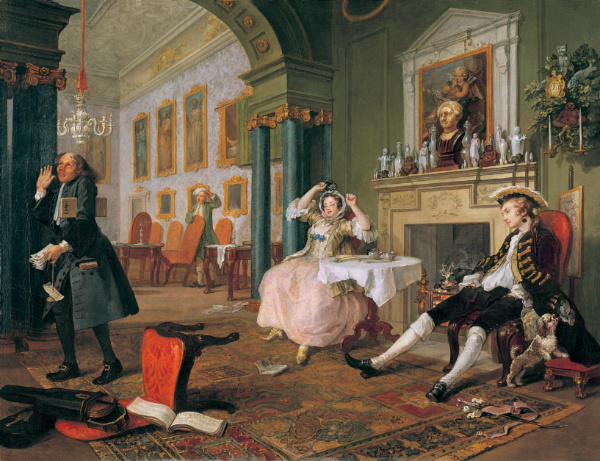
William Hogarth, ‘Marriage A-la-Mode: 2, The Tête à Tête’ (1743) 45 © The National Gallery, London.

• See the works of 18th century English artist William Hogarth alongside those of his European contemporaries in a new exhibition which opened at Tate Britain this week. Hogarth and Europe features more than 60 of Hogarth’s works and has some of his best-known paintings and prints – such as Marriage A-la-Mode (1743), The Gate of Calais (1748), Gin Lane (1751) and his celebrated series, A Rake’s Progress (1734) – shown alongside works by famed European artists including Jean-Siméon Chardin, Pietro Longhi, and Cornelis Troost. The display also includes Hogarth’s work, Miss Mary Edwards (1742) – it depicts the eccentric, wealthy patron who commissioned many of Hogarth’s best-known works and has not been seen in the UK for more than century. Admission charge applies. See www.tate.org.uk.

The first commercial Christmas card, created after civil servant Henry Cole commissioned artist​ John​ Callcott​ Horsley to design one for him in 1843, can once again been seen at The Postal Museum’s permanent display. That’s just one of the drawcards (pardon the pun), at the Postal Museum in the lead-up to Christmas with others including a new display, Letters to Santa, featuring Royal Mail cards sent by Father Christmas to children between 1963 and 2010 (from a recently donated collection), and the chance to ride on the Mail Rail which has undergone a Christmas makeover. The museum is also holding a series of ‘Festive Family Fun Days’ on selected dates in December. Admission charges apply. For more, head to www.postalmuseum.org.

Handwritten lyrics and photographs spanning the career of Paul McCartney feature in a new free Entrance Hall display at the British Library from tomorrow. Paul McCartney: The Lyrics features previously unseen materials from his personal archives as it reveals the process and people behind some of the most famous songs of all time, from some of his earliest compositions to his time with The Beatles, Wings and through to today. The display accompanies his new book, The Lyrics: 1956 to the Present. Can be seen until 13th March next year. For more, see www.bl.uk/events/paul-mccartney-the-lyrics.

Send all items for inclusion to exploringlondon@gmail.com.

10 sites of (historic) musical significance in London – 6. Royal Albert Hall… 

PICTURE: Raphael Tomi-Tricot/Unsplash

Arguably the grandest music venue in London, the Royal Albert Hall, named in memory of Queen Victoria’s husband Prince Albert, has been hosting musical events since it first hosted a concert in 1871.

The Grade I-listed hall, which has a seating capacity of more than 5,000 and which did suffer from acoustic problems for many years (until mushroom-shaped fibreglass acoustic diffusers were hung from the ceiling following tests in the late 1960s), has been the setting for some of the most important – and, in some cases, poignant – music events of the past 150 years, not just in London but the world at large.

Among some of the most memorable are the Titanic Band Memorial Concert – held on 24th May, 1912, just six weeks after the sinking of the iconic ship to remember the 1514 people who died with a particular focus on the eight musicians who played on as the stricken vessal sank, the ‘Great Pop Prom’ of 15th September, 1963 – only one of a handful of occasions when The Beatles and Rolling Stones played on the same stage, and Pink Floyd’s gig of 26th June, 1969 – coming at the end of a UK tour, the on-stage antics saw the band banned (it was short-lived, however, they returned just a few years later in 1973).

Other musical figures to have taken to the stage here include everyone from composers Richard Wagner, John Philip Sousa, and Benjamin Britten to the Von Trapp family, jazz greats Billie Holiday and Ella Fitzgerald, and the likes of Shirley Bassey, Bob Dylan and Elton John – a veritable musical who’s who of the past 150 years. The venue also hosted the 13th Eurovision Song Contest in 1968.

Of course, Royal Albert Hall is famous for The Proms, an annual festival of classical music which was first performed here in 1941 after the venue where it had been held since 1895 – the Queen’s Hall on Langham Place – was lost to an incendiary bomb during World War II.

Prom stands for ‘Promenade Concert’,  a phrase which originally referred to the outdoor concerts in London’s pleasure gardens during which the audience was free to walk around while the orchestra was playing (there are still standing areas during performances). The most famous night of the season is the ‘Last Night of the Proms’ which, broadcast by the BBC, features popular classics and ends with a series of patriotic tunes to stir the blood.

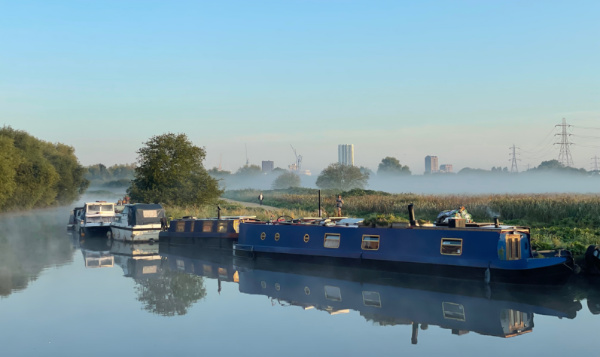
LondonLife – Foggy morning on the Lea, East London…

PICTURE: Dan Poulton/Unsplash

A Moment in London’s History – Crystal Palace burns…

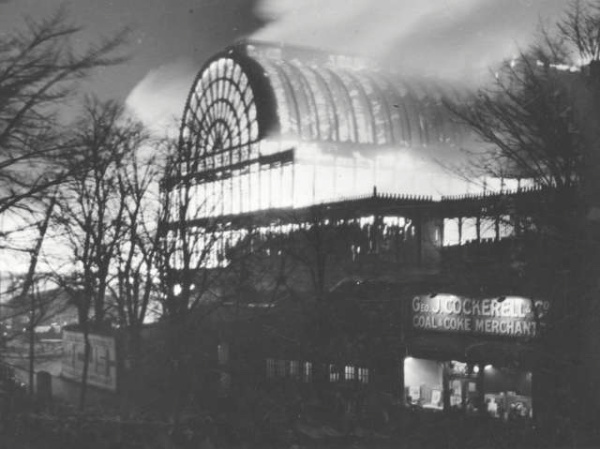
The Crystal Palace fire in 1936. PICTURE: Unknown author (via Wikipedia)

This month marks 85 years since the Crystal Palace in London’s south was destroyed in a fire.

The Joseph Paxton-designed building had originally been located in what is now Hyde Park for the Great Exhibition of 1851 and, following the end of the exhibition, had been dismantled and relocated to Sydenham.

When the fire in broke out on the night of 30th November, 1936, two night watchmen tried to put it out. Sir Henry Buckland, the building’s general manager, was out walking his dog with his daughter Crystal (named, apparently after the building) when he spotted the flames and called the fire brigade.

They arrived at about 8pm but the fire, fanned by a wind, was soon out of control and so further aid as summoned with hundreds of firefighters and some 88 engines attending the scene. It has been said the blaze could be seen across eight counties.

A crowd of spectators – said to number as high as 100,000 – arrived to watch what was apparently a rather spectacular sight (special trains were apparently put on to transport people from towns in Kent and private airplanes were spotted overhead). Police, some on horseback, did their best to keep the crowds away but had limited success given the numbers who turned out (Winston Churchill, among those watching the building burn, is said to have remarked: “This is the end of an age” while Sir Henry told reporters later that the palace would “live in the memories not only of Englishmen, but the whole world”).

By morning, the building was reduced to bits of twisted metal and ash but thankfully no lives were lost in the conflagration. The cause, however, remained a mystery – there was speculation it had been started by a stray cigarette butt or had been deliberately lit by a disgruntled worker. Television pioneer John Logie Baird, who had a workshop in the building, believed it could have been started by a leaking gas cylinder in his workshop.

Two water towers, located at either end of the building, survived the blaze but were later demolished. Among the few remains of the building which did survive the blaze is the subway located under Crystal Palace Parade. The park which surrounded the building remains home to the famous ‘Crystal Palace dinosaurs’.

Lost London – Prison hulks on the Thames…

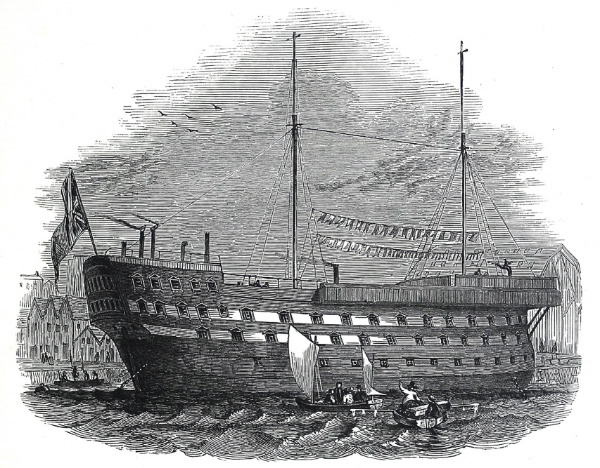
Floating prisons known as ‘hulks’ were a regular site on the Thames in London between the late 18th century and mid-19th century, used to house convicts awaiting transportation to British penal colonies including in what is now Australia.

The ‘hulks’ were actually decommissioned warships, dismasted and repurposed for the purpose of housing prisoners.

The Warrior’ converted into a prison hulk off Woolwich. PICTURE: Illustration for The Illustrated London News, 21st February, 1846.

The decision to use the former warships – some of which had a storied history – for such a purpose was initially seen as a temporary measure to ease overcrowding in the jails with an Act of Parliament in 1776 only authorising their use for two years.

But, despite rising concerns over conditions on the hulks, they remained in use until 1857 when the act finally expired for good. Some 8,000 convicts were housed upon them in the first 20 years alone.

The hulks were initially moored off Woolwich – the former East Indiaman Justitia and a former French Navy frigate Censor were among the first – and the convicts aboard them put to use working to improve the river and at Woolwich Arsenal and nearby docks. The hulks were also later positioned at sites including Limehouse and Deptford (and the idea of using hulks was also exported to colonies in Australia and the Caribbean).

The hulks were initially operated by private individuals under a government contract but from 1802 they were placed under the supervision of the Inspector of Hulks. Aaron Graham was first to hold the post while his successor John Capper, who was appointed Superintendent of Prisons and the Hulk Establishment in 1814, oversaw numerous reforms of the system. During Capper’s tenure, the use of private contractors was later phased out with the government assuming direct responsibility for the hulks.

Some hulks – like positioned at Limehouse – were used as “receiving hulks” where prisoners were initially sent for several days where they were inspected and issued clothing, blankets, and a mess kit. They were then sent to “convict hulks” where they were assigned to a mess and a work gang for the long-term. Other hulks were to serve specific purposes such as being a “hospital hulk” (there was also a hulk off Kent, the Bellerophon, which was specifically designated for boys).

Conditions on board the vessels were indeed appalling and disease spread quickly with mortality rates of 30 per cent not uncommon. Prisoners were kept chained when aboard and floggings handed out as punishment for any offences. Food and clothing were of poor quality.

Despite this, the hulks continued to be seen as a convenient means of housing convicts and, in 1841, there were still more than 3,500 convicts on board hulks in England. It was said that one ship – a second vessel named Justitia – housed as many as 700 convicts alone.

Following several government inquiries into the hulks and the construction of more prisons on land, the hulks were gradually decommissioned. But altogether, between  1776 and 1884, the British Government had converted more than 150 ships into hulks in both the UK and the colonies.

This Week in London – The ‘RRS Sir David Attenborough’ at Greenwich; the Amazon explored at the Science Museum; and, Christmas at The National Gallery…

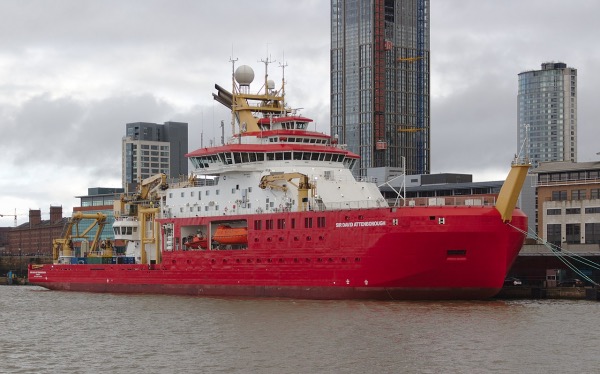
The RRS Sir David Attenborough in Liverpool. PICTURE: By Phil Nash from Wikimedia Commons CC BY-SA 4.0 & GFDL.

Find out what it’s like to live and work in the Earth’s polar extremes at Greenwich from today. The three day ‘Ice World Festival’ centres on the British Antarctic Survey’s vessel, the RRS Sir David Attenborough, which is visiting Greenwich before beginning its first mission to the Antarctic. Visitors will also be able to meet real polar scientists and explorers and see the Boaty McBoatface submersible as well as treasures from the National Maritime Museum’s polar collection including relics from HMS Erebus and Terror and items belonging to Captain Scott and Ernest Shackleton. While the ship can be seen from the dockside, a limited number of tickets are available for walk-up visitors to the festival (advanced booking tickets have sold out). Runs from today until 30th October. Admission is free. For more information, head here.

More than 200 images – captured by Brazilian photographer Sebastião Salgado over seven years – explore the rich diversity of the Amazon in an exhibition at the Science Museum. Amazônia provides a close-up look at one of the most unique environments on the planet through Salgado’s eyes, including panoramic scenery and the Indigenous peoples of the region (Salgado spent time with 12 different Indigenous groups over his period in the Amazon). Runs until March next year. Admission charge applies. For more, see www.sciencemuseum.org.uk/see-and-do/amazonia.

Father Christmas with return to The National Gallery for selected dates in November and December. The gallery’s Christmas experience will provide children with the chance to have their photo taken with Santa in his grotto, listen to an elven story in the winter forest set and receive a special token which they can exchange for a gift at the Elven Sorting Office. Meanwhile, Hendrick Avercamp’s painting A Winter Scene with Skaters near a Castle (about 1608–9) will be enlarged and reproduced on a canvas to provide a scenic backdrop for the activities. Admission charge applies. Bookings are now open. For more, head to www.nationalgallery.org.uk/whats-on/meet-father-christmas.

Send all items for inclusion to exploringlondon@gmail.com.

10 sites of (historic) musical significance in London – 5. Henry Purcell’s grave in Westminster Abbey…

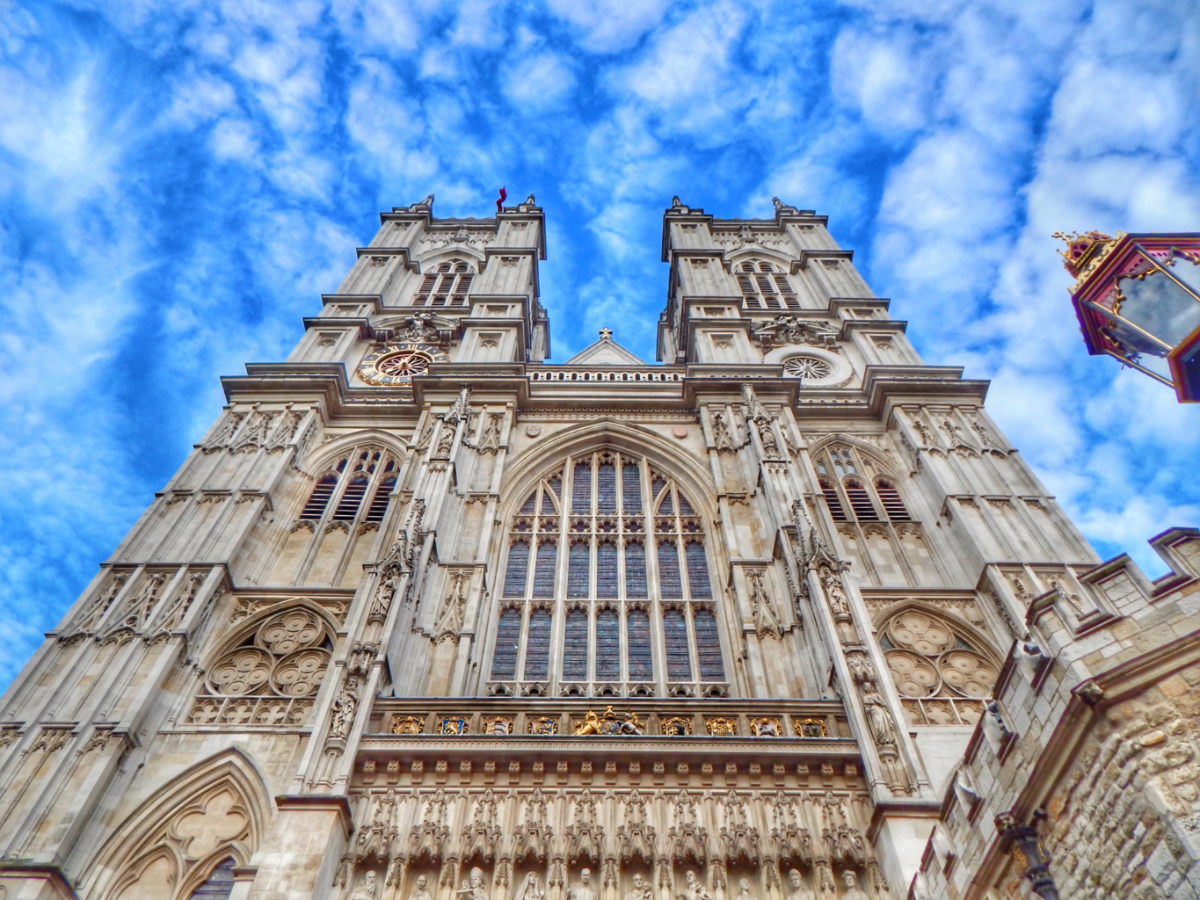
Westminster Abbey. PICTURE: Clark Van Der Beken/Unsplash

Westminster Abbey is important for many reasons when it comes to London’s musical heritage but among them is the intrinsic connection the grand building has with Restoration-era composer and musician Henry Purcell.

Purcell, who was born in Westminster in 1659 and who died there in 1695, is famous for having composed music in a range of genres including the first English opera as well as being the organist of the Westminster Abbey (from 1679) and that of the Chapel Royal (from 1682).

Statue commemorating Henry Purcell. PICTURE: Eluveitie (licensed under CC BY-SA 3.0)

Fittingly, Purcell, who died at the age of just 36 leaving a widow and six children behind, was buried beside where the organ was then located in the north aisle of Westminster Abbey. The grave, which also contains the remains of his wife Frances, is inlaid with brass letters written in Latin.

It reads: “Here rests Henry Purcell, Organist of this Collegiate Church. Died 21 November aged 37, A.D. 1695. Immortals, welcome an illustrious guest, your gain, our loss – yet would not earth reclaim the many-sided master of his art, the brief delight and glory of his age: great Purcell lives! his spirit haunts these aisles, while yet the neighbouring organ breathes its strains, and answering choirs worship God in song. Frances, wife of Henry Purcell, is buried near her husband 14 February 1706.”

A memorial tablet to Purcell was erected on a nearby wall by Dame Annabella Howard, a former pupil of Purcell’s. The inscription in English and Latin “Here lyes Henry Purcell Esq., who left this life and is gone to that blessed place where only his harmony can be exceeded. Died 21 of November in the 37th year of his age, AD 1695”.

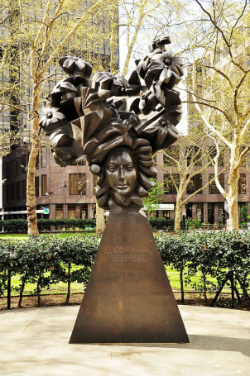
There is also an elaborate statue, The Flowering of the English Baroque, commemorating Purcell located just down the road from the Abbey in Christchurch Gardens, Broadway. Designed by sculptor Glynn Williams, it was unveiled by Princess Margaret on the tercentenary of the death of the composer – 22nd November 1995.

LondonLife – Low tide on the Thames…

PICTURE: Gavin Allanwood/Unsplash

London Pub Signs – The Artillery Arms, Bunhill Row…

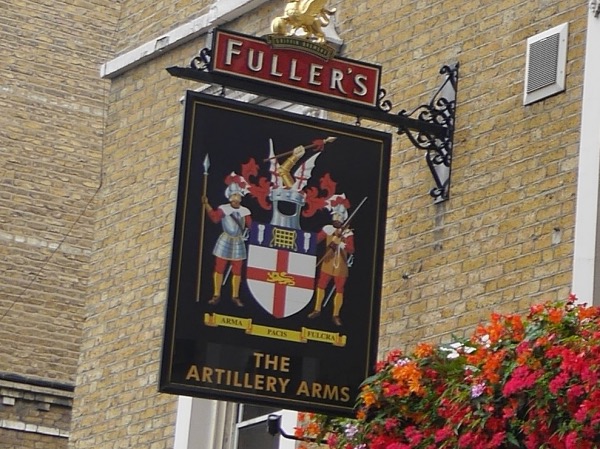
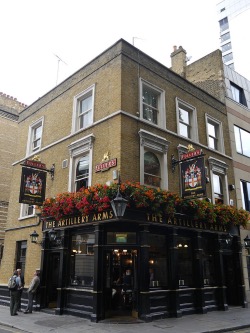
The Artillery Arms. PICTURES: Edwardx (licensed under CC BY-SA 4.0)

This City of London pub is located opposite the Bunhill Fields Burial Ground, final resting place of the likes of Daniel Defoe, John Bunyan and William Blake, and dates from the 1850s.

Originally known as The Blue Anchor, it – under the landlord ship of Jemmy Shaw – was once notorious for the “sport” of rat-baiting which usually involved betting how long a dog would take to kill a rat and which apparently became popular after the 1835 Cruelty to Animals Act banned bull baiting, cock fighting and dog fighting.

The name of this premises at 102 Bunhill Row comes from the nearby location (just ton the south on the other side of the road) of the Honourable Artillery Company, which was incorporated by a Royal Charter issued by King Henry VIII in 1537 located here since the mid-17th century. The company’s coat-of-arms are on the pub’s sign.

Now part of the Fullers chain. For more, see www.artillery-arms.co.uk.

Treasures of London – The pelicans of St James’s Park…

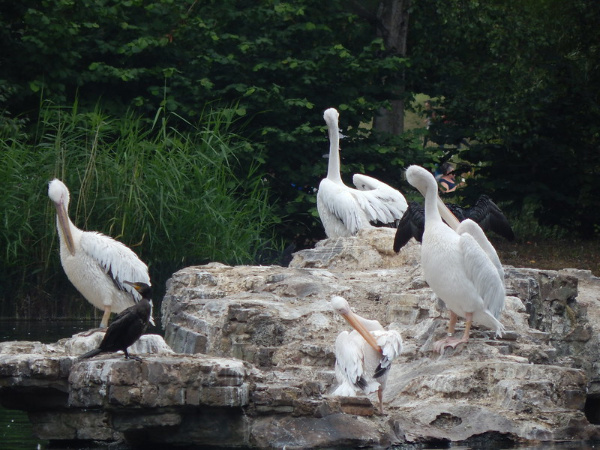
Pelicans were first introduced to St James’s Park in 1664 when a pair of the rather large birds were presented as a gift from the Russian Ambassador to King Charles II. They’ve been there ever since.

Pelicans in St James’s Park in 2015. PICTURE: Philippa Willitts (licensed under CC BY-NC 2.0)

More than 40 pelicans have apparently made their home at the park over the years. Past pelicans have included the solitary Daphne – nicknamed the ‘Lady of the Lake’, she lived alone at the park in the early 1970s as well as Astra and Khan, who came from Astrakhan in Russia and were presented by the Russian Ambassador in 1977. There’s also been a Louis, who came from Louisiana in 1982, and Vaclav and Rusalka, who were a gift from Prague Zoo in 1995.

There are currently six members of the ‘scoop’ or ‘squadron’ (just two of the collective nouns used for pelicans) in the park. They include Isla and Tiffany – gifted from Prague in 2013 – and Gargi (gifted in 1996 after he was found in a Southend garden) as well as newer arrivals, brothers Sun and Moon, and a female named Star, all of whom came from Prague Zoo in 2019. Five are Eastern Whites and one is a South American White.

The pelicans are fed fresh fish each day between 2:30pm and 3pm, next to Duck Island Cottage, and while they are free to go where they wish, they rarely go far from the almost 57 acre park. But they did make headlines for eating a pigeon in 2006.

Royal Parks are offering a walking tour of St James’s Park which ends with watching the daily feeding on 5th November. Head here for details.

This Week in London – Free family festival kicks off this weekend; Beano the subject of Somerset House exhibition; and, lawyer Helena Normanton honoured…

Pop-Up London, a free festival for families, kicks off in central London on Saturday and runs throughout the half-term break until 31st October. The festival features more than 300 artists – including musicians, dancers, comedy acts and circus performers – who can be seen in more than 100 performances at locations including Trafalgar Square, King’s Cross, Spitalfields, and Canary Wharf. The diverse range of acts will include Brazilian drumming, Cantonese story-telling and Caribbean steelpans. For the full list of events. head to www.visitlondon.com/things-to-do/lets-do-london/pop-up-london.

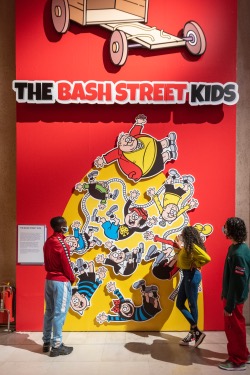
The Bash Street Kids cut outs in ‘Beano: The Art of Breaking the Rules’ PICTURE: Stephen Chung for Somerset House

The world’s longest-running weekly comic, Beano, is celebrated in a new exhibition opening at Somerset House today. Beano: The Art of Breaking the Rules features 100 comic artworks from the Beano archive exhibited, including original drawings never previously seen in public, and, works by contemporary artists including artist duo Gilbert & George, sculptor Phyllida Barlow and Oscar-winning animator Nick Park as well as larger-than-life recreations of Beano’s most iconic settings and interactive installations including Peter Liversidge’s patchwork of protest signs and a jukebox filled with music influenced by Beano’s rebellious streak. Beano was first released in 1938 and is still created weekly at its home in Dundee. This year marks the 70th since Dennis, Beano‘s top mischief-maker, made his debut. Runs until 6th March. Admission charge applies. For more, see www.somersethouse.org.uk/beano.

Barrister and women’s rights advocate Helena Normanton (1882-1957) has been honoured with an English Heritage Blue Plaque at her former home. The plaque at 22 Mecklenburgh Square – where Normanton lived from 1919 to 1931 – was unveiled almost 100 years since she passed her Bar finals on 26th October, 1921. Normanton played an instrumental tole in paving the way for women to practice law, being the first female students one of London’s Inns of Court, one of the first women to be called to the Bar, the first female counsel to lead a case in the High Court, the first woman to run a trial at the Old Bailey and the first women to lead murder trials in England as well as one of the first two women to take silk as King’s Counsel. For more, see www.english-heritage.org.uk/visit/blue-plaques.

Send all items for inclusion to exploringlondon@gmail.com.