Guildhall Yard where the annual Inter-Livery Pancake Race is held. PICTURE: David Adams
• Shrove Tuesday, also known as Pancake Day, takes place this coming Tuesday and to mark the event, representatives from the City of London’s livery companies are coming in their annual Inter-Livery Pancake Race around Guildhall Yard. The event is organised by the Worshipful Company of Poulters while the Worshipful Company of Gunmakers provide the starting gun, the Worshipful Company of Clockmakers time the races and the Worshipful Company of Fruiterers provide lemons to accompany the pancakes. The starter’s gun fires at noon. Entry is free.
• East Enders is celebrating its 40th anniversary and to mark the occasion, the Museum of the Home in Hoxton is featuring props and costumes from the show in its displays. EastEnders at 40: Icons of Home and Drama features props and costumes including the costumes from Syed and Amira’s wedding in 2010, Kat Slater’s leopard print coat and Frank Butcher’s spinning bow tie. Runs until 22nd June. Admission is free. For more, see www.museumofthehome.org.uk.
• The origins of the Hallelujah Chorus and its special connecting to the Foundling Hospital is the subject of a new display at the Foundling Museum in Bloomsbury. Composer George Frideric Handel first held a benefit concert at the venue in 1749 in which he premiered his Foundling Hospital Anthem. He returned the following year to perform the Messiah, which had made its debut in Dublin in 1742, and this event proved so popular it was held annually until the 1770s. The display can be seen until 29th March, 2026. Admission charge applies. For more, see https://foundlingmuseum.org.uk/event/hallelujah-display/.
In an article first published on The Conversation, LACEY WALLACE of the University of Lincoln, looks at the recent discovery….
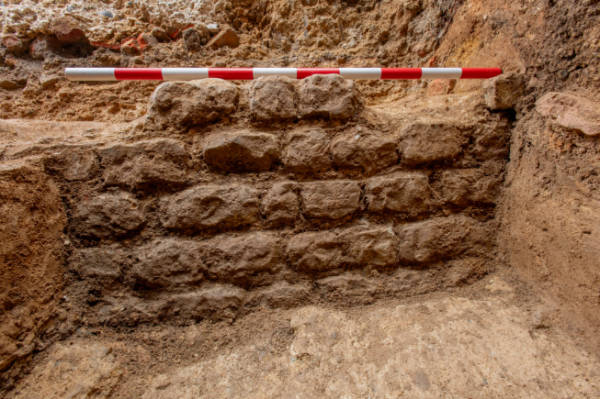
Archaeologists from the Museum of London have discovered a well-preserved part of the ancient city of London’s first Roman basilica underneath the basement of an office block. The basilica was constructed for use as a public building in the 70s or early 80s AD.
A section of the wall from the Roman basilica. PICTURE: MOLA
In a Roman town, a basilica was a multi-functional civic building. Often paid for by leading local inhabitants, it provided a large indoor space for public gatherings. These ranged from political speeches to judicial proceedings.
Along with the connected forum – an arrangement of buildings that surrounded an open courtyard space – the building formed the centre of administrative and civic life in the ancient Roman city of Londinium.
Other walls of London’s basilica and forum have been known by archaeologists since the early 1880s. But they were only recognised as remains of the social and civic centre of Londinium in 1923.
The story until now
Peter Marsden, the author of The Roman Forum Site in London (1987), compiled disconnected evidence for the different phases of London’s forum basilica complex.
Referring to the current area of excavations (on Gracechurch Street), he noted that: “More than half of the archaeological deposits still remain, and should be carefully excavated when the opportunity arises, since only then will the history of the site be elucidated.”
Occasional opportunities have arisen to reveal small parts of the forum basilica. For example, during construction of a shaft to install a lift at 85 Gracechurch Street, some important remains from the first century were found. But the excavated area was too small to contribute greatly to our knowledge.
In contrast, the recent work is part of a major redevelopment. It has opened targeted excavation areas where walls of the basilica were expected to be found, exposing substantial parts of the building.
Archaeologists have found one-metre-wide foundations and walls of the interior, some of which probably extend for more than 10 metres in length. The walls are constructed of flint, tile and Kentish ragstone (a type of limestone quarried in Kent), and some stand at four metres high.
What was the basilica for?
Londinium was constructed on an unoccupied site beginning in about AD47 or 48. It began to gain the trappings of a Roman-style town, including a basilica building, in the lead-up to its destruction in the Boudican Revolt in AD60 or 61.
The city did not have a monumental forum and basilica complex until later, however, when a major programme of public and private construction was undertaken in the Flavian period (AD69–96).
London’s Flavian basilica took the plan of a long rectangle (44m x 22.7m) divided into three aisles. There is good evidence from the deeper central aisle (nave) wall foundations that the nave roof was raised to two storeys, to allow for windows to provide internal light.
A reconstruction drawing of the first London forum. PICTURE: PeterMarsden/MOLA
Shallow foundations crossing the nave are evidence of a raised dais or platform at the eastern end. The speaker or judge would sit there, elevated above the crowds, increasing both his visibility and status. This platform, or “tribunal”, is the area that has recently been revealed.
The basilica would have risen above the north side of the buildings that formed the forum courtyard. It would have dominated the high ground of this monumental space at the highly visible crossroads leading straight up from the Roman Thames bridge.
It would have been the largest building in the area and firmly announced that the people of Londinium were constructing a high-status Roman city.
Rebuilding following the British Queen Boudica’s revolt had been swift. The post-Revolt fort that was built only 100 metres or so down the street had likely been decommissioned and the people were ready to embark on a new phase and a major expansion of the urban centre.
The designs of late first century forum basilica complexes varied across the provinces. But generally they combined religious, civic, judicial and mercantile space.
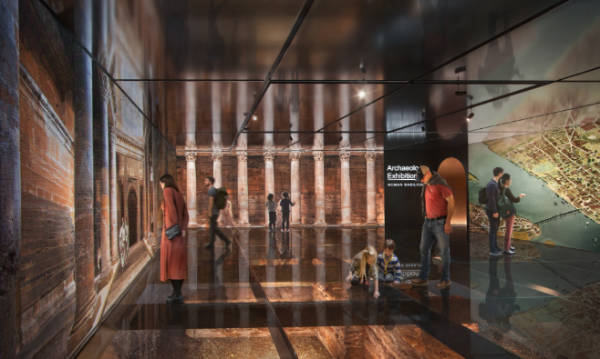
An artist’s impression of the proposed exhibition space that will showcase the newly discovered walls. PICTURE: Woods Bagot/MOLA
In places like Pompeii, the forum had developed over time. But, when the town was buried by the ash of Vesuvius in AD79 (approximately the same time the forum basilica of London was built), the focus of the elongated monumental space was the Temple of Jupiter, symbol of the Roman state.
Although a classical temple was constructed to the west of the exterior of Londinium’s Flavian forum, it was clearly separate. No forum in Britannia was dominated by a temple, setting the core of urban space in this province apart from most examples in the rest of the empire.
The Flavian forum basilica at Londinium is one of the earliest examples to demonstrate this characteristic, along with that at Verulamium (St Albans). There, an inscription links the circa AD79–81 construction to the governor Agricola, who is well known among historians from the celebratory biography written by his son-in-law, Tacitus.
The Flavian basilica and forum only stood for about 20 or 30 years, however. With increased prosperity in the early second century, they were demolished and replaced by a new structure which was five times larger, leaving the remains of the first basilica underneath the surface of the later courtyard space.
Museum of London Archaeology will now analyse and publish the results of its find, applying modern methods to advance our understanding of the development of the first forum basilica. We can expect refined dating evidence and an improved understanding of the architecture from the post-excavation analyses. An exhibition space to make the remains visible for the public is also planned.
• Iconic portraits which featured in the trail-blazing magazine, The Face, have gone on show from today at the National Portrait Gallery off Trafalgar Square. The Face Magazine: Culture Shift features more than 200 prints by more than 80 photographers including Sheila Rock, Stéphane Sednaoui, David LaChappelle, Corinne Day, Elaine Constantine, Juergen Teller and Sølve Sundsbø. The display explores how the cult magazine, which ran from 1980 to 2004 before being relaunched in 2019, impacted culture in the Eighties, Nineties and Noughties and in particular how it shaped the tastes of Britain’s youth. Runs until 18th May. Admission charges apply. For more, see www.npg.org.uk.
• Visitors to the London Transport Museum are being treated to live performances from some of London’s most promising classical and jazz musicians under a new initiative which kicked off earlier this month. The young musicians, from the Guildhall School of Music and Drama, Royal Academy of Music, Royal College of Music, or Trinity Laban, are performing in a programme designed to equip them with real-world performance experience. The music is being performed over various dates until 24th October. For more details, see www.ltmuseum.co.uk/whats-on/music-museum.
• A new exhibition celebrating the work of illustrator Ralph Steadman has opened at the Heath Robinson Museum in Pinner. Ralph Steadman: INKling spans the 70 years of Steadman’s career and covers his literary illustrations, including Steadman’s interpretations of Alice in Wonderland, Animal Farm, and Treasure Island, his illustrations for children’s books such as From Fly Away Peter (1963) and The Ralphabet (2023), and the “Gonzo art” he created in collaboration with Hunter S Thompson. Runs until 10th May. Admission charges apply. For more, see www.heathrobinsonmuseum.org/#whatson.
Linked to the brutal slayings of at least five women in the later half of 1888, the identity of Jack the Ripper is London’s most infamous mystery and one which continues to fuel speculation – and make headlines – more than 130 years later.
Subscribe for just £3 a month to gain access to all Exploring London’s content…
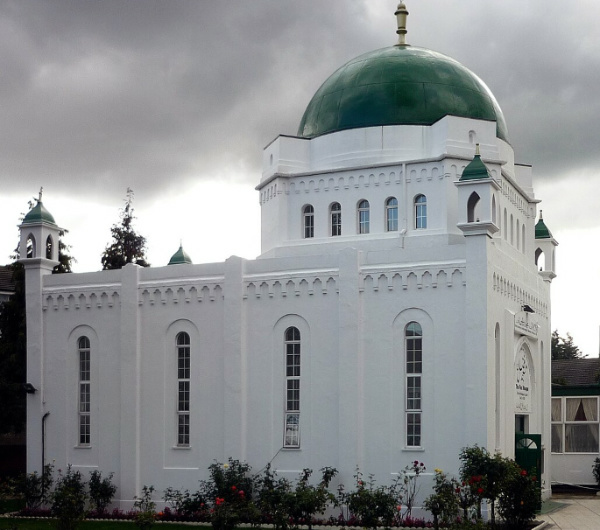
Known as the Fazl Mosque (Grace Mosque in English), the mosque – which is also known as the London Mosque and is the second oldest in Britain – is said to have cost some £6,223 and is understood to have been designed by TH Mawson and Sons.
Said to have been financed by the donations of Ahmadiyya community in India (the land had been purchased in 1920), the foundation stone was laid in 1924 by Mirza Bashir-ud-Din Mahmud Ahmad, the second Caliph of the Ahmadiyya and leader of the worldwide Ahmadiyya Muslim Community.
The Grade II-listed building was formally opened by Khan Bahadur Sheikh Abdul Qadir, an ex-minister of Punjab Legislative Council, on 4th October, 1926, with about 600 guests.
The mosque can accommodate about 150 people and the first Imam was Maulana Abdul Rahim Dard.
Visitors to the mosque have included King Saud of Saudi Arabia and the Crown Prince Faisal Bin Abdul-Aziz, who visited in 1935. In more recent times, Prince Edward, the Earl of Wessex, and Justin Welby, the Archbishop of Canterbury, have both visited the property.
The fourth caliph, Mirza Tahir Ahmad, lived in an apartment in a separate building on the premises, originally built for the mosque’s imam, after migrating from Pakistan where prohibitions were placed on the Ahmadis, banning them from any public expression of the Islamic faith.
It remained so until his death in 2003 after which the current caliph, Mirza Masroor Ahmad, lived there until relocating to the estate known as Islamabad in Tilford in 2019.
During this period between 1984 and 2019, the mosque at 16 Gressenhall Road served as the de facto headquarters of the Ahmadiyya Muslim Community worldwide.
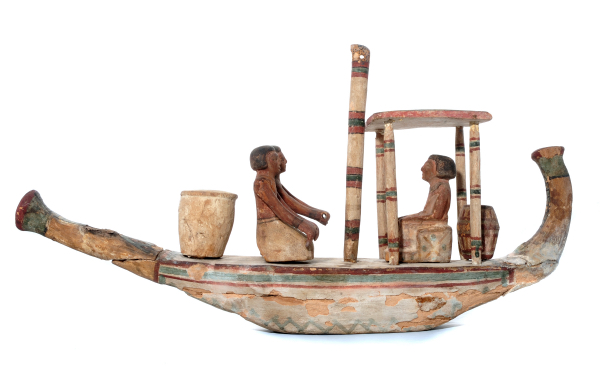
Wooden Funerary Boat approx. 3000 years old. PICTURE: Courtesy of Chiddingstone Castle
• A new exhibition exploring how stories and images from ancient Egypt continue to influence art, design and popular culture today opens at the Young V&A in Bethnal Green on Saturday. Making Egypt is divided into three sections – Storytelling, Communicating and Making – and features more than 200 objects which, as well as ancient artifacts, include contemporary responses from jewellery and fashion designers, graphic novelists and ceramic artists throughout. Highlights include everything from a 4000-year-old small wooden painted model funerary boat and an amulet of Taweret, goddess of childbirth and fertility, dating from between 664 BC to 332 BC to a rare carved wooden scribe’s palette which was used to hold ink and brushes, and Egyptian faience shabtis dating from between 380 BC to 343 BC which represent just a handful of more than 300 small funerary figures discovered in the tomb of Djedhor. Runs until 2nd November. Admission charge applies. For more, see vam.ac.uk/young.
• A new plaque commemorating humanitarian aid workers has been unveiled in the crypt of St Paul’s Cathedral. Located near the memorial to Florence Nightingale, the plaque “celebrates the bravery of those who dedicate their lives to helping others and remembers those who have been murdered or injured while delivering humanitarian assistance”. Hand-carved by stonemason Martin Gwilliams, the plaque reads: “In celebration of Humanitarian Aid Workers. Helping those in need whoever and wherever they are. And in remembrance of those who have died in the pursuit of their calling.” The plaque is the first in the UK in a public space to honour humanitarian aid workers and their work in conflict zones and disaster-stricken areas around the world. For more, see www.stpauls.co.uk.
• After almost 40 years, the Science Museum’s ‘Exploring Space’ gallery at the South Kensington institution will partially close on 22nd April and fully close in early June as part of preparations for the museum’s new ‘Space’ gallery. Key objects on display include the Soyuz spacecraft that carried astronaut Tim Peake back to Earth, the spacesuit worn by Helen Sharman, the first Briton in space, during a 1991 spaceflight and a three-billion-year-old piece of the Moon. Other items include a British Black Arrow rocket and a United States Scout rocket suspended from the gallery’s ceiling, a RL10 rocket engine and a J-2 rocket engine which powered the Apollo astronauts to the Moon. For more, see www.sciencemuseum.org.uk
A black cat the size of a labrador? The first sighting of the panther-like creature – which later became known as the Beast of Sydenham, was first reported in south-east London in 2002.
Subscribe for £3 a month to access all our stories…
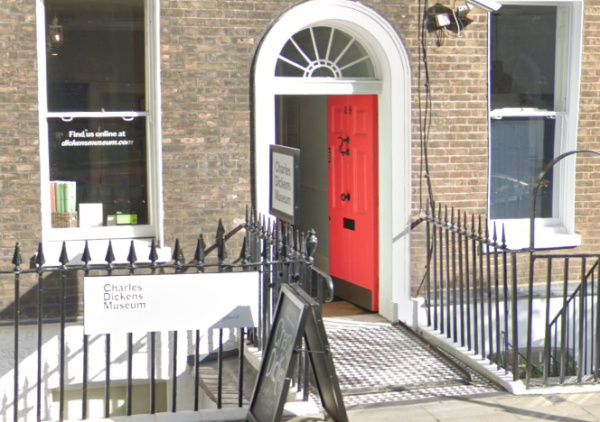
The Charles Dickens Museum. PICTURE: Courtesy of Google Maps
• The Charles Dickens Museum, located in the author’s former home at 48 Doughty Street in Bloomsbury, is marking its centenary this year, and to celebrate the occasion, it’s holding a special exhibition of highlights from its collection. The museum, which first opened its doors on 9th June, 1925, has brought together everything from Dickens’ hairbrush, walking stick and only surviving suit through to portraits and photographs made during his lifetime as well as original manuscripts, letters to his family and friends and rare first editions. The exhibition runs on 29th June. Admission charge applies. For more, see https://dickensmuseum.com/.
• Housing rights campaigner and activist Olive Morris has been commemorated with an English Heritage Blue Plaque in Brixton. Jamaican-born Morris (1952-1979), who dedicated her life to helping the oppressed and exploited, hosted Black women’s study groups and lived as a squatter at the three storey property at 121 Ralston Road in the 1970s. She was a significant figure in the British Black Panther movement, co-founded the Brixton Black Women’s Group and the Organization of Women of African and Asian Descent in 1978, and was one of the “Old Bailey three” who were acquitted after being prosecuted over a protest outside the Old Bailey, winning the right to a fair representation of Black people on the jury during the court proceedings. For more, see www.english-heritage.org.uk/visit/blue-plaques/.
•Soldier magazine, the official magazine of the British Army, is marking its 80th anniversary with an exhibition ay the National Army Museum.The Story of Soldier Magazine charts the publication’s history from March, 1945, when it was launched by Field Marshal Bernard Law Montgomery, through the role it’s played in covering every major conflict since as well as the issues shaping military life. Runs until 6th July. Admission is free. For more, see https://www.nam.ac.uk.
Send all items for inclusion to exploringlondon@gmail.com.
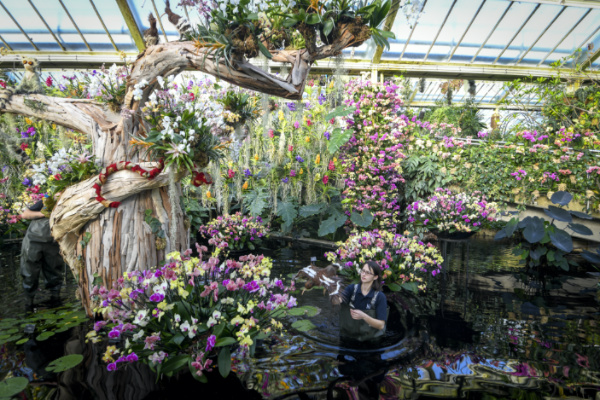
• Kew Garden’s iconic orchid festival returns this Saturday with a Peruvian twist. The gardens’ 29th orchid festival explores some of the 3,000 species of orchids found in Peru’s varied landscapes. Inside the Princess of Wales Conservatory will be a floral recreation of the scenery of Peru including a cornucopia sitting on a grass island in the central pond which was inspired by Lake Titicaca and, in a smaller pond, floral parihuanas (flamingoes) stand proud in front of the iconic Machu Picchu. The display also includes the world’s largest bromeliad – Puya raimondii (commonly known as the Queen of the Andes) – which will be shown alongside floral sculptures inspired by the plant. The country’s diverse wildlife, meanwhile, is celebrated with an orchid aviary that brings to life the diverse bird populations of Peru, and visitors are welcomed by an alpaca bedecked in orchids. Visitors can also wander under a starry night sky adorned with dazzling allium flower heads, which will be recycled from Kew’s outdoor garden displays. There is also large-scale photography taken by celebrated Peruvian photographer Mariano Vivanco and new artworks created for the exhibition of Lima-born artist Gisella Stapleton. Runs until 2nd March. Admission charge applies (advance booking required). For more, see www.kew.org.
• The diversity of 20th century Brazilian art is being celebrated in a new exhibition which opened at the Royal Academy this week.Brasil! Brasil! The Birth of Modernism features more than 130 works by 10 important Brazilian artists and spans the period from the 1910s to the 1970s. The artists include pioneers of Brazilian modernism such as Anita Malfatti, Vicente do Rego Monteiro, Jewish Lithuanian emigré Lasar Segall, Candido Portinari and Tarsilo do Amaral as well as self-taught artists such as Alfredo Volpu, Djaniro da Motta e Silva, Rupert Valentim, Geraldo de Barros, and the artist and architect Flávio de Carvalho. The exhibition also features a section dedicated to the historic Exhibition of Modern Brazilian Paintings, which took place at the Royal Academy in 1944 and was the first exhibition of modern Brazilian art in the UK. Runs until 21st April. Admission charge applies. For more, see www.royalacademy.org.uk.
• A “legacy stone” commemorating the former residence of musician and former lead singer of The Clash, Joe Strummer, has been unveiled in North Paddington. The stone was installed in the newly refurbished Maida Hill Market on the corner of Walterton Road, a location where Strummer, who died in 2002, squatted during the 1970s ( in fact, his address of 101 Walterton Road inspired the name for the band the 101ers). The stone is inscribed with lyrics sung by Strummer in the song Clampdown from The Clash’s 1979 album London Calling including “the future is unwritten” and “No man born with a living soul can be working for the clampdown”. The stone was installed as part of Westminster City Council project to revitalise the market and Market Hill Area.
Send items to exploringlondon@gmail.com for inclusion.
On first glance, this stone pyramid standing in the churchyard of St Anne’s Limehouse appears to be a grave marker or tomb, albeit a rather unusual one.
Subscribe for just £3 a month to gain access to all Exploring London’s content – and support our work at the same time!
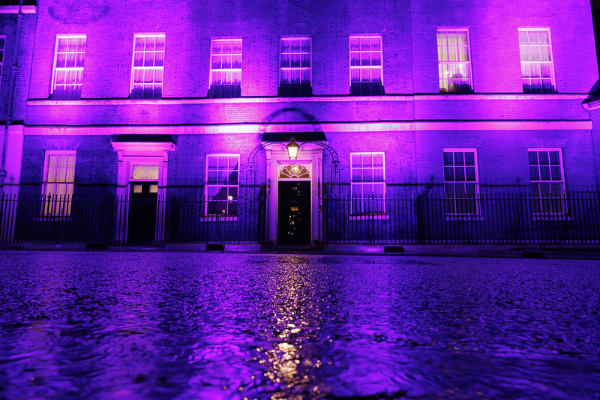
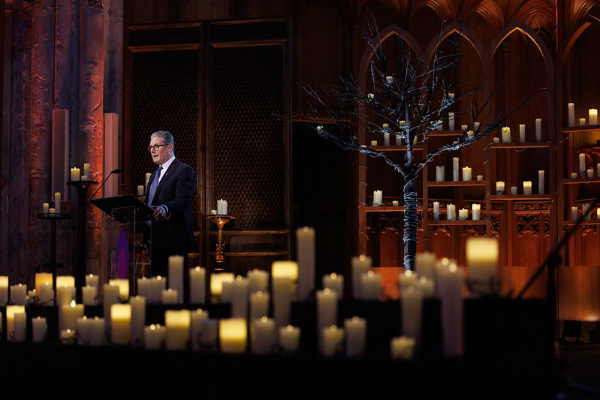
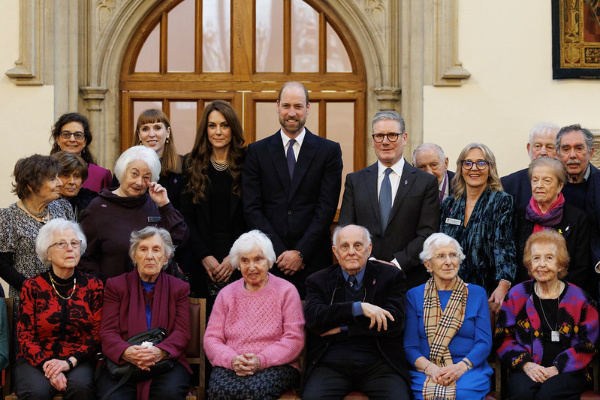
10 Downing Street is lit to mark Holocaust Memorial Day on 27th January. PICTURE: Simon Dawson/No 10 Downing Street (licensed under CC BY 2.0)Prime Minister Keir Starmer speaks as he attends a Holocaust Memorial Day event at the Guildhall . PICTURE: Simon Dawson/No 10 Downing Street (licensed under CC BY 2.0)Prime Minister Keir Starmer poses for a photo with the Prince and Princes of Wales and survivors of the Holocaust as they attend a Holocaust Memorial Day event at the Guildhall. PICTURE: Simon Dawson/No 10 Downing Street (licensed under CC BY 2.0)
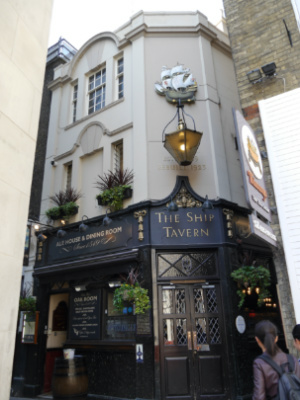
Its name, however, is said to be related to its proximity to the now-underground River Fleet which runs through Holborn and linked the area with the River Thames. It’s said that the pub’s clientele soon included dock workers and that it may have even had connections to smuggling and pirates. It was apparently these connections that gave the pub the name it still has today.
These days tucked down a narrow alleyway at 12 Gate Street in a building dating from 1923 (apparently considerably bigger than the original), the pub, which features wood panelled walls and leaded windows, has a storied history.
Having been established during the reign of King Edward VI, the pub is known to have provided a space for banned Catholic worship (complete with spotters to warn if officials were seen in the area and hiding places for the priests should the officials decide to raid the premises).
Indeed, the pub would have also served those who attended executions of Catholics such as Robert Morton and Hugh More who were executed in 1588 in the nearby Lincoln’s Inn Fields (other executions there included that of Anthony Babington, executed in 1586 after being convicted of plotting against Queen Elizabeth I, and Lord Russell, executed in 1683 for his involvement in the Rye House Plot).
Other clientele, meanwhile, may have come from the nearby thoroughfare of Whetstone Park which was once notorious for gambling houses and other illicit behaviours.
The Ship also has Freemason connections, being officially consecrated as a Masonic Lodge in 1736 by the then-Grand Master, the Earl of Antrim.
Famous figures said to have been associated with this pub include Richard “Trusty Dick” Penderell, who aided Charles I’s escape after the Battle of Worcester in September, 1651, the antiquarian John Bagford, the French diplomat and spy Chevalier d’Eon who lived both as a man and, later in life, as a woman, and John Smeaton, the builder of a lighthouse once located at Eddystone in Cornwell. It’s even been suggested Shakespeare visited.
There’s also said to be a number supernatural clients at the pub with mysterious figures seen sitting at tables and glasses being moved around (it’s been suggested some of these relate to the persecution of Catholics on the site).
The disappearance of King Edward V and his brother, Richard, Duke of York, after being last seen in the Tower of London is one of London’s most famous mysteries. And while it’s one we’ve written about before, we thought we’d take a look at the recent announcement that new evidence had been found in the matter.
Subscribe to Exploring London for just £3 a month to access all of our articles…
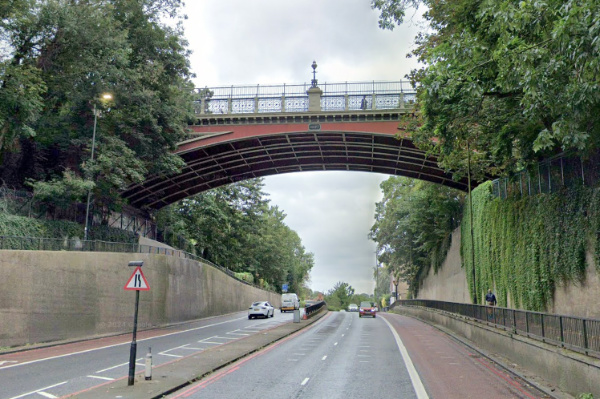
This north London district in the London Borough of Islington owes its name to a bridge which straddles Archway Road (part of the Great North Road or A1).
The bridge’s origins go back to the early 19th century when work began on a 230 metre-long tunnel underneath Highgate Hill which would allow users to bypass the hill’s steep gradient. If completed, it’s said it would have been the earliest road tunnel in Britain.
But in April, 1812, the tunnel collapsed and a cutting through the hill, utilising the work done on the collapsed tunnel, was then proposed. It would become Archway Road.
Hornsey Lane, however, ran across the top of the hill linking Highgate to its west to Crouch End in the east, and to ensure the lane remained when the cutting was completed, it was decided to build a viaduct to carry the lane across the cutting.
The bridge over Archway Road (the A1) as it is today. PICTURE: Google Maps
The resultant structure was designed by none other than John Nash in the style of a Roman aqueduct and opened in 1813.
Archway Road, which ran underneath the arch, was operated as a toll road until 1871.
The bridge, meanwhile, was demolished in 1900 and replaced by a cast iron bridge, designed by Alexander Binnie, which still stands.
The area was referred to as Highgate Archway but gradually the Highgate was dropped and plain Archway adopted.
This was reinforced by the naming of the Tube station in Junction Road which was originally named Highgate when it opened in 1907 as the terminus of the Northern Line but was renamed Archway (Highgate) in 1939 and then just Archway in 1947.
Landmarks in this predominantly leafy residential area include the Whittington Hospital, originally built as the Holborn Union Infirmary 1877-79, on Highgate Hill.
On a similar theme, the Whittington Stone can also be found at the bottom end of Highgate Hill. It is said to commemorate the spot where Dick Whittington, having decided to leave London after failing to make his fortune, heard the Bow Bells ringing and turned back (the stone is topped with a statue of Whittington’s famous cat).
The green expanse of Hampstead Heath lies just to the west.
• Transport for London has announced it will be unveiling four major new artworks on the Tube network this year as part of its Art on the Underground programme which this year celebrates its 25th anniversary. The works include Saved by the Whale’s Tail, Saved by Art, a large-scale piece by artist Ahmet Öğüt in collaboration with New Contemporaries In Art which, to be unveiled at Stratford Underground station in March, explores the role art plays in everyday life. There’s also a new artwork by Hungarian-born American artist Agnes Denes which will be featured in a new pocket Tube map, a new audio work produced by artist and composer Rory Pilgrim with the Mayor of London’s Culture and Community Spaces at Risk (CCSaR) programme which will be heard at Waterloo Station in June and July, and, a new mural by Rudy Loewe which will be unveiled at Brixton Tube station in November. For more on Art on the Underground, see https://art.tfl.gov.uk.
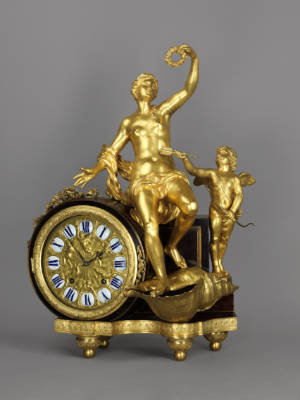
• On Now: Keeping Time: Clocks by Boulle. This exhibition at the Wallace Collection in Manchester Square explores the art and science of timekeeping through a display of five pieces created by André-Charles Boulle (1642–1732). Boulle, the most famous cabinetmaker working for the court of the Sun King, Louis XIV (1638–1715), ended up giving his name to a style that featured elaborate veneer designs incorporating turtleshell, brass and other materials. The objects on show in the Housekeeper’s Room include a monumental wardrobe from 1715 that encloses a clock; two mantel clocks, one from around 1715 featuring Venus and Cupid, and another, from a decade later, with the figure of Father Time; as well as two pedestal clocks. A complementary display in the museum’s Billiard Room brings together two artworks as it explores the concept of time – The Dance to the Music of Time (about 1634-6) by Nicolas Poussin in which the Four Seasons dance to the song of Father Time, the composition of their rhythmic bodies echoing the workings of a clock movement, and The Borghese Dancers (1597–1656), where five female figures masquerade as the Hours, attendants to the goddesses of the Dawn and Moon. Runs until 2nd March. Free admission. For more, see www.wallacecollection.org.
• London Zoo has welcomed three new Socorro doves as part of a global effort to breed and reintroduce them to the wild. The three doves, which moved from Portugal’s Lagos Zoo at the end of 2024, have joined six other Socorro doves at the zoo. The species, which is extinct in the wild, is endemic to the tiny Socorro Island off the coast of Mexico and the Socorro Dove Project, an international initiative, is working to reintroduce the species to the island by 2030. The Socorro doves can be seen in Blackburn Pavilion, London Zoo’s historic tropical birdhouse, which is also home to the endangered Sumatran laughingthrush, the critically endangered Bali starling and the critically endangered blue-crowned laughingthrush. For more, see www.londonzoo.org.
Send all items for collection to exploringlondon@gmail.com.





 Exploring London