This Week in London – A Dutch master rediscovered; Science Museum’s new gallery; and, Rome defaced…

The first exhibition dedicated to the works of 17th century Dutch master Adriaen van de Velde has opened at the Dulwich Picture Gallery in south London. Adriaen can de Velde: Dutch Master of Landscape features more than 60 of his most accomplished works including landscapes and beachscapes as well as red chalk preparatory studies, pen and ink drawings and watercolours. There’s also a selection of his larger works including Portrait of a Family in a Landscape and Landscape with cattle and figures. Part of the Rediscovering Old Masters: The Melosi Series being shown at the Dulwich Picture Gallery, the exhibition is being held in partnership with the Rijksmuseum in Amsterdam. Runs until 15th January. For more, see www.dulwichpicturegallery.org.uk.

• The Science Museum in South Kensington has opened its “most ambitious” interactive science gallery featuring interactive exhibits, artworks, live demonstrations and immersive experiences. Wonderlab: The Statoil Gallery, which cost £6 million to create, features more than 50 exhibits in seven zones and spans topics as diverse as sound, forces, light and mathematics. Highlights include a giant interactive orrery (mechanical model of the solar system), the chance to explore the effects of different materials on a friction slide and live science shows featuring explosions, rockets, and space. Admission charges apply. For more, see www.sciencemuseum.org.uk/wonderlab.

 A free exhibition focusing on defaced coins and other objects has opened at the British Museum. Defacing the past: damnation and desecration in imperial Rome takes on Roman history from the view of the defacer and features coins of Caligula and Nero – the first emperors to suffer ‘damnation’ after their deaths, as well as defaced images of Domitian and Commodus, both of whom were killed by conspirators as a result of their extravagant and autocratic behaviour. Runs in Room 69a until 7th May. For more, see www.britishmuseum.org.

Send all items for inclusion too exploringlondon@gmail.com.

This Week in London – Medieval embroidery; Maino on show; former toilet block becomes Kensington Garden’s newest eatery; and, a new Lord Mayor…

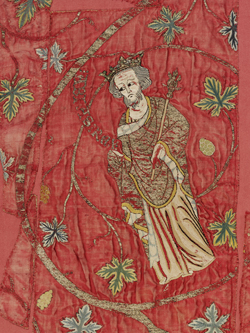
the_jesse_cope_detail_ca-_1310-25_c_victoria_and_albert_museum_londonObjects associated with some of the most notable personages of the Middle Ages – from King Edward I and his wife, Queen Eleanor of Castile through to Edward, the Black Prince, and martyred archbishop, Thomas Becket – will go on show at the V&A in South Kensington as part of a display of medieval embroidery. Opening Saturday, Opus Anglicanum: Masterpieces of English Medieval Embroidery features embroidered treasures such as a seal-bag which, dating from the early 12th century, was made to hold the foundation document of Westminster Abbey, the Toledo Cope which has been brought back to England from Spain for the first time since its creation in the 14th century and an embroidered vestment associated with Thomas Becket. There’s also the Hólar Vestments from Iceland, the Jesse Cope from the V&A’s own collections (pictured), the Daroca Cope from Madrid and an embroidered tunic worn by Edward, the Black Prince. As well as embroidery, the display features panel paintings, manuscripts, metalwork and sculpture. Runs until 5th February along with a season of events. Admission charges apply. See www.vam.ac.uk/opus for more. PICTURE: © Victoria and Albert Museum, London.

Two works by Spanish painter Fray Juan Bautista Maino have gone on exhibition for the first time in the UK at The National Gallery, off Trafalgar Square. The Adoration of the Shepherds and The Adoration of the Kings, dating from 1612-14, have been loaned from the Museo Nacional del Prado in Madrid, Spain, and can be seen for free in a display being held in conjunction with the upcoming exhibition Beyond Caravaggio. Each of the paintings measures more than three metres in height and were originally part of a retable (altarpiece) created for the altar of the Dominican church of San Pedro Martir in Toledo. The work took three years to complete and it was while he was doing so that Maino took religious vows and joined the Dominican Order (there’s also a chance he included a self portrait in the work in the form of a pilgrim on the altar’s far left). Can be seen until 29th January. For more, see www.nationalgallery.org.uk.

A former disused toilet block has been converted into a new cafe overlooking the 150-year-old Italian Gardens in the Kensington Gardens. Formally opened by Loyd Grossman, chairman of the Royal Parks charity, earlier this month, the cafe has a “living roof” aimed at supporting the biodiversity and wildlife of the gardens and has been designed in sympathy with the gardens and the nearby Grade 2* listed Queen Anne’s Alcove, currently being restored. The Italian Gardens were a gift from Prince Albert to Queen Victoria. For more on the cafe, including opening times, head here.

Alderman Andrew Parmley has been elected as the 689th Lord Mayor of London. In keeping with tradition, he will take up the office after the ‘Silent Ceremony’ in Guildhall on 11th November followed by the annual Lord Mayor’s Show parade through the City the following day.

Send all items to exploringlondon@gmail.com for inclusion.

This Week in London – Totally Thames; Sixties revolution at the V&A; and, French portrait drawings…

totally-thamesIt’s September and that means Totally Thames, an annual month of events celebrating London’s great watery artery. Highlights among this year’s 150 events include this Saturday’s Great River Race in which more than 300 boats from across the UK and around the world compete on a course running from Millwall Slipway to Ham House in Richmond, Life Afloat, an exhibition looking at the evolution of the houseboat living on the Thames across the last 100 years, and the 8th annual Classic Boat Festival at St Katharine Docks this weekend as well as walks, talks, performances, art installations and boat trips including a tour of Brunel’s London. Runs until the end of the month. For more information and the full programme of events, see www.totallythames.org. PICTURE: Totally Thames/Barry Lewis.

The changes that swept across society in the late 1960s are the subject of a new exhibition which opens at the V&A this weekend. You Say You Want a Revolution? Records and Rebels 1966-70 is divided into six distinct sections, and starts with a recreation of Carnaby Street as it was before moving on to subjects like clubs and counterculture, revolution on the street, revolution in consumerism, festivals and alternative communities. Among the objects on display are costumes designed for Mick Jagger, a Cecil Beaton portrait of Twiggy, Roger Corman’s 1967 film about LSD, The Trip, a wall of protest posters, film, sound and still footage from the 1967 Montreal and 1970 Osaka World Expos, a kaftan worn by Grace Slick of Jefferson Airplane at Woodstock, and a rare Apple 1 computer. Runs from 10th September to 26th February at the South Kensington institution. For more, see www.vam.ac.uk/revolution.

A new exhibition showcasing the British Museum’s holdings of French portrait drawings opens at the Bloomsbury establishment today. French portrait drawings from Clouet to Courbet offers the chance to see some well-known French portrait drawings alongside others that have never been exhibited before. Pictures on show include Francois Clouet’s portrait of Catherine de’Medici, Jean-Michel Moreau le Jeune’s chalk drawing of his infant daughter, and a ‘playful’ portrait of artist Artemisia Gentileschi by Pierre Dumonstier. The free display can be seen in Room 90 until 29th January.

Send all items for inclusion to exploringlondon@gmail.com.

This Week in London – Family festival celebrates Queen’s 90th at Buckingham Palace; Kew Garden’s first Science Festival; and big data examined…

Buckingham-PalaceBuckingham Palace will host a family festival in celebration of the 90th birthday of Queen Elizabeth II this Saturday. The festival, which will be held in the Family Pavilion on the West Terrace, at the Royal Mews and in The Queen’s Gallery, will feature a 24 foot high, life-sized drawing of the Roald Dahl’s Big Friendly Giant (BFG) by Sir Quentin Blake, story-telling sessions, arts and crafts activities including the chance to make hats inspired by the Queen’s outfits and a BFG ‘dream jar’, and a toy kitchen where under fives can decorate a birthday cake. There will also be dressing-up activities in the Royal Mews and a special family tour of current exhibitions at The Queen’s Gallery while a selection of refreshments will be available. Admission charge applies. For more information, check out www.royalcollection.org.uk.

Kew Gardens holds it first Science Festival this weekend with a range if interactive activities for visitors to get hands-on with. The family friendly festival will celebrate the ground-breaking discoveries made by Kew scientists and allow visitors to explore how to use a DNA sequencer, clone a cabbage or pollinate orchids with tuning forks. The festival will also features a special display and talks about carnivorous plants and there’s special activities for younger “budding scientists” such as making their own mushroom spore print. The festival kicks off tomorrow and runs until Sunday. For more, see www.kew.org.

On Now: Our Lives in Data. This free exhibition at the Science Museum in South Kensington explores some of the many ways in which our data is collected, analysed and used for a variety of purposes – from a toy that learns from a child’s personality to become a better playmate to new virtual reality tools created by game designers to help researchers understand vast collections of data. There is also the chance to test facial recognition software through an “intelligent mirror” and an exploration of some of the latest products developed to help people protect their data, including a Cryptophone and wi-fi blocking paint. Runs until September, 2017. For more, visit www.sciencemuseum.org.uk/data.

Send all items for inclusion to exploringlondon@gmail.com.

This Week in London – Kew Gardens celebrates its herbaceous borders; the global ‘War on Terror’ at the IWM; Bobby Moore honoured; exposing the camera; and, 60 years of fanzines…

The first of three weekends celebrating the creation of the world’s longest double herbaceous borders – known as the Great Broad Walk Borders – will be held at Kew Gardens this weekend. Made up of 30,000 plants, the borders run along 320 metres of the Broad Walk which was originally landscaped in the 1840s by William Nesfield to provide a more dramatic approach to the newly constructed Palm House (completed in 1848). The spirit of the formal colourful beds he created along either side of the walk have been recreated using a range of plants. To celebrate, Kew are holding three themed weekends, the first of which, carrying a history and gardens theme, is this Saturday and Sunday. As well as talks and drop-in events, there will be a range of family-related activities as well as craft workshops, tours, and shopping. Further weekends will be held on 13th and 14th August (around the theme of the excellence of horticulture at Kew) and the bank holiday weekend of 27th to 29th August (around the theme of a celebration of beauty). For more, head to www.kew.org.

A new exhibition centring on the experiences of UK citizens and residents suspected but never convicted of terrorism-related activities and the role of the British Government in the ‘Global War on Terror’ opens at the Imperial War Museum in Lambeth today. Edmund Clark: War on Terror, Clark’s first major solo show in the UK, looks at the measures taken by states to protect their citizens from the threat of international terrorism and their far-reaching effects, exploring issues like security, secrecy, legality and ethics. Among the photographs, films and documents on display are highlights from five series of Clark’s work including Negative Publicity: Artefacts of Extraordinary Rendition, created in collaboration with counter-terrorism investigator Crofton Black, and other works including the film Section 4 Part 20: One Day on a Saturday, photographs and images from the series Guantanamo: If the Light Goes Out and Letter to Omar as well as the first major display of the work Control Order House. Runs until 28th August, 2017. Admission is free. For more, see www.iwm.org.uk/exhibitions/iwm-london/edmund-clark-war-of-terror.

The only English football captain to win a World Cup, Bobby Moore, has become the first footballer to be honoured with an English Heritage blue plaque. The plaque was unveiled at the footballer’s childhood home at 43 Waverley Gardens in Barking, East London, this week. Moore is best remembered for leading England to a 4-2 win over West Germany in the 1966 World Cup. For more, see www.english-heritage.org.uk/visit/blue-plaques/.

The camera is the subject of a new photography display which opened at the V&A in South Kensington last weekend. The Camera Exposed features more than 120 photographs, including works by more than 57 known artists as well as unknown amateurs. Each work features at least one camera and include formal portraits, casual snapshots, still-lifes, and cityscapes. Among the images are pictures of photographers such as Bill Brandt, Paul Strand and Weegee with their cameras along with self-portraits by Eve Arnold, Lee Friedlander and André Kertész in which the camera appears as a reflection or shadow. The display includes several new acquisitions including a Christmas card by portrait photographer Philippe Halsman, an image of photojournalist W Eugene Smith testing cameras and a self-portrait, taken by French photojournalist Pierre Jahan using a mirror. Runs in gallery 38A until 5th March. Free admission. For more, see www.vam.ac.uk/exhibitions/the-camera-exposed.

Sixty years of fanzines – from the development of zine-making back in the 1940s through to today’s – go on show at the Barbican Music Library in the City on Monday. FANZINES: a Cut-and-Paste Revolution features zines including VAGUE, Sniffing’ Glue, Bam Balam, Fatal Visions, Hysteria and Third Foundation among others. The exhibition, which runs until 31st August, is being held in conjunction with this year’s PUNK LONDON festival. For more, see www.cityoflondon.gov.uk/services/libraries-and-archives/our-libraries/Pages/Barbican-Music-Library.aspx.

Send all items for inclusion to exploringlondon@gmail.com.

This Week in London – Festival of Archaeology; exploring colour and vision at the NHM; and the City’s Summer Community Fair…

The 25th annual Festival of Archaeology has kicked off across the UK this week and, of course, there’s events taking place across London. They include a walk exploring the moat at Fulham Palace this Sunday, the opportunity to join Inspector of Ancient Monuments Jane Siddell on a walk along the route of the former London wall in the City of London next Thursday, a tour of the remains of London’s Roman amphitheatre beneath Guildhall Yard on 28th July, and the chance to investigate ancient poo at the Museum of London Docklands over the week from 25th to 29th July. Some of the events are free to attend and require no booking; others charge an admission price and require advance booking. For all details, head to www.archaeologyfestival.org.uk.

Giant-Jewel-Beetle Explore how colour and vision have shaped the natural world in a new exhibition which opens at the Natural History Museum in South Kensington tomorrow. Colour and Vision features more than 350 rarely seen specimens and uses immersive arts and digital imaging to highlight how colour and vision influence life on the planet, providing insights into how humans and animals perceive the world and how colour-shifters, stealth experts and mimics use colour to survive. They include specimens from the rarely-displayed national eye collection, some of nature’s finest examples of structural colour – including Jewel beetles and hummingbirds, cochineal insects which show how nature can be used to create pigments for dyes and paints, and some rose-ringed parrots, whose different colours reveal the visible impact of a mutation in their pigment genes. The exhibition also features a newly commissioned light installation – Our Spectral Vision – by artist Liz West which has been inspired by Sir Isaac Newton’s investigation of the colour spectrum and blue morphs butterflies. Runs to 6th November. Admission charges apply. For more, see www.nhm.ac.uk. PICTURE: Giant jewel beetles/© Trustees of NHM.
The City of London Corporation’s Community Fair will be held on Sunday in Guildhall Yard, featuring entertainment, food stalls and activities for all ages. The free event will see the yard lined with market stalls run by local clubs, faith groups, learning providers and cultural partners who will be offering games and activities as well as information and handmade items for sale. Special guest broadcaster and author Charlie Dimmick will be giving planting workshops throughout the afternoon and will take part in a special Q&A session. Runs from noon to 4pm. For more details, see www.cityoflondon.gov.uk/communityfair.
Send all items for inclusion to exploringlondon@gmail.com.

This Week in London – Commemorating the Battle of the Somme; Transported by Design; and, Winifred Knights at Dulwich…

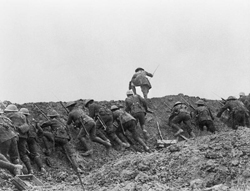
Battle-of-the-SommeThe Imperial War Museum in Lambeth is holding a free late night opening tonight featuring live music, film screenings, immersive theatre and poetry to mark the 100th anniversary of the Battle of the Somme. Highlights of Night Before the Somme, which runs from 8pm to midnight tonight, include slam poet Kat Francois’ critically acclaimed play Raising Lazarus, poet and broadcaster Ian McMillan’s show Magic Lantern Tales, and extracts from the immersive production Dr Blighty – which tells the story of the million Indians who travelled to fight in the war. Visitors will also have the chance to watch the film, The Battle of the Somme (filmed and screened in 1916, it was the first feature-length documentary about war), listen in to a series of Q&A’s with experts on the battle, and preview the major exhibition, Real to Reel: A Century of War Movies. Real to Reel, which officially opens on Friday, explores how film-makers have found inspiration in compelling personal stories and the real events of wars from the past century. As well as audio-visual installations, the display features film clips, costumes, props, scripts, sketches and designs from films such as The Dam Busters, Where Eagles Dare, Apocalypse Now, Battle of Britain, Das Boot, Casablanca, Jarhead, Atonement and War Horse along with original archival material and artefacts from the IWM collections. The exhibition, which is divided into five sections, runs until 8th January. Admission charges apply. See www.iwm.org.uk for more. PICTURE: © IWM (Q 70164. Staged scene from The Battle of the Somme film, 1916 British troops go ‘over the top’ into ‘No Man’s Land’. This scene was staged for the camera at a training school behind the lines.

• Don’t forget tonight’s vigil at Westminster Abbey to mark the 100th anniversary (as mentioned in last week’s entry here).

Still on the centenary of the Battle of the Somme and a new exhibition opened at the Science Museum in South Kensington this week focusing on the innovations in medical practice and technologies developed as a result of the new kind of industrialised warfare seen in the battle. Wounded: Conflict, Casualties and Care has at its centre a collection of historic objects from the museum’s World War I medical collections including stretchers adapted for use in narrow trenches and made-to-measure artificial arms fitted to the wounded in British hospitals as well as lucky charms and personal protective items carried by frontline soldiers. There are also artworks from the period including Henry Tonk’s famous pastel drawings of facial injuries and a 1914 painting by John Lavery that depicts the arrival of the first British wounded soldiers at the London hospital. Admission is free and the exhibition can be seen until early 2018. For more, see www.sciencemuseum.org.uk.

Regent Street will be transformed on Sunday, 3rd July, with the Transported by Design Festival featuring transport designs which have shaped and will shape London. The festival, which will stretch from Piccadilly Circus to Oxford Circus Tube stations, will see the street divided into three zones – past, present and future. Among the objects on show in ‘past’ section will be a horse-drawn bus and other heritage buses, a 1927 train carriage and an exhibition of classic advertising posters and signage while the ‘present’ section will feature ‘Cycle Spin Fun’ by Santander Cycles, Moquette Land – a showcase of fabric used across the transport network, and, a ‘design a bus’ competition, and the ‘future’ section will feature a range of technologies, including virtual reality headsets, exploring what transport could look like in 2040. The free festival, part of the ‘Summer Streets’ program which sees Regent Street closed to traffic on Sundays over summer, runs from noon to 6pm. For more, see www.tfl.gov.uk/campaign/transported-by-design/event-calendar?intcmp=40582.

• The work of artist Winifred Knights, the first British woman to win the Prix de Rome scholarship, is the subject of a recently-opened exhibition at the Dulwich Picture Gallery. The display, the first major retrospective of the work of Knights (1899-1947), brings together more than 70 preparatory studies and her most ambitious works including The Deluge (1920), The Potato Harvest (1918) and Leaving the Munitions Works (1919). Winifred Knights (1899-1947) runs until 18th September. Admission charge applies. For more, see www.dulwichpicturegallery.org.

Send all items for inclusion to exploringlondon@gmail.com.

This Week in London – Engineering feats explained; Tate Modern reopens; app for blue plaques; and, the RA’s summer exhibition…

Sydney_Opera_House_under_construction_6_April_1966__Robert_Baudin_for_Hornibrook_Ltd._Courtesy_Australian_Air_PhotosThe stories behind some of the world’s most iconic buildings – from the Sydney Opera House to the Centre Pompidou in Paris – and engineering projects like London’s Crossrail will be exposed in a new exhibition at the V&A on the work of Ove Arup – arguably the most influential engineer of the 20th century. Engineering the World: Ove Arup and the Philosophy of Total Design, which is being staged on conjunction with the global engineering and design company he founded – Arup, surveys the life, work and legacy of Arup (1895-1988) and features more than 150 previously unseen prototypes, models, films, drawings and photographs as well as new immersive digital displays featuring animations, simulations and virtual reality. As well as presenting information relating to a selection of Arup’s most ground-breaking projects – including collaborations with architects such as Richard Rogers and Norman Foster, the display, which is divided into several distinct sections arranged chronologically, also explores the pioneering work of Arup today on projects like Crossrail, technologies for acoustics studies like SoundLab and SolarLeaf – an experimental bio-reactive facade system that uses micro algae to generate renewable energy. The first major exhibition led by the V&A’s new Design, Architecture and Digital Department, Engineering the World runs at the South Kensington museum until 6th November. Admission charges apply. For more, see www.vam.ac.uk/EngineeringSeason. PICTURE (above): Sydney Opera House under construction, 1966; © Robert Baudin for Hornibrook Ltd. Courtesy Australian Air Photos.

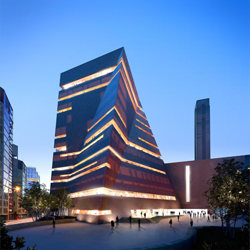
New-Tate-ModernThe new Tate Modern opens its doors to the public tomorrow following a £260 million renovation and expansion. Designed by architects Herzog & de Meuron (who also designed the original conversion of the Battersea Power Station which opened in 2000), the new Switch House building increases the size of the Tate Modern by 60 per cent. As well as redisplaying the 800 works previously on show, the revamped Tate Modern – which still features the Turbine Hall at its centre – also offers a range of new experiences for visitors, from the  subterranean concrete ‘Tanks’ – the first permanent museum spaces dedicated to live art, and a panoramic public viewing terrace on level 10. The museum’s reopening will be celebrated by a free programme of live performances, new commissions and other special events and the museum will stay open until 10pm each evening this weekend when events will include a specially commissioned choral work being performed by more than 500 singers from community choirs around London at 5pm on Saturday. Entry to the Tate Modern on Bankside is free. For more, see www.tate.org.uk/visit/tate-modern. PICTURE: © Hayes Davidson and Herzog & de Meuron/Tate 

English Heritage blue plaques were unveiled to ballet dancer Dame Margot Fonteyn and choreographer Sir Frederick Ashton earlier this month. Dame Margot’s plaque was unveiled at her former flat at 118 Long Acre in Covent Garden (conveniently close to the nearby Royal Opera House where she performed) while Sir Frederick’s plaque was unveiled at his former property at 8 Marlborough Street in Chelsea. The pair’s 25 year relationship produced many of her most celebrated performances and his greatest ballets, including Daphnis and Chloe (1951), Sylvia (1952) and Ondine (1958). The unveiling coincided with the release of a new free Blue Plaques app which, as well as helping users to find blue plaques and uncover the stories of those they commemorate, is also intended to provide an expanding series of walking tours. The first, ‘Soho’s Creatives and Visionaries’, follows a route from Oxford Circus to Tottenham Court Road Station, taking in the property where Karl Marx began writing Das Kapital, the house where Canaletto lived and the attic rooms where John Logie Baird first demonstrated television in 1926. For more, see www.english-heritage.org.uk/visit/blue-plaques/.

The 248th ‘summer exhibition’ – featuring the work of 15 international artistic duos in a display curated by leading British sculptor Richard Wilson – opened at the Royal Academy of Arts this week. On display in the Piccadilly institution’s main galleries, the exhibition’s highlights include a new large scale, suspended kite sculpture by Heather and Ivan Morison, two hand-coloured prints from Jake and Dinos Chapman’s Human Rainbow II series, and, an atmospheric photographic installation from Jane and Louise Wilson’s seminal Chernobyl series. Turkish film-maker and artist Kutlug Ataman’s monumental multi-image video installation, THE PORTRAIT OF SAKIP SABANCI, featuring 10,000 LCD panels will also be displayed. Can be seen until 21st August. Admission charges apply. For more, see www.royalacademy.org.uk.

Send all items for inclusion to exploringlondon@gmail.com.

LondonLife – Beetle-inspired moving installation at the V&A…

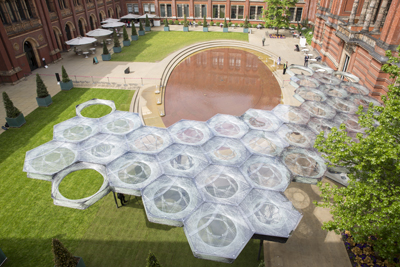
Elytra_Filament_Pavilion_at_the_VA_c_Victoria_and_Albert_Museum_London_5The result of four years of research, the Elytra Filament Pavilion is inspired by the fibrous forewing shells of flying beetles known as elytra. Featuring components which have been fabricated by a robot at the University of Stuttgart and then assembled on site in the V&A’s John Madejski Garden, the installation will grow and move in response to how visitors use the canopy thanks to anonymous data collected from sensors installed in the canopy fibres. On select dates – 17th and 18th June and 22nd September – visitors will be able to see new cells – each of which weighs about 45 kilograms and take an average of three hours to create – manufactured live by a Kuka robot. The installation is the work of experimental architect Achim Menges with Moritz Dorstelmann, structural engineer Jan Knippers and climate engineer Thomas Auer. The pavilion is one of the highlights of the V&A’s first ever ‘engineering season’ with the landmark exhibition – Engineering the World: Ove Arup and the Philosophy of Total Design opening on 18th June. Admission to see the installation, which can be seen at the South Kensington location until 6th November, is free. For more, see www.vam.ac.uk/EngineeringSeasonPICTURES: © Victoria and Albert Museum, London.Elytra_Filament_Pavilion_at_the_VA_c_Victoria_and_Albert_Museum_London_8

This Week in London – Beacons to mark Queen Elizabeth II’s 90th; 4,000 years of Sicilian history; underwear’s history exposed; a Shakespearean banknote remembered…

• Queen Elizabeth II’s 90th birthday is being marked in various ways across the capital today. Along with street parties, gun salutes in Hyde Park and at the Tower of London, beacons will be lit in numerous locations across the city (as well as around the country and even internationally) tonight. Further celebrations will be held across May and June.

Sicily

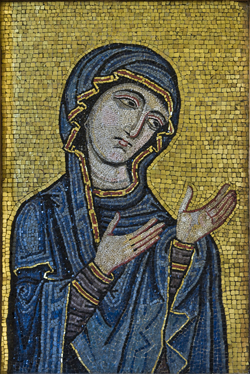
More than 4,000 years of Sicily’s history is being explored in a new exhibition opening at the British Museum in Bloomsbury today. Sicily: culture and conquest features more than 200 objects and focuses on two major eras: the arrival of the Greeks in the latter half of the 7th century BC and their subsequent encounters with earlier settlers and the Phoenicians; and, the period under Norman rule between 1100 and 1250 AD. Highlights include a spectacularly well preserved terracotta altar from about 500 BC, a terracotta sculpture of a Greek Gorgon, an iconic marble sculpture of a warrior from ancient Akragas, a bronze battering ram used by the Romans to sink enemy ships, a 12th century Byzantine-style mosaic and marble, and wooden Islamic-influenced architectural decorations along with ceremonial glassware and ivory, gold pendants and intricate enamel mosaics and cameos from the Norman period. The exhibition, being run in conjunction with Regione Siciliana, Assessorato dei Beni Culturati e dell’Identita Siciliana, runs in Room 35 until 14th August. Admission charges apply and a programme of events accompanies the exhibition. For more, see www.britishmuseum.org/sicily.

• The largest ever museum exhibition of underwear has opened at the V&A in South Kensington. Undressed: A Brief History of Underwear charts the history of underwear from the 18th century to today and features some of the more than 60 individual pieces of mostly contemporary underwear the museum recently acquired for its permanent collection as well as loaned objects. Among the objects on display are an “austerity corset” dating from 1917-18 which has been made from woven paper twine, a man’s waist belt used on the wearer’s wedding day which dates from 1842, a late 19th century corset designed for cycling as well as a rare surviving example of a 1978 panty thong designed by Rudi Gernreich (credited with giving the thong its name) and numerous contemporary pieces – everything from a butt lifter and waist trainer for women to a pair of EnlargetIt briefs designed by aussieBum to add volume to a man’s crotch and a mastectomy bra and prosthesis. The exhibition can be seen until 12th March next year. For more, see www.vam.ac.uk/undressed.

Banknote designer Harry Norman Eccleston’s Shakespearean-related design for the now out of circulation £20 banknote is the subject of an exhibition at the Bank of England Museum in the City. Held as part of commemorations marking 400 years since the Bard’s death, Eccleston’s Shakespeare explores the design elements used in the note, first issued in July, 1970, from his rendering of William Kent’s statue of Shakespeare to his drawing of the balcony scene of Romeo and Juliet. Entry is free. For more, see www.bankofengland.co.uk.

Send all items for inclusion t0 exploringlondon@gmail.com.

This Week in London – Russia’s finest portraiture on show, Scottish art from the Royal Collection; and photographer/film-maker Paul Strand revisited…

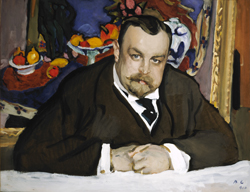
Russia The “most important exhibition of Russian portraits ever to take place at a British museum” opens at the National Portrait Gallery off Trafalgar Square today. The portraits of key figures from Russia spanning the period from 1867 to 1914 come from Moscow’s State Tretyakov Gallery which is simultaneously displaying a selection of portraits of famous Britons from the National Portrait Gallery in a joint event being held to mark the 160th anniversary of both institutions. Russia and the Arts: The Age of Tolstoy and Tchaikovsky features portraits of the likes of Akhmatova, Chekhov, Dostoevsky, Mussorgsky, Rimsky-Korsakov, Rubinstein, Tchaikovsky, Tolstoy and Turgenev by artists including Nikolai Ge, Ivan Kramskoy, Vasily Perov, Ilia Repin, Valentin Serov and Mikhail Vrubel. The majority of the works featured were commissioned directly from the artists by Pavel Tretyakov, a merchant, philanthropist and founder of the State Tretyakov Gallery, whose own portrait by Repin opens the exhibition. The exhibition at the National Portrait Gallery runs until 26th June. Admission charge applies. For more, see www.npg.org.uk/russia. PICTURE: Ivan Morozov by Valentin Serov (1910) © State Tretyakov Gallery, Moscow.

The best Scottish art in the Royal Collection goes on show at The Queen’s Gallery, Buckingham Palace, from tomorrow. Scottish Artists 1750-1900: From Caledonia to the Continent brings together more than 80 works collected by monarchs since King George III. It tells the story of the emergence of a distinctly Scottish school of art through works painted by the likes of Allan Ramsay – who in 1760 was commissioned to paint King George III’s State portrait and subsequently became the first Scot appointed to the role of Principal Painter in Ordinary to His Majesty, and Sir David Wilkie – whose works depicting small-scale scenes of everyday life attracted the attention of the Prince Regent (later King George IV) in the early 17th century. Other artists represented in the collection include Sir Joseph Noel Paton, David Roberts, James Giles, John Phillip, William Leighton Leith, and William Dyce. Runs until 9th October. Admission charge applies. For more, see www.royalcollection.org.uk.

The work of American photographer Paul Strand is on show at the V&A from Saturday in the first retrospective showing of his art in the UK in 40 years. One of the greatest photographers of the 20th century, Strand (1890-1976) was instrumental in defining the way fine art and documentary photography is understood and practiced today. He is also credited with creating the first avant-garde film, Manhatta. The exhibition, Paul Strand: Photography and Film for the 20th Century, features more than 200 objects including vintage photographic prints, films, books, notebooks, sketches and Strand’s cameras and includes newly acquired photographs from his only UK project – a 1954 study of the island of South Uist in the Scottish Hebrides. Can be seen until 3rd July. Admission charge applies. For more, see www.vam.ac.uk/paulstrand.

Send all items for inclusion to exploringlondon@gmail.com.

This Week in London – Botticelli at the V&A; Shakespeare recalled in free sound and light show; and, ‘punk’ captured on film…

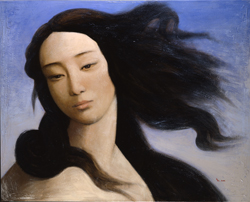
VenusA major new exhibition opening at the V&A this Saturday will feature more than 150 works from around the world in a display exploring how artists and designers have responded to the artistic legacy of Botticelli. Italian artist Sandro Botticelli (1445-1510) was largely forgotten for more than 300 years after his death but is now widely recognised as one of the greatest artists of all time. Botticelli Reimagined features painting, fashion, film, drawing, photography, tapestry, sculpture and print with works by Dante Gabriel Rossetti, Edward Burne-Jones, William Morris, René Magritte, Elsa Schiaparelli, Andy Warhol and Cindy Sherman. The exhibition is divided into three sections: ‘Global, Modern, Contemporary’, ‘Rediscovery’, and ‘Botticelli in his own Time’. Runs until 3rd July. Admission charge applies. For more, see www.vam.ac.uk/Botticelli. PICTURE: Venus, after Botticelli by Yin Xin (2008). Private collection, courtesy Duhamel Fine Art, Paris. (Name of artist corrected)

The historic facade of Guildhall in the City of London will become a canvas for a free son et lumiére show on Friday and Saturday nights to mark the 400th anniversary of the death of William Shakespeare. The display, which runs on a 20 minute loop between 6.45pm and 8.45pm, will feature period images and music from the City’s extensive archives and use 3D projection mapping techniques to transform the Dance Porch of the 15th century building. The Guildhall Art Gallery will be open from 6pm to 9pm and, as well as allowing people to view a property deed for a house in Blackfriars which was signed by the Bard, will feature a pop-up bar with a Shakespeare-themed cocktail. For more on this and other events, see www.cityoflondon.gov.uk/shakespeare400.

The 40th anniversary of punk is the subject of a new photographic exhibition drawn from the archives of world renowned music photographer and rockarchive.com founder Jill Furmanovsky which opened at the City of London Corporation’s Barbican Music Library this week. Chunk of Punk, which runs until 28th April, features many of Furmanovsky’s well-known punk-related images as well as hitherto unseen pictures with The Ramones, Buzzcocks, The Clash, The Sex Pistols, Blondie, The Undertones, Siouxsie and the Banshees, Blondie and Iggy Pop among the bands featured. The exhibition forms part of Punk.London: 40 Years of Subversive Culture. For more, see www.cityoflondon.gov.uk.

Send all items for inclusion to exploringlondon@gmail.com.

LondonLife – Images of London past…

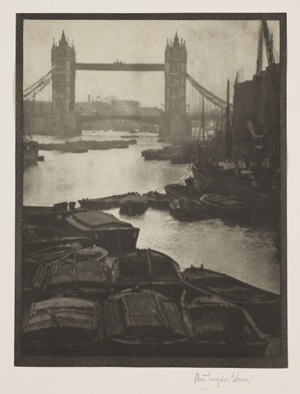
Tower_Bridge_1910_Alvin_Langdon_CoburnTower Bridge, here depicted in an image by Alvin Langdon Coburn, taken in about 1910. The image is one of more than 400,000 vintage prints, daguerreotypes and early colour photographs as well as other photography-related objects including the world’s first negative from the Science Museum Group’s 3,000,000 strong photography collection which is being transferred to the Victoria and Albert Museum under an agreement between the two institutions. The images are joining the V&A’s existing collection of 500,000 photographs to create an International Photography Resource Centre, providing the public with a “world class” facility to access what will be the single largest collection on the art of photography on the planet. It’s a reunion for some of the images which were once part of a single collection housed at the South Kensington Museum in the 19th century before it divided into the V&A and the Science Museum. For more on the museums, see www.vam.ac.uk and www.sciencemuseum.ac.ukPICTURE: © Royal Photographic Society/National Media Museum/ Science & Society Picture Library


This Week in London – Behind the scenes at London’s (and New York’s) theatres; Leonardo da Vinci’s mechanical talents; and, deeper inside the Queen’s wardrobe…

TheatreLondon’s West End “Theatreland” and New York’s Broadway are jointly the subject of a new exhibition which opened at the V&A this week. Curtain Up: Celebrating 40 Years of Theatre in London and New York takes visitors on an immersive, behind the scenes look at how award-winning plays, musicals and productions are made as well as the history of theatrical awards and life on the red carpet. Objects – taken from the V&A collection and that of The New York Public Library for the Performing Arts at Lincoln Centre – on display include Maria Bjornson’s original costume designs from The Phantom of the Opera (1986), one of the longest-running West End musicals and the longest running Broadway production in history as well as a selection of golden top hats from A Chorus Line which won both the Tony Award and the inaugural Olivier Award for Best New Musical in 1976, a tunic worn by Rudolf Nureyev in Romeo and Juliet, winner of the Olivier Award in 1977, and a dress designed by Bob Crowley and worn by Dame Helen Mirren in The Audience, a production which earned the actress both an Olivier award in 2013 and a Tony Award in 2015. The free exhibition, organised in partnership with the Society of London Theatre as part of a year long celebration of 40 years of the Olivier Award, runs until 31st August in the V&A’s Theatre and Performance Galleries before touring to The New York Public Library for the Performing Arts at Lincoln Centre later this year. For more, see www.vam.ac.uk/curtainup. PICTURE: © Victoria and Albert Museum.

A visually stunning exhibition highlighting the talents of Leonardo da Vinci opened at the Science Museum in South Kensington yesterday. Leonardo da Vinci: The Mechanics of Genius takes a look at some of the unique mechanical concepts dreamt up by one of “history’s greatest minds”. The display features 39 historical models of designs da Vinci drew – including those of flying machines, diving apparatus and weapons – which were made in Milan in 1952 to mark the 500th anniversary of his birth. Runs until 4th September. Admission charge applies. For more, see www.sciencemuseum.org.uk/leonardo.

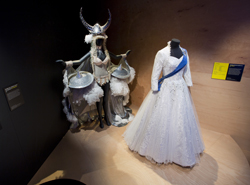
Kensington Palace is taking you even further into the wardrobes of Queen Elizabeth II, Princess Margaret and Diana, Princess of Wales, in a new display of dresses as part of the Fashion Rules exhibition. The new display continues the exhibitions exploration of how each of the three women have navigated the fashion ‘rules’ defined by their royal duties in their own unique style. Among the dresses on display is a candy-striped dress in the “Parisian style” created by Norman Hartnell in the late 1940s for Princess Margaret – on show for the first time at the palace, as well as formal dresses worn by the Queen on state visits to France and the Middle East, and a bottle green silk velvet halterneck worn by Diana which was later made famous in images by photographer Mario Testino. The new display goes on show today. Admission charges apply. For more, see www.hrp.org.uk/kensingtonpalace.

Send all items for inclusion to exploringlondon@gmail.com.

LondonLife – Lost Beatrix Potter story found in V&A…

V&A10A new tale written by Peter Rabbit creator Beatrix Potter will be published last this year following its discovery in the Potter archives at the Victoria & Albert Museum (pictured above).

The Tale of Kitty-In-Boots, which apparently tells the story of a black cat that leads a double life, was found two years ago by Penguin Random House Children’s publisher Jo Hanks. Its publication forms part of the celebrations surrounding the 150th anniversary of Ms Potter’s birth.

The story, which Ms Hanks unearthed in three separate manuscripts in the archive, was sent to Ms Potter’s publisher in 1914 and Ms Hanks told the BBC that Ms Potter had “fully intended” to publish it but, thanks to interruptions including World War I, her marriage and illness, she never went back to it.

Ms Hanks told the BBC that “the tale really is the best of Beatrix Potter”.

“It has double identities, colourful villains and a number of favourite characters from other tales. And, most excitingly, our treasured, mischievous Peter Rabbit makes an appearance – albeit older, slower and portlier!”

Artist Quentin Blake has been asked to illustrate the new book.

The V&A holds the world’s largest collection of Beatrix Potter’s drawings, literary manuscripts, correspondence, photographs and related materials.  For more, see www.vam.ac.uk/content/articles/t/beatrix-potter-collections/.

This Week In London – Artists and gardens at the RA; London tattoos; and, out of this world photos at the Natural History Museum…

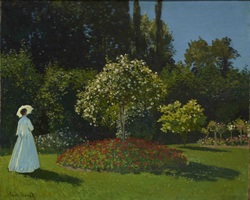
Monet A major exhibition looking at the role of gardens in the paintings of Claude Monet and his contemporaries opens at the Royal Academy of Arts in Piccadilly on Saturday. Painting the Modern Garden: Monet to Matisse spans the period from the 1860s to the 1920s and includes more than 120 Impressionist, Post-Impressionist and Avant-Garde works including 35 by Monet as well as “rarely seen” masterpieces by Paul Klee, Emil Nolde, Gustav Klimt and Wassily Kandinsky. Highlights include Monet’s Agapanthus Triptych (1916-1919) as well as his Water Lilies (1904) and Lady in the Garden (1867), Auguste Renoir’s Monet Painting in His Garden at Argenteuil (1873) , Kandinsky’s Murnau The Garden II (1910) and Pierre Bonnard’s Resting in the Garden (1914). The exhibition, which has previously been at The Cleveland Museum of Art in Ohio, runs until 20th April. Admission charge applies. For more, see www.royalacademy.org.uk. PICTURE: Claude Monet, Lady in the Garden, 1867;  © The State Hermitage Museum/Vladimir Terebenin.

The world of professional tattooing is the subject of a new display at the Museum of London. Tattoo London, which opens at the City-based museum tomorrow, looks at the history of tattooing in the capital – which dates back to a time before Captain Cook – as well as life inside four contemporary tattoo studios. Also on display will be newly commissioned artworks by tattooists from the studios – Lal Hardy at New Wave, Alex Binnie at Into You, Claudia de Sabe at Seven Doors, and Mo Coppoletta at The Family Business. A series of events are being held in conjunction with the display which runs until 8th May. Entry is free. For more, see www.museumoflondon.org.uk.

A new photographic exhibition exploring the solar system has opened at the Natural History Museum. Otherworlds: Visions of our Solar System features 77 composite images pieced together from date collected on NASA and ESA missions by artist, curator and writer Michael Benson. Highlights include A Plutonian haze – a colourised image of Pluto created from data captured during New Horizon’s flyby of the dwarf planet in July last year, Enceladus vents waters into space – captured in 2009 by NASA’s Cassini mission it shows Saturn’s sixth largest moon Enceladus spraying water into space, and, A Warming Comet – a picture of the twin-lobed comet 67P/Churyumov-Gerasimenko venting gas and dust captured by ESA’s Rosetta probe in July last year. The exhibition can be seen until 15th May at the South Kensington museum. Admission charge applies. For more, see www.nhm.ac.uk/otherworlds.

Send all items for inclusion to exploringlondon@gmail.com.

This Week in London – Literary ‘foundlings’; Anthony Van Dyck re-examined; Astronights; and, Liberty in Fashion…

A new exhibition featuring drawings of fictional child protagonists who were orphaned, adopted, fostered or ‘found’ opens at the Foundling Museum in Bloomsbury tomorrow. Drawing on Childhood shows how illustrators, spanning the period from the 18th century until today, was inspired by Lemn Sissay’s 2014 commission, Superman was a Foundling. It features original drawings, first editions and special illustrated editions depicting everyone from James Trotter (James and the Giant Peach) to Cinderella and Rapunzel. Among the artists whose work will be on display are Phiz (Hablot K Browne), Arthur Rackham, Quentin Blake, Stref, George Cruikshank, Thomas Rowlandson, Nick Sherratt and David Hockney. Three contemporary artists – Chris Haughton, Pablo Bronstein and Posy Simmonds – have also been invited to produce a new illustration for Henry Fielding’s 1749 novel, The History of Tom Jones, a Foundling. Runs until 4th May. Admission charge applies. For more, see www.foundlingmuseum.org.uk.

NPG Supplementary Image

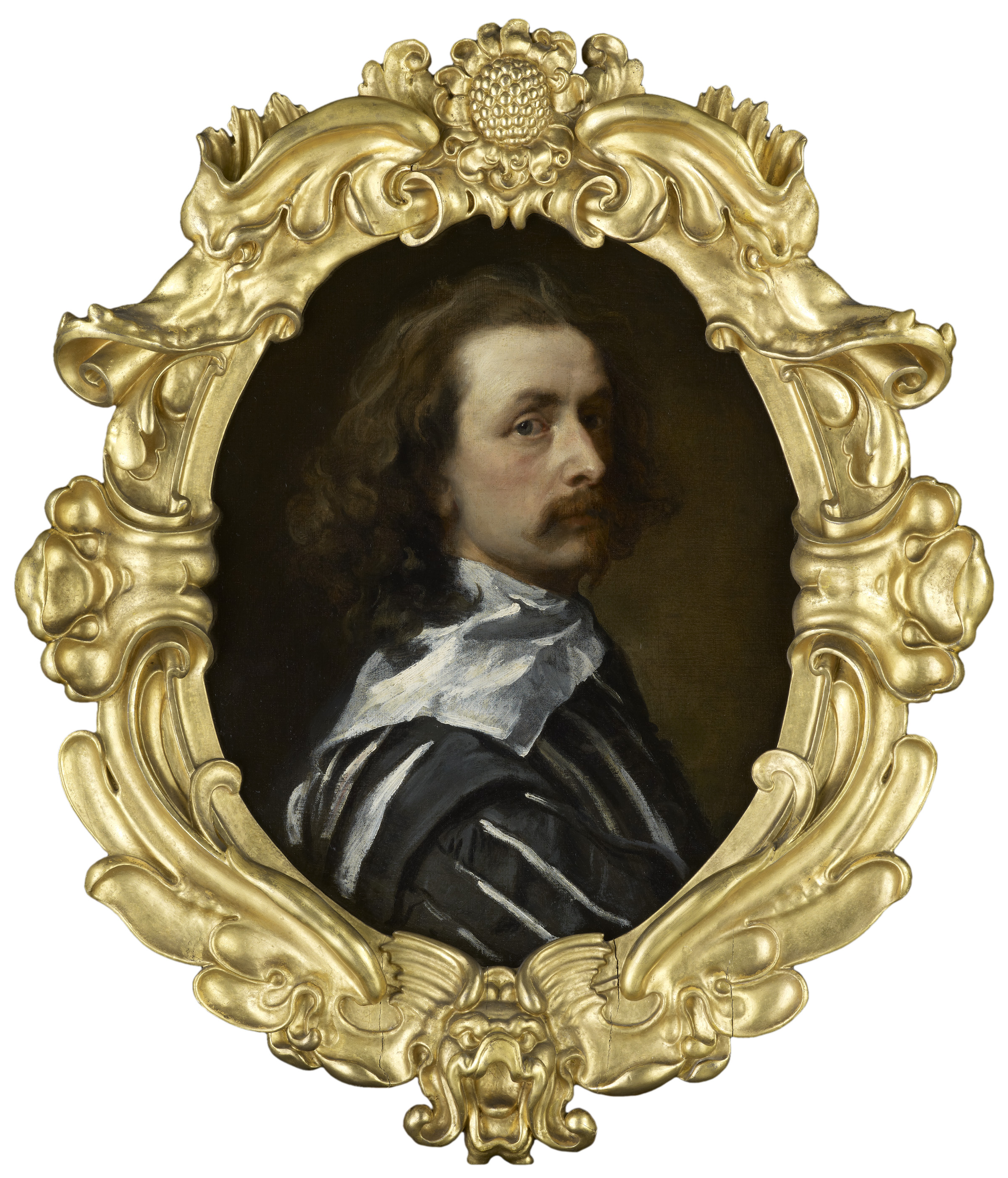
The works of Anthony van Dyck are the subject of a new display at the Dulwich Picture Gallery. I Am Van Dyck centres around a self-portrait of the artist recently acquired by the National Portrait Gallery and lent to Dulwich and juxtaposes the painting with two works by contemporary British artist Mark Wallinger – Self (Times New Roman) and I Am Innocent – in an effort to explore the meanings of individuality and our sense of self. The display – the first of four under the umbrella of Making Discoveries: Dutch and Flemish Masterpieces – also reveals new information on works by Van Dyck held by the gallery and shows how he developed and altered his compositions. Runs until 24th April. Admission charge applies. For more, see www.dulwichpicturegallery.org.uk.

The Science Museum is holding the first of its Astronights – “sleepovers for grown-ups” – this Saturday night. Guests will be treated to a midnight screening of Star Wars: Episode VII – The Force Awakens before which they’ll enjoy a three course meal with live music and an evening of entertainment. The next Astronight will be held on 4th March. Charges apply. For more, see www.sciencemuseum.org.uk/astronights.

On Now: Liberty in Fashion. Commemorating the 140th anniversary of the company in 2015, this exhibition at the Fashion and Textiles Museum in Bermondsey Street explores the impact of Liberty & Co on British fashion and features more than 150 garments, textiles, and objects which demonstrate the company’s relationships with designers such as Yves Saint Laurent and Vivienne Westwood. The exhibition, which opened in October, runs until 28th February. Admission charge applies and there’s a series of events accompanying the exhibition (many of which have still to run). For more, see www.ftmlondon.org.

Send all items for inclusion to exploringlondon@gmail.com.

This Week in London – V&A reopens Europe 1600-1815 galleries; the Victorian era’s finest; and, ‘Handel’s Performers’…

ZMMA_VA_Dec_2015_DG_01

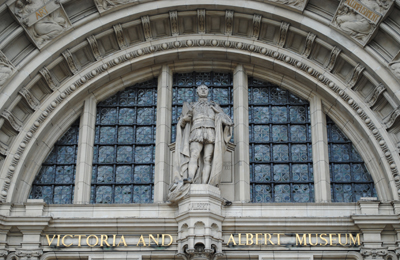
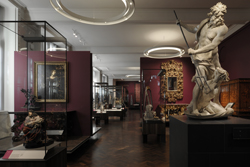
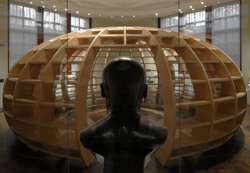
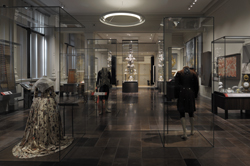
The V&A has reopened its ‘Europe 1600-1815’ galleries to the public this week following a major £12.5 million refurbishment. The seven transformed galleries, located close to the South Kensington museum’s grand entrance, tell the story of how France succeeded Italy as the “undisputed leader” of fashionable art and design in Europe in the late 17th century and how Europeans systematically “explored, exploited and collected” resources from Africa, Asia and the Americas. Featuring more than 1,100 objects, the galleries – redesigned in conjunction with architectural practice ZMMA – include four V&A2large rooms introducing the story of Europe across the period and three smaller rooms focusing on specific activities – ‘collecting in the Cabinet’, ‘enlightened thought in the Salon’, and ‘entertainment and glamour in the Masquerade’. Objects on display include a highly ornate Rococo writing cabinet made from Augustus III (on show for the first time since it has undergone a conservation work), a newly conserved 18th century bed from the Parisian workshop of George Jacob – furniture maker to Napoleon, a 17th century Venetian table by Lucio de Lucci and Pierre-Denis Martin’s oil painting, The Visit of Louis XIV to the Chateau de V&A3Juvisy (both on show for the first time) as well as several large recently cleaned tapestries including the 1860s Gobelins tapestry, The infant Moses tramples on Pharoah’s crown. The display also includes three recreated period rooms – a 17th century French bedchamber, Madame de Sérilly’s cabinet and a mirrored room from 18th century Italy – while in the Salon can be found a contemporary installation, The Globe. A curved architectural sculpture, it is the creation of Havana-based artist collective Los Carpinteros and forms a “room within a room” within the ‘Salon’. It will be used for events and discussions. Entry to the galleries is free. For more, see www.vam.ac.uk/europegalleries. PICTURES: David Grandorge/©Victoria and Albert Museum, London.

On Now: A Victorian Obsession: The Pérez Simón collection. This exhibition at the Leighton House Museum – former home of artist Frederic, Lord Leighton – features more than 50 works by leading Victorian artists, some of which are rarely exhibited. The paintings, which include six works by Leighton himself as well as works by Dante Gabriel Rossetti, Edward Burne-Jones, John Everett Millais and John William Waterhouse, all form part of the collection of Mexican Juan Antonio Pérez Simón who has the largest private collection of Victorian art outside the UK. The highlight of the exhibition, however, is Lawrence Alma-Tadema’s The Roses of Heliogabalus, being shown in London for the first time since 1913. Admission charge applies. The exhibition at the property on the edge of Holland Park runs until 6th April. For more, see www.leightonhouse.co.uk.

On Now: Handel’s Performers. This display of portraits and documents in The Foundling Museum’s Handel Gallery is a showcase of celebrities and singers who brought the work of composer George Frideric Handel’s work to the public in the 18th century. Among those depicted are Anastasia Robinson and Senesino, among the highest paid singers of their time, Anna Maria Strada, a leading soprano, Gustavus Waltz, a bass singer who sang at the benefit performance of Handel’s Messiah at the Foundling Hospital in 1754, and John Hebden, who played in the orchestra during benefit performances of the Messiah in 1754 and 1758. Runs at the Bloomsbury museum until 1st May. Admission charge applies. For more, see www.foundlingmuseum.org.

Send all items for inclusion to exploringlondon@gmail.com.

This Week in London – Alice in Wonderland’s 150th; Remembering Julia Margaret Cameron; and, Imperial Britain’s artistic influence…

John-Tennial-illustrationA new exhibition has opened at the British Library in Kings Cross to mark the 150th anniversary of the publication of Alice’s Adventures in Wonderland. The free exhibition explores the story of how the tale came to be written and features Lewis Carroll’s handwritten manuscript of Alice’s Adventures Under Ground (complete with 37 illustrations by Carroll) as well as an entry from Carroll’s diary in which he relates how he first came to tell the story to Alice Liddell and her sisters on the “golden afternoon” of 4th July, 1862. Other highlights include two first editions of Alice’s Adventures in Wonderland with illustrations by Sir John Tenniel (including the suppressed first edition; suppressed because Carroll and Tenniel were unhappy with the quality of the illustrations), the first movie adaption of the story – a 1903 silent film, early Alice memorabilia, and three new computer game concepts. The exhibition, which runs until 17th April, is accompanied by a series of events and a pop-up shop. For more, see www.bl.uk/events/alice-in-wonderland-exhibition. PICTURE: Sir John Tenniel’s illustration of Alice and the Cheshire Cat from the 1866 edition of Alice’s Adventures in Wonderland by Lewis Carroll © The British Library Board.

An exhibition featuring more than 100 photographs by celebrated 19th century photographer Julia Margaret Cameron opens at the V&A on Saturday to mark the bicentenary of her birth. The display at the South Kensington museum offers a retrospective of her work and looks at her relationship with the V&A’s founding director Sir Henry Cole who presented the only exhibition of her work during her lifetime in 1865. Her relationship with the museum goes back to the very start of her work – within two years of being given a camera by her daughter she was selling and giving photographs to what was then the South Kensington Museum while, in 1868 she was granted the use of two rooms at the institution to use as a portrait studio, becoming the museum’s first artist-in-residence. The exhibition features original prints acquired from Cameron as well as a selection of her letters to Cole, his 1865 diary, the first photograph identified as being of her studio and a variety of her portraits in which family, friends and servants posed as characters from Biblical, historical and allegorical stories. The free exhibition runs until 21st February. For more, see www.vam.ac.uk/juliamargaretcameron.

The influence of the British Empire on art over the past 400 years is the subject of a new exhibition which opened in Tate Britain’s Linbury Galleries yesterday. Artist and Empire will showcase art from across the empire – including the British Isles, North America, the Caribbean, the Pacific, Asia and Africa – and features some 200 paintings, drawings, photographs, sculptures and artefacts. These include paintings by the likes of George Stubbs and Anthony Van Dyck through to Indian miniatures, Maori objects, and the works of contemporary artists such as Sonia Boyce and Judy Watson. Runs until 10th April at the Milbank gallery. The exhibition is free. For more, see www.tate.org.uk.

Send all items for inclusion to exploringlondon@gmail.com.

This Week in London – Samuel Pepys and his world revealed; the world of contemporary cycling; and, Indian jewellery traditions…

Samuel-PepysThe largest exhibition ever mounted about the life of 17th century diarist Samuel Pepys opens at the National Maritime Museum in Greenwich tomorrow. Samuel Pepys: Plague, Fire, Revolution features more than 200 paintings and objects brought together from museums, galleries and private collections which explore the life of the famous diarist (depicted here in a bust outside the Guildhall Art Gallery) against the backdrop of the tumultuous events of Stuart London, from the execution London of King Charles I in 1649 through the Great Fire of London and the Glorious Revolution on 1688. Objects on show include the famous painting, Portrait of Charles II in Coronation Robes, objects connected to Pepys’ mistresses including one of his love letters to Louise de Kéroualle (aka ‘Fubbs’ or ‘chubby’) and other personal items such as a lute owned by Pepys. The exhibition is accompanied by a series of events including Pepys Show Late: Party like it’s 1669 (26th November) and a series of walks and talks. Admission charge applies. The exhibition runs until 28th March. For more, see www.rmg.co.uk/national-maritime-museum.

Cycles are in the spotlight at the Design Museum in Shad Thames with a new exhibition, Cycle Revolution, opening yesterday. The display, which focuses on the world of contemporary cycling, features dozens of bicycles from key manufacturers as well as high end accessories, items belonging to celebrated cyclists Sir Chris Hoy and Sir Paul Smith and specially commissioned films and photography. It looks at cycling subcultures – everyone from the “high performers” to the “cargo bikers”, examines manufacturing techniques and innovations in the use of materials and design with exhibits including a large scale recreation of a bespoke bicycle making workshop, and tackles questions about the future of cycling particularly in relation to the urban environment. The exhibition is being accompanied by a ‘cycle cafe’, large scale installations and a series of public events. Runs until 30th June. Admission charge applies. For more, see www.designmuseum.com.

The jewellery traditions of the Indian sub-continent are set to sparkle at a new exhibition opening at the V&A in South Kensington this Saturday. Part of the V&A India Festival, Bejewelled Treasures: The Al Thani Collection features 100 items, drawn from a single private collection, including a Golconda diamond given to Queen Charlotte by the Nawab of Arcot in South India in 1767, a jade-hilted dagger that belonged to the 17th century emperor Shah Jahan (builder of the Taj Mahal), and a jewelled gold tiger’s head from the throne of the Tipu Sultan of Mysore. As well as showcasing the types of jewels collected by the Mughal emperors, the exhibition reveals the influence of India on European jewellery houses in the early 20th century and the ongoing impact of Indian influences on more modern pieces. The exhibition runs until 28th March. Admission charge applies. For more, see www.vam.ac.uk/BejewelledTreasures.

Send all items for inclusion to exploringlondon@gmail.com