There’s a couple of connections between the creation of Winnie-the-Pooh and this London institution.
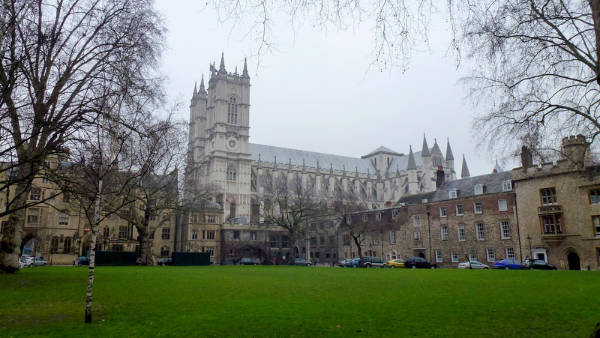
There’s a couple of connections between the creation of Winnie-the-Pooh and this London institution.
Archbishop’s House, located next to the Roman Catholic Cathedral of Westminster, is the official residence of the Catholic Archbishop of Westminster.

• The history and artistry of Hawaii along with its relationship with Britain is the subject of a new exhibition at the British Museum. Hawaii: a kingdom crossing oceans commemorates 200 years since a series of events including the visit of Hawaiian King Liholiho (Kamehameha II) and Queen Kamāmalu to London with a royal delegation to seek alliance and protection from the Crown. Building from the visit of the Hawaiian party to the British Museum, the exhibition features around 150 objects and artworks, many of which have never seen seen before, with highlights including an ‘ahu ‘ula (feathered cloak) which was sent in 1810 by the first king of united Hawai’i, Kamehameha I, to King George III, a nine foot ki’i image of the god Kū, and the Anglo-Franco proclamation of 1843, on loan from The National Archives, which highlights the UK and France’s formal recognition of Hawai’i’s independence and emphasises diplomatic bonds between these nations. Opening today, the exhibition can be seen until 25th May in The Joseph Hotung Exhibition Gallery (Room 35). Admission charge applies. For more, see britishmuseum.org/hawaii.
• The former headquarters of the Football Association (FA) has been commemorated with a City of Westminster Green Plaque at 22 Lancaster Gate, an address synonymous with the FA from the early 20th century until the 1990s. In a statement, the City of Westminster said the plaque, which was unveiled late last year, “celebrates the cultural and historical significance of the FA’s presence in the area and its role in English football history”.
• On Now: Turner & Constable. An exhibition at the Tate Britain focuses on two of Britain’s greatest painters, JMW Turner and John Constable, who were also great rivals. The display, which marks 250 years since their births – Turner in 1775 and Constable in 1776, features more than 170 paintings and works on paper as it explores their intertwined lives and legacies. Highlights include Turner’s momentous The Burning of the Houses of Lords and Commons (1835), not seen in Britain for more than 100 years, and Constable’s The White Horse (1819). Admission charge applies. Runs until 12th April. For more, see www.tate.org.uk/whats-on/tate-britain/turner-and-constable/exhibition-guide.
Send all items to exploringlondon@gmail.com.
Earlier…
It’s 5th November and that means Bonfire Night, the annual event featuring bonfires, effigies of Guy Fawkes (and others), and fireworks displays in commemoration of the November, 1605, foiling of a conspiracy to kill King James I (and many others) by blowing up the House of Lords (you can read more about it in earlier posts here and here).
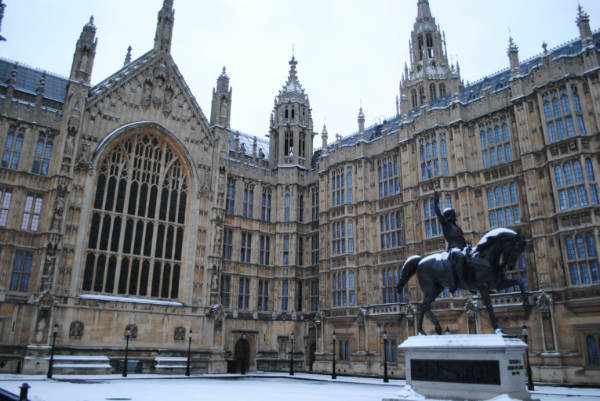
Here’s five places of significance to the story of the plot:
1. The Houses of Parliament: It was in the undercroft beneath the House of Lords that Guy Fawkes was found with 36 barrels of gunpowder. The cellar is now gone – having been destroyed when the Houses of Parliament burned down in 1834.
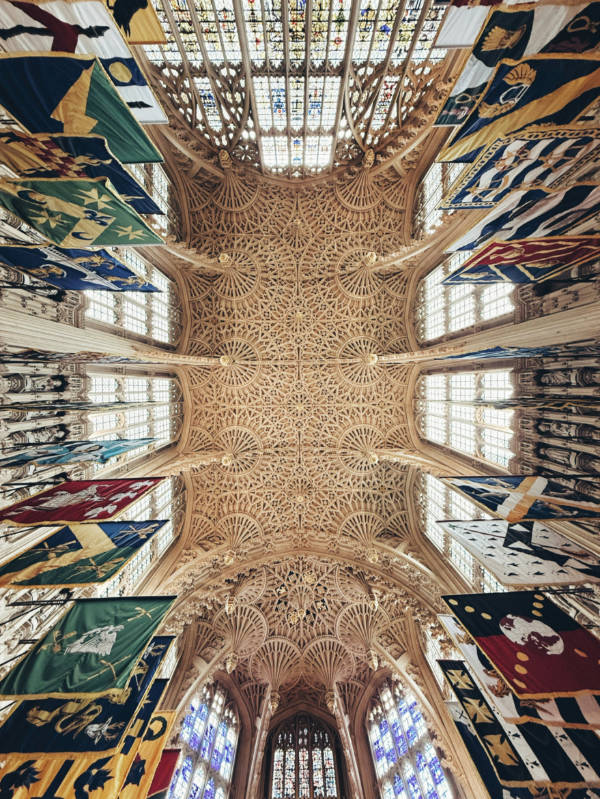
The magnificent carved fan vaulted roof of the Henry VII Lady Chapel at the eastern end of Westminster Abbey. The chapel, which 16th century historian John Leland called “the wonder of the world”, was consecrated in 1516.
A titan of American broadcast journalism, Edward R Murrow’s name is synonymous with London during World War II from where, as a correspondent for CBS, he famously provided live radio broadcasts at the height of the Blitz.

Murrow, who joined CBS in the US in 1935, went to London in 1937, initially to serve as director of the network’s European operations. Said to have been deeply committed to exposing the threat Nazism posed to Americans, he was soon deeply involved in reporting events leading up to and during World War II with his first on the scene news report taking place in March, 1938, when he reported live from Vienna, Austria, during Hitler’s annexation.
Following the breakout of the war in 1939, Murrow remained based in London and went on to provide his famous live broadcasts during the Blitz, opening them with the iconic words, “This is London” and, later, ending them with “Good night and good luck”.
His wartime dispatches – which were broadcast from a studio in the sub-basement of the BBC’s Broadcasting House (which was bombed more than once) as well as from locations including Traflagar Square and a rooftop during the bombing raids – were to win him considerable acclaim and also saw him undertake such feats as joining combat missions in the skies over Europe and being one of the first two reporters to enter Buchenwald concentration camp in Germany in April, 1945.
Such was his standing that then British Prime Minister Winston Churchill even offered to make him joint-director of the BBC (a job offer he declined).
Murrow made his last report from London in March, 1946, before returning to the US to head CBS News. he continued to work with CBS until resigning in 1961 to take up a position as head of the United States Information Agency, a job he held until 1964.
He died at the age of 57 after being diagnosed with lung cancer at his home in Pawling, New York, on 27th April, 1965.
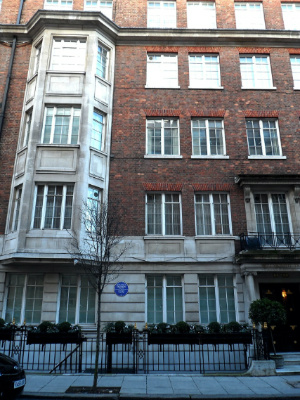
During his time in London, Murrow lived in a flat at Weymouth House, 84-94 Hallam Street in Westminster. An English Heritage Blue Plaque now commemorates his stay there.
Murrow is, of course, also the subject of the 2005 film – and subsequent Broadway production – Good Night, and Good Luck (although that focuses on his later stand against US Senator Joe McCarthy and his hunt for communists).
Located in what was the gatehouse of Westminster Abbey, this small prison dates from 1370.
It was built by Walter de Warfield, then the abbey’s Cellarer, and featured two wings, built at right angles to each other.
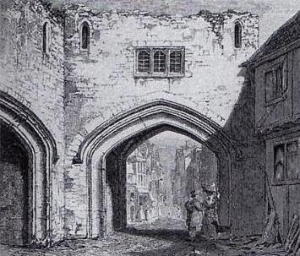
Under the jurisdiction of the Abbot, the prison had two sections – one for clerics and one for laymen. The Abbey’s Janitor was its warder.
Among the most famous inmates was the Cavalier poet Richard Lovelace who was imprisoned for petitioning to have the Clergy Act 1640 annulled. While inside, he wrote the famous work, To Althea, from Prison which features the famous lines: “Stone walls do not a prison make, Nor iron bars a cage”.
Other notables include Sir Walter Raleigh, held here on the night before he was beheaded in Old Palace Yard on 29th October 1618, diarist Samuel Pepys – detained for a few weeks in 1689 on suspicion of being a Jacobite (but released because of ill health), and Gunpowder Plot conspirator Thomas Bates.
Falling into a state of decay, the prison was demolished in 1776-77 (although one wall stood until the 1830s). A gothic column, the Westminster Scholars’ Memorial which is also known as the Crimea and Indian Mutiny Memorial, now stands on the site.
A rectangular block of pale yellow sandstone decorated with a Latin cross, the Stone of Scone, also known as the Stone of Destiny, long featured in the crowning of Scottish kings. But in 1296, it was seized by King Edward I as a trophy of war.
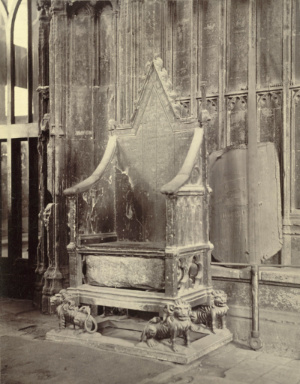
He brought it back to England (or did he? – it has been suggested the stone captured by Edward was a substitute and the real one was buried or otherwise hidden). In London, it was placed under a wooden chair known as the Coronation Chair or King Edward’s Chair on which most English and later British sovereigns were crowned.
On Christmas Day, 1950, four Scottish nationalist students – Ian Hamilton, Kay Matheson, Gavin Vernon and Alan Stuart – decided to liberate the 152 kilogram stone and return it to Scotland.
The stone broke in two when it was dropped while it was being removed (it was later repaired by a stone mason). The group headed north and, after burying the greater part of it briefly in a field to hide it, the stone was – on 11th April, 1951 – eventually left on the altar of Arbroath Abbey in Scotland.
No charges were ever laid against the students.
It was brought back to the abbey and used in the coronation of Queen Elizabeth II in 1953.
The stone was eventually returned to Scotland in 1996 on the proviso it could be temporarily relocated back to London for coronations and now sits in Edinburgh Castle. It was taken to London temporarily in 2023 for the coronation of King Charles III but has since been returned.
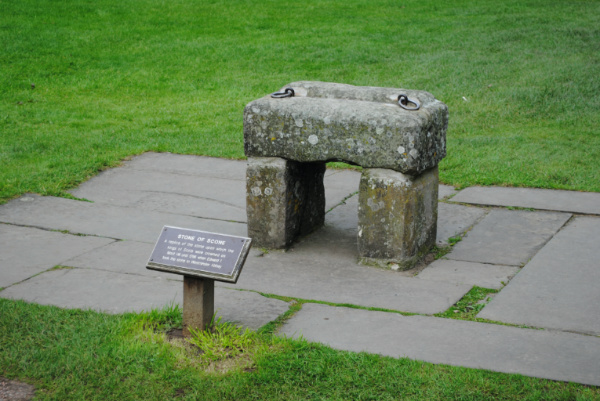
There is a replica of the stone at Scone Castle in Scotland.
UNESCO’s World Heritage List includes as many as 1223 properties right across the globe which the World Heritage Committee considers as having “outstanding universal value”.
Most of them are cultural sites (952) but they also include some 231 natural sites and 40 which have both qualities.
The UK is actually home to 35 sites on the list, ranging from Stonehenge and the English Lake District to neolithic Orkney and the City of Bath.
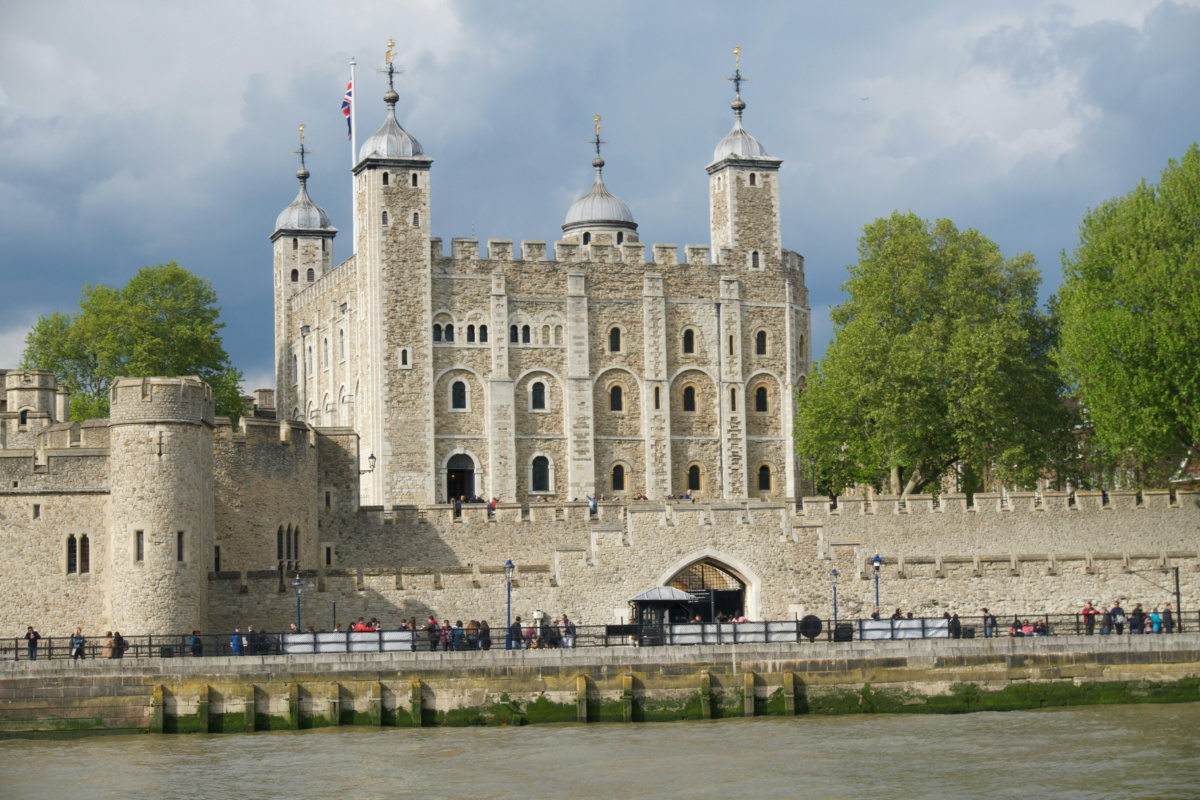
London itself is home to four internationally recognised UNESCO World Heritage Sites. These include the Tower of London, the Royal Botanic Gardens in Kew, the Palace of Westminster and Westminster Abbey (including the neighbouring St Margaret’s Church), and maritime Greenwich.
The first of the four to be added to the list was the 10 hectare site of Palace of Westminster and Westminster Abbey in 1987 (described as being of “great historic and symbolic significance”). It was followed by the Tower of London in 1988, and the 109 hectare area covering the Queen’s House, Old Royal Naval College and Royal Observatory known as maritime Greenwich in 1997.
The 132 hectare site of the Royal Botanic Gardens at Kew was the most recent addition to the list in 2003.
As well as being added to the list, sites can also be removed as happened when Liverpool became the third site to be removed from the list in 2021 due to what the World Heritage Committee said was “the irreversible loss of attributes conveying the outstanding universal value of the property”.
Concerns have been raised over the Tower of London’s future on the list due to surrounding development and, of course, there are always other sites that can be added (we vote for Hampton Court Palace, among others).
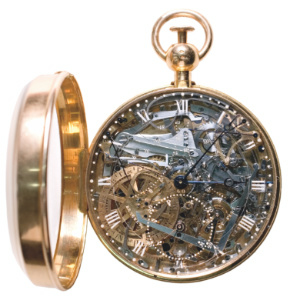
• One of the world’s most valuable watches – the No 160 watch which Abraham-Louis Breguet designed for Marie Antoinette but which wasn’t completed until the 1820s, well after her death – is the star of the show at the Science Museum’s new exhibition Versailles: Science and Splendour. Opening today, the exhibition, created in partnership with the Palace of Versailles, takes visitors on “a 120-year journey through the evolution of science at Versailles” and explores how Louis XIV, Louis XV and Louis XVI encouraged the pursuit of scientific knowledge and harnessed that knowledge as a tool of power. More than 100 objects are on display and, along with Breguet’s watch, they include Louis XV’s rhinoceros, a detailed map of the moon by Jean-Dominique Cassini, and Claude-Siméon Passemant’s Clock of the Creation of the World (1754). The watch, meanwhile, has its own fascinating history, including two decades in which its whereabouts were unknown after it was stolen in 1983 (in fact, its display in this exhibition marks the first time the timepiece has travelled abroad since its safe return to the LA Mayer Museum for Islamic Art in 2008). Runs until 21st April. Admission charge applies. For more, see sciencemuseum.org.uk/see-and-do/versailles.
• A medieval silk seal bag, which dates from the reign of King Henry III, has gone on public display for the first time in the Queen’s Diamond Jubilee Galleries at Westminster Abbey. The display follows the discovery by scholars that the bag’s material is a perfect match to the silk cloth used to wrap the remains of the Emperor Charlemagne when he was buried in Germany’s Aachen Cathedral (Charlemagne, seen as the first Holy Roman Emperor, died in 814 but was re-buried in the karlsschrein (Charles’s shrine) at Aachen in 1215). The bag at the abbey contains a wax seal, the Great Seal of King Henry III, which was attached to an inventory of the jewels and precious items on Edward the Confessor’s shrine located in the heart of the abbey. It was drawn up in 1267 when Henry III was in financial difficulties and forced to pawn items from the shrine to Italian merchants to raise funds (it is believed the items were all returned within 18 months). The silk used for Charlemagne’s shroud is believed to have been spun in the 12th century in Spain or the eastern Mediterranean and, while the small piece at the Abbey originates from a separate silk, it is understood that it would have been produced by the same weavers on the same loom. The bag can been seen until Easter next year. Admission charge applies. For more, see www.westminster-abbey.org/visit-us/plan-your-visit/the-queens-diamond-jubilee-galleries/.
• A new interactive electric bus display has opened at the London Transport Museum in Covent Garden. The Wrightbus Electroliner display – which has been provided by Transport UK London Bus – is based on an electric vehicle bus type which has been part of the fleet of buses operating in London since 2023. The new display features the front of the bus and includes an interactive driver cab and passenger space. Admission charge applies. For more, see www.ltmuseum.co.uk.
Send all items for inclusion to exploringlondon@gmail.com.
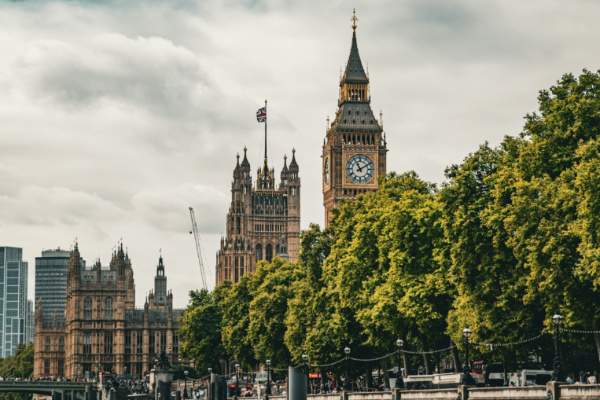
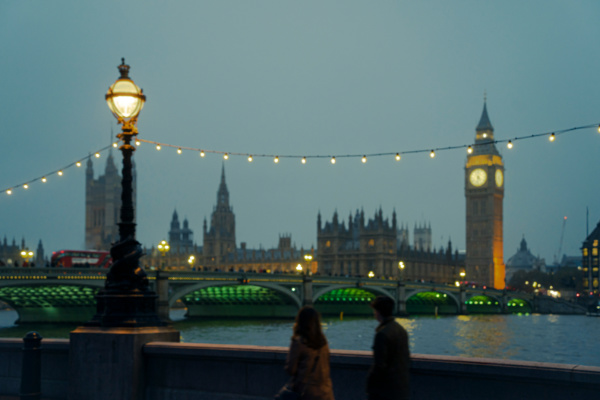
Looking south towards the Houses of Parliament from the River Thames.
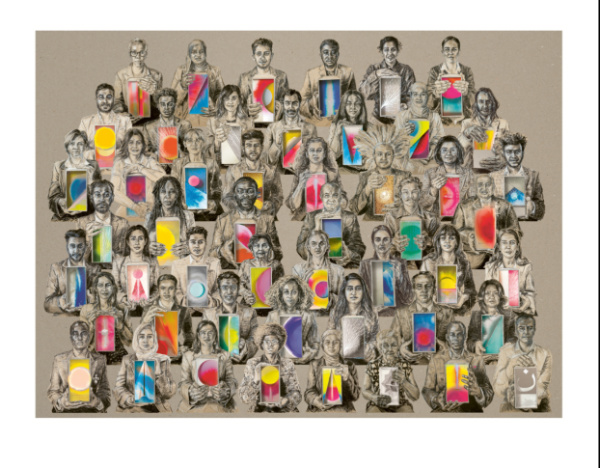
CONGREGATION, a new large-scale installation by Es Devlin, can be seen at the church of St Mary Le Strand – but you’ll have to be quick, it’s only there for two more days (until 9th October). The work, curated by Ekow Eshun, was created in partnership with UK for UNHCR, the United Nations Refugee Agency, and was developed in collaboration with King’s College London and The Courtauld. Created over four months, it features chalk and charcoal portraits of 50 Londoners who have experienced forced displacement from their homelands. Ranging in age from 18 to 90, these “co-authors” have roots in countries ranging from Syria to Sri Lanka; from Rwanda to Albania. An accompanying soundscape has been composed by Polyphonia and features the voices of the sitters while film sequences have been created in collaboration with filmmaker Ruth Hogben and choreographer Botis Seva. CONGREGATION is free to visit and is open to the public daily from 11am till 9pm with free public choral performances outside the church at 7pm each evening to coincide with Frieze London. To book tickets, head to https://www.unrefugees.org.uk/esdevlin-congregation/.
A well-known landmark in Westminster, the distinctive striped brick and stone campanile of Westminster Cathedral stands 284 feet or 64 metres high.
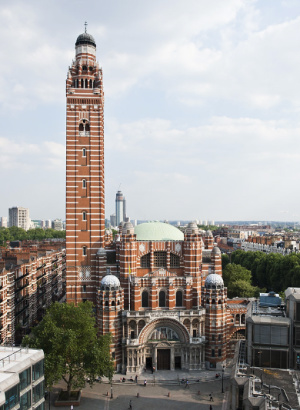
Building of a Roman Catholic cathedral in Westminster – what would be the largest in England and Wales – was the vision of Cardinal Herbert Vaughan. Construction started in 1895 and was complete eight years later. The campanile was the final part of the building’s structure to be completed.
Conscious that the Gothic Westminster Abbey only a short distance away, architect John Francis Bentley instead designed the cathedral in a neo-Byzantine style and the plans originally included two campanili or bell towers which may have been influenced by those in Venice (it was Cardinal Vaughn who famously said one campanile would be enough for him resulting in just one being built).
The 30 foot square dome-topped tower, like the rest of the building, was constructed of stripes of red brick and Portland stone which reflected existing residential buildings nearby.
Formally known as St Edward’s Tower, it contains the 55cwt St Edward’s Bell (named after St Edward the Confessor) which was a gift of Gwendoline, the Duchess of Norfolk, in 1910. It was cast at the Whitechapel Foundry and bears the inscription, “While the sound of this bell travels through the clouds, may the bands of angels pray for those assembled in thy church. St Edward, pray for England.”
Carved stone eagles surround the apex of the tower – a reference to St John the Evangelist (apparently patron saint of the architect) and the cross on top of the cupola is said to contain a fragment of the True Cross discovered by the Empress Helena in 326 AD.
The campanile famously appears at the end of Alfred Hitchcock’s 1940 thriller, Foreign Correspondent, in a scene in which the bad guy is thrown from the top.
The campanile, which has a lift to the top, is open to the public. Viewing balconies on all four sides of the tower provide 360 degree views of the surrounding city including over the stunning domes of the cathedral itself.
WHERE: The Campanile, Westminster Cathedral (nearest Tube stations are Victoria and St James’s Park); WHEN: 11am to 3:30pm Fridays, Saturdays and Sundays; COST; £6 adults; £12 families (two adults and up to four children); £3 concessions (aged 60+); WEBSITE: https://westminstercathedral.org.uk/tower-viewing-gallery-reopens/
• A celebration of Black communities and culture returns to Trafalgar Square this weekend. Taking place on Saturday, the Mayor of London’s Black On The Square festival features live music and dance as well as art, fashion, food from Ghana, Guyana, Jamaica, Mauritius and Nigeria, and a range of family-friendly activities. Multi award-winning actor and rapper Bashy is headlining with other acts including Cultur FM, Kofi Stone, Krar Collective, Shingai, Phoebs and Karen Nyame. The free festival runs from noon to 6pm. For more, see www.london.gov.uk/events/black-square-2024.
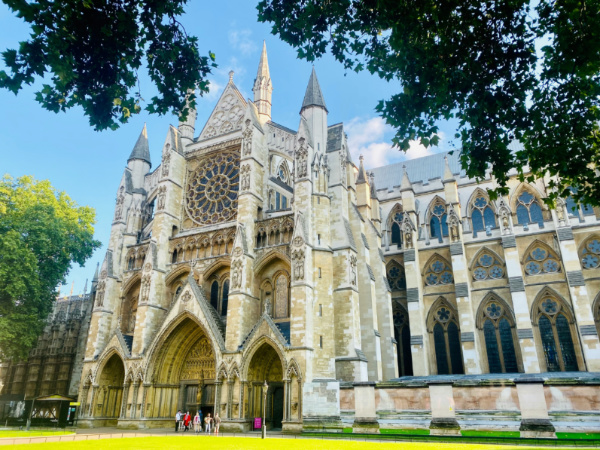
• Westminster Abbey, home of the famed Poet’s Corner, has unveiled a new season of events celebrating poets and poetry this autumn. Voice and Verse, which launches on 3rd October, features poetry readings, talks, tours, musical performances and workshops. Highlights include a lunchtime concert to be held in St Margaret’s Church with music inspired by the poetry of writers memorialised in Poet’s Corner, a talk on the lives and legacy of World War I poets and an eventing of poetry held in Poet’s Corner itself. For more information, including event dates and booking information, head to www.westminster-abbey.org/events/autumn-season.
• Further afield: Two of Victorian actor Ellen Terry’s costumes – worn while performing Lady Macbeth in an 1888 production of Macbeth at London’s Lyceum Theatre – have gone on display at her former home of Smallhythe Place in Kent. The costumes, designed by Alice Comyns Carr, include the iridescent green ‘Beetlewing dress’, decorated in over 1,000 beetle wings, and immortalised in a John Singer Sargent painting of Terry. There’s also a gown worn by Terry in the play’s banqueting scene in which Macbeth sees the ghost of Banquo. Made of muslin and shot through with gold thread, it is on display for the first time after extensive conservation work to address the damage caused by its repeated use on stage and the alterations and repairs which have occurred since. The Dressing Lady Macbeth: An Exhibition can be seen until 3rd November. Admission fees apply. For more, see www.nationaltrust.org.uk/visit/kent/smallhythe-place.
Send all items for inclusion to exploringlondon@gmail.com
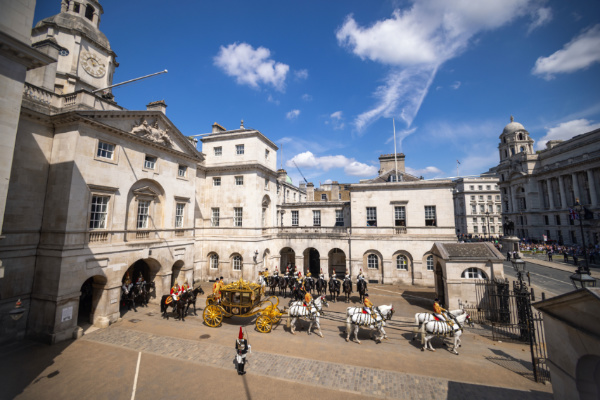
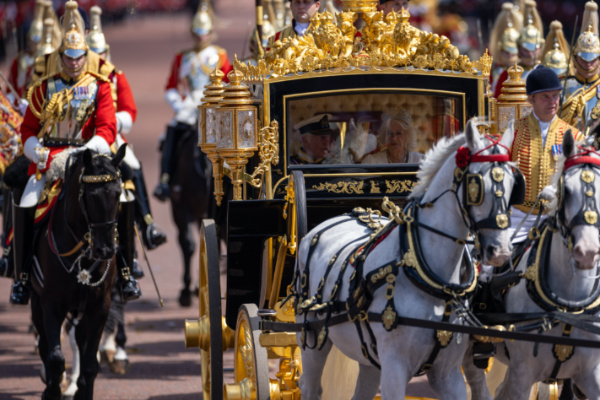
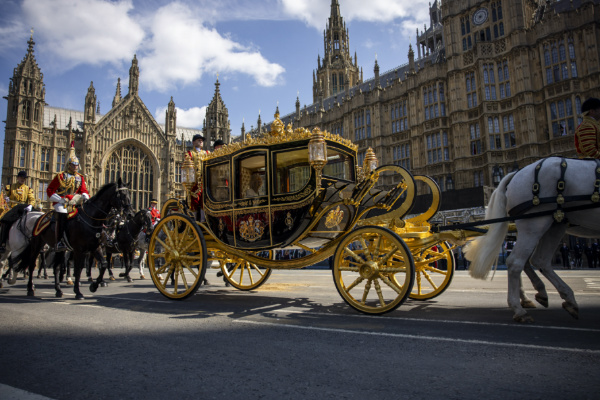
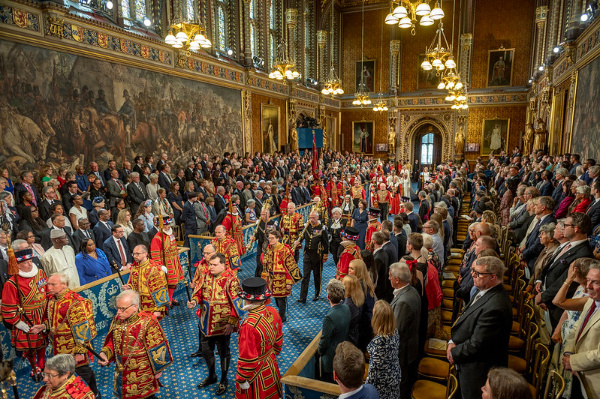
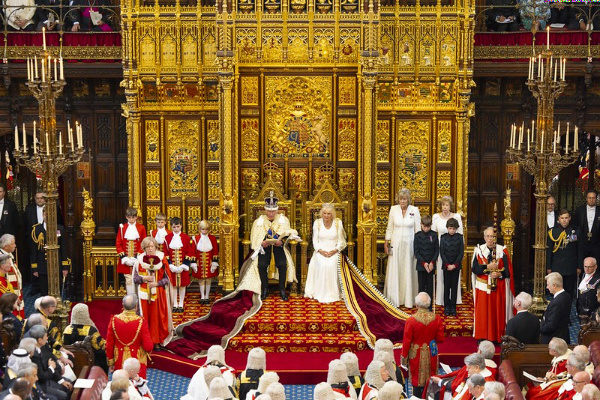
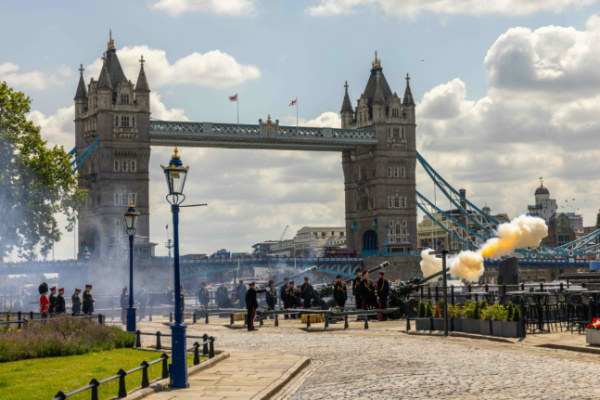
Last Wednesday, 17th July, was the State Opening of Parliament, the first since the new Labour government took office. More than 1,100 members of the armed forces were in attendance, accompanied by 200 military horses, as the procession of King Charles III and Queen Camilla made its way to the Houses of Parliament where the King delivered a speech outlining the government’s plans.
Hanging in the Tudor Great Hall at Hampton Court Palace, this series of 10 huge tapestries are believed to have been commissioned by King Henry VIII and were first hung in the hall in 1546.
A Royal Peculiar is a Church of England parish that is exempt from the jurisdiction of the church diocese or province in which it sits and instead answers directly to the monarch.
The concept of the Royal Peculiar first began to emerge in Anglo-Saxon times and was developed over the following centuries.
 Exploring London


