Meerkats explore an advent calendar in the countdown to Christmas. PICTURE: Courtesy of London Zoo
London Zoo is celebrating the festive season with the ’12 Animals of Christmas’, a series of seasonally-based talks in which zookeepers discuss some of the zoo’s most iconic species and the animals partake of some Christmas cheer with an enrichment activity in which the animals can enjoy their very own Christmas food. The talks of just one part of ‘The Magic at Christmas at London Zoo’ experience which runs until 5th January. Visitors during that period also have the chance to meet Santa in a grotto experience at the heart of the zoo or upgrade to engage in a “deluxe session” with Mrs Claus which includes preparing treats for the animals and take a tour of the zoo, or join her in a special VIP breakfast. Santa can also be found popping up at different locations around the zoo to feed the animals and there’s a Winter Village Post Room where children can write their letters to Father Christmas. Other activities include a ‘Reindeer Rubbish Round Up’ recycling challenge, a Christmas craft station and even the chance to have a Christmas sleepover at the London Zoo Lodges. For more, see www.londonzoo.org/plan-your-visit/events/magic-of-christmas.
Asiatic lions explore scented Christmas presents. PICTURE: Courtesy of London ZooSquirrel monkeys explore food-filled stockings. PICTURE: Courtesy of London Zoo.
One of the most devastating moments of World War II in Britain took place 80 years ago this month when, at 12:26pm on 25th November, 1944, a German V2 rocket bomb hit a Woolworths store in New Cross, south-east London.
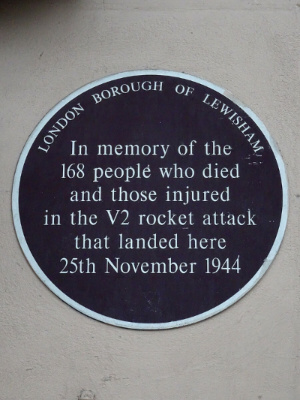
One of the plaques memorialising those killed in the V2 attack outside what is now an Iceland in New Cross. PICTURE: Spudgun67 (licensed under CC BY-SA 4.0)
There were some 30 staff and 100 customers in Woolworths when the rocket struck (a queue had formed at the store after word had spread that tin saucepans had arrived).
The massive blast flattened the shop and spread into nearby streets, bringing down neighbouring houses and shops, overturning an army lorry and causing cars to burst into flames.
Some 168 people, including Woolworths customers and store workers as well as 33 children (some just babies in prams), were killed in the blast. Some of those who died were in the neighbouring Royal Arsenal Co-operative Socierty store, others were sitting at their desks in nearby offices and some were killed while sitting on a passing bus. Some 123 passersby were injured in the blast.
It took three days to clear the debris. Twenty four of those killed were never identified.
It is believed that the nearby New Cross Station was the intended target.
The V2, the world’s first long-range guided ballistic missile, travelled at some 3,000 mph and, as such, few too high and fast to be tracked by radar, put down by anti-aircraft fire or intercepted by fighter aircraft.
V2s had only started to be used in September, 1944, following an order from Adolf Hitler for their manufacture in December, 1942. The first V2 rocket had hit Chiswick on 8th September, 1944, and over the next few months about half of the 3,000 rockets fired at Allied targets were aimed at London.
Such was the fear over the rocket attacks that it had only been on 10th November 1944, that Winston Churchill had publicly admitted the country was facing rocket attacks.
The New Cross attack is commemorated by two memorial plaques at the site, one erected by the Deptford History Group in 1994 and the other by the London Borough of Lewisham in 2009.
• World premiere installations Ombre by TILT – which takes the “form of a series of giant plants in bloom springing up from the landscape in a spectrum of vibrant shades” – and Threshold by Studio Vertigo – an “illuminated helix-like shape, bathed in golden yellow light to evoke the warmth and joy of the festive season” are at the centre of this year’s Christmas light trail at Kew Gardens. Other highlights at this year’s festive showing include Camellia Walk, which has been transformed into a snowy lane which showcases the spectacular tree canopy and evoking a wintery wonderland, Fish are Jumping by Dutch artists TOER and Mist Arches by Culture Creative which create “an atmospheric ambience across Kew’s Lake Crossing”. Annual favourites such as the light show on the Temperate House, the Fire Garden and Christmas Cathedral have also returned along with the Palm House finale. The trail can be visited on selected dates until 5th January. Admission charge applies. For more, see www.kew.org/christmas.
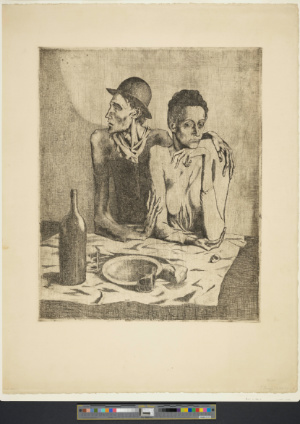
• Around 100 prints by Pablo Picasso – including some from his 347 Suite which have never been displayed before – are on show in a new exhibition at the British Museum.Picasso: Printmaker charts the artist’s engagement with printmaking (he produced around 2,400 in total) and centres on some of the more than 500 now in the British Museum’s collection (the largest in the UK). Highlights include his first professional print – The Frugal Meal (1904 – pictured) – as well as prints from the Vollard Suite (1930-1937) such as the aquatint Faun Uncovering a Woman (1936), and, the 347 Suite‘s Tree in the Storm, with Flight Towards a Church (1968). The exhibition can be seen in Room 90 until 30th March. Admission charges apply. For more, see www.britishmuseum.org/picasso.
• The T rex’s new Christmas jumper has been unveiled at the Natural History Museum. This year’s design – which can be seen modelled by the T rex – features festive colours of red, blue, green and white and an image of the museum’s latest prehistoric resident, Fern the Diplodocus, who took up residence in the redesigned gardens earlier this year. The jumper can be seen in the Dinosaur’s Gallery until January. Human-sizxed versions can be bought in the museum shop (www.nhmshop.co.uk). For more, see nhm.ac.uk.
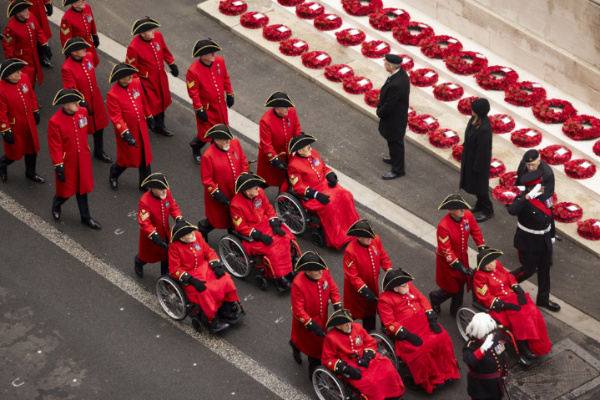
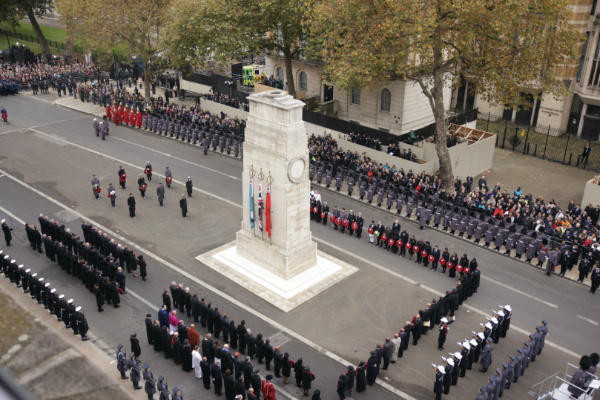
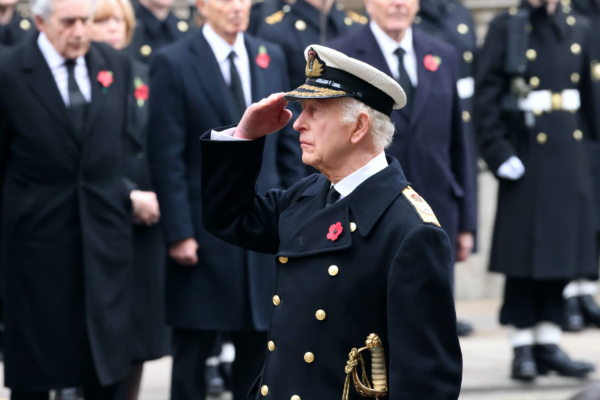
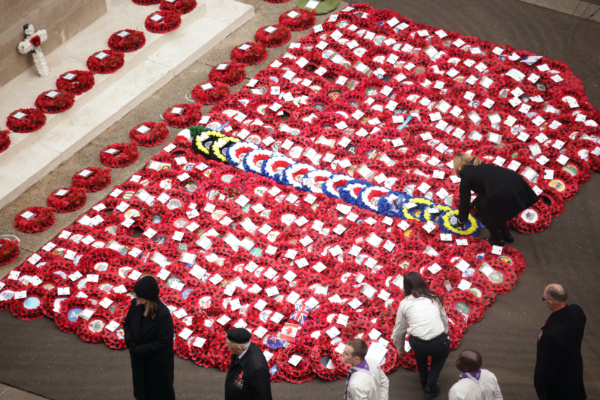
Some 10,000 people lined Whitehall to watch the The Royal British Legion’s Veterans Parade and take part in the annual two-minute silence at the Cenotaph on Sunday…
There’s a couple of possible explanations for the name – the first is that the oak in question once marked the southern boundary of the estates or “honour” of the 12th century Earls of Gloucester – hence ‘Honor Oak’.
The second is that Queen Elizabeth I apparently had a picnic with Sir Richard Bulkeley of Beaumaris under its branches on May Day, 1602. Hence again ‘Oak of Honor’ or ‘Honor Oak’.
Sadly, the original tree is gone – it was apparently hit by lightning in the 1880s – and a replacement, which can still be seen today, was subsequently planted nearby.
There’s a few stories surrounding the hill and its oak including that it was here that the Roman general Paulinus overcome Boudicca in 61AD. Another says that the highwayman Dick Turpin used it as a lookout.
Its height did see the hill put to use as a beacon by the Admiralty during the Napoleonic Wars and as a semaphore station by the East India Company. A beacon on top of the hill was erected to commemorate the Silver Jubilee of King George V in 1935 and subsequently used for celebrations including the coronation of Queen Elizabeth II and the Queen’s silver and golden jubilees.
There was also a gun emplacement built upon the hill during World War I.
The area around the hill was largely rural until the late 18th century. In 1809, the Croydon Canal Company constructed a canal which ran from Croydon north to New Cross and which included numerous locks. It was taken over almost 30 years later by the Croydon and London Railway for its new line (the current railway line, the stops on which include Honor Oak Park (opened in 1886), runs along the same course).
There was a bid to incorporate One Tree Hill into a golf course in the late 1800s but following a protest, this was halted and in 1905 the hill was acquired by the Camberwell Borough Council as public open space. It remains so today.
The Church of St Augustine was built to the designs of William Oakley on the hill’s east side in the late 19th century.
Famous residents in the streets around the hill have included Spike Milligan.
The Honor Oak Reservoir lies just to the north of the hill. It was constructed between 1901 and 1909 and was the largest brick built underground reservoir in the world. The roof of the still-in-use reservoir is grassed over and used as a golf course. A rather grand pumping station stands nearby.
• The Lord Mayor’s Show – featuring the 696th Lord Mayor of London, Alastair King – will be held this Saturday. The three-mile long procession – in which the Lord Mayor will ride in the Gold State Coach – features some 7,000 people, 250 horses, and 150 floats. It will set off from Mansion House at 11am and travel down Poultry and Cheapside to St Paul’s Cathedral before moving on down Ludgate Hill and Fleet Street to the Royal Courts of Justice. The return journey will set off again at 1:10pm from Temple Place and travel via Queen Victoria Street back to Mansion House where he will take the salute from the Pikemen and Musketeers at 2:40pm. For more information, including where to watch the show, head to https://lordmayorsshow.london.
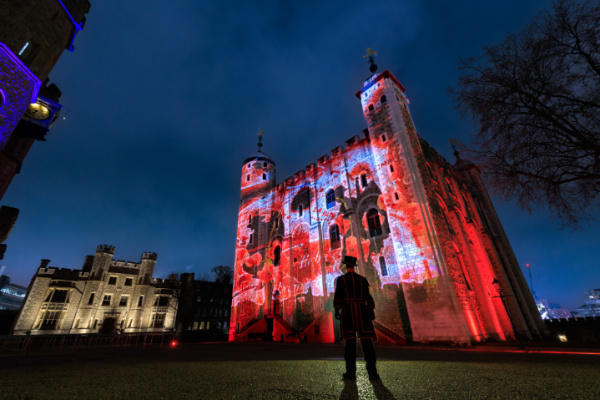
• An immersive sound and light show commemorating World War I and II opens at the Tower of London tomorrow ahead of Armistice Day and Remembrance Sunday. Historic Royal Palaces has partnered with Luxmuralis to present Poppy Fields at the Tower with visitors invited to go inside the Tower where – recalling the 2014 display Bloodswept Lands and Seas of Red in the Tower of London moat to mark the centenary of World War I – the walls will not only be illuminated with tumbling poppies but also historic photographs, documents and plans. The display is being accompanied by music composed by David Harper, and poetry recordings. Visitors will also be granted special access to see the Crown Jewels after-hours to learn more about their removal from the Tower during both World Wars. Runs until 16th November and should be pre-booked. Admission charges apply. For more, see https://www.hrp.org.uk/tower-of-london/whats-on/poppy-fields-at-the-tower/.
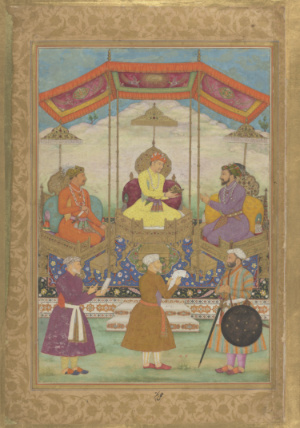
• An exhibition celebrating the golden age of the Mughal Court opens at the V&A in South Kensington on Saturday.The Great Mughals: Art, Architecture and Opulence examines the “creative output and internationalist culture” of Mughal Hindustan during the age of its greatest emperors, a period spanning c1560 to 1660. More than 200 objects are on display arranged in three sections corresponding to the reigns of the Emperor Akbar (1556-1605), Jahangir (1605 to 1627) and Shah Jahan (1628 to 1658). The objects include paintings, illustrated manuscripts, vessels made from mother of pearl, rock crystal, jade and precious metals. Highlights include four folios from the Book of Hamza, commissioned by Akbar in 1570, and the Ames carpet which was made in the imperial workshops between c1590 and 1600 and is on display for the first time in the UK. There’s also a unique wine cup made from white nephrite jade in the shape of a ram’s head for Shah Jahan in 1657, two paintings depicting a North American Turkey Cock and an African zebra created by Jahangir’s artists, and a gold dagger and scabbard set with over 2,000 rubies, emeralds and diamonds. Runs in Galleries 38 and 39 until 5th May. Admission charge applies. For more, see www.vam.ac.uk.
• Send all items for inclusion to exploringlondon@gmail.com.
An aerial view of the area known as Albertopolis. PICTURE: Andreas Praefcke/Public Domain
A nickname, connected to Prince Albert (beloved husband of Queen Victoria), which was given to an area of South Kensington centred on Exhibition Road which is packed with various cultural and educational institutions.
The land, which had been the Kensington Gore Estate, was purchased by the Royal Commission for the Exhibition of 1851 on the suggestion of Prince Albert using the profits made from the Great Exhibition which had been held just to the north in Hyde Park. His vision was for arts and science quarter which included schools, colleges and libraries as well as museums, exhibition rooms and spaces for events.
Among the buildings subsequently constructed upon it were those bearing Prince Albert’s name including Royal Albert Hall and the Victoria and Albert Museum along with the huge Albert Memorial.
Other institutions on the land include the Natural History Museum, Imperial College London, the Royal College of Music, the Royal College of Art, the Science Museum, the Royal Geographical Society and the since removed Royal Horticultural Society Gardens.
The area gained its nickname in the 1850s due to the Prince’s role in the Great Exhibition and its subsequent purchase and was seen to both celebrate, but also by some, to satirise him. It fell out of use after the Prince’s death in 1861 but was subsequently revived in the 1960s and since to bring attention to buildings in the area threatened with demolition.
A pedestrian subway under Exhibition Road runs north from South Kensington Station and gives access to the museums (when it was built in 1885, a toll of one penny was charged to use it).
• A celebration of Black communities and culture returns to Trafalgar Square this weekend. Taking place on Saturday, the Mayor of London’s Black On The Square festival features live music and dance as well as art, fashion, food from Ghana, Guyana, Jamaica, Mauritius and Nigeria, and a range of family-friendly activities. Multi award-winning actor and rapper Bashy is headlining with other acts including Cultur FM, Kofi Stone, Krar Collective, Shingai, Phoebs and Karen Nyame. The free festival runs from noon to 6pm. For more, see www.london.gov.uk/events/black-square-2024.
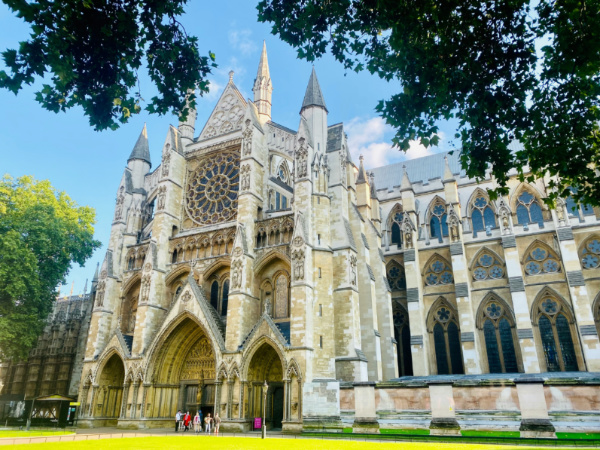
• Westminster Abbey, home of the famed Poet’s Corner, has unveiled a new season of events celebrating poets and poetry this autumn. Voice and Verse, which launches on 3rd October, features poetry readings, talks, tours, musical performances and workshops. Highlights include a lunchtime concert to be held in St Margaret’s Church with music inspired by the poetry of writers memorialised in Poet’s Corner, a talk on the lives and legacy of World War I poets and an eventing of poetry held in Poet’s Corner itself. For more information, including event dates and booking information, head to www.westminster-abbey.org/events/autumn-season.
• Further afield: Two of Victorian actor Ellen Terry’s costumes – worn while performing Lady Macbeth in an 1888 production of Macbeth at London’s Lyceum Theatre – have gone on display at her former home of Smallhythe Place in Kent. The costumes, designed by Alice Comyns Carr, include the iridescent green ‘Beetlewing dress’, decorated in over 1,000 beetle wings, and immortalised in a John Singer Sargent painting of Terry. There’s also a gown worn by Terry in the play’s banqueting scene in which Macbeth sees the ghost of Banquo. Made of muslin and shot through with gold thread, it is on display for the first time after extensive conservation work to address the damage caused by its repeated use on stage and the alterations and repairs which have occurred since. The Dressing Lady Macbeth: An Exhibition can be seen until 3rd November. Admission fees apply. For more, see www.nationaltrust.org.uk/visit/kent/smallhythe-place.
Send all items for inclusion to exploringlondon@gmail.com
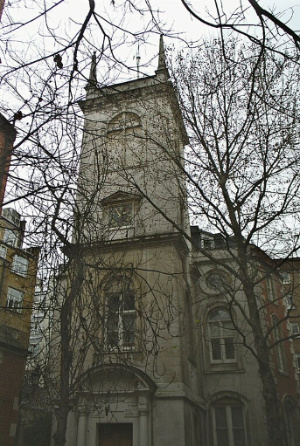
This tower is a survivor and was originally part of the rebuilt Church of St Olave, Old Jewry.
The medieval church, which was apparently built on the site of an earlier Saxon church, originally dated from 12th century. Its name referred to both the saint to whom it was dedicated – the patron saint of Norway, St Olaf (Olave) – and its location in the precinct of the City that was largely occupied by Jews (up until the infamous expulsion of 1290).
The former tower of St Olave, Old Jewry. PICTURE: Mark C Grant (public domain).
The church, which is also referred to as Upwell Old Jewry (this may have related to a well in the churchyard), was the burial place of two former Lord Mayors – mercer Robert Large (William Caxton was his apprentice) and publisher John Boydell (who apparently washed his face under the church pump each morning). Boydell’s monument was later transferred to St Margaret Lothbury.
The church was sadly destroyed in the Great Fire of 1666 but it was among those rebuilt under the eye of Sir Christopher Wren in the 1670s. It’s from this rebuilding that the current tower dates.
At this time, the parish was united with that of St Martin Pomeroy (which had already shared its churchyard and which was also destroyed in the Great Fire).
Wren’s church was eventually demolished in 1887 as moves took place to consolidate church parishes under the Union of Benefices Act – the parish was united with that of St Margaret Lothbury and proceeds from the sale were used to fund the building of St Olave, Monor House. It’s worth noting that a Roman pavement was found on the site after the church demolition.
The tower (and the west wall), meanwhile, survived. The tower was subsequently turned into a rectory for St Margaret Lothbury and later into offices.
Interestingly, the Grade I-listed, Portland stone tower is said to be the only one built by Wren’s office which is battered – that is, wider at the bottom than the top. It’s topped by some obelisk-shaped pinnacles and a weather vane in the shape of a sailing ship which was taken from St Mildred, Poultry (was demolished in 1872).
The tower’s former clock was built by Moore & Son of Clerkenwell. It was removed at the time of the church demolition was installed in the tower of St Olave’s Hart Street. The current clock was installed in 1972.
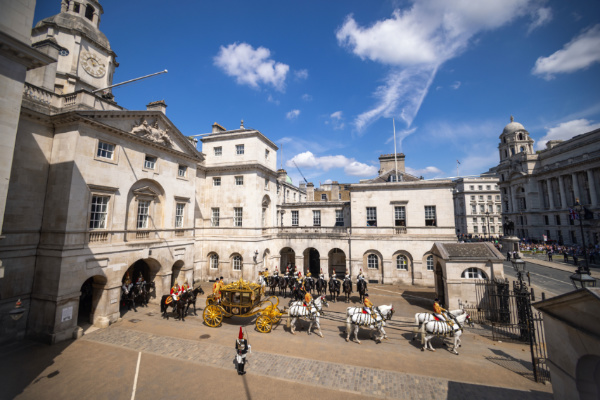
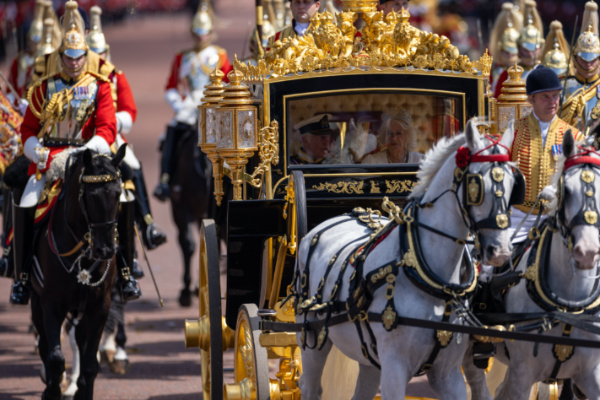
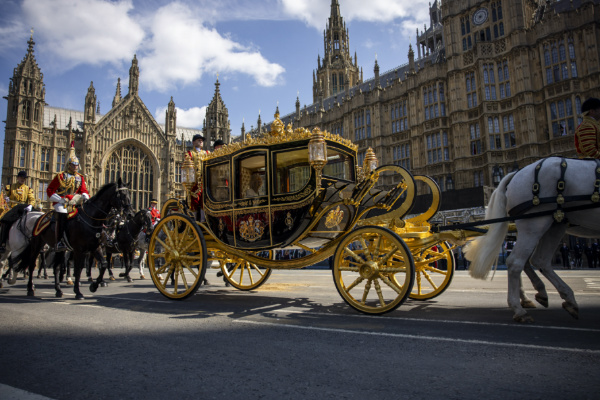
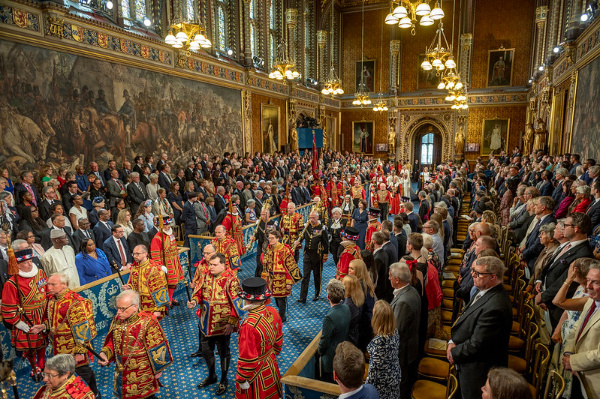
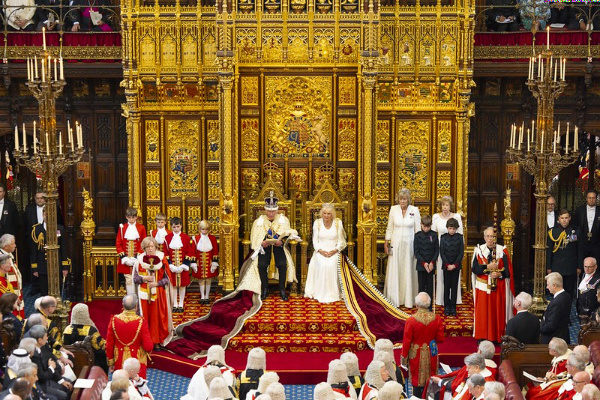
Last Wednesday, 17th July, was the State Opening of Parliament, the first since the new Labour government took office. More than 1,100 members of the armed forces were in attendance, accompanied by 200 military horses, as the procession of King Charles III and Queen Camilla made its way to the Houses of Parliament where the King delivered a speech outlining the government’s plans.
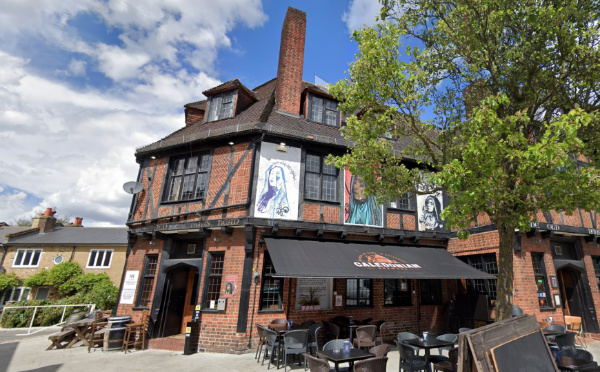
This district of London, which lies to the south-east of Peckham in the London Borough of Southwark, is believed to owe its name to a local tavern named, you guessed it, the Nun’s Head on the linear Nunhead Green (there’s still a pub there, called The Old Nun’s Head, in a building dating from 1905).
The Old Nun’s Head near Nunhead Green. PICTURE: Google Maps
There may well have been actual nuns here (from which the tavern took its name) – it’s suggested that there was a nunnery here which may have been connected to the Augustinian Priory of St John the Baptist founded in the 12th century at Holywell (in what is now Shoreditch).
A local legend gets more specific. It says that when the nunnery was dissolved during the Dissolution, the Mother Superior was executed for her opposition to King Henry VIII’s policies and her head was placed in a spike on the site near the green where the inn was built.
While the use of the name for the area goes back to at least the 16th century, the area remained something of a rural idyll until the 1840s when the Nunhead Cemetery, one of the “Magnificent Seven” cemeteries of Victorian London, was laid out and the area began to urbanise.
A fireworks manufactory – Brocks Fireworks – was built here in 1868 (evidenced by the current pub, The Pyrotechnists Arms). The railway arrived in 1871.
St Antholin’s Church was built in 1877 using funds from the sale of the City of London church, St Antholin’s, Budge Row, which was demolished in 1875. St Antholin’s in Nunhead was destroyed during the Blitz and later rebuilt and renamed St Antony’s (the building is now a Pentecostal church while the Anglican parish has been united with that of St Silas).
There’s also a Dickens connection – he rented a property known as Windsor Lodge for his long-term mistress, actress Ellen Ternan, at 31 Lindon Grove and frequently visited her there (in fact, it has even been claimed that he died at the property and his body was subsequently moved to his home at Gad’s Hill to avoid a scandal).
Nunhead became part of the Metropolitan Borough of Camberwell in 1900. These days, it’s described by Foxtons real estate agency as “a quiet suburb with pretty roads and period appeal”.
Hanging in the Tudor Great Hall at Hampton Court Palace, this series of 10 huge tapestries are believed to have been commissioned by King Henry VIII and were first hung in the hall in 1546.
To see the rest of this post (and all of our coverage), subscribe for just £3 a month. This small contribution – less than the cost of a cup of coffee – will help us continue and grow our coverage.We appreciate your support!
This unusually named church dates back to at least the 13th century and stood on what is now Threadneedle Street.
St Benet is a contraction of St Benedict (he who founded monastic communities in Italy in the 6th century) and this was once of four City churches dedicated to the saint before 1666. The word ‘Fink’, meanwhile, is a corruption of Finch and apparently referred to Robert Finch (or Fink) who paid for a rebuild of the church in the 13th century.
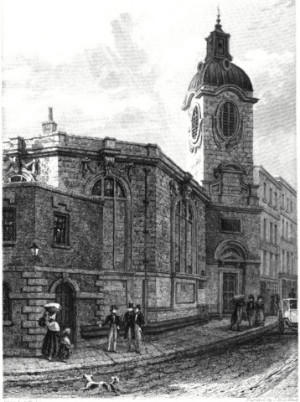
‘The Church of St Benet Fink’ (1839), seen in The Churches of London by George Godwin (1839).
The medieval rectangular church was among those destroyed in the Great Fire of 1666. Rebuilding commenced soon after, thanks in part to a £1,000 donation from a Catholic George Holman (he was rewarded with two pews and a place in the vault). The church was completed in 1675 apparently for a cost at just over £4,000.
Designed by Sir Christopher Wren, the church – due to the irregular shape of the site after the City decided to widen Threadneedle Street, was rebuilt on a decagonal plan, over which sat a dome, with a tower at the west end topped by a bell cage over which sat a ball and cross (apparently this latter feature was unique for a Wren church).
The church survived until the mid-18th century when the Corporation of London petitioned Parliament for permission to demolish the tower of St Benet Fink in order make way for an expanded Royal Exchange (which had burned down in 1838).
Following the demolition of the tower (over which there were some protests), a new entrance was cut into the west wall of the church but it proved less than ideal and the City of London was granted permission to knock down the rest of the church which took place in 1846.
The parish was merged with that of St Peter le Poer. Proceeds of the sale of the site were used to build St Benet Fink Church, Tottenham.
The furniture was sold off and paintings of Moses and Aaron that had formed part of the altarpiece are now in the chapel of Emanuel School in Battersea.
Famous associations include John Henry Newman, the future Catholic cardinal, who was baptised in the church on 9th April, 1801.
An office block now occupies the site. A City of London blue plaque marks the site.
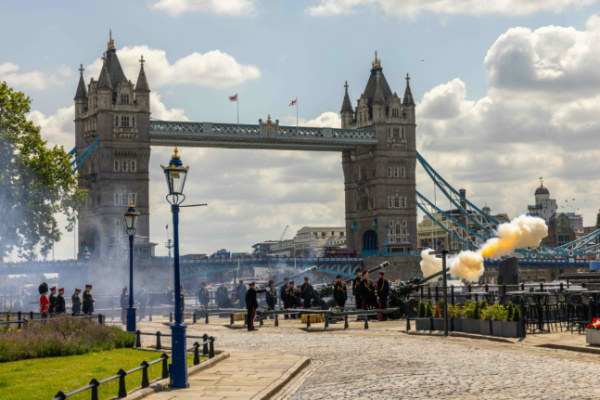
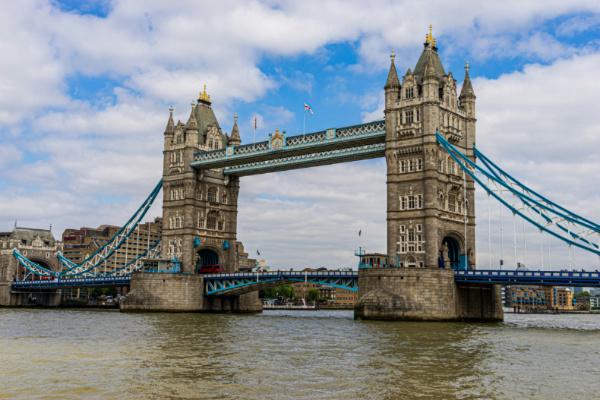
• Tower Bridge marks its 130th birthday this year and to mark the event, the London Metropolitan Archives are hosting a free exhibition charting its history at the City of London’s Heritage Gallery. Designed by Horace Jones, the bridge opened on 30th June, 1894, and the display reflects on the splendour of that royal event as well as examining how and why the bridge was built, the engineering involved and how the bridge played a role in defending London during World War I. The exhibition runs until 19th September at the gallery, located in the Guildhall Art Gallery. Booking tickets is recommended. For more, see https://www.cityoflondon.gov.uk/events/tower-bridge-at-the-heritage-gallery.
• Actor Dame Peggy Ashcroft and Dublin-born novelist Iris Murdoch have been honoured with English Heritage Blue Plaques. A leading figure in 20th century theatre, Dame Peggy has been remembered with a plaque on her childhood home in South Croydon. It was in what was then a “leafy market town” that at the age of 13 Peggy first dreamt of performing on the stage while standing outside the local grocers on George Street and to which she returned in 1962 to open a theatre named after her. The plaque honouring Murdoch, meanwhile, has been placed on 29 Cornwall Gardens, part of a Italianate stucco-fronted mid-Victorian terrace in Kensington where she occupied a top floor flat. Murdoch lived in London for more than 25 years and during that time would spend three days a week in the flat. For more, see www.english-heritage.org.uk/visit/blue-plaques/
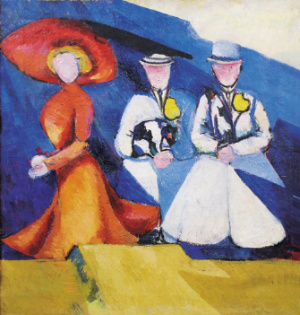
Alexandra Exter, ‘Three Female Figures’, 1909-10Oil on canvas, 63 x 60 cmNational Art Museum of Ukraine
• The most comprehensive UK exhibition to date of modern art in Ukraine opens at the Royal Academy on Saturday.In the Eye of the Storm: Modernism in Ukraine, 1900–1930s, features some 65 works, many on loan from the National Art Museum of Ukraine and the Museum of Theatre, Music and Cinema of Ukraine. Artists represented in the display, which is divided into six sections, include such renowned names as Alexander Archipenko, Sonia Delaunay, Alexandra Exter and Kazymyr Malevych as well as lesser-known artists such as Mykhailo Boichuk, Oleksandr Bohomazov and Vasyl Yermilov. Runs in the The Gabrielle Jungels-Winkler Galleries until 13th October. Admission charge applies. For more, see www.royalacademy.org.uk.
• The work of artists who have illustrated Michael Rosen’s many books for children are the subject of a new exhibition at the Heath Robinson Museum.Michael Rosen: The Illustrators explores Rosen’s books and the many artists who illustrated them over his 50 year career including the likes of Quentin Blake, Helen Oxenbury, Chris Riddell and Korky Paul. Among the works on show are original drawings for titles including We’re Going on a Bear Hunt, Michael Rosen’s Sad Book and Michael Rosen’s Book of Nonsense! Runs until 22nd September. Admission charge applies. For more, see https://www.heathrobinsonmuseum.org/.
Send all items for inclusion to exploringlondon@gmail.com.
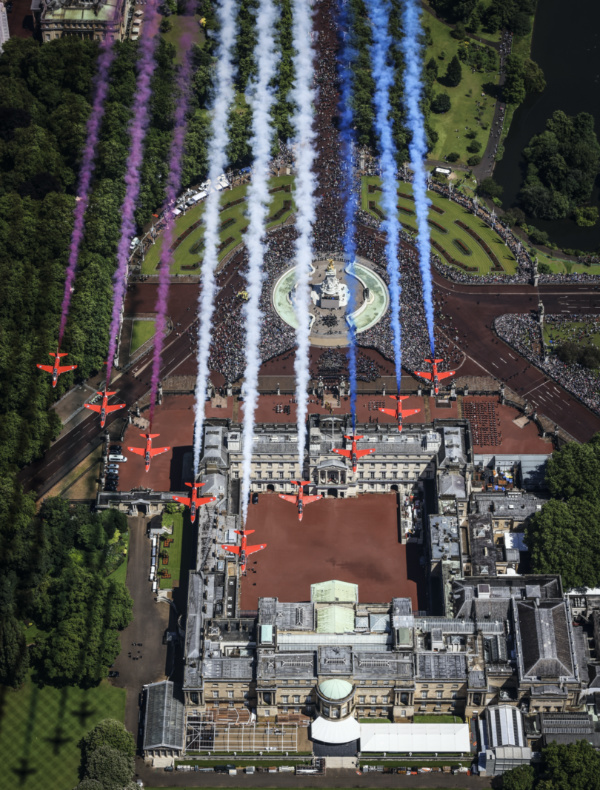
The King’s Birthday Parade took place in central London on Saturday featuring some 242 military working horses, 250 military musicians, 40 pipers and drummers, and more than 1,000 dual role soldiers of the British Army’s Household Division. The parade is a gift from the British Army’s Household Division to the King and is traditionally held on the second Saturday in June, regardless of the Sovereign’s actual date of birth.
Nations, including the UK, have just marked the 80th anniversary of the D-Day landings in Normandy at a range of locations in France and England. But did you know London has its own “D-Day tree”?
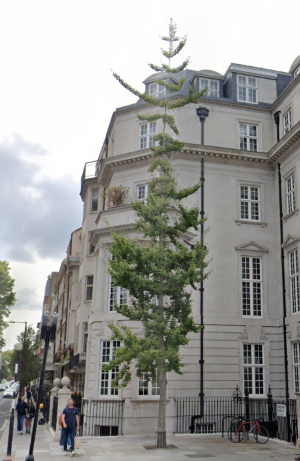
The tree, a Ginkgo biloba or Maidenhair tree, is located outside number 22 in Grosvenor Square in Mayfair (on the corner with Upper Brooks Street). It was planted in 1994 to mark the 50th anniversary of the D-Day landings.
As well as the tree itself, the landings are commemorated with plaques around the base which provide the date of the landings and its code-name, Operation Overlord.
The location apparently relates to 20 Grosvenor Square being, for a time, the headquarters of Dwight D Eisenhower, Supreme Commander of the Allied Expeditionary Force launched on D-Day. There’s a plaque on the building commemorating his tenure.
In fact, the number of Americans working in the square – at locations including the US Embassy – led to it being known colloquially as ‘Eisenhower Platz’).
The tree was planted by the City of Westminster.
Note: There seems to be some conflicting information, not the least on a plaque in Bushy Park about Eisenhower’s connections with Grosvenor Square and Norfolk House in St James’s Square. We’ll be investigating further to clarify.
Members of the Household Division in London rehearse for the King’s Birthday Parade, known as Trooping the Colour. The Colonel’s Review is held one week before and saw some 250 musicians, 20 pipers, 240 military working horses, and almost 1,000 dual role soldiers of the British Army’s Household Division run through their paces on Saturday. Trooping the Colour will take place on 15th June.
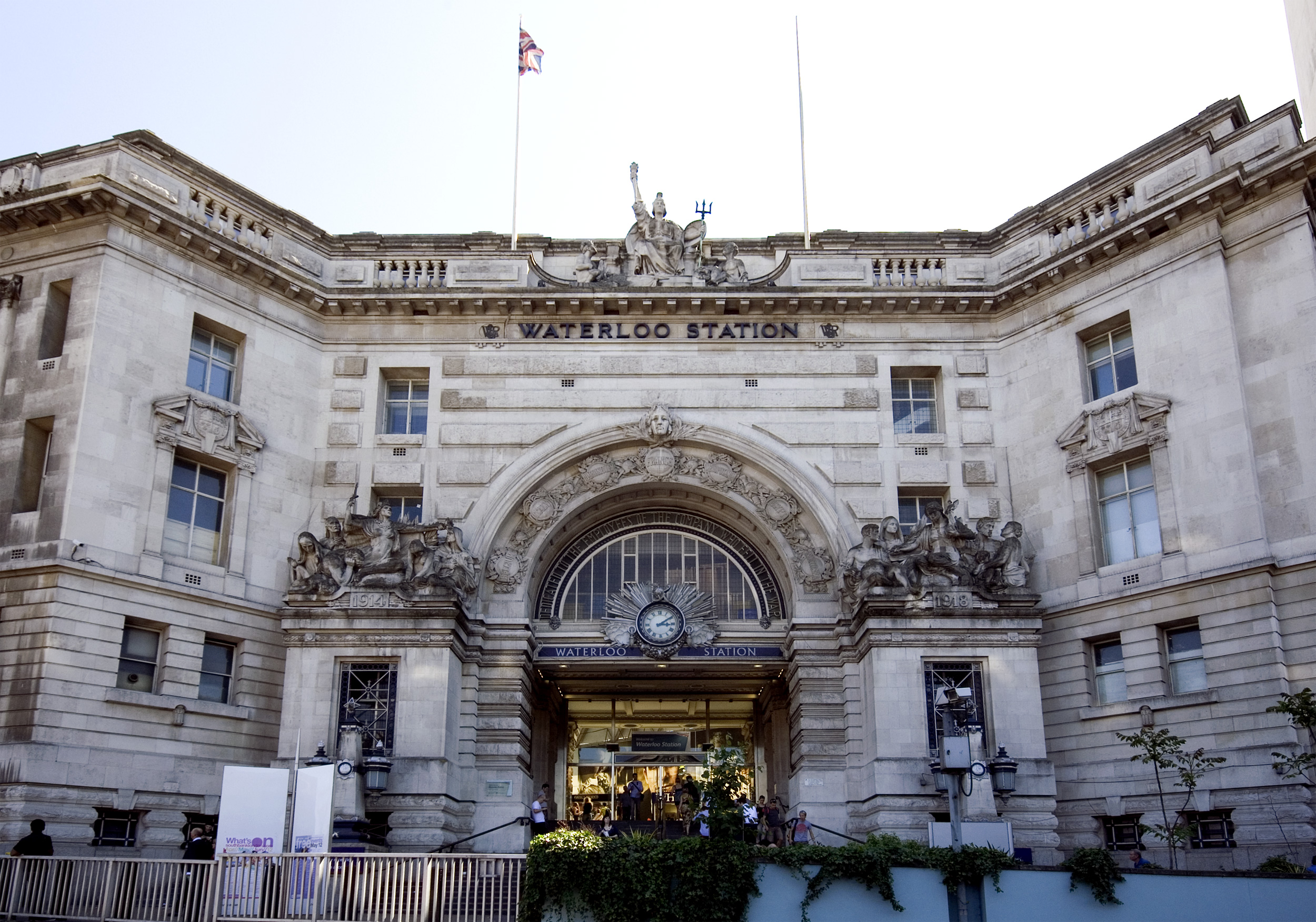
Sitting over the main entrance to Waterloo Station is a Victory Arch which commemorates railway personnel who died in World War I and II.
There are several plaques located at the top of the steps under the arch commemorating those who died in the conflicts and among them, particularly notable this week as the world marks the 80th anniversary of D-Day, is one commemorating those who died in the Normandy landings.
The plaque was installed on the 50th anniversary of the landings – 6th June, 1994.
The arch was built as part of a station rebuild in the first couple of decades of the 20th century and added to the design following World War I. The new station was completed in 1922.
The now Grade II-listed memorial, the work of sculptor Charles Whiffen, features two sculptural groups located on either side – one dedicated to Bellona and dated 1914 and the other dedicated to Peace and dated 1918.
Set around a glazed arch are the names of countries where key battles were fought in the conflict and at the centre is a clock set within in a sunburst. Sitting above the arch is a depiction of Britannia holding aloft the torch of liberty.
As well as the D-Day plaque under the arch, a Roll of Honour commemorates the 585 London and South Western Railway employees who lost their lives in World War I. There is also a plaque commemorating the 626 men of the Southern Railway who died in World War II.
View of Castletown Road in Barons Court. PICTURE: Courtesy of Google Maps
This district in west London doesn’t have anything to do with any particular baron but rather was named Barons Court by the late 19th century developer Sir William Palliser.
It apparently refers to the Court Baron, a form of manorial court which could be held in medieval times by any Lord of the Manor and is perhaps a nod to nearby Earl’s Court. It’s said by some that it may also be a reference to the Baronscourt estate in County Tyrone, Northern Ireland, where Sir William possibly had connections.
Many of the street names refer to members of the Palliser family or estates and the district, which lies between West Kensington and Hammersmith, features a Tube station which opened in 1905.
Barons Court did suffer bomb damage during World War II.
Landmarks include the London Academy of Music and Dramatic Art (LAMDA), housed in what was formerly a ballet school on Talgarth Road, the Queen’s Club tennis club, and the Margravine or Hammersmith Cemetery, which, laid out by architect George Saunders, opened in 1868.











 Exploring London