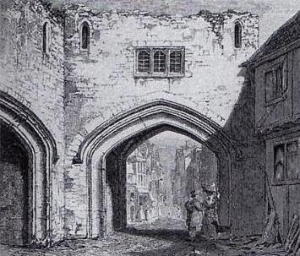
Located in what was the gatehouse of Westminster Abbey, this small prison dates from 1370.
It was built by Walter de Warfield, then the abbey’s Cellarer, and featured two wings, built at right angles to each other.
The Gatehouse Prison in an 18th century depiction. PICTURE: Wikipedia
Under the jurisdiction of the Abbot, the prison had two sections – one for clerics and one for laymen. The Abbey’s Janitor was its warder.
Among the most famous inmates was the Cavalier poet Richard Lovelace who was imprisoned for petitioning to have the Clergy Act 1640 annulled. While inside, he wrote the famous work, To Althea, from Prison which features the famous lines: “Stone walls do not a prison make, Nor iron bars a cage”.
Other notables include Sir Walter Raleigh, held here on the night before he was beheaded in Old Palace Yard on 29th October 1618, diarist Samuel Pepys – detained for a few weeks in 1689 on suspicion of being a Jacobite (but released because of ill health), and Gunpowder Plot conspirator Thomas Bates.
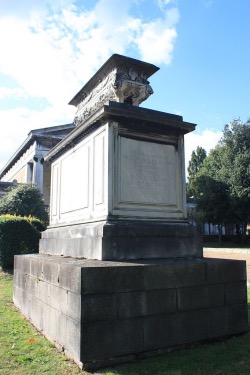
Falling into a state of decay, the prison was demolished in 1776-77 (although one wall stood until the 1830s). A gothic column, the Westminster Scholars’ Memorial which is also known as the Crimea and Indian Mutiny Memorial, now stands on the site.
Located close to the River Thames, Richmond Lodge was a royal hunting lodge before becoming a favoured residence for Hanoverian royals for several decades in the 18th century.
Subscribe for just £3 a month – that’s less than the cost of a cup of coffee – to access all of Exploring London’s content!
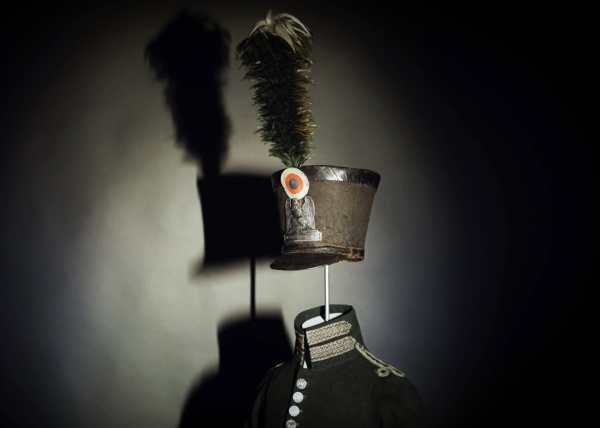
The Charles Hare uniform PICTURE: Courtesy of the National Maritime Museum, Greenwich
Newly acquired by the National Maritime Museum in Greenwich is the uniform of an officer in the French Imperial Customs Service (Les Douanes) worn by a Naval midshipman during his escape from Napoleonic France.
The son of a naval officer in Lincolnshire, Charles Hare had joined the Royal Navy at the age of 11 in 1801 and was serving as a naval midshipman on board the ship Minerva when it was captured off Cherbourg in 1803.
Along with the other officers, Hare, just 13-years-old, was sent to a the walled town of Verdun which served as a prison depot and allowed to live within the walls on parole. In 1806, however, he was transferred to the prison fortress of Sarre Libre (now Saarlouis in modern Germany).
On 12th August, 1809, Hare – now aged 19 and wearing the above mentioned uniform which includes a dark green coat with stripes of silver lace at the collar and a shako, a tall and cylindrical military cap featuring a plume of green and white feathers – made his escape from Sarre Libre.
He travelled by carriage to Mainz and then took a number of boats along the Rhine including on a barge hosting a wedding where he had to join in the drinking of brandy and singing. He eventually reached the port of Rotterdam in what is now The Netherlands.
On the 25th August, fishermen rowed Hare and his dog out to the British warship Royal Oak which was involved in a blockade of the Dutch coast. A few days later he sailed back to Britain where later that month Hare was reunited with his mother and sisters (his father had died in the year he joined the Navy) in the village of Fillingham, Lincolnshire.
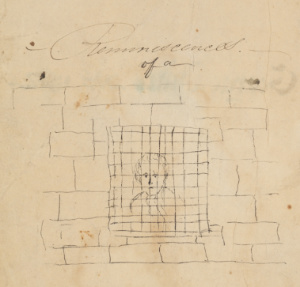
A amall drawing on inner cover of Charles Hare’s account of his escape. PICTURE: Courtesy of the National Maritime Museum, Greenwich
Astonishingly, along with the uniform, the museum was also able to acquire a hand-written account of Hare’s escape which he apparently wrote for his young son George.
In it, Hare talks about the risk he was taking in wearing a “military habit” (he could have been executed as a spy if discovered) and his pet English terrier dog which he had been given while at Verdun and which accompanied him throughout the escape.
Hare soon returned to his career in the navy and eventually settled in Canada.
Following conservation work, the uniform – the most complete surviving example of its type from the Napoleonic era – can be how seen in the Nelson, Navy, Nation gallery at the National Maritime Museum.
WHERE: Nelson, Navy, Nation gallery at the National Maritime Museum, Romney Road, Greenwich (nearest DLR is Cutty Sark; nearest train stations are Greenwich and Maze Hill); WHEN: 10am to 5pm daily; COST: Free (booking recommended): WEBSITE: rmg.co.uk.
• West Ham Park celebrates its 150th anniversary this weekend with a festival of music, food, sport, and other activities. On Saturday there will be a free, family-friendly festival with music – including appearances by Australian-born singer-songwriter Celina Sharma and singer-songwriter, Fiaa Hamilton, as well as a DJ set from Ellis – along with arts and crafts, a children’s fun fair and local food stalls. On Sunday, activities are based around the theme of ‘give it a go’ with visitors able try out various sports and health activities, including football, cricket, tennis, athletics, Tai Chi, and long-boarding. There will also be free taster sessions and opportunities to meet local sporting legends. An outdoor exhibition about the park’s history can be seen in Guildhall Yard in the City leading-up to the event after which it will be moved to Aldgate Square. West Ham Park is the largest green space in the London Borough of Newham and has been managed by the City of London Corporation since 1874. Activities on both days start at 12pm. For more, see www.cityoflondon.gov.uk/westhampark150.
To see the rest of this post (and all of our coverage), subscribe for just £3 a month. This small contribution – less than the cost of a cup of coffee – will help us continue and grow our coverage.We appreciate your support!
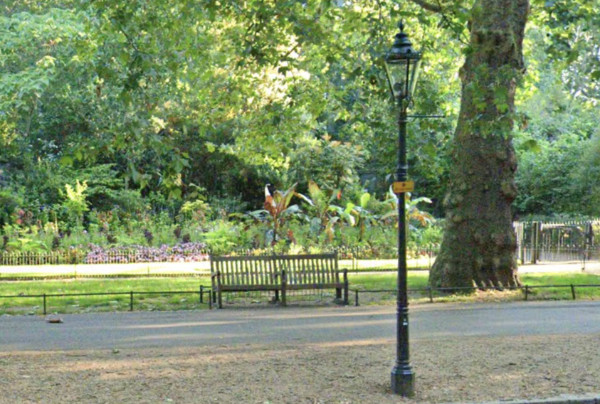
One of the George IV lamps in Birdcage Walk. PICTURE: Via Google Maps
There remain some 1,300 publicly maintained gas lamps still in use in London’s streets but the oldest surviving gas lamps can be found in Birdcage Walk (along the south side of St James’s Park).
These cast iron lamps bear the insignia of King George IV who ruled from 1820 to 1830. While lamps had been installed in London since the reign of King George III (the earliest permanent placement was on Westminster Bridge in 1813), these lamps were installed during his successor’s reign.
They are among numerous Grade II-listed lamp stands on Birdcage Walk (some others are marked with thee insignia of King William IV).
PICTURE: Via Wikipedia (licensed under CC BY-SA 4.0)
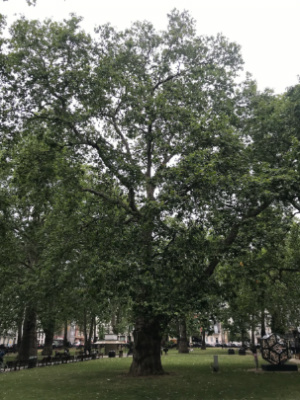
Located in the heart of Mayfair are some of the oldest – and most valuable – plane trees in London.
London plane trees (Platanus × acerifolia) – believed to be a hybrid of the American Sycamore Platanus occidentalis) and the Oriental Plane (Platanus orientalis) – were widely planted across London in the 18th century due to their resistance to pollution.
These grand old trees are believed to have been planted in 1789 by MP Edward Bouverie, who lived at 13 Berkeley Square.
Among the 30 or so plane trees in the Grade II-listed park is one known variously as the ‘Victorian Plane’ or ‘Berkeley Plane’.
It was reportedly assessed under the Capital Asset Value for Amenity Trees system in 2008 as being worth $750,000, a price tag which is understood to have made it the most valuable tree in Britain at the time.
The tree was one of the original 41 Great Trees of London.
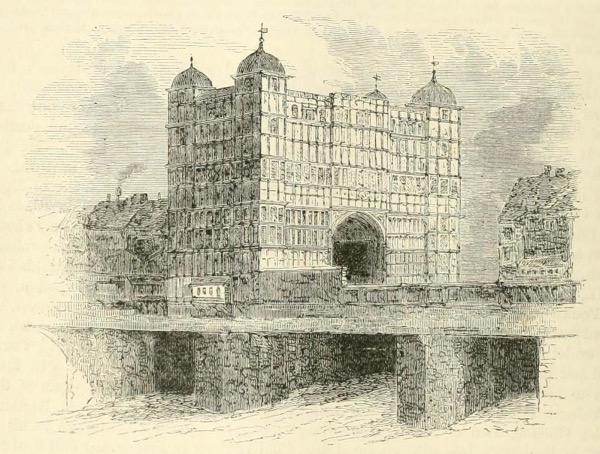
Once located at the southern end of London Bridge, Nonsuch House is the earliest documented prefabricated building.
Nonsuch House as seen in ‘Old and New London, Illustrated’ (1873). PICTURE: Via Wikipedia
Originally constructed in what is now The Netherlands, it was shipped to London in pieces – each individually marked – in 1578 with the reassembly completed the following year.
The four storey building, which was said to have been constructed using wooden pegs and no nails, featured an arched tunnel through the middle through which bridge traffic would pass.
The main facade faced toward Southwark and there were towers at each of the four corners, topped with onion domes. The east and west sides of the building, which protruded beyond the bridge out over the Thames were elaborately carved.
The northern facade of the building abutted other properties while the southern side had a clear space in front over which a drawbridge is believed to have been located (it could be raised to allow larger ships through).
The name may have referenced King Henry VIII’s Nonsuch Palace, located near Ewell in Surrey, and was said to refer to the fact there was no such building as splendid.
The property was demolished along with the other buildings on the bridge in about 1757.
Murphy and her husband Hugh had both been convicted of “coining” (producing counterfeit coins, then seen as a matter of high treason) at the Old Bailey and sentenced to death on 18th September, 1788.
The following year – on 18th March, 1789 – they and seven other men were executed at Newgate Prison.
All eight of the men were executed by hanging but Murphy was, as the law then stipulated, made to stand on a foot high platform in front of a stake to which she was fastened.
It is believed Murphy, who was reportedly dressed in a striped gown with a black ribbon around her cap, was strangled to death before she was burned. A noose had been placed around her neck and the platform on which she was standing removed a half-an-hour before the faggots were lit about her, leaving her to hang (this had become a somewhat standard practice since the 1650s).
Execution by burning – which was increasingly attracting public opprobrium, not because of its barbarity but because of its impact on local residents offended by the smell and smoke which accompanied such a method of execution – was officially abolished the following year when the Treason Act was passed.
This was apparently on the initiative of Sir Benjamin Hammett, a former sheriff of London and now MP.
London’s oldest roundabout is said to be located in Southwark at the intersection of Borough, Westminster Bridge, Waterloo, London and Blackfriars Roads.
St George’s Circus was built in 1771 (during the reign of King George III) and designed by Robert Mylne as a grand southern entrance to London with radiating roads leading to three bridges over the Thames: London Bridge, Westminster Bridge and Blackfriars Bridge.
Mylne also designed the obelisk which still stands in the centre of the circus. As well as showing the date on which it was erected, the obelisk also records distances to Palace Yard in Westminster, Fleet Street, and London Bridge. Gas lamps were placed at each corner to illuminate the intersection.
The now Grade II*-listed obelisk has a rather interesting history in itself. Having stood at the roundabout for more than a century, in about 1897 it was relocated to Geraldine Mary Harmsworth Park outside the Imperial War Museum on Lambeth Road to make way for a clocktower designed to mark Queen Victoria’s Diamond Jubilee.
The clocktower itself, however, was removed in the 1930s to help with traffic flow. It wasn’t until 1998 that the obelisk was moved back to its original site (now minus the oil lamps).
Interestingly, an Act of Parliament passed in 1812 specifies that all buildings on the intersection must be located 240 feet from the obelisk (the reason, apparently, for curved facades on some of the surrounding buildings).
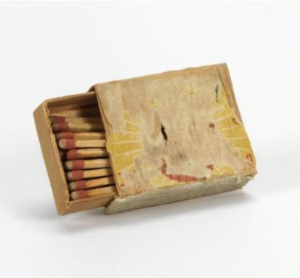
• A free exhibition exploring the “tricks, tools and elaborate plots that make up the secret world of spying and deception” has opened at IWM London. Spies, Lies and Deception features more than 150 objects including gadgets, official documents, art and newly digitised film and photography. Highlights include Operation Mincemeat mastermind Ewen Montagu’s private papers relating to the World War II plot – which fooled German High Command about the location of the next major Allied assault by planting a dead body with fake military documents off the Spanish coast – along with an oar from the submarine’s dinghy which deposited the body. There is also a box of matches with a match specially adapted for writing secret messages (pictured), footprint overshoes made by SOE (Special Operations Executive) in South-East Asia during World War II to disguise the wearer’s real footprints, and papier-mâché heads used to deceive snipers in World War I trenches. The exhibits also detail the work of the World War I Postal Censorships department – which examined letters sent to foreign locations including testing letters for invisible ink and tell the story of SOE operative Noor Inayat Khan – the first female wireless operator sent by SOE into Occupied France, she successfully transmitted messages to London for four months before being betrayed, captured and executed. There’s also a newly commissioned interview with Eliot Higgins, founder of Bellingcat, an international collective of researchers who used open source data to uncover the real identities of those responsible for the Salisbury Novichok poisonings in 2018, along with a photo album of double agent Kim Philby in Siberia after he escaped to the Soviet Union following his discovery in 1963. The free display can be seen until 14th April next year. For more, see iwm.org.uk/events/spies-lies-and-deception.
• A exhibition looking at the history of printing William Shakespeare’s plays has opened at the Guildhall Library. Folio 400: Shakespeare in Print covers everything from the printing of the small ‘Quartos’ of the late 16th century to the reworking of the text in the 18th century and the rediscovery of original texts in the 19th century. Running in parallel is a display at the City of London Heritage Gallery at Guildhall Art Gallery which features the library’s copy of the First Folio, widely regarded as one of the finest and most complete. Entry is free. Runs until 30th January. For more, see www.cityoflondon.gov.uk/things-to-do/history-and-heritage/guildhall-library.
• An exhibition centring on the spectacular light illuminations of the Georgian period has opened at Sir John Soane’s Museum. Georgian Illuminations celebrates the light shows of the period and the impressive and the elaborate temporary architectural structures created for them, often designed by leading architects and artists, including Sir John Soane. It featuresnewly discovered linen transparencies, which were back-lit in Georgian windows as patriotic decoration during the Napoleonic Wars, as well as a contemporary work by light artist Nayan Kulkarni light artist which sees the facade of the museum at Lincoln’s Inn Fields illuminated each night from dusk until about 11pm. A series of events accompanies the exhibition. Runs until 7th January, 2024. Entry is free. For more, see www.soane.org/exhibitions/georgian-illuminations,
Send all items to exploringlondon@gmail.com for inclusion.
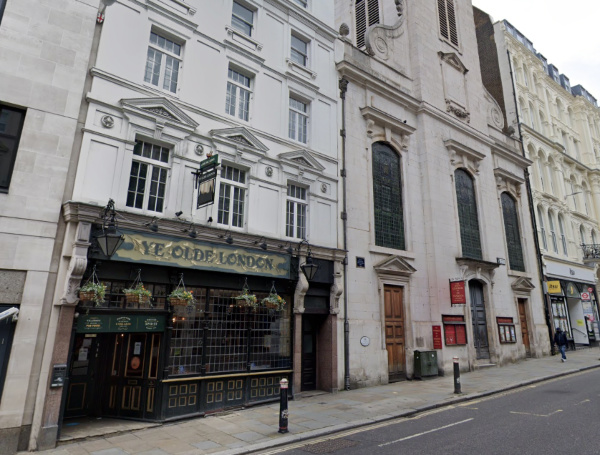
Site of the London Coffee House. PICTURE: Google Maps
Established in the early 1730s on Ludgate Hill (next to St Martin Ludgate), the proprietor of this establishment was one James Ashley (hence the coffee house also being known as Ashley’s London Punch House – the punch was apparently particularly affordable).
It was known to have been frequented by the likes of Joseph Priestley and his friend, American Benjamin Franklin, while James Boswell described its customers as being primarily physicians, dissenting clergy and “masters of academies”.
Its location also meant it served as a place where Old Bailey juries which could not reach a decision were sequestered for the night.
Continued to be favoured by Americans, in 1851 philanthropist George Peabody gave a dinner here for those from the United States who were connected with the Great Exhibition being held in Hyde Park.
In 1806, a statue of Hercules and a hexagonal Roman altar, dedicated to Claudia Martina by her soldier husband, were found here. The coffee house has also been identified as the “Coffee House on Ludgate Hill” mentioned in Charles Dickens’ Little Dorritt.
It closed in 1867. The site is now occupied by a pub, The Ye Olde London.
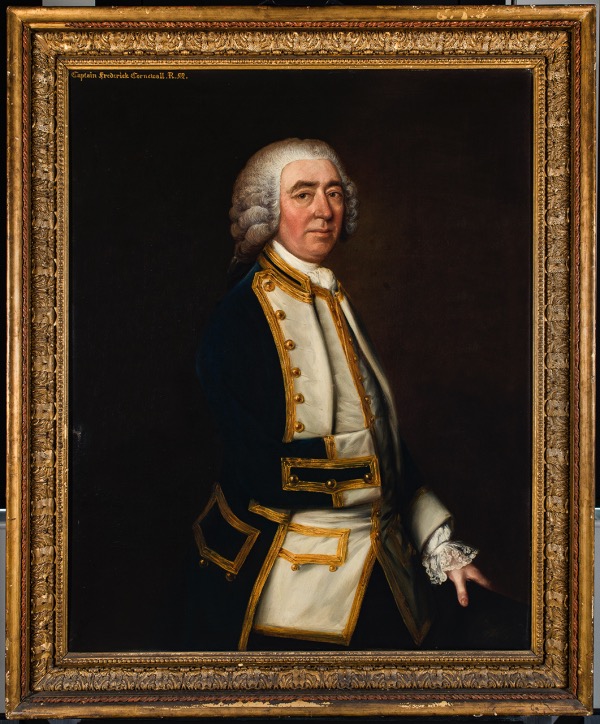
Part of the collection at Royal Museums Greenwich since 1960, this three quarter-length portrait of Captain Frederick Cornewall (1706 – 1788) has in recent decades had been attributed to an unknown artist and held in storage.
That was reportedly thanks to a curator who, after the painting was acquired by RMG, didn’t deem it of sufficient quality to be a work of famed 18th century artist Thomas Gainsborough (1727 to 1788) (this was despite having previously been attributed to him).
Research by historian Hugh Belsey and RMG curators has now turned that on its head. Belsey, who had first come across the work in a photograph dating from the early 20th century, requested to see it in February last year after becoming aware it was in the museum’s collection.
Having inspected it, he found it – based on the warm palette and “unrivalled” draughtsmanship – to have been a work by Gainsborough and dated it to about 1762 when the artist was working in Bath. Society columns in newspapers from the time confirmed that the Captain had visited Bath in March, 1762.
‘I have been studying Gainsborough’s works for over forty years and during that time I have taken every opportunity to look at as many paintings and drawings as possible,” said Belsey. “I am delighted that this splendid portrait is now identified as a fine early work by Gainsborough.”
The painting, which was perhaps intended to commemorate Cornewall’s retirement from active naval service the previous year, depicts the captain in undress uniform and a bag wig, standing against a plain brown background.
He is shown without his right arm which he lost in 1744 Battle of Toulon (he also fought in the Battle of Minorca in 1756), the sleeve of his coat attached by a small loop to a button on his waistcoat apparently in imitation of the traditional 18th-century pose where men were often painted tucking one hand into their waistcoat.
Gainsborough has painted him with his right arm forward in an apparent effort to emphasise his war wound.
The painting is currently too fragile for display, according to curators, and RMG has launched a crowdfunding campaign to raise £60,000 towards the conservation work is preparation for its eventual display at the Queen’s House.
• In the wake of last week’s reopening of the National Portrait Gallery, another new exhibition – this time focused on the photography of Paul McCartney – opened yesterday. Paul McCartney Photographs 1963-64: Eyes of the Storm reveals, for the first time, portraits captured by McCartney using his own camera between December, 1963, and February, 1964, – a period during which John, Paul, George and Ringo went from being Britain’s most popular band to international stardom. The images reveal McCartney’s personal perspective on what it was like to be a Beatle at the start of what became known as ‘Beatlemania’ through images captured everywhere from gigs in Liverpool and London to performing on The Ed Sullivan Show in New York. Runs until 1st October. Admission charge applies. For more, see www.npg.org.uk/whatson/exhibitions/2023/paul-mccartney-photographs-1963–64-eyes-of-the-storm/.
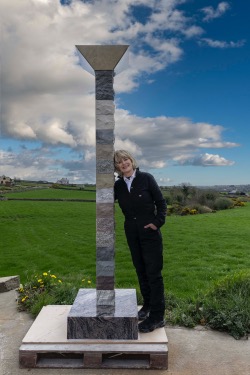
Angela Palmer with ‘Tower of Time’. PICTURE: Ewa McBride Photography.
• A unique sculptural portrait of the UK formed with interlocking blocks of stones from all four countries is on show in an exhibition at the Pangolin London Sculpture Gallery in King’s Cross. Four Nations is just one of the works by Highbury-based artist Angela Palmer in the display, Deep Time: Uncovering Our Hidden. Among others is the 2.5 metre high Tower of Time, which features 16 rocks from the four countries including a 2.5-billion-year-old White Anorthosite rock, the same type of rock brought back from the Moon by Apollo 15 in 1971, and Torus of Time, a one-metre diameter ring representing the country’s three billion year history as a circle of time. Runs until 16th September. For more, see www.pangolinlondon.com.
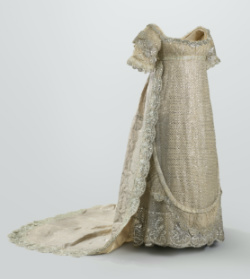
• The only royal wedding dress that survives from the Georgian period – the silk embroidered bridal gown of Princess Charlotte of Wales, daughter of King George IV – is one of the star sights at a new exhibition at The Queen’s Gallery, Buckingham Palace.Style and Society: Dressing the Georgians features more than 200 works from the Royal Collection including rare surviving examples of clothing and accessories as well as artworks by artists such as Gainsborough, Zoffany and Hogarth. Other highlights include a portrait of the wedding ceremony of George IV and Princess Caroline of Brunswick by John Graham – on display for the first time – as well as the original silver and gold dress samples supplied for the bride and other royal guests. There’s also a Thomas Gainsborough,’ depicting’s full-length portrait of Queen Charlotte wearing a magnificent court gown, a preserved gown of similar style worn at Queen Charlotte’s court in the 1760, and life-size coronation portraits of George III and Queen Charlotte by Allan Ramsay. Other items include a 1782 portrait of Prince Octavius, the 13th child of George III and Queen Charlotte, by Benjamin West in which the three-year-old wears a a style of dress known as a ‘skeleton suit’, jewellery including diamond rings given to Queen Charlotte on her wedding day and a bracelet with nine lockets – one with a miniature of the left eye of Princess Charlotte of Wales, and accessories such as a silver-gilt travelling toilet service acquired by the future George IV as a gift for his private secretary at a cost of £300. The exhibition can be seen until 8th October. Admission charges apply. For more, see www.rct.uk.
• One of the finest copies of Shakespeare’s First Folio goes on display at the City of London’s Guildhall Library for just one day on Monday, 24th April, as part of the celebrations surrounding the 400th anniversary of its publication. The document will be on display between 10.30am to 3.30pm with a 10-minute introductory talk given on the hour throughout the day. Two small and original copies (‘Quartos’) of Henry IV Part One and Othello will also be on display, next to a replica copy of the First Folio that visitors can look through. The First Folio brought together 36 plays in one volume and was published in an edition of around 750 copies on 8th November, 1623 – seven years after Shakespeare’s death. It is now regarded as one of the most valuable books in the literary world. For more, see www.cityoflondon.gov.uk/things-to-do/history-and-heritage/guildhall-library.
• Prints and drawings acquired by the British Museum over the past five years have gone on show in Room 90.New acquisitions: Paul Bril to Wendy Red Star features works ranging from an early 17th-century study for a fresco by the Flemish artist Paul Bril to 19th century drawings by Dante Gabriel Rossetti, 2019 prints by the Apsáalooke (Crow) artist Wendy Red Star and Cornelia Parker’s From H to B and back again – made during with the COVID-19 pandemic. Can be seen until 10th September. Admission is free. For more, see britishmuseum.org/exhibitions/new-acquisitions-paul-bril-wendy-red-star.
Send all items for inclusion to exploringlondon@gmail.com.
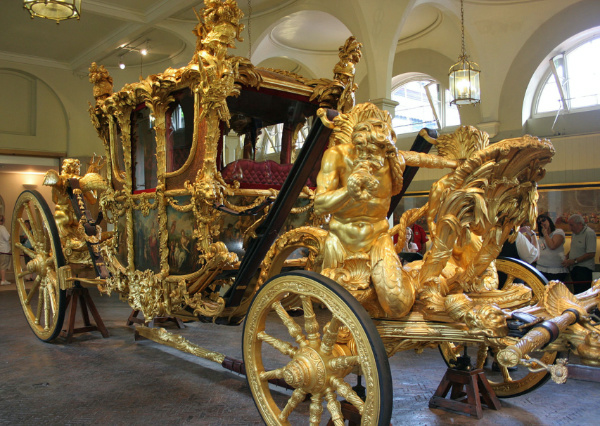
The Gold State Coach will feature in the Coronation Procession of King Charles III (though, interestingly, not for both journeys), it was announced earlier this week so we thought we’d take a more detailed look at it.
The coach – which was last seen publicly during Queen Elizabeth II’s Platinum Jubilee in June, 2022 – was built for King George III to travel to the State Opening of Parliament in 1762.
Designed by Sir William Chambers, it was built in the London workshops of coach maker Samuel Butler and cost more than £7,500 at the time.
The coach weighs some four tonnes and is 28 foot long and 12 feet high. The coach is made of giltwood – a thin layer of gold leaf over wood – and features sculptures by Sir Joseph Wilton including three cherubs on the roof (representing England, Ireland and Scotland) and four tritons (a display of imperial power) above the wheels. The coach is also decorated with painted panels depicting Roman gods and goddesses by artist Giovanni Battista Ciprian.
Inside the coach is lined with velvet and satin.
The coach is pulled by a team of eight horses wearing a Red Morocco leather harness. At the coronation it will be pulled by Windsor Greys and due to its age and weight, will only move at walking pace.
The coach has been used in every coronation since that of King William IV and was also used for the State Opening of Parliament by Kings George III, George IV and William IV as well as Queen Victoria (up until Prince Albert’s death).
The coach is, however, not said to be the most comfortable ride – Queen Elizabeth II is known to have said so while King William IV described travelling in the coach as like being on a ship “in a rough sea”. So it will only be used for the return, post-Coronation, journey from Westminster Abbey to Buckingham Palace.
For the outward journey – from Buckingham Palace to Westminster Abbey – the King and Queen Consort Camilla will travel in the more comfortable – and Australian-made – Diamond Jubilee State Coach (unlike the Gold State Coach, it comes with air-conditioning, modern suspension and electric windows).
Both coaches are usually housed in the Royal Mews at Buckingham Palace.
On Coronation Day, the Gold State Coach will transport the newly crowned King and Queen Consort on a shorter route than that of Queen Elizabeth II on her Coronation Day – just 1.3 miles compared to the late Queen’s five mile route back to the palace. Leaving Westminster Abbey, it will travel down Whitehall and pass under Admiralty Arch before travelling down The Mall to Buckingham Palace.
WHERE: The Royal Mews, Buckingham Palace (nearest Tube stations are Victoria, Green Park, St James’s Park and Hyde Park Corner); WHEN: 10am to 5pm (check website for closure dates around the coronation); COST: £15 adults/£10 young person (aged 18-24)/£9 child (aged five to 17); WEBSITE: www.rct.uk/visit/the-royal-mews-buckingham-palace
Described as the “father of British painting”, 18th century artist William Hogarth bought this property in Chiswick at the height of his fame in 1749.
PICTURE: Patche99z/Public Domain
The property, which had been built between 1713 and 1717 and had previously been the country property of a pastor and his family, then located in what was a rural area and served as the Hogarths country home (they had an inner London home in Leicester Fields).
Hogarth extended the home and had a studio installed above a (now lost) coach house in the rear of the garden. As well as his wife Jane, occupants included Hogarth’s sister Anne and his mother-in-law.
Following Hogarth’s death in 1764 (Hogarth, who actually died in the Leicester Fields property, is buried in the nearby St Nicholas Church), Jane continued to live at the property and along with her cousin Mary Lewis, ran a business selling prints of her husband’s works. Mary inherited the house when Jane died in 1789 and remained there until her own death in 1808.
The house, which features three stories and an attic, subsequently passed through various hands including, from 1814 to 1833, Rev Henry Francis Cary, who translated Dante’s Divine Comedy (and counted literary luminaries such as Samuel Taylor Coleridge and Charles Lamb as friends). It was sold for redevelopment in 1901 and, following a failed campaign by artists and writers to buy the house, it was purchased by Chiswick resident, Lieutenant-Colonel Robert William Shipway.
Drawing on the help of the architect Frederick William Peel and Hogarth’s biographer, Henry Austin Dobson, he had the house restored and turned into a museum, installing a collection of the artist’s works and commissioning replica furniture based on images in Hogarth’s prints (he even personally took photographs for a guidebook).
The house opened to the public in 1904 and in 1909 Shipway gave the house to Middlesex County Council. Its ownership passed to Hounslow Council when Middlesex County Council was abolished in 1965.
It was damaged by in September, 1940, during World War II after a parachute mine detonated nearby but was repaired and reopened in 1951. A single storey extension to the property was rebuilt at the time to provide a space for exhibitions.
The now-Grade I-listed property’s interior was refurbished for the tercentenary of Hogarth’s birth in 1997 and again in 2011. A further project in 2020 known as the Mulberry Garden Project – funded by the National Lottery Heritage Fund – added the Weston Studio for learning and activities, but also re-landscaped and reinterpreted the garden to highlight historic planting and themes.
The house and garden are currently managed by London Borough of Hounslow.
Inside, the house continues to show Hogarth’s artistic output including such famous engraving series as A Harlot’s Progress, A Rake’s Progress and Marriage à-la-mode. The house also contains some of the replica furniture commissioned by Shipway.
In the garden is a Mulberry tree believed to be the last survivor of an orchard first established on the site in the 1670s.
There’s a statue of Hogarth and his famous pug dog, Trump, located in Chiswick High Road.
WHERE: Hogarth’s House, Hogarth Lane, Great West Road, Chiswick (nearest Tube station is Turnham Green while nearest Overground is Chiswick Station); WHEN: 12pm to 5pm Tuesday to Sunday and Bank Holiday Mondays; COST: Free; WEBSITE: https://hogarthshouse.org.
The oldest of London’s so-called ‘Magnificent Seven’ cemeteries established in the 19th century, Kensal Green is the burial place of a few members of the royal family dating from the Georgian and Victorian eras.
The ninth child and sixth son of King George III, Prince Augustus Frederick, the Duke of Sussex, died at Kensington Palace at the age of 70. In his will, he specifically requested he not have a state funeral and so was buried at Kensal Green on 4th May, 1843. His rather plain grey monument which is surrounded by concrete bollards, is located in front of the cemetery’s main chapel.
Opposite his grave is the tomb of his sister Princess Sophia, the 12th child of King George III. She, too, died at Kensington Palace – on 27th May, 1848 – and wished to be buried near her brother instead of at Windsor.
King George III’s grandson, Prince George, Duke of Cambridge, was also buried at Kensal Green. A military man (and ally of Queen Victoria), he served as commander-in-chief for 39 years before being forced to resign in 1895. He died in 1904 at Gloucester House, Piccadilly, in 1904 and was buried at Kensal Green with his wife the following day.
WHERE: Kensal Green Cemetery, Harrow Road, Queen’s Park (nearest Tube station is Kensal Green); WHEN: Monday to Saturday 9am to 5pm, Sundays 10am to 5pm; COST: Free: WEBSITE: www.kensalgreencemetery.com.
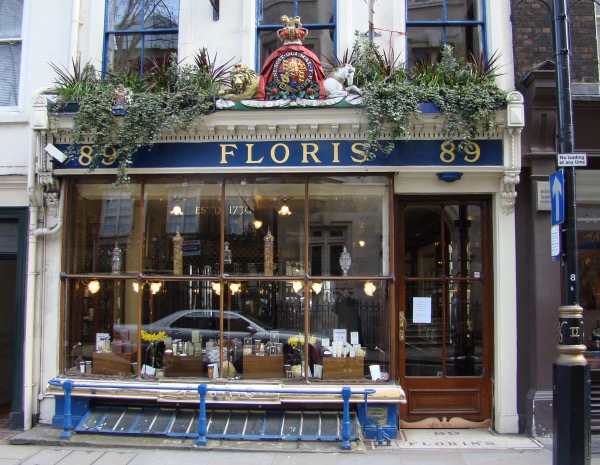
Not just said to be the oldest perfumer in London but in the UK, Floris London started life as a barber-shop and comb-maker in Jermyn Street, St James’s, by immigrant Juan Famenias Floris.
PICTURE: Sergey Moskalev (licensed under CC BY-SA 3.0)
Floris arrived in London in 1730, having travelled from the island of Menorca in the Balearic Islands which had become a British possession after it was captured in 1708 in the War of the Spanish Succession.
The story goes that Floris was missing the sweet scent of the flowers of his youth on the island and so he and his wife Elizabeth began creating and selling perfumes (and living in a premises above the shop).
Floris was granted his first Royal Warrant in 1820 soon after the accession of King George IV as ‘Smooth Pointed Comb Maker’ to His Majesty. It was to be the first of many.
Customers have included everyone from Admiral Lord Nelson (who kept a room Lady Emma Hamilton on the building’s third floor) and Florence Nightingale to Mary Shelley, Beau Brummell, Oscar Wilde, Winston Churchill, Marilyn Monroe and members of the Royal Family including the Duke and Duchess of Sussex, creating a bespoke fragrance for their wedding in 2016.
Writer Ian Fleming was also a customer – the No 89 Eau de Toilette was to become a favourite of James Bond. The company’s other pop culture references include a mention in the Al Pacino film, Scent of a Woman.
Still a privately owned family business, Floris is still run by Juan’s’ descendants today and the London store at 89 Jermyn Street, which was renovated in 2017, remains in the same building Floris first established his business. The current shop front was added in the early 19th century and over it sits the original coat-of-arms granted by King George IV.
Inside, the Spanish mahogany cabinets were purchased from the Great Exhibition held in Hyde Park in 1851. The four storey property, which these days features a small museum at the rear, is now Grade II-listed.
Floris opened a second store at 147 Ebury Street, Belgravia in 2012.
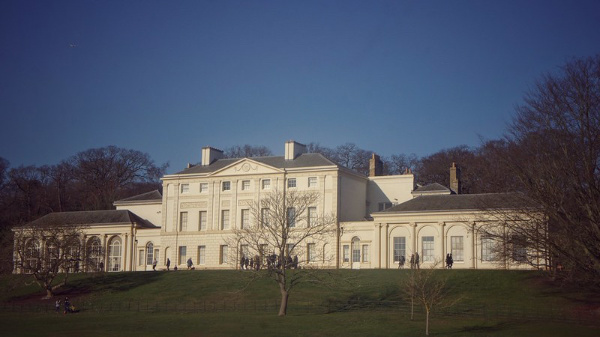
• Marble Hill in London’s west reopens on Saturday following a restoration and the reinstatement of a lost pleasure garden. Once home to King George II’s mistress Henrietta Howard, Countess of Suffolk, Marble Hill is a rare example of a home built by and for a woman in Georgian England and is one of the last survivors of the many 18th century villas that once fronted the Thames in the area. Marble Hill was built as a country retreat from London’s crowds and among those entertained here were poet Alexander Pope, Horace Walpole, John Gay and Jonathan Swift. English Heritage has invested £3 million into a major transformation of the house and 66 acres of riverside parkland which also used a £5 million grant from The National Lottery Heritage Fund and The National Community Lottery Fund. This has included the reinstatement of a pleasure garden – an “Arcadian landscape” which was inspired by sketches made by Pope – with the opening up of previously inaccessible woodland areas, the reinstallation of paths and the replanting of avenues of trees that led from the house to the river. Howard’s ninepin bowling alley has been restored and an 18th-century garden grotto has been excavated and returned to its 18th-century appearance. Inside the house, English Heritage has re-instated the paint scheme that existed during Howard’s lifetime in several interior spaces, including the Great Room, conserved the fine collection of early Georgian paintings which includes portraits of Howard’s circle and re-created furniture including an intricate carved peacock motif table and luxurious crimson silk wall hangings in her dressing room. The new display has reframed Howar’s beyond being simply the King’s mistress by also exploring her abusive first marriage and the role deafness played in her life as well as her rise in Georgian society and the social circles she captivated. Entry to the house is free. For more, head to www.english-heritage.org.uk/visit/places/marble-hill-house/.
Harry Kane of England celebrates after scoring their side’s second goal during the UEFA Euro 2020 Championship Round of 16 match between England and Germany at Wembley Stadium on 29th June, 2021 in London, England. PICTURE: Catherine Ivill/Getty Images.
• England football captain Harry Kane is the subject of a new exhibition opening at the Museum of London on Saturday. Harry Kane: I want to play football features sporting memorabilia including the shirt Kane, who grew up in Chingford, East London, wore on his debut for England where he scored against Lithuania just 79 seconds after coming on the pitch, Kane’s MBE which was awarded to him in March 2019 for ‘services to sport’ and the 2018 World Cup Golden Boot (Kane being one of only two British players to receive a Golden Boot at a World Cup competition, where he was named Man of the Match three times) as well as family photos. The display also includes a changing room space where visitors can listen to Kane’s pre-match playlist and an interactive area where visitors can learn more about who has inspired Harry and share their own hopes and dreams. A programme of activities for families and children will run alongside the free display. Runs until December. For more, see www.museumoflondon.org.uk.
• The use of gold in embellishing and enhancing the written word across cultures, faiths and through time is the subject of a new exhibition opening at the British Library. Gold, which opens Friday, showcases some of the most luxurious illuminated manuscripts, gold-tooled books, sacred texts and scrolls from the British Library’s collection with objects on display including the Harley Golden Gospels, the Lotus Sutra and a treaty in Malayalam, beautifully inscribed on a long strip of gold itself. Admission charge applies. Runs until 2nd October. For more, see www.bl.uk.



 Exploring London
