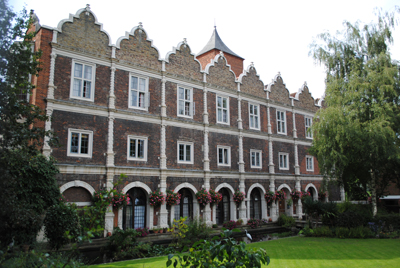
King James I’s London – 9. Hampton Court Palace

It’s fitting given the important role Hampton Court Palace played in the creation of the King James Bible that we include it in this series. But Hampton Court Palace is also notable for some other events during King James I’s reign. First, however, we turn to the Hampton Court Conference…
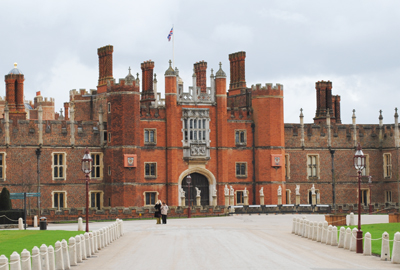
It was in 1604 that King James I meet at Hampton Court with representatives of the Church of England, including one party led by Archbishop John Whitgift (representing the church hierarchy) and another party led by John Rainolds (representing the Puritans), to discuss complaints made by the Puritans concerning a range of matters. While a new Bible wasn’t initially on the agenda, the three days of discussions did eventually lead to King James I commissioning the creation of a new Bible which eventually became known as the King James Version.

King James I was already familiar with Hampton Court Palace – it was in the palace that he had celebrated his first Christmas as king the previous year. Notably, it was during this Christmas and New Year period that Shakespeare’s acting company, the King’s Men, performed in the palace’s Great Hall for the king and his court.

At that stage, the palace hadn’t been dramatically updated since Tudor times – in fact, it wasn’t until after the accession of King William III and Queen Mary II following the “Glorious Revolution” in 1689 that the Tudor palace was given a major overhaul.

King James I continued to visit Hampton Court during the remainder of his reign and his visits, which were generally proceeded by a program of repairs, were noted for the lavish entertainment that took place when they occurred.

It was also at Hampton Court Palace that James’ wife, Queen Anne, died of dropsy in 1619. And where his son King Charles I, who had commissioned some improvements to the palace, was imprisoned for a period during the Civil War. But more of that another time…

WHERE: Hampton Court Palace, East Molesey, Surrey (nearest station is Hampton Court from Waterloo); WHEN: 10am to 6pm everyday (winter hours 10am to 4.30pm from 31st October to 26th March); COST: Adult £15.40, Concession £12.65, Child under 16 £7.70 (under fives free), family tickets, garden only tickets and online booking discounts available; WEBSITE:www.hrp.org.uk/HamptonCourtPalace/
King James I’s London – 8. The New World

It was during the reign of King James I that the first permanent English settlement was made in what was then called the New World (and is now better known as the United States of America).

Named Jamestown (after the King) and located on Jamestown Island, it was the capital of the new Virginia Colony and was founded by the London Company.

The ‘discovery’ and settlement of the New World impacted London itself in various ways – here we look at a couple of related sites in London…

First up is Blackwall in East London, from where three small merchant ships of the Virginia Company of London sailed in 1606 under orders from King James I to bring back gold from the New World. The site is now marked by the First Settlers Monument, first unveiled in 1928 and then restored in 1999.

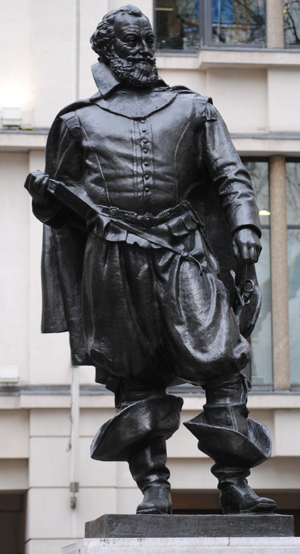
Among those who was on board the ships is Captain John Smith (he of Pocahontas fame) – a statue of him can be found in Bow Churchyard in the City (pictured right, it’s a replica of an original in Richmond, Virginia). Captain Smith was buried in St Sepulchre-without-Newgate, where there is a window commemorating him.

Next we turn to the former, now non-existent, property of John Tradescant and his son, also John Tradescant. Gardeners to the rich and famous and avid collectors of all sorts of artefacts, they are noted for having founded “The Ark” – a house in Lambeth, in they showed off a collection of curiosities that they had gathered on his trips (both were were widely travelled).

These included objects presented to by American colonists including John the Elder’s friend Captain John Smith and those collected by personally by John the Younger (he made several trips to the New World). Among them was the mantle of Powhattan, the father of Pocahontas.

The pair’s name lives on in Tradescant Road in Lambeth (it marks one side of the Tradescant estate). They are both buried at St Mary-at-Lambeth which now houses the Garden Museum.

King James I’s London – 7. The Gunpowder Plot

One of the most significant events during the early year of King James I’s reign was the discovery of the Gunpowder Plot.

The plot, which involved a group of Catholic conspirators including Robert Catesby and  Guido ‘Guy’ Fawkes (you can read more about Fawkes in our earlier entry on Bonfire Night), centred on a plan to blow up the House of Lords in Westminster Palace during the State Opening of Parliament in November 1605, thus killing the king (who had aggrieved Catholics in a public denunciation at the Hampton Court Conference in 1604; it should also be noted that he was already aware of several other failed Catholic plots to kill him) and, presumably, many MPs and Lords.

It is believed they intended replacing James with his daughter, Princess Elizabeth, whom they hoped could be made more amendable to Catholic worship.

But such a plot was hard to keep mum and an anonymous tip-off to Lord Monteagle, a Catholic, not to attend the event, led authorities to eventually uncover the plot in a basement storeroom below the House of Lords where, at around midnight on 4th November, they found Fawkes guarding the 36 barrels of gunpowder.

Fawkes was sentenced to be hung, drawn and quartered – a sentence never fully carried out after he leapt off the scaffold and broke his neck – and the other plotters, who had fled from London soon after the discovery, were either killed during subsequent arrest attempts, imprisoned or executed.

So happy was King James I – that he had Act of Parliament passed which made the 5th November a day of thanksgiving – it remained in force until 1859. Celebrations of the plot’s foiling continue every year on Bonfire Night.

But what were some of the significant places in the event? The cellar where Fawkes was arrested no longer exists – it was destroyed during a fire in 1834.

The conspirators who had been arrested were subsequently taken to the Tower of London where King James I authorised the torture of at least Fawkes and perhaps others among the conspirators. Fawkes capitulated quickly and signed two confessions (which are now in The National Archives). Another of the conspirators, Francis Tresham, died of natural causes while in the Tower.

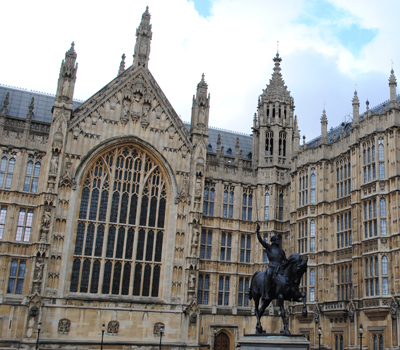
The eight surviving conspirators went on trial at Westminster Hall – still part of the Houses of Parliament complex today; the end of the hall is visible in the above picture – in late January 1606 and were all condemned to death for treason.

Four of them were executed on 30th January in St Paul’s Churchyard outside St Paul’s Cathedral while the remaining four including Fawkes were executed the next day outside Westminster Hall in Old Palace Yard. The heads of Catesby and Thomas Percy, both of whom had been killed during a shoot-out in Staffordshire, were set up outside the Houses of Parliament.

Arrests – and in some cases executions – of others believed to be associated with the plot continued in the following months.

Another place of note in the story of the Gunpowder Plot is Syon Park in the city’s west, now the London home of the Duke of Northumberland. The aforementioned Thomas Percy was a cousin of the then Earl of Northumberland, Henry Percy, and apparently dined with the Catholic earl at the house on the night of 4th November, before the plot was uncovered.

That association subsequently led to the earl’s arrest and he was confined to the Tower for the next 15 years on the order of the king.

King James I’s London – 6. The Queen’s House, Greenwich

Long an admired landmark of Greenwich, the origins of the Queen’s House go back to the reign of King James I.

It was the Queen, Anne of Denmark, who commissioned the building of The Queen’s House in 1616 and gave it the name by which it is still known. Sadly, however, she died before it was completed.

King James I was said to have been a frequent visitor to the Tudor Palace of Greenwich (the building had earlier been known as the Palace of Placentia and was the birthplace of King Henry VIII in 1491).

King James  is traditionally said to have awarded the Manor of Greenwich to Queen Anne as an apology after he had publicly sworn at her when she had accidentally shot one of his favorite hunting dogs.

In 1616, Queen Anne decided to build a new property on the site as both a private retreat and a place where she could entertain and it was to the rising star Inigo Jones that she turned to for the design (in recognition of his growing status, he was appointed Surveyor of the King’s Works the following year).

The house was Jones’ most important job to date and the design he came up – based on a H with the two sides joined by a bridge over the Greenwich to Woolwich road – with is said to be the first Classical building in England.

Among the original features which survive to this day are the striking black and white geometrically patterned marble floor of the Great Hall (the room having been designed as a perfect cube), the painted ceiling of the Queen’s Presence Chamber and the iron balustrade the Tulip Stairs – said to be the first “geometric self-supporting spiral stair in Britain”.

Queen Anne became ill in 1618 and died the following year without seeing the end result of her commission. The work subsequently was shelved and only restarted (and completed in 1638) after King Charles I gave it to his wife, Queen Henrietta Maria.

She only had possession for a short time before Parliamentary forces seized it during the Civil War. After the Restoration, the Queen’s House was returned briefly to her by her son King Charles II (it was at this time that the original H-shape of the house was altered to a square) before part of it as later used as studio for painters and then as grace and favor apartments.

With the Old Royal Naval College now occupying the surrounding site, in 1805, King George III gave the property to the Royal Naval Asylum – a charity caring for the orphan children of seamen – and it later became part of the Royal Hospital School.

The National Maritime Museum took possession in 1934 and the building now houses the National Martime Museum’s collection of fine art. As an interesting aside, there have been several reported sightings of ghosts in the house, the latest as recently as 2002.

WHERE: The Queen’s House, National Maritime Museum, Greenwich (nearest DLR station is Cutty Sark); WHEN: 10am to 5pm daily (check website for closures); COST: Free; WEBSITE: www.nmm.ac.uk/places/queens-house

King James I’s London – 5. Holland House

A Jacobean mansion located in Kensington’s Holland Park, Holland House was first built in 1605 for Sir Walter Cope, Chancellor of the Exchequer for King James I. 

Sir Walter apparently entertained the king and his wife, Queen Anne of Denmark, at the property – then named Cope Castle – on numerous occasions at the property and reportedly hosted the king the night after his son, Henry Frederick, the Prince of Wales, died in 1612.

Its name came with a later owner – the ill-fated Henry Rich, Cope’s son-in-law, who was made the 1st Earl of Holland in 1624 and was later executed for his role in supporting the Royalist cause during the Civil War during which the house was occupied by parliamentary troops.

The home was later used by various family members – among luminaries associated with the property are the essayist Joseph Addison who died there in 1719 as well as, in later years, the likes of Lord Byron, Benjamin Disraeli, Charles Dickens and Sir Walter Scott, all of whom visited the property during the property’s golden age in the 19th century when it was an important social gathering place.

The house was largely destroyed in a bombing raid in September 1940 and passed into ownership of the local authority. A youth hostel is now housed inside the restored east wing of the building while other buildings are used for a restaurant and function centre – all set within the 22 hectare (55 acre) Holland Park. Some of the ruins provide a backdrop for open-air theatre performances and concerts in summer.

WHERE: Holland Park (nearest tube stations are Holland Park, Kensington High Street and Notting Hill); WHEN: 7.30am to 30 minutes before dusk (check signs by entrance); COST: Park entrance is free (house is not open to the public); WEBSITE: www.rbkc.gov.uk/leisureandlibraries/parksandgardens/yourlocalpark/hollandpark.aspx

King James I’s London – 4. Charterhouse

The Charterhouse School was founded in 1611 – the seventh year of King James I’s reign – on the site of a former Carthusian monastery in Smithfield.

It owes its creation to Thomas Sutton (1532-1611) who bought the site – which then contained a Tudor mansion – from Thomas Howard, Earl of Suffolk, in 1611, the year of Sutton’s death.

A Yorkshireman, Sutton (who is buried in the chapel in Charterhouse) is said to have been the “wealthiest commoner in England” at the time, having made a fortune after discovering coal. He used his resources to endow a school and an almshouse on the site.

Among the school’s alumni were John Wesley, founder of the Methodist Church, and novelist William Makepeace Thackeray.

The school – which is this year celebrating its 400th anniversary – moved to Godalming in Surrey in 1872 and the site was subequently occupied by the Merchant Taylor’s School while the almhouse continued to operate on the western part of the land (it still does today under the name Sutton’s Hospital in Charterhouse).

The school later became the medical college of the nearby St Bartholomew’s Hospital and is now occupied by Barts and The London School of Medicine and Dentistry.

For more on the Charterhouse, see www.thecharterhouse.org (tours run on Wednesday afternoons at 2.15pm from April until August and cost £10 per person). For more on the Charterhouse School, see www.charterhouse.org.uk.

King James I’s London – 3. Golf on Blackheath

When King James I came south to take up the throne England, he is known to have brought that peculiarly Scottish game of golf with him and it is believed that it was at Blackheath, above the then Royal Palace of Placentia in Greenwich, that his courtiers first played the game.

According to the Royal Blackheath Golf Club, now located some way to the south of Blackheath in Eltham (the club moved there is 1923), documentary evidence shows the earliest players included James I’s son Henry Frederick, Prince of Wales, who is known to have gone golfing in 1606. The club itself notes that while it is generally accepted it was established in 1608, no documentary evidence to support this has yet been unearthed (records prior to 1787 are missing).

The first course at Blackheath – which has played a significant role in several events including as a rallying point during the Peasant’s Revolt of 1381 –  apparently consisted of five holes, each of which was played three times.

King James I’s London – 2. St James’s Park

Although royal connections with St James’s Park, the oldest royal park in London, go back to the time of King Henry VIII – it was he who first purchased the marshy watermeadow in 1532 with the idea of creating another of his many deer parks, it was on the accession of King James I that orders were given for the swamp to be drained and landscaped.

The landscape features included a large pool known as Rosamond’s Pond at the west end and, at the east end, a collection of waterways and islands used to attract birds that could then stock the royal larder. There was also a flower garden next to St James’s Palace (this had been built by King Henry VIII).

Among the other uses King James I had for the park were as a site to keep the royal menagerie which included exotic animals like crocodiles and camels. There were also bird aviaries placed along what is now appropriately named Birdcage Walk.

The layout of the park became more formal during the later reign of King Charles II who had been inspired by what he’d seen while in exile in France.

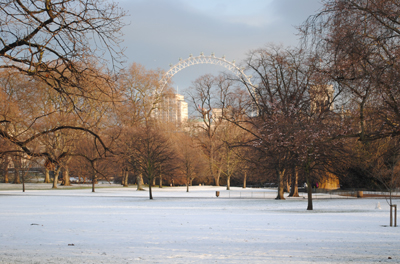
PICTURE: Looking across St James’s Park toward Whitehall in the snow.

WHERE: St James’s Park (nearest tube station is St James’s Park); WHEN: 5am to midnight daily; COST: Free entry; WEBSITE: www.royalparks.gov.uk/St-Jamess-Park.aspx

King James I’s London – The Banqueting House

This year marks 400 years since the creation of the King James Bible (it was completed in 1611). So, in a new special Wednesday series, we’re taking a look at London during the reign of King James I (he’s the one who commissioned the Bible). First up in our list of some of the key sites from his reign in 1603 to 1625, is the Banqueting House in Whitehall.

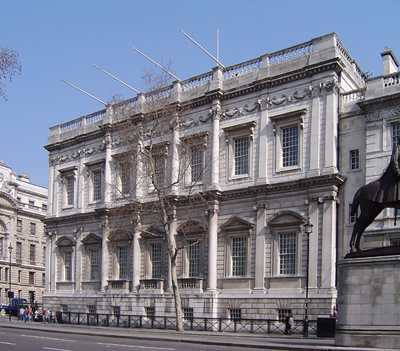
All that’s left of the Palace of Whitehall after a fire destroyed the rest in 1698, the Banqueting House was completed towards the end of King James I’s reign in 1622. In a sharp break from the fiddly Elizabethan architecture found in the remainder of the palace, the Banqueting House was the first building in central London which paid homage to the plainer Palladian style, brought back from Italy by ‘starchitect’ Inigo Jones.

The three floor Banqueting House replaced an earlier banqueting house which, funnily enough, had been destroyed by fire only a few years earlier. The new building was built to host royal ceremonies such as the reception of ambassadors and, most importantly, performances of court masques, which at the time were growing in sophistication and were being designed to communicate to audiences messages about the Stuart concept of kingship.

The building is centred on a “double cube” room  – a hall built so that its length is exactly double its width and height. The great chamber also features a balcony believed to have been created not for ministrels but as a space for an audience to watch the proceedings going on below.

It should be noted that the massive ceiling paintings were added after King James I’s death – it was his ill-fated son, King Charles I, who commissioned Flemish artist Peter Paul Rubens to paint them around 1630 (they were in place by March, 1636). It was, incidentally, from one of the windows in the Banqueting House that King Charles I stepped out onto a scaffold and had his head cut off – although that was in 1649, long after the era we’re focusing on here.

Inigo Jones and Ben Jonson’s Masque of Augurs was the first masque performed here in 1622, even before the building was complete. The last was Sir William Davenant’s The Temple of Love in 1635 after which the masques were stopped, apparently because the torches typically used to illuminate them would cause smoke damage to the paintings now on the ceiling.

WHERE: The Banqueting House, Whitehall (nearest tube station is Westminster); WHEN: 10am to 5pm, Monday to Saturday (check website for closing dates as the hall is used for functions) ;  COST: £5 an adult/£4 concessions/children under 16 free; WEBSITE: www.hrp.org.uk/BanquetingHouse/

PICTURE: Wikipedia

Lost London – Winchester Palace

This week we look at another “lost” palace of London but this time it’s not one built primarily for kings and queens. Rather we’re taking a look at the former Thameside home of the Bishops of Winchester.

Located in Southwark, Winchester Palace (also known as Winchester House) was built in the 12th century as the London residence of the bishop, a major landowner in the area.

The palace’s hall was extravagantly decorated and is known to have played host to royalty including King James I of Scotland and Joan Beaufort whose wedding feast was held there in 1424. It’s also suggested that King Henry VIII may have met wife number five, Catherine Howard, there.

The remainder of the palace was arranged around two courtyards and as well as buildings including its own prison and brewhouse, it also boasted a tennis court, bowling alley and pleasure gardens. It was used up until the Civil War – during which it served as a prison – before, in a growing state of deterioration, being let out for tenements and warehouses. Much of what remained was destroyed by fire in 1814.

Today all that remains above ground is a wall which stood at the west end of the great hall, mostly dating for the 14th century. Now in the care of English Heritage, it features a magnificent (albeit glassless) rose window, 13 feet in diameter, and three doors, believed to have led to the buttery, pantry and kitchen.

The palace was located in what was known variously as the ‘Manor of Southwark’, the ‘Liberty of Winchester’ or the ‘Liberty of the Clink’ (the word ‘clink’ refers to the bishop’s notorious prison – more on this another time). This was an area of land under the direct jurisdiction of the Bishop of Winchester and outside the jurisdiction of the City of London and become particularly known for prostitution – the Bishop was granted the power to licence prostitutes in the 12th century – with the prostitutes referred to as “Winchester Geese”.

The current ruins were found during the area’s redevelopment in the 1980s. Remains of Roman buildings were also found underneath where the palace once stood.

WHERE: Clink Street, Southwark (nearest tube station is London Bridge); WHEN: Anytime; COST: Free; WEBSITE: www.english-heritage.org.uk/daysout/properties/winchester-palace/

Lost London – York Watergate

There’s several places along Victoria Embankment where it’s possible to see where the River Thames bank stood before the massive mid-19th century project to reclaim land. Not the least of them is located in the downstairs foyer to Somerset House, where looking through the glass floor, you can see the pebbles of the original riverbank.

Another is York Watergate, once the river entrance to the Duke of Buckingham’s London mansion, and now stranded some distance from the water in Victoria Embankment Gardens.

The mansion, known as York House, was originally located on the southside of the Strand. Originally built in the 13th century, it was later acquired by King Henry VIII and granted to the Archbishop of York, Nicholas Heath, in 1556 (hence its name). The house became the home of George Villiers, the first Duke of Buckingham and somewhat sycophantic favorite of King James I, in the early 1620s.

When the duke was stabbed to death in 1628, the property passed to his son, the second Duke of Buckingham (also George), who later sold it to a land developer. It was apparently as a condition of the sale that the streets there now include the duke’s full name – hence George Court, Villiers Street, Duke Street, the slightly ludicrous Of Alley, and Buckingham Street.

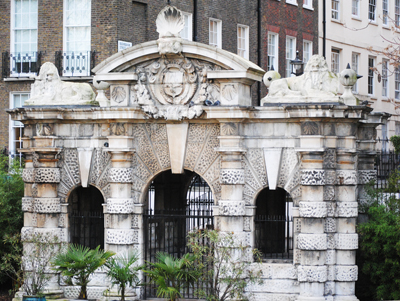
The impressive Italianate watergate, which stands below the junction of Buckingham Street and Watergate Walk just a short walk into the gardens from Embankment tube station, was designed by the irrepressible Inigo Jones and built in 1626. Though weathered, it still bears the coat of arms of the Duke of Buckingham on the front.

Lost London – Nonsuch Palace

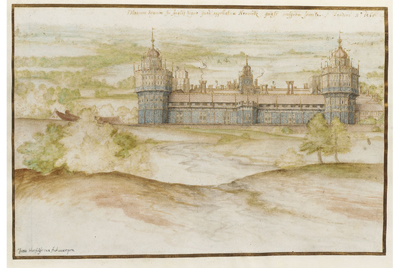
Built as a symbol of the triumphal reign of the Tudor dynasty (not to mention as a response to the French King Francis I’s palace Château de Chambord), Nonsuch Palace near Ewell in Surrey, now part of greater London, was the last palace constructed by King Henry VIII.

Construction on the palace started in 1538, the 30th year of Henry’s reign and only six months after the birth of Henry’s son and heir, later King Edward VI. The medieval village of Cuddington was demolished to make way for the new premises.

The multi-storied building was designed around an inner and an outer courtyard, each entered through a fortified gatehouse, with the royal apartments located in the latter. While plain on the outside, the inner courtyard interior was decorated with stucco reliefs depicting, among other things, Roman emperors, gods and goddesses and Henry VIII with his son Edward. To cap it off, there were two great octagonal towers built at either end.

While the bulk of of the work had been completed when Henry died in 1547, it is believed that the palace may still have been unfinished. In any case, it only remained a royal property for a short time before Queen Mary I sold it to Henry Fitzalan, the Earl of Arundel. It passed back into royal hands when the earl’s son-in-law, John Lumley, was forced to sell it back to Queen Elizabeth I to settle a debt. The queen was said to have stayed frequently at the palace.

King James I granted the palace to his wife, Queen Anne of Denmark, and it was also used by his son Henry, Prince of Wales. King Charles I also granted the palace to his wife, Queen Henrietta Maria, before it was sold off by Parliamentary commissioners after the Civil War. When King Charles II came to the throne, the palace was once again given to Henrietta Maria and then, when she died in 1669, to Barbara Villers, Countess of Castlemaine, a mistress of the king.

The building was demolished in 1682 with the materials and sale of the land used to pay off the countess’ gambling debts. While some parts of the building were carted off to be incorporated into others, no trace of the building remains above the ground but its former site, on the west side of what is now Nonsuch Park in Cheam, is marked by three granite bollards. A separate banqueting house and extensive gardens were also built near the site.

The building, which was only depicted a few works, can be confused with Nonsuch Mansion House, the oldest parts of which date from the 18th century, which still stands on the east side of the park and was probably built on the site of a former keeper’s lodge.

There are exhibitions on the palace in the Honeywood Museum (the heritage centre for the London Borough of Sutton) in Carshalton and in the Tudor house known as Whitehall in Cheam. The Epson and Ewell History Explorer website also have a trail you can follow which encompasses the former site of the palace.

PICTURE: Nonsuch Palace in an engraving by Joris Hoefnagel. Source: Wikipedia.

What’s in a name?…Whitehall

Running southward from Trafalgar Square towards the Houses of Parliament (the southern part of Whitehall is actually known as Parliament Street), Whitehall is lined with government buildings – everything from the Foreign Office to the Cabinet Office, from the Scotland and Wales Offices to the Ministry of Defence – and has become so identified with government that its very name is now used to mean just that. But where does the name come from?

Whitehall takes its name from the Palace of Whitehall which once stood on the site of the current street. The palace’s origins go back to the 14th century when a grand house known as York Place was built as the London residence of the Archbishops of York.

The building was gradually expanded over the years – work which continued when Thomas Wolsey was made Archbishop of York in 1513. When Cardinal Wolsey fell from favour in the late 1520s, however, King Henry VIII seized the house along with his other assests.

With the royal Palace of Westminster badly damaged in a fire in 1512, King Henry VIII had been staying at Lambeth Palace. He saw the newly acquired palace, renamed Whitehall, as a suitable new home and continued expansion works, constructing a series of recreationally-oriented buildings on the west side of what is now Whitehall including tennis courts, a cockfighting pit and a tiltyard for tournaments. By the time of Henry VIII’s death in 1547, the palace covered 23 acres and was the largest in Europe.

The palace continued to be used by subsequent monarchs until much of it was destroyed by fire in 1698. These days the only surviving part of the palace is the Banqueting House. Built by Inigo Jones for King James I, it was from a window on the first floor of this 1622 building that King Charles I stepped onto a scaffold where his head was cut off.

Apart from the Banqueting House, other significant sites in Whitehall including the Cenotaph, the focus of Remembrance Sunday commemorations. Downing Street, meanwhile, runs off the south-eastern end of Whitehall and behind gates which have blocked it off since 1989, stands the Prime Minister’s official residence.

A Moment in History – Guy Fawkes and the Gunpowder Plot

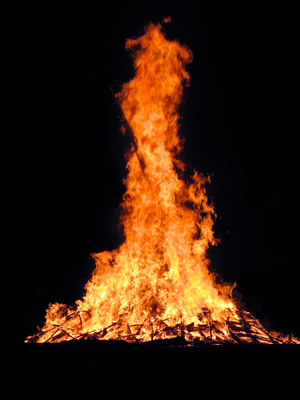
This week, on November 5th and surrounding days, people across England will mark Bonfire Night, an annual event which involves burning effigies of Guy Fawkes on top of a bonfire and setting off copious amounts of firecrackers.

So who was Guy Fawkes and what’s it all about?

Bonfire Night (the 5th November is also known as Guy Fawkes Day or Fireworks Night) has its origins in 1605 when a group of Catholics – including Guy or Guido Fawkes (the latter the Spanish form of his name) – attempted to blow up parliament in what became known as the Gunpowder Plot.

Born in York in 1570, Fawkes converted to Catholicism some time before selling his inheritance and heading to continental Europe where he fought as a mercenary for Catholic Spain against the Protestant Dutch in the Eighty Years War.

Having later travelled to Spain where he unsuccessfully tried to drum up support for a Catholic rebellion in England, he then returned to England where he was introduced to Robert Catesby, who planned to assassinate King James I and much of parliament and put a Catholic monarch back on the throne.

Having leased an undercroft beneath the House of Lords, the group of 13 plotters stockpiled gunpowder there with Fawkes put in charge of lighting it on 5th November before making his escape to the Continent. An anonymous letter, however, to Catholic Lord Monteagle warning him not to attend the State Opening of Parliament, led authorities to the site around midnight on 4th November and there they found Fawkes guarding the 36 barrels of gunpowder.

Arrested (he initially gave them the name of John Johnson), he subsequently confessed under torture and was sentenced to be hung, drawn and quartered – a sentence which he shortened by leaping off the scaffold and breaking his own neck before it could be carried out. The other plotters were also either killed, imprisoned or executed.

Bonfires were supposed to have been lit the night after the plot was foiled – 5th November – to celebrate the king’s safety and they have been ever since that date (in fact, James I passed an Act of Parliament making 5th November a day of thanksgiving – it remained in force until 1859).

Effigies of Fawkes followed (although some people substitute that of Fawkes with other people) as did the firecrackers. Some children carry effigies of Fawkes around asking for a “penny for the Guy” in an effort to apparently raise money for firecrackers. The poem which starts “Remember, remember, the fifth of November” is also associated with the night.

The night, which is now celebrated for all sorts of reasons – some suggest Guy Fawkes should be recognised as a hero for defending persecuted people against governments, is reportedly still observed in places as far afield as the US and New Zealand.

The cellar where Fawkes was arrested no longer exists – it was destroyed during a fire which consumed much of the medieval Houses of Parliament in 1834. But interestingly, the Yeoman of the Guard still do search the Houses of Parliament before each State Opening of Parliament. Two confessions signed by Fawkes are held at the National Archives.

PICTURE:  Agata Urbaniak (www.sxc.hu)

Where’s London’s oldest…pub?

There’s a number of contenders for this controversial title and a number of different ways of looking at the question. So, rather than take sides, we’ll just canvas a few of them.

Our initial contenders are:

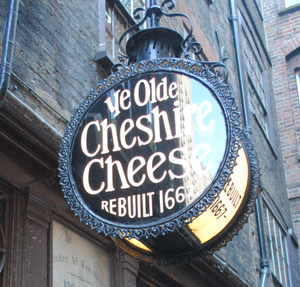
• Ye Olde Cheshire Cheese (145 Fleet Street, the City). Built in 1667 after the Great Fire of London, the current building replaced one previously on the site. The cellar is apparently 13th century and forms part of the remains of an old monastery on the site. Dr Samuel Johnson, who lived just around the corner while creating his famous dictionary, was a regular here and the pub is also said to have been frequented by writers Mark Twain, Alfred, Lord Tennyson, and Sir Arthur Conan Doyle, creator of Sherlock Holmes.

The Spaniards Inn (Spaniard’s Road, Hampstead). Located on the edge of Hampstead Heath, the Spaniard’s Inn dates from around 1585. The story goes that it was named after the Spanish ambassador to the court of James I who lived here for a time (another version says it was two Spanish brothers who first converted the building into a pub in the 1700s). Other historical figures associated with the inn include the highwayman Dick Turpin (some say he was born here while others say he used to wait here while watching for vulnerable coaches to pass by), the poets Byron and Keats and the painter Sir Joshua Reynolds – who apparently visited, and Charles Dickens who mentioned the inn in the Pickwick Papers (it also gets a mention in Bram Stoker’s Dracula).

• The Lamb and Flag (33 Rose Street, Covent Garden). The building has been occupied since Tudor times but it’s only been a licensed premises since 1623. The pub, certainly the oldest still standing in Covent Garden, was previously associated with prize fighting and was apparently once called the Bucket of Blood. The poet John Dryden is said to have been involved in a fight here.

The George Inn (77 Borough High Street, Borough). Located on the south side of London Bridge, the George Inn is a rare surviving galleried coaching inn. Now owned and leased by the National Trust, the current building dates from 1676 after the previous inn was destroyed by fire. The inn is mentioned in Dickens’ Little Dorrit and the author himself was apparently a regular visitor.

UPDATE: It seems we left one of the list which is certainly worth mentioning –  The Prospect of Whitby in Wapping (57 Wapping Wall). There’s been a tavern on this site on the bank of the Thames since 1520 and during its early days it became known the ‘Devil’s Tavern’ due to its rather dodgy clientele, alleged to have included smugglers, prostitutes and thieves as well as more famous people such as diarist Samuel Pepys, the notorious Judge Jeffreys, known as the ‘Hanging Judge’, and much later, Charles Dickens. Later destroyed by fire, it was rebuilt and given the new name, The Prospect of Whitby, after a ship that moored nearby. The building now incorporates a ship’s mast.