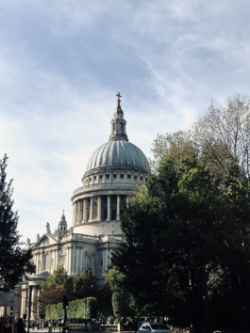
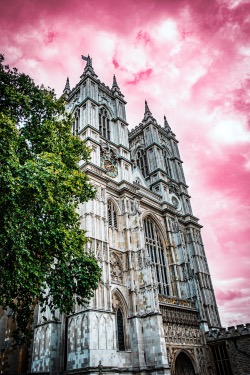
Four sites related to royal coronations in London – 3. Westminster Abbey…

Westminster Abbey has been centre-stage at coronations since at least the Norman Conquest.

William the Conqueror set the precedent for coronations at the abbey when he decided not to get crowned at Winchester Cathedral (where Edward the Confessor had been crowned) and instead chose to be crowned at the minster built by Edward the Confessor (there is some suggestion King Harold Godwinson, the last Saxon King, was crowned at Westminster Abbey before the Conquest but no documentary evidence exists for this).

William the Conqueror’s coronation was held on Christmas Day, 1066, and since then some 39 coronations have been carried out (King Charles III’s will be the 40th).

A view of the pulpit and to the right the Cosmati Pavement and behind it the High Altar inside Westminster Abbey. PICTURE: PJ photography/Shutterstock

Arrangements for the coronation ceremony are the responsibility of the Earl Marshal and the coronation committee but the abbey’s dean acts as a liaison with the sovereign and assists the Archbishop of Canterbury who is usually the bishop who crowns the monarch.

Since the late 14th century, the service has largely followed that laid down in the Liber Regalis (Royal Book), an illuminated manuscript created in around 1390.

Since 1308, the heart of the coronation service has taken place on the Cosmati Pavement, located just before the High Altar, in what is known as the “Coronation Theatre”.

Having processed into the abbey and been acclaimed or “recognised” as sovereign by those present, the monarch then makes promises to God and the people they rule in what is known as the Oath, before being presented with a Bible.

Then, seated in the Coronation Chair, the monarch is anointed with holy oil while a canopy is held over them to shield this most sacred part of the ceremony from the eyes of those gathered.

Still seated, the monarch is then invested with the coronation regalia, including the Sovereign’s Ring, the Sovereign’s Orb, the Sceptre with Cross and the Sceptre with Dove, before St Edward’s Crown is brought from the altar and placed on the monarch’s head (it’s only since that coronation of King James I in 1603 that both the anointing and the crowning are carried out while the monarch is seated on the Coronation Chair – before that, the chair was used for only one aspect of the ceremony).

The monarch then moves to a throne and receives the homage of the royal princes and senior peers. It’s at this point that the coronation of a Queen Consort typically takes place in a simpler form of the ceremony.

The monarch then retires into St Edward’s Chapel where they dress on a purple robe known as the Imperial State Robe or Robe of Estate as well as the Imperial State Crown before processing back out through the abbey.

Other elements of the coronation include music which since the Coronation of King George II has included the George Fredric Handel anthem, Zadok the Priest. The introit I was glad has been sung at every coronation since that of King Charles I in February, 1626.

The abbey is currently closed in preparation for the Coronation of King Charles III. It reopens on Monday, 8th May. The Coronation Theatre will remain in place for visitors to see until 13th May.

WHERE: Westminster Abbey, Westminster (nearest Tube station is Westminster or St James’s Park); WHEN: Open to tourists everyday except Sunday  (times vary so check the website); COST: £27 an adult/£24 for seniors (65+)/£12 a child (6-17 years); WEBSITE: www.westminster-abbey.org.

Moments in London’s history – Five (more) unusual facts about royal coronations past…

Following last week’s unusual facts, here’s five more…

The coronation of King William I (aka William the Conqueror) was marred by riots. The new King had chosen to be crowned in Westminster Abbey on Christmas Day, 1066, in a display of power (kings had in the past been crowned in Winchester). But when shouts of support for the new king were mistakenly thought to be an assassination attempt, Norman soldiers outside the abbey began setting fire to nearby houses, causing the abbey to fill with smoke and the congregation to flee while outside people rioted. William nonetheless ensured the service was completed.

Henry, the eldest son of King Henry II, had a coronation service at Westminster Abbey while his father was still monarch – the only instance of this occurring. While crowning the heir during the lifetime of the monarch was a more common practice in France, it was not so in England. But in an effort to settle the succession, King Henry II had Henry crowned on 14th June, 1170. Sadly Henry, known as Henry the Young King, did not live to succeed his father but died at just the age of 28 in 1183 after contracting dysentery while campaigning with his younger brother Richard (later King Richard I) against their father. King Henry II died on 6th July, 1189, and was succeeded by Richard.

There has only been one coronation in the abbey in which two monarchs were crowned at the same time. After King James II was deposed, William of Orange and his wife Mary were jointly invited to rule in what was known as the Glorious Revolution. They were crowned together at Westminster Abbey on 11th April, 1689. King William III sat in the Coronation Chair while another chair was specifically made for Queen Mary II, and, while the king was crowned using the traditional regalia, a special set of regalia was made for Mary.

Only two of King Henry VIII’s six wives had coronations. Catherine of Aragon was crowned alongside the King on 24th June, 1509 (she sat on a lower chair). Anne Boleyn, meanwhile, was crowned on 1st June, 1533. Interestingly, she was crowned with St Edward’s Crown which had up until then only been used to crown the monarch. Jane Seymour died before she could be crowned (there had been plague in London at the time she married Henry), while his marriage with Anne of Cleves was annulled before she could be crowned and Catherine Howard was executed before any coronation took place. By the time the king married Catherine Parr, he was ageing and ill and a coronation was unlikely to be high on his agenda.

King Henry VI is the youngest monarch to have been crowned at Westminster Abbey. He was aged just eight-years-old when he was crowned on 6th November, 1429, having become king at the age of just eight-months-old when his father, King Henry V, died on 31st August, 1422 (other children to have been crowned in the abbey include King Edward VI, who was just nine at his coronation). King Charles III – whose coronation will take place on 6th May – will be the oldest monarch to have been crowned at the abbey.

Correction: We’ve corrected the position of the two Catherines after the names were accidentally transposed.

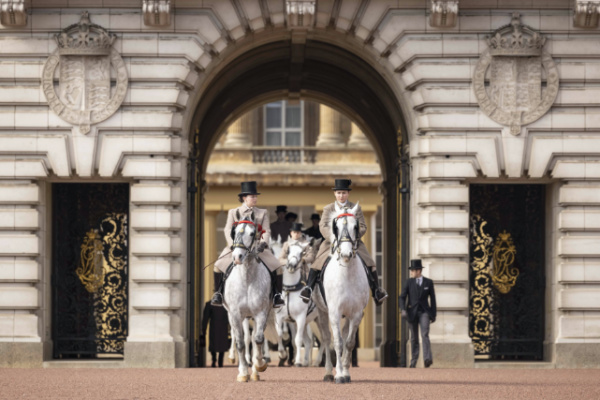
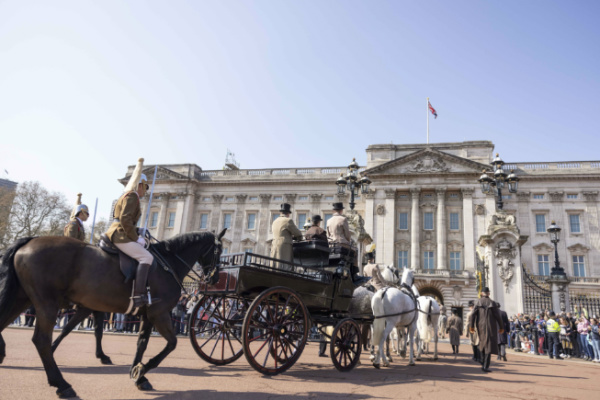
LondonLife – Rehearsing the Coronation Procession…

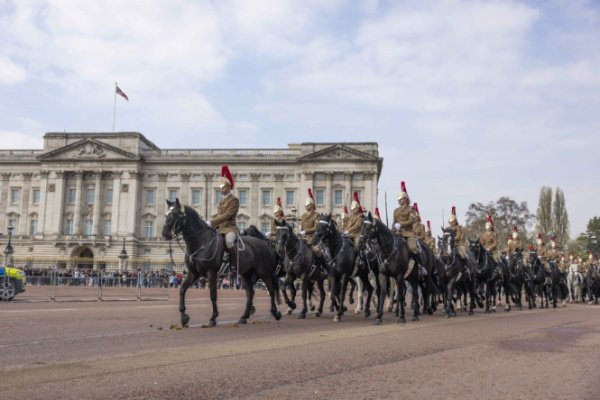
Members of the Household Mounted Regiments leaving Buckingham Palace in a rehearsal of the Coronation Procession. More than 6,000 men and women of the armed forces will participate in the coronation next month in the largest military ceremonial operation for 70 years. PICTURE: Sgt Donald C Todd/UK MOD © Crown copyright 2023.
Rehearsals at Buckingham Palace for King Charles III coronation. PICTURE: Sgt Donald C Todd/UK MOD © Crown copyright 2023.
Approaching Buckingham Palace as part of rehearsals for the coronation of King Charles III. PICTURE: Sgt Donald C Todd/UK MOD © Crown copyright 2023.
Members of the Household Mounted Regiments provided the escort for a number of royal coaches from Buckingham Palace up the Mall to ensure timings and pacing was correct for the coronation next month. PICTURE: Sgt Donald C Todd/UK MOD © Crown copyright 2023
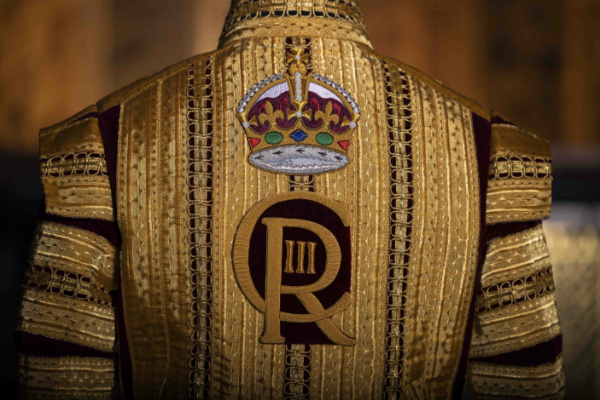
Image of drum major’s new State Ceremonial Uniform of the household Division, taken at The Royal Military Chapel (The Guards’ Chapel) in London. PICTURE: Sgt Donald C Todd/UK MOD © Crown copyright 2023

Moments in London’s history – Five unusual facts about royal coronations past…

Westminster Abbey, scene of coronations for more than 950 years. PICTURE: Benjamin Elliott/Unsplash.

Ahead of the coronation of King Charles III, here’s five unusual facts about coronations of bygone eras…

1. Queen Mary I did not use the Coronation Chair during her coronation on 1st October, 1553. An ardent Catholic, the Queen apparently believed the ancient seat had been tainted by her half-brother Edward VI’s Protestantism and so was crowned in a different chair. The chair is said to have been sent to her by the Pope but what became of it remains something of a mystery. The Queen also had a new, special supply of coronation oil for the anointing part of the ceremony made and sent to her by the Bishop of Arras for the same reason – that Edward had “polluted” the previous oil.

2. So many things went wrong at Queen Victoria’s coronation that a group of historians was established to examine the history of coronations and create a more structured ceremony. The mishaps during the five hour ceremony included the Queen having the Coronation Ring painfully forced into the wrong finger, the Bishop of Bath and Wells prematurely announcing that the ceremony had ended, and the elderly Lord John Rolle falling down a flight of steps when making his homage to the Queen (the Queen then graciously went down to him rather than have him attempt the steps again).

3. Two (or possibly three) English monarchs never had coronations. They include King Edward V – one of the “Princes in the Tower” who became king following the death of his father, Edward IV, on 9th April, 1483, but who then disappeared with his brother Richard after last being seen in the Tower of London (King Richard III was subsequently crowned King instead). They also include King Edward VIII who, having became king on 20th January, 1936, abdicated in December that year before his coronation was held (King George VI was subsequently crowned on the date set for Edward’s coronation – 12th May, 1937). And, depending on whether you accept her monarchy, Lady Jane Grey, who reigned for only nine days before she was executed.

4. King Edward VII’s coronation had to be delayed because of an emergency appendectomy operation. The ceremony, which had originally been scheduled for 26th June, 1902, took place some weeks later than planned on 9th August – and was then marred when the Archbishop of Canterbury, Frederick Temple, placed the crown back-to-front on the King’s head.

5. King George IV refused to let his wife Queen Caroline attend his coronation. Such was the acrimonious nature of their relationship that, having already been informed she was not welcome at the event, Caroline found the doors to Westminster Abbey barred to her when she attempted to enter as he was being crowned on 19th July, 1821. After repeated attempts to enter, she was eventuallys forced to leave without having gained entry.

Treasures of London – The Gold State Coach…

The Gold State Coach will feature in the Coronation Procession of King Charles III (though, interestingly, not for both journeys), it was announced earlier this week so we thought we’d take a more detailed look at it.

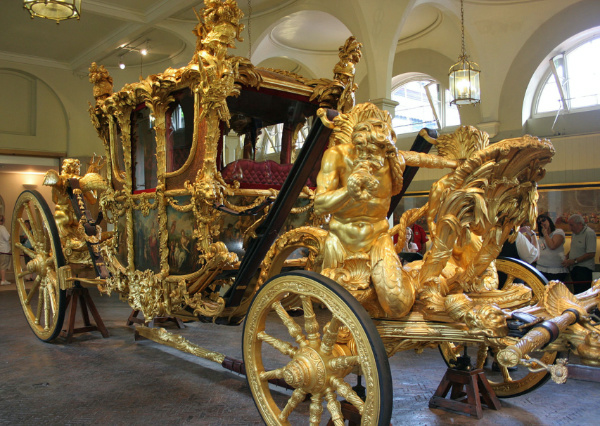
The Gold State Coach in the Royal Mews. PICTURE: Crochet.david (talk) (licensed under CC BY-SA 3.0)

The coach – which was last seen publicly during Queen Elizabeth II’s Platinum Jubilee in June, 2022 – was built for King George III to travel to the State Opening of Parliament in 1762.

Designed by Sir William Chambers, it was built in the London workshops of coach maker Samuel Butler and cost more than £7,500 at the time.

The coach weighs some four tonnes and is 28 foot long and 12 feet high. The coach is made of giltwood – a thin layer of gold leaf over wood – and features sculptures by Sir Joseph Wilton including three cherubs on the roof (representing England, Ireland and Scotland) and four tritons (a display of imperial power) above the wheels. The coach is also decorated with painted panels depicting Roman gods and goddesses by artist Giovanni Battista Ciprian.

Inside the coach is lined with velvet and satin.

The coach is pulled by a team of eight horses wearing a Red Morocco leather harness. At the coronation it will be pulled by Windsor Greys and due to its age and weight, will only move at walking pace.

The coach has been used in every coronation since that of King William IV and was also used for the State Opening of Parliament by Kings George III, George IV and William IV as well as Queen Victoria (up until Prince Albert’s death).

The coach is, however, not said to be the most comfortable ride – Queen Elizabeth II is known to have said so while King William IV described travelling in the coach as like being on a ship “in a rough sea”. So it will only be used for the return, post-Coronation, journey from Westminster Abbey to Buckingham Palace.

For the outward journey – from Buckingham Palace to Westminster Abbey – the King and Queen Consort Camilla will travel in the more comfortable – and Australian-made – Diamond Jubilee State Coach (unlike the Gold State Coach, it comes with air-conditioning, modern suspension and electric windows).

Both coaches are usually housed in the Royal Mews at Buckingham Palace.

On Coronation Day, the Gold State Coach will transport the newly crowned King and Queen Consort on a shorter route than that of Queen Elizabeth II on her Coronation Day – just 1.3 miles compared to the late Queen’s five mile route back to the palace. Leaving Westminster Abbey, it will travel down Whitehall and pass under Admiralty Arch before travelling down The Mall to Buckingham Palace.

WHERE: The Royal Mews, Buckingham Palace (nearest Tube stations are Victoria, Green Park, St James’s Park and Hyde Park Corner); WHEN: 10am to 5pm (check website for closure dates around the coronation); COST: £15 adults/£10 young person (aged 18-24)/£9 child (aged five to 17); WEBSITE: www.rct.uk/visit/the-royal-mews-buckingham-palace

This Week in London – Coronations at Westminster Abbey; tulips at Hampton Court; St Bartholomew at The National Gallery; and, Food Season at the British Library…

A new exhibition exploring the 1,000-year history of coronations at Westminster Abbey has opened in the abbey’s medieval chapter house. The exhibition, which has opened ahead of the coronation of King Charles III on 6th May, draws on historic illustrations and archive photography to explore the elements of the coronation service including the oath-taking, anointing, investing and crowning and takes a closer look any some of key artefacts present in the ceremony including the Coronation Chair. The exhibition, which is free with admission to the abbey and which runs until the end of September, is part of a season of events celebrating the coronation including themed late evenings, family activities and special afternoon teas at the Cellarium Café. Meanwhile, the abbey has also announced that visitors will be able to view the ‘Coronation Theatre’ – the special area which will be built for the historic occasion, from the Abbey’s North and South Transepts – following the coronation. Tickets for the special viewing – which will include the chance to see key elements from the coronation service including the Coronation Chair still in position on the Cosmati Pavement – can be purchased for timed slots between 8th and 13th May. For more on the abbey’s events surrounding the coronation, see www.westminster-abbey.org/events.

Tulips at Hampton Court Palace in 2021. PICTURE: Derek Winterburn (licensed under CC BY-ND 2.0)

Hampton Court Palace bursts into colour from Friday with its annual Tulip Festival. More than 110,000 bulbs have been planted to creat dramatic displays in the formal gardens and cobbled courtyards, among them a selection of heirloom bulbs on display in the Lower Orangery Garden which presents visitors with the chance to see tulips as they would have looked during the time of King William III and Queen Mary II, soon after the flowers were first introduced to Britain. Thanks to a special relationship with Netherlands-based Hortus Bulborum, the bulbs on display include Sylvestris (1595) and Rubella Broken (1700) as well as the Orange King (1903) and Queen of the Night (1940). Other highlights of the festival include 3,000 wine-toned tulips, including the merlot variety, flowing down from the steps and parapet of the Wine Fountain, as well as a floral fantasy in the palace’s courtyards in which tulips such as Raspberry Ripple, Apricot Emperor and Purple Prince flow out of wheelbarrows, barrels and a horse cart, and a free-style tulip planting in the Kitchen Garden inspired by Van Gogh’s 1883 painting, Bulb Fields. Runs until 1st May. Admission charge applies. For more, see https://www.hrp.org.uk/hampton-court-palace/whats-on/tulip-festival/.

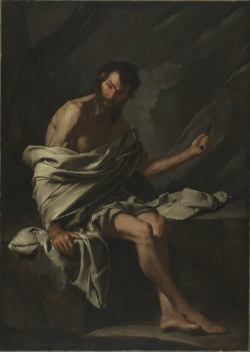
Bernardo Cavallino (1616 ‑ 1656?), Saint Bartholomew (about 1640-1645), oil on canvas H x W: 176 x 125.5 cm; The National Gallery, London. Bought with the support of the American Friends of the National Gallery, 2023
PICTURE: © The National Gallery, London

The recently acquired Bernardo Cavallino work, Saint Bartholomew has gone on show at The National Gallery. The painting, which dates from 1640-45 and which was last exhibited at The Metropolitan Museum of Art in New York in 1993, is being displayed alongside other 17th century works by artists such as Caravaggio, Artemisia and Orazio Gentileschi, Guercino, Reni and Ribera in the Hans and Julia Rausing Room (Room 32). The National Gallery has one other work by Cavallino – Christ driving the Traders from the Temple – but his depiction of Saint Bartholomew is considered one of his most splendid works. Admission is free. For more, see nationalgallery.org.uk.

Featuring everything from a celebration of African Caribbean takeaways to a “deep-dive” into the issues surrounding food production and access, Food Season kicks off at the British Library Monday. Highlights include a discussion of the sandwich by food writers Nigella Lawson, Jonathan Nunn and Rebecca May Johnson, a day-long celebration of African Caribbean cuisine featuring chefs and broadcasters Jimi Famurewa, Fatmata Binta and Andi Oliver, and, an exploration of the big challenges in food, land use and food production featuring author Henry Dimbleby alongside Dr Tara Garnett, Nick Saltmarsh, Abby Allen and Dimitri Houtart. Runs until 7th June. Admission charges apply. For the full programme, see www.bl.uk/events/food-season.

Send all items to exploringlondon@gmail.com
Four sites related to royal coronations in London – 1. The Jewel House…

In the lead-up to the coronation of King Charles III and Queen Consort Camilla on 6th May, we’re taking a look at sites in London which have played an important role in coronations past (and, mostly, in this coronation as well).

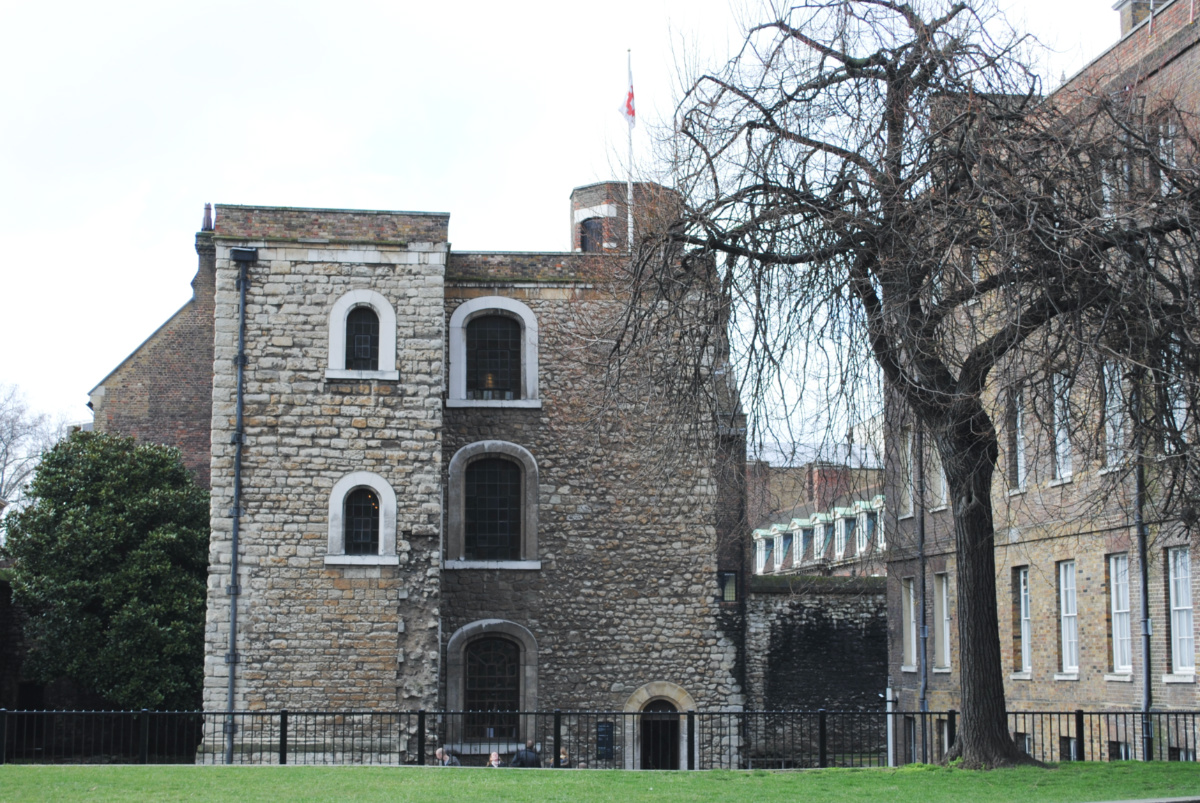
First up, it’s the Tower of London’s Jewel House which is linked to the coronation through the role it plays in housing the Crown Jewels and, more specifically, the Coronation Regalia.

The entrance to the Jewel House in the Waterloo Block. PICTURE: Dave Campbell (licensed under CC BY-NC-ND 2.0)

The centrepiece of the Crown Jewels is St Edward’s Crown, with which King Charles will be crowned in Westminster Abbey.

The crown, which has already been removed from the Tower of London so it could be resized for the occasion, is made from 22 carat gold and adorned with some 444 precious and semi-precious gems. Named for St Edward the Confessor, it dates from 1661 when it was made for the coronation of King Charles II and replaces an earlier version melted down after Parliament abolished the monarchy in 1649.

The crown was subsequently used in 1689 in the coronation of joint monarchs King William III and Queen Mary II and then not used again until 1911 when as used to crown King George V. It was also used to crown King George VI and Queen Elizabeth II in 1953.

St Edward’s Crown is not the only crown that will be used in the coronation ceremony – the King will also wear the Imperial State Crown at the end of the service.

Made by Garrard and Company for the coronation of King George VI in 1937 (replacing a crown made for Queen Victoria in 1838), it features the Black Prince’s Ruby in the front – said to have been a gift to Edward, the Black Prince, in 1357 from the King of Castile.

Further gems in the crown include the Stuart Sapphire, the Cullinan II Diamond and St Edward’s Sapphire, said to have been worn in a ring by St Edward the Confessor and found in his tomb in 1163.

Among other items which will be used in the coronation are the Sovereign’s Sceptre with Cross, the Sovereign’s Orb, and the Coronation Spoon.

The sceptre was made for King Charles II and now features the world’s largest diamond, the Cullinan Diamond, which was added to it in 1911. The orb was also made for King Charles II’s coronation and is topped with a cross.

The spoon, meanwhile, is one of the oldest items in the Crown Jewels, dating from the 12th century. It is used for anointing the new sovereign with holy oil – which comes from the Church of the Holy Sepulchre in Jerusalem – during the ceremony. It survived the abolition of the monarchy after it was purchased by a member of King Charles I’s wardrobe and later returned to King Charles II after the monarchy. The oil is held in a golden vessel known as an ampulla which is shaped like an eagle.

Other items to be used in the coronation are a series of swords – among them the Sword of State, the Sword of Temporal Justice, the Sword of Spiritual Justice, and the Sword of Mercy (this has its tip blunted to represent the Sovereign’s mercy).

The regalia was housed at Westminster Abbey until 1649. They have been kept at the Tower of London since the Restoration (even surviving a theft attempt by Colonel Thomas Blood and accomplices in 1671).

The Crown Jewels, which are now held under armed guard, have been housed in several different locations during their time at the Tower of London including in the Martin Tower and the Wakefield Tower. They were moved into a subterranean vault in the western end of the Waterloo Block (formerly the Waterloo Barracks), now known as the Jewel House (and not to be confused with The Jewel Tower in Westminster), in 1967.

A new Jewel House was opened by Queen Elizabeth II on the ground floor of the former barracks in 1994. The exhibit was revamped in 2012 and following King Charles III’s coronation, the display is again being transformed with a new exhibition exploring the origins of some of the objects for the first time.

WHERE: The Jewel House, Tower of London (nearest Tube station Tower Hill); WHEN: 9am to 4.30pm (last admission), Tuesday to Saturday, 10am to 4.30pm (last admission) Sunday to Monday; COST: £29.90 adults; £14.90 children 5 to 15; £24 concessions (family tickets available; discounts for online purchases/memberships); WEBSITE: https://www.hrp.org.uk/tower-of-london/whats-on/the-crown-jewels/.

10 historic London homes that are now museums…10. Flamsteed House…

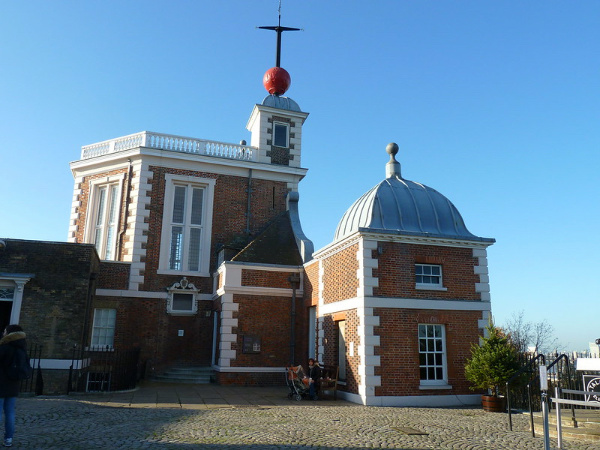
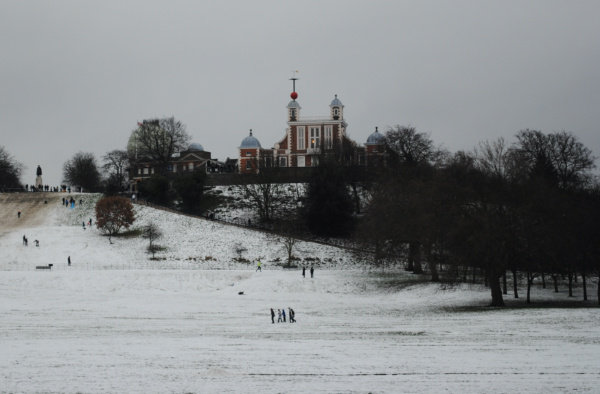
Flamsteed House from Greenwich Park. PICTURE: David Adams

Located at the heart of what is now known as the Old Royal Observatory in Greenwich is a residence, built for the first Astronomer Royal John Flamsteed and subsequently used by his successors to the post.

The property was built at the behest of King Charles II after he appointed Flamsteed to the post in March, 1675. Flamsteed, who initially worked out of the Queen’s House below, laid the foundation stone for the new property on 16th August that year.

Designed by Sir Christopher Wren and built under the supervision of Robert Hooke, the building was constructed on the foundations of the previous building on the site – known variously as Duke Humphrey’s Tower or Greenwich Castle) – and used bricks from spare stock at Tilbury Fort, and wood, iron and lead from a demolished gatehouse at the Tower of London.

Costing some £520, the three story property featured a large hall and parlour on the ground floor, a bedroom and study for the then-single Flamsteed, a basement kitchen and “astronomer rooms” while on the floor above was a single large, octagonal room, known initially as the “Great Room” and later as the “Octagon. Room”, featuring a series of tall windows through which Flamstead could conduct his observations of the heavens.

A telescope was mounted on the roof and two summerhouses, one of which contained Flamsteed’s camera obscura, were built on either side. Other buildings on the site during Flamsteed’s time included the adjoining Quadrant House and Sextant House (so-named for the equipment they housed).

The original property was extended several times and a series of additional buildings were also added to the site including what is now known as the Meridian Building (which incorporates not only Flamsteed’s Sextant House and Quadrant House but subsequent additions including apartments for an assistant, fireproof record rooms and domes to house equipment including the Telescope Dome.

Flamsteed House. PICTURE: givingnot@rocketmail.com (licensed under CC BY-NC 2.0)

In 1946, the scientific work of the observatory was relocated to Herstmonceux in Sussex and the complex came under the management of the National Maritime Museum. In 1960, Flamsteed House was reopened as part of the museum; other buildings later followed suit.

The site was renovated in the early 1990s and reopened to the public as a museum in 1993.

These days Flamsteed House hosts displays about its construction as well as what life was like for those who lived there. Wren’s Octagon Room, which houses a collection of timepieces and astronomical instruments, remains a highlight.

Flamsteed House is now topped by a time-ball which was installed in 1919 (replacing an earlier one which was installed in 1833) and drops each day at 1pm.

WHERE: Flamsteed House, Royal Observatory Greenwich (nearest stations are Cutty Sark DLR and Greenwich and Maze Hill Stations); WHEN: 10am to 5pm daily; COST: £16 adults/£10 under 25s/students/£8 children; WEBSITE: www.rmg.co.uk/royal-observatory/attractions/flamsteed-house.

A Moment in London’s History – The coronation of King Henry V…

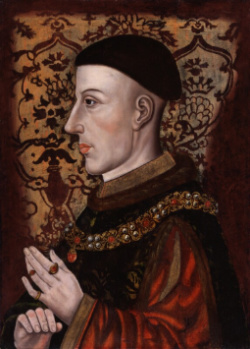
King Henry V by unknown artist
oil on panel, late 16th or early 17th century (NPG 545) © National Portrait Gallery, London

This year marks the 610th anniversary of the coronation of King Henry V and since we’re gearing up for another coronation, we thought it a good time to take a look back.

King Henry V, then 26-years-old, became king following the death of his father – King Henry IV – on 20th March, 1413. The coronation took place early the next month on 9th April at Westminster Abbey.

It just so happened there was a snowstorm that day, which some took to mean there were hard times ahead but which his supporters apparently saw as a good omen, the white-out a symbol of Henry’s holiness.

The ceremony in Westminster Abbey was followed by a feast in Westminster Hall.

It is said to have featured sugar sculptures of antelopes and eagles with illuminated texts extolling the virtues of the new king hanging from their mouths.

Guests were served by servants on horseback and, as was tradition, the King’s Champion rode into the hall and issued a challenge (which nobody took up).

There are two carvings depicting his coronation on his elaborate chantry chapel in the abbey.

The coronation hailed the start of Henry V’s short, nine-year reign, the most recalled aspect of which is his famous victory at the Battle of Agincourt in October, 1415.

10 historic London homes that are now museums…8. Queen Charlotte’s Cottage…

PICTURE: Maureen Barlin (licensed under CC BY-NC-ND 2.0)

A confession to begin – this property, located in Kew Gardens, was never actually a residence but instead was built as a country day retreat for the family of King George III at the behest of his wife Queen Charlotte.

The cottage, which features a thatched roof and half-timbered walls and dates from around 1772, is known as a cottage orné (decorated cottage).

Located in what’s described as “one of London’s finest bluebell woods” with parts of it more than 300-years-old, it was designed to be a place where the Queen and her growing family (the King and Queen would have 15 children) could enjoy picnics or take tea while on walks through the gardens during their summers at Kew.

Inside, the ground floor of the premises features two halls – one for the royal family on the left and another for servants on the right, each of which features a staircase leading to the first floor. In the centre of the ground floor is the Print Room, a small room hung with more than 150 satirical engravings including works by the famed James Gillray. There’s also a small kitchen.

On the upper floor is the Picnic Room which features two expansive recycled 17th century windows looking out to the garden and wall and roof paintings featuring trailing nasturtiums and convolvulus to give the appearance of a bower. The latter are thought to have been the work of Princess Elizabeth, generally viewed as the most artistic of King George III’s children.

Behind the cottage was a large paddock which was used to contain a growing menagerie of animals, no doubt to the delight of the royal children. Initially the occupants were Tartarian pheasants and oriental cattle but later it also housed a now extinct quagga (an animal similar to a zebra) and some of the first kangaroos to arrive in Britain (these were bred by the early 19th century, there were up to 18 of them). In 1806, the gardener was instructed to turn the paddock into a flower garden.

King George III was apparently fond of the cottage but he was last at Kew in 1806. It was used in 1818 following the double wedding of his sons, the Duke of Clarence (who became King William IV) and Edward, the Duke of Kent (father of Queen Victoria).

Queen Victoria rarely visited the cottage but had it maintained by a housekeeper. In 1889, the Queen gave the cottage to the public to commemorate her Diamond Jubilee.

The Grade II* cottage is these days managed by Historic Royal Palaces.

WHERE: Queen Charlotte’s Cottage, the south-west corner of, Kew Gardens (nearest Tube station is Kew Gardens); WHEN: Cottage is open from 4th April from 11.30am to 3.30pm on weekends and bank holidays; COST: (entry to Kew Gardens) £21.50 adults/£10 students/children £5 (discounts apply for advance bookings); WEBSITE: www.kew.org.

Where’s London’s oldest…chair?

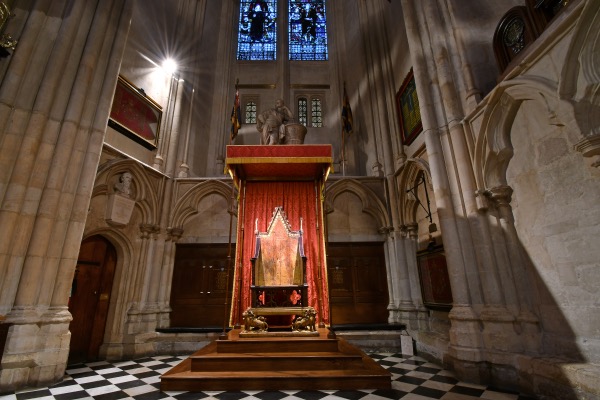
The Coronation Chair in Westminster Abbey PICTURE: Jim Dyson/Getty Images/Dean and Chapter of Westminster

The coronation of King Charles III is taking place in Westminster Abbey on 6th June and in preparation for that, the Coronation Chair is getting a makeover.

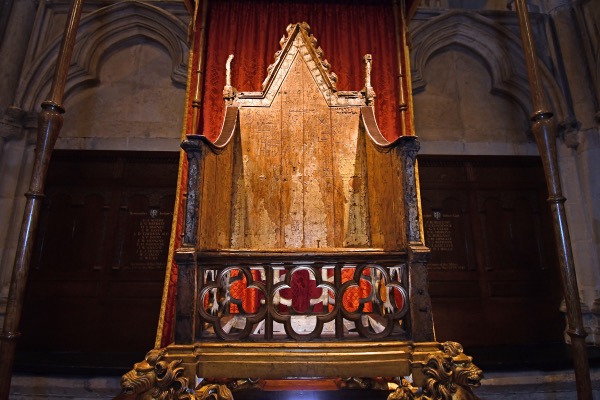
The six foot tall chair, which was made around 1300, is commonly referred to as the oldest piece of furniture in the UK which is still used for its original purpose and which is by a known maker.

The chair was constructed on the orders of King Edward I in 1300-1301 specifically to hold the Scone of Stone which he had brought south from Scotland several years before and which he had given into the care of the Abbot of Westminster.

Made of oak and painted by one Master Walter, the chair was decorated with patterns of birds, foliage and animals on a gilt background. On the seat back was painted the figure of a king, possibly King Edward I, with his feet resting on a lion. The chair, which would have had the appearance of being made of gold, would have also been decorated with coloured glass.

The space for the stone below the seat was originally fully enclosed and it’s believed the chair originally contained no seat with the King sitting on a cushion placed directly on the Stone of Scone.

The chair now rests on four gilt lions which were added in the 16th century (although those currently there are replacements made in 1727).

The Coronation Chair in Westminster Abbey PICTURE: Jim Dyson/Getty Images/Dean and Chapter of Westminster

While there is some debate over whether King Edward II was sitting in the chair when he was crowned in 1308, that has certainly been the case from the 1399 when King Henry IV was crowned while sitting on it. Twenty-six subsequent monarchs including everyone from King Henry VIII to Queen Elizabeth II followed suit (Oliver Cromwell, meanwhile, had the chair removed to Westminster Hall when installed there as Lord Protector).

The chair has been graffitied in earlier centuries thanks mostly to Westminster schoolboys and visitors. Among the most legible graffiti scrawled upon it is “P Abbott slept in this chair 5-6 July 1800”. It also suffered minor damage in a bomb attack in 1914 thought to have been carried out by Suffragettes (it didn’t suffer any damage in World War II thanks to its being removed to Gloucester Cathedral).

The Stone of Scone, which had been taken briefly back to Scotland by Scottish Nationalists in 1950, was formally returned to Scotland in 1996 where it can now be seen at Edinburgh Castle. It is being returned to London for the coronation.

The chair, which for centuries had been kept in the Chapel of St Edward the Confessor, was moved to the abbey’s ambulatory in 1998 and then again moved again in 2010, this time to a specially-built enclosure in St George’s Chapel, located at the west end of the nave, so it could undergo conservation work. The two year conservation program was completed in 2013.

The chair is currently undergoing cleaning and work to stabilise what’s left of the gilding ahead of the coronation.

Treasures of London – The Jewel Tower’s vaulted chamber…

The Jewel Tower which contains the ground floor vaulted chamber. PICTURE: David Adams

Located in the ground floor of Westminster’s three-storied Jewel Tower is a fine 14th-century ribbed vault, described as an “architectural masterpiece”.

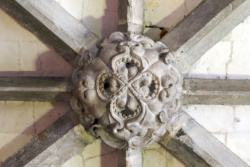
One of the ceiling bosses in the ground floor chamber. PICTURE: Daniel Stockman (licensed under CC BY-SA 2.0)

The room is believed to have been constructed, along with the rest of the building, in the 1360s to the designs of master mason Henry de Yevele.

Located in the south-west corner of Old Palace Yard, the tower was originally used as a personal treasure-house for King Edward III and was known as the King’s Privy Wardrobe. Later it was used to house government documents and in 1869 became the Weights and Measures Office.

It is one of few surviving buildings from the medieval Palace of Westminster (the rest having been destroyed in the fire of 1834).

The vaulted chamber incorporates tiercerons – ribs set between the transverse and diagonal ribs to form simple fans and also features a series of sculpted bosses.

Made in Reigate stone, these depict human and mythical animal heads, as well as intertwined pairs of eagles and swans and plant designs. It is believed the bosses were once whitened.

The west wall of the chamber features the remains of a fireplace while the main window reveal is medieval (although the window itself dates from the 18th century).

The property, which is under the care of English Heritage, is not to be confused with the Jewel House at the Tower of London.

WHERE: The Jewel Tower, Abingdon Street, Westminster, (nearest Tube stations are Westminster and St James’s Park); WHEN: 10am to 4pm on weekends; COST: £6 adults/£3.60 children (aged five to 17 years)/£5.30 concession; family tickets available; WEBSITE: www.english-heritage.org.uk/visit/places/jewel-tower/

This Week in London – The Van de Veldes at the Queen’s House; Young V&A to open in July; Roman pottery kiln to return to Highgate Wood; and, welcome to ‘Kyiv Road’…

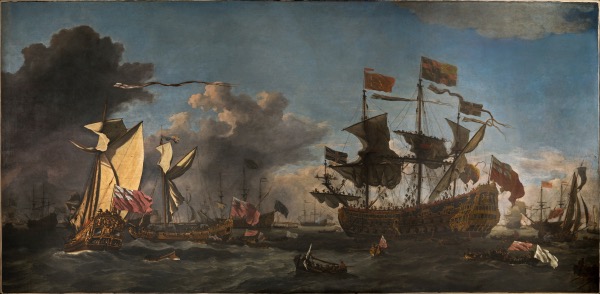
‘Royal visit to the fleet in the Thames Estuary, 6 June 1672’ by Willem Van De Velde The Younger © National Maritime Museum, London

The work of 17th century marine painters Willem van de Velde the Elder and Willem van de Velde the Younger is the subject of a new exhibition at the Queen’s House in Greenwich – the location of a studio King Charles II granted to them. The Van de Veldes: Greenwich, Art and the Sea features the newly conserved painting, A Royal Visit to the Fleet, which they worked on in their studio at the Queen’s House in the 1670s and which, at almost four metres across, was the largest seascape Van de Velde the Younger had painted to date (pictured after conservation above). Also on show is the The Burning of the Royal James at the Battle of Solebay, 28 May 1672, otherwise known as The Solebay Tapestry and originally one of six, along with a selection of some of the more than 1,400 drawings from the National Maritime Museum’s collection. The exhibition, which is free to visit, runs until 14th January, 2024. For more, see www.rmg.co.uk/van-de-velde.

• The Young V&A will open on 1st July following a three year transformation project, it was announced this week. Formerly known as the V&A Museum of Childhood, the Bethnal Green institution will display “remarkable and optimistic stories of children’s ingenuity” alongside 2,000 works from the V&A’s collection of art, design, and performance. Features will include an interactive Minecraft installation, murals by street artist Mark Malarko, tech solutions created for Raspberry Pi’s Coolest Projects, and, a display of portraits by photographer Rehan Jamil capturing young people expressing what creativity means to them and set alongside self-portraits by the likes of Chila Kumari Singh Burman, Quentin Blake, Kenneth Branagh, Dapo Adeola, and Linda McCartney. Also announced was the first exhibition at the new facility – Japan: Myths to Manga – which will open on 14th October. For more, see vam.ac.uk/young.

The most complete Roman pottery kiln ever found in Greater London is going on display in a visitor centre at Highgate Wood from September next year. The kiln, which was excavated from the wood in Haringey in the 1960s and 1970s, has been in storage beneath Bruce Castle Museum. But thanks to a £243,550 grant by The National Lottery Heritage Fund to charity Friends of Highgate Roman Kiln, it will be returned for public display. The kiln is said to be one of the best-preserved Roman pottery kilns found in the UK and is thought to be the last one built by Roman potters who worked in Highgate Wood between 50CE to 160CE to supply Londinium and south-east England with distinctive ‘Highgate Ware’ pottery. 

A small section of Bayswater Road has been renamed Kyiv Road to mark the first anniversary of the invasion of Ukraine by Russia. The new road name was installed last Friday on the road which runs from Palace Court to Ossington Street and is located not far from the Russian Embassy. Councillor Adam Hug, leader of Westminster City Council, said the request for the new name came from the Ukrainian community. “Westminster is home to Ukrainians displaced by the war, and our residents have opened their hearts and their doors to those fleeing Putin’s war machine,” he said in a statement. “As the centre of an international capital, it seemed to us entirely fitting that part of our City should carry a torch for the unbowed defenders of Ukraine. It’s a small stretch of road, but we want to show the people of Ukraine that their struggle has a visible place in our city.”

Send all items to exploringlondon@gmail.com.

This Week in London – Boleyn ring at Hampton Court; and, Status Quo at the Barbican…

© Historic Royal Palaces/3004593

A gold signet ring once believed to have belonged to the Tudor-era Boleyn family has gone on display at Hampton Court Palace. The ring, was discovered in a field near Shurland Hall on the Isle of Sheppey in Kent, the country home of one of Anne Boleyn’s cousins and a property she visited with King Henry VIII. It is engraved with with a bull’s head – which appears in the arms of the Boleyn family (a visual pun on the family name, which was often spelled as ‘Bullen’) – and arrayed with sunbeams and stars of white enamel as well as being decorated with icons of the Virgin and Child and St Catherine of Alexandria on its shoulders. Analysis concluded the ring was consistent with objects of the early Tudor era, leading historians to suggest that it may have belonged to either Thomas or George Boleyn – Anne Boleyn’s father and brother. The ring, which was purchased by Historic Royal Palaces with support from the Arts Council England/V&A Purchase Grant Fund, the Art Fund, the Meakins Family and John Harding, under the terms of the Treasure Act 1996, can be seen in the Great Hall. Included in general admission. For more, see www.hrp.org.uk/hampton-court-palace/.

One of the UK’s most successful rock bands, Status Quo, are the subject of a new exhibition at the Barbican Music Library. Celebrating Seven Decades of Status Quo is the first ever public exhibition on the band and features never-before-seen material including the original handwritten lyrics to Caroline and Down Down as well as tour posters, photographs and more than 40 of the bands key albums. The display is a collaboration between Paul and Yvonne Harvey, who ran the band’s official fan club, ‘From The Makers Of…’ (FTMO), and Status Quo fan and collector Andy Campbell. Status Quo was formed in 1962 and has since had more than 60 chart hits as well as opening the LIVE AID concert in Wembley in July, 1985, and receiving a Brit Award for Outstanding Contribution to Music in 1991. Runs until 22nd May. Admission is free. For more, see www.cityoflondon.gov.uk/services/libraries/barbican-music-library.

Send all items to exploringlondon@gmail.com

This Week in London – London painted large; Donatello at the V&A; and, the first King Charles III stamps…

The most extensive collection of large scale paintings of London ever seen opens at the City of London Corporation’s Guildhall Art Gallery on Friday. The Big City: London painted on a grand scale has at its heart a series of works by David Hepher which, on display in London for the first time, were given to the City by the artist in 2022. There’s also a four piece panel installation by John Bartlett and huge works by Frank O Salisbury and Terence Cuneo. The exhibition is open on a ‘pay what you can’ basis and runs until 23rd April. For more, see www.cityoflondon.gov.uk/thebigcity.

Donatello and Desiderio da Settignano, St. John the Baptist (Martelli Baptist), Museo Nazionale
del Bargello, Florence, courtesy of the Ministry of Culture. Photo: Bruno Bruchi.

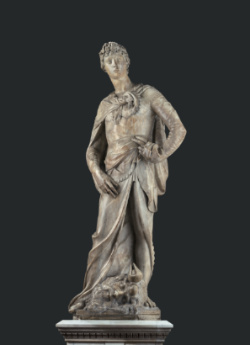
The first major exhibition to explore the work of Renaissance sculptor Donatello opens at The V&A on Saturday. Donatello: Sculpting the Renaissance features works never before on display in the UK including his early marble David and the bronze Attis-Amorino – both of which come from the Museo Nazionale del Bargello in Florence, as well as the reliquary bust of San Rossore from the Museo Nazionale di San Matteo, Pisa, and bronzes from the High Altar of the Basilica of St Anthony in Padua. And, for the first time, the V&A’s carved shallow relief of the Ascension with Christ giving the keys to St Peter will be displayed alongside the Madonna of the Clouds from the Museum of Fine Arts, Boston, and Desiderio da Settignano’s Panciatichi Madonna from the Museo Nazionale del Bargello. Among the 130 objects in the display are also works by Donatello’s contemporaries and followers. Admission charge applies. The display runs until 11th June. For more, see www.vam.ac.uk.

See the designs for the first Royal Mail stamp to feature King Charles III in a new exhibition at The Postal Museum. The King’s Stamp traces the story of definitive stamps and features stamps from the reigns of six monarchs. Along with the designs for the first definitive stamps featuring King Charles III, highlights include one of only two sheets of Edward VII ‘Tyrian Plum’ and original letters revealing the influence of past monarch’s on stamp designs as well as the chance to see your silhouette on a stamp. Runs until 3rd September. Admission charge applies. For more, see www.postalmuseum.org/event/the-kings-stamp/.

Send all items for inclusion to exploringlondon@gmail.com.

What’s in a name?…Shoe Lane…

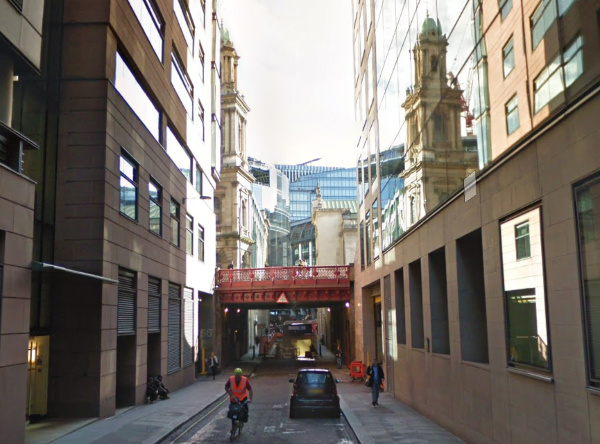
Looking south down Shoe Lane from near Charterhouse Street where it passes under the Holborn Viaduct. PICTURE: Courtesy of Google Maps.

This name of this rather long laneway, which runs from Charterhouse Street, under Holborn Viaduct, all the way south to Fleet Street, doesn’t have anything to do with footwear.

The name is actually a corruption of the Sho Well which once stood at the north end of the thoroughfare (and which itself may have been named after a tract of land known as Shoeland Farm thanks to it resembling a shoe in shape).

In the 13th century the lane was the London home of the Dominican Black Friars – after they left in the late 13th century, the property became the London home of the Earl of Lincoln and later became known as Holborn Manor.

In the 17th century, the lane was known as for its signwriters and broadsheet creators as well as for a famous cockpit which was visited by none other than diarist Samuel Pepys in 1663. It was also the location of a workhouse.

Prominent buildings which have survived also include St Andrew Holborn, designed by Sir Christopher Wren (it actually survived the Great Fire of London but was in such a bad state of repair that it was rebuilt anyway). The street these days is lined with office buildings.

Famous residents have included John de Critz, Serjeant Painter to King James I and King Charles I, preacher Praise-God Barebone who gave his name to Barebone’s Parliament held in 1653 during the English Commonwealth, and Paul Lovell, who, so the story goes, refused to leave his house during the Great Fire of 1666 and so died in his residence.

London pub signs – Aragon House…

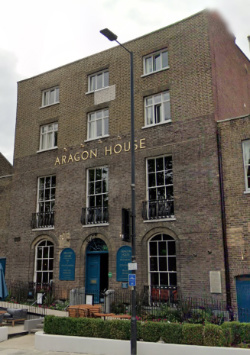
Aragon House in 2019. PICTURE: Courtesy of Google Maps

This brown brick pub (and boutique hotel) in Parson’s Green, west London, was built just after the start of the 19th century. But its name comes from a much earlier historic connection.

The site where the four storey pub now stands was once a dower house which belonged to Queen Catherine of Aragon, the first wife of King Henry VIII.

It’s believed that the property was given to Catherine by King Henry VII, father of her first husband, Prince Arthur – who died in April, 1502 – and her second husband and his younger brother, King Henry VIII, whom she married in 1509.

The site was later part of a parcel of land upon which was located the home of novelist Samuel Richardson. Richardson, famed for his works Pamela and Clarissa, lived there from 1756 until his death in 1761. The property was subsequently known as ‘Richardson’s Villa’.

The Grade II-listed pub is located at 247 New King’s Road. For more, see www.aragonhousesw6.com.

8 locations for royal burials in London…A recap…

Before kicking off a new series, here’s a recap of our last…

1. (Old) St Paul’s Cathedral…

2. St Clement Danes…

3. St Edward’s Chapel, Westminster Abbey…

4. Christ Church Greyfriars…

5. Henry VII’s Lady Chapel, Westminster Abbey…

6. St Peter ad Vincula…

7. Westminster Abbey (near the High Altar)…

8. Kensal Green Cemetery…

This Week in London – Christmas at Hampton Court Palace; the V&A’s couture Christmas Tree; and, the stories of Asian and African foundlings…

Festive Fayre returns to Hampton Court Palace this weekend with visitors having the chance to do some Christmas shopping, sample some festive treats and enjoy live music. The festival, which runs from Friday to Sunday, takes place ahead of the launch of the palace’s Christmas light trail – Palace of Light – next Wednesday (7th December). Inspired by Henry VIII’s heraldic beasts, it features an array of installations, ranging from a sea-monster lurking in the Great Fountain Garden to polka-dot panther lanterns in the Wilderness. Created by the award-winning outdoor event producers Wild Rumpus, the light trail can be visited until 2nd January. For more, see www.hrp.org.uk/hampton-court-palace/.

Christmas tree installation, designed by Miss Sohee PICTURE: © Victoria and Albert Museum, London

The V&A has unveiled its couture Christmas Tree installation for this year – a work by London-based Korean fashion designer Miss Sohee. On display in the Cromwell Road Grand Entrance, the installation reimagines the traditional Christmas tree as a three metre long couture gown, which combines Sohee’s signature style of vibrant silhouettes and intricate embroidery with religious statuary found around the museum. The installation can be seen until 5th January. For more, see www.vam.ac.uk.

On Now – Tiny Traces: African & Asian Children at London’s Foundling Hospital. This exhibition at The Foundling Museum in Bloomsbury explores the newly discovered stories of African and Asian children in the care of the hospital in the 18th century, following the stories of more than a dozen children through personal items, physical artefacts, works of art and archival documents. In a parallel thread, works of art by artists including Zarina Bhimji, Hew Locke, Kehinde Wiley, Alexis Peskine, Deborah Roberts and Shanti Panchal form a dialogue with the historic narratives. Admission charge applies. Runs until 19th February. For more, see https://foundlingmuseum.org.uk.

Send all items to exploringlondon@gmail.com
8 locations for royal burials in London…8. Kensal Green Cemetery…

Princess Sophia’s grave at Kensal Green Cemetery. PICTURE: Stephencdickson (licensed under CC BY-SA 4.0)

The oldest of London’s so-called ‘Magnificent Seven’ cemeteries established in the 19th century, Kensal Green is the burial place of a few members of the royal family dating from the Georgian and Victorian eras.

The ninth child and sixth son of King George III, Prince Augustus Frederick, the Duke of Sussex, died at Kensington Palace at the age of 70. In his will, he specifically requested he not have a state funeral and so was buried at Kensal Green on 4th May, 1843. His rather plain grey monument which is surrounded by concrete bollards, is located in front of the cemetery’s main chapel.

Opposite his grave is the tomb of his sister Princess Sophia, the 12th child of King George III. She, too, died at Kensington Palace – on 27th May, 1848 – and wished to be buried near her brother instead of at Windsor.

King George III’s grandson, Prince George, Duke of Cambridge, was also buried at Kensal Green. A military man (and ally of Queen Victoria), he served as commander-in-chief for 39 years before being forced to resign in 1895. He died in 1904 at Gloucester House, Piccadilly, in 1904 and was buried at Kensal Green with his wife the following day.

WHERE: Kensal Green Cemetery, Harrow Road, Queen’s Park (nearest Tube station is Kensal Green); WHEN: Monday to Saturday 9am to 5pm, Sundays 10am to 5pm; COST: Free: WEBSITE: www.kensalgreencemetery.com.