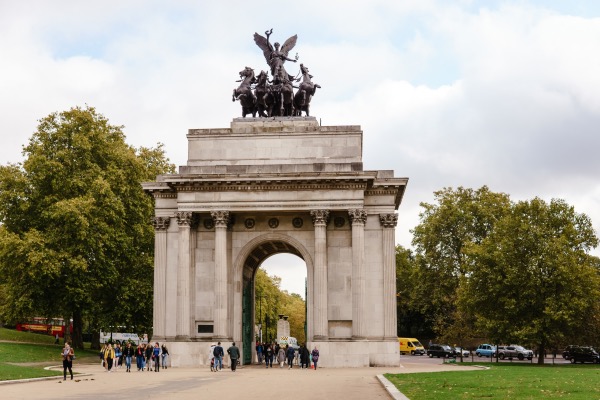
LondonLife – Wellington Arch…
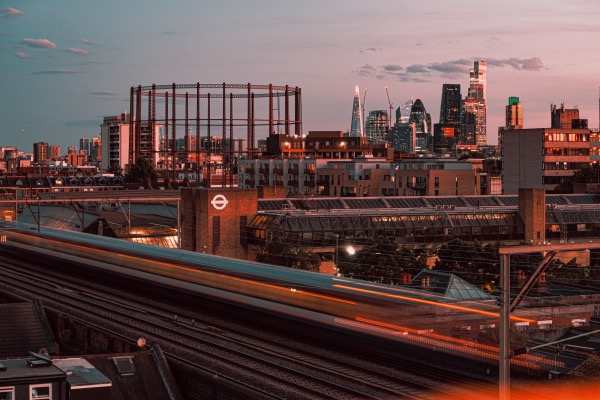

World-renowned mathematical physicist Professor Sir Roger Penrose has received the Freedom of the City of London. Sir Roger, who won the Nobel Prize in Physics two years ago for his pioneering studies in the 1960s, was the first to prove mathematically that black holes exist. The now 90-year-old, who is currently Emeritus Rouse Ball Professor of Mathematics at the University of Oxford and Emeritus Fellow of Wadham College in Oxford, also jointly won the 1988 Wolf Prize in Physics with the late Stephen Hawking for their work on gravitational singularity theorems. Sir Roger said he was “hugely honoured” to be given the Freedom of the City. “London is a magnificent city in which I have spent many happy and productive years since my school and undergraduate days, and then with four separate academic appointments,” he said. Sir Roger, who is also known for discovering Penrose tiling in which a pair of rhombus-shaped tiles can be used to tile a flat service without the pattern ever repeating itself, was nominated for the Freedom by Lord Mayor of the City of London, Vincent Keaveny, and the City of London Corporation’s policy chairman, Chris Hayward. The tradition of the Freedom of the City of London is believed to have begun in 1237 and enabled recipients, who were also required to join a Livery Company, to carry out their trade.
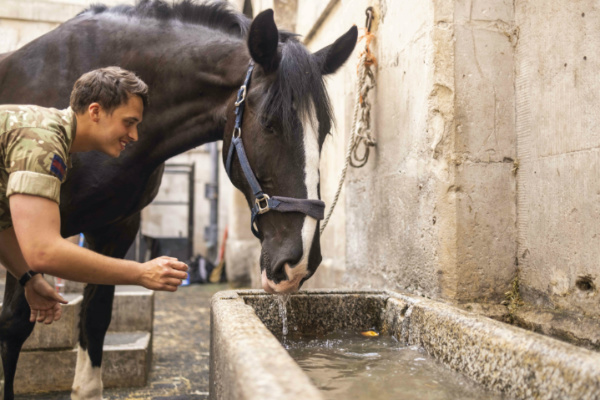
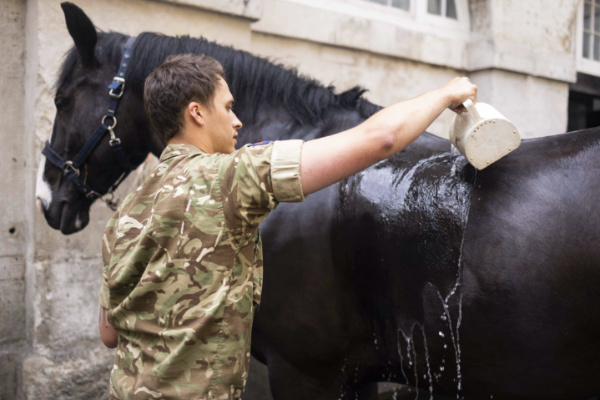
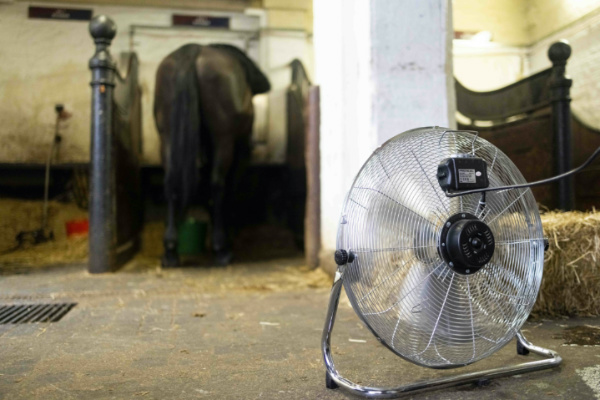
As London swelters, the Troopers of the Household Cavalry Mounted Regiment conducting the Queen’s Life Guard at Horse Guards take care to ensure their loyal horses are well looked after. That includes a hose off in the shade after duty to help them cool down, bobbing for in the water trough to help ensure they’re drinking enough and providing fans in the stables.
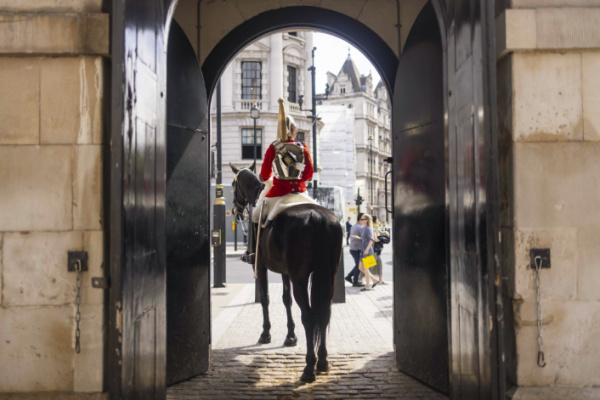
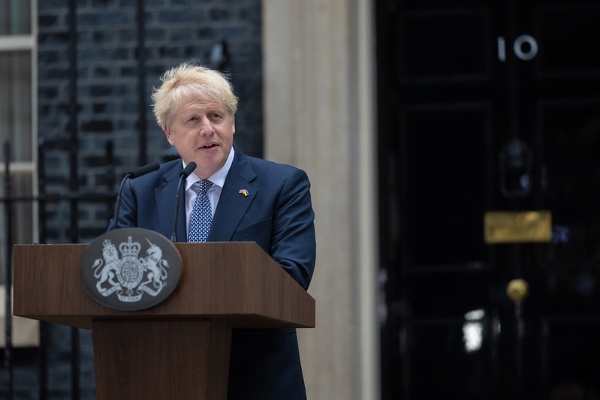
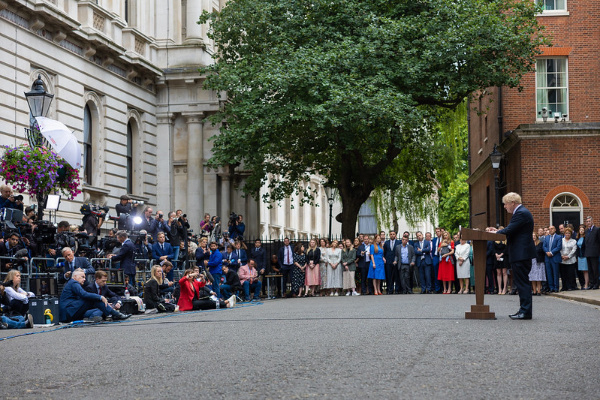
All eyes turned to Whitehall last week with Prime Minister Boris Johnson emerging from 10 Downing Street to announce he would resign. The move has sparking a leadership contest in the Conservative Party which is expected to be complete by 5th September.
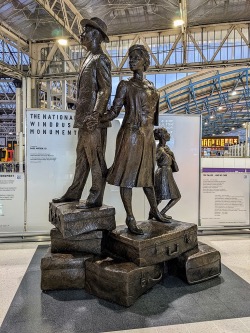
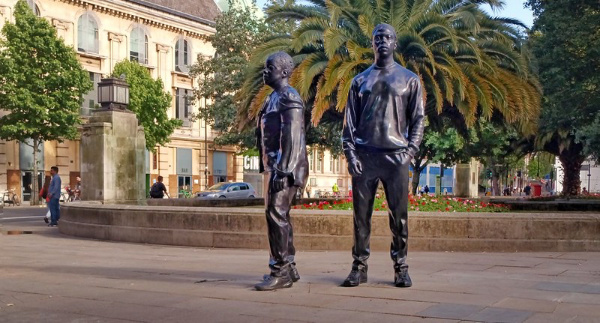
The National Windrush Monument (right) was unveiled at Waterloo Station on Windrush Day (23rd June). The bronze sculpture – the work of US-based Jamaican artist Basil Watson – memorialises the British West Indian immigrants who came to the UK on board HMT Empire Windrush in 1948 and later ships and who subsequently became known as the Windrush generation. Funded by a £1 million government grant, it depicts a man, woman and child who, dressed in their “Sunday best”, are climbing a pile of suitcases which represent all the possessions they brought with them. The memorial, which is located inside the station through which thousands of the Windrush Generation passed on their way to their new lives in the UK, was unveiled by the Duke and Duchess of Cambridge. Floella Benjamin, chair of the Windrush Commemoration Committee, reportedly said the monument will “act as a symbolic link to our past and a permanent reminder of our shared history and heritage for generations to come“. Meanwhile, a public bronze sculpture was unveiled outside Hackney Town Hall on the same day which also commemorates the Windrush generation. Warm Shores, the work of London artist Thomas J Price, depicts larger than life-sized a man and woman and was based on 3D scans of real-life residents.
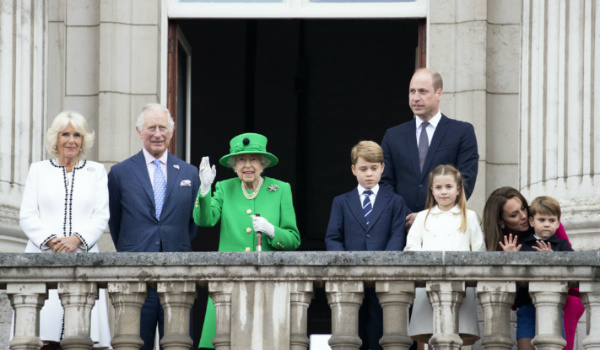
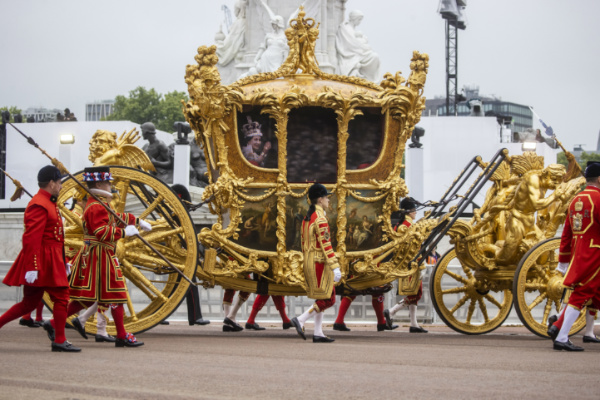
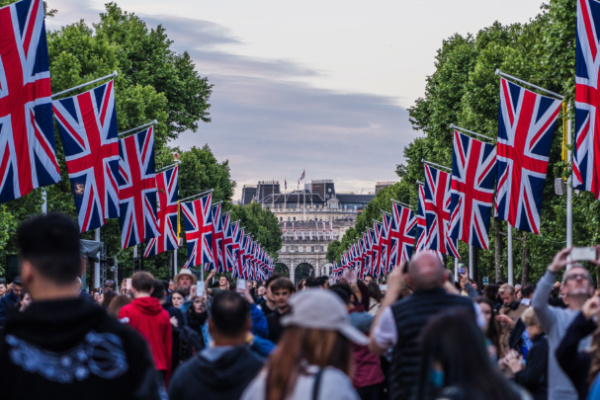
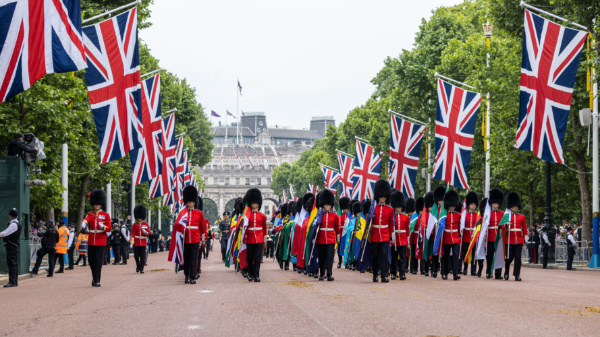
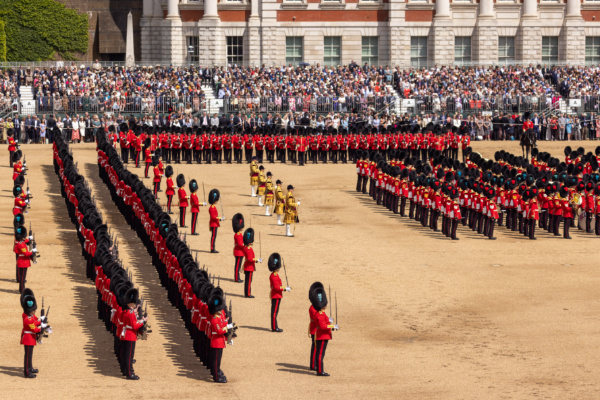
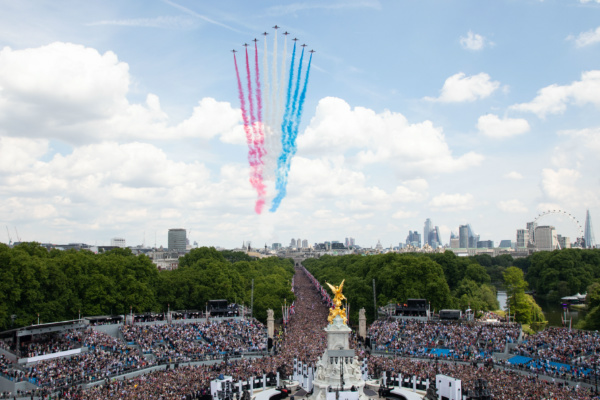
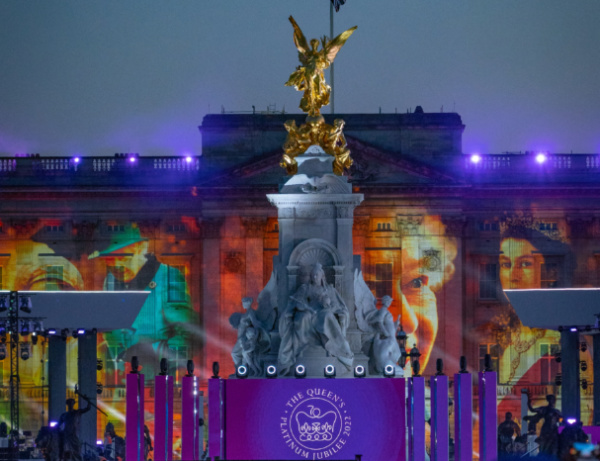
Four days of celebration were held from Thursday to Sunday to mark Queen Elizabeth II’s Platinum Jubilee. Here’s a short selection of images from the events…
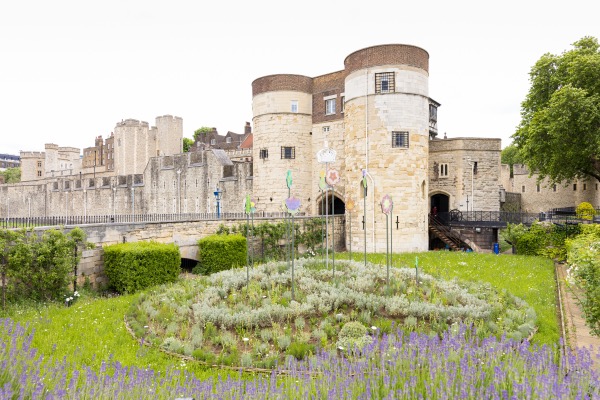
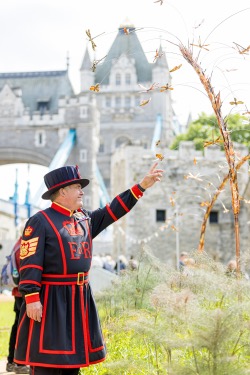
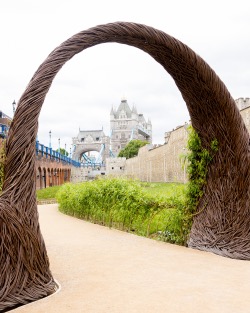
Twenty million seeds have been sown into the Tower of London’s moat to create a floral display known as ‘Superbloom’ as part of the celebrations surrounding Queen Elizabeth II’s Platinum Jubilee.
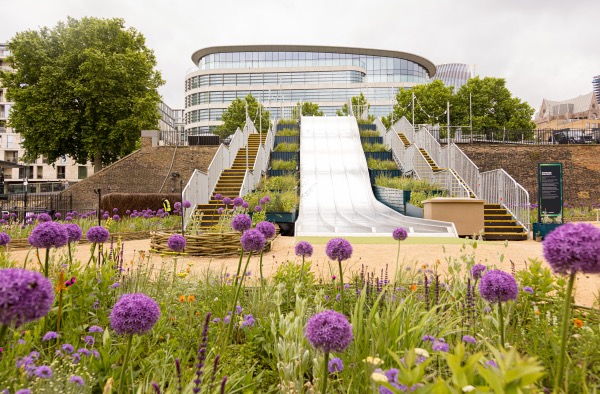
Paths, walkways and viewing points have been installed throughout and in a first at the Tower, a four lane slide has been installed to provide an unusual entrance to the display.
Those visiting the display – which features wildflowers such as red poppies, yellow corn marigolds and blue cornflowers as well as garden plants including sunflowers, cosmos and rudbeckias – will hear a score by Scottish composer Erland Cooper – Music for Growing Flowers – while other attractions include a willow sculpture by artist Spencer Jenkins and a swarm of intricate copper insects by sculptor Mehrdad Tafreshi.
The centrepiece of the display is the “Queen’s Garden” which has been installed by Grant Associates – the lead designers for the Superbloom project – in the Tower’s historic Bowling Green.
Inspired by the Queen’s Coronation gown, this garden features a combination of meadow flowers, topiary and summer-flowering perennials, bulbs and ornamental grasses and draws on the colours, shapes and motifs used by designer Norman Hartnell in the 1953 gown.
Rising above the garden are 12 cast glass forms by glass artist Max Jacquard which represent the national emblems featured in Hartnell’s design and in their centre sits a glass crown, a reminder of the Tower’s role as home of the Crown Jewels.
Tower Wharf, meanwhile, has been transformed into a food and drinks venue, with street food and bars from KERB and fine dining available riverside in ‘The Glass Rooms’. The flowers are expected to gradually bloom in June and will continue to evolve until September. For more, including how to purchase tickets, head here.

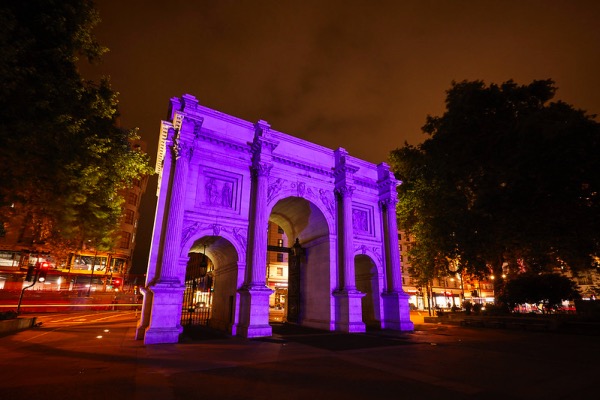
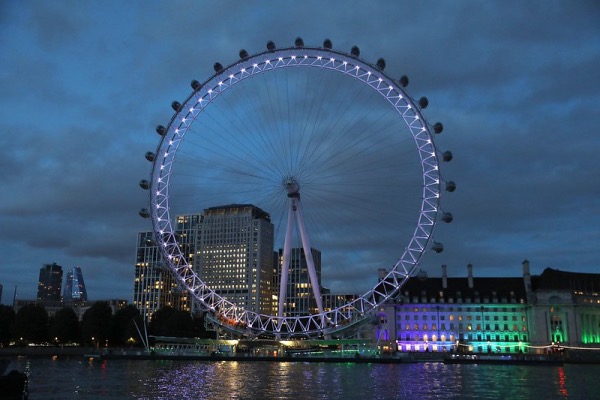
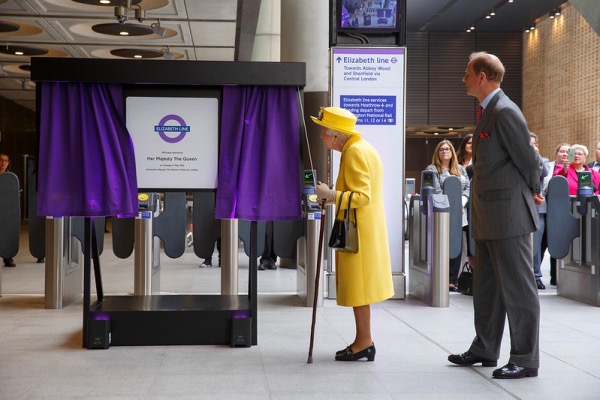
Iconic London locations including Tower Bridge, The London Eye, and Marble Arch turned purple last night to mark the opening of the new Elizabeth Line today. Thousands of people are today expected to use the new Tube line which provides faster journeys between Paddington and Abbey Wood via 10 new stations using Class 345 trains that are more and than one-and-a-half times longer than a standard Tube train and able to carry 1,500 passengers. The line’s opening is the latest step in the £18.8 billion Crossrail project which is linking Reading, to the west of London, with Heathrow before travelling through central London to connect with Shenfield and Abbey Wood in the east. Sadiq Khan, the Mayor of London, said it was an “historic day”. “This is a huge moment, not just for London but the entire country – particularly in this special Jubilee year…This brand new line is the most significant addition to our transport network in decades.” Last week, the Queen and Prince Edward attended Paddington Station to mark the completion of the new line.


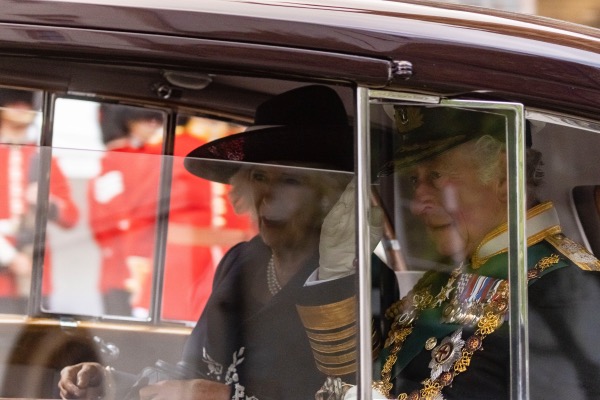
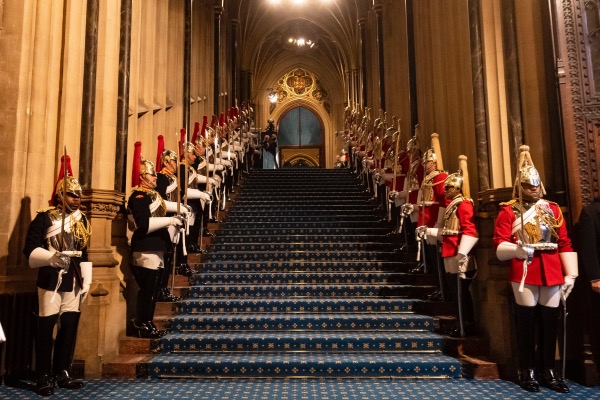
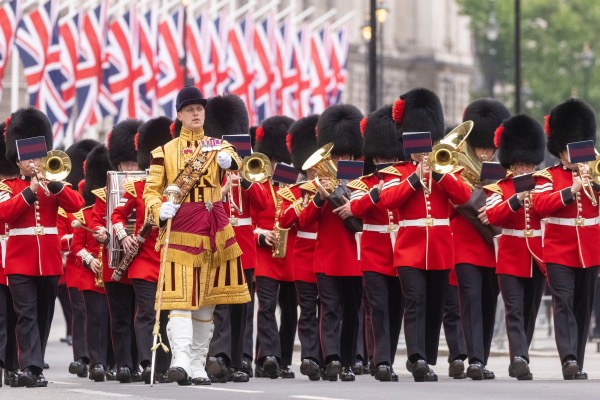
Queen Elizabeth II didn’t attend the State Opening of Parliament last Tuesday for the first time in almost 60 years with Prince Charles delivering the Queen’s Speech for the first time. In an event that’s all about pomp and pageantry, more than 500 soldiers and 125 military horses took part in a variety of ceremonial roles over the day.
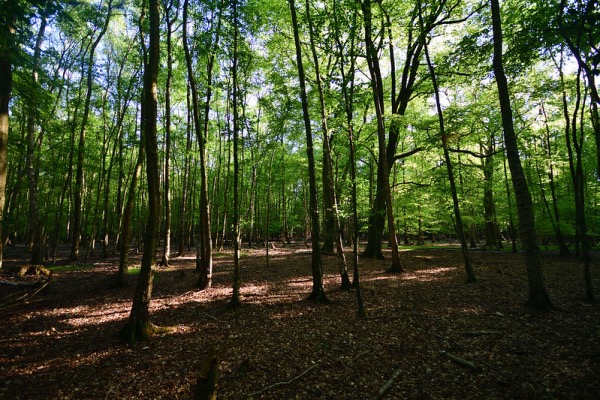
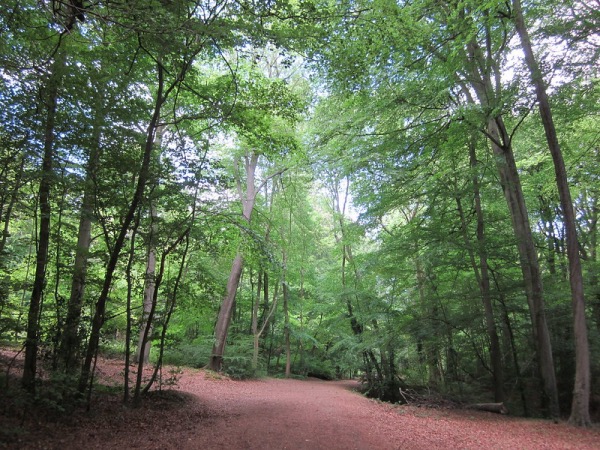
City of London-managed open spaces Epping Forest, Burnham Beeches and Ashtead Common have been selected to be part of a nationwide network of 70 ancient woodlands to be dedicated to The Queen in celebration of the Platinum Jubilee. At almost 6,000 acres, Epping Forest is London and Essex’s largest green space and is known as the “green lungs” of London. Burnham Beeches, located in Buckinghamshire, is only a square mile in size but is described as a “New Forest in miniature” while Ashtead Common in Surrey’s 200 hectares of open public space is home to more 1,000 living ancient oak pollards. For more on The Queen’s Green Canopy initiative, see www.queensgreencanopy.org. For more on the City of London’s green spaces, see www.cityoflondon.gov.uk/things-to-do.
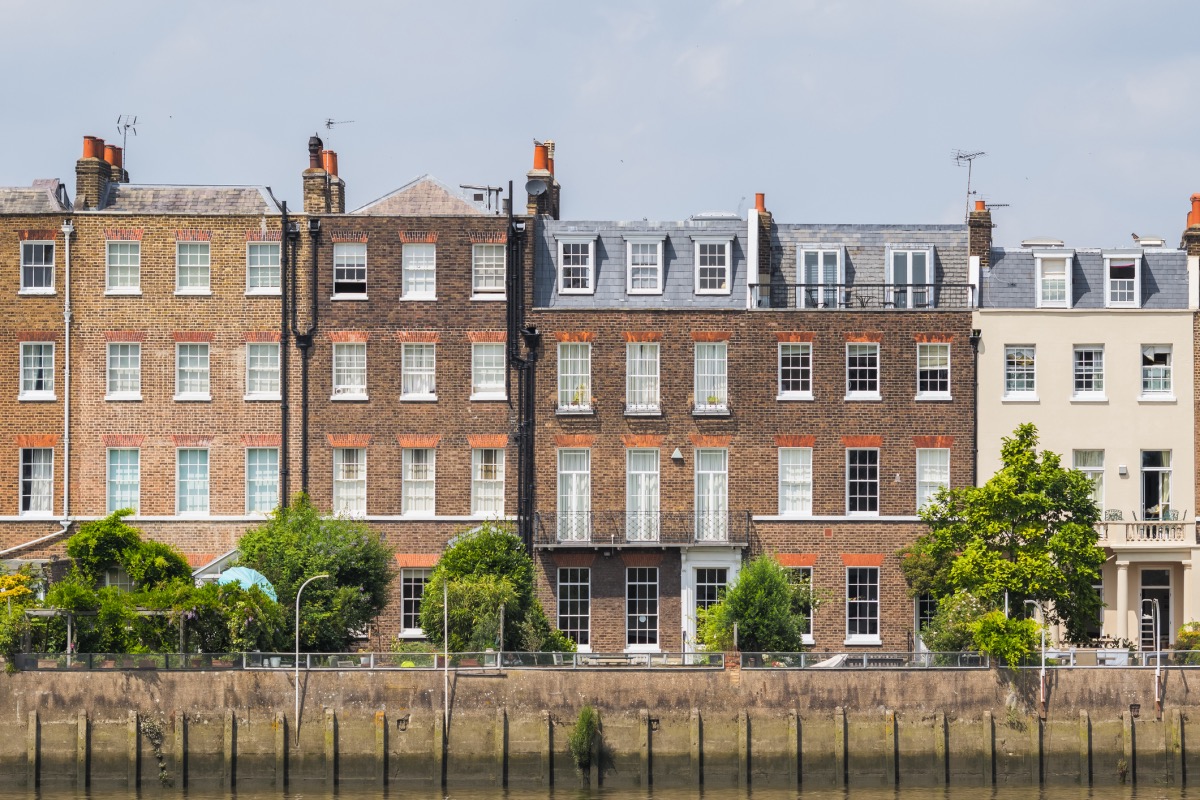
A row of terraced houses overlooking the Thames in Hammersmith.
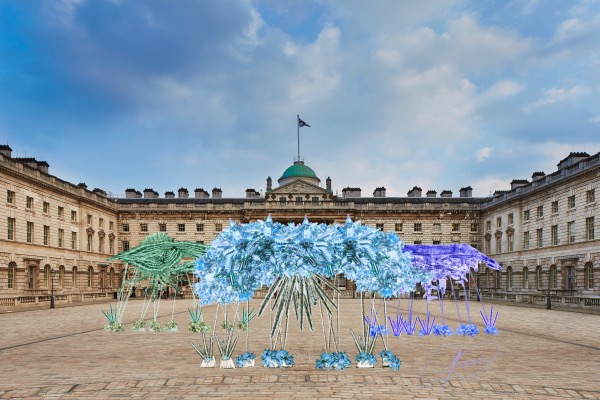
The Arks of Gimokudan, the first large-scale installation by Philippine artist-designer Leeroy New, has taken up residence in Somerset House’s central courtyard to mark Earth Day later this month. The installation features a fleet of three ships – made using reused and recycled materials and plastic waste – which appear to float some three metres above ground, inviting visitors to imagine themselves underwater and looking up at the vessals which draw on the history, culture and mythologies of his home nation of the Philippines, the country most at risk from the climate crisis according to a 2019 report. The ships represent a Spanish imperial galleon highlighting the Philippines’ long history of colonisation, a contemporary, military battleship, referencing continued territorial conflict and international tension in the region, and a futuristic spaceship, inspired by New’s fascination with sci-fi and world-making while the overall work also references Mebuyan, the Goddess of Gimokudan (Death and Fertility). Earth Day will be celebrated on 22nd April and the work can be seen in the Edmond J Safra Fountain Court until 26th April. Meanwhile, the first in the series of Morgan Stanley Lates at Somerset House with The Courtauld will take place on Wednesday (13th April) with Leeroy New in which visitors are invited to take part in a free live sculpting workshop in the courtyard. There will also be food from Hackney’s Bongbong’s Manila Kanteen, dance performances from 2022 Olivier award nominee Julia Cheng, a DJ, drinks and more. For more, see www.somersethouse.org.uk.
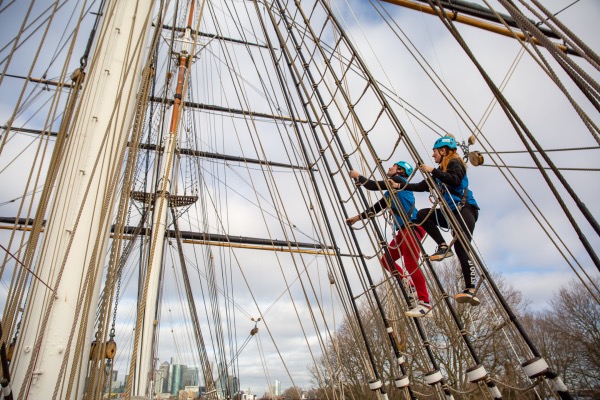

Visitors to the Cutty Sark now have the opportunity to climb the ship’s rigging for the first time since the ship arrived in Greenwich in 1954. The ‘Rig Climb Experience’, which was launched last weekend, sees those bold enough to do so stepping up from the main deck onto the ship’s ratlines, climbing up its shrouds and traversing one of the ship’s lower yardarms to reach the tops platform where they’ll be able to take in magnificent views over Greenwich and The Thames. One of the fastest tea clippers of its day, the Cutty Sark – which was built in Dumbarton in 1869 – had more than 11 miles of rigging, 32 sails with an original sail area of 32,000 square feet, and a 152 foot main mast. Prices start at £41 for adults and £26 for children for a ‘Standard Rig Climb’ and £51 for adults and £36 for children for the Rig Climb Experience Plus. For more, head to www.rmg.co.uk/cuttysark.


A parakeet admires the cherry blossom in St James’s Park.

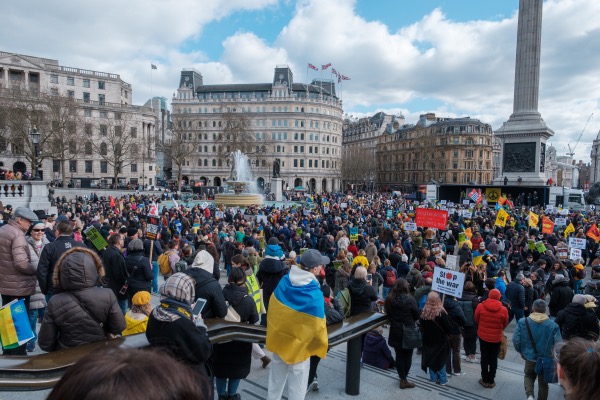
Demonstrations in support of Ukraine have taken place in numerous places in London since Russia launched its invasion on 24th February, including in Trafalgar Square.