This Week in London – The Marble Arch Mound opens; Wampum at the Guildhall Art Gallery; and, Paula Rego at the Tate…

The 25 metre high viewpoint in the grass and tree covered Marble Arch Mound opens to visitors on Monday. Created by Westminster City Council, the mound – which has been designed by Dutch architectural studio MVRDV, provides expansive views of Oxford Street, Hyde Park, Mayfair and Marylebone. Visitors can either climb the 130 stairs to the top or take a lift. The mound will be open to the public until January next year. Ticket holders are also invited to visit W1Curates art installation Lightfield, led by British/American artist, Anthony James, which is located inside the mound. For more information and to book tickets, see www.westminster.gov.uk/news/get-set-summit-marble-arch-mound-summer.

The history, art and culture of the Native Americans who met the passengers of the Mayflower is explored in a new exhibition at the Guildhall Art Gallery. Opening on Friday, Wampum: Stories from the Shells of Native America centres on a newly-crafted wampum belt created by the Wampanoag people of Massachusetts alongside historic material from the British Museum. Wampum belts are the creative expression of the Wampanoag people, with each shell on the belt imbued with memory and meaning. The display is presented by The Box, Plymouth, and supported by Arts Council England as part of commemorations of the 400th anniversary of the sailing of the Mayflower from England to America. Runs until 5th September. Entry is free (booking required). For more, head here.

On Now: Paula Rego. This exhibition at Tate Britain – the largest retrospective of Paula Rego’s work to date – features more than 100 works including collage, paintings, large-scale pastels, drawings and etchings as it showcases the career of the Portuguese-born artist. As well as early work from the 1950s, the display features her large pastels of single figures from the acclaimed Dog Women and Abortion series and richly layered, staged scenes from the 2000s. Runs until 24th October. Admission charge applies. For more, see www.tate.org.uk/whats-on/tate-britain/exhibition/paula-rego.

Send all items for inclusion to exploringlondon@gmail.com.

This Week in London – ‘Hidden Highlights’ at Westminster Abbey; food and Black entrepreneurship; and, ride the Dodgems at Somerset House…

Westminster Abbey Library, part of of the ‘Hidden Highlights’ tour. PICTURE: Dean and Chapter of Westminster.

A lost medieval sacristy used by Westminster Abbey’s monks in the 13th-century which has been revealed in the abbey grounds has been opened to the public. A visit to the dig uncovering the former sacristy is one of the stops on new ‘Hidden Highlights’ tours which also take in other areas not usually open to the public including the Jerusalem Chamber where King Henry IV died in 1413 and, the Library, formerly part of the monk’s dormitory which features a 15th century oak roof and 17th century bookcases (pictured above). The tour, which finishes in the Diamond Jubilee Galleries which have been closed since the start of the pandemic, is part of a summer of events at the abbey which also includes open air cinema, visits to the abbey after dark, live music performances and a chance to look behind the scenes at the abbey’s role in the 2011 wedding of the Duke and Duchess of Cambridge. For more, see www.westminster-abbey.org/abbey-news/lost-medieval-sacristy-opens-to-public-for-summer-festival-of-events.

A new exhibition looking at the central role food plays in Black entrepreneurship and identity in the city’s south east has opened at the Museum of London Docklands. Feeding Black: Community, Power & Place puts four businesses in the spotlight – Livity Plant Based Cuisine in Croydon, Woolwich businesses African Cash & Carry and Junior’s Caribbean Stall, and Zeret Kitchen in Camberwell – and tells their stories through objects, recipes and videos as well as newly commissioned photography by Jonas Martinez and original oral histories and soundscapes by Kayode ‘Kayodeine’ Gomez. The free display can be seen until 17th July next year in the London, Sugar & Slavery gallery. For more, see www.museumoflondon.org.uk.

Ride the dodgems at Somerset House. Dodge, described as a “thrilling open air experience” that takes an “inventive twist on the traditional fairground”, features dodgem cars and installations from acclaimed artists as well as food and drink and DJ sets. The event runs until 22nd August. There is free entry to the site but charges apply for the dodgem rides. For more, see www.somersethouse.org.uk. The event is part of the #LetsDoLondon campaign, described as the “biggest domestic tourism the capital has ever seen”.

Send all items for inclusion to exploringlondon@gmail.com.

LondonLife – Exploring Buckingham Palace’s gardens…

The garden at Buckingham Palace in spring. PICTURE: John Campbell (Royal Collection Trust/© Her Majesty Queen Elizabeth II 2021.)

The historic 39 acre garden at Buckingham Palace opened to the public for the first time last Friday as part of the palace’s summer opening. Visitors can follow a route that takes in the 156-metre Herbaceous Border, plane trees which were planted by and named for Queen Victoria and Prince Albert, and views of the island and its beehives across the 3.5-acre lake. There’s also the opportunity to enjoy a picnic on the lawns and guided tours of the south-west of the garden with features including the Rose Garden, summer house and wildflower meadow. The current landscape dates back to the 1820s when King George IV turned Buckingham House into a place. It features more than 1,000 trees, the National Collection of Mulberry Trees (mulberry trees were first planted by King James I in 1608), 320 different wildflowers and grasses, and, since 2008, five beehives. The Queen traditionally hosts three garden parties in the gardens annually which are each attended by 8,000 guests, who consume around 27,000 cups of tea, 20,000 sandwiches and 20,000 slices of cake. The gardens are open until 19th September. Admission charge applies. For more, see www.rct.uk.

A curving path leading past the Magnolia Dell to the Rose Garden. PICTURE: John Campbell (Royal Collection Trust/© Her Majesty Queen Elizabeth II 2021.)
The Rose Garden and summer house can be seen as part of guided tours. PICTURE: John Campbell ( Royal Collection Trust/© Her Majesty Queen Elizabeth II 2021.)
Spring flowers in the Buckingham Palace garden. PICTURE:John Campbell (Royal Collection Trust/© Her Majesty Queen Elizabeth II 2021.)

This Week in London – Paddington’s story; pioneering neurologist JS Risien Russell honoured; and, Sir Quentin Blake’s gift…

Michael Bond with plush Paddington. PICTURE: © P & Co. Ltd 2021

A new family friendly exhibition celebrating Paddington Bear opens at the British Library tomorrow. The Story of a Bear features more than 50 books, documents, film clips and original artworks as it explores Michael Bond’s creation of the much loved children’s book character. Highlights include a first edition of Bond’s A Bear Called Paddington published in 1958, Barbara Ker Wilson’s original review of the book, photographs and memorabilia of Michael Bond on loan from his family as well as original illustrations of Paddington stories by artists including Peggy Fortnum, David McKee and RW Alley. There are also clips from the Paddington movies and sound recordings featuring Bond speaking about his creation. The exhibition is ticketed (booking in advance recommended). Admission charge applies. For more, see www.bl.uk/events/paddington-the-story-of-a-bear.

Pioneering neurologist James Samuel Risien Russell has been honoured with an English Heritage Blue Plaque at his former home and practice in Marylebone. Russell, born in 1863 in what was then British Guiana (now Guyana), was one of the UK’s first Black consultants and played a critical role in establishing the British school of neurology in the 1890s. His contribution in furthering our understanding of many conditions of the nervous system and mental health issues has only recently come to light thanks to new research by the Windrush Foundation. Dr Risien Russell lived and worked at 44 Wimpole Street from 1902 until his death in March, 1939. For more, see www.english-heritage.org.uk/visit/blue-plaques.

<iframe width="560" height="315" src="https://www.youtube.com/embed/XACNk26xulk" title="YouTube video player" frameborder="0" allow="accelerometer; autoplay; clipboard-write; encrypted-media; gyroscope; picture-in-picture" allowfullscreen></iframe>

• A display of images from Sir Quentin Blake have gone on show at the Foundling Museum in Bloomsbury to mark his gift of 24 drawings to the museum. Curated by children’s author and illustrator Lauren Child, Quentin Blake: Gifted features pictures form two series –  Children and Dogs and Children with Birds & Dogs – as well as a range of responses from writers including poetry collective 4 BROWN GIRLS WHO WRITE, children’s author and poet Michael Rosen and Scottish playwright, poet and novelist Jackie Kay. Admission charge applies. Runs until 26 September. For more, see https://foundlingmuseum.org.uk/events/quentin-blake-gifted/.

Send all items for inclusion to exploringlondon@gmail.com.

LondonLife – The Queen awards the George Cross to the NHS…

Queen Elizabeth II has awarded the George Cross – the country’s highest civilian gallantry award – to the National Health Service. In an accompanying statement, the Queen said: “It is with great pleasure, on behalf of a grateful nation, that I award the George Cross to the National Health Services of the United Kingdom. This award recognises all NHS staff, past and present, across all disciplines and all four nations. Over more than seven decades, and especially in recent times, you have supported the people of our country with courage, compassion and dedication, demonstrating the highest standards of public service. You have our enduring thanks and heartfelt appreciation.” Details of when the award will be presented are yet to be announced. It is only the third time, the George Cross has been awarded to a collective body, country or organisation, rather than an individual (the first time was when it was collectively awarded to the people of Malta in 1942 by Queen Elizabeth’s father, King George VI, and the second time when it was awarded to the Royal Ulster Constabulary by the Queen in 1999). PICTURE: Nicolas J Leclercq/Unsplash

This Week in London – New statue of Princess Diana; V&A’s new Design 1900 gallery; a Blue Plaque for Jean Muir; and, police boxes reimagined…

A new statue of the late Princess Diana is being unveiled today at Kensington Palace. The statue will be unveiled in the Sunken Garden at Diana’s former home. The garden – originally created on the orders of King Edward VII in 1908 – has been redesigned by designer Pip Morrison to provide a more reflective setting for the memorial. This included planting more than 4,000 of Diana’s favourite flowers including forget-me-nots and tulips. The statue, which is the work of sculptor Ian Rank-Broadley, is expected to be unveiled by Diana’s two sons, William and Harry, who commissioned it in 2017.

The V&A’s new gallery, Design 1900. PICTURE: Courtesy of the V&A

A new permanent gallery has opened at the V&A which explores the role design plays in shaping, and being shaped by, how we live, work, travel and communicate. Design 1900 is housed within the museum’s former 20th Century Gallery and, among the displays are new acquisitions including Margaret Calvert and Jock Kinneir’s iconic British road signage system, Kim Kardashian’s Selfish book, Nike’s Nigeria football shirt for the 2018 World Cup and a one-of-a-kind desk designed by Future Systems for Condé Nast Chairman Jonathan Newhouse. The display also includes items from the Rapid Response Collecting programme such as 3D-printed door openers, designed to limit the spread of the COVID-19 virus, and the I Believe in Our City bus shelter posters that highlighted increased anti-Asian bias. For more, see www.vam.ac.uk.

Twentieth century dressmaker and fashion designer Jean Muir has been honoured with an English Heritage Blue Plaque at the Mayfair address she worked for 30 years. The plaque was unveiled at 22 Bruton Street, the location of the showroom and office she operated out of from 1966 to 1995, by her house model, friend and client Joanna Lumley. Others among Muir’s clientele included actress Patricia Hodge and writer Lady Antonia Fraser. For more, see www.english-heritage.org.uk/visit/blue-plaques/.

The City of London Corporation has unveiled the design for new ‘Digital Service Points’ which will reimagine the concept of the traditional police boxes. ‘The London Stones’, the work of architecture and design studio Unknown Works, will include information screens, life saving emergency equipment and serve as hubs for City of London Police officers and community events. Details from buildings, stories and images of the Square Mile will be collected and ‘digitally carved’ into the exterior of the ‘stones’ which will also be home to a vast array of lichen colonies and species expected to evolve in their colour and appearance as they grow.

Send all items for inclusion to exploringlondon@gmail.com

LondonLife – City lights…

PICTURE: Kamran Chaudhry/Unsplash

Further Afield Special: Prince Philip celebrated at Windsor…

HRH The Duke of Edinburgh, 2017, Ralph Heimans. PICTURE: Royal Collection Trust/All Rights Reserved
The Coronation Robe and Coronet worn by HRH The Prince Philip, Duke of Edinburgh, during the Queen’s Coronation on 2nd June 1953
PICTURE: Royal Collection Trust/All Rights Reserved
.

Further Afield Special: A exhibiting the life and work of Prince Philip opens at Windsor Castle today. Prince Philip: A Celebration traces the late Prince’s life, including his naval career and his role as consort, and also cover his many patronages and associations in areas as diverse as science and industry to sport, conservation and the environment to art. Highlights among the more than 120 objects on display include the Coronation Robe and Coronet he wore on the day on display (pictured – right) as well as his Chair of Estate, usually located in Buckingham Palace’s Throne Room. Also present is the journal in which his great-great-grandmother, Queen Victoria, recorded the birth of his mother, Princess Alice of Battenberg (describing her as “very pretty”), George A Weymouth’s portrait of the Prince standing in the shell of Windsor Castle’s St George’s Hall and holding a set of floorplans after a fire in 1992, and a portrait of Prince Philip painted by Ralph Heimans in 2017, the year of His Royal Highness’s retirement from public engagements, which is on display for the first time (pictured above). Other highlights include a First Nations feather headdress presented to the Prince during a Commonwealth visit to Canada in 1973, and a display of archival material and historic photographs in St George’s Chapel’s south quire which celebrates his faith and service to society, his support of the chapel and his role in the foundation and development of St George’s House consultation centre. The Palace of Holyroodhouse in Scotland will have its own exhibition focusing on the life of the Prince in July. Admission charge applies. The Windsor Castle exhibition runs until 20th September. For more, see www.rct.uk.

Send all items for inclusion to exploringlondon@gmail.com.

LondonLife – Museum of London marks Windrush Day…

Tihara Smith outfit PICTURE: © Tihara Smith

Marking this year’s Windrush Day, the Museum of London has made two new acquisitions – an ensemble from London fashion designer Tihara Smith’s ‘Windrush collection’ and a suit owned by her grandfather – available to explore on the Museum of London website. Tihara’s outfit, which was designed as part of Smith’s UCA Epsom graduate collection in 2018 and selected for display at Graduate Fashion Week, references the story of her grandfather, Lazare Sylvestre, who arrived in the UK from St Lucia in 1958 as part of the Windrush generation. Details including a raffia vest hand embroidered with the words ‘Black and British’ which is accompanied by a Black Power fist and the red lion symbol of England as well as a shirt made from a tablecloth purchased in Peckham Market and flared 1970s style denim culottes – all of which are representative of her grandfather’s experience and that of so many other Black British Londoners at that time. Her grandfather’s suit, meanwhile, was designed and made for him by a close friend, Winceslas ‘Winston’ Giscombe, a tailor who originally from Kingston, Jamaica, who came to the UK in 1947 on a ship called the Ormonde, a year before the Windrush arrived in 1948. Photographs of the items, along with oral histories recorded by Tihara, her mother and her grandfather, can be explored on the Museum of London website. For more on Windrush, see the Windrush Stories page on the Museum of London Docklands website

This Week in London – Marking the 500th anniversary of the Field of the Cloth of Gold; and, a new sculpture trail in Greenwich…

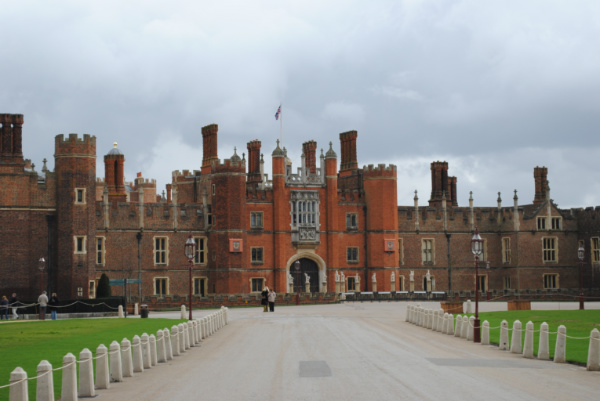
The 18 day meeting between King Henry VIII and King Francois I of France in 1520, known as the Field of the Cloth of Gold, is the subject of an exhibition at Hampton Court Palace. Gold and Glory: Henry VIII and the French King, which is being held to mark the 500th anniversary of the event (having been rescheduled from last year), is being held in rooms in Hampton Court Palace that were once used by the architect of the summit, Cardinal Thomas Wolsey, and features objects from the actual meeting as well as treasures from the courts of the two kings. They include the spectacular Stonyhurst vestments – woven from cloth of gold and chosen by Henry for use at the religious services held near Calais, Wolsey’s Book of Hours, and a unique tapestry which, manufactured in Tournai in the 1520s, depicts a bout of wrestling at the event with a black trumpeter shown among the brace of royal musicians. The display can be seen until 5th September. Admission charge applies. For more information and tickets – prebooking is essential, see www.hrp.org.uk/hampton-court-palace/.

A free sculpture trail, featuring works by artist Josie Spencer, has opened on the King William Lawns at the Old Royal Naval College in Greenwich. Fragments in Time features life-sized bodies captured in dramatic positions, including fractured figures, which demonstrate the beauty and resilience of the human spirit while highlighting the fragility of life. The artist says the works have been chosen from a group of pieces that treated the figures as if they were the “archaeology of our time found in another century, in the future, when those then looking at them can see the fragility of our life now”. The trail can be seen until 6th August.

Send all items for inclusion to exploringlondon@gmail.com.

LondonLife – Hampstead Heath Act turns 150…

PICTURE: Brett Jordan/Unsplash

This month marks 150 years since the passing of the Hampstead Heath Act, which confirmed the heath as a public open space, and, to celebrate, the City of London Corporation, the Heath & Hampstead Society and other partners have launched a year of commemorations. Upcoming planned highlights include an outdoor exhibition showcasing the heath’s history and the significance of the 1871 Act which will be launched on the heath (on the main path leading onto the heath from the Hampstead Heath Overground Station) on 23rd June, a community fun day (27th June), an outdoor cinema screening (8th September), a summer music event (tentatively scheduled for 5th September) and historic walks as well as an Historic Postcard Project featuring an interactive online map with historic images of the heath. For more, see www.cityoflondon.gov.uk/things-to-do/green-spaces/hampstead-heath.

This Week in London – Noël Coward’s glittering world; figures from the African diaspora; and, reflections on land rights and colonialism in Australia…

The glittering world of playwright and songwriter Noël Coward is on show in a new exhibition opening at the Guildhall Art Gallery this Monday. The much delayed Noël Coward: Art & Style, which marks the 100th anniversary of Coward’s West End debut as a 19-year-old earlier this year, brings together never-before-seen materials from the Coward Archive and demonstrates the impact he and his creative circle had on the culture of his time – and today. Highlights include an original page of Coward’s handwritten lyrics for Mad Dogs and Englishmen, the chocolate brown evening suit he wore in the film Boom!, two of his signature silk dressing gowns, his iconic ‘Hamlet’ chair, and several of his own paintings. There’s also a specially commissioned new reconstruction of the iconic white satin dress that Molyneux designed in 1930 for Gertrude Lawrence in Private Lives and a never-before-exhibited gold lamé theatre cape by Lucile (Titanic survivor Lady Duff Gordon) from 1920. The exhibition, which is free, runs until 23rd December. Tickets must be booked in advance. For more, see www.cityoflondon.gov.uk/noelcoward.

A new portrait depicting Dido Belle (1761-1804) has gone on display at Kenwood House – one of six works depicting historic figures from the African diaspora now on show at English Heritage properties across the nation. Belle, who is depicted by artist Mikéla Henry-Lowe, was the illegitimate daughter of a young black woman named Maria Bell and a Royal Naval officer, Sir John Lindsay. She spent much of her life at Kenwood House with her great-uncle William Murray, 1st Earl of Mansfield, the Lord Chief Justice. Other portraits in the series depict the likes of African-born Roman Emperor Septimius Severus (the work of Elena Onwochei-Garcia, it’s on display at Corbridge Roman Town on Hadrian’s Wall, Northumberland), North African-born 7th century Abbot Hadrian (the work of Clifton Powell, it’s on display at St Augustine’s Abbey in Kent) and Queen Victoria’s god-daughter Sarah Forbes Bonetta (the work of Hannah Uzor, it’s on display at Osborne House on the Isle of Wight). For more, see www.english-heritage.org.uk/learn/histories/black-history/.

More than 25 works by Australian artists exploring debates around land rights and colonialism have gone on show in a new exhibition at the Tate Modern. A Year in Art: Australia 1992 takes as its starting point the High Court of Australia’s landmark 1992 Mabo ruling which overturned the doctrine of terra nullius. Works on show include Emily Kame Kngwarreye’s 1989 Untitled (Alhalkere) – an expression of her cultural life as an Anmatyerre elder, Gordon Bennett’s 1991 work Possession Island (Abstraction) which is presented in dialogue with Algernon Talmage’s 1937 work The Founding of Australia 1788, and Tracey Moffatt’s 1997 photographic series Up in the Sky, which speaks to the ‘Stolen Generations’ – the forced separation of Aboriginal families by government agencies. At the heart of the display is Vernon Ah Kee’s 2010 four-screen video installation tall man which shows footage of the protests and riots following the death in custody of Mulrunji Doomadgee on Palm Island in 2004. The exhibition is free. For more, see www.tate.org.uk.

Send all items for inclusion to exploringlondon@gmail..com

LondonLife – A forest at Somerset House…

Forest for Change – The Global Goals Pavilion at London Design Biennale. PICTURE: Ed Reeve

The courtyard at Somerset House has been transformed into a forest as part of the London Design Biennale. Forest for Change – The Global Goals Pavilion features some 400 trees with clearing in the middle containing an installation aimed at raising awareness of the United Nations’ Global Goals for Sustainable Development. The biennale also features a series of more than 30 pavilions from across all six continents – created in response to the theme ‘resonance’ – which have been placed in rooms and outdoor areas throughout the property. Among the countries represented with pavilions are Antarctica, Argentina, Austria, Canada, Chile, the Czech Republic, Finland, Germany, Ghana, Greece, Guatemala, Hong Kong, India, Indonesia, Ireland, Israel, Japan, Latvia, Poland, Taiwan, and Venezuela. Others, including Italy, Nile Region, Norway, New York City and Pakistan, are taking part digitally. There’s also an exhibition – Design in an Age of Crisis – showcasing radical design thinking from the world’s design community, the public, and young people, as well as a series of installations by a selected group of universities and galleries in which they demonstrate their contribution to global issues through design under the banner of ‘Sustainability and Innovation’. The biennale runs all month. Admission charge applies. For more and to book tickets, head to www.somersethouse.org.uk/whats-on/london-design-biennale-2021.

This Week in London – Royal gowns; first ‘blossom garden’; and, the brightest colours ever created…

A view of the Royal Style in the Making exhibition. PICTURE © Historic Royal Palaces.

A stunning wedding dress worn by Diana, the Princess of Wales – including its 25 foot long sequin encrusted train – and a rare surviving ‘toile’ – a working pattern – of the 1937 coronation gown of Queen Elizabeth, The Queen Mother, are among star items on display in a new exhibition in Kensington Palace’s Orangery. Royal Style in the Making features some never-before-seen items from the archives of some of the most celebrated royal couturiers of the 20th century as well as original sketches, fabric swatches and unseen photographs from the Royal Ceremonial Dress Collection, a treasure trove of more than 10,000 items of dress and design history cared for by Historic Royal Palaces. Admission charge applies. The display can be seen until 2nd January. For more, see www.hrp.org.uk.

• The first in a series of ‘blossom gardens’ has been opened by the National Trust in Queen Elizabeth Olympic Park in London’s east. The garden features 33 trees including cherry, plum, hawthorn and crab apple which represent the city’s 32 boroughs and the City of London itself. The garden, which was opened last month by the Mayor of London, Sadiq Khan, will be followed by further gardens planted over the next five years across England, Wales and Northern Ireland.

The brightest colours ever created are dazzling eyes at Kew Gardens. Naturally Brilliant Colour, an exhibition in the Shirley Sherwood Gallery of Botanical Art, explores the origins of colour and vision and showcases how botanical artists have depicted the brightest and most intense colours found in nature. Works by Robert John Thornton (1768-1837) and contemporary artist Julia Trickey are on show as well as the world’s first botanical artwork to accurately reproduce natural structural colour (it features flakes of ‘Pure Structural Colour’ which artificially replicates how microscopic structures within the surface layers of plants and animals reflect sunlight in a specific way to generate bright colours). Runs until 26th September. Admission charge applies. For more, see www.kew.org.

Send all items for inclusion to exploringlondon@gmail.com.

LondonLife – The Bow Street Police Museum opens its doors…

The Bow Street Magistrates’ Court in 2006, the year of its closure. PICTURE: Edward (public domain)

The Bow Street Police Museum, located on the site of the 1881 Bow Street Magistrates’ Court and Police Station, has opened its doors in Covent Garden. The museum tells the story of the early Bow Street Runners, the first official law enforcement service in the city, and the Metropolitan Police officers who came after. Visitors can explore the former cells and hear the stories of those who once worked in the building. The connections between Bow Street and the constabulary dates back to 1740 when Thomas de Veil opened a Magistrates’ Court in his family home at number four Bow Street in the 18th century and continued until the closure of the Bow Street Magistrates’ Court in 2006. Among the famous faces who passed through Bow Street’s police station and court over that time were Oscar Wilde, Suffragettes Sylvia Pankhurst, Christabel Pankhurst and Mrs Drummond, and the Kray twins. For more, head to https://bowstreetpolicemuseum.org.uk.

This Week in London – Nero at the British Museum; Stephen Hawking’s office to be recreated at the Science Museum; and, Blue Plaque for Indian engineer Ardaseer Cursetjee Wadia…

This image has an empty alt attribute; its file name is head-of-nero-bm.jpg
Head from a bronze statue of the emperor Nero. Found in England, AD 54– 61. PICTURE: © The Trustees of the British Museum.

A bronze head of the Roman Emperor Nero found in the River Alde in Suffolk – long wrongly identified as being that of the Emperor Claudius – and the Fenwick Hoard – which includes Roman coins, military armlets and jewellery – are among the star sights at a new exhibition on Nero at the British Museum. Nero: the man behind the myth is the first major exhibition in the UK which takes Rome’s fifth emperor as its subject. The display features more than 200 objects charting Nero’s rise to power and his actions during a period of profound social change and range from graffiti and sculptures to manuscripts and slave chains. Other highlights include gladiatorial weapons from Pompeii, a warped iron window grating burnt during the Great Fire of Rome of 64 AD, and frescoes and wall decorations which give some insight into the opulent palace he built after the fire. The exhibition, which opens today, runs until 24th October in the Sainsbury Exhibitions Gallery. Admission charge applies. For more, see www.britishmuseum.org/whats_on/exhibitions/nero/events.aspx.

The office of late theoretical physicist Professor Stephen Hawking will be recreated at the Science Museum, it was announced this week. The contents of the office, which Hawking, the author of the best-selling A Brief History of Time, occupied at Cambridge’s department of applied mathematics and theoretical physics from 2002 until shortly before his death in 2018, includes reference books, blackboards, medals, a coffee maker and Star Trek mementoes as well as six of his wheelchairs and the innovative equipment he used to communicate. The museum, which reportedly initially plans to put the objects on display in 2022 and later recreate the office itself, has acquired the contents through the Acceptance in Lieu scheme, which allows families to offset tax (his archive will go to the Cambridge University Library under the same scheme).

Nineteenth century civil engineer Ardaseer Cursetjee Wadia – the first Indian Fellow of the Royal Society – has been honoured with an English Heritage Blue Plaque at his former Richmond home. The plaque, which can be found on 55 Sheen Road – the villa Cursetjee and his British family moved to upon his retirement in 1868, was installed to mark the 180th anniversary of his election as a Fellow of the Royal Society. Cursetjee is considered the first modern engineer of India and was the first Indian at the East India Company to be placed in charge of Europeans. He was at the forefront of introducing technological innovations to Mumbai including gaslight, photography, electro-plating and the sewing machine. Cursetjee first visited London in 1839 and travelled regularly been Mumbai (formerly Bombay) and London until his retirement. For more, see www.english-heritage.org.uk/visit/blue-plaques.

Send all items for inclusion to exploringlondon@gmail.com.

This Week in London – V&A celebrates Alice; life under Nazi air raids; and, carbon capture at the Science Museum…

A view of the Alice: Curiouser and Curiouser exhibition at the V&A. PICTURE: Courtesy of the V&A

A landmark exhibition focusing on the iconic work of literature, Alice in Wonderland, opens at the V&A on Saturday. Alice: Curiouser and Curiouser features more than 300 objects encompassing film, performance, fashion, art, music and photography and explores the cultural impact of Alice in Wonderland and its ongoing inspiration for everyone from Salvador Dalí to The Beatles, Vivienne Westwood and Little Simz. Highlights of the exhibition, which boasts theatrical sets and immersive environments including a special VR experience, include Lewis Carroll’s handwritten manuscript, illustrations by John Tenniel, Ralph Steadman and Mary Blair for Walt Disney’s iconic 1951 film adaptation, Royal Opera House stage costumes, fashion from Iris van Herpen and photography from Tim Walker. Admission charges apply. Runs in The Sainsbury Gallery until 31st December. For more, see vam.ac.uk/alice.

Artworks which shine a new light on the experience of ordinary people forced into new patterns of living by Nazi air raids during World War II are the subject of a new exhibition which opened in the Churchill War Rooms this week. Wartime London: The Art of the Blitz includes newly acquired drawings from Henry Moore, as well as works from other British artists including William Matvyn Wright, Eric Ravilious, Ernest Boye Uden, Mabel Hutchinson, Evelyn Gibbs, Evelyn Dunbar, and Leila Faithfull. Admission charge applies. Runs until 12th September. For www.iwm.org.uk/events/wartime-london-art-of-the-blitz.

A prototype mechanical tree that absorbs carbon dioxide from the atmosphere is among objects on display in a new exhibition Our Future Planet – at the Science Museum. The exhibition offers visitors a look at the cutting-edge technologies and natural solutions being used to mitigate the impacts of climate change and, as well as Klaus Lackner’s Mechanical Tree – on display in the UK for the first time, it features experts including leading ecologists studying ancient forests, engineers at Arizona State University who developed the earliest versions of carbon capture machines, and chemists at C-Capture who are working to remove carbon dioxide from emissions at the UK’s largest power plant. This free exhibition runs until 4th September, 2022. For more, see www.sciencemuseum.org.uk/see-and-do/our-future-planet.

Send all items to exploringlondon@gmail.com.

This Week in London – Rodin at the Tate; life-sized Monopoly; and, a floral tribute to John Keats…

Many London institutions reopen in the coming week – while some are continuing with exhibitions which were already on before lockdowns lead to closures, there are also some new exhibitions being launched and these we’ll feature in coming weeks…

Auguste Rodin Monument to the Burghers of Calais, 1889 Musée Rodin, S.00153. PICTURE: Courtesy of the Tate Gallery.

A major new exhibition on the work of French sculptor Auguste Rodin opens at the Tate Modern on Monday. The EY Exhibition: The Making of Rodin features more than 200 works including the Thinker (1881) and The Three Shades (1886) as well as a newly restored plaster made in preparation for The Burghers of Calais (1889). The exhibition is the first show to focus in-depth on Rodin’s use of plaster and takes inspiration from the artist’s landmark self-organised exhibition at the Pavillon de l’Alma in 1900. It also explores the complex dynamics with different models – including his onetime studio assistant and collaborator Camille Claudel – and looks at his use of photography and watercolours. Located in the Eyal Ofer Galleries, the exhibition runs until 21st November. Admission charges applies. For more, see www.tate.org.uk.

The world’s first life-sized Monopoly-based attraction will be opening in Tottenham Court Road in August, it was revealed this week. Hasbro, Inc and Gamepath, a new division of international theatre producer Selladoor Worldwide, are behind the attraction which the City of London Corporation says will “bring together the best of the iconic board game, escape rooms and team challenge”. The premises at 213-215 Tottenham Court Road will house individually designed and unique main gameplay boards including Classic, The Vault, and City as well as a Junior Board. There will also be a retail outlet and a Monopoly-themed bar and restaurant. Stay tuned for more.

A new floral display featuring flowers from John Keats’ graveside in Rome and his home in London’s Hampstead form part of a new indoor art installation at the Hampstead property, Keats House, when it reopens Monday. The display, created by London artist Elaine Duigenan, is part of the Keats200 commemorations marking the bicentenary of his death. “Flowers are embedded in John Keats’s life story and are a vehicle for expressing something both transitory and lasting, and my installation seeks to honour his legacy by alluding to human frailty and resilience,” says Duigenan. “As an artist, I understand both the desire for recognition and the fear of leaving no mark, so I have crowned him laureate and wreathed him as though for oblivion.” For more (to check opening times before attending), see  www.cityoflondon.gov.uk/keats.

Send all items for inclusion to exploringlondon@gmail.com.

LondonLife – A Blue Plaque for John Osborne…

Blue Plaque to John Osborne at 53 Caithness Road in Hammersmith. PICTURE: Courtesy of English Heritage.
Blue Plaque to John Osborne. PICTURE: Courtesy of English Heritage.

Post-war playwright John Osborne (1929-1994) was honoured with an English Heritage Blue Plaque last week at his former Hammersmith home. The announcement came 65 years after his seminal play, Look Back in Anger, was first performed at the Royal Court Theatre on 8th May, 1956. The terraced red brick property at 53 Caithness Road was his London base when he wrote Look Back in Anger, arguably his best known work. Playwright and director Sir David Hare said Osborne “had the most sensational London debut of any playwright in the English language in the 20th century”. “It was John’s brilliance and originality which led so many to help relocate the theatre at the centre of Britain’s cultural and intellectual life. Everyone who followed owes him a debt.” For more on Blue Plaques, see www.english-heritage.org.uk/visit/blue-plaques.

This Week in London – Raphael Court to reopen at V&A; naming a Tower raven; and, Caroline Norton’s Blue Plaque…

The V&A has unveiled its refurbished Raphael Court – home to the world famous Raphael Cartoons – after a renovation last year to mark the 500th anniversary of the artist’s death. The gallery, which reopens to the public along with the rest of the museum on 19th May, transforms the way visitors will encounter the large scale cartoons on loan to the V&A from the Royal Collection. The new gallery features state-of-the-art LED lighting, acoustic panelling and bespoke furnishings. There are also high-resolution images of the cartoons which can be explored at the gallery as well as online. The cartoons were created by Raphael in 1513 after he was commissioned by Pope Leo X to create a set of 10 designs for a series of tapestries to hang in the the Sistine Chapel. Illustrating scenes from the lives of Saints Peter and Paul, each of the cartoons – which were sent to the workshop of merchant-weaver Pieter van Aelst in Brussels to be made into tapestries – measures around five metres wide and 3.5 metres high. Seven of them survive and were brought to Britain in the early 17th century by the Prince of Wales (later King Charles I). They were first lent to the South Kensington Museum – now the V&A – by Queen Victoria in 1865. For more, see vam.ac.uk/raphael-cartoons.

People across the globe are invited to help name a baby female raven, one of a pair born at the Tower of London during lockdown. Until 18th May, people are invited to vote for their favourite name on the Ravenmaster’s shortlist – from Matilda (the name of a medieval queen) to Florence (named for Florence Nightingale), Brontë (named for the writing family), Winifred (named for Winifred Maxwell, the Countess of Nithsdale, who plotted her husband Lord Nithsdale’s escape from the Tower in 1716 disguised as a woman) and Branwen (a figure from Celtic mythology). The poll can be found at http://bit.ly/NameOurRaven and the winning name will be announced as part of the reopening of the Tower on 19th May.

Nineteenth century women’s rights campaigner Caroline Norton has been commemorated with an English Heritage Blue Plaque. The plaque is located on a townhouse at 3 Chesterfield Street in Mayfair, the home from where Norton fought for the rights to own the proceeds of her own work as a writer. Her abusive marriage and subsequent separation from George Chapple Norton was one of the most highly publicised cases in 19th-century Britain. It led to Norton successfully lobbying for legal rights for married women and, as a result of her campaigning, mothers were eventually granted custody of children under seven (and access thereafter) in cases of divorce or separation. For more on Blue Plaques, see www.english-heritage.org.uk/visit/blue-plaques.

Send all items for inclusion to exploringlondon@gmail.com.