One Thousand Springs, an artwork by internationally renowned artist Chiharu Shiota, is the centrepiece of the Japan festival taking place at Kew Gardens in west London. The work features 5,000 haikus submitted by members of the public which have been suspended on red threads in the Victorian-era Temperate House. Says Shiota: “The Japanese language was formed by a culture that cherishes the natural world. Many cultural practices like ikebana, bonsai and hanami are based on the contemplation and enjoyment of nature. For One Thousand Springs I chose to focus on the haiku. The traditional haiku mentions one of the seasons and many haikus are based on observations in nature.” The installation can be seen throughout the month-long festival along with horticultural displays including a specially commissioned Chalk Garden, a contemporary response to a Japanese garden showcasing native plants including grasses, shrubs and trees. For more on the festival, including after hours events, see www.kew.org/kew-gardens/whats-on/festival-japan.
• Visitors to Kew Gardens are being invited to immerse themselves in the art, plants and culture of Japan in a month long celebration of the Asian nation. The Japan Festival kicks off this Saturday in Kew’s Temperate House and features at its heart a large-scale artistic installation by Japanese artist Chiharu Shiota entitled One Thousand Springs which is constructed of 5,000 haikus submitted by members of the public. There will also be a specially commissioned Chalk Garden – a contemporary response to a Japanese garden showcasing native plants including grasses, shrubs and trees – as well as a display showcasing six different chrysanthemums, Japan’s national flower, and an immersive soundscape by sound artist Yosi Horikawa featuring the natural sounds of the rivers and waterfalls of Kagoshima, atmospheric soundscapes from the Cedar mountains of Gifu and bird calls set across the waves of the Philippine Sea. The Temperate House will also be illuminated for Japan: After hours featuring a varied programme of dance, theatre, and live music performances as well as traditional flower arranging and sake sipping. The festival, supported by Daikin UK, runs to 31st October. Admission charge applies. For more, see www.kew.org.
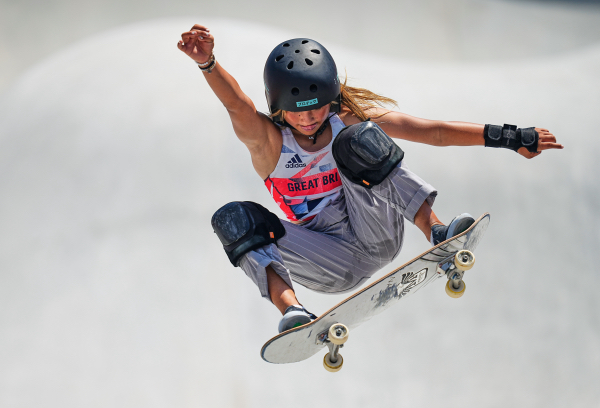
Sky Brown from Great Britain during women’s park skateboard at the Olympics at Ariake Urban Park, Tokyo, Japan on August 4, 2021. PICTURE: Ulrik Pedersen/NurPhoto via Getty Images.
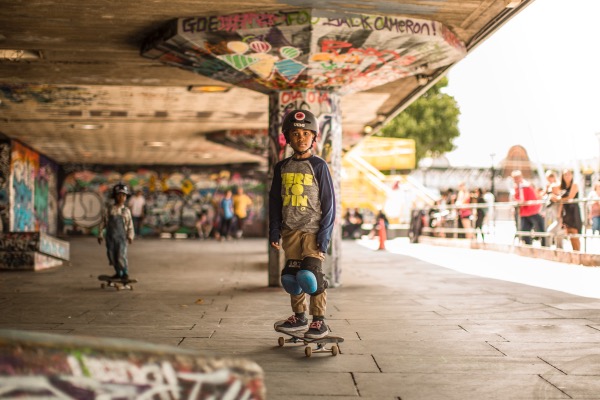
• Thirteen-year-old Olympian Sky Brown’s skateboard, children’s garments created by sustainable fashion designer, humanitarian and artist Bethany Williams, and Open Bionics’ 3D printed prosthetic, The Hero Arm, are among new acquisitions to be displayed at what was the former V&A Museum of Childhood. Now renamed the Young V&A, the Grade II* Bethnal Green institution is undergoing a £13m transformation ahead of reopening in 2023. The new interior fit-out, by firm AOC Architecture, will include three new galleries – Play, Imagine and Design – as well as interactive collection displays, a suite of dedicated learning workshops, an in-gallery design studio for visitors, and a new café and shop.
• The late Princess Diana has been honoured with an English Heritage Blue Plaque at her former flat in Kensington. Flat 60, Coleherne Court, Old Brompton Road, was her home between 1979 and 1981 during her courtship with Prince Charles. She shared it with three friends including Virginia Clarke who was at the unveiling ceremony this week. Diana, who died aged 36 in a Paris car crash in 1997, described her years at the property as “the happiest time of her life”, according to biographer Andrew Morton’s book Diana, In Her Own Words.
• Vincent Keaveny was this week elected as the 693rd Lord Mayor of the City of London. Alderman Keaveny succeeds Lord Mayor William Russell, who served a second year in office after his term was extended to ensure continuity of leadership during the current COVID-19 pandemic (the last time a Lord Mayor served a second year in office was in 1861 when William Cubitt was re-elected). The annual Lord Mayor’s Show is scheduled for Saturday, 13th November, and will be followed by Lord Mayor’s Banquet at Guildhall on 15th November.
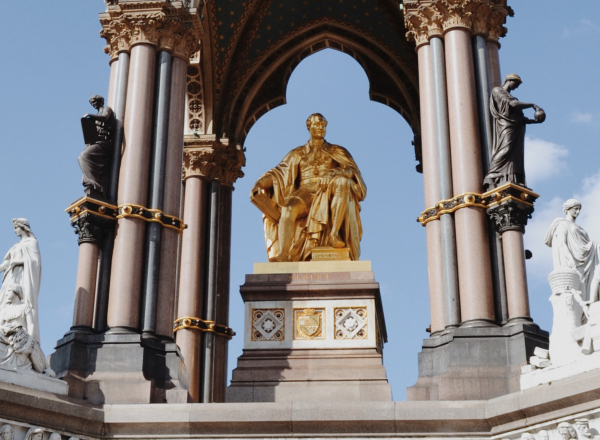
• Some 5,000 papers and photographs relating to the life and legacy of Prince Albert, consort of Queen Victoria, have been published online. The move, which marks the completion of the Prince Albert Digitisation Project, means some 22,000 archival documents, prints and photographs from the Royal Archives, the Royal Collection and the Royal Commission for the Exhibition of 1851 are now publicly available, many for the first time, through the website Prince Albert: His Life and Legacy which was launched in mid-2019 to mark the 200th anniversary of the Prince’s death. The new items predominantly consist of the Prince’s private and official papers and correspondence as well as excerpts from Albert’s now lost diaries, spanning the years from 1841 to 1852. Highlights include a note he wrote to Victoria on October, 1858, which reads: “I declare that I have every confidence in you. A”; a letter from 10-year-old Princess Louise to her father from Swiss Cottage, the life-sized playhouse he had installed for his children at Osborne House on the Isle of Wight, in which she reports cooking and making “some wafers and schneemilch” (a type of Austrian pudding); and, an annotated list of candidates for the role of Master of the Household in which Albert lists why they are unsuitable with reasons including ‘too old’ and ‘too useful to the Navy’ and ‘bad temper’ and ‘French mistress’.
• London Transport Museum are offering people the chance to go behind the scenes at its depot in Acton, West London, this weekend. The depot, which houses more than 320,000 objects from London’s transport history, will play host to a programme of events – ‘Underground Uncovered’ – which includes talks, vintage vehicle displays and family activities. Highlights include a talk by Siddy Holloway, a disused station history expert and co-presenter of the new Secrets of the London Underground TV series, the chance to try your hand at being a train operator in the Victoria Line driving cab, and the opportunity to watch a demonstration of restored London Underground signalling frames. The open days are being held from today until Sunday, 11am to 5pm. Admission charge applies. To book and see the full programme of events, see www.ltmuseum.co.uk/visit/depot/events.
• W1 Curates and artist Anthony James’ light exhibition inside the Marble Arch Mound has opened to the public with free entry to what has been a somewhat controversial attraction to continue. James’ Lightfield installation involves a series of 12 cubed light sculptures in three rooms inside the mound through which visitors will make their way after first visiting the viewing platform on top. James, who has described the cubes as alluding to the “mycorrhizal nature of birch tree forests”, says it’s the first time his works have been displayed and viewed in such a “fully immersive way”. Visitors are asked to book an entry time at www.themarblearchmound.com.
Send all items for inclusion to exploringlondon@gmail.com.
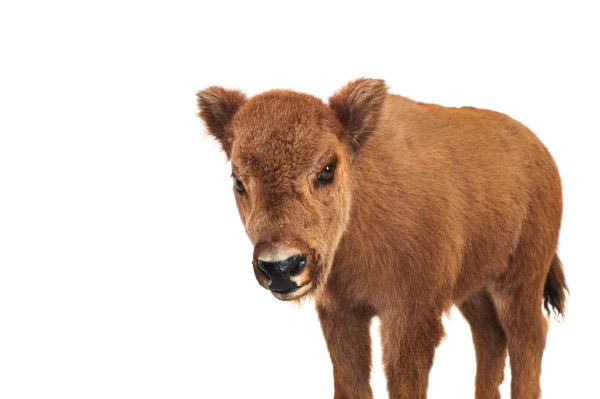
• The third and final part of the free exhibition, Our Broken Planet: How We Got Here and Ways to Fix It, has opened at the Natural History Museum. Following on from sections exploring the food we eat and the products we use, the third phase of the display explores the energy humans consume and how we can we create a greener, cleaner future. Specimens in the display include a juvenile European bison, illustrating an experimental rewilding project in Kent which is investigating if bison feeding habits will improve the forest’s biodiversity and store more carbon in the soil, blue-green algae collected during Captain Scott’s famed RRS Discovery expedition which is being used in the study of climate change, and the recently extinct Chinese paddlefish, a casualty of the global boom in hydroelectric dams. Entry to the South Kensington museum is free but visitors are encouraged to book a time ticket in advance to ensure entry. For more, see www.nhm.ac.uk/visit/our-broken-planet.html.
• The West End comes to Trafalgar Square this weekend with a line-up of free performances from top shows taking to the stage. Forming part of Westminster City Council’s Inside Out Festival and the Society of London Theatre’s #BackOnStage campaign, the West End LIVE event will feature the first ever West End LIVE appearances from award-winning musicals Hamilton and The Book Of Mormon, as well as an exciting roster of new shows including The Prince Of Egypt, Dear Evan Hansen, Cinderella, Back To The Future: The Musical and Pretty Woman. More than 30 acts will be involved in the free and unticketed event. For the full programme, see www.westendlive.co.uk.
• The first major UK exhibition of woodcuts by the leading abstract expressionist, Helen Frankenthaler, opened at the Dulwich Picture Gallery this week. Helen Frankenthaler: Radical Beauty brings together more than 30 works on loan from the Helen Frankenthaler Foundation which span the artist’s career from her first ever woodcut in 1973 to her last work published in 2009. Works include including Madame Butterfly (2000), East and Beyond (1973), Cameo (1980) and Freefall (1993). The display can be seen until 18th April. Admission charge applies. For more, see www.dulwichpicturegallery.org.uk.
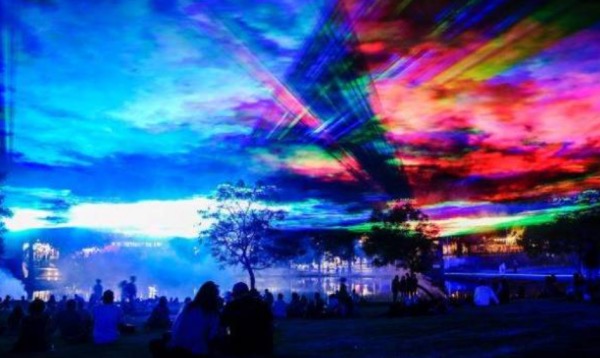
One Night Light Show by Leo Villareall as part of Totally Thames. PICTURE: Totally Thames.
• Totally Thames, the annual month-long celebration of London’s river, is celebrating its 25th iteration this month. Highlights this year include Leo Villareal’s Illuminated River which lights up the Thames every night (along with a special three-day celebration including guided tours, talks, sketching workshops and a one-off illumination event on 23rd September) as well as the chance to explore the foreshore with ‘Mudlarking’ at St Paul’s Cathedral, take a deep dive into the history of dockside communities with ‘The Islanders’ and see river-themed art from children across the globe come together at the National Maritime Museum in Rivers of the World. More than 80 events are included in the programme which runs until the end of the night. For more, see https://thamesfestivaltrust.org/whats-on.
• Muppet creator Jim Henson was honoured with an English Heritage Blue Plaque at his former Hampstead home this week. Henson lived in the home at 50 Downshire Hill between 1979 and 1982 and continued to use it as his base until his death in 1990. It stands opposite the former ‘Jim Henson’s Creature Shop’, where creatures from fantasy films including The Dark Crystal, The Storyteller and Labyrinth were created. Henson’s son Brian, chairman of the board at The Jim Henson Company, said it was an honour to have the property recognised, “knowing that he so admired and respected the talent in London, and that this is the place he called home when creating some of his most memorable productions.” For more, see www.english-heritage.org.uk/visit/blue-plaques/.
• Beerfest-Lite takes place in Guildhall Yard in the City of London today. The event , which runs from noon to 9pm – features beers from the Meantime, Windsor and Eaton, Hook Norton and Shepherd Neame breweries and a street vendor menu including paella, hot dogs, souvlaki and Caribbean dishes as well as a jazz performance from the Alvar Tree Frogs and Bavarian Oompah band Würst Brass. For more, see www.citybeerfest.org.
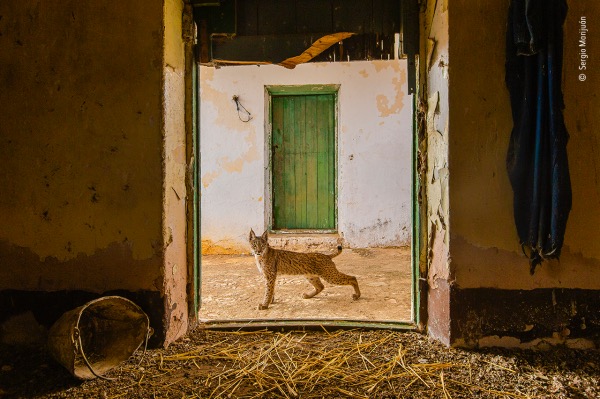
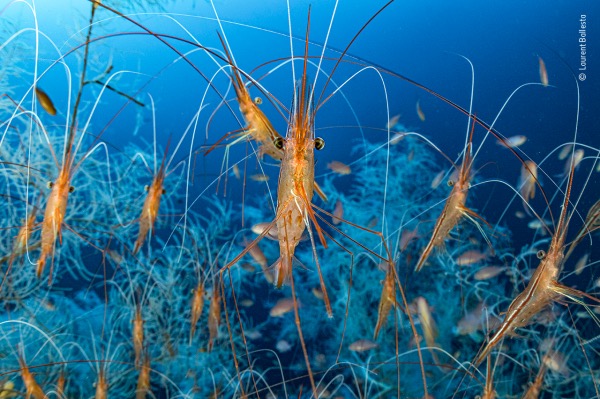
A selection of entries into this year’s Wildlife Photographer of the Year have been released ahead of the opening of the annual exhibition at the Natural History Museum in October. Among the images selected from the more than 50,000 entries in the 57th competition is that of Sergio Marijuán’s Lynx on the threshold depicting a young Iberian lynx pausing in the doorway of the abandoned hayloft where it was raised in Sierra Morena in Spain (pictured above), Gil Wizen’s Beautiful bloodsucker depicting a female ornamented mosquito in the process of biting (below), and Laurent Ballesta’s Deep feelers showing a vibrant community of narwhal shrimps in deep waters off the French Mediterranean coast (far below). The winners will be announced at a ceremony on 12th October. The exhibition at the South Kensington museum opens on 15th October at the Natural History Museum. To book tickets for the exhibition, head to www.nhm.ac.uk/visit/exhibitions/wildlife-photographer-of-the-year.html. The 2021 competition opens on 18th October.
St Leonards Court Air Raid Shelter in Sheen. PICTURE: Courtesy of Open House London
• Open House London kicks off this weekend and this year is being billed as a nine day ‘festival’ of the city’s architecture and urban landscapes. This year’s programme features “hidden gems” such asa World War II air raid shelter designed to appear like an old dovecote or garden storeroom in East Sheen (pictured right) and the UK’s only Brutalist Quaker Meeting House in Blackheath as well as buildings deemed at risk from demolition such as the soon to be vacated City Hall and Notting Hill’s landmark Trellick Tower. The programme also features five of London’s outstanding housing estates in a bid to celebrate those estates which helped support positive wellbeing during the COVID-19 pandemic. There’s also a number of important projects from some of the black, Asian and ethnic minority designers as well as annual programme favourites like 10 Downing Street, the HM Treasury building, and various churches across the metropolis. For the full programme of events (most of which are free but some of which have to be rebooked), check out https://open-city.org.uk/open-house.
• The first in a new series of ‘After Dark’ events kicks off at the London Transport Museum on Friday night. The nights, which run from 6,30pm to 9pm, come with a variety of themes starting with a night themed around the museum’s ‘Hidden London’ tours of ‘ghost’ stations and other secret sites across the Capital’s transport network. As well as the chance to explore the museum’s galleries free from crowds and enjoy the thematic fun, guests can also visit a pop-up bar featuring the museum’s signature red Routemaster cocktail. For full details of the events, head to www.ltmuseum.co.uk/news/new-season-after-dark-evening-events-kick-september.
• The work of award-winning illustrator Korky Paul will be on display at the Heath Robinson Museum on Saturday.Korky Paul’s Magic of Illustration (with a Flying Visit from Winnie and Wilbur) is the first solo exhibition of his original work which includes such characters as Winnie the Witch, The Fish Who Could Wish, Professor Puffendorf and Sir Scallywag. The exhibition will provide an insight into Korky Paul’s process of illustrating and preparing illustrations by drawing on his archive of drawings and other material relating to the development of the illustrations of each book and its publication. Korky Paul, whose work “often clearly shows the influence of Heath Robinson’s humorous drawings” according to the museum, has sold over 10 million of books worldwide in more than 35 languages. Runs until 9th January. Admission charge applies. For more, see www.heathrobinsonmuseum.org.
Send items for inclusion to exploringlondon@gmail.com.
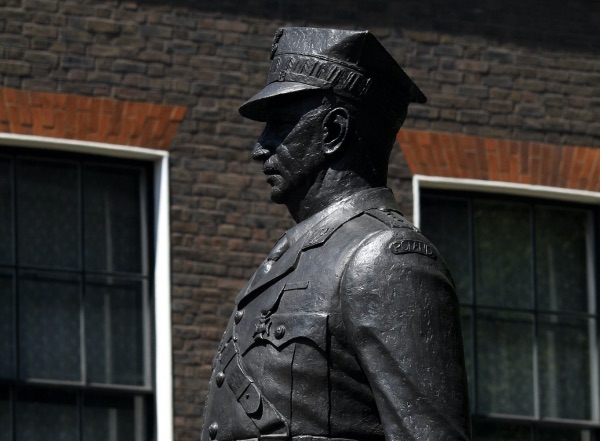
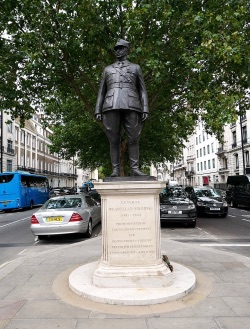
This statue in Portland Place in Marylebone commemorates wartime Polish Prime Minister and military leader (and British ally) Władysław Sikorski (1881-1943).
Larger than lifesize, the bronze statue depicts Sikorski in military uniform standing on a white stone plinth. It is the work of late British artist Faith Winter (also the sculptor of a controversial statue of Air Chief Marshal Sir Arthur Harris outside the RAF church on the Strand).
Funded by public subscription, this statue of Sikorski was erected on 24th September, 2000, and unveiled by the Duke of Kent. It stands near the Polish Embassy on a traffic island near the intersection with Weymouth Street.
There’s inscriptions on each face of the plinth which commemorate Sikorski as well as the “Soldiers, Seamen and Airmen of the Polish Armed Forces and the Resistance Movement” between 1939 – 1945. The east face inscription commemorates Polish involvement in World War II through a listing of battles.
Sikorski is also commemorated with a plaque adorning the Rubens Hotel in Buckingham Palace Road which served as his headquarters between 1940 until his death in an air crash in Gibraltar in 1943 (where there is another memorial to him).
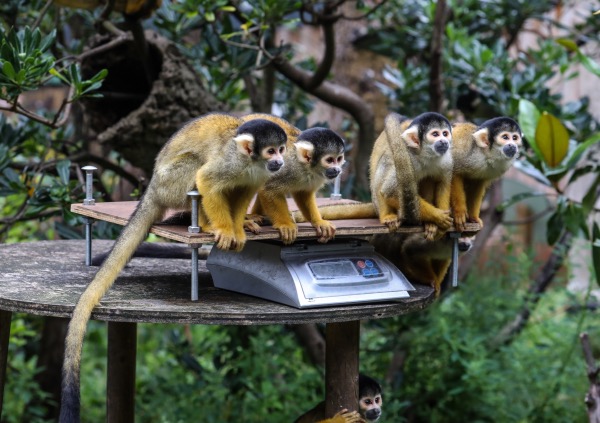
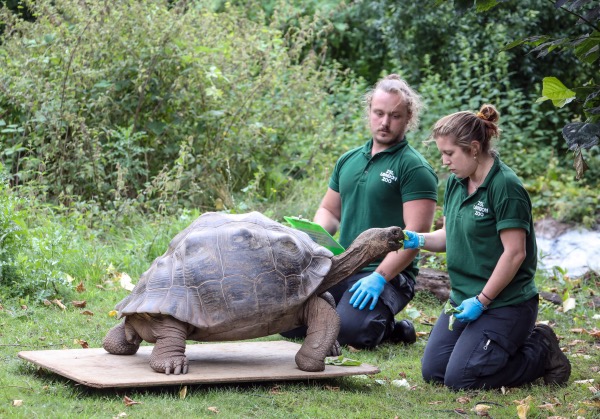
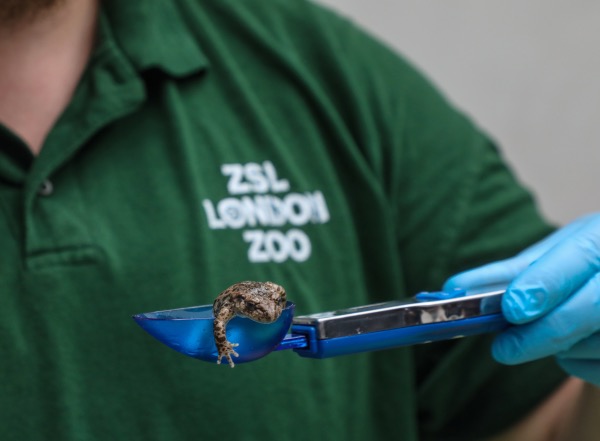
Last week saw the annual weigh-in of animals at ZSL London Zoo and all creatures great and small took part – from the Bolivian black-capped squirrel monkeys (pictured above) to the giant Galapagos tortoises and the tiny midwife toads (both pictured below). With more than 20,000 animals in the care of the zoo, the keepers spend hours through the year recording the heights and weights of all the animals. It’s an important task – the information aids them in monitoring the health and wellbeing of all those in the zoo. “It helps to ensure that every animal we look after is healthy, eating well, and growing at the rate they should – weight is a particularly important indicator of health and wellbeing,” says the zoo’s animal manager Angela Ryan. “A growing waistline can also help us to detect and monitor pregnancies, which is so important as many of the species at ZSL London Zoo are threatened and part of international breeding programmes, including today’s Asiatic lions and big-headed turtles. By sharing information with other zoos and conservationists worldwide, we can all use this knowledge to better care for the species we’re striving to protect.” For more, see www.zsl.org.
• The Northern Lights come to Greenwich this Bank Holiday weekend. The Greenwich + Docklands International Festival, promoted as London’s “leading festival of free outdoor theatre and performing arts”, features two major installations in the Old Royal Naval College grounds – the Borealis and We are Watching – from artist Dan Acher as well as the Greenwich Fair on Sunday. There’s also dance and theatrical performances – including Family Tree, a performance inspired by the life of Henrietta Lacks, an African American woman whose cells were harvested and cultivated without her consent after her death from cervical cancer in 1951, and Future Cargo, Requardt & Rosenberg, a contemporary sci-fi dance show – and pop-up events in neighbourhoods across the Royal Borough of Greenwich. The festival opens tomorrow and runs until 11th September. For the full programme of events and for more information, see https://festival.org/gdif/whatson/. For bookings for Borealis, head here.
• Art historian and broadcaster, Sir Kenneth Clark, has been honoured with an English Heritage Blue Plaque at his former Marylebone home. Clark (1903-1983), who is probably best known for the landmark 1969 BBC TV series Civilisation, lived in the property at 30 Portland Place between 1934 and 1939 – the period when he became director of The National Gallery and when he was knighted. Sir Kenneth and his wife Jane hosted parties at the property where guests included Winston Churchill and Vanessa Bell. Sir Kenneth, who also headed organisations including the Arts Council of Great Britain and the Independent Television Authority, is noted for having saved some of the nation’s most valuable artworks during World War II by having more than 800 paintings evacuated to rural Wales. He was also responsible for many of the Ministry of Information’s wartime films and sponsored emerging artists including Henry Moore and Graham Sutherland. For more, see www.english-heritage.org.uk/visit/blue-plaques/.
• A celebration of Phyllida Barlow’s art has opened at the Tate Modern on South Bank.ARTIST ROOMS: Phyllida Barlow spans the British artist’s 60 year career and features some of her large-scale sculptures as well as more than 30 works on paper. Highlights include Object for the television (1994), the only surviving work from Barlow’s 1990s series Objects for… and major installations such as untitled: brokenstage/hangingcontainer, 2012/2013 and untitled: upturnedhouse2, 2012. The exhibition is free to enter. For more, see www.tate.org.uk.
Send all items for inclusion to exploringlondon@gmail.com.
• A celebration of skateboarding and its impact on communities and culture of the past 45 years is underway at Somerset House.No Comply: Skate Culture and Community is a free exhibition featuring imagery from some of the world’s foremost photographers capturing skateboarding scenes from across the UK as well as early editions of skateboarding titles like Alpine Sports, Read and Destroy (R.A.D) and Skateboard!, and original film commissions including a new short film from London-based director Dan Emmerson and a new short by skate videographer Sirus f Gahan. The display also explores the influence of skateboarding on mainstream culture – everything from fashion brands to video games – and uses archival objects, photographs and personal anecdotes to share stories from skate communities in the UK and beyond as well as those of skateboarding-related non-profit initiatives including Free Movement Skateboarding and SkatePal. Runs until 19th September; pre-booking required. For more, see www.somersethouse.org.uk.
• On Now: More! Oliver Twist, Dickens and Stories of the City. This exhibition at the Charles Dickens Museum in Doughty Street, Bloomsbury, showcases a selection of letters, illustrations, postcards and photos – including a provocative artwork by artist Cold War Steve – as it explores the story of Oliver Twist and the inspiration behind it. Can be seen until 17th October; admission charge applies. For more, see https://dickensmuseum.com.
Send all items for inclusion to exploringlondon@gmail.com.
Inside Out Festival launch at The National Gallery. PICTURE: Nyla Sammons
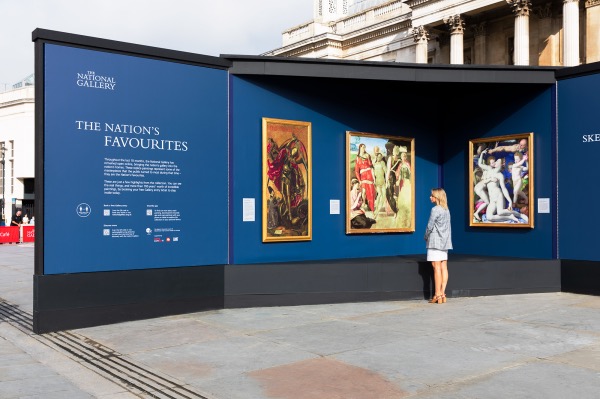
• Reproductions of some of The National Gallery’s most famous works have appeared on Trafalgar Square’s North Terrace as part of the City of Westminster’s ‘Inside Out’ festival. The life-sized replicas include Van Gogh’s Sunflowers (1888), Turner’s The Fighting Temeraire (1839), Botticelli’s Venus and Mars (1485), Titian’s Bacchus and Ariadne (1520-3) and John Constable’s The Hay Wain (1821). The display is being accompanied by ‘Sketch in the Square’, a programme of free, daily alfresco art activities with a strong emphasis on mindfulness and wellbeing. Other events in the Inside Out festival include the ‘Tusk Lion Trail’ in which 22 life-sized lion sculptures take visitors on a journey to trail some of the West End’s most iconic landmarks, a immersive light installation by artist Chila Burman at Covent Garden’s historic Market Building, and ‘Art of London’, in which five Royal Academy artists have brought their art to Piccadilly Circus and its surrounding streets. The ‘Inside Out’ festival is part of the ‘Westminster Reveals’ campaign which aims to encourage visitors to return to the city’s streets and enjoy the city’s cultural scene. For more on ‘Inside Out’ – which runs until 31st October, see www.westminster.gov.uk/insideout.
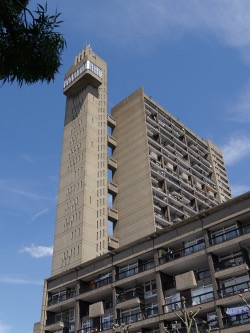
Trellick Tower (courtesy of Open House London).
• Usually held over a weekend, Open House London is this year a nine day celebration of London’s architecture and urban landscapes. Highlights this year include the chance to see inside 10 Downing Street, Ernő Goldfinger’s brutalist landmark Trellick Tower (pictured), a street of self-build timber houses in Lewisham and a former Victorian workhouse which has been transformed into a homeless shelter in Camden. There’s also the first chance to see a new design district in Greenwich, a yet to be opened community centre in Holborn and a special focus on the capital’s pubs and breweries. The full programme for the festival – which runs from 4th to 12th September and features hundreds of events – is now available online. For full listings, see www.openhouselondon.org.uk/2021.
• Historic sites and objects related to the landmark 1951 Festival of Britain have been officially recognised to mark the event’s 70th anniversary. The London sites include Calvary Charismatic Baptist Church in Tower Hamlets, built as part of the ‘live’ architectural exhibition of the Festival of Britain, which has seen its heritage listing upgraded from Grade II to Grade II*. Among the sites which have had their listings updated are: Royal Festival Hall which was designed by the London County Council Architect’s Department as part of their contribution to the Festival of Britain; the Church of St John located just off the Waterloo roundabout which, struck by a bomb during World War II, remained damaged until 1950 when the interior was remodelled in a neo-Georgian style for the festival; and, the Newbury Park Bus Station Canopy, which was designed with a high arched, open structure in what has been described as the modernist ‘Festival style’. The Festival of Britain, which ran from May to September, 1951, was a national exhibition and fair aimed at promoting British design, science, technology, architecture, industry, and the arts. Held in the aftermath of World War II, one of its key aims was to help foster a national sense of recovery.
Send all items for inclusion to exploringlondon@gmail.com.
• A 19-year-old graphic design student from Nottinghamshire has won a competition to find an emblem for the Queen’s Platinum Jubilee. Edward Roberts, who is studying at Leeds, said that for his design, “I wanted to give a modern twist to the iconic elements of St Edward’s Crown, and so I created a continuous line, which I felt was a fitting representation of The Queen’s reign”. Paul Thompson, vice-chancellor of the Royal College of Art and a member of the judging panel which selected the winning design said it takes people “on a simple line journey to create the crown and the number 70, beautifully capturing the continuous thread of Her Majesty The Queen’s 70-year reign”. “Drawn on a computer, the ingenious emblem works across all scales and the flow of the line gives us a sense of a human touch behind the digital design process.” The competition, which was was open to young people aged between 13 and 25 from all over the United Kingdom, was judged by a panel of graphic designers, visual artists and design professionals, experts from the V&A, the Royal College of Art, the Design Museum, and a representative from the Royal Household. It was chaired by V&A Director Tristram Hunt. As the winner, Edward will be invited to next year’s Jubilee celebrations including the ‘Platinum Party at the Palace’, and his winning design, along with the other nine shortlisted emblem design entries which will be revealed next year, will be displayed at the V&A in June. Edward will also receive a prize of £1,500 and a year’s free membership of the V&A.
• The £8 entrance fee to the Marble Arch Mound has been dropped for visitors during August after it closed only two days after opening following sustained criticism from visitors. In a statement Stuart Love, chief executive of the City of Westminster, apologised that the Marble Arch Mound wasn’t ready for visitors when it opened. “London’s businesses and residents have suffered through the pandemic and we built the Mound as part of our bigger plan to get people back into the City and into the shops, restaurants, theatres and to see the amazing sights the West End has to offer,” he said. “We wanted to open the Mound in time for the summer holidays and we did not want to disappoint people who had already booked tickets. We made a mistake and we apologise to everyone who hasn’t had a great experience on their visit.” The 25 metre high temporary attraction will reopen on Monday. For more, head here.
• Explore the stories of real-life pets and their owners in a new feature at the Museum of The Home in Shoreditch. Pet Life – which features animations, projections, hands on activities and stories written by author and storyteller Bernadette Russell – aims to show “the joy, companionship and challenges our pets bring to the home”. Runs until 31st October. Admission charge applies. For more, see www.museumofthehome.org.uk/whats-on/exhibitions-and-installations/pet-life/.
Send items for inclusion to exploringlondon@gmail.com.
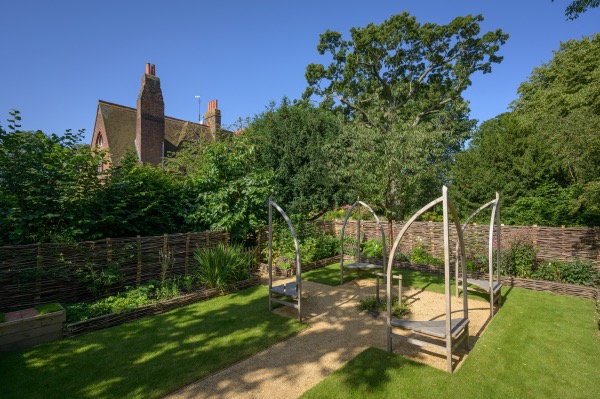
A lost ‘garden snug’ has been recreated at 19th century designer William Morris’ Arts & Crafts home, Red House, in Bexleyheath. Inspired by the original notes of architect Philip Webb, the design draws on an ordnance survey map from when Morris and his family were residents at the house between 1860-1865 which shows outdoor spaces separated into different ‘rooms’. Photos of the garden from the 1890s were also used to guide the project. The 100 square metre garden is enclosed with traditional hazel and hawthorn and the planting inside its bounds references some iconic Morris & Co designs like ‘Trellis’, ‘Daisy’ and ‘Fruit’. At the centre is a Tibetan cherry (Prunus serrula) and the garden also features traditional cottage plants like Shasta daisies, columbines, honeysuckle, irises, peonies, jasmine and mock orange. Around the central tree are specially commissioned wooden seats from Scottish craftsman Angus Ross with distinctive two-metre high arches designed to echo the house’s medieval-inspired architecture. For more, see www.nationaltrust.org.uk/red-house.
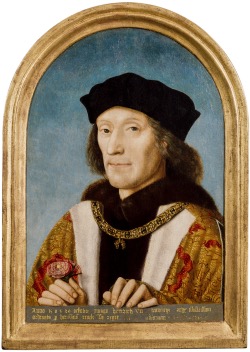
• More than 150 of the finest portraits of royal families over five dynasties are on show at the National Maritime Museum in Greenwich.Tudors to Windsors: British Royal Portraits, which is being run in conjunction with the National Portrait Gallery, features famous paintings, miniatures, sculpture, photographs, medals and stamps from the Tudor, Stuart, Georgian, Victorian and Windsor dynasties. Highlights include the earliest known portrait of Henry VII (also the oldest artwork in the exhibition) which was painted in 1505 by an unknown artist, Flemish artist Marcus Gheeraerts the Younger’s famous ‘Ditchley Portrait’ of Elizabeth I, portraits of Charles II and his mistresses, early 19th century domestic photographs of Queen Victoria and her family, and a selection of paintings and photographs of Queen Elizabeth II by Cecil Beaton and Annie Leibovitz. Runs until 31st October. Admission charge applies. For more, see www.rmg.co.uk/TudorsWindsors.
• Westminster Abbey has announced a new memorial to Sir Roger Bannister, the first man to run under a mile in four minutes. The abbey said the memorial ledger stone to Bannister, who later became a neurologist, will be placed in what is known as ‘Scientists’ Corner’ in the building’s nave, close to the graves of scientists Sir Isaac Newton and Charles Darwin as well as the ashes of Stephen Hawking. “Throughout his life Sir Roger Bannister reached out for that which lay beyond,” said the Dean of Westminster, the Very Reverend Dr David Hoyle, in a statement. “As a sportsman, pushing himself towards a prize some considered beyond human reach, as a scientist ever eager for deeper understanding of neurology. We are delighted that his memory and his achievement will be set in stone in the Abbey. He ran the race set before us all.” Bannister is famous for having run a mile in three minutes, 59.4 second at Oxford on 6th May, 1954 – a record which stood for almost nine years.
• Be among those transforming the Tate Modern’s Turbine Hall into an “ever changing work of art”. Visitors are invited to join in covering the hall’s floor with their own jottings using coloured drawing materials as part of artist Ei Arakawa’s interactive installation, Mega Please Draw Freely. The installation, which can be contributed to until 29th August, kicks off UNIQLO Tate Play – a new free programme of playful art-inspired activities for families, being in partnership with UNIQLO, at the Tate Modern. The project, which has seen the Turbine Hall floor covered with a temporary surface allowing it to be drawn upon, is inspired by the Gutai group, radical Japanese artists who wanted to change the world through painting, performance and children’s play and, in particular, the group’s ‘Outdoor Gutai Art Exhibition of 1956’ in which Yoshihara Jirō created the groundbreaking work Please Draw Freely, a large board on which people were free to draw and paint. Visitors can access Mega Please Draw Freely by booking a free collection display ticket online at www.tate.org.uk.
• Send all items for inclusion to exploringlondon@gmail.com.
• The 25 metre high viewpoint in the grass and tree covered Marble Arch Mound opens to visitors on Monday. Created by Westminster City Council, the mound – which has been designed by Dutch architectural studio MVRDV, provides expansive views of Oxford Street, Hyde Park, Mayfair and Marylebone. Visitors can either climb the 130 stairs to the top or take a lift. The mound will be open to the public until January next year. Ticket holders are also invited to visit W1Curates art installation Lightfield, led by British/American artist, Anthony James, which is located inside the mound. For more information and to book tickets, see www.westminster.gov.uk/news/get-set-summit-marble-arch-mound-summer.
• The history, art and culture of the Native Americans who met the passengers of the Mayflower is explored in a new exhibition at the Guildhall Art Gallery. Opening on Friday, Wampum: Stories from the Shells of Native America centres on a newly-crafted wampum belt created by the Wampanoag people of Massachusetts alongside historic material from the British Museum. Wampum belts are the creative expression of the Wampanoag people, with each shell on the belt imbued with memory and meaning. The display is presented by The Box, Plymouth, and supported by Arts Council England as part of commemorations of the 400th anniversary of the sailing of the Mayflower from England to America. Runs until 5th September. Entry is free (booking required). For more, head here.
• On Now: Paula Rego. This exhibition at Tate Britain – the largest retrospective of Paula Rego’s work to date – features more than 100 works including collage, paintings, large-scale pastels, drawings and etchings as it showcases the career of the Portuguese-born artist. As well as early work from the 1950s, the display features her large pastels of single figures from the acclaimed Dog Women and Abortion series and richly layered, staged scenes from the 2000s. Runs until 24th October. Admission charge applies. For more, see www.tate.org.uk/whats-on/tate-britain/exhibition/paula-rego.
Send all items for inclusion to exploringlondon@gmail.com.
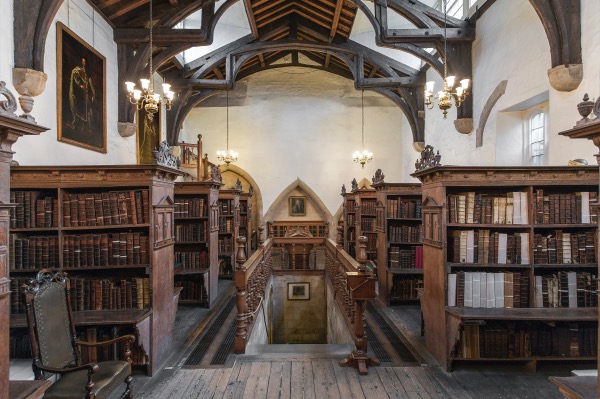
Westminster Abbey Library, part of of the ‘Hidden Highlights’ tour. PICTURE: Dean and Chapter of Westminster.
• A lost medieval sacristy used by Westminster Abbey’s monks in the 13th-century which has been revealed in the abbey grounds has been opened to the public. A visit to the dig uncovering the former sacristy is one of the stops on new ‘Hidden Highlights’ tours which also take in other areas not usually open to the public including the Jerusalem Chamber where King Henry IV died in 1413 and, the Library, formerly part of the monk’s dormitory which features a 15th century oak roof and 17th century bookcases (pictured above). The tour, which finishes in the Diamond Jubilee Galleries which have been closed since the start of the pandemic, is part of a summer of events at the abbey which also includes open air cinema, visits to the abbey after dark, live music performances and a chance to look behind the scenes at the abbey’s role in the 2011 wedding of the Duke and Duchess of Cambridge. For more, see www.westminster-abbey.org/abbey-news/lost-medieval-sacristy-opens-to-public-for-summer-festival-of-events.
• A new exhibition looking at the central role food plays in Black entrepreneurship and identity in the city’s south east has opened at the Museum of London Docklands.Feeding Black: Community, Power & Place puts four businesses in the spotlight – Livity Plant Based Cuisine in Croydon, Woolwich businesses African Cash & Carry and Junior’s Caribbean Stall, and Zeret Kitchen in Camberwell – and tells their stories through objects, recipes and videos as well as newly commissioned photography by Jonas Martinez and original oral histories and soundscapes by Kayode ‘Kayodeine’ Gomez. The free display can be seen until 17th July next year in the London, Sugar & Slavery gallery. For more, see www.museumoflondon.org.uk.
• Ride the dodgems at Somerset House.Dodge, described as a “thrilling open air experience” that takes an “inventive twist on the traditional fairground”, features dodgem cars and installations from acclaimed artists as well as food and drink and DJ sets. The event runs until 22nd August. There is free entry to the site but charges apply for the dodgem rides. For more, see www.somersethouse.org.uk. The event is part of the #LetsDoLondon campaign, described as the “biggest domestic tourism the capital has ever seen”.
Send all items for inclusion to exploringlondon@gmail.com.
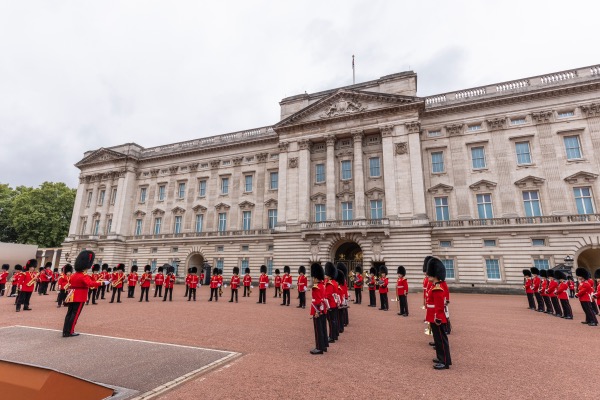
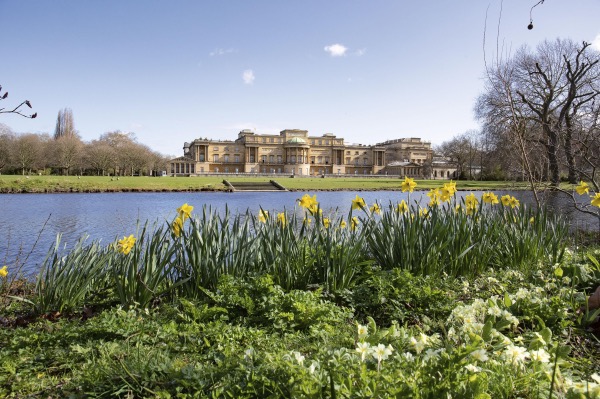
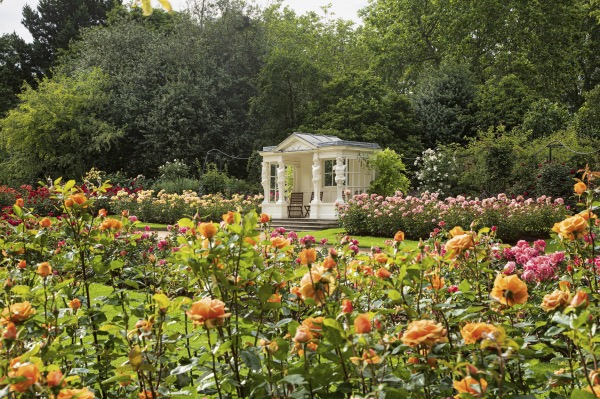
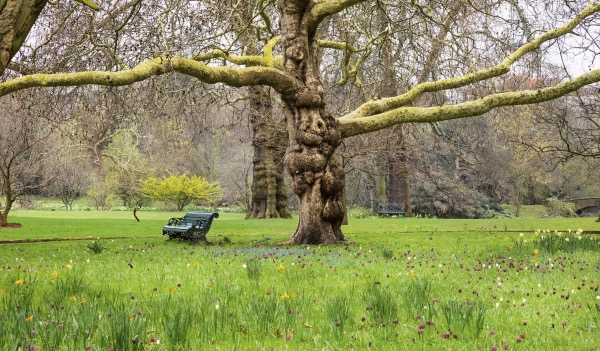
The historic 39 acre garden at Buckingham Palace opened to the public for the first time last Friday as part of the palace’s summer opening. Visitors can follow a route that takes in the 156-metre Herbaceous Border, plane trees which were planted by and named for Queen Victoria and Prince Albert, and views of the island and its beehives across the 3.5-acre lake. There’s also the opportunity to enjoy a picnic on the lawns and guided tours of the south-west of the garden with features including the Rose Garden, summer house and wildflower meadow. The current landscape dates back to the 1820s when King George IV turned Buckingham House into a place. It features more than 1,000 trees, the National Collection of Mulberry Trees (mulberry trees were first planted by King James I in 1608), 320 different wildflowers and grasses, and, since 2008, five beehives. The Queen traditionally hosts three garden parties in the gardens annually which are each attended by 8,000 guests, who consume around 27,000 cups of tea, 20,000 sandwiches and 20,000 slices of cake. The gardens are open until 19th September. Admission charge applies. For more, see www.rct.uk.
• A new family friendly exhibition celebrating Paddington Bear opens at the British Library tomorrow. The Story of a Bear features more than 50 books, documents, film clips and original artworks as it explores Michael Bond’s creation of the much loved children’s book character. Highlights include a first edition of Bond’s A Bear Called Paddington published in 1958, Barbara Ker Wilson’s original review of the book, photographs and memorabilia of Michael Bond on loan from his family as well as original illustrations of Paddington stories by artists including Peggy Fortnum, David McKee and RW Alley. There are also clips from the Paddington movies and sound recordings featuring Bond speaking about his creation. The exhibition is ticketed (booking in advance recommended). Admission charge applies. For more, see www.bl.uk/events/paddington-the-story-of-a-bear.
• Pioneering neurologist James Samuel Risien Russell has been honoured with an English Heritage Blue Plaque at his former home and practice in Marylebone. Russell, born in 1863 in what was then British Guiana (now Guyana), was one of the UK’s first Black consultants and played a critical role in establishing the British school of neurology in the 1890s. His contribution in furthering our understanding of many conditions of the nervous system and mental health issues has only recently come to light thanks to new research by the Windrush Foundation. Dr Risien Russell lived and worked at 44 Wimpole Street from 1902 until his death in March, 1939. For more, see www.english-heritage.org.uk/visit/blue-plaques.
• A display of images from Sir Quentin Blake have gone on show at the Foundling Museum in Bloomsbury to mark his gift of 24 drawings to the museum. Curated by children’s author and illustrator Lauren Child, Quentin Blake: Gifted features pictures form two series – Children and Dogs and Children with Birds & Dogs – as well as a range of responses from writers including poetry collective 4 BROWN GIRLS WHO WRITE, children’s author and poet Michael Rosen and Scottish playwright, poet and novelist Jackie Kay. Admission charge applies. Runs until 26 September. For more, see https://foundlingmuseum.org.uk/events/quentin-blake-gifted/.
Send all items for inclusion to exploringlondon@gmail.com.