Around London – Europe’s oldest intact book at British Library; 100 days to the Games; world’s largest archaeological archive; the London Marathon; and, Turner at the National Gallery…

• The British Library has paid £9 million for a 7th century text, the St Cuthbert Gospel, which is also the oldest intact European book. The acquisition follows the library’s most successful fund-raising effort ever – it included a £4.5 million grant from the National Heritage Memorial Fund. The book – a Gospel of John bound in beautifully tooled red leather – was produced in north-east England in the late 7th century and was placed in the saint’s coffin after his death on the Isle of Lindisfarne in 698. It was retrieved when the coffin was opened at Durham Cathedral in 1104. The Gospel is on display in the Sir John Ritblat Treasures Gallery at the library in St Pancras and following a conservation review, it is anticipated it will soon be displayed with the pages open for the first time. There will be a public event celebrating the acquisition on 15th May. For more, see www.bl.uk/whatson/events/may12/index.html.

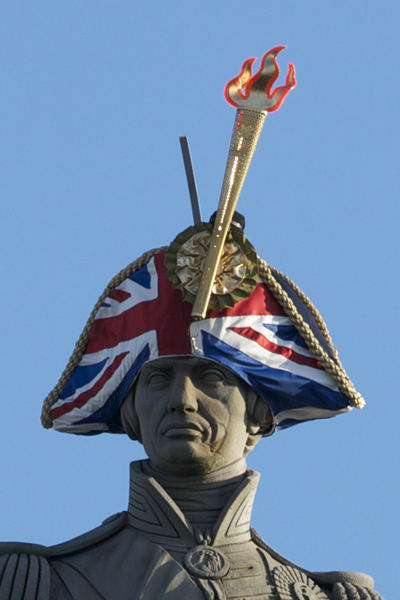
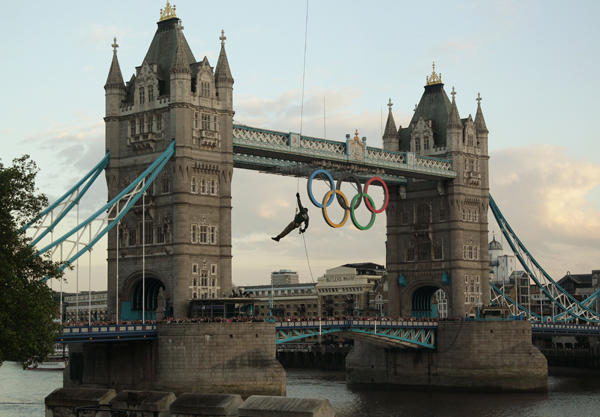
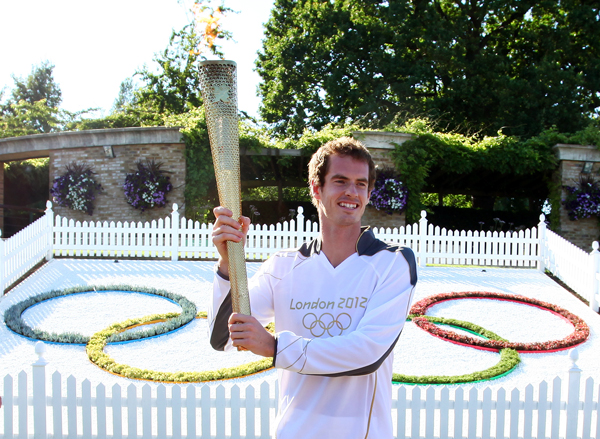
• London this week marked 100 days until the Opening Ceremony of the 2012 Olympic Games. This included unveiling the latest installation of the Olympic rings – made of 20,000 plants the 50 metre long rings are located in the Royal Botanic Gardens at Kew in the city’s west and can be seen from planes on the Heathrow flight path. The organising committee also announced the Red Arrows aerobatic display team will perform a nine-ship flypast in ‘big battle’ formation on the day of the Opening Ceremony (27th July) and stated that the games motto will be ‘Inspire a Generation’. For more, see www.london2012.com.

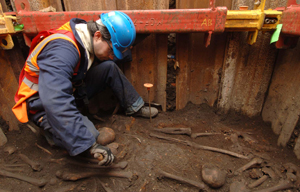
• The Museum of London’s archaeological archive – known as the London Archaeological Archive and Research Centre (LAARC) – is officially the largest in the world according to Guinness World Records. The archive contains more than five million artefacts and the records of almost 8,500 excavations dating back to 1830. Items in the archive include shoes dating back to Roman times, a 200-year-old set of false teeth, ‘witching bottles’ including one with human hair and toenails, and coffin plates from London’s cemeteries. The world record has been recorded as part of World Record London, a series of world record breaking events being held in the run-up to the Olympics. Others have included the Faberge Big Egg Hunt.

• Thousands of people are expected to take part in the Virgin London Marathon this Sunday. The 26.2 mile route starts in Blackheath, passes through Woolwich and Greenwich and crosses the Thames at Tower Bridge before looping around the east end of London, through Canary Wharf, and the west along The Highway (formerly known as The Ratcliffe Highway) and Embankment to Parliament Square, Birdcage Walk and finally to Buckingham Palace. The first London marathon was run in 1981. For more, see www.virginlondonmarathon.com.

• On Now: Turner Inspired – In the Light of Claude. The first major presentation of 17th century artist Claude Gellée’s influence on the English romantic artist J M W Turner, the exhibition focuses on Claude-inspired themes which run through Turner’s work including “the evocation of light and air in landscape, the effect of light upon water and his often radical reworking of contemporary scenes”. The display includes works from large scale oils on canvas through to leaves from Turner’s pocket sketchbooks. Interestingly, the exhibition also explores the story behind the so-called Turner Bequest – that on his death, Turner linked himself to Claude forever by leaving the National Gallery two pictures – Dido building Carthage (1815) and Sun rising through Vapour: Fishermen cleaning and selling Fish (before 1807) –  on condition that they were hung between two pictures by Claude, Seaport with the Embarkation of the Queen of Sheba (1648) and Landscape with the Marriage of Isaac and Rebecca (1648). Runs until 5th June. Admission charge applies. For more, see www.nationalgallery.org.uk.

Around London – Of a dramatic Boat Race; celebrating bluebells; Cockney slang; WT Stead; and, Titian’s early masterpiece…

 • Cambridge took the line honours over Oxford in this year’s Boat Race on the Thames in what has been billed as one of the most dramatic races in its 158 race history. The race was interrupted when a swimmer, described as an anti-elitist protestor, was spotted in the water and, following a restart near the Chiswick Eyot, the boat crews clashed oars and one of the Oxford crew lost his oar’s spoon. Cambridge pulled steadily ahead with Oxford an oar down and was declared the winner by four and a quarter lengths. The presentation ceremony was subsequently not held after Oxford’s bow man collapsed and was rushed to hospital where was reported to be recovering well. The win takes Cambridge’s victories to 81 compared to Oxford’s 76. For more, see http://theboatrace.org. (For more on the history of the Boat Race, see our entry from last year).

Epping Forest’s bluebells are out in force and to celebrate the City of London Corporation is holding a series of events including an art exhibition at The Temple in Wanstead Park. The exhibition, Out of the Blue, celebrates the bluebells of Chalet Wood and features a “miscellany of bluebell images, artwork, folklore and fairies”. A free event, it runs until 27th May. This Sunday the Temple will also host an art afternoon with local artist Barbara Sampson and on 29th April photographer Robert Good will hold a course on photography around the forest. Both are free events. For more details, see www.cityoflondon.gov.uk/epping.

• “Porky pies” (lies) is the most used Cockney phrase, according to a survey of Britons on their knowledge and use of Cockney. The Museum of London survey of 2,000 people, including 1,000 from London, also found that “apples and pears” (stairs) was the most well-known Cockney phrase and that while a majority of people knew what common phrases like “brown bread” meant (in this case dead), only small percentages of people used them. And while 63 per cent of respondents believed Cockney slang was crucial to London’s identity, 40 per cent were convinced it is dying out and 33 per cent were sad at its passing. Strictly speaking, a ‘Cockney’ is someone who was born within the sound of bow bells at the church of St Mary-le-Bow in Cheapside, but according to Alex Werner, head of history collections at the museum, “people from all corners of London identify themselves as being Cockney”. He said that while for many people “Cockney rhyming slang is intrinsic to the identity of London”, the research the Cockney dialect “may not be enjoying the same level of popularity”. The research found that among the least known Cockney rhyming slang phrases included “white mice” (ice), “donkey’s ears” (years), and “loop de loop” (soup). For more from the museum, see www.museumoflondon.org.uk.

• The life of influential newspaper editor and Titanic victim, William Stead, will be celebrated at a two day conference next week. Hosted by the British Library, in association with Birkbeck College and the University of Birmingham, the conference will feature 40 speakers from around the world. Stead, who was editor of The Pall Mall Gazette, was a controversial figure who is credited with being one of the inventors of the modern tabloid. He died on the Titanic‘s maiden voyage – the 100th anniversary of which is being marked this month. W.T. Stead: A Centenary Conference for a Newspaper Revolutionary takes place from 16th to 17th April, 2012. Tickets (£45 for one day or £85 for two days) can be booked by visiting the box office in the St Pancras building or phoning 01937 546546. The programme for the conference can be found at https://sites.google.com/site/stead2012/.

• On Now: Titian’s First Masterpiece: The Flight into Egypt. The National Gallery is hosting a new exhibition focused on the then young artist’s creation of the magnificent painting The Flight into Egypt in the 16th century. The artwork, lent to the National Gallery by the Hermitage Museum, St Petersburg, has recently been restored and the exhibition represents the first time the painting has been seen outside Russia since 1768 when Empress Catherine the Great purchased it in Venice. Admission is free. Runs until 19th August. For more, see www.nationalgallery.org.uk.

Around London – At home in World War II; Hogwarts comes to London; Kew Steam Bridge Museum to be upgraded; and, V&A looks at British design…

• A new exhibition in which visitors can experience life during the Second World War through the eyes of a London family opens today at the Imperial War Museum in London. A Family in Wartime explores the lives of William and Alice Allpress and their 10 children at their South London home during the war as the face events such as the Blitz and the evacuation of the city. The display includes firsthand audio accounts from members of the family, photographs and a detailed model of the family home at 69 Priory Grove. Two of the family’s sons served in the military during the war while three of the daughters joined the Women’s Voluntary Service. Artefacts on display include many everyday household items such as cookery books which gave advice on cooking with limited rations and stirrup pumps which people were encouraged to wear in case of incendiary bombs as well as newspaper clippings, propaganda posters and film footage. There will also be artworks depicting wartime living by artists including Henry Moore, Wilfred Haines and Leila Faithful. Admission is free. For more, see www.iwm.org.uk/visits/iwm-london.

Hogwarts has come to London’s north with the opening of the new Warner Bros Studio Tour in Leavesden. The tour, which was launched this week, features sets, costumes and pros from the Harry Potter series of films and reveals how special effects and animatronics were used in the movies. Highlights include the chance to visit Hogwarts Great Hall, Dumbledore’s office and Diagon Alley as well as see Harry’s Nimbus 2000, the flying Ford Anglia owned by the Weasleys and Hagrid’s motorcycle. For more information, see www.wbstudiotour.co.uk.

The Kew Bridge Steam Museum in London’s west has been awarded a £1.84 million Heritage Lottery Fund grant for a restoration project that will see new visitor facilities and more modern displays as well as new outdoor water-based actvities. Project Aquarius will also see outstanding repairs to the Grade I and Grade II listed buildings – described as the most important historic site of the water supply industry in the UK – completed. The museum, which opened 37 years ago, features four giant working Cornish steam pumping engines as part of its displays telling the story of London’s water supply and attracts some 15,000 visitors a year. For more, see www.kbsm.org.

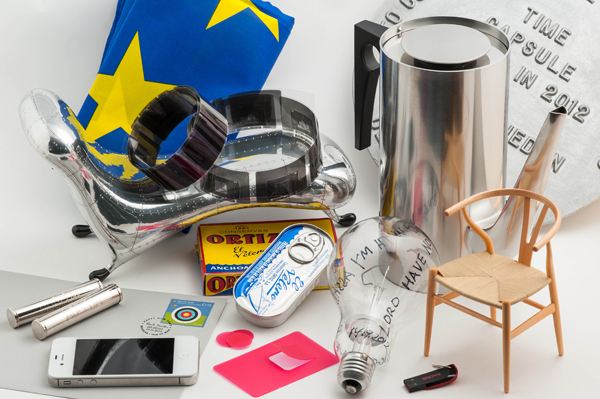
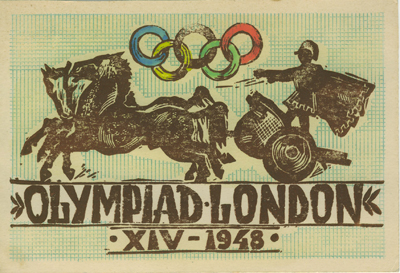
• On Now: British Design 1948-2012: Innovation in the Modern Age. The V&A’s major spring exhibition, this is a showcase of British design from the 1948 ‘Austerity Olympics’ to present day and features more than 300 objects – from the 1959 Morris Mini Minor to a model of the recently completed Zaha Hadid-designed London Aquatics Centre. Highlighting significant moments in British design, the exhibition looks not only at 60 years worth of fashion, furniture, fine art, graphic design, photography, ceramics, architecture and industrial design but also investigates how the UK continues to nuture artistic talent and the role British design and manufacturing plays around the world. Admission charge applies. Runs until 12th August. For more see www.vam.ac.uk.

We’re taking a break over Easter – posts will resume next Tuesday. In the meantime have a great Easter!

Around London – Crown Jewels polished for Diamond Jubilee; Diana’s dresses at Kensington Palace; a plaque for Ziggy Stardust; and At Home with the World…

• A revamped Crown Jewels display opens today at the Tower of London to mark the Diamond Jubilee of Queen Elizabeth II. The new display features graphics, music and newly restored film footage and will focus on the coronation ceremony as its central theme, exploring how the regalia are used in the ceremony. The regalia – which includes some of the most extraordinary diamonds in the world such as the Star of Africa and Koh-i-Nur – is being displayed in the order in which it is used at the coronation ceremony. The Crown Jewels have been on show to the public at the Tower of London since at least 1661 after they were remade for King Charles II’s coronation. The previous collection had been largely destroyed in the Civil War although some pieces survived including a gilt silver spoon probably made for King Henry II or King Richard I (the “Lionheart”). For more information, see www.hrp.org.uk/TowerOfLondon/.

Five dresses worn by Diana, Princess of Wales, have gone on display at Kensington Palace  which re-opened to the public this week following a £12 million overhaul. The five dresses include a black silk taffeta gown (designed by Emanuel) which Diana wore to a fundraising event at the Goldsmith’s Hall in 1981 – her first official engagement with Prince Charles as well as a formal dinner dress of ivory silk (Catherine Walker) created for a State Banquet for the King and Queen of Malaysia in 1993 and a black ribbed silk shift evening dress (Gianni Versace) worn to the London premiere of Apollo 13 in Hammersmith in 1995. For more on the revamp of the palace see our earlier post. Or visit www.hrp.org.uk/KensingtonPalace/.

• A plaque commemorating the site where the iconic image for the cover of David Bowie’s 1972 album The Rise and Fall of Ziggy Stardust and the Spiders of Mars was photographed has been unveiled in the West End. The plaque at the somewhat innocuous site at 23 Heddon Street, just off Regent Street, was installed by the Crown Estate and unveiled this week by Gary Kemp of Spandau Ballet. The image for the album cover was shot by the late photographer Brian Ward who managed to persuade Bowie to step outside the ‘studio’ space he had rented upstairs despite the fact it was a cold, wet January night.

• On Now: At Home with the World. This exhibition at the Geoffrye Museum explores the cosmopolitan nature of London’s homes over the past 400 years and looks at how diverse cultures have helped shaped the homes – covering everything from Chinese porcelain and the tea craze of the 1700s to the use of Islamic and Indian patterns in the 1800s, the popularity of Scandinavian and American design in the 1900s and the globalism of today. The period rooms on show at the museum have been reinterpreted to highlight the international influences. This is one of a series of Stories of the World: London exhibitions taking place across the city which are exploring four aspects of life – home, identity, journeys and place – as part of the London 2012 Cultural Olympiad program. Runs until 9th September. Entry is free. For more, see www.geffrye-museum.org.uk.

LondonLife – The Old Bailey and the notorious case of Dr Crippen…

Image

As well as being relevant to our recent focus on author Charles Dickens (as well as featuring in his works, some suggest he worked here as a court reporter), the Old Bailey (home of the Central Criminal Court) has been in the news recently for its role in the conviction of the  infamous murderer Dr Hawley Crippen. An American, Dr Crippen was tried and found guilty at the court of poisoning his first wife Cora and then of cutting her up (he was found to have hidden the body parts in the cellar of their home in Hilldrop Crescent, Holloway). He was hanged in 1910, having been arrested while fleeing on a ship to Canada with his mistress Ethel Le Neve. Now reportedly come plans to hold a posthumous retrial of the case in front of a judge at the Islington Museum. The event, which will be held later this year, is being organised by Archway-based human rights solicitor Greg Foxsmith and will see John Cooper, QC, defending Dr Crippen. The move comes follows an earlier investigation by US scientists who concluded from DNA evidence that the victim may have in fact been male. For a great read on the case of Dr Crippen – and the important role the new invention of the wireless telegraph played in his capture – have a look at Erik Larsen’s Thunderstruck.

Around London – Your Roman influences; celebrating the City; and, of Journeys and kinship…

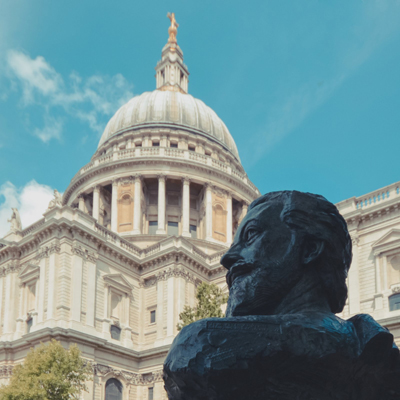
• The Museum of London is calling on Londoners to submit images showing “Roman influences in London today” as part of its forthcoming Our Londinium 2012 exhibition, a revamping of the museum’s Roman gallery. In what is the largest update made to the museum’s Roman gallery since it opened in 1994, the  reworked gallery looks at parallels between Roman London and the city today and features important Roman artifacts such as a bust of the Emperor Hadrian found on the Thames foreshore (part of the British Museum’s collection, this will be displayed for six months before being replaced by a replica) alongside modern objects such as the V for Vendetta masks worn by protestors in the Occupy movement. The exhibition is being co-curated by young people from Junction, the Museum of London’s youth panel, and they’re calling on people to submit their images showing how the city’s Roman past still resonates even today (see example pictured). For details on how to submit images via email of Flickr, head to www.museumoflondon.org.uk/ol2012map.

Secrets will be revealed, we’re promised, as part of the City of London’s Celebrate the City: four days in the Square Mile event to be held from 21st to 24th June. Events held in the City our the four days, many of which will be free, include a musical extravaganza to launch the event in Guildhall Yard as well as exhibitions, walks and talks, a chance to explore buildings like Livery Company Halls, the Bank of England and the Mansion House, family entertainment at the Cheapside Fayre and music and activities at sites across the Square Mile including the Barbican Centre, Museum of London and churches. We’ll have more to come on this. For now, head to www.visitthecity.co.uk/culture2012 for more information.

• Architectural historian and former director of the Sir John Soane Museum, Sir John Summerson, has been honored with an English Heritage blue plaque at his former home  London’s north-west. Sir John (1904-1992) lived at the property at 1 Eton Villas in Chalk Farm for more than 40 years. He was the director of the Sir John Soane Museum from 1945 to 1984. For more, see www.english-heritage.org.uk/discover/blue-plaques/.

• Architecture students are being invited to submit designs for a new stone seating area on the City thoroughfare of Cheapside. The winning student will work with trainee masons from the Cathedral Works Organisation and The Mason’s Company with the new seating area unveiled in October. For an application pack and full brief, see For an application pack and full brief, please contact Melanie Charalambous, Department of the Built Environment, City of London Corporation, PO Box 270, Guildhall, London, EC2P 2EJ or call 020 7332 3155 or email stonebench@cityoflondon.gov.uk.

• Now On: Journeys and kinship. This display at the Museum of London Docklands showcases the creative output of a community collaboration project which involved a group of young Londoners working with visual artist Jean Joseph, Caribbean Calypso musician Alexander D Great and Yvonne Wilson from training organisation Equi-Vision. The centrepiece of the exhibition – which explores themes highlighted in the museum’s permanent gallery, London, Sugar and Slavery, on the city’s involvement in the trans-Atlantic slave trade  – is an artwork by Joseph entitled Sales Over Centuries, 2010, which features plaster face casts of 42 people from the African diaspora who were born in or currently live in London. In response to it, the young Londoners have created their own works including face casts, music, film and photography. Runs until 4th November. Entry is free. For more, see www.museumoflondon.org.uk/Docklands/.

Around London – John Carter at Ham House; John Hegley, Keats’ poet-in-residence; blue plaque writers; and, mapping the Blitz…

Ham House near Richmond in London’s south west is making a star appearance in the new Disney movie, John Carter. The 17th century mansion, located on the Thames, is doubling as a New York mansion on the Hudson River and the cast and crew spent six weeks filming there in January last year. The film is an adaptation of Edgar Rice Burroughs’ 1912 sci-fi comic-book John Carter of Mars, about a civil war veteran who is magically transported to a turbulent new life on the red planet. For more on Ham House, see www.nationaltrust.org.uk/ham-house/. PICTURE: ©2011 Disney.

• North London born poet John Hegley has been appointed poet-in-residence at Keats House in Hampstead for this summer. Hegley, whose poetry collections include Glad to Wear Glasses, The Sound of Paint Drying and My Dog is a Carrot, will host workshops and readings during his residency which takes place from 1st May to 31st October. He will also host the launch and closing event of the Keats House Festival, held at the house between 1st and 10th June, and present a series of meetings, entitled Sunday Tea with John (Keats), on the last Sunday of each month. These will include music and a 20 minute lecture about a particular aspect of Keats’ life. For more, see www.keatshouse.cityoflondon.gov.uk.

• Writers Jean Rhys and Elizabeth Bowen have been commemorated with English Heritage blue plaques. Caribbean-born Rhys (1890-1979) lived at Paultons House, Paultons Square, in Chelsea in the 1930s and it was while here that she developed her career as a novelist and penned Good Morning, Midnight (1939), now considered one of her finest works. Meanwhile the Anglo-Irish novelist Elizabeth Bowen (1899-1973) lived at 2 Clarence Terrace, Regents Park, for 17 years and during her time there wrote her two most celebrated works, The Death of the Heart (1938) and The Heat of the Day (1949). Last month blue plaques were unveiled commemorating the home of singer Elisabeth Welch (1904-2003) – described by her biographer as “Britain’s first black star” – at Ovington Court in Kensington and that of florist to royalty Constance Spry (1886 – 1960) on the site of her Mayfair shop at 64 South Audley Street. For more, see www.english-heritage.org.uk/discover/blue-plaques/.

Now on: Mapping the London Blitz. This exhibition at the London Metropolitan Archives in Clerkenwell centres on a series of bomb damage maps made during the dark days of World War II. Created by the London County Council, the 110 large maps used a color code to indicate the extent of damage in individual buildings and covered 117 square miles. Now in its last days – exhibition closes on 29th March. For more, see www.cityoflondon.gov.uk/lma.

Queen unveils final Jubilee Greenway plaque; a Barbican weekend; and, the Transit of Venus at Greenwich…

Queen Elizabeth II this week unveiled the final plaque marking the end of the 37 mile/60 kilometre Jubilee Greenway in front of Buckingham Palace. The circular Greenway – marked by 542 glass plaques – has been created to celebrate the Queen’s Diamond Jubilee. It can be walked or cycled and takes in key sites around London, including Kensington Palace, Regent’s Park, the Thames Barrier and Olympic sites including Greenwich Park (equestrian events), the O2 Arena (hosting gymnastics, trampoline and basketball events) as well as the main stadium at Olympic Park. The Greenway is divided into 10 sections and you can download either the entire walk or brochures for one of the sections only here.

This weekend sees the Barbican Centre play host to the event known as ‘Barbican Weekender’ – two days of free art, dance, music, theatre and film at the Barbican Foyers. Part of London 2012 Festival, the event’s ‘Freestage’ programme features Roxxxan,Dizralie and the Small Gods, young drummers from East London and performance poetry by the Barbican Young Poets. There’s also street dance classes with Boy Blue Entertainment, the chance to make an Opera in a Day with the Hip Hop Shakespeare Company, a Digital Graffiti wall, street food stalls, the Wah Nails Pop-Up boutique and free running by Streets United. For more, see www.barbican.org.uk/weekender.

• On Now – Measuring the Universefrom the Transit of Venus to the edge of the cosmos. Marking the 2012 transit of Venus, this exhibition at the Greenwich Observatory follows the story of man’s ongoing quest to understand the vastness of space, looking at the people and technologies involved in seeing farther than ever before – from the Astronomer Royal, Edmond Halley, to Captain James Cook and Edwin Hubble and through to the possibilities offered by the Cosmic Microwave Background Explorer. It’s accompanied by a series of talks, observing events – including this month’s Daytime Sky Watch sessions – and a planetarium show. Runs until 2nd September. Admission is free. For more information, see www.rmg.co.uk.

Around London – Family festival to celebrate Diamond Jubilee; British Library publishes world’s first detective novel; and, Closing Ceremony Celebration Concert tickets on sale Friday…

Sainsbury’s and Royal Parks have unveiled plans for a two day festival in Hyde Park – billed as the largest family festival London has ever seen – celebrating the Queen’s Diamond Jubilee over the June holiday weekend. The Jubilee Family Festival will feature live music and entertainment with one of the key highlights of each day being the finale – a 70 minute Disney concert specially created to celebrate the Jubilee. Other activities will include appearances by celebrity performers and dancer and children’s TV characters as well as equestrian events and motorcycle displays. There will also be a range of “Commonwealth-inspired” acts, food and drink supplied by Sainsbury’s and giant screens showing Jubilee-related events taking place elsewhere. There will be capacity for 50,000 ticket holders on each of the two days – Saturday, 2nd June, and Sunday, 3rd June. The event will run from 10.30am to 7pm on each day. Tickets – priced at £20 an adult/£12.50 for under 16s (children under three free) or £52 for a family of two adults and two children – go on sale at 9am tomorrow (Friday 24 February) from Ticketmaster – www.ticketmaster.co.uk or call 0844 847 1661 (+44 161 385 3211 from outside the UK) – or Seetickets –  www.seetickets.com  or call 0844 858 6760 (+44 1142 249 784 from outside the UK). In addition, from 28th March, Sainsbury’s customers who spend £60 in store will be able to enter a daily ballot for free family tickets. For more information on the festival, see www.sainsburys.co.uk/jubilee.

• The British Library has republished what many believe was the first detective novel ever published. The Notting Hill Mystery by Charles Felix was originally serialised between 1862 and 1863 in the magazine Once a Week (pictured right – image courtesy of the British Library). It was also published as a single volume in 1863, meaning it predates both Wilkie Collins’ The Moonstone (1868) and Emile Gaboriau’s first Monsieur Lecoq novel, L’Affaire Lerouge, but has not been available commercially since. The story is presented in the form of diary entries, family letters, chemical analysis reports, and interviews with witnesses as well as a crime scene map and follows an insurance investigator, Ralph Henderson, as he builds a case against the sinister Baron ‘R___’ whom he suspects of murdering his wife for life insurance. Available from the British Library bookshop – www.bl.uk/shop.

• Tickets for the BT London Live Closing Ceremony Celebration Concert go on sale tomorrow. The open air event will feature headline act Blur and will be held in Hyde Park on Sunday, 12th August, the day of the Olympic Games Closing Ceremony. Other artists performing at the concert will include The Specials and New Order, and giant screens in the park will show highlights of the Closing Ceremony. Another concert will be held in Hyde Park on Friday July 27, coinciding with the Games’ Opening Ceremony (headline acts and ticket prices will be announced shortly – BT customers will have 48 hour priority access for tickets for both concerts via www.bt.com/londonlive. Tickets for the August concert, priced at £55 (plus booking fee) go on sale at 9am on Friday via www.btlondonlive.com.

Around London – Chiswick House’s Camellia Festival; Picasso at the Tate; and, Mondrian at the Courtauld…

The second annual Camellia Festival kicks off in  gardens surrounding the neo-Palladian property, Chiswick House,  in west London this weekend. The month long festival, run by the Chiswick House & Gardens Trust, was kicked off in 2011 with the aim of showcasing Chiswick’s world renowned Camellia Collection, believed to be the largest in the Western world. Following the success of last year’s festival following a £12.1 million garden restoration project, the flowers will once again be on display in the Conservatory (designed by Samuel Ware in 1813). Complementing the display of camellias will be a showcase of early spring flowers planted in the newly restored Italian Garden (originally created for the 6th Duke of Devonshire in 1814, it was, at the time, at the forefront of horticultural fashion). The Camellia Collection, meanwhile, includes rare and historically significant plants featuring pink, red, white and striped blooms, many of which are descended from the original planting in 1828. Among them is the Middlemist’s Red which was originally brought to Britain from China in 1804 by John Middlemist, a nurseryman from Shepherds Bush. It is one of only two in the world known to exist (the other is in Waitangi in New Zealand). The festival runs from the 18th February to the 18th March.  Admission charge applies. For more information, see www.chgt.org.uk. PICTURE:  The Middlemist’s Red Camellia at Chiswick House © Clare Kendall.

• On Now: Picasso and Modern British Art. This exhibition at Tate Britain explores the influence of Spanish artist Pablo Picasso on British art and the role this played in the acceptance of modern art in Britain as well as celebrating the connections Picasso made with Britain following his first London visit in 1919. It features more than 150 works including 60 by Picasso, among them Weeping Woman and The Three Dancers, as well as works by the likes of Duncan Grant, Wyndham Lewis, Ben Nicholson, Henry Moore, Francis Bacon, Graham Sutherland and David Hockney. Runs until 15th July. Admission charge applies. For more information, see www.tate.org.uk

On Now: Mondrian || Nicholson in Parallel. This show at the Courtauld Gallery tells the story of the extraordinary relationship between celebrated 20th century painter Piet Mondrian and Ben Nicholson, one of the UK’s greatest modern artists. The exhibition will follow the parallel artistic paths taken by the two artists in the 1930s and their subsequent creative relationship. Each of the works selected for the exhibition have a particular historical significance and the presentation also includes archival material such as photographs and letters. Admission charge applies. For more information, see www.courtauld.ac.uk.

Around London – Butler’s Retreat reopens in Epping Forest; Designs of the Year; and, Lucian Freud’s last work…

• Epping Forest’s historic Butler’s Retreat has reopened its doors as a cafe following a refurbishment project to restore the building to its former glory. The building was constructed in the 19th century and is one of the last remaining Victorian-era ‘retreats’ within the forest. Named for its 1891 occupier, John Butler, it was one of a number of retreats built to serve refreshments as part of the Temperance movement – said to have been “extremely popular” with visitors from the East End. The building, which now forms part of the Epping Forest visitor hub, is expected to host a range of events this summer and will have its opening hours extended with the slated opening of a restaurant upstairs in the evenings. Owned by the City of London, Epping Forest is the largest public open space in the London area, stretching across 12 miles from Manor Park in East London to a spot past Epping in Essex. The cafe, the refurbishment of which was carried out with funding provided via the Heritage Lottery’s Branching Out project, will be open from 9am to 5pm weekdays and 8am to 5pm weekends. For more on the cafe, see www.worldslarder.co.uk. For more on Epping Forest, see www.cityoflondon.gov.uk/eppingforest

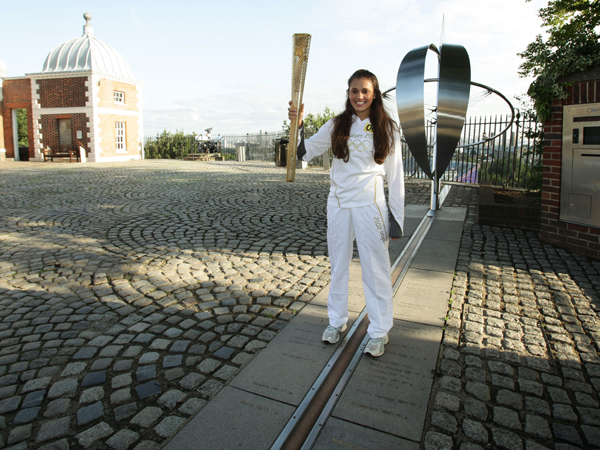
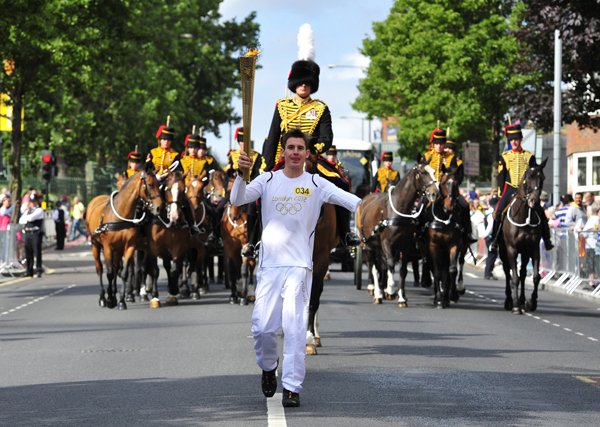
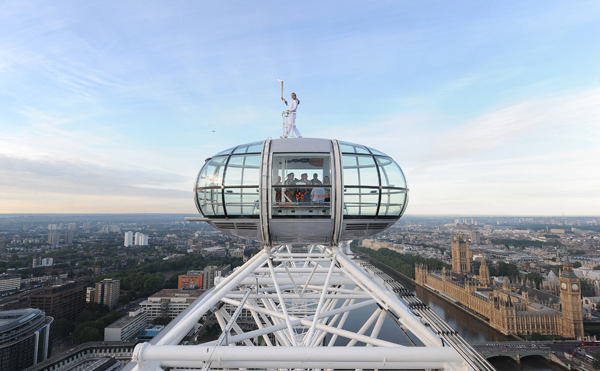
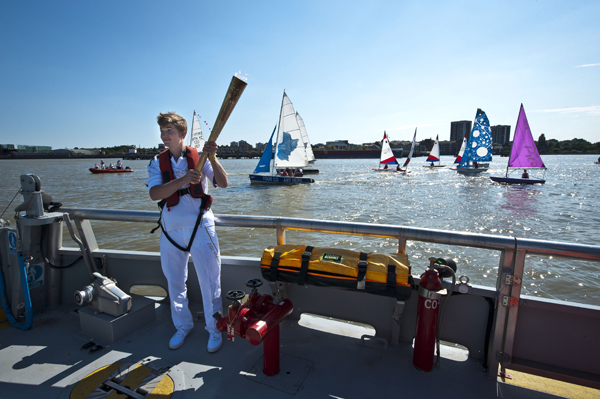
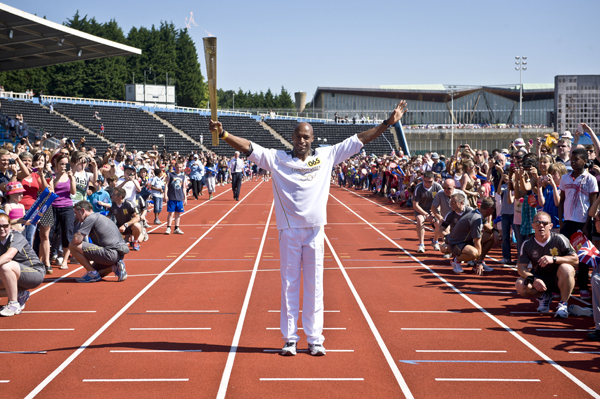
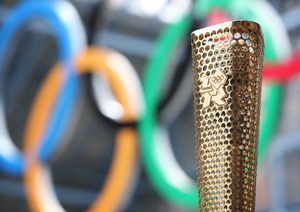
• On Now – Designs of the Year Exhibition: The London Olympic Torch and the Duchess of Cambridge’s wedding dress are among 90 objects nominated as one of the “best designs in the world” in this year’s Design of the Year competition. The objects, which go on display at the Design Museum today, have been entered in seven categories – architecture, digital, fashion, furniture, graphics, product and transport – with winners to be announced on 24th April. Among the other objects nominated are a wind-propelled landmine detector, a pop-up cinema in Hackney, the London 2012 velodrome and the first Tesco virtual store. An admission charge applies for the exhibition which runs until 15th July.  For more information, see designsoftheyear.com.

On Now – Lucian Freud Portraits. The last work of the late artist Lucian Freud is on show for the first time in this exhibition at the National Portrait Gallery. The unfinished painting, Portrait of the Hound 2011, which depicts Freud’s assistant assistant David Dawson and his dog Eli, is a highlight of the exhibition which also includes works dating back as far as the 1940s. The 130 paintings and works on paper – which feature sitters including artists Francis Bacon and David Hockney along with the likes of Andrew Parker Bowles and Baron Rothschild – have been loaned from museums and private collections around the world. Runs until 27th May, 2012. Admission charge applies. See www.npg.org.uk.

LondonLife – A look back at Queen Elizabeth II’s reign…

In celebration of Queen Elizabeth II’s Diamond Jubilee (the 60th anniversary of her reign officially passed on Monday), the Victoria and Albert Museum is holding an exhibition of portraits of the Queen taken by the acclaimed late photographer Cecil Beaton, including this one of Queen Elizabeth II in Coronation Robes taken in June, 1953. The exhibition, Queen Elizabeth II by Cecil Beaton: A Diamond Jubilee Celebration, depicts the Queen in various roles – as princess, monarch and mother – and includes a number of never-before-seen photographs as well as excerpts from Beaton’s diaries and letters. Runs from tomorrow (8th February to 22nd April). For more, see http://www.vam.ac.uk.

Image: Copyright, Victoria and Albert Museum, London

Around London – ‘Cathedral of Middlesex’ to be opened in west London; Roman brothel token on display; wifi in Westminster and Kensington; and, looking at the Hajj at the British Museum…

• A medieval barn in west London, said to be the “Cathedral of Middlesex”, will open to the public in April. The Grade I listed Harmondsworth Barn was built in 1426 by Winchester College, who owned a manor farm at Harmondsworth, and was used to store grain. Nearly 60 metres long, the roof is held up by 13 massive oak trusses. In 2006, the barn was bought by an off-shore company who subsequently agreed to sell it to English Heritage following the issuing of a notice for emergency repairs. English Heritage say the barn, called the “Cathedral of Middlesex” by the late poet-laureate Sir John Betjeman, will now be “run by and for the local community”. “Harmondsworth Barn is one of the greatest medieval buildings in Britain, built by the same skilled carpenters who worked on our magnificent medieval cathedrals,” says Simon Thurley, chief executive of English Heritage. “Its rescue is at the heart of what English Heritage does – protecting this nation’s architectural treasures and helping people discover our national story through them. We will complete the repair of this masterpiece and working with local people, will open it to the public to enjoy.” For more, see www.english-heritage.org.uk. (Image: Copyright English Heritage; Photographer Boris Baggs).

The oldest Roman brothel token to have been discovered in London has gone on temporary display at the Museum of London. The token, which may be the oldest of its kind to have been found in Britain (or, indeed, even the only one of its kind ever found in Britain), was known as a spintria and depicts two reclining human figures on one side and the Roman numeral 14 on the other. It was found on the Thames foreshore near Putney Bridge by a mudlarker using a metal detector. Only the size of a 10 cent piece, its use remains something of a mystery – it may have been exchanged for sexual services or used as gaming piece. The token is on display at the museum until April. For more, see www.museumoflondon.org.uk.

Free wifi is being rolled out across Westminster, Kensington and Chelsea as part of deal between Westminster City Council, the Royal Borough of Kensington and Chelsea and network operator, O2. The network, installation of which began last month, is initially being rolled out in a limited number of areas but will eventually cover all of the boroughs and create the largest free wireless hub in Europe.

Now On: Hajj: journey to the heart of Islam. This exhibition at the British Museum is the first to focus on the pilgrimage to Mecca in Saudi Arabia – a central tenet of the Islamic faith. Organised in partnership with the King Abdulaziz Public Library in Riyadh, it’s based around three central themes: the pilgrim’s journey to Mecca with an emphasis on the major routes taken; the Hajj today and its associated rituals; and the origins and importance of the Hajj to Mecca. Objects featured in the exhibition include a seetanah which covers the door of the Ka’ba as well as gifts offered to the sanctuary and souvenirs taken back home. It’s the first of three exhibitions at the British Museum focused on spiritual journeys. Runs until 15th April. Admission charge applies. For more, see www.britishmuseum.org.

Around London – Lloyd’s gets Grade I; 700,000 historic items online in NT database; and, introducing the Silverdale Hoard…

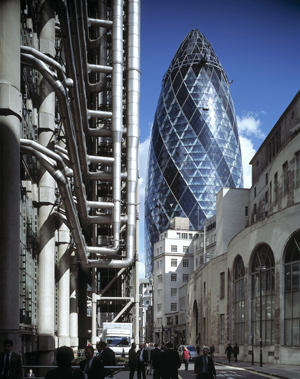
London’s iconic Lloyd’s Building (also known as the ‘inside out’ building thanks to a design in which utility pipes, lifts and stairways are exposed on the outside) has been listed as a Grade I building, becoming the youngest building to be granted such status. John Penrose, Minister for Tourism and Heritage, made the decision following advice from English Heritage. Roger Bowdler, English Heritage’s designation director, said he was “delighted” at the decision. “Its listing at the highest grade is fitting recognition of the sheer splendour of Richard Rogers’s heroic design. Its dramatic scale and visual dazzle, housing a hyper-efficient commercial complex, is universally recognised as one of the key buildings of the modern epoch.” The futuristic-looking building is one of very few post war buildings to be protected with a Grade I listing. Construction of the tower started in 1981 and was largely completed by May 1984. It was occupied two years later. As well as its futuristic exterior, the building also features a nod to the past with the Adam Room, which dates from the 1760s and was moved here intact from which was moved from Bowood House in Wiltshire. The building is also home to the Lutine Bell, which comes from a French frigate captured by the British in 1793, and was rung to herald important announcements (today these are generally only ceremonial). The history of Lloyd’s goes back to 1688 when it’s believed the first Lloyd’s Coffee House opened in Tower Street.

• More than 700,000 objects in the care of the National Trust can be accessed virtually via a new online database. The database, accessed via www.nationaltrustcollections.org.uk contains details of more than 700,000 objects – everything from artworks by Gainsborough to a laudanum bottle containing remnants of poison and the cotton underwear of a grocer – currently housed at more than 200 properties as well as in storage or on loan to other organisations. Highlights include a costume made from beetle wings for the actress Ellen Terry, an early anti-aging ‘machine’, a furnished Victorian dolls house from Uppark House in West Sussex, and a Bible reputed to have been used at the execution of King Charles I from Chastleton House in Gloucestershire. The database has been in development for 15 years and the work to develop it will continue.

A 1,100-year-old collection of Viking Age objects including silver arm-rings and brooch fragments and coins from the Silverdale Hoard – found in Silverdale, Lancashire, in September – has gone on display in room 2 of the British Museum until early in the New Year. Among the 200 objects in the hoard is a type of coin not seen before and bears the inscription Airdeconut which appears to be an early attempt to represent the name Harthacnut. Lancaster City Museum has reportedly expressed an interest in acquiring the hoard. For more, see www.britishmuseum.org.

Around London: A new pleasure garden for London; music hall star Dame Gracie Fields honored; mystery portraits at the NPG; and, celebrating the Olympics (from a Peruvian perspective)…

A new pleasure garden will be built in the city’s east as part of celebrations for next year’s Diamond Jubilee. London Pleasure Gardens, announced back in March, will be built upon a 60,000 square metre site at Pontoon Dock, opposite the ExCeL Exhibition Centre, and consist of an “ever-evolving creative playground for both resident Londoners and tourists alike”. The gardens, which will feature landscaped walkways, a floating cinema, an ‘adult’s playground’ and a range of facilities such as a ‘glass cafe’ – are expected to be open for the Queen’s Jubilee Weekend on 1st June. It’s expected that more than 40,000 people a day will pass through the site during the Olympics. London has had a long association with the concept of pleasure gardens – places where people gathered to listen to music, see art, eat and drink and talk, the most famous of which was the Vauxhall Pleasure Gardens. But the Royal Docks also had its own pleasure gardens in the past – these existed between 1851 and 1884 and were named the Royal Victoria Gardens.  For more, see www.londonpleasuregardens.com.

• Music hall star Dame Gracie Fields has been honored by English Heritage with a blue plaque on the Islington house where she lived for three years in the 1920s. It was while living at 72a Upper Street with her parents and first husband Archie Pitt, that she consolidated her reputation as one of Britain’s most popular performers and it was also during this time that she recorded for the first time (she was to become a regular on the BBC and by 1933 had cut a massive four million discs) and appeared before King George V and Queen Mary at a Royal Variety Performance. Following her success, Fields and Pitt built a mansion in The Bishop’s Avenue, Hampstead, called ‘The Tower’ in honor of the show which had made her a star – Mr Tower of London. She later separated from Pitt and married an Italian born director Monty Banks. They moved to the US in 1940 amid fears her husband would be interned and, after the war, she settled on the Italian island of Capri where, following Banks’ death in 1950, she married again. She made her final appearance on the London stage in 1978 – closing a Royal Variety Performance – and died back in Capri the following year.

• And, briefly…..A new species of dinosaur – Spinops sternbergorum – has reportedly been discovered at the Natural History Museum, identified from bones previously gathering dust on a shelf at the museum.

On Now: Imagined Lives: Portraits of Unknown People. This exhibition at the National Portrait Gallery centres on a group of 14 portraits from the 16th and 17th centuries which depict unknown people. Originally thought to represent famous figures like Queen Elizabeth I, the identity of the sitters is now considered unknown. In response to the pictures, eight internationally renowned authors – from Alexander McCall Smith and Joanna Trollope to Julian Fellowes and Terry Pratchett – have written imaginative short stories about the portraits, bringing them to life. The exhibition was originally shown in Somerset but is now running at the NPG until 22nd July. Admission is free. For more information, see www.npg.org.uk.

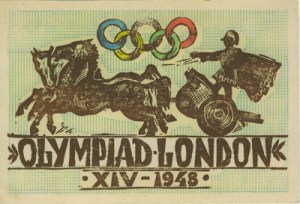
On Now: London and the Olympics. The Museum of London is hosting a new display which looks at the 1908 and 1948 Olympic Games held in London but, in twist, looks at not only the experiences of Londoners but those of the 41 man team Peru sent to the 1948 games. Pictures included in the display come from an album made by one of the athletes, Enrique Mendizabal Raig, recording the team’s visit (you can find the images on Flickr here). Entry is free. Runs until September. For more, see www.museumoflondon.org.uk.

LondonLife – Poet Ted Hughes commemorated in Poets’ Corner


The late Poet-Laureate Ted Hughes was honored in a ceremony in Westminster Abbey’s Poets’ Corner last week with the dedication of a hand-carved memorial slab. 
The memorial includes a quotation from his work That Morning: “So we found the end of our journey, So we stood alive in the river of light, Among the creatures of light, creatures of light…”. The memorial to Hughes, who died in 1998 at the age of 68, was placed at the foot of that of TS Eliot, who was a mentor to Hughes. Among those who attended the commemoration were Hughes’ widow Carol and his daughter Frieda as well as literary figures including Nobel Laureate Seamus Heaney, Sir Andrew Motion, Michael Morpurgo and Graham Swift. Other literary luminaries commemorated in Poets’ Corner (only some of whom are buried here) include Geoffrey Chaucer, Edmund Spenser, John Milton, Lord Byron and John Keats as well as Charles Dickens, William Shakespeare and Rudyard Kipling. For more on Poets’ Corner, see www.westminster-abbey.org.

PICTURE: Carol Hughes lays a bouquet of flowers and herbs from the garden of the Hughes’ Devon home at the memorial. (Copyright Dean and Chapter of Westminster).

Around London – Dickens at the Museum of London; looking at Leicester Square’s past; Mr Chinnery’s art; and, Wellcome’s Miracles & Charms…

• Dickens fever is well and truly upon us in the lead-up to the bicentenary of his birth in February and tomorrow the Museum of London opens its own unmissable exhibition, Dickens and London. Displays centre on the relationship between Dickens and the city and visitors will be able to follow in the great novelist’s footsteps as they visit some of the places which sparked his imagination as well as confront some of the great social issues of the 19th century – including childhood mortality, prostitution and poverty – and be taking on a tour of some of the age’s greatest innovations – everything from railways and steamboats to the Penny Post. Among the objects on display will be Dickens’ writing desk and chair, his bank ledger, excavated items from Jacob’s Island, a notorious slum which was located near Bermondsey, and manuscript pages describing an East End opium den which was featured in Dicken’s unfinished novel, The Mystery of Edwin Drood (this, along with William Powell Frith’s celebrated portrait of the author, are being lent by the Victoria and Albert Museum). The exhibition also features a specially commissioned film looking at London after dark in Dickens’ time and today. Costumes from the upcoming BBC One drama series, Great Expectations, will also be on display and there is also a specially commissioned window display by acclaimed creative director and set designer Simon Costin showing a wintery London in the mid-19th century. The museum is also offering a new iPhone and iPad graphic novel app, Dickens: Dark London, which will take users on a “journey through the darker side” of Dickens’ London. Opens on 9th December (tomorrow) and runs until 10th June, 2012. Admission charges apply. For more, see www.museumoflondon.org.uk. For more on Dickens, see www.dickens2012.org. PICTURE: Dickens Dream by Robert William Buss (Courtesy Museum of London).

New hoardings have gone up at Leicester Square celebrating the area’s history as work continues on an £18 million plan by Westminster City Council to revitalise the Leicester Square streetscape. The more than 160 square metres of hoardings feature 11 images spanning a period of 250 years (and selected from thousands of archive images of the square). Meanwhile in Trafalgar Square, the famous Norwegian Christmas Tree was lit in a ceremony last Thursday. The tree is an annual gift from the people of Oslo as thanks for British support during Norway’s years of occupation in World War II. It will be lit from noon until midnight every day until 6th January.

And, briefly…..London’s Kew Gardens has been voted the top visitor attraction in Britain at the British Airways magazine travel award while the London Eye and Tate Modern came runner’s up…..Figures released to mark the 10th anniversary of free admission to England’s national museums show that visitor numbers to the museums have more than doubled over the past decade…..and, the first woman Tube driver, Hannah Dadds, reportedly died at the age of 70.

On Now: The Flamboyant Mr. Chinnery: An English artist in India and China. This exhibition at Asia House in New Cavendish Street in the West End, focuses on the work of 19th century artist George Chinnery and features landscapes and portraits he painted while in China and India. Runs until 21st January. Admission is free. For more, see www.asiahouse.org.

• On Now: Miracles & Charms. The Wellcome Collection is hosting this exhibition which features two shows – Infinitas Gracias: Mexican miracle paintings, the first major exhibition of Mexican votive paintings outside of Mexico, and Charmed life: The solace of objects, an exhibition of unseen London amulets from Henry Wellcome’s collection. Runs until 26th February, 2012. For more, see www.wellcomecollection.org.

Around London – Dickens’ supernatural leanings at the British Library; Art Fund looking to relocate Shop in a Bottle; HMS Belfast closed; and, Winter Wonderland returns to Hyde Park…

• Next year – 7th February to be precise – marks 200 years since the birth of celebrated 19th century novelist Charles Dickens and to mark the bicentenary, London institutions are among those across the country organising a raft of exhibitions under the banner of Dickens 2012. First up for us is a new exhibition launched this week at the British Library. A Hankering after Ghosts: Charles Dickens and the Supernatural explores the way in which Dickens used supernatural phenomena in his works (remember the ghosts of A Christmas Carol anyone?), while at the same time placing them in the context of the “scientific, technological and philosophical debates of his time”. The exhibition includes a letter from Dickens to his wife Catherine written in 1853 (this alludes to a disagreement which arose between them after Catherine became jealous of the attention Dickens was paying to another lady; he apparently used mesmerism to treat Catherine’s “nervous condition”), an article in an 1858 Household Words magazine in which Dickens questions the motivation of the spirits who supposedly tapped out messages to spiritualists, and, a 1821 copy of The Terrific Register: or, record of crimes, judgements, providences and calamities, a publication which was one of Dickens’ favorite reads as a youth. There is a range of accompanying events including talks by Dickens’ biographer Claire Tomalin (author of Charles Dickens: A Life) and John Bowen, author of Other Dickens: Pickwick to Chuzzlewit. Admission is free. Runs until 4th March. For more, see www.bl.ukImage: Courtesy of British Library

• The Art Fund has launched an appeal to have Yinka Shonibare’s Ship in a Bottle, currently sitting atop Trafalgar Square’s fourth plinth, relocated to a permanant home outside the National Maritime Museum in Greenwich. The fund, which has kick started the campaign with a £50,000 grant, needs £362,500 to buy the work – a scaled down replica of Nelson’s flagship, HMS Victory – which has been on display in Trafalgar Square since May, 2010, but is due to be removed in January next year. The replica work features 80 cannon and 37 sails, set as on a day of battle, and is made out of materials including oak, hardwood, brass, twine and canvas. For more, see www.artfund.org/ship/.

• The historic ship HMS Belfast, moored on the Thames between London Bridge and Tower Bridge, has been closed until further notice after a section of gangway which provides access to the ship collapsed earlier this week. Two contractors received minor injuries in the collapse and staff and visitors were evacuated by boat. The HMS Belfast is described as the most significant surviving Royal Navy warship from World War II and later served in places like Korea. It contains extensive displays on what life was like aboard the vessel. Keep on eye on www.iwm.org.uk for more information.

Now On: Winter Wonderland in Hyde Park. Hyde Park’s annual festival of all things Christmas is on again and this year’s festive offerings include, an ice rink, circus, giant observation wheel, rides and the chance for younger people to visit Santa Land as well as a plethora of opportunities to purchase presents at the Angels Christmas Market and warm-up with some of the fare available at eateries including the Bavarian Village, English Food Fair, and Spiegel Saloon. Winter Wonderland is free to enter and open between 10am and 10pm daily. Runs until 3rd January. For more, see www.hydeparkwinterwonderland.com.

Around London – New Year’s Eve fireworks; a Resurrectionist diary; and, Russian architecture at the Royal Academy…

Plans for this year’s New Year’s Eve fireworks – marking the beginning of the year in which London hosts the Olympic and Paralympic Games – have been announced by the Mayor of London, Boris Johnson. The EDF London Eye on South Bank will once again form the focus of the fireworks display and those wishing to attend have been warned to take their places early with some areas filling up by 9pm or 10pm. Parents with young children are advised to consider attending fireworks displays closer to home (for more, see www.london.gov.uk/newyearseve). The display will be followed by a parade on New Year’s Day (for more, see www.londonparade.co.uk). Meanwhile, the annual Christmas Tree lighting ceremony will take place next Thursday. The tree is a gift from the people of Oslo, the Norwegian capital, given annually for more than 60 years in recognition of Britain’s support during World War II.

On Now – The Diary of a Resurrectionist. This month marks the 200th anniversary of an intriguing diary which offers insights into the work of a group of grave robbers and to mark the moment, the Hunterian Museum at the Royal College of Surgeons of England is hosting an exhibition featuring extracts from the diary and charting the rise and fall of grave robbing. The exhibition, which is being hosted in the Library Reading Room, runs until 22nd December. There is a special lecture by Kirsty Chilton at the museum from 7pm tonight (24th November, entry fee applies). For more, see www.rcseng.ac.uk/museums/exhibitions/index.html.

• On Now – Building the Revolution: Soviet Art and Architecture 1915-1935. The Royal Academy of Arts is hosting this exhibition which looks at the avant-garde architecture which appeared in Russia from 1922 to 1935, and its design origins in the earlier flowering of Constructivisit art which emerged around 1915. Large scale photographs, taken by Richard Pare, are juxtaposed with relevant Constructivisit drawings and paintings as well as vintage photographs. A reconstruction of Vladimir Tatlin’s Monument to the Third International (known as Tatlin’s Tower) has been built in the Annenberg Courtyard to coincide with the exhibition. Runs until 22nd January. Admission charge applies. For more, see www.royalacademy.org.uk.

Around London – The Lord Mayor’s Show goes on; London 2012 Festival launched; dowry tradition lives on; and, Leonardo da Vinci at the National Gallery…

On Saturday the annual Lord Mayor’s Show will crawl its way across London’s Square Mile in a three mile long procession that will involve 123 floats and 6,200 people. The show (a scene from last year’s procession is pictured) is held each year as the first public outing of the newly elected Lord Mayor – this year it’s David Wootton, the City of London’s 684th Lord Mayor, who officially takes up his new office tomorrow (11th November). Organisers have said the procession will follow its usual route despite the protestors currently encamped outside St Paul’s. Leaving Mansion House, the official residence of the Lord Mayor, at 11am, it will make its way down Cheapside to St Paul’s Cathedral, where the new Lord Mayor will be blessed, before heading onto the Royal Courts of Justice, where the Lord Mayor swears an oath of allegiance to Queen Elizabeth II, and then returning to Mansion House. The the procession, the origins of which date back to 1215, will feature representatives of livery companies, educational and youth organisations, military units and other London-associated organisations and charities like St Bart’s Hospital. There will be a fireworks display at 5pm on the Thames between Blackfriars and Waterloo. For more information, see www.lordmayorshow.org.

• Organisers have unveiled plans for the London 2012 Festival, a 12 week nationwide cultural celebration of music, theatre, dance, art, literature, film and fashion held around next year’s Games. We’ll be providing more details in upcoming weeks and months but among the highlights in London will be a British Museum exhibition on the importance of Shakespeare as well as “pop-up” performances by actor Mark Rylance – both held as part of the World Shakespeare Festival, a musical tribute to the history of jazz at the Barbican by the London Symphony Orchestra and Jazz at the Lincoln Center Orchestra, an exhibition of the work of artist Damien Hirst at the Tate Modern and another on Yoko Ono at the Serpentine Gallery, and ‘Poetry Parnassus’ at the Southbank Centre – the largest poetry festival ever staged in the UK. The festival is the finale of the “Cultural Olympiad” – launched in 2008, it has featured a program of events inspired by the 2012 Olympics – and will see more than 10 million free events being held across the country. For more details, see www.london2012.com.

In a tradition which dates back to the late 1800s, three “poor, honest (and) young” women have been awarded a dowry by the City of London Corporation. Susan Renner-Eggleston, Elizabeth Skilton, and Jenny Furber have each received around £100 under the terms of a bequest Italian-born Pasquale Favale made to the City in 1882. Inspired by the happiness he found is his marriage to his London-born wife Eliza, Favale bequeathed 18,000 Lira to the City in 1882 and stipulated that each year a portion of the money was to be given to “three poor, honest, young women, natives of the City of London, aged 16 to 25 who had recently been or were about to be married”. To be eligible the women must have been born in the City of London or currently reside there.

• On Now: Leonardo da Vinci: Painter at the Court of Milan. Billed as the year’s blockbuster art event in London, this exhibition at the National Gallery focuses on Da Vinci’s time as a court painter in Milan in the 1480s-90s and features 60 paintings and drawings. Thanks to a collaboration between the National Gallery and the Louvre, they include two versions of the Virgin of the Rocks (it is the first time the two versions are being shown together). Other paintings include Portrait of a Musician, Saint Jerome, The Lady with an Ermine (an image of Cecilia Gallerani, mistress of Milan’s ruler at the time – Ludovico Maria Sforza, ‘Il Moro’) and Belle Ferronniere as well as a copy of Da Vinci’s painting, The Last Supper, by his pupil Giamopietrino. Runs until 5th February and an admission charge applies. For more, see www.nationalgallery.org.uk.