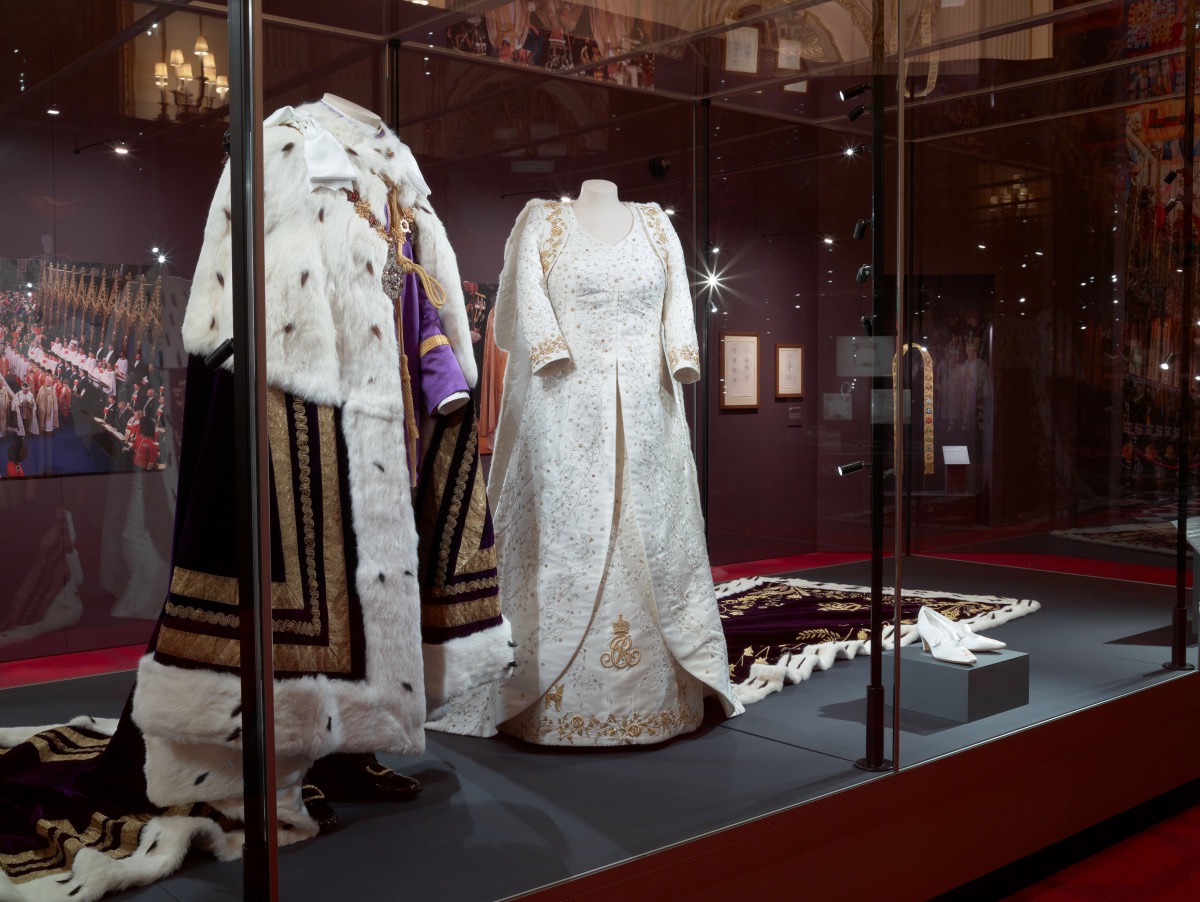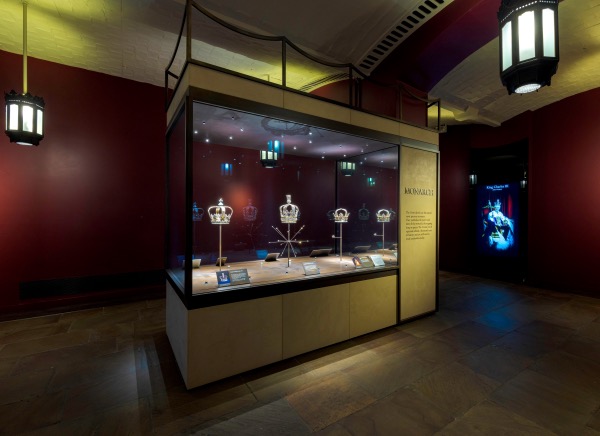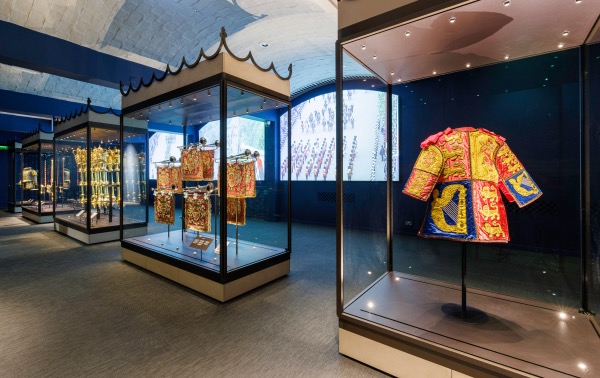


• A new exhibition exploring the 1,000-year history of coronations at Westminster Abbey has opened in the abbey’s medieval chapter house. The exhibition, which has opened ahead of the coronation of King Charles III on 6th May, draws on historic illustrations and archive photography to explore the elements of the coronation service including the oath-taking, anointing, investing and crowning and takes a closer look any some of key artefacts present in the ceremony including the Coronation Chair. The exhibition, which is free with admission to the abbey and which runs until the end of September, is part of a season of events celebrating the coronation including themed late evenings, family activities and special afternoon teas at the Cellarium Café. Meanwhile, the abbey has also announced that visitors will be able to view the ‘Coronation Theatre’ – the special area which will be built for the historic occasion, from the Abbey’s North and South Transepts – following the coronation. Tickets for the special viewing – which will include the chance to see key elements from the coronation service including the Coronation Chair still in position on the Cosmati Pavement – can be purchased for timed slots between 8th and 13th May. For more on the abbey’s events surrounding the coronation, see www.westminster-abbey.org/events.

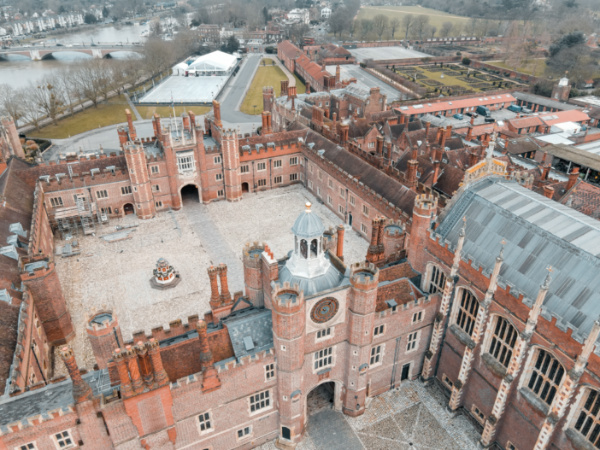
• Hampton Court Palace bursts into colour from Friday with its annual Tulip Festival. More than 110,000 bulbs have been planted to creat dramatic displays in the formal gardens and cobbled courtyards, among them a selection of heirloom bulbs on display in the Lower Orangery Garden which presents visitors with the chance to see tulips as they would have looked during the time of King William III and Queen Mary II, soon after the flowers were first introduced to Britain. Thanks to a special relationship with Netherlands-based Hortus Bulborum, the bulbs on display include Sylvestris (1595) and Rubella Broken (1700) as well as the Orange King (1903) and Queen of the Night (1940). Other highlights of the festival include 3,000 wine-toned tulips, including the merlot variety, flowing down from the steps and parapet of the Wine Fountain, as well as a floral fantasy in the palace’s courtyards in which tulips such as Raspberry Ripple, Apricot Emperor and Purple Prince flow out of wheelbarrows, barrels and a horse cart, and a free-style tulip planting in the Kitchen Garden inspired by Van Gogh’s 1883 painting, Bulb Fields. Runs until 1st May. Admission charge applies. For more, see https://www.hrp.org.uk/hampton-court-palace/whats-on/tulip-festival/.

• The recently acquired Bernardo Cavallino work, Saint Bartholomew has gone on show at The National Gallery. The painting, which dates from 1640-45 and which was last exhibited at The Metropolitan Museum of Art in New York in 1993, is being displayed alongside other 17th century works by artists such as Caravaggio, Artemisia and Orazio Gentileschi, Guercino, Reni and Ribera in the Hans and Julia Rausing Room (Room 32). The National Gallery has one other work by Cavallino – Christ driving the Traders from the Temple – but his depiction of Saint Bartholomew is considered one of his most splendid works. Admission is free. For more, see nationalgallery.org.uk.
• Featuring everything from a celebration of African Caribbean takeaways to a “deep-dive” into the issues surrounding food production and access, Food Season kicks off at the British Library Monday. Highlights include a discussion of the sandwich by food writers Nigella Lawson, Jonathan Nunn and Rebecca May Johnson, a day-long celebration of African Caribbean cuisine featuring chefs and broadcasters Jimi Famurewa, Fatmata Binta and Andi Oliver, and, an exploration of the big challenges in food, land use and food production featuring author Henry Dimbleby alongside Dr Tara Garnett, Nick Saltmarsh, Abby Allen and Dimitri Houtart. Runs until 7th June. Admission charges apply. For the full programme, see www.bl.uk/events/food-season.
Send all items to exploringlondon@gmail.com
We’re taking a short break for Easter and will be back on Tuesday!
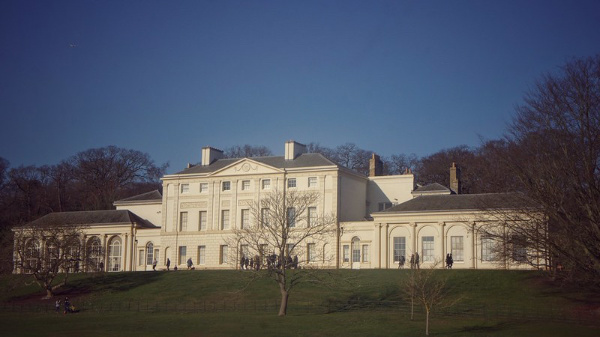
• The glittering world of the Georgian court and the glamour of the modern red carpet come together in a new exhibition at Kensington Palace. Crown to Couture sees contemporary fashion worn by the likes of celebrities like Lizzo and Lady Gaga displayed alongside historical costumes, drawing some fascinating parallels between the two worlds. More than 200 objects are included in the display in the State Apartments with highlights including the Thom Browne dress worn by musician Lizzo to the 2022 Met Gala, Christopher John Roger’ luminous green gown worn by Lady Gaga to the 2020 MTV Awards, the Rockingham Mantua – brocaded in silver thread and silver lace trim and believed to have been worn by the wife of British Prime Minister, 2nd Marquess of Rockingham, in the 1760s, and the world-famous Silver Tissue Gown. On loan from the Fashion Museum Bath, the latter is a rare example of fashion worn at the court of Charles II and is believed to have been worn to court by a young Lady Theophila Harris, who later went on to become the wife of MP Sir Arthur Harris of Hayne. Runs until 29th October. Admission charge applies. For more, see www.hrp.org.uk/kensington-palace/whats-on/crown-to-couture.
• A major exhibition charting the romance and radicalism of the Rossetti generation opens at Tate Britain today. The Rossettis – he first retrospective of Dante Gabriel Rossetti at Tate and the largest exhibition of his iconic pictures in two decades as well as the first full retrospective of Elizabeth Siddal for 30 years – features more than 150 paintings and drawings as well as photography, design, and poetry. Highlights include Dante Gabriel’s Ecce Ancilla Domine (The Annunciation) (1850), Elizabeth Siddal’s Lady Clare (1857) and Christina Rosetti’s famous poem The Goblin Market (1859). There’s also Aesthetic portraits from the later part of Dante Gabriel’s career, such as Bocca Baciata (1859), Beata Beatrix (c1864-70) and The Beloved (1865-73), as well as Lady Lilith (1866-8) and Mona Vanna (1866). Runs until 24th September. Admission charge applies. For more, see www.tate.org.uk/whats-on/tate-britain/the-rossettis.
• The Lindt Gold Bunny Hunt is on again at Hampton Court Palace. Youngsters are invited to explore the palace’s 60 acres in a search for a series of hidden Lindt Gold Bunny statues, matching the name of an important character from the palace’s history with each bunny to unwrap a fascinating story. At the end of the experience, they’ll be rewarded with their own delicious Lindt Gold Bunny. Visitors to the palace will also encounter historic characters as the royal court compete with chocolatier Grace Tosier to help Prince George, the son of King George I, achieve his mission of sleeping-in, drinking chocolate and dancing all day. Runs until 16th April. Admission charge applies. For more, see www.hrp.org.uk/hampton-court-palace/whats-on/easter-lindt-gold-bunny-hunt/.
Send items to exploringlondon@gmail.com

• Shakespeare’s First Folio goes on display at the National Maritime Museum in Greenwich from tomorrow. The display is part of a national celebration of the 400th anniversary of the folio’s publication. Shakespeare’s First Folio was published in 1623, seven years after the playwright’s death. Some 235 copies are known to survive with 50 remaining in the UK. The version on display – the Dulwich College Folio, which includes the Comedies and Histories (but lack the Tragedies), is believed to have been acquired by the college in 1686 from the estate of William Cartwright, a bookseller and actor who performed with the King’s Company and is known to have played Brabantio in Othello and Falstaff in Henry IV Part I and Part II. The two volumes feature handwritten notes, ink and water stains, and burn holes, suggesting they were well-used before the college acquired them. The Tempest and the Thames can be seen until 24th September. Admission is free. For more, see www.rmg.co.uk/folio-400.
• London’s fog and its reflection in Charles Dickens’ writings are the subject of a new exhibition opening at the Charles Dickens Museum in Bloomsbury. A Great and Dirty City: Dickens and the London Fog explores how the fog affected Dickens’ work, his health and that of his family, and how London has endeavoured to mitigate the problem of air pollution over the past couple of centuries. Among the items on display are the hearthstone Dickens laid in front of the fireplace in the Drawing Room, the fire poker from Dickens’ dining room at Gad’s Hill Place (his home from 1856 until his death in 1870), original first edition parts of Dickens’ ‘foggiest’ novel Bleak House, an original pen and wash illustration by Frederick Barnard depicting Martin Chuzzlewit, Mary Graham, and Mark Tapley, and, a letter from Dickens to his sister-in-law Helen Dickens in which he writes about his brother Alfred’s “inflammation in the region of the lungs” which is dated on 16th July, 1860 – just 11 days before Alfred’s death. Runs until 22nd October. Admission charge applies. For more, see https://dickensmuseum.com.
• Forty of Impressionist painter Berthe Morisot’s works have been brought together for a new exhibition at the Dulwich Picture Gallery. Berthe Morisot: Shaping Impressionism, which opens tomorrow, is the first major UK exhibition of the renowned Impressionist since 1950 and features many works never seen before. Highlights include Eugène Manet on the Isle of Wight (1875) – painted while Morisot was on honeymoon in England, Self-Portrait (1885) – which will appear alongside Jean-Honoré Fragonard’s Young Woman (c.1769) from Dulwich Picture Gallery’s collection, Apollo revealing his divinity to the shepherdess Issé, after François Boucher (1892), In the Apple Tree (1890) and Julie Manet with her Greyhound Laerte (1893). Runs until 10th September. Admission charge applies. For more, see www.dulwichpicturegallery.org.uk.
Send all items to exploringlondon@gmail.com.
• Paintings and sculptures by artists including Cézanne, Van Gogh, Rodin, Picasso, Matisse, Klimt, Kandinsky and Mondrian opens at The National Gallery on Saturday. After Impressionism: Inventing Modern Art features more than 100 paintings and sculptures from museums and private collections around the world spanning the period between 1886 and 1914. Highlights include André Derain’s La Danse, Edgar Degas’s Dancers in the Foyer, Paul Cézanne’s Grandes Baigneuses, Edvard Munch’s The Death Bed, Paul Gauguin’s Vision of the Sermon, Camille Claudel’s Imploration / l’Implorante, and Lovis Corinth’s Nana, Female Nude. Admission charge applies. Runs until 13th August. For more, see www.nationalgallery.org.uk/exhibitions/after-impressionism-inventing-modern-art.
• Sir David Attenborough has planted an English oak tree to officially open the Platinum Jubilee Woodland, a new woodland in Richmond Park. The woodland has been created as part of The Queen’s Green Canopy initiative to celebrate and honour the late Queen Elizabeth II’s lifetime of service. Some 70 young trees have been planted in the woodland, including oak, Dutch elm-disease-resistant elm, small-leaved lime, and sweet chestnut trees, planted around a focal point which will later incorporate a seating area. Sir David’s tree is one of the last to be planted as part of The Queen’s Green Canopy initiative which concludes on 31st March. The project invited people from across the nation to plant trees in honour of Queen Elizabeth II to mark the Platinum Jubilee and benefit future generations. For more on the park, see www.royalparks.org.uk/parks/richmond-park.
• Illustrative works by William Heath Robinson, Charles Robinson and Thomas Health Robinson, many of which have not be exhibited before, are on show in a new exhibition at the Heath Robinson Museum in Pinner. The works, which come from the collection of Martin and Joanne Verden, include original drawings for Railway Ribaldry and William Heath Robinson’s How to… series of books. Admission charge applies. Runs until 21st May. For more, see www.heathrobinsonmuseum.org.
Send all items for inclusion to exploringlondon@gmail.com.

Museum of London Docklands’ major exhibition, Executions, has less than a month to run, closing on 16th April. This week sees a special late opening on Friday night (24th March) with a candlelit evening featuring screenings, pop-up talks and tours. There will be execution ballads sung live and a selection of exhibition-inspired drinks available as visitors have the chance to explore some of London’s grisly past before the doors clang shut for good. For more, see www.museumoflondon.org.uk/museum-london-docklands/whats-on/exhibitions/executions.


• A letter written by Sir Christopher Wren requesting stone for the construction of the Royal Hospital for Seamen in Greenwich is on display in the Painted Hall vestibule. Wren wrote the letter requesting 2,000 tonnes of Portland stone to Thomas Gilbert, overseer of the King’s Quarries of the Isle of Portland, on 11th October, 1700. It is being displayed along with information explaining how the stone was brought from Dorset to London. The display is one of a series of events taking place at the Old Royal Naval College marking the 300th anniversary of Wren’s death on 25th February, 1723. Can be seen until January, 2024. An admission charge applies. For more, see https://ornc.org/whats-on/painted-hall-display-letter-written-by-sir-christopher-wren/. For more on events surrounding the 300th anniversary of Wren’s death, head to https://ornc.org/celebrating-wren300/.
• Slavery, the cruel segregationist policies of the Jim Crow era, and the civil rights movement in the southern United States are all explored in a new exhibition at the Royal Academy. Souls Grown Deep like the Rivers: Black Artists from the American South, features around 64 works – including assemblages, sculpture, paintings, reliefs, and drawings – by 34 artists spanning the period from the mid-20th century to the present. Drawn mostly from the collection of the Souls Grown Deep Foundation in Atlanta, Georgia, many of the works are being seen in Europe for the first time. The display in the Gabrielle Jungels-Winkler Galleries also features quilts by the celebrated quiltmakers of Gee’s Bend, Alabama, and the neighbouring communities of Rehoboth and Alberta. Opening on Friday, the exhibition can be seen until 18th June. Admission charge applies. For more, see royalacademy.org.uk.
• Three masterpieces from The National Gallery’s collection – by Hogarth, Gainsborough and the Le Nain Brothers – have gone on show at The Foundling Museum in Bloomsbury as part of a new exhibition exploring what family is and can be. Finding Family examines the ways in which artists have represented and responded to ideas of family with reference to the historic paintings as well as contemporary works of art. The art is accompanied by creative writing created by participants in ‘Tracing Our Tales’ – the museum’s award-winning programme for young care leavers – who have responded to the exhibition’s themes. Opens on Friday and runs until 27th August. Admission charge applies. For more, see https://foundlingmuseum.org.uk/event/finding-family/.
Send items for inclusion to exploringlondon@gmail.com.
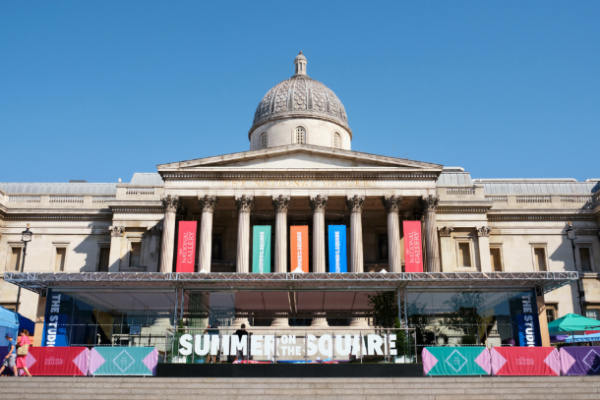
• London’s annual St Patrick’s Day Parade will be held on Sunday with more than 50,000 people expected to take part. The festivities will kick off at noon with a spectacular parade featuring Irish marching bands, dancers and pageantry which will wind its way from Green Park through Piccadilly Circus to Trafalgar Square. From noon until 6pm, Trafalgar Square will feature performances from the likes of Sharon Shannon & Band, Celaviedmai, The Craicheads, Celtic Youth Orchestra, Biblecode Sunday’s, and AIS as well as the Maguire O’Shea School of Dance and spoken word artist Leon Dunne. There will also be family-friendly workshops run by Irish youth creative programme Junk Kouture, a selection of food and drinks stalls including demonstrations by celebrity chef Anna Haugh and stalls where you can learn about Irish culture and community staffed by representatives of the Irish Cultural Centre, London Irish Centre, Irish in Britain, Irish Film London and London Gaelic Athletic Association. For more, check out www.london.gov.uk/events/st-patricks-festival-2023.
• London’s first female mayor, Ada Salter, and Welsh philosopher and preacher Dr Richard Price have both been honoured with English Heritage Blue Plaques. A social reformer and activist, Salter became mayor of Bermondsey in 1922 and so became the first female mayor of a London borough as well as the first Labour woman to be elected as a mayor in Britain. The plaque has been placed on 149 Lower Road in Rotherhithe, the Women’s House of the Bermondsey Settlement where Salter lived in the late 1890s. Price, meanwhile, is considered to be one of the greatest Welsh thinkers of all time and, as well as a preacher and philosopher, was also a pioneer of actuarial science. A plaque has been placed on a red brick house at 54 Newington Green which dates from 1658 and is believed to be the oldest surviving terrace in London. Price, who was born 300 years ago this year, lived in the house from 1758 to 1787 and while there wrote letters to the likes of Benjamin Franklin and Thomas Jefferson with whom he enjoyed close friendships. For more, see www.english-heritage.org.uk/visit/blue-plaques/.
• Joseph Wright’s painting A Philosopher Giving That Lecture on the Orrery in Which a Lamp is Put in Place of the Sun has gone on show at the Foundling Museum. The painting is at the heart of Seeing the Light, an exhibition which explores the connections between Wright, who hailed from Derby, his large network of friends and acquaintances, and key people in the Foundling Hospital’s history as well as objects in the museum’s collection. This includes the story of the founding of the Lunar Society. Admission charge applies. Runs until 4th June. For more, see https://foundlingmuseum.org.uk/event/seeing-the-light/.
Send all items to exploringlondon@gmail.com

British artist Finn Campbell-Notman has been named as the winner of the Sky Arts’ Landscape Artist of the Year for his creation of a contemporary seascape inspired by the work of 17th century marine painters, Willem van de Velde the Elder and his son, Willem van de Velde the Younger. Campbell-Notman’s work, Fail We May, Sail We Must, has gone on display at the Queen’s House in Greenwich which is currently hosting the new exhibition, The Van de Veldes: Greenwich, Art and the Sea. The new painting was inspired by Campbell-Notman’s personal experience as he found out more about the Van de Veldes while travelling in The Netherlands. “My approach to landscape painting is that a painting is rarely, if ever, a direct transcription from a single view, even those painted en plein air,” Campbell-Notman said in a statement. “One composes and constructs, simplifies, rearranges and perhaps adds certain elements to create a picture. The finished painting is thus a record of a dialogue with what is seen and what is reflected within and want I to transmit; between what is seen and what is felt.” For more, see www.rmg.co.uk/queens-house.

• The work of 17th century marine painters Willem van de Velde the Elder and Willem van de Velde the Younger is the subject of a new exhibition at the Queen’s House in Greenwich – the location of a studio King Charles II granted to them. The Van de Veldes: Greenwich, Art and the Sea features the newly conserved painting, A Royal Visit to the Fleet, which they worked on in their studio at the Queen’s House in the 1670s and which, at almost four metres across, was the largest seascape Van de Velde the Younger had painted to date (pictured after conservation above). Also on show is the The Burning of the Royal James at the Battle of Solebay, 28 May 1672, otherwise known as The Solebay Tapestry and originally one of six, along with a selection of some of the more than 1,400 drawings from the National Maritime Museum’s collection. The exhibition, which is free to visit, runs until 14th January, 2024. For more, see www.rmg.co.uk/van-de-velde.
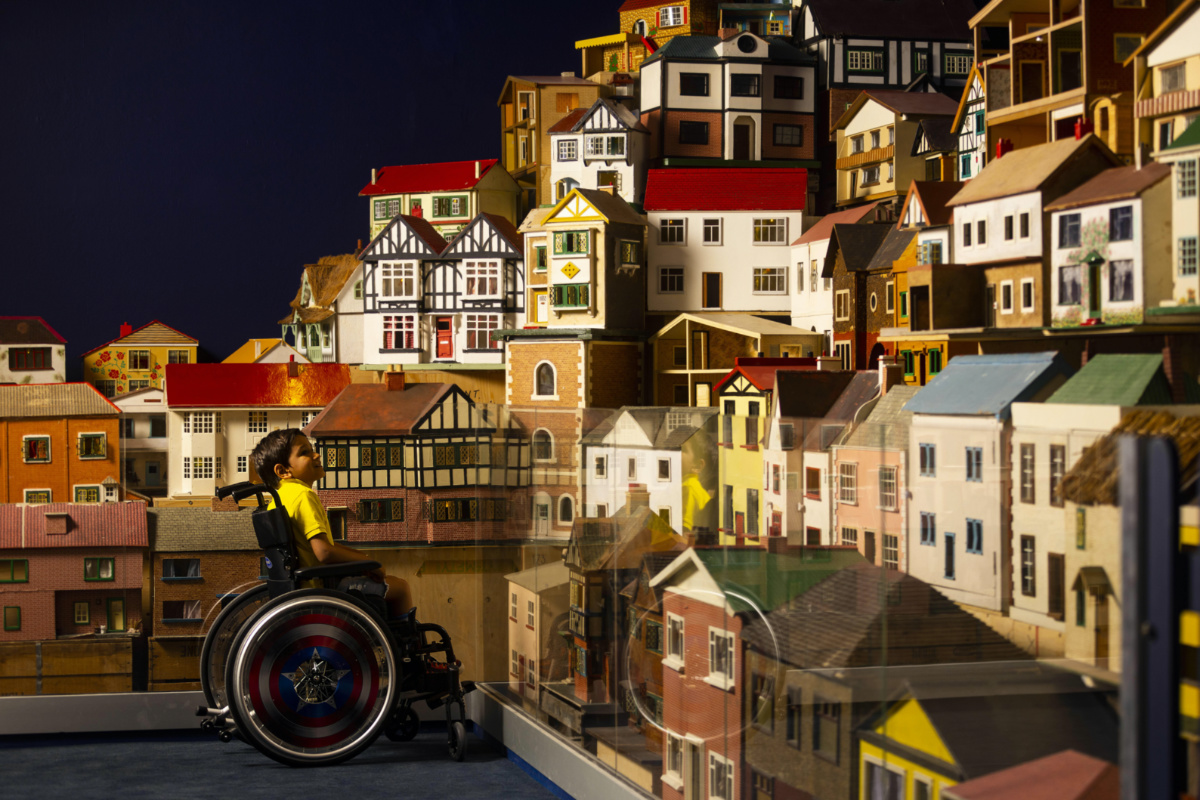
• The Young V&A will open on 1st July following a three year transformation project, it was announced this week. Formerly known as the V&A Museum of Childhood, the Bethnal Green institution will display “remarkable and optimistic stories of children’s ingenuity” alongside 2,000 works from the V&A’s collection of art, design, and performance. Features will include an interactive Minecraft installation, murals by street artist Mark Malarko, tech solutions created for Raspberry Pi’s Coolest Projects, and, a display of portraits by photographer Rehan Jamil capturing young people expressing what creativity means to them and set alongside self-portraits by the likes of Chila Kumari Singh Burman, Quentin Blake, Kenneth Branagh, Dapo Adeola, and Linda McCartney. Also announced was the first exhibition at the new facility – Japan: Myths to Manga – which will open on 14th October. For more, see vam.ac.uk/young.
•The most complete Roman pottery kiln ever found in Greater London is going on display in a visitor centre at Highgate Wood from September next year. The kiln, which was excavated from the wood in Haringey in the 1960s and 1970s, has been in storage beneath Bruce Castle Museum. But thanks to a £243,550 grant by The National Lottery Heritage Fund to charity Friends of Highgate Roman Kiln, it will be returned for public display. The kiln is said to be one of the best-preserved Roman pottery kilns found in the UK and is thought to be the last one built by Roman potters who worked in Highgate Wood between 50CE to 160CE to supply Londinium and south-east England with distinctive ‘Highgate Ware’ pottery.
• A small section of Bayswater Road has been renamed Kyiv Road to mark the first anniversary of the invasion of Ukraine by Russia. The new road name was installed last Friday on the road which runs from Palace Court to Ossington Street and is located not far from the Russian Embassy. Councillor Adam Hug, leader of Westminster City Council, said the request for the new name came from the Ukrainian community. “Westminster is home to Ukrainians displaced by the war, and our residents have opened their hearts and their doors to those fleeing Putin’s war machine,” he said in a statement. “As the centre of an international capital, it seemed to us entirely fitting that part of our City should carry a torch for the unbowed defenders of Ukraine. It’s a small stretch of road, but we want to show the people of Ukraine that their struggle has a visible place in our city.”
Send all items to exploringlondon@gmail.com.
• Sigmund Freud’s collection of ancient antiquities and books inspired by them are the subject of a new exhibition at the Freud Museum London in Hampstead. Freud’s Antiquity: Object, Idea, Desire, which opens Saturday, explores the crucial role the collection played Freud’s development of the concepts and methods of psychoanalysis. The display, which is co-curated by Professor Miriam Leonard of UCL, Professor Daniel Orrells of Kings College London, and Professor Richard Armstrong, of the University of Houston, discusses six separate aspects of Freudian theory alongside representative objects from the collection and spans his entire psychoanalytic career from 1896 to 1939. Alongside the physical objects is a comprehensive digital multimedia resource, containing video recordings, podcasts, photographs of rarely seen objects from the collection, and a list of suggested reading. A series of events accompanies the exhibition. Runs until 16th July. Admission charge applies. For more, see www.freud.org.uk/exhibitions/freuds-antiquity-object-idea-desire/.

• A new display at the Design Museum will showcase how cutting-edge design can help people live “more independently, sustainably and healthily but also with joy and fulfilment” as they age. Designing for our Future Selves, which opens on Friday, follows on from last Future of Ageing exhibition and will feature 10 design initiatives currently being developed by Design Age Institute and its partners which aim to positively impact the way we live and work as we grow older. The exhibition is free to visit. Runs until 26th March. For more, head here.
• A permanent home for the Migration Museum, currently based in Lewisham, will be built in the Square Mile following planning approval this week. The new facility at 65 Crutched Friars will be located in a 21-storey building and will consist of three floors featuring space for exhibitions and events, a cafe and a shop. The City of London Corporation said the developer had agreed to provide the museum space rent-free for 60 years and to cover its operating costs for three years, and has also donated £500,000 to support its fund-raising campaign.
Send all items from inclusion to exploringlondon@gmail.com.

A new art installation – Jitish Kallat’s Whorled (Here After Here After Here) – has been unveiled at Somerset House. The work, located in the Edmond J Safra Fountain Court, is more than 30 metres in diameter and comprises two intersecting spirals that represent a “seismic ripple” or a galactic whorl which spirals outwards from the centre of the courtyard. The work, which draws upon sacred geometry and alchemical diagrams, features two 168 metre scrolls which follows the visual language of UK motorway signage. As visitors walk through the spirals, they are taken on a journey past signs indicating the distance from Somerset House to more than 300 locations across the planet and beyond including celestial bodies, such as the Moon, Mars, and distant stars in the Milky Way. The installation is free to see until 23rd April.


• A gold signet ring once believed to have belonged to the Tudor-era Boleyn family has gone on display at Hampton Court Palace. The ring, was discovered in a field near Shurland Hall on the Isle of Sheppey in Kent, the country home of one of Anne Boleyn’s cousins and a property she visited with King Henry VIII. It is engraved with with a bull’s head – which appears in the arms of the Boleyn family (a visual pun on the family name, which was often spelled as ‘Bullen’) – and arrayed with sunbeams and stars of white enamel as well as being decorated with icons of the Virgin and Child and St Catherine of Alexandria on its shoulders. Analysis concluded the ring was consistent with objects of the early Tudor era, leading historians to suggest that it may have belonged to either Thomas or George Boleyn – Anne Boleyn’s father and brother. The ring, which was purchased by Historic Royal Palaces with support from the Arts Council England/V&A Purchase Grant Fund, the Art Fund, the Meakins Family and John Harding, under the terms of the Treasure Act 1996, can be seen in the Great Hall. Included in general admission. For more, see www.hrp.org.uk/hampton-court-palace/.
• One of the UK’s most successful rock bands, Status Quo, are the subject of a new exhibition at the Barbican Music Library. Celebrating Seven Decades of Status Quo is the first ever public exhibition on the band and features never-before-seen material including the original handwritten lyrics to Caroline and Down Down as well as tour posters, photographs and more than 40 of the bands key albums. The display is a collaboration between Paul and Yvonne Harvey, who ran the band’s official fan club, ‘From The Makers Of…’ (FTMO), and Status Quo fan and collector Andy Campbell. Status Quo was formed in 1962 and has since had more than 60 chart hits as well as opening the LIVE AID concert in Wembley in July, 1985, and receiving a Brit Award for Outstanding Contribution to Music in 1991. Runs until 22nd May. Admission is free. For more, see www.cityoflondon.gov.uk/services/libraries/barbican-music-library.
Send all items to exploringlondon@gmail.com

A celebration of the artists who have painted London on a monumental scale, The Big City is currently running at the Guildhall Art Gallery. The exhibition, which runs until 23rd April, can be visited on a ‘pay what you can’ basis. For more, see www.cityoflondon.gov.uk/events/the-big-city.


• The most extensive collection of large scale paintings of London ever seen opens at the City of London Corporation’s Guildhall Art Gallery on Friday. The Big City: London painted on a grand scale has at its heart a series of works by David Hepher which, on display in London for the first time, were given to the City by the artist in 2022. There’s also a four piece panel installation by John Bartlett and huge works by Frank O Salisbury and Terence Cuneo. The exhibition is open on a ‘pay what you can’ basis and runs until 23rd April. For more, see www.cityoflondon.gov.uk/thebigcity.

• The first major exhibition to explore the work of Renaissance sculptor Donatello opens at The V&A on Saturday. Donatello: Sculpting the Renaissance features works never before on display in the UK including his early marble David and the bronze Attis-Amorino – both of which come from the Museo Nazionale del Bargello in Florence, as well as the reliquary bust of San Rossore from the Museo Nazionale di San Matteo, Pisa, and bronzes from the High Altar of the Basilica of St Anthony in Padua. And, for the first time, the V&A’s carved shallow relief of the Ascension with Christ giving the keys to St Peter will be displayed alongside the Madonna of the Clouds from the Museum of Fine Arts, Boston, and Desiderio da Settignano’s Panciatichi Madonna from the Museo Nazionale del Bargello. Among the 130 objects in the display are also works by Donatello’s contemporaries and followers. Admission charge applies. The display runs until 11th June. For more, see www.vam.ac.uk.
• See the designs for the first Royal Mail stamp to feature King Charles III in a new exhibition at The Postal Museum. The King’s Stamp traces the story of definitive stamps and features stamps from the reigns of six monarchs. Along with the designs for the first definitive stamps featuring King Charles III, highlights include one of only two sheets of Edward VII ‘Tyrian Plum’ and original letters revealing the influence of past monarch’s on stamp designs as well as the chance to see your silhouette on a stamp. Runs until 3rd September. Admission charge applies. For more, see www.postalmuseum.org/event/the-kings-stamp/.
Send all items for inclusion to exploringlondon@gmail.com.

• Kew Garden’s iconic Orchid Festival returns to the Princess of Wales Conservatory this Saturday. This year’s display takes its inspiration from the biodiversity of Cameroon – the first time it has celebrated the flora of an African nation. Highlights include giraffe sculptures and a troop of gorillas as well as arrangements featuring lions and hippos. The festival also includes ‘Orchids After Hours’ with music, food and drink. Runs until 5th March. Admission charge applies. For more, see www.kew.org.
• English Heritage Blue Plaques honouring anti-racist activist Claudia Jones, suffragette Emily Wilding Davison and Ada Salter, the first female mayor of a London borough, will be among those unveiled in London this year. English Heritage announced this year’s plaques will also honour 20th century violinist Yehudi Menuhin, Princess Sophia Duleep Singh – a god-daughter of Queen Victoria and also a suffragette, and Marie Spartali Stillman, a Pre-Raphaelite model who appeared in paintings by the likes of Dante Gabriel Rossetti and Edward Burne-Jones. For more on the Blue Plaques scheme, see www.english-heritage.org.uk/visit/blue-plaques/.
• Images of Ukraine during its conflict with Russia go on show at the Imperial War Museum in Lambeth on Friday. Ukraine: Photographs from the Frontline features images taken by renowned photojournalist Anastasia Taylor-Lind which were taken during her time in Ukraine between 2014 and June, 2022. The exhibition is presented in three sections – the first focusing on the 2014 protests in Kyiv, the second on the ongoing conflict in eastern Ukraine and the third on Russia’s invasion in February last year. Runs until 8th May. Admission is free. For more, see www.iwm.org.uk/events/iwm-london-ukraine-exhibition.
Send items for inclusion to exploringlondon@gmail.com.

• Stephen Lawrence, a London teenager who was killed in a racially motivated murder in 1993, and four-times medieval Mayor of London, Richard Whittington, are both remembered in a new display at the City of London Heritage Gallery. Among the items on show is a report by the headteacher of John Roan School in Greenwich which was created following Lawrence’s death along with the last will and testament of Whittington and a book recording his third election as mayor in 1406 and showing his decorated coat of arms. Also on show in the gallery is a Bomb Damage Map which, produced by London County Council, shows the extent of damage to Rotherhithe and part of the Isle of Dogs following a German Luftwaffe raid in September, 1940. The display can be seen until 28th April. Admission is free but booking is recommended. For more, see www.cityoflondon.gov.uk/events/heritage-gallery-exhibition.
• The Museum of London is seeking information on high-profile items of clothing created by leading Jewish fashion designers ahead of an exhibition running later this year. Fashion City: How Jewish Londoners Shaped Global Style, scheduled to open in October, will explore the major contribution of Jewish designers had in making London an iconic fashion city during the 20th century. It will feature pieces from the museum’s own collections but those behind the exhibition are also looking for a range of other high profile items. These include menswear made by Mr Fish and Cecil Gee which were worn by famous names such as Sean Connery, David Bowie, Mick Jagger, Muhammad Ali, Michael Caine and The Beatles, womenswear made by Rahvis in the 1930s and 1940s and worn by Hollywood film stars, hats made by Otto Lucas and worn by the likes of Greta Garbo and Wallis Simpson, a theatre costume made by Neymar for Cecil Landau’s 1949 production of Sauce Tartare, and 1930s gowns made by dressmaker Madame Isobel (Isobel Spevak Harris). Anyone who has information about the location of these objects are asked to email fashioncity@museumoflondon.org.uk with any information. More information on the exhibition will be provided closer to the date.
• The Royal Parks is looking for volunteer rangers in The Regent’s Park this spring. Following the success of volunteer ranger programmes in Richmond, Bushy and Greenwich Parks, the charity is seeking “friendly and chatty people who are passionate about The Regent’s Park, and keen to inspire and educate visitors”. Volunteers, who need to commit to a minimum of three hours per month, will work in pairs and share facts about the park’s heritage as well as provide tips on the best walking and cycling routes and inform visitors on how everyone can help nature thrive in the parks. Rangers can choose from a range of 90-minute volunteering sessions across weekdays and weekends. Applications close on 26th February. Full training will be provided. To apply, visit www.royalparks.org.uk/rangers.
Send all items for inclusion to exploringlondon@gmail.com

• The collection of the Hispanic Society Museum & Library in New York is being celebrated in a new exhibition opening at the Royal Academy of Arts. Opening Saturday, Spain and the Hispanic World: Treasures from the Hispanic Society Museum & Library features more than 150 works from the collection – founded in 1904 by Archer M Huntington – which range from paintings and sculptures to jewellery, maps and illuminated manuscripts. Highlights include Francisco de Goya’s painting The Duchess of Alba (1797), Pedro de Mena’s reliquary bust, Saint Acisclus (c1680), earthenware bowls from the Bell Beaker culture (c2400-1900 BC), Celtiberian jewellery from the Palencia Hoard (c150-72 BC), and Hispano-Islamic silk textiles including the Alhambra Silk (c1400). There’s also a beautifully illuminated Hebrew Bible (after 1450-97), an exceptionally rare Black Book of Hours (c1458), and, Giovanni Vespucci’s celebrated world map from 1526. The exhibition runs until 10th April. Admission charge applies. For more, see www.royalacademy.org.uk.
• The Lunar New Year is being celebrated in Greenwich this Saturday with a series of events at the National Maritime Museum. Activities range from Mahjong workshops to seeing a traditional lion dance, lantern making, a tea ceremony demonstration and, of course, the chance to find out about the items in the museum’s collection with Asian connections. For more, see www.rmg.co.uk/whats-on/national-maritime-museum/lunar-new-year.

• Twenty contemporary artworks gifted by the Royal Academy of Arts to Queen Elizabeth II ar on display at The Queen’s Gallery in Buckingham Palace. The works on paper – created by Royal Academicians elected in the past decade – were presented to the Queen to mark her Platinum Jubilee in 2022. They include Wolfgang Tillmans’ Regina – a photograph taken during Queen Elizabeth II’s Golden Jubilee celebrations in 2002 depicting the Queen in the Gold State Coach passing along Fleet Street, Yinka Shonibare’s Common Wealth – a digital print of an orchid against a collage of platinum leaf and Dutch wax printed fabric, and Sir Isaac Julien’s Lady of the Lake – a fictionalised portrait of the American abolitionist Anna Murray Douglass as well as a digital print of Thomas Heatherwick’s design for the Tree of Trees project. This 21-foot sculpture incorporates 350 saplings and was erected outside Buckingham Palace as part of The Queen’s Green Canopy and was illuminated during a special Platinum Jubilee ceremony on 2nd June last year. The works can be seen until 26th February. Admission charge applies. For more, see www.rct.uk.
Send all items for inclusion to exploringlondon@gmail.com.

• The 18th and 19th century concert series – ‘Concert of Antient Music’ – is explored in a new display at the Foundling Museum in Bloomsbury. Located in the Handel Gallery, Music for the King: The Concert of Antient Music looks at the story behind the establishment of this concert series which were held at various locations in London annually from 1776 to 1848 and which only featured works composed at least 20 years prior. The concerts attracted patronage from the likes of King George III and members of the nobility – in fact, the King was such an admirer of Handel’s music that he instructed an extra concert – a performance of Handel’s Messiah – be given annually for the benefit of the Royal Society of Musicians. The display includes portraits of composers including Handel, Geminiani and Corelli as well as those of singers and other performers along with the index of performances and payment records for performers, letters, tickets and programmes of the concerts. Admission charge applies. Runs until 8th October. For more, see https://foundlingmuseum.org.uk/event/music-for-the-king-the-concert-of-antient-music/.
• The National Portrait Gallery has announced it will reopen its doors for the first time since 2020 on 22nd June this year. The reopening will follow a major redevelopment project, ‘Inspiring People’, which includes a comprehensive redisplay of the gallery’s collection, spanning from the Tudor period to today, as well as the restoration of Grade I-listed buildings and historic features. The new design – the work of Jamie Fobert Architects working in partnership with Purcell – will incorporate the Blavatnik Wing, the entire first floor encompassing nine galleries, which will explore society and culture in the 19th and early 20th centuries. It will also see the return of the gallery’s East Wing to public use as the Weston Wing, restore original gallery spaces and create new retail and catering facilities.
• On Now: Heath Robinson’s Shakespeare Illustrations. This exhibition at the Heath Robinson Museum in Pinner features Robinson’s illustrations from works including Lamb’s Tales from Shakespeare (1902), Twelfth Night (1908) and A Midsummer Night’s Dream (1914) as well as some of the illustrations he created for a never published complete works of Shakespeare commissioned by the publishing house of Jonathan Cape. The exhibition can be seen until 19th March. Admission charge applies. For more, see www.heathrobinsonmuseum.org/whats-on/heath-robinsons-shakespeare-illustrations/.
Send items to exploringlondon@gmail.com
It’s that time of year again – our annual countdown of our 10 most read posts for the year!
First up are numbers nine and ten…