This Week in London – A Greenwich chocolate house recreated; Bridgerton wig debuts at Kew; and, climate tech at the Science Museum…

• Happy Easter to all our readers! We’ll be taking a break over the next few days with our usual coverage returning next Tuesday.

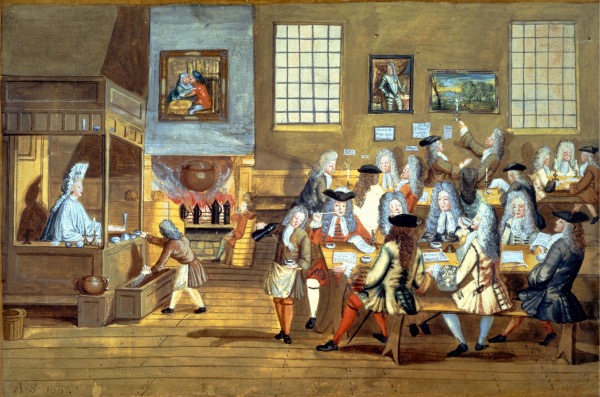
A caricature of Lloyd’s Coffee House from the 17th century.

Experience a recreation of Grace and Thomas Tosier’s famous ‘royal’ Chocolate House in Greenwich this Easter. Located in the Old Royal Naval College, Chocolate House Greenwich recreates the Tosier Chocolate House which was located in what became known as Chocolate Row, on the edge of Blackheath. A social space for the leading figures of the day, the chocolate house was run by Grace while her husband Thomas served as chocolate maker for King George I, running the chocolate kitchen at Hampton Court Palace. Visitors will be able to immerse themselves in the chocolate house via an audio and visual experience created by Unusual Expo and actor-writer Jonathan Coote. As well as meeting Grace, there is also the chance to listen in to luminaries such as architect and astronomer Sir Christopher Wren, writer and diarist John Evelyn, the first Astronomer Royal, John Flamsteed, and playwright and architect John Vanbrugh. A series of events will accompany the exhibition – which opens tomorrow – including an Easter Trail for families, a gin and chocolate tasting experience and a ‘Choc-o-Late’ event. Admission charge applies. Runs until 3rd November. For more, see https://ornc.org/whats-on/chocolate-house-greenwich/.

A wig worn by Golda Rosheuvel in Netflix’s hit series Queen Charlotte: A Bridgerton Story goes on display at Kew Palace from the end of this month. The grey wig with accompanying tiara will be showcased in Queen Charlotte’s dressing room, alongside a lock of the real Queen Charlotte’s hair. Visitors will also be able to join daily 30 minute Queen Charlotte: A Kew Palace story tours, walking in the footsteps of famous royals like King George III and Queen Charlotte. Admission charge applies. For more, see https://www.hrp.org.uk/kew-palace/.

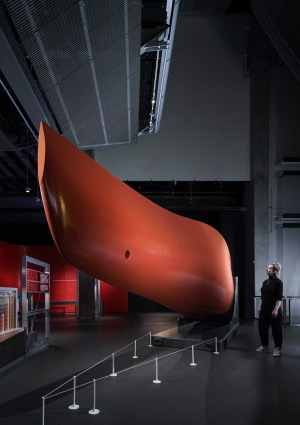
A visitor looks at a tidal turbine blade in Energy Revolution The Adani Green Energy Gallery at the Science Museum © Science Museum Group

A major new gallery examining the rapid energy transition and decarbonisation needed globally to limit climate change has opened at the Science Museum. The Energy Revolution: The Adani Green Energy Gallery is divided into three sections – Future Planet, Future Energy and Our Future – and highlights technologies and projects being used to address the climate crisis. Objects on show include a seven metre long tidal turbine blade made by Orbital Marine Power which was used in the Orkneys, rare surviving Edison tube mains cables used to power world’s first public electricity network in London in 1882, and a three metre high CoolAnt passive air-cooling facade from India that reduces dependence on powered air conditioning. At the centre of the gallery sits Only Breath, a kinetic sculpture created by artists Alexandra Carr and Colin Rennie from Torus Torus Studios that moves and blooms, stretching to around five metres in diameter when unfurled. The gallery can be found on Level 2 of the South Kensington museum. Admission is free. For more, see sciencemuseum.org.uk/energy-revolution.

Send all items to exploringlondon@gmail.

This Week in London – Hampton Court’s bunny hunt returns; vintage prints at the National Portrait Gallery; and, ‘Sounds of Blossom’ at Kew…

Gardens at Hampton Court Palace. PICTURE: edwin.11 (licensed under CC BY 2.0)

The Lindt Gold Bunny hunt returns to Hampton Court Palace this Saturday with families once again invited to search the gardens for those elusive Gold Bunny statues. Each statue offers a chance to match the names of influential characters from Hampton Court Palace’s history to the distinctive red ribbons and a small Lindt bunny chocolate awaits those who succeed in finding the bunnies. Visitors will also have the chance to encounter a selection of the characters roaming the palace over the Easter period. The Gold Bunny hunt is included in general admission. Until 14th March. For more, see www.hrp.org.uk/hampton-court-palace/whats-on/easter-lindt-gold-bunny-hunt/.

Rare vintage prints by two of art history’s most influential photographers – Francesca Woodman (1958-1981) and Julia Margaret Cameron (1815-1879) – go on show at the National Portrait Gallery today. Francesca Woodman and Julia Margaret Cameron: Portraits to Dream In showcases more than 160 rare vintage prints including 97 by Woodman and 71 by Cameron as well as artist’s books by Woodman which have never been exhibited before in the UK. Key works include Cameron’s self-declared “first success” – a portrait of Annie Wilhemina Philpot taken in 1864, Woodman’s Self-portrait at thirteen, taken during a summer holiday in Italy in 1972, images from Woodman’s Angel series and Cameron’s ethereal portraits of actor Ellen Terry taken in 1864. Also featured are Woodman’s Caryatid pieces and Cameron’s portraits of her niece and favorite model Julia Jackson, Alice Liddell as the goddess Pomona, a portrait of John Frederick William Herschel called The Astronomer (1867), and those of her frequent muses, May Prinsep and Mary Ann Hillier. Runs until 16th June. Admission charge applies. For more, see www.npg.org.uk.

A new collaboration with the Royal College of Music blends music with spring blooms at Kew Gardens. Sounds of Blossom: Awaken your senses, the first ever spring festival to be held at the gardens, features six bespoke commissions that celebrate Kew’s unique landscape in the spring emerging from locations such as Cherry Walk, Asano Avenue and the Japanese Landscape. And on weekends during the festival, visitors can enjoy live musical performances from the Royal College of Music as they showcase a varied repertoire from classical favourites to jazz melodies. Included in general admission. Runs until 14th April. For more, see www.kew.org/kew-gardens/whats-on/sounds-of-blossom.

Send all items to exploringlondon@gmail.com

This Week in London – “Forgotten” stories from royal palaces; and, St Patrick’s Day celebrations…

A scene from the Untold Lives exhibition at Kensington Palace. PICTURE: Courtesy of Historic Royal Palaces.

The “forgotten” stories of those who worked behind the scenes at London’s royal palaces are the subject of a new exhibition at Kensington Palace. Untold Lives: A Palace at Work shines a spotlight on those working in various roles at the palace between 1660 and 1830 – everyone from pages and cooks to wetnurses and seamstresses. Among the items on display is an apron worn by Queen Charlotte’s Wardrobe Maid, Ann Elizabeth Thielcke, a newly conserved portrait depicting a young Black attendant standing by King William III and holding his armour, and a specially commissioned photographic piece by Peter Braithwaite which reimagines figures from the Kensington Palace’s Kings Staircase. Among those whose stories are featured is the “Rat-Killer”, who wore a special rat-embroidered uniform, the Groom of the Stool, who was responsible for looking after the monarch on the toilet, and the Keeper of Ice and Snow, whose job was to cut ice so those at the palace could enjoy cold drinks and iced desserts all year round. The exhibition also explores the unexpected origins of some of those who served at the palaces, such as Abdullah, a wild cat keeper from India, and Mehmet von Könsigstreu, Keeper of the Privy Purse for King George I.. The exhibition, entry to which is included in general admission to the palace, can be seen until 27th October. For more, see https://www.hrp.org.uk/kensington-palace/.

St Patrick’s Day is being celebrated this Sunday with the annual parade and a free, family-friendly afternoon of entertainment in Trafalgar Square. The procession, which sets off from Hyde Park Corner at noon and winds its way through the city to Whitehall, will include Irish marching bands, dance troupes and pageantry. From 1pm to 6pm, Trafalgar Square will host family concerts, children’s films and youth performances, as well community choirs, schools and dancing with Anna Haugh, International Chef of the Year 2019, running food demos alongside the main stage and children’s workshops. Entry is free. For more, see www.london.gov.uk/events/st-patricks-day-2024.

Send all items to exploringlondon@gmail.com

LondonLife – Bamboo forest…

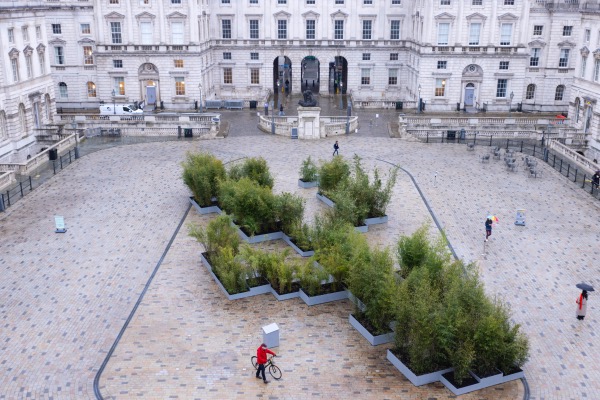
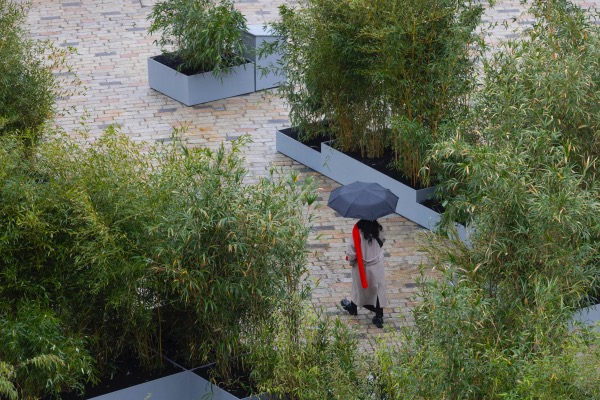
Hong Kong-based artist Zheng Bo’s new artwork, ‘Bamboo as Method’, situated in Somerset House’s courtyard. PICTURE:: David Parry/PA Wire

Located in the Edmond J Saffra courtyard at Somerset House is a forest of more than 300 bamboo plants. An art installation by Hong Kong-based artist Zheng Bo, Bamboo as Method invites visitors to take a moment out of their busy lives, immerse themselves in the garden and spend some time drawing. The installation features alcoves where visitors are encouraged to sketch some of the 10 different species of bamboo in the forest. They can also hear directly from the artist by scanning a QR code at the site. The artworks’s title pays homage to the late 15th century philosopher, Wang Yangming, who pursued enlightenment through the practice of gewu zhizhi – the acquisition of knowledge through the investigation of the nature of things. There’s an events programme accompanying the installation which is free to enter until 28th April. For more, see https://www.somersethouse.org.uk/whats-on/zheng-bo-bamboo-method.

PICTURE: David Parry/PA Wire

This Week in London – Underground shelters in wartime – then and now; new Ravenmaster at the Tower; and, ‘La Ghirlandata’ back at the Guildhall Art Gallery…

A new photographic exhibition exploring how Underground stations and metro systems provide shelter to citizens during periods of war, both now and in the past, opened at the London Transport Museum in Covent Garden last week. Echoes of the Blitz: Underground shelters in Ukraine and London features 70 images, including historical pictures from the museum’s collection as well as 38 contemporary photographs shot by six renowned, mainly Ukrainian, documentary photographers. The latter include photography showing ordinary Ukrainian citizens sleeping, waiting, cooking, washing clothes, caring for their pets and creating temporary make-shift homes in metro stations of Kyiv and and Kharkiv show alongside black and white archive images of Londoners taking refuge in Tube stations during World War II. The exhibition, which is being run in partnership with Berlin-based journalistic network n-ost, can be seen until spring next year. Admission charge applies. For more, see www.ltmuseum.co.uk.

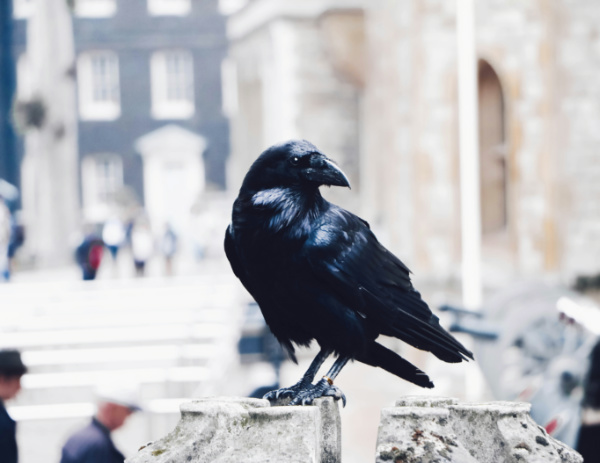
A raven at the Tower of London. PICTURE: Kasturi Roy/Unsplash

A new Ravenmaster has been appointed at the Tower of London. Yeoman Warder Michael ‘Barney’ Chandler took up the role at the start of this month, 15 years after he first became a Yeoman Warder at the Tower. The Ravenmaster oversees a team of four responsible for the care of the Tower’s seven ravens which legend says must remain at the Tower to ensure its protection. The legend apparently goes back to at least the reign of King Charles II – when the King’s astronomer John Flamsteed complained that the resident ravens were impeding his work at the Tower and requested their removal, the King was told that if the ravens left the Tower then the Kingdom would fall (and so they remained). While the Yeoman Warders have longed cared for the ravens, the post of Ravenmaster was only created in the past 50 years and was first held by Yeoman Warder Jack Wilmington. Yeoman Warder Chandler, who became the 387th Yeoman Warder at the Tower when he was appointed in March, 2009, is only the sixth person to hold the office. For more, see www.hrp.org.uk/tower-of-london/.

One of the most popular paintings at the Guildhall Art Gallery is being reinstalled to mark International Women’s Day on Friday. Dante Gabriel Rossetti’s La Ghirlandata has been on loan – first to the Tate Britain and then to the Delaware Art Museum in the US – but is now being returned. The painting dates from 1873 and depicts a ‘garlanded woman’ playing an arpanetta and looking directly at the viewer. The muse for the woman is said to have been the actor and model, Alexa Wilding, while the two ‘angels’ in the top corners were posed by William and Jane Morris’ youngest daughter, May Morris. The City of London Corporation acquired the oil on canvas work in 1927. On Saturday, free family activities will be held at the gallery to mark the work’s return. For more, see www.thecityofldn.com/la-ghirlandata.

Send items to exploringlondon@gmail.com.

This Week in London – Women of the RNLI; ‘Tropical Modernism’ at the V&A; and, a new memorial to Sir Ernest Shackleton unveiled at Westminster Abbey…

National Maritime Museum in Greenwich. PICTURE: Keith Murray (licensed under CC BY-NC-ND 2.0)

The role of women in the Royal National Lifeboat Institution is being celebrated in a new exhibition at the National Maritime Museum in Greenwich. Women of the RNLI, which marks the bicentenary of the organisation, features a series of 42 photographs depicting women volunteers and the lifeboat stations’ slipways where they work. The images by photographer Jack Lowe are part of his ongoing ‘Lifeboat Station Project’an attempt to photograph all 238 operational RNLI lifeboat stations and their crews.. Lowe uses a 12×10 inch (30×25cm) Thornton-Pickard field camera from about 1905 and develops the photos using a process called ‘wet collodion’, a technique invented in the mid-19th century. The display also features oral histories from some of the sitters. The display can be seen from Saturday until 1st December. For more, see www.rmg.co.uk.

• A new exhibition exploring the architectural style of Tropical Modernism in West Africa and India opens at the V&A on Saturday. Tropical Modernism: Architecture and Independence centres on the work of British architects Jane Drew and Maxwell Fry who developed Tropical Modernism in the 1940s, working primarily in Ghana and India. The style, which valued function over ornamentation, became a symbol of a post-colonial future. The exhibition includes models, drawings, letters, photographs, and archival ephemera as it documents the key figures and moments of the Tropical Modernist movement. There is also a half hour film installation displayed on three screens. Runs until 22nd September. Admission charge applies. For more, see vam.ac.uk.

A new memorial stone dedicated to Antarctic explorer Sir Ernest Shackleton has been unveiled at Westminster Abbey. The triangular-shaped memorial, which can be found on a wall in the south cloister, was unveiled at a service earlier this month attended by Princess Anne and members of Shackleton’s family. Located close to tributes to pioneering sailors Captain James Cook, Sir Francis Chichester and Sir Francis Drake, it was designed and made by sculptor Will Davies and its shape reflects Shackleton’s preference to be at the apex of a triangle in group photographs. The memorial incorporates stones including Connemara marble and Kilkenny limestone in reflection of Shackleton’s Irish heritage, and the names of his expedition ships, Nimrod and Endurance, are inscribed upon it, along with the lifeboat The James Caird, and his family motto, ‘FORTITUDINE VINCIMUS’ (‘By Endurance We Conquer’). For more, see www.westminster-abbey.org.

Send all items to exploringlondon@gmail.com.
This Week in London – John Singer Sargent at the Tate; vote for the Fourth Plinth occupants; and the Black figure celebrated in contemporary art at the National Portrait Gallery…

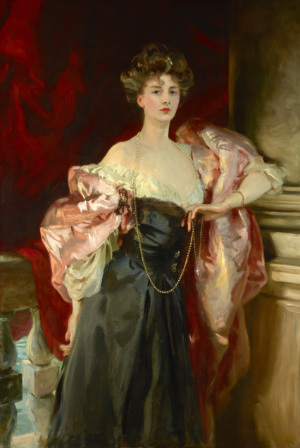
John Singer Sargent, Lady Helen Vincent, Viscountess d’Abernon, 1904 Birrmingham Museum of Art. Photo Sean Pathasema

The work of portrait painter John Singer Sargent (1856-1925) is the subject of a new exhibition opening at Tate Britain today. Sargent and Fashion features some 60 paintings as well as a dozen period dresses and accessories with many of the former worn by his sitters and several reunited for the first time with the portraits in which they are shown. Highlights include Lady Helen Vincent, Viscountess d’ Abernon (1904), Mrs. Charles E. Inches (Louise Pomeroy) (1887), which will be juxtaposed with the red velvet evening dress illustrated, and, Charles Stewart, sixth Marquess of Londonderry at the Coronation of Edward VII (1904) which will be reunited with the regalia worn by the marquess. Also on show is Sargent’s iconic painting of socialite Virginie Amélie Gautreau, Madame X (1883-4), which caused a stir by depicting Mme Gautreau with one diamond strap falling from her shoulder, Mrs Montgomery Sears (1899) which is being shown alongside Mrs Sears’ own dresses and her photographs of Sargent at work, and his dramatic image, Ellen Terry as Lady Macbeth 1889 which is being shown alongside Terry’s dress and cloak. Runs until 7th July. Admission charge applies. For more, see www.tate.org.uk/whats-on/tate-britain/sargent-and-fashion.

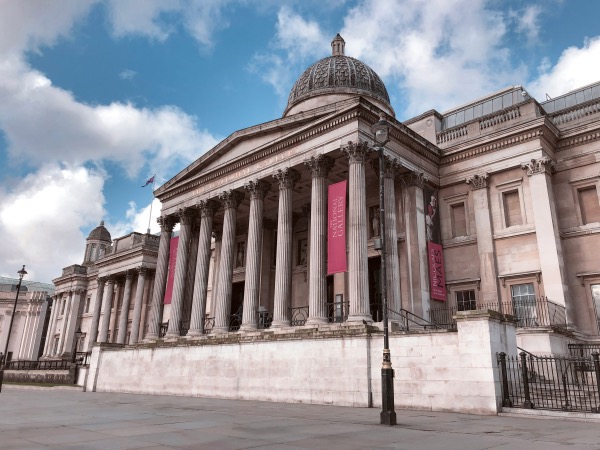
The public are being asked to vote on a shortlist of seven sculptural works to determine which of them will occupy Trafalgar Square’s Fourth Plinth in 2026 and 2028. The works include Ruth Ewan’s Believe in Discontent depicting a black cat, Chila Kumari Singh Burman’s The Smile You Send Returns to You featuring a colourful bus with a tiger atop it and Veronica Ryan’s Sweet Potatoes and Yams are Not the Same which features a sweet potato “island” with growing vine leaf sprouting out of it. Models of the short-listed works can be seen at The National Gallery (Room 1, entry is free) until 1st March. To vote, head to https://www.london.gov.uk/programmes-strategies/arts-and-culture/current-culture-projects/fourth-plinth-trafalgar-square/fourth-plinth-commissions

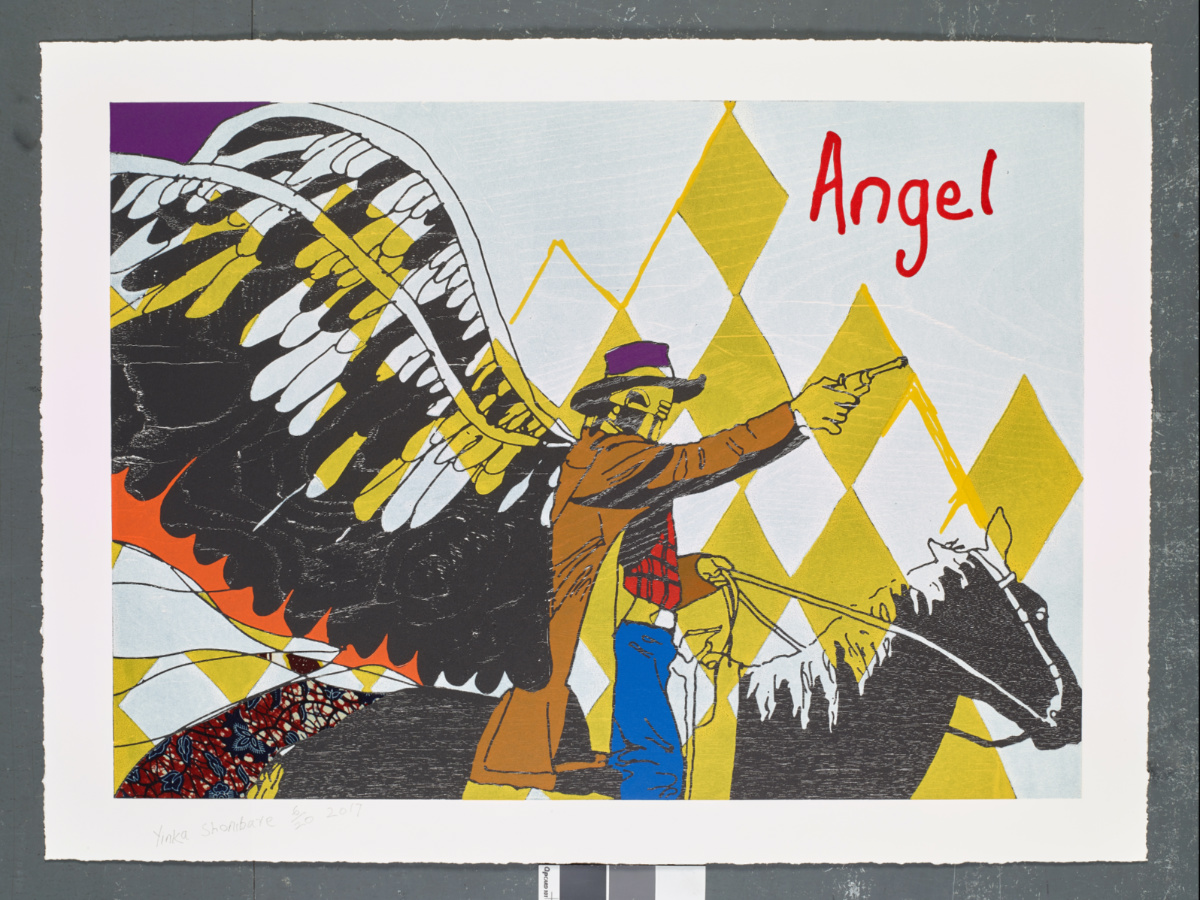
A major exhibition exploring the Black figure opens at the National Portrait Gallery today. The Time is Always Now: Artists Reframe the Black Figure features 55 contemporary works, including sculpture, paintings and drawings, by some 22 African artists working in the US and UK. The works include Amy Sherald’s life-size greyscale portraits of African Americans, American figurative artist Nathaniel Mary Quinn’s fragmented portraits, Thomas J Price’s life-sized fictional female figure, As Sounds Turn to Noise (2023), Noah Davis’ depiction of Greenwood, Oklahoma, known as Black Wall Street (2008), Kimathi Donkor’s history painting Nanny of the Maroons’ Firth Act of Mercy (2012) and Lubaina Himid’s work Le Rodeur: The Exchange (2016) which responds to a case of blindness that affected a French slave ship in 1819. The display is curated by writer Ekow Eshun, former director of the Institute of Contemporary Arts. Runs until 19th May. Admission charge applies. For more. see www.npg.org.uk.

Send all items to exploringlondon@gmail.com

This Week in London – Billingsgate Market history explored; new landscapes at Dulwich; and, recovered gems on show…

The history of Billingsgate Market in the City of London is being explored in am exhibition at the City of London Heritage Gallery. Billingsgate Market at the Heritage Gallery features items including the Liber Horn, a compilation of charters, statutes, and customs made by Andrew Horn, chamberlain of the City of London from 1320-1328, in 1311 which is illustrated by small images of fish showing their importance to Londoners, a late 17th century petition by the fishermen protesting the landing of vessels loaded with salt and oranges, 19th century volumes recording the collection of tolls and detailing the licensing of porters, and 20th century photographs of the market at work. Free to view, the display, located in the Guildhall Art Gallery, can be seen until 16th May. For more, see www.thecityofldn.com/billingsgateexhibition

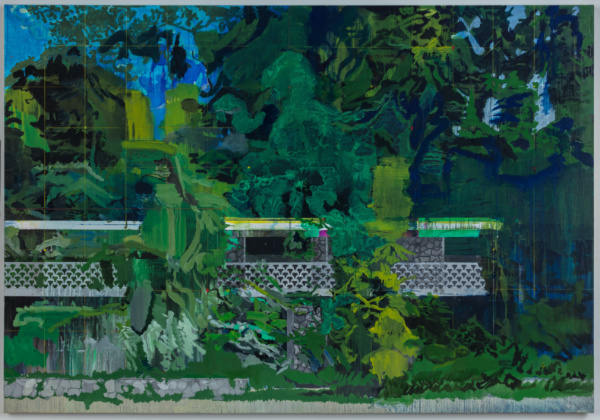
Hurvin Anderson, ‘Limestone Wall’ (2020) © Hurvin Anderson. Courtesy the artist and Thomas Dane Gallery. Photo: Richard Ivey

A major new exhibition featuring new interpretations of landscape art has opened at the Dulwich Picture Gallery. Soulscapes features more than 30 contemporary works spanning painting, photography, film, tapestry and collage by artists such as Hurvin Anderson, Phoebe Boswell, Njideka Akunyili Crosby, Kimathi Donkor, Isaac Julien, Marcia Michael, Mónica de Miranda and Alberta Whittle. Highlights include Anderson’s Limestone Wall (2020), Akunyili’s Cassava Garden (2015) and Donkor’s Idyl series (2016-2020). Runs until 2nd June. Admission charge applies. For more, see www.dulwichpicturegallery.org.uk.

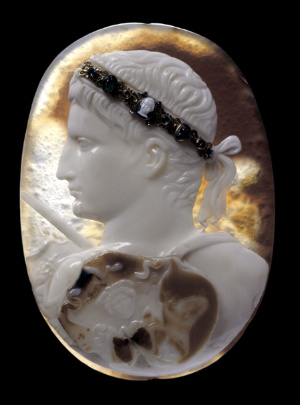
Blacas cameo depicting Augustus – Roman, AD 14–20 1867

A selection of gems recovered after news that around 2,000 objects from the British Museum’s collections were missing, stolen or damaged go on show at the museum from today. Rediscovering gems explores the significance of classical gems – used as seals, worn as jewellery or collected as objects of beauty in the ancient world – and the impression they have left throughout history. The gems are displayed in a typical 18th century gem cabinet, along with a collector’s equipment, in reflection of the huge interest in classical gems during the period. The display can be seen in Room 3 until 15th June. Admission is free. For more, see britishmuseum.org/exhibitions/rediscovering-gems.

Send all items to exploringlondon@gmail.com

This Week in London – Notre Dame de Paris celebrated at the Abbey; remembering “great escapes” of World War II; and, ‘Wildlife Photographer of the Year’…

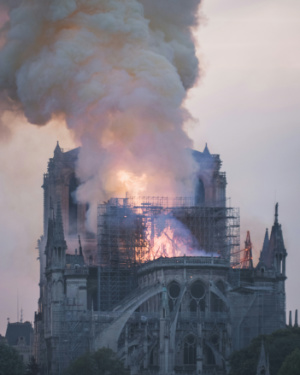
Notre Dame de Paris on fire in 2019. PICTURE: Nivenn Lanos/Unsplash

An immersive exhibition on the cathedral of Notre Dame de Paris, currently being restored following a devastating 2019 fire, opened at Westminster Abbey this week. Notre Dame de Paris, The Augmented Exhibition tells the story of the Gothic masterpiece from the 12th century to today and features a digital recreation of the cathedral by digital heritage specialists, Histovery, in collaboration with Rebuilding Notre-Dame de Paris. The exhibition is being held in the 13th century chapter house of the abbey with visitors, thanks to digital technology, able to witness firsthand the lavish wedding of King Henri IV, the coronation of Napoleon Bonaparte, and the 19th century construction of Notre-Dame’s iconic spire of Viollet-le-Duc. Runs until 1st June. Admission charge applies. For more, head here. The exhibition is part of a season of events at the abbey celebrating the bonds between the UK and France.

An new exhibition focused on the hundreds of thousands of people held captive during World War II has opened at the National Archives in Kew. Great Escapes: Remarkable Second World War Captives, tells the story of famous escape attempts such as the escape from Stalag Luft III known as “the Great Escape” (made famous in the film of the same name) and British officer Airey Neave’s escape from Colditz Castle dressed as a German soldiers well as stories of individuals seeking escape through art, music and finding love while being held. The exhibition is divided into three parts. The first explores the legal framework for the 1929 Geneva Convention governing prisoners and tells the story of MI9, a highly secret British Government agency established in 1939 to help military personnel evade and escape capture. Part two explores the stories from individual prisoners and internees under British, German, and Japanese authority during World War II while part three examines how prisoners were dealt with at the end of the war as well as how the experience of the conflict led to the Geneva Convention being rewritten in 1949. Runs until 21st July. Admission is free. For more, see www.nationalarchives.gov.uk/great-escapes/.

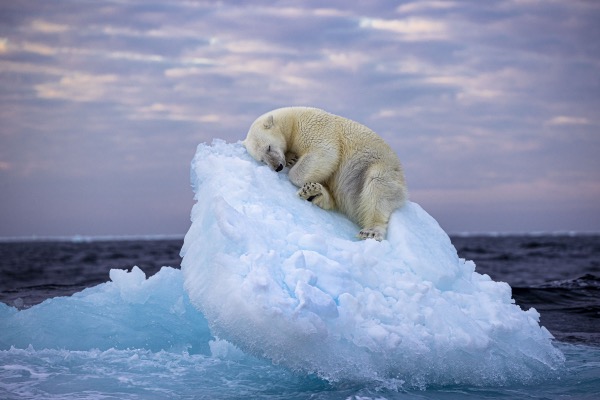
‘Ice Bed’ ©Nima Sarikhani, Wildlife Photographer of the Year People’s Choice Award winner.

An image of a young polar bear drifting to sleep on a bed carved into an iceberg has won the Wildlife Photographer of the Year People’s Choice Award. Nima Sarikhani’s Ice Bed, and the four finalist ‘Highly Commended’ images were selected from a shortlist of 25 images chosen by the Natural History Museum and an international judging panel from almost 50,000 images entered in the 59th Wildlife Photographer of the Year competition. The other finalists include Tzahi Finkelstein’s The Happy Turtle – a meeting between Balkan pond turtle and a northern banded groundling dragonfly, Daniel Dencescu’s Starling Murmuration - which captured the moment a starling murmuration formed the shape of a bird, Mark Boyd’s Shared Parenting in which two lionesses groom a cub in Kenya’s Maasai Mara, and, Audun Rikardsen’s Aurora Jellies which shows two moon jellyfish illuminated by the aurora borealis in a fjord in Norway. The five images can be seen both online and in the accompanying exhibition at the Natural History Museum until 30th June. Admission charge applies. For more, see www.nhm.ac.uk/wpy/peoples-choice.

Send all items to exploringlondon@gmail.com.

This Week in London – Life in the Roman army explored; clockwork treasures from China; and, Kew Gardens’ Orchid Festival…

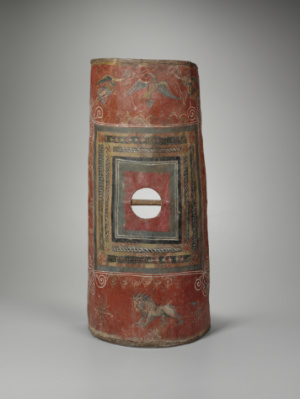
A major new exhibition on life as a Roman legionary opens at the British Museum today. Legion: Life in the Roman army shares stories of real legionaries and shows how the army was as much an “engine of social change” as it was a war machine. More than 200 objects, many of which are on display in the UK for the first time, are on show including the world’s only intact legionary shield, on loan from Yale (pictured), and the oldest and most complete classic Roman segmental body armour, found in Kalkriese, Germany, in 2018. There are also the remains of a soldier found at Herculaneum, reunited with his belt and equipment for the first time outside of Italy, as well as the Crosby Garrett mask helmet – found in Cumbria in 2010, and a unique dragon standard found in Germany. The exhibition, which can be seen in the Sainsbury Exhibitions Gallery until 23rd June, also features a specially designed Horrible Histories themed trail of the exhibition with interactive family stations. Admission charge applies. For more, see www.britishmuseum.org.

More than 20 mechanical clocks collected by Chinese emperors are being displayed together for the first time in the UK in a new exhibition opening today at the Science Museum. Among those on display in Zimingzhong 凝时聚珍Clockwork Treasures from China’s Forbidden City is the ‘Pagoda Zimingzhong’ which, was made in London in the 1700s during the Qing Dynasty in China, ‘Zimingzhong with Turbaned Figure’ which mixes imagery associated with China, Japan and India to present a generalised European view of an imagined East, and the Zimingzhong with mechanical lotus flowers’, which, when wound, reveals a flock of miniature birds swimming on a glistening pond as potted lotus flowers open. Runs until 2nd June. Visitors are invited to pay what they can to visit the exhibition, with a minimum ticket cost of £1 per person. For more, see www.sciencemuseum.org.uk/see-and-do/zimingzhong.

Kew Gardens’ Orchid Festival returns from this Saturday, this year drawing inspiration from the unique flora and fauna of Madagascar. The display features a specially commissioned film showcasing the beauty of Madagascar – the world’s fourth largest island – as well as themed floral displays and living installations in the Princess of Wales Conservatory. The latter include ‘Lovers Baobab’ on the waterlily pond, floral sculptures recreating some of Madagascar’s most iconic wildlife, including ring-tailed lemurs, chameleons and the aye-aye, the world’s largest nocturnal primate, and a small selection of Madagascan orchids including Angraecum sesquipedale (also known as Darwin’s orchid). Visitors will also hear Malagasy music composed by the Boriza Borothers and be able to purchase food made according to a range of authentic Malagasy recipes, thanks to a menu curated by Malagasy chef Lilia Andrianovy of Lilia’s Kitchen. Orchids After Hours will also return for this year’s festival. Runs until 3rd March. Admission charge applies. For more, see www.kew.org.

Send all items for inclusion to exploringlondon@gmail.com

This Week in London – Charles Holden’s university vision; Two-Tone at the Barbican; and celebrating Winston…

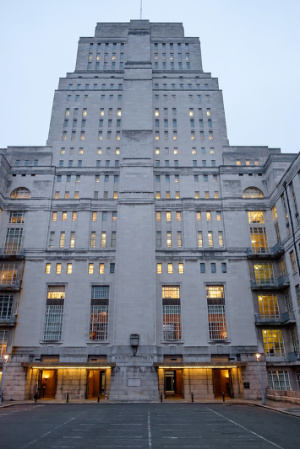
Senate House. PICTURE: Tim Abbott (licensed under CC BY-NC-ND 2.0)

A new exhibition celebrating the vision architect Charles Holden had for the design of the University of London – including the iconic Senate House – has opened at the venue. Holden had a hand in designing some 48 Tube stations and 55 Broadway – London’s first skyscraper - before in 1931 being appointed to develop the university’s Bloomsbury estate, including its headquarters. While the master plan was never completed (only the Senate House and its library were finished), it provides a fascinating insight into a part of London that could have been. Charles Holden’s Master Plan: Building the Bloomsbury Campus tells the story of institution’s design through architectural models, archival documents, photo albums, and other mixed media. The display in the Chancellor’s Hall Lobby on the first floor of the Senate House runs until 17th March. Entry is free. For more, see www.london.ac.uk/news-events/events/charles-holdens-master-plan-building-bloomsbury-campus.

A new exhibition tracing the origins and influence of the popular British music genre known as two-tone has opened at the Barbican Music Library. Two-tone, which is also known as ‘ska-rock’ or ‘ska revival’ and which had its heyday in the late 1970s and early 1980s, fused traditional Jamaican ska, rocksteady, and reggae music with elements of punk rock and new wave music. Its name comes from record label 2 Tone Records which was founded in 1978 by Jerry Dammers from The Specials, one of the most popular Two-tone bands of the time. The display – From the Caribbean to Coventry: Plotting the Rise of Two Tone – features band memorabilia as well as clothing, literature, art, photographs, and fan contributions, and explores how Caribbean immigration influenced UK youth culture. Runs until 25th May. Admission is free. For more, see https://fromthecaribbean2coventry.co.uk.

FURTHER AFIELD: Sir Winston’s family home – Chartwell in Kent – is hosting a new outdoor photography exhibition to mark what would have been his 150th birthday which features some of most spectacular birthday cakes. Press interest into Churchill’s birthday extravaganza – and in particular the cakes – was considerable and historic photographs from TopFoto have now been colourised for the first time, bringing the baking creations vividly to life. The images can be seen until 25th February. For more, see www.nationaltrust.org.uk/visit/kent/chartwell.

Send all items for inclusion to exploringlondon@gmail.com

LondonLife – St Pancras ‘book tree’…

PICTURE: JuliaC2006/Flickr (licensed under CC BY 2.0)

A Christmas tree with a difference, this year’s festive display at St Pancras International features a 12 metre high ‘book tree’ with a winding staircase and 270 shelves adorned with over 3,800 hand-painted books, including classics like Charles Dickens’ A Christmas Carol and CS Lewis’ The Lion, The Witch, and the Wardrobe. There’s also a series of nooks where passerby can ensconce themselves and listen to a five minute excerpt from an audio book. The display is the result of a collaboration with bookseller Hatchards.

This Week in London – Time to get your skates on…

Ice skating at Somerset House in 2014. PICTURE: Alison Day (licensed under CC BY-ND 2.0)

It’s ice-skating time in London – here’s some of the most spectacular rinks:

Skate at Somerset House transforms the palace’s spectacular courtyard with a backdrop provided by Switzerland Tourism. There’s a 40 foot tall Christmas tree and a host of experiences to take part in, including the Skate School, featuring coaching sessions with National Ice Skate Association (NISA) instructors, a Kid’s Club and Chilled Out sessions as well as Skate Lates. Runs until 14th January. For more, see somersethouse.org.uk/whats-on/skate-somerset-house.

Hampton Court Palace Ice Rink features the chance to skate with stunning views of the Tudor palace as a backdrop. There’s also festive refreshments available from the onsite café and bar. Open until 7th January. For more, see www.hrp.org.uk/hampton-court-palace/whats-on/hampton-court-palace-ice-rink/#gs.24q96i.

The Queen’s House Ice Rink is set outside the historic Queen’s House in Greenwich with views of the Old Royal Naval College. There’s special sessions for young ones and relaxed sessions for those after a calmer environment. The Benugo café is located next to the rink. Open until 7th January. For more, see www.rmg.co.uk/queens-house/attractions/queens-house-ice-rink.

The UK’s largest open air ice rink, the Ice Rink at Hyde Park Winter Wonderland, is set under a canopy of lights and centred around a Victorian bandstand. There’s live entertainment on selected dates. Runs until 1st January. For more, see https://hydeparkwinterwonderland.com/things-to-do/ice-skating/.

Set in Canada Park Square, the Ice Rink Canary Wharf spans 1275 square metres. Wednesday nights feature DJs and on the 20th December, there’s an ‘Ultimate Christmas Party on Ice’. The rink stays open until 24th February. For more, see https://icerinkcanarywharf.co.uk.

This Week in London – London homes in winter; artworks commemorating people of African, Caribbean, and Asian heritage; and, final NYE tickets…

A Christmas tree in London. PICTURE: Hert Niks/Unsplash

See how Londoners lived during winters past at the Museum of the Home in Hoxton. Rooms Through Time: Winter Past centres on the museum’s ‘Rooms Through Time’ and reveals how winter has changed London homes through the last 400 years. The display – which includes rooms set out as they would have been on Millennium Eve, Christmas Eve in 1915, Twelfth Night in 1830, and during a Frost Fair in 1683 – takes a multi-sensory storytelling approach, offering new sounds, smells, sights and stories across the room sets. The display is accompanied by a series of ‘Winter Festival’ events. Runs until February next year. Entry is free. For more, see www.museumofthehome.org.uk.

• A series of artworks commemorating people of African, Caribbean, and Asian heritage from London’s past opens at the London Metropolitan Archives in Clerkenwell on Monday. Art at the Archive: Reimagining Unforgotten Lives sees three artists creating works after taking as their inspiration a range of people featured in LMA’s Unforgotten Lives exhibition. The works include Annie-Marie Akussah’s three-dimensional artwork depicting landscapes Black abolitionist Quobna Ottobah Cugoano would have seen in Ghana as well as London’s West and East India Docks, Elyssa Rider’s oil portraits of Ann Duck, a young woman living in London from 1717 to 1744 whose criminal past is preserved in the court records of the Old Bailey and Tara Jerome-Bernabé’s woven painting which reimagines the lives and images of young Black servants who were enslaved and forced to work in aristocratic households. Runs until 27th March. Admission is free. For more, see head here.

The final tickets to see London’s New Year’s Eve fireworks celebrations on the banks of the River Thames go on sale on Friday. Just over 20,000 tickets will go on sale at noon, taking to 100,000 the total number of tickets sold. Tickets, which cost £20 each, must be bought in advance from the only authorised outlet, AXS. Only ticket holders will be able to watch the fireworks in person. Those without a ticket are encouraged to watch the display live on BBC One or via BBC iPlayer alongside millions of viewers or to celebrate the new year at the capital’s fantastic range of bars, restaurants, pubs and clubs. Tickets can be bought online at AXS.com. For more, see www.london.gov.uk/nye.  

Send all items to exploringlondon@gmail.com

This Week in London – Impressionists on paper; Vanessa Bell and Duncan Grant honoured with a Blue Plaque; new Burnham Beeches history app; and, young artists celebrated on London billboards…

Claude Monet, ‘Cliffs at Etretat: The Needle Rock and Porte d’Aval’, c 1885. National Galleries of Scotland.

A new exhibition exploring how Impressionist and Post-Impressionist artists in late 19th-century France radically transformed the status of works on paper opens at the Royal Academy on Friday. Impressionists on Paper: Degas to Toulouse-Lautrec features around 80 works on paper by artists including Mary Cassatt, Paul Cézanne, Edgar Degas, Paul Gauguin, Eva Gonzalès, Claude Monet, Berthe Morisot, Odilon Redon, Pierre-Auguste Renoir, Georges Seurat, Henri de Toulouse-Lautrec and Vincent van Gogh. Among the highlights are Degas’ Woman at a Window (1870-71), van Gogh’s The Fortifications of Paris with Houses (1887), Monet’s Cliffs at Etretat: The Needle Rock and Porte d’Aval (c1885) and Toulouse-Lautrec’s images of the urban underworld of Montmartre. The display can be seen in The Gabrielle Jungels-Winkler Galleries until 10th March. Admission charges apply. For more, see royalacademy.org.uk.

English Heritage have unveiled their final Blue Plaque for 2023 and it celebrates two of the most influential painters of the early-to-mid 20th century, Vanessa Bell and Duncan Grant. The plaque was unveiled at number 46 Gordon Square in Bloomsbury, from where the Bloomsbury Group – of which Bell and Grant were leading members – drew its name. Bell first lived at number 46 with her siblings, including Virginia Stephen (later Woolf), and, in 1914, Grant moved in with Vanessa and her husband, Clive Bell. Paintings the pair made at number 46 include Grant’s Interior at Gordon Square (c1915) and Bell’s Apples: 46 Gordon Square (c1909-10), a still-recognisable view from the drawing-room balcony to the square. For more on the English Heritage Blue Plaques scheme, head to www.english-heritage.org.uk/visit/blue-plaques/.

The history of Burnham Beeches has been brought to life with a new augmented reality app. The app allows users to superimpose periods of Burnham Beeches’ history – from the Iron Age, Middle Ages and World War II – over what they see when visiting the site and incorporates sounds from selected era as well. It can be accessed via a QR code which is being published on signs at Burnham Beeches. Burnham Beeches, located near the village of Burnham in Buckinghamshire, was acquired by the City of London in 1880 when the area was threatened by development and is managed as a free open space. For more, head here.

The work of 30 young artists celebrating African community and culture is being showcased on billboards across the city in conjunction with Tate Modern’s current exhibition, A World in Common. The photographs have been selected following a call from the Tate Collective for 16-to-25-year-olds to submit images responding to the exhibition. More than 100 entries were submitted by young people based across the UK and beyond and Londoners will be able to view the 30 shortlisted works on billboards in Haringey, Lambeth, Southwark and Tower Hamlets over the next two weeks.

Send all items to exploringlondon@gmail.com.
This Week in London – Hans Holbein at The Queen’s Gallery; ‘Crown and Coronation’ at the Tower; Christmas at Kew; and, Charles Dickens’ friendship with Wilkie Collins explored…

Hans Holbein the Younger, 
Anne Boleyn (1532)/Royal Collection Trust / © His Majesty King Charles III 2023.

The largest exhibition of the work of Tudor-era artist Hans Holbein the Younger has opened at The Queen’s Gallery, Buckingham Palace. Holbein at the Tudor Court features more than 50 works by Holbein including intimate portrait drawings of the royal family and the Tudor nobility including one of few surviving drawings of Anne Boleyn made during her lifetime, drawings of Jane Seymour and Sir Thomas More, and an unfinished portrait of King Henry VIII’s son Prince Edward. Other portraits include that of Derich Born, a 23-year-old Steelyard merchant, and one of Richard Southwell, a convicted murderer who was one of King Henry VIII’s closest advisors. The exhibition also features objects including a Brussels tapestry, jewel-like miniatures and Henry VIII’s magnificent armour, usually on show at Windsor and in London for the first time in a decade. Runs until 14th April. Admission charge applies. For more, see www.rct.uk/collection/themes/exhibitions/holbein-at-the-tudor-court/the-queens-gallery-buckingham-palace

The White Tower looking south-east, showing a coloured light projection of St Edward’s Crown, the crown used at the moment of Coronation. PICTURE: © His Majesty King Charles III 2023 -Royal Collection Trust – Historic Royal Palaces

The magnificence of coronations and the Crown Jewels will be on show at the Tower of London from tomorrow night in a new light and sound show. Crown and Coronation – which has been created by Historic Royal Palaces in partnership with Luxmuralis as part of an artistic collaboration between artist Peter Walker and composer David Harper – brings the “spectacle, significance and shared experience” of coronations to life and demonstrates the pivotal role of the Crown Jewels in the ceremony as it takes visitors on a journey through the past 1,000 years. Images of the jewels will be projected on the White Tower in the show with visitors then able to view the actual jewels themselves in a special after hours opening. But you’ll have to be quick – the show can only be seen for nine days, ending on 25th November before it embarks on a two year UK-wide tour. Admission charge applies. For more, see www.hrp.org.uk/tower-of-london/.

The Palm House light show, part of Christmas at Kew. PICTURE: © Raymond Gubbay Ltd, Richard Haughton

Christmas returned to Kew this week with the launch of it’s new festive light trail featuring seven new installations. Highlights of this year’s trail include three metre tall illuminated flowers, cascading lights suspended from the tree canopy, one of the longest light tunnels to ever feature in Kew’s Christmas celebrations and the Hive – which recreates life inside a beehive – as well as the iconic Palm House light show, the twinkling tunnel of light inspired by arched church windows known as the ‘Christmas Cathedral’, and a ‘Fire Garden’ at the Temperate House. There’s also festive treats to sample and visitors can experience a traditional Christmas dinner at The Botanical Brasserie. Admission charges applies. Runs until 7th January (advance bookings only). For more, see www.kew.org/christmas.

Charles Dickens’ friendship and collaboration with writer Wilkie Collins is explored in a new exhibition at The Charles Dickens Museum in Bloomsbury. Dickens met Collins, who would become one of his most significant friends, in 1851 as they performed together in a play at the house of John Forster and their personal and professional relationship lasted more than 15 years. The display features works produced as a result of the friendship – everything from articles in Dickens’s Household Words through to novellas and plays such as The Lazy Tour of Two Idle Apprentices and The Frozen Deep – and features original letters, historic objects, and interactive displays focusing on everything from the pair’s moustache-growing contests and cruising international entertainment districts to co-writing side by side, discussing writer’s block and plot devices. Admission is included with general admission. Runs until 25th February. For more, see https://dickensmuseum.com.

Send all items to exploringlondon@gmail.com.
This Week in London – 695th Lord Mayor’s Show; Peruvian and Andean culture at the British Museum; and, a ‘virtual heart’ at the Science Museum…

The Lord Mayor’s Show in 2019. PICTURE: It’s No Game (licensed under CC BY 2.0)

The 695th Lord Mayor’s Show – the oldest and longest civic procession in the world – will be held in the City of London this weekend. The three mile-long parade, which dates back to the 13th century, will feature Lord Mayor of London, Michael Mainelli (who will take office during the Silent Ceremony on Friday), who will process through the City streets to swear allegiance to the Crown in Westminster. Accompanying him will be a procession featuring some 7,000 people, 200 horses and around 150 floats and will include representatives of the City’s livery companies as well as military groups, bands and community organisations. The procession leaves from Mansion House at 11am and rolls down Poultry and Cheapside to St Paul’s Cathedral and then via Ludgate Hill and Fleet Street to the Royal Courts of Justice before returning, from 1:10pm, via Queen Victoria Street to Mansion House. For more, see https://lordmayorsshow.london.

The first permanent display of Peruvian and Andean culture at the British Museum has opened in the Wellcome Trust Gallery. Part of the Living and Dying exhibition is divided into two sections – the first exploring the culture’s relationship with the sea and the second with the land. The displays includes digital elements as well as objects ranging from pottery and textiles to metalwork and conch shells. For more, see www.britishmuseum.org.

A “compelling, complex and beautiful” large-scale virtual model of a human heart has gone on display in the Science Museum in South Kensington. The model was created by bioengineer Dr Jazmín Aguado Sierra using scans of her own heart and functions just as her real heart does. The ‘Virtual Heart’ display, which is introduced by Dr Aguado Sierra, can be seen in the Engineers gallery, in a section which explores collaborations between clinicians, medical engineers and patients and showcases real-world health solutions. The display is free to see. For more, see sciencemuseum.org.uk/engineers.

Send all items to exploringlondon@gmail.com.
This Week in London – Myanmar explored; Hockney portraits; and the world’s fastest all-electric aircraft…

The Golden Letter of Alaungpaya, Konbaung period, 18th century © Gottfried Wilhelm Leibniz Bibliothek –Niedersächsische Landesbibliothek, Hannover, Ms IV 751a
Oil Workers Helmet, 1900s © Calderdale Museums Services

A new exhibition exploring the history of Myanmar, also known as Burma, opens at the British Museum today. Burma to Myanmar, the first major exhibition in the UK to focus on the country’s history, features more than 110 objects and spans the period from around 450 AD through today. Highlights include: a golden letter sent from King Alaungpaya to George II which, made of gold, is set with 24 rubies and placed in an elephant tusk case; a wall hanging (a ‘shwe-chi-doe’ or ‘kalaga’) illustrating scenes from the Ramayana; a gold Buddhist reliquary from the 1400s; a late 19th or early 20th century blanket from the Nung-Rawang people; an oil worker’s helmet from the early 1900s; a map of several Shan states from the 1880s made to assist the British in the process of drawing hard borders with China; and, a bust of General Aung San (1915–47), leader of the Burma Independence Army. The exhibition in the Joseph Hotung Great Court Gallery can be seen until 11th February. Admission charge applies. For more, see http://www.britishmuseum.org/exhibitions/burma-myanmar

More than 30 portraits painted by British artist David Hockney at his Normandy studio between 2021 and 2022 can be seen for the first time in an exhibition of the artist’s works at the National Portrait Gallery. David Hockney: Drawing from Life was open for just 20 days prior to the gallery’s closure due to COVID-19 in 2020. It has now returned in an expanded form, featuring 160 works which trace the trajectory of Hockey’s practice largely through his intimate portraits of five sitters – Celia Birtwell, Hockney’s mother Laura Hockney; his former partner and curator Gregory Evans; master printer Maurice Payne and himself. The newly added portraits include depictions of the likes of actor and singer Harry Styles and people from the Normandy community in which he works. The exhibition can be seen until 21st January. Admission charge applies. For more, see ngp.org.uk/whatson/exhibitions/2023/hockney-drawing-from-life.

Rolls Royce’s Spirit of Innovation electric aircraft © Science Museum Group

The world’s fastest all-electric aircraft, Spirit of Innovation, has gone on show at the Science Museum in South Kensington. Suspended as if in mid-flight, the aircraft is the final object in Making the Modern World, a major gallery which presents advances in science and technology from the birth of the Industrial Revolution to the present day. Powered by a lightweight and energy efficient 400kW electric powertrain, Spirit of Innovation holds the all-electric aircraft world record for highest top speed over three kilometres, with an average of 555.9km/h (345.4 mph), breaking the previous record by over 200 kilometres per hour. The plane also set a new record for the fastest climb by an electric aircraft to three kilometres. Rolls-Royce created the aircraft as part of the Accelerating the Electrification of Flight (ACCEL) project, in collaboration with Electroflight (now part of Evolito), YASA, and the Aerospace Technology Institute. The gallery is free to visit. For more, see www.sciencemuseum.org.uk.

Send all items for inclusion to exploringlondon@gmail.com

This Week in London – London’s transport posters on show; a musical exploration at the Science Museum; and, ‘Petrichor’ at Kew…

London Transport Museum in Covent Garden. PICTURE: Marcus Meissner (licensed under CC BY 2.0)

The first permanent gallery dedicated to the history of poster art and design at the London Transport Museum in Covent Garden opens tomorrow. The new Global Poster Gallery, sponsored by Global, the Media & Entertainment Group, showcases the museum’s collection of 20th century graphic art and design – one of the world’s largest. The new gallery, which is set over two floors, launches with the exhibition, How to Make a Poster, and an accompanying programme of events. The exhibition visually explores the process of creating posters from the pre-digital age from 1900 and features more than 110 poster artworks and posters including the Underground’s very first pictorial poster titled No need to ask a p’liceman by John Hassall, dating from 1908. Admission charge applies. The exhibition runs until 2025. For more, see www.ltmuseum.co.uk.

A new interactive exhibition exploring the mysterious hold music can have over us opens at the Science Museum today. Turn It Up: The power of music features historic music players, inventions and unusual instruments. Among the inventions on show are the MiMU gloves invented by Imogen Heap and used by Ariana Grande and Kris Halpin which use gestures to control electronic music-making software, and a virtual instrument called Headspace, created by professional trumpeter Clarence Adoo and inventor Rolf Gelhar after Adoo was paralysed from the shoulders down in a car accident while among the unusual instruments are the pyrophone organ powered by flames to the Anarchestra satellite dish which can be played in multiple new ways to make music. The exhibition can be seen until 6th May at the South Kensington premises. Admission charges apply. For more, see www.sciencemuseum.org.uk.

The work of acclaimed contemporary artist Mat Collishaw goes on show tomorrow at Kew Garden’s Shirley Sherwood Gallery of Botanical Art on Saturday. Highlights of the exhibition – Petrichor – include the UK premieres of Alluvion, a series of six new AI artworks inspired by Dutch Old Masters, and the large-scale projected work Even to the End. Other works include Heterosis – a collection of dynamic NFT’s which combine genetic algorithms with blockchain technology to facilitate the hybridisation of mutable digital flowers, The Centrifugal Soul – a zoetrope which creates a stunning illusion of motion, and Albion – a large-scale piece in the form of an intricate 19th-century ‘Pepper’s Ghost’ illusion which depicts the Major Oak in Sherwood Forest. Runs until 7th April. Admission charge applies. For more, see www.kew.org.

Send all items for inclusion to exploringlondon@gmail.com.
This Week in London – How Jewish Londoners shaped global fashion; the influence of Japanese folklore on art and design; and, Claudia Jones honoured…

• An iconic red coat worn by Princess Diana when she announced she was pregnant with Prince William is going on show in a new exhibition at the Museum of London Docklands at West India Quay. Fashion City: How Jewish Londoners shaped global style – the first major exhibition in two decades centred on the museum’s extensive dress and textile collection – tells the story of Jewish designers, makers and retailers responsible for some of the most recognisable looks of the 20th century. As well as the David Sassoon-designed coat, it also features a newly acquired Alexon tweed coat worn by EastEnders character Dot Cotton, hats relating to the ‘milliner millionaire’, Otto Lucas, who changed the global reputation of British fashion in the mid-20th century, and garments designed by Mr Fish, a leading figure of the Peacock Revolution whose flamboyant menswear was worn by stars including Jimi Hendrix, David Bowie, and Muhammad Ali. The fashion items are joined by personal items from some of the 200,000 Jewish people who arrived in Britain between the late 19th and mid 20th century, such as a small travelling case used by a child arriving in London as part of the Kindertransport (the rescue effort of children from Nazi-controlled territory in 1938-1939), and a leather bag owned by a woman who fled from Vienna in 1938. Opens on Friday and runs until 14th April next year. Admission charges apply. For more, see www.museumoflondon.org.uk/museum-london-docklands/whats-on/exhibitions/fashion-city

Sakar International, Inc, Hello Kitty rice-cooker, 2014, Japan © Victoria and Albert Museum, London

Drawing on everything from Hokusai to Pokémon and Studio Ghibli, the influence of Japanese folklore on Japan’s art and design is the subject of the first exhibition at the new Young V&A. Japan: Myths to Manga is divided into four sections – Sky, Sea, Forest, and City – and features more than 150 historic and contemporary objects along with hands-on activities for visitors of all ages ranging from manga-making to Taiko drumming and yōkai interactive. Highlights in the display include works by celebrated 19th century Japanese artists, such as Hokusai’s Great Wave (1831), Sylvanian families matched with historic netsuke (small sculptures), a stage model for the Royal Shakespeare Company’s production of My Neighbour Totoro, and a Hello Kitty rice cooker from 2014. An installation of 1,000 paper cranes, a symbol of remembrance from the Hiroshima Peace Memorial Park in Japan, will also be present. The display, which opens at the Bethnal Green premises on Saturday, runs until 11th August next year. Admission charges apply. A series of events linked to the exhibition are also being run. For more, see www.vam.ac.uk/exhibitions/japan-myths-to-manga.

Anti-racism activist and a ‘founding spirit’ of the Notting Hill Carnival, Claudia Jones, has been honoured with an English Heritage Blue Plaque in Vauxhall. The plaque marks the mid-19th century terraced house that was her home for almost four years during which she founded the West Indian Gazette and came up with the idea of bringing Caribbean carnival to London (the first carnival took place in  It was during her time living in this shared dwelling that Jones founded the West Indian Gazette and came up with the idea of bringing Caribbean carnival to London (the first carnival took place in St Pancras Town Hall on 30th January, 1959; the Notting Hill Carnival, an outdoor event, came later). For more, see www.english-heritage.org.uk/visit/blue-plaques/.

Send all items for inclusion to exploringlondon@gmail.com.