This Week in London – ‘Dress Codes’ at Kensington Palace; Edvard Munch portraits; St Patrick’s Day celebrations; and, women’s lives at Hampton Court…

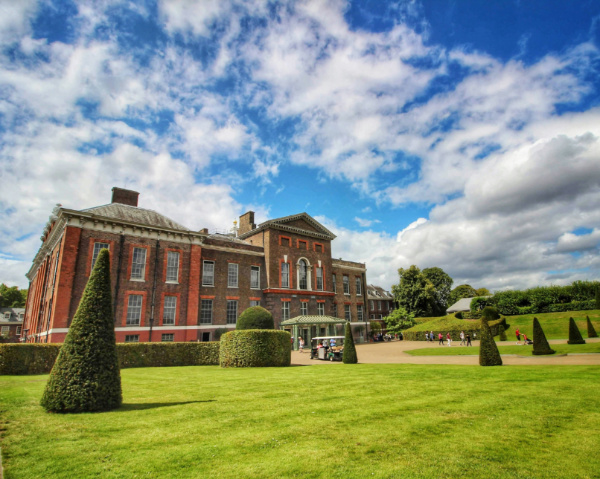
Kensington Palace. PICTURE: Martin Zenker/Unsplash

Never-before-seen royal clothing is going on show at a new exhibition opening at Kensington Palace today. Dress Codes, which includes rarely seen highlights from the Royal Ceremonial Dress Collection, explores the codes and conventions of royal clothing, and the impact fashion can make “when boundaries are pushed and dress codes evolve”. Highlights include two matching Liberty print floral cotton dresses, worn in 1936 by Queen Elizabeth II (then Princess Elizabeth) and her younger sister Princess Margaret, a glittering red Bruce Oldfield gown worn by Diana, Princess of Wales, for a state visit to Saudi Arabia in 1987, and a Catherine Walker green silk velvet tuxedo-style dress which was shared with the world as one of 79 dresses famously auctioned to raise money for HIV/AIDS and cancer charities in 1997. There also two dresses worn by Princess Margaret which are going on show for the first time in the UK – a 1978 Thea Porter evening ensemble and a colourful green embroidered evening gown by the Filipino designer Jose Pitoy Moreno, worn in 1980. Other items include a never-before-displayed black mourning bodice worn by Queen Victoria. Runs until 30th November. Admission charges apply. For more, see www.hrp.org.uk/kensington-palace/whats-on/dress-codes.

The first ever exhibition of Edvard Munch portraits opens at the National Portrait Gallery. The display, Edvard Munch Portraits, include Munch’s portraits of lawyer Thor Lütken and physicist Felix Auerbach as well as early family portraits such as Evening (1888) which shows his sister Laura on a family holiday and Andreas Munch Studying Anatomy (1886). Other works include The Brooch (1902) and full-length portraits of Jappe Nilssen, the painter Ludvig Karsten and writer Christian Gierløff – all from the group of men he called his ‘Lifeguards’ or ‘Guardians’. Runs until 15th June. Admission charge applies. For more, see www.npg.org.uk.
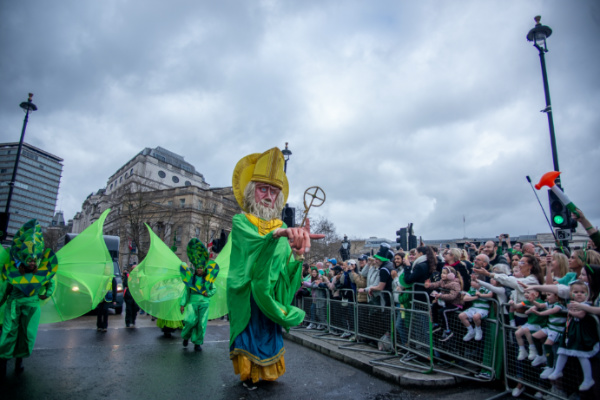
St Patrick’s Day in London in 2024. PICTURE: Loredana Sangiuliano/Shutterstock

The St Patrick’s Day Parade and Festival returns to London this Sunday. Irish Paralympic gold medal winning cyclist Katie-George Dunlevy and Olympic gold medal winning boxer Kellie Harrington are serving as this year’s Grand Marshals of the parade which, with more than 50,000 participants, will feature floats, marching bands, and dance troupes. The parade kicks off at noon and will make its way from Hyde Park Corner past Piccadilly and Trafalgar Square and on to Whitehall. Meanwhile, Trafalgar Square will host an afternoon of entertainment hosted by Irish-Indian-Malaysian DJ and broadcaster Tara Kumar and featuring a wide range of family-friendly performances by the likes of Kíla, Irish Women in Harmony and Ragz-CV. Celebrity chef Anna Haugh will provide Irish cooking demonstrations and there will be an exhibition celebrating Ireland’s unsung women heroes as well as the chance to learn Irish dancing and a dedicated zone for kids with free creative workshops. For more, see https://www.london.gov.uk/events/st-patricks-day-2024.

An audio-led exploration of Hampton Court Palace after dark kicks off next Wednesday to mark
International Women’s History Month.
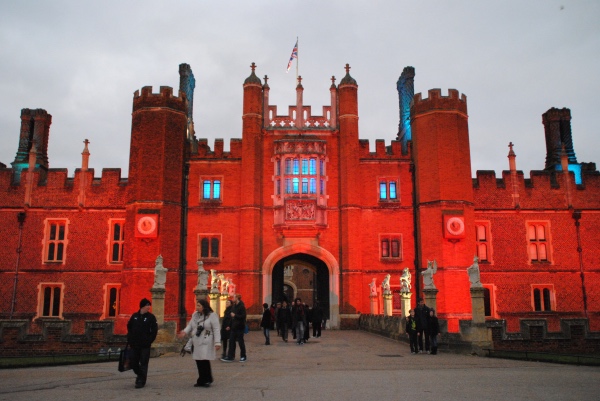
Still The Hours uses a layered soundscape to guide visitors through the palace’s darkened halls as established actors including Kathryn Hunter (Harry Potter, Black Doves, Poor Things) and Miranda Richardson (Harry Potter, Good Omens, The Hours) can be heard alongside up-and-coming female voices to “weave a vivid tapestry” of women’s lives at the palace. The stories explored in the hour long presentation range from a suffragette to a mistress and a queen to a maid. Runs until 30th March. Admission charge applies (for ages 14+, under 16s must be accompanied by an adult). For more, see www.hrp.org.uk.

Send all items to exploringlondon@gmail.com

This Week in London – Queen Victoria’s Christmas childhood; Parmagianino’s Madonna and Child with Saints; and, Buckingham Palace winter tours…

Step back in time at Kensington Palace this Christmas with an experience inspired by Queen’s Victoria’s childhood at the palace. Victoria’s Childhood Christmas features intricately designed installations – everything from trees hung with sugar ornaments and handmade paper decorations to bespoke illustrations and period-style gifts – as well as an exploration of how some of the traditions still celebrated today – such as arranging numerous Christmas trees on table tops and displaying unwrapped presents around them – can be traced back to the 1830s at Kensington Palace. There’s also a pop-up theatre set which captures the magic of Victoria’s winter trips to London opera houses and a festive-themed afternoon tea inspired by Princess Victoria’s Christmas traditions served in The Orangery. The experience, which is included in general admission, can be seen until 5th January. For more, see www.hrp.org.uk/kensington-palace/

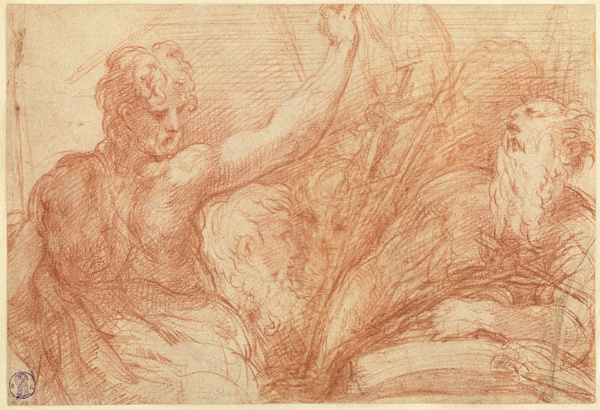
Parmigianino (1503–1540), ‘Studies of Saints John the Baptist and Jerome, a Crucifix and Various Heads’ (recto), about 1525–7; Red chalk on paper, 13.5 × 22.1 cm; The J. Paul Getty Museum, Los Angeles (87.GB.9); PICTURE: Courtesy of the Getty’s Open Content Program

Parmigianino’s Madonna and Child with Saints (1526‒7) returns to display in The National Gallery for the first time in a decade in honour of the gallery’s 200th anniversary. The work, which is also known as The Vision of Saint Jerome, was presented to the gallery in 1826 and is being displayed with a selection of some of the most important preparatory drawings providing a rare opportunity to follow the artist’s creative process. The painting can be seen in Room 46 until 9th March. Entry is free. For more, see nationalgallery.org.uk.

The Buckingham Palace State Rooms are open for one hour tours on select dates throughout winter. Led by an expert guide, the tours, which have a maximum of 30 people, include a complimentary guide. For more, see https://www.rct.uk/whatson

Send all items to exploringlondon@gmail.com

This Week in London – “Forgotten” stories from royal palaces; and, St Patrick’s Day celebrations…

A scene from the Untold Lives exhibition at Kensington Palace. PICTURE: Courtesy of Historic Royal Palaces.

The “forgotten” stories of those who worked behind the scenes at London’s royal palaces are the subject of a new exhibition at Kensington Palace. Untold Lives: A Palace at Work shines a spotlight on those working in various roles at the palace between 1660 and 1830 – everyone from pages and cooks to wetnurses and seamstresses. Among the items on display is an apron worn by Queen Charlotte’s Wardrobe Maid, Ann Elizabeth Thielcke, a newly conserved portrait depicting a young Black attendant standing by King William III and holding his armour, and a specially commissioned photographic piece by Peter Braithwaite which reimagines figures from the Kensington Palace’s Kings Staircase. Among those whose stories are featured is the “Rat-Killer”, who wore a special rat-embroidered uniform, the Groom of the Stool, who was responsible for looking after the monarch on the toilet, and the Keeper of Ice and Snow, whose job was to cut ice so those at the palace could enjoy cold drinks and iced desserts all year round. The exhibition also explores the unexpected origins of some of those who served at the palaces, such as Abdullah, a wild cat keeper from India, and Mehmet von Könsigstreu, Keeper of the Privy Purse for King George I.. The exhibition, entry to which is included in general admission to the palace, can be seen until 27th October. For more, see https://www.hrp.org.uk/kensington-palace/.

St Patrick’s Day is being celebrated this Sunday with the annual parade and a free, family-friendly afternoon of entertainment in Trafalgar Square. The procession, which sets off from Hyde Park Corner at noon and winds its way through the city to Whitehall, will include Irish marching bands, dance troupes and pageantry. From 1pm to 6pm, Trafalgar Square will host family concerts, children’s films and youth performances, as well community choirs, schools and dancing with Anna Haugh, International Chef of the Year 2019, running food demos alongside the main stage and children’s workshops. Entry is free. For more, see www.london.gov.uk/events/st-patricks-day-2024.

Send all items to exploringlondon@gmail.com
This Week in London – The Georgian court meets contemporary fashion; the Rossettis at Tate Britain; and, the Lindt Gold Bunny Hunt returns…

We’re taking a short break for Easter and will be back on Tuesday!

The glittering world of the Georgian court and the glamour of the modern red carpet come together in a new exhibition at Kensington Palace. Crown to Couture sees contemporary fashion worn by the likes of celebrities like Lizzo and Lady Gaga displayed alongside historical costumes, drawing some fascinating parallels between the two worlds. More than 200 objects are included in the display in the State Apartments with highlights including the  Thom Browne dress worn by musician Lizzo to the 2022 Met Gala, Christopher John Roger’ luminous green gown worn by Lady Gaga to the 2020 MTV Awards, the Rockingham Mantua – brocaded in silver thread and silver lace trim and believed to have been worn by the wife of British Prime Minister, 2nd Marquess of Rockingham, in the 1760s, and the world-famous Silver Tissue Gown. On loan from the Fashion Museum Bath, the latter is a rare example of fashion worn at the court of Charles II and is believed to have been worn to court by a young Lady Theophila Harris, who later went on to become the wife of MP Sir Arthur Harris of Hayne. Runs until 29th October. Admission charge applies. For more, see www.hrp.org.uk/kensington-palace/whats-on/crown-to-couture.

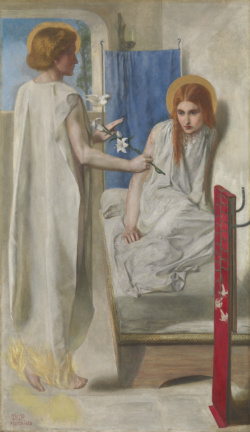
Dante Gabriel Rossetti
Ecce Ancilla Domini (The Annunciation) 1849-50
© Tate, Purchased 1886

A major exhibition charting the romance and radicalism of the Rossetti generation opens at Tate Britain today. The Rossettis – he first retrospective of Dante Gabriel Rossetti at Tate and the largest exhibition of his iconic pictures in two decades as well as the first full retrospective of Elizabeth Siddal for 30 years – features more than 150 paintings and drawings as well as photography, design, and poetry. Highlights include Dante Gabriel’s Ecce Ancilla Domine (The Annunciation) (1850), Elizabeth Siddal’s Lady Clare (1857) and Christina Rosetti’s famous poem The Goblin Market (1859). There’s also Aesthetic portraits from the later part of Dante Gabriel’s career, such as Bocca Baciata (1859), Beata Beatrix (c1864-70) and The Beloved (1865-73), as well as Lady Lilith (1866-8) and Mona Vanna (1866). Runs until 24th September. Admission charge applies. For more, see www.tate.org.uk/whats-on/tate-britain/the-rossettis.

The Lindt Gold Bunny Hunt is on again at Hampton Court Palace. Youngsters are invited to explore the palace’s 60 acres in a search for a series of hidden Lindt Gold Bunny statues, matching the name of an important character from the palace’s history with each bunny to unwrap a fascinating story. At the end of the experience, they’ll be rewarded with their own delicious Lindt Gold Bunny. Visitors to the palace will also encounter historic characters as the royal court compete with chocolatier Grace Tosier to help Prince George, the son of King George I, achieve his mission of sleeping-in, drinking chocolate and dancing all day. Runs until 16th April. Admission charge applies. For more, see www.hrp.org.uk/hampton-court-palace/whats-on/easter-lindt-gold-bunny-hunt/.

Send items to exploringlondon@gmail.com

10 most popular posts for 2022 – Numbers 6 and 5…

6. 10 historic stairways in London – 3. The Monument stairs…

5. 10 historic stairways in London – 8. The King’s Staircase, Kensington Palace… 

London Explained – Royal residences…

There are numerous royal palaces in London but which are royal residences?

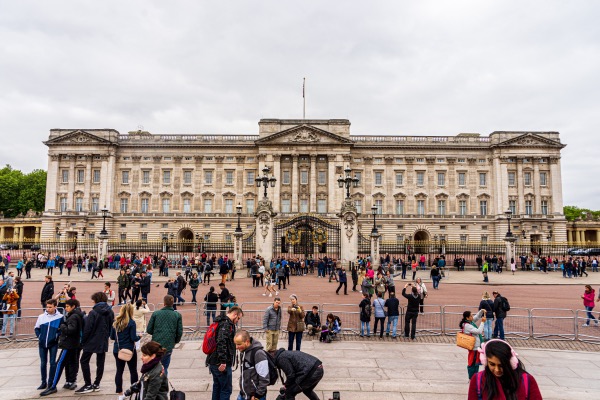
Buckingham Palace. PICTURE: Sung Shin/Unsplash

Foremost is Buckingham Palace, the official residence and office of the monarch – Queen Elizabeth II – in London. The palace – acquired for the Crown by King George III in 1761, converted to a palace by King George IV and first lived in by Queen Victoria – is also used for State ceremonies and for official entertaining.

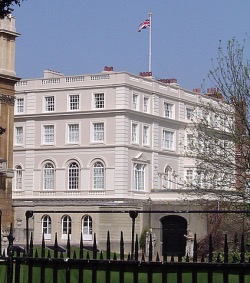
Clarence House. PICTURE: ChrisO (licensed under CC BY-SA 3.0)

Other royal residences include Clarence House which is the official London residence of Prince Charles and Camilla, Duchess of Cornwall.

The property was built between 1825 and 1827 to the designs of John Nash for Prince William Henry, Duke of Clarence (hence the name).

It was the home of Queen Elizabeth, the Queen Mother, between 1953 and her death in 2002, and was also temporarily the home of the then-Princess Elizabeth and Prince Philip following their marriage in 1947.

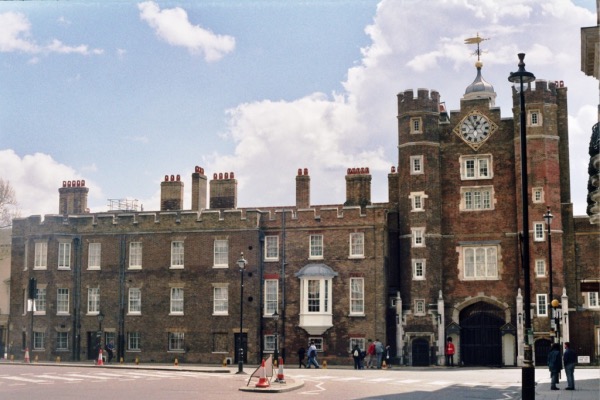
St James’s Palace. PALACE: Elisa.rolle (licensed under CC BY-SA 3.0)

St James’s Palace, which was largely built by King Henry VIII and served as the residence of numerous monarchs until King William IV, also remains the home of several members of the Royal Family – including Princess Anne and Princess Alexandra – and their household offices.

The State Apartments are sometimes used for entertaining during in-coming State Visits, as well as for other ceremonial and formal occasions. Its history means diplomats are still accredited to the Court of St James.

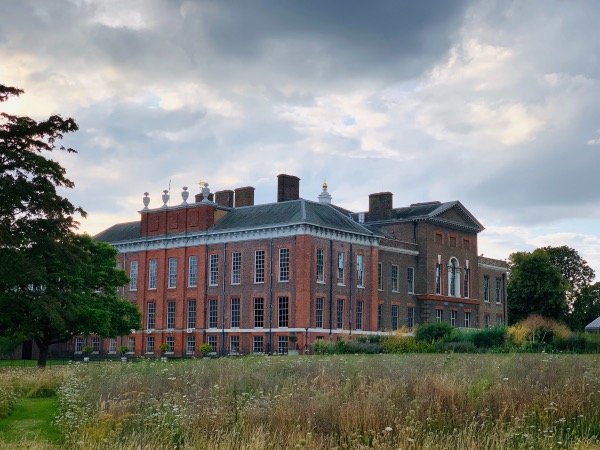
Kensington Palace. PICTURE: Pranav Thombare/Unsplash.

Kensington Palace – childhood home of Queen Victoria and favoured residence of monarchs from King William III to King George II – is these days the official London residence of Prince William and Katherine, the Duchess of Cambridge.

It also contains the London residences and offices of the Duke and Duchess of Gloucester, the Duke and Duchess of Kent and Prince and Princess Michael of Kent.

While Hampton Court Palace, the Tower of London, Kew Palace and the remnant of the Palace of Whitehall known as the Banqueting House are all royal palaces, they ceased being used regularly for royal court purposes in the 18th century and are now in the care of Historic Royal Palaces (along with parts of Kensington Palace).

This Week in London – Canaletto at the National Maritime Museum; the story of the postcode; Easter hunts at royal palaces; and, superheroes and orphans…

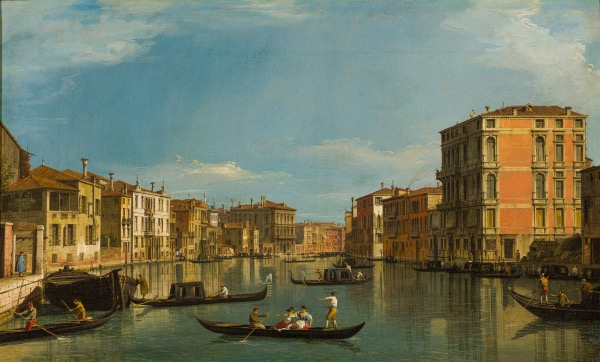
Canaletto, ‘View of the Grand Canal from the Palazzo Bembo to Palazzo Vendramin-Calergi‘ © From the Woburn Abbey Collection

Twenty-four of Canaletto’s Venetian views which are normally found at Woburn Abbey form the heart of a new exhibition opening at the National Maritime Museum in Greenwich on Friday. Canaletto’s Venice Revisited explores some of the most iconic view paintings of Venice and how tourism, which helped establish Canaletto’s career, today threatens Venice’s future. The views from Woburn Abbey were painted by Canaletto for Lord John Russell, the 4th Duke of Bedford, in the 1730s and this is the first time the paintings, which are thought to be Canaletto’s largest single commission, will be on display in their entirety outside of the abbey. As well as 22 smaller views of Venice depicting iconic landmarks such as Piazza San Marco and the Grand Canal, as well as campi, palazzi and churches, the works include two monumental views, A Regatta on the Grand Canal and The Grand Canal, Ascension Day: The embarkation of the Doge of Venice for the Ceremony of the Marriage of the Adriatic. Runs until 25th September. Admission charge applies. For more, see www.rmg.co.uk/canaletto.

The story of the postcode is the subject of a new exhibition at The Postal Museum. Sorting Britain: The Power of Postcodes charts the journey of postcodes in the UK, from the post postal districts in London, Liverpool and Manchester and the first trial of postcodes in Norwich in 1959 to how postcodes are used today as an indicator of social standing. Highlights in the display include ELSIE, one of the only original 1950s Electronic Letter Sorting Indicating Equipment left in existence, images of ‘Poco the Postcode Elephant’ – one of the biggest advertising campaigns of the 1980s and unseen maps of London from the 19th century. Runs until 1st January. Included in admission ticket. For more, see www.postalmuseum.org.

• The Lindt GOLD BUNNY Hunt is returning to both Hampton Court Palace and Kensington Palace this Easter for the first time since 2019. Children aged four to 12 are invited to use a trail map to explore each palace and gardens and find the Lindt GOLD BUNNY statues while learning about people from the palaces’ past and, on successfully completing their mission, claim their chocolatey reward. Check the website for details of dates. The hunt is included in palace admission. For more, see www.hrp.org.uk.

The representation of foundlings, orphans, adoptees, and foster children in comics and graphic novels comes under scrutiny in a new exhibition at the Foundling Museum in Bloomsbury. Opening Friday, Superheroes, Orphans & Origins: 125 years in comics looks at traditional orphan superheroes ranging from Superman and Batman to Spider Man and Black Panther along with characters from early newspaper comic strips, Japanese Manga and contemporary graphic novel protagonists. The display includes historical newspapers, original artwork and contemporary digital work as well as examples of international comics rarely exhibited in the UK. There are also three new artistic commissions specifically made for the exhibition. Can be seen until 28th August. Admission charge applies. For more, see https://foundlingmuseum.org.uk/event/superheroes-orphans-origins/.

Send items for inclusion to exploringlondon@gmail.com.

10 historic stairways in London – 8. The King’s Staircase, Kensington Palace… 

PICTURE: Tuomo Lindfors (licensed under CC-BY-NC-SA 2.0)

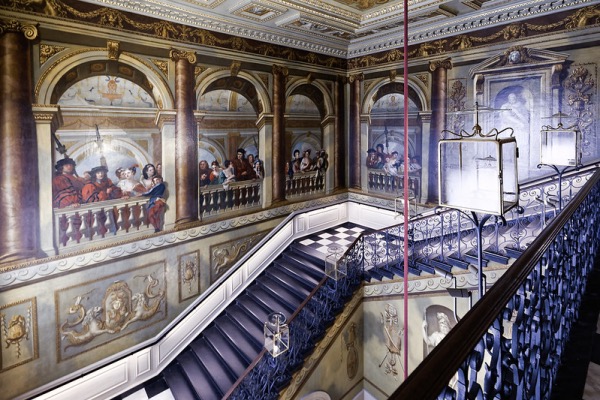
This staircase, a grand entrance to the King’s State Apartments at Kensington Palace, are famous for the paintings on the walls and ceiling which depict an 18th century court looking down on those who ascend.

The work of William Kent, the staircase paintings were complete in 1724 and replaced earlier wooden panelling.

The stairs were originally constructed as part of Sir Christopher Wren’s remodelling Nottingham House into Kensington Palace for King William III and Queen Mary II. Following a fire in 1691, they were rebuilt in marble.

There are 45 people in Kent’s painting and only about a dozen have been identified. As well as members of the Yeomen of the Guard, the images depict King George I’s Polish page Ulric, his Turkish servants Mahomet and Mustapha, Peter the ‘wild boy’, a child found in the woods in Germany, and Dr John Arbuthnot, a medical doctor and satirist who tried to teach Peter to speak.

Interestingly, Kent included a selfie on the ceiling – a depiction of himself, wearing a brown turban and carrying an artist’s palette, standing with his mistress by his side.

The trompe l’oeil (a technique which creates the optical illusion of 3D) work features architecture inspired by Rome where Kent had trained while there’s also a painted figure of Diana on the top landing which is based on an antique statue at Holkham Hall in Norfolk.

In 1734, Queen Caroline commissioned Kent to rework the stairs to the Queen’s State Apartments. His work there features a Roman-inspired scene again created as a trompe l’oeil. There is also a homage to Queen who is compared to Britannia. The staircase’s balustrade was another by Huguenot ironworker Jean Tijou.

WHERE: The Broad Walk, Kensington Gardens, Kensington (nearest tube stations are High Street Kensington or Queensway); WHEN: Daily 10am to 6pm (last admission 5pm); COST: £16 adult/£12.80 concession/£8 child (Historic Royal Palaces members free); WEBSITE: www.hrp.org.uk/KensingtonPalace.

London Explained – Historic Royal Palaces…

The Tower of London is one of the palaces under the care of Historic Royal Palaces. PICTURE: Nick Fewings/Unsplash

Visitors to several of London’s landmark royal properties will across an organisation known as Historic Royal Palaces.

HRP, as its sometimes shortened to, is a self-funding charity charged with the management of palaces which are owned by the Crown (technically by Queen Elizabeth II ‘in Right of Crown’ meaning she holds them in trust for the next monarch and by law cannot sell or lease them). The palaces are generally no longer used as royal residences.

These include the Tower of London, Hampton Court Palace, Kensington Palace, Kew Palace and the Banqueting House (once part of the Palace of Whitehall). Buckingham Palace, which remains the official London residence of Queen Elizabeth II and a working royal palace, is not one of them nor is St James’s Palace, home to several members of the Royal Family and their households.

All five of the properties in London which are under the care of Historic Royal Palaces ceased being regularly used by the Royal Court in the 19th century and were opened up to the public. The government became responsible for their care under the Crown Lands Act 1851.

In 1989, the government established Historic Royal Palaces as part of the Department of the Environment to oversee care of the five palaces. Six years later it became part of the Department of National Heritage (now known as the Department for Culture, Media & Sport).

In April, 1998, Historic Royal Palaces became an independent charity by Royal Charter. It is governed by a board of trustees who include the director of the Royal Collection Trust and the Keeper of the Privy Purse from the Royal Household as well as the Constable of the Tower of London.

Historic Royal Palaces now oversees management of the palaces under a contract with the Secretary of State for Culture, Media & Sport (as well as the five London properties, since 2014, it has also been responsible for the care of Hillsborough Castle in Northern Ireland).

Perhaps the most well-known faces of Historic Royal Palaces are joint curators – Tudor historian Tracy Borman, and architectural and social historian Lucy Worsley.

HRP collects revenues through entries to the palaces but also offer an annual membership through which you can have unlimited entry.

For more, head to www.hrp.org.uk.

This Week in London – Faberge eggs; Royal jeweller Garrard; and, Christmas at Kew…

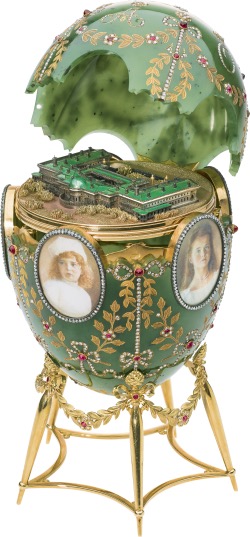
The Alexander Palace Egg, Fabergé. Chief Workmaster Henrik Wigström (1862-1923), gold, silver, enamel, diamonds, rubies, nephrite, rock crystal, glass, wood, velvet, bone, 1908 © The Moscow Kremlin Museums

• The largest collection of Faberge’s Imperial Easter eggs to be displayed together in a generation go on show at the V&A from Saturday. Fabergé in London: Romance to Revolution is the first major exhibition devoted to the international prominence of Russian goldsmith, Carl Fabergé, and his little-known London branch. Divided into three sections which cover everything from the techniques and detailing synonymous with the Faberge name to his time in London, the royal patronage he received, and the impact of the Great War and Russian Revolution on the business. The display features more than 200 objects with highlights including a prayer book gifted by Emperor Nicholas II to Empress Alexandra Feodorovna on his Coronation Day, the only known example of solid gold tea service crafted by Fabergé, a rare figurine of a veteran English soldier commissioned by King Edward VII, and a “kaleidoscopic display” of 15 of the Imperial Easter Eggs. The latter include several that have never before been shown in the UK including the largest Imperial Egg – the Moscow Kremlin Egg – which was inspired by the architecture of the Dormition Cathedral, the Alexander Palace Egg – which features watercolour portraits of the children of Nicholas II and Empress Alexandra and contains a model of the palace inside (pictured), the recently rediscovered Third Imperial Egg of 1887 (found by a scrap dealer in 2011) and Empress Alexandra Feodorovna’s Basket of Flowers Egg. Runs until 8th May. Admission charge applies. For more, see www.vam.ac.uk.

The Royal Family’s relationship with the jeweller Garrard is the subject of a new exhibition which has opened in Kensington Palace’s ‘Jewel Room’. Going on display for the first time are examples of the firm’s ledgers which document royal commissions dating back to 1735 while other highlights include Queen Mary’s fringe tiara which was made in 1919 using diamonds taken from Queen Victoria’s wedding gift to Queen Mary and which was subsequently worn by Queen Elizabeth II on her wedding day. Admission charge applies. For more, see www.hrp.org.uk/kensington-palace.

Botanical illustrations from the archives at Kew Gardens are brought to life on a canvas consisting of a selection of spectacular trees from the arboretum as part of this year’s Christmas display. Christmas at Kew also includes Spheric – a 15-metre-wide dome of light covered in more than 2,000 individually controlled LED pixels which sits on a reflective water pool and allows visitors to fully immerse themselves in a unique mirrored illusion as they cross the lake, a new installation for Holly Walk which will illuminate the night sky for over 200 metres overhead as it replicates the enchanting visual phenomenon of the Aurora Borealis, a vibrant rainbow tree illumination which brings to life the 12 Days of Christmas, and the ever-popular Fire Garden. The display can be seen until 9th January. Admission charge applies. For more, see www.kew.org.

Send all items for inclusion to exploringlondon@gmail.com.

London Explained – The Royal Parks…

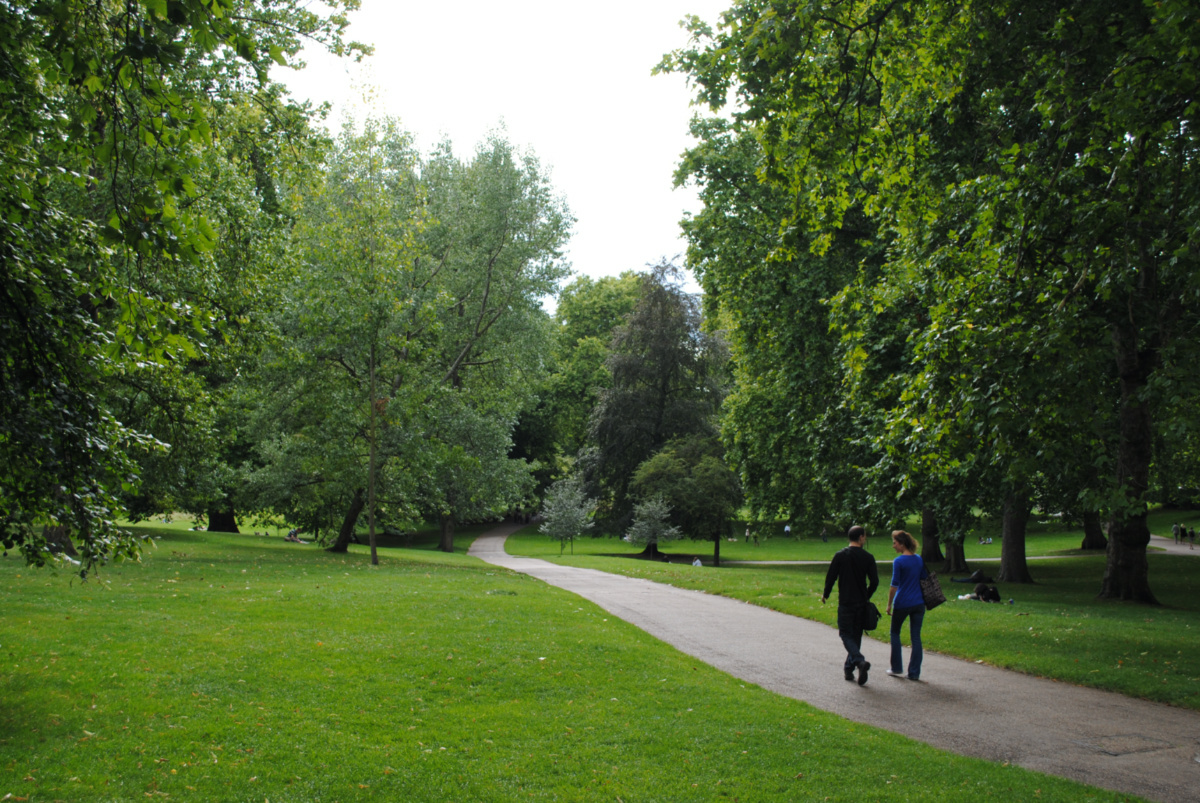
Green Park, the smallest of the eight Royal Parks. PICTURE: David Adams

One of the most beautiful features of London are its Royal Parks.

The Royal Parks signage in The Regent’s Park. PICTURE: Elliott Brown (licensed under CC BY 2.0)

The parks, which covers some 5,000 acres, are owned by the Crown and managed by a charity, The Royal Parks. They include eight of London’s largest open spaces – Hyde Park, The Green Park, Richmond Park, Greenwich Park, St James’s Park, Bushy Park, The Regent’s Park, and Kensington Gardens – as well as some other important open spaces such as Brompton Cemetery, Victoria Tower Gardens, Canning Green and Poet’s Corner.

All eight of the Royal Parks have historically been owned by the Crown with St James’s Park considered the oldest (while Greenwich Park is the oldest enclosed park).

Under an Act of Parliament passed in 1851, the Crown transferred management of the parks to the government. These powers were originally vested in the Commissioners of Works and later transferred to the Minister of Works in 1942. They now rest with the Secretary of State for Culture, Media and Sport.

The Royal Parks charity was created in 2017 when The Royal Parks Agency – a former executive agency of the Department for Culture, Media and Sport – and the Royal Parks Foundation came together. It is governed by a board led by chairman Loyd Grossman.

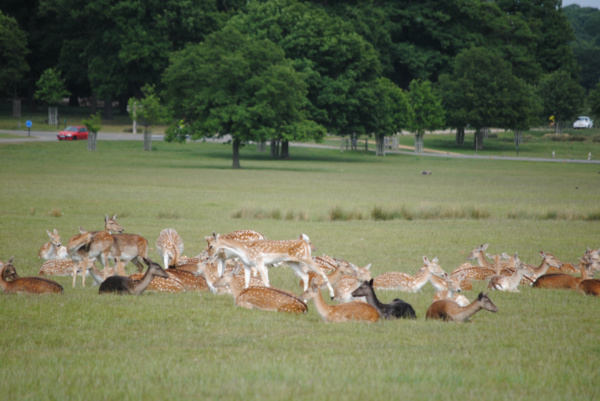
Deer in Richmond Park, largest of The Royal Parks. PICTURE: David Adams

The largest of the eight Royal Parks is Richmond Park which covers some 2,500 acres in London’s south-west (it’s followed by Bushy Park which is just over 1,000 acres). The smallest of the parks is Green Park at just 40 acres.

Interestingly, Hampton Court Palace gardens, which are open to the public are not part of The Royal Parks but instead are under the care of Historic Royal Palaces.

Here’s one fact about each of the eight Royal Parks.

  1. Cardinal Thomas Wolsey gave Bushy Park to King Henry VIII in 1529 (along with Wolsey’s home, Hampton Court Palace).
  2. Green Park was initially known as Upper St James’s Park after it was enclosed by King Charles II in 1668.
  3. The Royal Observatory, designed by Sir Christopher Wren, is located in Greenwich Park.
  4. Hyde Park became the location of the first artificially lit highway in the country when King William III, who had moved his court to Kensington Palace and found his walk back to St James’s rather dangerous, had 300 oil lamps installed upon a route which later became known as Rotten Row.
  5. Queen Caroline, wife of George II, gave Kensington Gardens much of its present form when, in 1728, she oversaw the creation of the the Serpentine and the Long Water.
  6. Horse Guards Parade is considered part of St James’s Park.
  7. Architect John Nash designed a summer palace for the Prince Regent which was to be located in The Regent’s Park but was never built.
  8. Prime Minister Lord John Russell was given a home in Richmond Park (Pembroke Lodge) by Queen Victoria in 1847.

This Week in London – New statue of Princess Diana; V&A’s new Design 1900 gallery; a Blue Plaque for Jean Muir; and, police boxes reimagined…

A new statue of the late Princess Diana is being unveiled today at Kensington Palace. The statue will be unveiled in the Sunken Garden at Diana’s former home. The garden – originally created on the orders of King Edward VII in 1908 – has been redesigned by designer Pip Morrison to provide a more reflective setting for the memorial. This included planting more than 4,000 of Diana’s favourite flowers including forget-me-nots and tulips. The statue, which is the work of sculptor Ian Rank-Broadley, is expected to be unveiled by Diana’s two sons, William and Harry, who commissioned it in 2017.

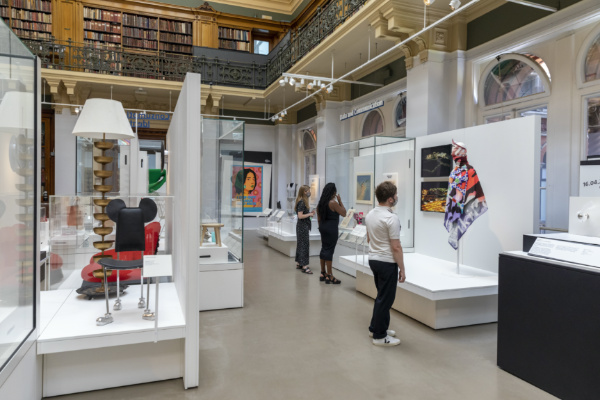
The V&A’s new gallery, Design 1900. PICTURE: Courtesy of the V&A

A new permanent gallery has opened at the V&A which explores the role design plays in shaping, and being shaped by, how we live, work, travel and communicate. Design 1900 is housed within the museum’s former 20th Century Gallery and, among the displays are new acquisitions including Margaret Calvert and Jock Kinneir’s iconic British road signage system, Kim Kardashian’s Selfish book, Nike’s Nigeria football shirt for the 2018 World Cup and a one-of-a-kind desk designed by Future Systems for Condé Nast Chairman Jonathan Newhouse. The display also includes items from the Rapid Response Collecting programme such as 3D-printed door openers, designed to limit the spread of the COVID-19 virus, and the I Believe in Our City bus shelter posters that highlighted increased anti-Asian bias. For more, see www.vam.ac.uk.

Twentieth century dressmaker and fashion designer Jean Muir has been honoured with an English Heritage Blue Plaque at the Mayfair address she worked for 30 years. The plaque was unveiled at 22 Bruton Street, the location of the showroom and office she operated out of from 1966 to 1995, by her house model, friend and client Joanna Lumley. Others among Muir’s clientele included actress Patricia Hodge and writer Lady Antonia Fraser. For more, see www.english-heritage.org.uk/visit/blue-plaques/.

The City of London Corporation has unveiled the design for new ‘Digital Service Points’ which will reimagine the concept of the traditional police boxes. ‘The London Stones’, the work of architecture and design studio Unknown Works, will include information screens, life saving emergency equipment and serve as hubs for City of London Police officers and community events. Details from buildings, stories and images of the Square Mile will be collected and ‘digitally carved’ into the exterior of the ‘stones’ which will also be home to a vast array of lichen colonies and species expected to evolve in their colour and appearance as they grow.

Send all items for inclusion to exploringlondon@gmail.com

This Week in London – Royal gowns; first ‘blossom garden’; and, the brightest colours ever created…

A view of the Royal Style in the Making exhibition. PICTURE © Historic Royal Palaces.

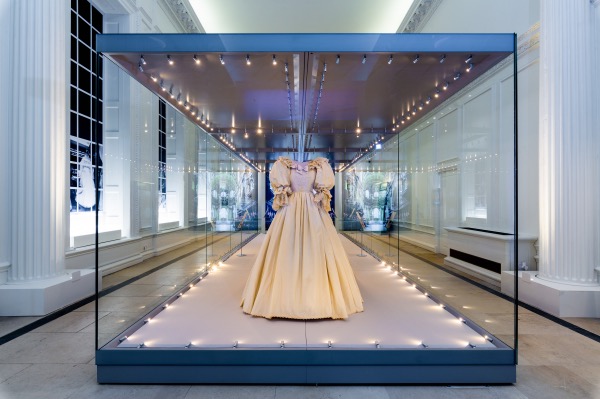
A stunning wedding dress worn by Diana, the Princess of Wales – including its 25 foot long sequin encrusted train – and a rare surviving ‘toile’ – a working pattern – of the 1937 coronation gown of Queen Elizabeth, The Queen Mother, are among star items on display in a new exhibition in Kensington Palace’s Orangery. Royal Style in the Making features some never-before-seen items from the archives of some of the most celebrated royal couturiers of the 20th century as well as original sketches, fabric swatches and unseen photographs from the Royal Ceremonial Dress Collection, a treasure trove of more than 10,000 items of dress and design history cared for by Historic Royal Palaces. Admission charge applies. The display can be seen until 2nd January. For more, see www.hrp.org.uk.

• The first in a series of ‘blossom gardens’ has been opened by the National Trust in Queen Elizabeth Olympic Park in London’s east. The garden features 33 trees including cherry, plum, hawthorn and crab apple which represent the city’s 32 boroughs and the City of London itself. The garden, which was opened last month by the Mayor of London, Sadiq Khan, will be followed by further gardens planted over the next five years across England, Wales and Northern Ireland.

The brightest colours ever created are dazzling eyes at Kew Gardens. Naturally Brilliant Colour, an exhibition in the Shirley Sherwood Gallery of Botanical Art, explores the origins of colour and vision and showcases how botanical artists have depicted the brightest and most intense colours found in nature. Works by Robert John Thornton (1768-1837) and contemporary artist Julia Trickey are on show as well as the world’s first botanical artwork to accurately reproduce natural structural colour (it features flakes of ‘Pure Structural Colour’ which artificially replicates how microscopic structures within the surface layers of plants and animals reflect sunlight in a specific way to generate bright colours). Runs until 26th September. Admission charge applies. For more, see www.kew.org.

Send all items for inclusion to exploringlondon@gmail.com.

This Week in London – Kensington Palace reopens with Diana’s ‘Travolta dress’; institution reopenings; the Luna Cinema at Greenwich; and, ‘British Surrealism’ online…

Kensington Palace has reopened its doors today after four months of lockdown and, to celebrate, the famous “Travolta dress” worn by Princess Diana is going on show for the first time. Designed by Victor Edelstein, the midnight blue velvet gown became the focus of world attention in 1985 when the Princess wore it to a White House Gala during which she danced with actor John Travolta. Historic Royal Palaces acquired the dress at auction in 2019. The palace will feature a new one-way route as part of coronavirus social distancing measures. For more, see www.hrp.org.uk/kensington-palace/.

Other reopenings this week include: the Imperial War Museum, Churchill War Rooms, Wellington Arch, the Ranger’s House in Greenwich and the Jewel Tower in Westminster (Saturday, 1st July); the Royal Observatory in Greenwich (Monday, 3rd August); and, the Natural History Museum in South Kensington (Wednesday, 5th August).

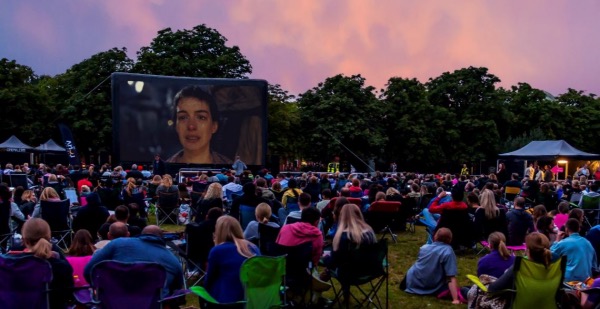
The Old Royal Naval College at Greenwich will host Luna Cinema’s open-air cinema from Tuesday 4th to Thursday, 6th August. Audiences will be able to sing and dance along to blockbuster hits RocketmanJudy and Dirty Dancing with the college as the backdrop. Meanwhile the Old Royal Naval College is launching new smartphone tours with the first, available for free on any smartphone using the Smartify app, a family tour aimed at those visiting with children aged five to 12 years. For more, see www.ornc.org.

The Dulwich Picture Gallery’s British Surrealism exhibition will be available for anyone to view online from Friday. The exhibition, which celebrates the British artists that contributed to the iconic surrealist movement, features more than 70 artworks from 42 artists, including Leonora Carrington, Francis Bacon, Henry Moore, Paul Nash, Ithell Colquhoun, and Conroy Maddox. For more, see www.dulwichpicturegallery.org.uk.

Send all items for inclusion to exploringlondon@gmail.com.

This Week in London – Christmas at the Royal Palaces; Aldgate Lantern Parade; and, Dora Maar

Hampton Court Palace is once again holding its ‘Festive Fayre’ this weekend. More than 80 stalls will fill the palace’s historic courtyards serving Christmas-related treats like mince pies and mulled wine. Included in entry price. Hampton Court will also host carol singing in the courtyards between 6pm and 7pm, 8pm and 9pm on 16th, 22nd and 23rd of December. Meanwhile, Kensington Palace is offering the visitors on select dates between 7th December and 5th January to take part in Princess Victoria’s Christmas by assisting her in staging a Christmas panto, joining in the type of seasonal crafts she enjoyed as a child and discovering the history of the festive food Victoria would have enjoyed growing up at Kensington. Included in palace admission. And, of course, the ice rinks at Hampton Court Palace and in the Tower of London’s moat are now open. For more, see www.hrp.org.uk.

More than 500 lanterns made by local children and adults will feature in this year’s Aldgate Lantern Parade tomorrow afternoon. The parade will launch from Sir John Cass’s Foundation Primary School at about 4.45pm and through streets north of Aldgate High Street to the beat of the Barbican’s Drum Works ending in a festive fete in the new Aldgate Square. A Winter Fair will simultaneously take place between Aldgate Square and St Botolph without Aldgate, complete with an array of performances, art, food, drink and festive activities.

On Now: Dora Maar. The first UK retrospective of the artist Dora Maar (1907-97) whose provocative photographs and photomontages became celebrated icons of surrealism is on at the Tate Modern. It features more than 200 works spanning the six decades of her career. Among highlights are The years lie in wait for you (c1935), Portrait of Ubu (1936), photomontages 29, rue d’Astorg (c1936) and The Pretender (1935), rarely seen works like The Conversation (1937) and The Cage (1943), and a substantial group of camera-less photographs that she made in the 1980s. Runs until 15th March. Admission charge applies. For more, see www.tate.org.uk.

Send all items for inclusion to exploringlondon@gmail.com.

Famous Londoners – Nicholas Hawksmoor…

Architect Nicholas Hawksmoor was a key figure in the creation of the fabric of London as we know it, working alongside Sir Christopher Wren as well as alone, and responsible for numerous works with can still be seen in London today.

Hawksmoor was born into a yeoman farming family in Nottinghamshire in around 1661-62 but little else is known of his early life. He probably received a fairly basic education but is believed to have been taken on a clerk to a justice in Yorkshire before, thanks to encountering a decorative plasterer by the name of Edward Gouge, travelling to London.

There, Hawksmoor was introduced to Wren who, agreed to take on the young man as his personal clerk at just the age of 18. He moved through a number of junior positions in Wren’s household before becoming deputy surveyor at Winchester Palace – between 1683 and 1685 – under Wren.

He went on to work with his mentor on numerous further projects; these included Chelsea Hospital, St Paul’s Cathedral, Hampton Court Palace and Greenwich Hospital as well as Kensington Palace where, thanks to Wren’s support, he was named clerk of works in 1689 (as well as deputy surveyor of works at Greenwich). He remained in these posts for some 25 years before he was removed thanks to political machinations (although he later returned to the secretaryship).

Hawksmoor also worked with Sir John Vanbrugh, assisting him in building Blenheim Palace, taking over command of the job in 1705. Vanbrugh made him his deputy and Hawksmoor later succeeded him as architect at Castle Howard in Yorkshire, designing a number of monuments in the gardens, including the great mausoleum.

Hawksmoor is described as one of the masters of the English Baroque style – Easton Nelson in Northamptonshire, which he designed for Sir William Fermor, is an exemplar of his work (and the only country house for which he was sole architect, although it remain uncompleted).

Hawksmoor also worked on buildings for the university at Oxford and while All Soul’s College was among buildings he completed, many of his proposed designs were not implemented for various reasons (as were grand plans he had for the redesign of central Oxford).

From 1711, Hawksmoor was busy again in London where, following the passing of an Act of Parliament, he was appointed as one of the surveyors to a commission charged with overseeing the building of 50 new churches in London.

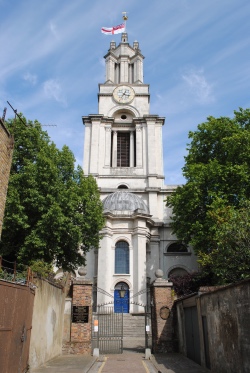
The commission only completed 12 churches, but half of them were designed by Hawksmoor (and he collaborated with fellow surveyor John James on two more). Hawksmoor’s completed churches include St Alfege in Greenwich, St George’s, Bloomsbury, Christ Church in Spitalfields, St George in the East in Wapping, St Mary Woolnoth, and St Anne’s Limehouse (the churches he collaborated on include James are St Luke Old Street and the now demolished St John Horsleydown).

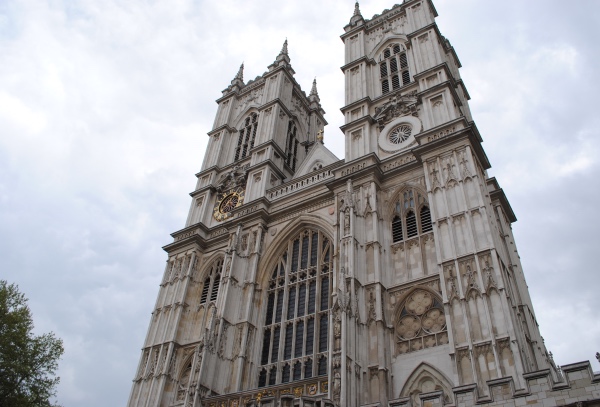
In 1723, following Wren’s death, he was appointed Surveyor to Westminster Abbey and, as well as aspects of the interior (some of which still survive to this day) designed the landmark west towers (although they weren’t completed until after his death).

Hawksmoor died at his home in Millbank on 25th March, 1736, from what was described as “gout of the stomach”, having struggled with his health for a couple of decades previously. He was buried at the now deconsecrated church in Shenley, Hertsfordshire.

Hawksmoor was survived by his wife Hester by a year, and a daughter, Elizabeth.

PICTURES: Top – The West Towers of Westminster Abbey; Right – St Anne’s, Limehouse. (David Adams)

This Week in London – Kensington Palace celebrates Victoria; unseen Leonardo; and, William Hogarth and sound…


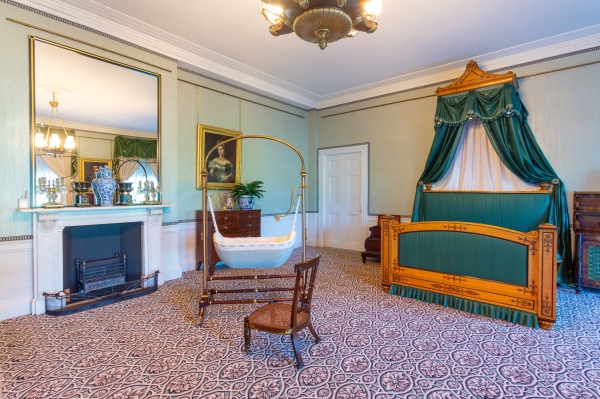
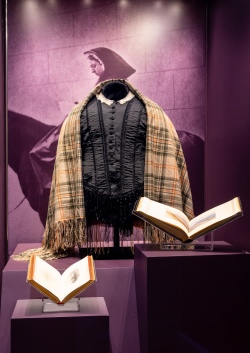
Queen Victoria’s childhood and later life are being re-examined in two new displays which open this week at Kensington Palace to mark the 200th anniversary of her birth. Victoria: A Royal Childhood features objects related to her early years – such as a scrapbook of mementos created by her German governess, Baroness Lehzen (on public display for the first time) – shown along a newly presented route through the rooms she once occupied in the palace. Visitors will experience how her childhood was governed by the strict rules of the ‘Kensington System’ and see how she escaped isolation and family feuding into a fantasy world of story writing, doll making and drawing inspired by her love of opera and ballet. Her education, family life, closest friendships and bitter struggles are explored with interactive displays helping visitors bring to life the rooms in which she lived. Meanwhile, the palace is also hosting another new exhibition – Victoria: Woman and Crown – which looks at the private woman behind the public monarch and examines her later life, including her response to the death of Prince Albert, her role in shaping royal dynasties and politics across Europe and her complex love affair with India. Among objects on show here are rare survivals from the Queen’s private wardrobe including a simple cotton petticoat dated to around the time of her marriage, and a fashionable pair of silver boots, both of which were recently acquired by Historic Royal Palaces with support from Art Fund. Entry to the two exhibitions is included in the standard admission charge. The palace gardens, meanwhile, are being planted with a special floral display in celebration of the anniversary centred on plant species connected to the Victorian period  including heliotrope, canna, pelargonium and begonia. For more, see www.hrp.org.uk/Victoria2019. PICTURES: Top  – The Birth Room in ‘Victoria: A Royal Childhood’; Right – Queen Victoria’s Highland dress in the ‘Victoria: Woman and Crown’ exhibition (Both images © Historic Royal Palaces/Richard Lea-Hair)

A newly identified sketch of the Renaissance master Leonardo da Vinci goes on public view for the first time at The Queen’s Gallery, Buckingham Palace, from tomorrow. Marking 500 years since the artist’s death, Leonardo da Vinci: A Life in Drawing also features the only other surviving portrait of Leonardo made during his lifetime as well as 200 of his drawings in which is a comprehensive survey of his life. The newly identified sketch was discovered by Martin Clayton, head of prints and drawings at the Royal Collection Trust, while he was undertaking research for the exhibition and has been identified as a study of Leonardo made by an assistant shortly before da Vinci’s death in 1519. The other contemporary image of Leonardo, by his pupil Francesco Melzi, was produced at about the same time. Other highlights of the exhibition include Leonardo’s Studies of hands for the Adoration of the Magi (c1481) – also on public display for the first time, studies for The Last Supper and many of the artist’s ground-breaking anatomical studies, such as The Fetus in the Womb (c1511). The drawings in the Royal Collection have been together since Leonardo’s death and are believed to have been acquired in the reign of King Charles II. Runs until 13th October. Admission charge applies. For more, see www.rct.uk/leonardo500/london.

The use of sound in the art of William Hogarth is being explored in a new exhibition opening in The Foundling Museum on Friday. Hogarth & the Art of Noise focuses on the work The March of the Guards to Finchley and unpacks the social, cultural and political context in which it was created including the Jacobite uprising, the plight of chimney boys and the origins of God Save the King. It uses sound, wall-based interpretation, engravings and a specially commissioned immersive soundscape by musician and producer Martin Ware to reveal how Hogarth orchestrated the natural and man-made sounds of London. Complementing the exhibition is a display of works from contemporary British artist Nicola Bealing which takes as its starting point subjects and narratives found in 18th century broadside ballads. Runs until 1st September. Admission charge applies. For more, see www.foundlingmuseum.org.uk.

Send items for inclusion to exploringlondon@gmail.com.

This Week in London – Easter in London; Chihuly at Kew; Sean Scully and JMW Turner; and, Mary Quant…

Wishing all of our readers a very happy Easter!

Easter is being celebrated in London through a range of events over the long weekend. They include an ‘Easter Extravaganza’ treasure hunt for children at The Royal Mews, Buckingham Palace, and a special Easter-themed trail at the Russia: Royalty & the Romanovs exhibition in the Queen’s Gallery, Lindt Gold Bunny Hunts at royal palaces including Hampton Court Palace and Kensington Palace, and, of course, all the pageantry of Easter services at the city’s many churches.

A major new exhibition of the work of contemporary glass artist Dale Chihuly has opened at Kew Gardens in London’s west. Chihuly at Kew features 32 works by the Seattle-based artist at 13 locations across the gardens. Highlights include Sapphire Star – located at the Victoria Gate, Drawings, the Rotolo series and Seaforms – all located in the Shirley Gallery of Botanical Art and a new, specially-designed sculpture as well as nine other installations in the Temperate House. An interactive trail designed for families takes visitors around the installations and there will be special night-time viewings from 15th August. Kew is also running family activities during Easter. Chihuly runs until 27th October. Admission charge applies. For more, see www.kew.org.

New works by Irish-born but American-based artist Sean Scully have gone on show at the National Gallery. Sea Star: Sean Scully at the National Gallery was inspired by the artist’s love for JMW Turner’s painting The Evening Star and features new and recent large scale multi-panel works that include his celebrated Landline paintings as well as Robe Blue Blue Durrow (2018), which suggests the seventh-century Book of Durrow from his native Ireland, and Human 3 (2018), inspired by the New York subway. Admission is free. Runs until 11th August. For more, see www.national gallery.org.uk.

On Now: Mary Quant. This exhibition at the V&A focuses on the 20 years between 1955 and 1975 and reveals how Dame Mary Quant democratised fashion for a new generation as she popularised the miniskirt, colourful tights, and tailored trousers. The display brings together more 120 garments as well as accessories, cosmetics, sketches and photographs, most of which have never been on display. Highlights include 35 objects from 30 people received after a public call-out to track down rare Quant items from wardrobes across the nation and 50 photographs of women wearing their Quant clothes. Runs until 8th March, 2020. Admission charge applies. For more, see vam.ac.uk/exhibitions/mary-quant.

Send all items for inclusion to exploringlondon@gmail.com.

This Week in London – ‘The Favourite’ costumes at Kensington; contemporary portraiture; and, Artemisia Gentileschi’s self portrait…

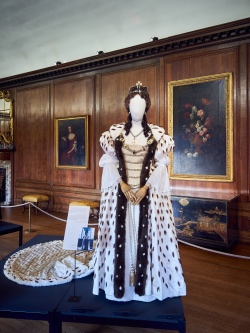
Costumes from a new film about Queen Anne, The Favourite, have gone on show at Kensington Palace where the Queen once lived. The film, directed by Yorgos Lanthimos, explores the relationships and power struggles between the Queen (played by Olivia Coleman) and two of her closest female attendants – Lady Sarah Churchill (Rachel Weisz) and Lady Churchill’s impoverished cousin turned chambermaid, Abigail (Emma Stone). The costumes have been designed by three-time Oscar winner Sandy Powell who worked with Fox Searchlight Pictures and Historic Royal Palaces in creating the display in the Queen’s Gallery, once used by Queen Anne and her husband for exercise when the weather was bad. The display can be seen until 8th February. Admission charge applies. The Favourite opens in the UK and Ireland on 1st January. For more, see www.hrp.org.uk/kensington-palace/. PICTURE: © Historic Royal Palaces/Michael Bowles

Previously unseen portraits of Amy Winehouse and Sir Kenneth Branagh and newly acquired portraits of explorer Sir Rannulph Fiennes, astronaut Tim Peake and British Museum director Neil MacGregor have gone on show at the National Portrait Gallery. The portraits, which also include photographs from the Duke and Duchess of Sussex’s wedding in May this year, form part of a major new display of the gallery’s contemporary collection which features works produced from the year 2000 until today. Sitting alongside the collection is a new exhibition of works by artist Njideka Akunyili Crosby from her series The Beautyful Ones – comprised of portraits of Nigerian youth, including some members of her own family. Admission is free and The Beautyful Ones display can be seen until 3rd February. For more. see www.npg.org.uk.

A recently discovered rare self portrait of Artemisia Gentileschi, the most celebrated female artist of the Italian Baroque, has gone on show at the National Gallery. Self Portrait as Saint Catherine of Alexandria (1615-17), which was acquired by the gallery in July, 2017, can be seen in the Central Hall of the gallery after going through a five month conversation and restoration process which was documented in a series of short films shared on social media via #NGArtemisia. In March, the painting will leave the gallery on a “pop-up” tour of unexpected venues across the UK. A major exhibition of Gentileschi’s work is planned at the National Gallery in 2020. Admission to see the painting is free. For more, see www.nationalgallery.org.uk.

Send all items for inclusion to exploringlondon@gmail.com.

This Week in London – James Cook’s voyages; Diana’s landmine moment remembered; and, the influence of the Greeks on Rodin…

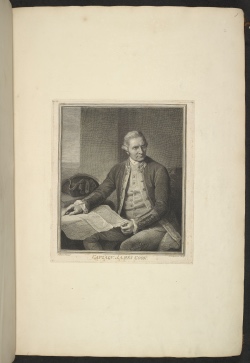
Marking 250 years since Captain James Cook set sail from Plymouth aboard the Endeavour in 1768 comes a new exhibition at the British Library focusing on the explorer’s three world-changing voyages aboard the Endeavour, the Resolution and the Discovery. Maps, artworks and journals from the voyages will be on show in James Cook: The Voyages alongside recently commissioned films bringing contemporary perspectives. The display features a collection of drawings by Polynesian high priest and navigator Tupaia – on display for the first time, as well as Sydney Parkinson’s natural history drawings including the first European depiction of a kangaroo, John Webber’s watercolour landscapes including the first European illustrations of Hawaii and works by William Hodges including the first artworks depicting the Antarctic. There’s also the first chart of New Zealand, specimens including the mouth parts of a squid from the first voyage, and, jewellery and musical instruments including a necklace from Tierra del Fuego, a ceremonial rate from Nootka Sound (Vancouver Island) and a bamboo flute from Tahiti. The display, which runs until 28th August, is being accompanied by a programme of public events. Admission charge applies. For more, see www.bl.ukPICTURE: Portrait of Captain James Cook (1728-79) © British Library Board.

A HALO Trust branded flak vest as well as a denim shirt and Armani chinos all worn by Diana, Princess of Wales, during a high profile visit to Angolan landmine fields in 1997 is among new items on show at Kensington Palace. Running since February last year, Diana: Her Fashion Story – which traces the evolution of the Princess’ style and her impact on British and global fashion – has been spruced up with the addition of new items including the landmine visit outfit as well as a pink Bellville Sassoon suit worn to board the train for her honeymoon, a Victor Edelstein evening gown worn for an official portrait by Terence Donovan (on public display for the first time), a floor length Yuki gown designed for the Prince and Princess of Wales’ visit to Japan, and a tartan dress by Caroline Charles worn to the 1982 Braemar Games in the Scottish Highlands. Admission charge applies. For more, see www.hrp.org.uk/Diana.

The influence of ancient Greek art on 19th century sculptor Rodin is the subject of a new exhibition opening at the British Museum today. Rodin and the art of ancient Greece displays his work alongside the Parthenon sculptures that inspired him. Thanks to a collaboration with the Musée Rodin in Paris, the exhibition features more than 80 of Rodin’s works in marble, bronze and plaster along with sketches. Key works on show include The Kiss (1882), which, like two female goddesses originally on the East Pediment of the Parthenon, was carved from a single block of stone. Runs until 29th July. Admission charge applies. For more, see www.britishmuseum.org.

Send all items to exploringlondon@gmail.com for inclusion.