This Week in London – Trafalgar Square Christmas tree to light up; new location for returning Sir John Tenniel plaque; and, Chinese crafts at the V&A…

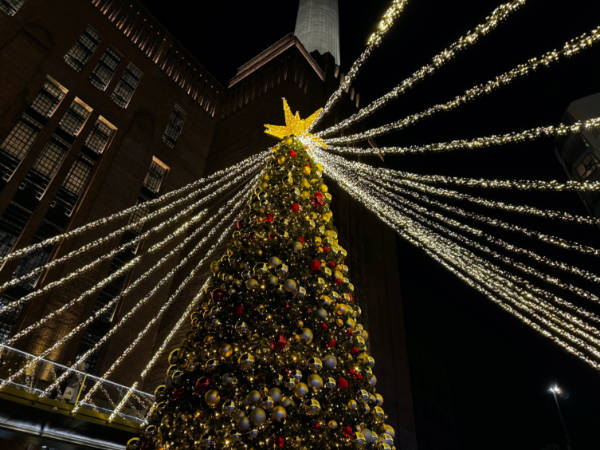
The lights will be turned on the Trafalgar Square Christmas tree tonight. This year marks the 78th anniversary of the gift of the first Christmas tree to the people of London from the Norwegian city of Oslo in acknowledgement of the support Britain gave to Norway during World War II. The festivities will include the choir of St-Martin-in-the-Fields singing some well known Christmas carols to music led by the Regent Hall Band of the Salvation Army, the reading of a poem written by children who live in Westminster, a display by The Corps of Drums from the Band of His Majesty’s Royal Marines Collingwood and a performance by Det Norske Jentekor, The Norwegian Girls’ Choir, conducted by Anne Karin Sundal-Ask. Festivities start at 5pm and the lights switch on at 6pm. The tree will be in the square until 5th January after which it will be recycled. You can follow the tree on Instagram at  @TrafalgarTree, on TikTok at @TrafalgarTree, and on X at @TrafalgarTree.

A Blue Plaque commemorating Alice in Wonderland illustrator and political cartoonist Sir John Tenniel has been returned to London’s streets – but to a different location than that where it was first positioned. The plaque, which is actually jade-green and white, was originally unveiled by the London County Council in 1930 at Tenniel’s longtime Maida Vale home (the colour was due to the request of the house-holder). But following its removal when the house was demolished in 1959, the plaque was so damaged that its destruction was authorised. But this wasn’t carried out and the plaque, which features an early “wreathed” design, has been in storage since. Following restoration, however, it has now been relocated to a new home – a property at 52 Fitz-George Avenue in West Kensington where Tenniel spent the final years of his life.

Figure from the ‘Century Doll’ series, glazed porcelain, by Yao Yongkang, 2004, Jingdezhen, China

The first major UK exhibition exploring contemporary studio crafts in China is on now at the V&A South Kensington. Dimensions: Contemporary Chinese Studio Crafts features more than 80 objects including almost 50 new acquisitions and puts a spotlight on “contemporary and modern makers who build upon longstanding tradition to reinvent ancient practices, pioneer alternative techniques, and develop new channels for self-expression”. Many of the objects – displayed in the China and Ceramics galleries – sit in dialogue alongside permanent displays of historic Chinese craftsmanship. Highlights include large scale works such as Lin Fanglu’s She’s Bestowed Love (2025), that transforms intricate tie-dye practices into a monumental textile sculpture, more delicate pieces such as Zhang Huimin’s Golden Mammary 4 (2025), a brooch produced by pushing the boundary of filigree in a reinvention of traditional practice, a wall hanging by pioneering artist of studio pottery Tan Chang, as well as works by the three potters who were the first to be exhibited in China under the mantle of ‘modern ceramics’: Mei Wending, Zeng Li and Zeng Peng. Runs until 27th September next year. Free admission. For more, see www.vam.ac.uk/exhibitions/dimensions-contemporary-chinese-studio-crafts.

Send all items to exploringlondon@gmail.com

10 London bishop’s palaces, past and present – 2. York Place…

The precursor to Whitehall Palace, York Place was the London residence of the Archbishops of York between the 13th and 16th centuries.

Subscribe for just £3 a month to access all of Exploring London’s content…

LondonLife – Downing Street’s Christmas lights…

Prime Minister Keir Starmer turns on the Christmas tree lights outside 10 Downing Street. PICTURE: Simon Dawson/No 10 Downing Street (licensed under CC BY-NC-ND 4.0)

This Week in London – Christmas at Hampton Court; Caravaggio’s Victorious Cupid; and, Romani art, culture and heritage…

PICTURE: paulafrench/iStockphoto

Christmas has come to Hampton Court Palace with the one-time home of King Henry VIII decorated with traditional decorations and hosting a range of Christmas-related activities. Musicians located throughout the palace are playing a mixture of classical tunes and familiar Christmas melodies while in the Wine Cellar “intriguing history” of Christmas is being brought to life in story-telling sessions. The culinary Christmas traditions of the Tudors, meanwhile, are on display in the historic kitchens with, between 20th December and 4th January, the Historic Kitchens team recreating recipes from the Tudor court. The Magic Garden is hosting a special playful outdoor adventure for younger ones between 17th December and 4th January. The Hampton Court Palace Ice Rink has also returned (until 4th January) and there’s a Christmas market being held in the Great Fountain Garden on 5th to 7th December and again on 12th to 14th December. The Festive Fayre will feature more than 100 independent exhibitors offering artisan food and drink, unique gifts and stocking fillers while there will be live music on the East Front bandstand and horse and cart rides in the grounds. Admission charge applies. For more on Christmas activties at the palace head to www.hrp.org.uk/hampton-court-palace/whats-on/christmas-festivities/.

Caravaggio’s Victorious Cupid – never-before seen in public in the UK – is at the centre of a new exhibition which has opened at the Wallace Collection. The sculpture is presented with two Roman sculptures that along with the Caravaggio were all once part of the portfolio of Marchese Vincenzo Giustiniani (1564–1637), one of the most celebrated collectors of his day. The life-sized Cupid was once displayed along with works by the likes of Raphael, Titian and Giorgione in his grand palazzo located near the Pantheon in Rome along with an extensive gallery of classical sculpture. Caravaggio’s Cupid, which is free to enter, can be seen in the Exhibition Galleries until 12th April. For more, see www.wallacecollection.org/whats-on/exhibitions-displays/caravaggios-cupid/.

A new display honouring the livelihoods, creativity and craft of Romani communities and their contribution to British society has opened at the London Museum Docklands. By Appointment Only: Romani art, culture and heritage centres on three works, Sugar Coated (2025) by Corrina Eastwood, Tap Your Heels Together Three Times (2025) by Delaine Le Bas and What Makes a Home? (2025) by Dan Turner. There’s also timeline by John-Henry Phillips which illustrates the history of Romani communities from 500-1000 up to 2022. This is displayed along with the Historic England film Searching for Romani Gypsy Heritage with John Henry Phillips (2024) and an oral history piece both of which contextualise the timeline. The exhibition in the Reflections Room is free. For more, see www.londonmuseum.org.uk/whats-on/by-appointment-only/.

Send all items for inclusion to exploringlondon@gmail.com.
10 London bishop’s palaces, past and present – 1. Lambeth Palace…

Dame Sarah Mullally, Bishop of London since 2018, was named as the 106th Archbishop of Canterbury in October so we thought it a good time to explore some of the grand palaces which served as bishop’s palaces, some of them still standing and others not.

And what more appropriate place to start than Lambeth Palace, the official Thames-side residence of the Archbishop of Canterbury.

Subscribe for just £3 a month to access all of Exploring London’s content…

LondonLife – Liverpool Street Station…

PICTURE: Yuichi/Unsplash

Famous Londoners – Charles Frederick Field…

The real person behind writer Charles Dickens’ ‘Inspector Bucket’, Charles Frederick Field was a police officer with the Metropolitan Police who rose to the rank of inspector before, following retirement, becoming a private detective.

Field’s funerary monument in Brompton Cemetery. PICTURE: Edwardx (licensed under CC BY-SA 1.0)

Field, the son of a Chelsea pub proprietor, had apparently wanted to be an actor but due to his straitened economic situation had instead joined the Metropolitan Police at its founding in 1829.

Field served in several divisions across London, eventually rising to the rank of inspector. He joined the Detective Branch, which had only been formed in 1842, in 1846.

It was while with the Detective Branch that he encountered Dickens and they formed what’s described as a lasting friendship. From 1850 onwards Dickens wrote as series of articles about the world of the Detective Branch and the work of Field (sometimes using a pseudonym) including his essay ‘On Duty With Inspector Field’.

Dickens is also believed to have used Field as the model for Inspector Bucket in Bleak House, first published as a serial in 1852 and 1853.

Field, who was noted as a bit of a raconteur and for his love of disguises even when not really required (perhaps explained by theatrical bent), retired from the Met in 1852 and set up his own enquiry office. He apparently caused controversy after his retirement by using his rank in his private work which somewhat soured his relationship with the force.

Field, who died in 1874 and is buried in Brompton Cemetery, has since been the subject of several works of fiction.

This Week in London – Wes Anderson’s archive explored; Edwin Austin Abbey at The National Gallery; and, Christmas at the Tower…

• The first retrospective of the work of film-maker Wes Anderson has opened at the Design Museum in South Kensington. Wes Anderson: The Archives draws on the director’s own archives to chart the evolution of his films from early experiments in the 1990s and collaborations to an exploration of the design stories behind films such as The Royal Tenenbaums, The Grand Budapest Hotel, Fantastic Mr Fox and Isle of Dogs. The display features more than 700 objects including original storyboards, polaroids, sketches, paintings, handwritten notebooks, puppets, miniature models and costumes. Highlights include a candy-pink model of the Grand Budapest Hotel, vending machines from Asteroid City, a FENDI fur coat worn by Gwyneth Paltrow as Margot Tenenbaum in The Royal Tenenbaums, stop motion puppets used to depict the fantastical sea creatures in The Life Aquatic with Steve Zissou and Mr Fox wearing his signature corduroy suit and show dog Nutmeg alongside miniature sets. There’s also a screening of Bottle Rocket, Anderson’s first short film, created in 1993. Runs until 26th July. Admission charge applies. For more, see https://designmuseum.org/exhibitions/wes-anderson-the-archives.

Edwin Austin Abbey, ‘Study for The Hours in the Pennsylvania State Capitol’ (about 1909–11), oil on canvas, 381 × 381 cm Yale University Art Gallery, Edwin Austin Abbey Memorial Collection. PICTURE: Courtesy of Yale University Art Gallery

A design for the ceiling of the House of Representatives in the Pennsylvania State Capitol in the US has gone on show at The National Gallery as part of a new exhibition dedicated to its creator Edwin Austin Abbey (1852-1911). The 12-feet diameter half-scale design for The Hours, newly conserved by the Yale University Art Gallery, depicts 24 female figures representing the 24 hours of the day. The display, Edwin Austin Abbey: By the Dawn’s Early Light, also features six preparatory drawings for his work, The Apotheosis of Pennsylvania, a vast wall mural featuring representations of 16th and 17th century English explorer Sir Walter Raleigh and American frontiersman Daniel Boone behind the Speaker’s dais. Abbey, who lived and worked in the UK, displayed the first of his Harrisburg murals at the University of London in 1908 prior to shipping them to the US – guests included King Edward VII and Queen Alexandria. The free display can be seen in the HJ Hyams Room (Room 1) until 15th February. For more, see www.nationalgallery.org.uk/exhibitions/edwin-austin-abbey-by-the-dawn-s-early-light

The Tower of London is being transformed into a “magical storybook world” to mark Christmas this year. A Storybook Christmas at the Tower of London features royal romances, legendary figures and treasured traditions which include animals who once lived in the Tower’s royal menagerie, the famous tower ravens, the chance to step onto a regal throne for a family portrait and find storybook backdrops among Christmas trees and wreaths, and an opportunity to explore the story of the Tower’s Royal Observatory where the first Royal Astronomer was appointed in 1675. The “storybook Christmas” opens on Sunday and runs until 4th January. Included in general admission. For more, see www.hrp.org.uk/tower-of-london/.

Send all items to exploringlondon@gmail.com

LondonLife – City of lights…

PICTURE: ale ber/Unsplash

Treasures of London – The Exeter Salt…

Part of the Crown Jewels held in the Tower of London, the Exeter Salt (or more formally the Salt of State) is, as the name suggests, a salt cellar but one which is exquisitely designed in the shape of a castle.

PICTURE: Firebrace/Wikipedia (licensed under CC BY-SA 4.0)

Standing 1.5 foot tall, the salt was made by Johann Hass of Hamburg, in what is now Germany, in about 1630. It is was made of silver gilt and mounted with some 73 gems including almandine garnets, turquoises, sapphires, emeralds, rubies, amethysts. It is thought the gems were not part of the original construction and may have been added at the time King Charles II’s coronation.

The design features a fantasy castle with turrets at each corner and a round tower topped by a dome and crown in the centre and comes complete with details such as cannons and decorative shields. It appears to stand on a base of rock which is supported by dragons at each corner.

It has a central compartment under the main tower as well as compartment under each turret. There are also a series of drawers used for pepper and other spices (the numbers suggesting it was made as a spice box).

The salt was purchased by Richard Bradshaw, representative of the then-Cromwellian government, in Hamburg in 1657 with the intention that it and other gifts be presented to the Russian court which had broken ties with Britain after the death of King Charles I.

But Bradshaw only made it as far as Riga in what is now Latvia (sadly many of his party dying of plague on the journey). He spent eight months waiting to cross into Russia to no avail. Bradshaw eventually returned to London via Hamburg, taking with him the gifts.

He is understood to have sold the gifts when back in London to try and recoup some of the losses he had experienced on his attempt to reach Russia.

The council of the city of Exeter acquired the salt in 1660, using the royal goldsmith, Sir Robert Vyner, as an intermediary, and paying a staggering £700 (and giving it a new name). The city, which had been a Parliamentary stronghold during the civil war, then presented it to King Charles II for his coronation.

It now forms part of the Crown Jewels and is held in the Tower of London’s Jewel House.

WHERE: The Jewel House, The Tower of London (nearest Tube Station is Tower Hill); WHEN: 9am to 4:30pm Tuesday to Saturday; opens 10am Sundays and Mondays (last entry at 3pm); COST: £35.80 adults; £28.50 concession; £17.90 children (free for Historic Royal Palaces members and £1 tickets are available for those in receipt of certain means-tested financial benefits); WEBSITE: www.hrp.org.uk/tower-of-london/crown-jewels/

This Week in London – Kew’s Christmas light trail returns; ‘Time’ at the Old Royal Naval College; and, a royal Christmas shop…

A scene from last year’s light show. PICTURE: James Carter-Johnson/iStockphoto

• Kew Garden’s famous light trail opens tomorrow and this year the three kilometres features eight new world premiere installations, interactive dance floors with giant headphones and, for the first time, the illumination of the Great Pagada. Christmas at Kew will also feature seasonal staples such as illuminated trees, a festive funfair and the ever-popular Christmas Cathedral. Among the new installations are Creative Culture’s Christmas Orchestra featuring festive music coordinated with lights and In Bloom, an installation by Netherlands’ multidisciplinary artist Wilhelmsusvlug said to evoke “delicate petals dancing through the air”. There will be a newly created projection at the Palm House while the Palm House Pond will feature a light display of 100 lillies and the trail concludes with a music and light show at the Temperate House. Runs until 4th January. Admission charge applies. For more, see www.kew.org/christmas.

Time, a sound and light show by Luxmuralis, has transformed the Old Royal Naval College after dark with an “unforgettable journey through history and science”. Visitors start in the Painted Hall where they’s see Peter Walker’s Connection & Identity illuminated after which they’ll move through the Ripley Tunnel, Queen Mary Undercroft and chapel before heading outside across the colonnades and into the courtyard. Runs until 22nd November. Admission charge applies. For more, see https://ornc.org/whats-on/time-by-luxmuralis/.

The Royal Shop in the Royal Mews at Buckingham Palace has been transformed into a Christmas pop-up shop for the first time. The Royal Mews Christmas Shop, which opens tomorrow, features a range of official royal gifts as well as food and drink from the Royal Collection Trust, a department of the Royal Household. Among the new offerings this year are mini 20cl bottles of gins infused with botanicals hand-picked from the grounds of royal residences including Buckingham Palace and Windsor Castle as well as a Property of the Royal Kitchen range of kitchen accessories, which takes its inspiration from the Great Kitchen at Windsor Castle, and wine accessories including crystal wine glasses, delicately etched with a pattern of knotted vines and grape leaves inspired by the Grand Punch Bowl, a majestic wine cistern in the Royal Collection known to have been used by Queen Victoria. To visit the shop online, head to www.royalcollectionshop.co.uk.

Send all items to exploringlondon@gmail.com

LondonLife II – The Lady Mayor’s Show…

The historic Lady Mayor’s Show took place on Saturday through the streets of the City of London. Dame Susan Langley, the 697th Lord Mayor of London, is only the third woman to hold the post in more than 800 years, and is the first ever to be titled the ‘Lady Mayor of London’.

The new Lady Mayor of London, Dame Susan Langley, waves from her carriage at the Lady Mayor’s Show. PICTURE: Ben Turner/UK MOD © Crown copyright 2025.
Participants in the Lady Mayor’s Show. PICTURE: Cpl Danielle Dawson/UK MOD © Crown copyright 2025
A military band in the Lady Mayor’s Show. PICTURE: Cpl Danielle Dawson/UK MOD © Crown copyright 2025
Pikemen guard the Lady Mayor’s carriage outside The Royal Courts of Justice. PICTURE: Ben Turner/UK MOD © Crown copyright 2025

LondonLife I – Marking 80 years since the end of World War II…

Poppies being laid at remembrance at the Cenotaph on Sunday, 9th November 2025. PICTURE: Cpl Danielle Dawson/© MoD Crown Copyright 2025
The Royal Party in front of the Cenotaph. King Charles II led the nation in a two-minute silence to remember those who gave their lives serving in the armed forces at the National Service of Remembrance at the Cenotaph on Sunday. PICTURE: Cpl Tim Hammond/UK MOD © Crown copyright 2025.
The Hollow Square formed around Cenotaph on Remembrance Sunday. PICTURE: LPhot Ollie Leach/UK MOD © Crown copyright 2025

Earlier…

Rod Stewart plays with the RAF band at the Festival of Remembrance in the Royal Albert Hall, London on Saturday. The audience included the King, Queen and other members of the Royal Family. PICTURE: Cpl Danielle Dawson/UK MOD © Crown copyright 2025
Members of the British Army, Royal Navy and Royal Air Force muster and the book of remembrance is presented at the Festival of Remembrance in the Royal Albert Hall, London on Saturday. PICTURE: Cpl Danielle Dawson/UK MOD © Crown copyright 2025
A Chelsea Pensioner at the Field of Remembrance outside Westminster Abbey on Friday. The field has been an annual feature since November, 1928, to commemorate those who have lost their lives serving in the armed forces. PICTURE: Sergeant Anil Gurung/©MOD Crown Copyright 2025
Queen Camilla places a wooden cross of remembrance at the Field of Remembrance outside Westminster Abbey on Friday. PICTURE: Sergeant Anil Gurung/©MOD Crown Copyright 2025

This Week in London – The first Lady Mayor’s Show; Joseph Wright ‘of Derby’ at the National Portrait Gallery; and, Audrey Hepburn’s Blue Plaque…

The State Coach at the Royal Courts of Justice in the 2013 Lord Mayor’s Show. PICTURE: S Pinter/iStockphoto.

The Lord Mayor’s Show – or this year, for the first time in its 800 year history, the Lady Mayor’s Show – takes place on Saturday as Dame Susan Langley is celebrated as the City of London’s 697th Lord Mayor of London. Langley, who takes office at Guildhall on Friday in the ancient ‘Silent Ceremony’, is the third woman to hold the role and the first to adopt the title “Lady Mayor”. The more than three mile-long procession, which kicks off at 11am, features around 7,000 participants, 200 horses and more than 50 decorated floats and travels from the Mansion House, the official mayoral residence, through the City to the Royal Courts of Justice, via St Paul’s Cathedral, before returning. The centrepiece as always is the State Coach carrying the Lady Mayor as she fulfills the dual purpose of showing herself to residents and swearing allegiance to the crown. For more – including details of the procession’s route, head to https://lordmayorsshow.london/.

The first exhibition dedicated to the work of 18th century artist Joseph Wright ‘of Derby’ opens at The National Gallery tomorrow. Wright of Derby: From the Shadows focuses on his career between 1765 and 1773 when he created his candlelight series. On show are a number of works from this series including Three Persons Viewing the Gladiator by Candlelight (1765), A Philosopher giving that Lecture on the Orrery in which a lamp is put in place of the Sun (1766), and the gallery’s own An Experiment on a Bird in the Air Pump (1768). Mezzotint prints of Wright’s works – key to the establishment of his international reputation – will also be on display. The exhibition, in the Sunley Room, runs until 10th May. Admission charge applies. For more, see www.nationalgallery.org.uk/exhibitions/wright-of-derby-from-the-shadows.

Hollywood icon Audrey Hepburn has been honoured with an English Heritage Blue Plaque on her former home in Mayfair. The plaque at 65 South Audley Street was where Hepburn lived in a flat with her mother between 1949 to 1954 as she launched her career as an actor. It was from here that she travelled to the West End to perform in chorus lines, appeared in British films such as 1951’s The Lavender Hill Mob and while living here that she was cast as the lead in Gigi on Broadway – a key stepping stone towards her breakthrough performance in 1953’s Roman Holiday. Hepburn was born in Brussels but had strong ties to London, training at the Ballet Rambert and working as a dancer and model before moving on to acting. Of course, as well as Roman Holiday, Hepburn performed notable roles SabrinaFunny FaceBreakfast at Tiffany’sMy Fair Lady, and Charade. She later dedicated herself to humanitarian work, serving as a UNICEF Goodwill Ambassador, and was awarded the Presidential Medal of Freedom shortly before her death in 1993. For more on English Heritage Blue Plaques, see www.english-heritage.org.uk/visit/blue-plaques/.

Send all items to exploringlondon@gmail.com

Bonfire Night – Five places in London featured in the events of the Gunpowder Plot…

It’s 5th November and that means Bonfire Night, the annual event featuring bonfires, effigies of Guy Fawkes (and others), and fireworks displays in commemoration of the November, 1605, foiling of a conspiracy to kill King James I (and many others) by blowing up the House of Lords (you can read more about it in earlier posts here and here).

Looking across Old Palace Yard outside the Houses of Parliament to the southern end of Westminster Hall. PICTURE: David Adams

Here’s five places of significance to the story of the plot:

1. The Houses of Parliament: It was in the undercroft beneath the House of Lords that Guy Fawkes was found with 36 barrels of gunpowder. The cellar is now gone – having been destroyed when the Houses of Parliament burned down in 1834.

Subscribe for just £3 a month to support our work and access all of our stories…

LondonLife – Traffic lights…

PICTURE: Jonny Gios/Unsplash

Outside St Paul’s Cathedral.

What’s in a name?…Upminster…

Known to many as the eastern end of the District Line, Upminster is located some 16.5 miles to the north-east of Charing Cross and is part of the London Borough of Havering.

Historically a rural village in the county of Essex, its name comes from Old English and means a large church or “minster” located on high ground.

The Church of St Laurence in Upminster. PICTURE: Bob Comics (licensed under CC BY-NC-SA 2.0)

The church is said to have dated at least as far back as the 7th century and to have been one of a number founded by St Cedd, a missionary monk of Lindisfarne, in the area. It was located on the site occupied by the current church of St Laurence (parts of which date back to the 1200).

The nearby bridge over the River Ingrebourne shares the name Upminister and is known to have been in existence since the early 14th century.

Once wooded, the area was taken over for farming (cultivation dates as far back as Roman times) and by the 19th century it came to be known for market gardens as well as for some industry including windmills and a brickworks.

Development was initially centred around the minister and nearby villages of Hacton and Corbets Tey. It received a boost in the 17th century when wealthy London merchants purchased estates in the area.

Improved transportation links also helped in later centuries including the arrival of the London, Tilbury and Southend Railway in 1885 – it was extended from Barking – and the underground in 1902 via the Whitechapel and Bow Railway.

Landmarks include the Church of St Laurence, the redbrick Clock House (dating from about 1775), the 16th century house Great Tomkyns, the Grade II*-listed Upminster Windmill, built in 1803 and considered one of England’s best surviving smock mills, and the 15th century tithe barn (once owned by the monks of Waltham Abbey and now a museum).

The Upminster Tithe Barn. PICTURE: diamond geezer (licensed under CC BY-NC-ND 4.0)

Upminster Hall, which dates back to the 15th and 16th century (and, once the hunting seat of the abbots of Waltham Abbey, was gifted by King Henry VIII to Thomas Cromwell after the Dissolution), is now the clubhouse of the Upminister Golf Club.

Hornchurch Stadium, the home ground of AFC Hornchurch, is located in the west of the area.

It was in Upminster that local rector Rev William Derham first accurately calculated the speed of sound, employing a telescope from the tower of the Church of St Laurence to observe the flash of a distant shotgun as it was fired and then measuring the time before he heard the gunshot using a half second pendulum.

Lost London – The Whitehall Mural…

Known through its many surviving copies, the Whitehall Mural was a dynastic portrait understood to have been created to decorate a privy chamber of King Henry VIII at the Palace of Whitehall.

King Henry VIII; King Henry VII
by Hans Holbein the Younger
ink and watercolour, circa 1536-1537
NPG 4027 © National Portrait Gallery, London (licensed under CC BY-NC-ND 3.0)

The mural, which was the work of Hans Holbein the Younger, featured four figures standing around a central plinth. They include King Henry VIII and his wife Jane Seymour at the front with the King’s parents King Henry VII and Queen Elizabeth of York at the back.

It is believed the portrait, commissioned during the King’s brief marriage to Jane Seymour (between 30th May 1536 and 24th October 1537), may have been created to celebrate the birth of Prince Edward (later King Edward VI) in 1537 and may have been commissioned before or after the prince’s birth.

The iconic image of the bearded King Henry VIII – which was created for the purposes of propaganda – shows him as something of an idealised powerful monarch with feet firmly planted apart and his arms out with a dagger hanging at his waist.

The mural was lost when a fire consumed much of the palace on 4th January, 1698. But copies – both of the mural as a whole and of the individual figure of King Henry VIII – survive including one by Flemish artist Remigius van Leemput commissioned by King Charles II the year before the fire.

There’s also a full-sized cartoon (pictured) showing the left-hand section of the mural which was created by Holbein in preparing to create the mural. Depicting King Henry VIII – his head turned in a slightly different aspect to the final version – and King Henry VII, it would been used to mark out the mural on the wall where it stood.

This Week in London – The story of Henry VIII’s lost dagger; ‘Secret Maps’ at the British Library; and, ‘Connection and Identity’ at Greenwich…

Strawberry Hill House. PICTURE: claudiodivizia/iStockphoto

• The disappearance of a jewelled Ottoman dagger which is believed to have once belonged to King Henry VIII has inspired a new exhibition at Strawberry Hill House, Horace Walpole’s former home in Twickenham in London’s west. Henry VIII’s Lost Dagger: From the Tudor Court to the Victorian Stage looks at the history of the 16th century dagger which, said to have been richly decorated with “a profusion of rubies and diamonds”, was once part of Horace Walpole’s collection. When the collection was sold in 1842, the dagger passed into ownership of the Shakespearean actor Charles John Kean who directed private theatricals for Queen Victoria at Windsor Castle. Kean (1811-1868) pioneered what critics dubbed “living museums” on the Victorian stage by using real artifacts, including the dagger, during performances. But after Kean’s death the dagger vanished without a trace. Dr Silvia Davoli, the principal curator at Strawberry Hill House, launched an investigation to find the dagger and instead found six almost identical daggers scattered around the globe. Two of these daggers – known as the Vienna and Welbeck Abbey examples – are featured in the exhibition alongside reproductions of 18th century materials which related to Walpole’s lost dagger from Yale University’s Lewis Walpole Library. The exhibition can be seen from Saturday until 16th February. Admission charge applies. For more, see www.strawberryhillhouse.org.uk.

The role maps have played in preserving secrets for the benefit of their creators from the 14th century to the present day is the subject of a new exhibition at the British Library. Secret Maps features more than 100 items ranging from hand-drawn naval charts given to Henry VIII to maps of cable networks used to intercept messages between the world wars; and the satellite tracking technology used by apps today. Among highlights are a map from 1596 attributed to Sir Walter Raleigh on an expedition in search of the mythical city of El Dorado in what is now Guyana in South America; a map produced in 1946 of British India (modern-day India, Pakistan and Bangladesh) with a ‘top secret’ report investigating the potential economic and military impact of partition for the proposed state of Pakistan; one of only two known existing copies of a secret map produced by Ordnance Survey during the General Strike of 1926 amid fears of a public uprising; and a 1927 Cable Map of the world which reveals a global network of censorship stations and was used by the British government to intercept messages sent via submarine and overland cables. Runs until 18th January (and accompanied by a programme of events). Admission charge applies. For more, see https://events.bl.uk/exhibitions/secretmaps.

Staffordshire-based artist Peter Walker’s large scale interactive artworks, Connection and Identity, can be seen in the Painted Hall at the Old Royal Naval College in Greenwich from Friday. Identity features eight columns suspended within the hall which shift in colour and light while Connection showcases “a dramatic and modern reinterpretation of Michelangelo’s Creation of Adam“. The installation, which is located in the hall sometimes described as “Britain’s Sistine Chapel”, is accompanied by music specially composed by David Harper. Runs until 25th January. Admission charge applies. For more, see https://ornc.org/whats-on/connection-and-identity/.

Send all items for inclusion to exploringlondon@gmail.com.
10 places to encounter London’s animal life…A recap…

Before we move on to our next Wednesday series, here’s a recap…

1. Deer in Richmond Park…

2. Mudchute Park and Farm…

3. WWT London Wetland Centre…

4. Bushy Park…

5. Golders Hill Park Zoo…

6. The River Thames…

7. Kew Gardens…

8. Epping Forest…

9. Walthamstow Wetlands…

10.. Hanwell Zoo…